This site is supported by our readers. We may earn a commission, at no cost to you, if you purchase through links.

Your dog knows exactly three things during a training session: what you’re asking, what’s in your hand, and whether any of it is worth their attention. Get that last part wrong, and you’ve lost them before the second repetition.
Keeping dogs motivated during training isn’t about enthusiasm or patience—it’s about strategy. A dog who suddenly sniffs the ground, looks away, or starts offering random behaviors isn’t being stubborn. They’re telling you something broke down: the reward wasn’t worth it, the session ran too long, or the timing missed the mark.
The good news? Every one of those problems has a fix. Here’s how to find it.
Table Of Contents
- Key Takeaways
- Why Dogs Lose Training Motivation
- Choose Rewards Your Dog Loves
- Keep Training Sessions Short
- Use Better Reward Timing
- Adapt Training to Your Dog
- Frequently Asked Questions (FAQs)
- What is the 3-3-3 rule for dog training?
- What is the 7 7 7 rule for dogs?
- How to keep a dog interested in training?
- What are the 5 D’s of dog training?
- Can stress or illness reduce my dogs motivation?
- How does socialization affect a dogs training engagement?
- Should multiple family members train the dog consistently?
- Does time of day impact a dogs focus?
- Can a dogs motivation improve after a training setback?
- Conclusion
Key Takeaways
- Reward timing is the most critical factor in dog training — reinforcing within one to three seconds locks in the right behavior, while even a brief delay teaches your dog the wrong thing.
- Short, focused sessions of five minutes or less keep success density high and prevent the cognitive fatigue that makes rewards stop working altogether.
- Matching reward value to task difficulty — saving high-value treats for harder or more distracting environments — is what sustains your dog’s effort when the stakes rise.
- Every dog learns differently based on age, breed, and energy level, so adapting your session structure and reward type to the individual dog in front of you is what separates stalled progress from real results.
Why Dogs Lose Training Motivation

If your dog keeps checking out mid-session, the reward system is usually the first place to look — but it’s rarely the only culprit. Several common mistakes quietly drain a dog’s motivation before you even notice the disconnect. Here’s what usually gets in the way.
One overlooked trigger is reward timing — understanding when to phase out treats in dog training can prevent the sudden motivation drop that throws your dog off mid-session.
Low-value Rewards
Sometimes the treat just isn’t worth it. Low-value rewards can’t compete when the environment feels more exciting than what you’re offering. Dogs disengage fast when treats feel boring, inconsistent, or just too small.
Watch for these signs:
- Sniffing the ground instead of watching you
- Sluggish responses to familiar commands
- Walking away mid-session
- Ignoring treats entirely
Reward rotation keeps motivation high. Using extrinsic motivation techniques can help make sure your dog remains focused on the task at hand.
Sessions Too Long
Even the best treat loses power when the session drags on too long. Dogs hit cognitive fatigue fast — mistakes increase, focus drops, and your timing drifts with them. That’s when diminishing learning returns set in.
| Sign | What It Means |
|---|---|
| More errors | Overtraining behavioral errors |
| Glazed look | Reduced engagement levels |
| Slowing down | Attention span limits reached |
Short, focused sessions protect that momentum.
Too Many Distractions
Short sessions help, but even a five-minute block falls apart when the environment is working against you.
A busy park, a passing dog, someone jogging by — your dog’s brain is already tracking all of it. Sudden sounds and moving objects pull attention faster than any treat can compete.
- Managing visual clutter keeps focus tighter
- Handling sudden sounds requires distance buffering
- Dealing with animal triggers means starting far back
- Controlling proximity thresholds prevents arousal spikes
- Mitigating human movement starts with quieter locations
Confusing Reward Timing
Distractions steal attention, but mistimed rewards steal understanding.
If your reward arrives three seconds after the sit, your dog isn’t connecting it to sitting — they’re connecting it to whatever they did next. That gap matters more than most people realize. The brain’s reward signal weakens fast. Reward within one to three seconds, and the lesson lands clearly.
Mental or Physical Fatigue
Fatigue is a motivation killer that’s easy to miss. When your dog starts making mistakes on cues they already know, slowing down mid-session, or turning away to sniff the ground, that’s not stubbornness — it’s their body or brain tapping out.
Understanding how much mental stimulation dogs actually need each day can help you spot the difference between a dog who’s bored and one who’s simply had enough.
Short, focused sessions prevent this. Push past those signals, and rewards stop working entirely.
Choose Rewards Your Dog Loves
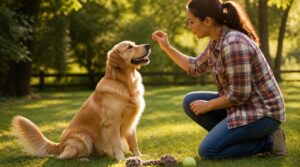
Not every dog goes crazy for kibble, and that’s actually useful information. The trick is figuring out what genuinely lights your dog up — whether that’s food, play, or a good scratch behind the ears. Here are the main reward types worth trying.
High-value Training Treats
Not all treats are created equal. Your dog’s nose knows the difference — aromatic meat-based rewards like freeze-dried chicken, liver, or organ meat outperform standard kibble every time.
Keep these principles in mind:
- Use single-ingredient proteins — no fillers, no aftertaste
- Cut treats to 0.25–0.5 inches for rapid delivery
- Rotate novel proteins like venison to prevent habituation
- Stay under 5 calories per treat to manage daily intake
Toys as Motivators
Some dogs couldn’t care less about food — but toss a tug toy, and they’re locked in.
Scented or squeaky toys trigger higher arousal and faster engagement than plain rewards. Pair a specific toy with a trained cue consistently, and it becomes a powerful signal.
Rotate toy sets to preserve novelty. Puzzle toys with hidden treats extend focus time noticeably — and keep sessions genuinely fun.
Praise and Affection
Your voice matters more than you think. Dogs read tone and body language constantly, so verbal praise timing is everything — say "yes" or "good" within seconds of the correct behavior, not after.
Keep praise specific. "Good sit" lands better than vague approval. Pair your words with calm, relaxed affection, and over time, your attention alone becomes a reward worth working for.
Reward Rotation
Using the same treat every session is like eating your favorite meal daily — eventually, it loses its appeal. Rotate between consumable and interactive rewards: treat, treat, toy, treat, praise. This prevents satiation and keeps your dog guessing.
Criteria-based reinforcement works well here. Save your dog’s absolute favorite reward for harder reps. Avoid predictable sequences — unpredictability itself becomes motivating.
Match Rewards to Difficulty
Think of rewards as payment for work — and hard work deserves better pay.
When your dog nails a sit in the backyard, a piece of kibble is fine. But ask for that same sit near a busy park, and the job just got harder. Scale reward value to match the effort. Tougher environment, better treat. Simple as that.
Keep Training Sessions Short

Short sessions aren’t just easier on your dog — they’re actually more effective. A tired or frustrated dog stops learning, and pushing past that point wastes both your time and your dog’s effort. Here’s how to structure your sessions so every minute counts.
Five-minute Practice Blocks
Five minutes sounds almost too short. But that tight window is exactly what keeps success density high — your dog earns reinforcement often, stays engaged, and finishes wanting more.
Start simple, raise difficulty gradually, and reset between blocks by returning to a calm position. Each fresh start rebuilds attention and momentum, making the next repetition feel achievable rather than exhausting.
Clear Training Goals
Vague goals waste short sessions. Instead of "practice sit," aim for something like "sit on cue near the front door, held for 3 seconds." That specificity tells you exactly what to reward and when to stop.
Break it into steps. One measurable target per block keeps your dog succeeding — and success is what keeps them coming back for more.
Frequent Success Moments
Once your goal is clear, engineer the session so your dog wins often.
Rapid feedback loops do the heavy lifting here:
- Start easier than you think necessary
- Reward every correct attempt early on
- Use successive approximation — reward steps toward the final behavior
- Keep repetitions short and focused
- Raise criteria only after three clean wins
Small victories stack fast. Boosting learner confidence through frequent reinforcement reduces guessing and keeps momentum alive.
End With Fun
Small wins build confidence — but how you close the session shapes how eagerly your dog shows up next time.
End every session with a playful session closure: a quick game of tug, a toy chase, or a short trick your dog already loves. Keep it under 20 seconds. Use a consistent ending ritual cue like "All done!" so the session boundary is clear, not abrupt.
| Closure Type | Duration | Best For |
|---|---|---|
| Tug game | 15–20 seconds | High-drive dogs |
| Toy chase | 10–15 seconds | Fetch-motivated dogs |
| Favorite trick | 10 seconds | Calm, focused dogs |
| Gentle praise + petting | 20 seconds | Sensitive or senior dogs |
| Nose work sniff | 15 seconds | Scent-driven breeds |
Positive emotional association is the real goal — your dog should walk away feeling successful, not drained. Rotate the final activity to keep endings fresh, and let your dog occasionally choose the last game. That small autonomy reinforces motivation for the next session before it even begins.
Track Daily Progress
Progress only becomes visible when you actually measure it. After each short session, jot down three things:
- Success rate per behavior — how many reps landed correctly
- Error patterns — where mistakes clustered most
- Reward type used — which motivator drove the sharpest responses
Compare scores day to day. That single habit reveals whether your consistent training routine is actually producing real results.
Use Better Reward Timing
Timing is everything in dog training — a reward that comes even a few seconds too late teaches your dog the wrong thing. The good news is that clean, well-timed reinforcement is a skill you can build with a little intention. Here’s what to focus on.
Reward Within Seconds
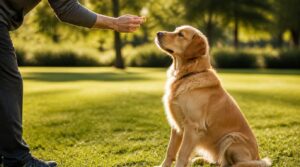
Timing is everything. When you reward your dog within one to three seconds of the correct behavior, their brain links that action directly to the payoff.
Wait too long, and you’ve accidentally reinforced whatever they did in between — a sniff, a shift, a glance away. Quick delivery keeps the association clean and the learning sharp.
Clicker Marker Training

A clicker bridges the gap between behavior and treat. First, charge the marker — pair the click with a treat 10–20 times until your dog predicts the reward automatically.
- Use it to capture natural behaviors the moment they happen
- Reward small steps through shaping approximations
- Fade the marker gradually once the behavior is solid
Consistency in your signal is what makes the whole system work.
Reward The Exact Behavior

Your dog can’t read your mind — so precision matters. Reward the exact criteria: a full hip-contact sit, not a half-crouch. Quality beats speed every time.
If you reward "close enough," close enough becomes the standard. Define what correct looks like before the session starts, then only reward that. The behavior you pay for is the behavior you’ll get.
Start With Constant Rewards

When you’re teaching something new, reward every correct repetition. Every single one.
Your dog is still figuring out the basic rule — which behavior earns the treat — and a reliable reward contingency removes the guesswork. Skipping rewards too early creates gaps in that connection, and motivation quietly fades. Keep the success rate high, the difficulty stable, and the treats flowing until the behavior is solid.
Shift to Random Rewards

Once the behavior is solid, stop rewarding every repetition. Variable reinforcement schedules actually boost motivation — your dog can’t predict when the treat arrives, so they keep trying harder. Think of it like a slot machine: unpredictability drives persistence.
Unpredictability drives persistence — once a behavior is solid, variable rewards keep dogs trying harder than guaranteed ones ever could
Aim for roughly 50–70% reward probability. Enough to sustain effort, not so much that your dog stalls waiting for a guaranteed payout.
Adapt Training to Your Dog

No two dogs are wired the same way, and what keeps one dog locked in will leave another completely checked out. Age, breed, and energy level all shape how your dog learns best — and ignoring those differences is one of the quickest ways to stall your progress.
Here’s how to tailor your approach so training actually clicks for the dog in front of you.
Puppy Attention Spans
Puppies are working with a very short runway. A rough rule of thumb: one minute per month of age — so a three-month-old might give you three minutes, tops. That’s not a flaw; it’s just where they are developmentally.
A passing smell or flicker of movement can pull them away mid-rep. Keep sessions tight, celebrate tiny wins, and quit before they drift.
Adult Dog Focus
Adults can hold focus longer, but that doesn’t mean they’re easier. They’ve formed habits — good and bad — and they notice everything.
Key ways to build adult dog focus:
- Reward check-ins (glances back at you) during walks
- Keep dog training sessions 10–20 minutes
- Use consistent cues and criteria every time
- Match reward value to distraction level
- Start low-distraction, generalize slowly
Senior Dog Comfort
Older dogs can still learn — they just need more grace. Sore joints, slower processing, and fatigue change what a good session looks like.
Keep it to 5–10 minutes, use soft, easy-to-chew treats, and train on non-slip surfaces or rugs. A warm, quiet rest space afterward matters too. Comfort isn’t optional for seniors — it’s the whole foundation.
Breed-specific Motivators
What works for one dog can completely bore another. Retrievers thrive on scent-based retrieve games — hiding an item and letting them find it feels like play, not work. Terriers light up with tug and grab sequences. Gundogs respond deeply to tracking drives.
Intelligent breeds need puzzle-style rewards that make them figure something out. Match the reward to the instinct your dog already carries.
High-energy Dog Preparation
High-energy dogs need to burn off steam before they can actually focus. 20–30 minutes of structured play — a run, fetch, or agility-style movement — takes the edge off without wiping them out.
Follow that with a quick snuffle mat session as a mental warmup, and you’ve got a dog genuinely ready to work, not just physically present.
Frequently Asked Questions (FAQs)
What is the 3-3-3 rule for dog training?
The 3-3-3 rule maps a dog’s adjustment into three phases: three days to decompress, three weeks to learn routines, and three months to fully settle and bond in your home.
What is the 7 7 7 rule for dogs?
The 7-7-7 rule maps a newly adopted dog’s adjustment across 7 days, 7 weeks, and 7 months — each stage shifting from basic comfort, to learning routines, to building the deep trust that makes a dog feel truly home.
How to keep a dog interested in training?
Keep your dog interested by varying rewards, keeping sessions short, and training when they’re calm and focused. Match the treat value to the task, and always end on a win.
What are the 5 D’s of dog training?
The five deliberate Ds — Distance, Duration, Distraction, Difficulty, and Diversity — define how trainers systematically raise the bar. Each variable challenges your dog differently, building reliable responses across real-life conditions through structured positive reinforcement.
Can stress or illness reduce my dogs motivation?
Yes. Stress and illness genuinely reduce your dog’s drive to engage. Pain, fatigue, and anxiety shift attention away from rewards — and a stressed dog barely registers food as motivating.
How does socialization affect a dogs training engagement?
A poorly socialized dog can make training feel like pulling teeth. Stranger anxiety and dog reactivity steal focus fast.
Well-socialized dogs recover from distractions quicker, hold handler communication focus longer, and stay in learning mode when it matters.
Should multiple family members train the dog consistently?
Every family member who interacts with your dog is training them — whether they know it or not. Unified cue consistency across the household means your dog hears the same signals from everyone.
Does time of day impact a dogs focus?
Yes — timing matters. Dogs follow a natural daily rhythm, tending to be more alert in the morning and again later in the day. Sleep loss reduces focus and play. Train when your dog is calm and wakeful.
Can a dogs motivation improve after a training setback?
Yes — a setback isn’t the end. Switch to higher-value rewards, shorten the session, and let your dog win something easy. Drive comes back faster than you’d think.
Conclusion
A single wrong reward can undo a hundred perfect repetitions. That’s not an exaggeration—it’s exactly how fragile motivation is when your dog decides the effort isn’t worth it.
Keeping dogs motivated during training comes down to reading your dog, adjusting fast, and making every reward feel like the best deal they’ve ever made. Short sessions. Smart rewards. Precise timing. Get those three things working together, and your dog won’t just cooperate—they’ll show up ready.
- https://www.zoomroom.com/tips/positive-reinforcement-training
- https://joyofdogsports.fi/2026/03/foundations-of-dog-training-part-1-reward-and-timing
- https://www.humaneworld.org/en/resources/positive-reinforcement-training
- https://www.3dogranchmt.com/post/positive-reinforcement-tips
- https://themobilebarkery.com/blogs/natural-dog-treats/best-dog-treats-for-training-expert-guide-to-high-value-rewards-that-work