This site is supported by our readers. We may earn a commission, at no cost to you, if you purchase through links.
You turn your back for ten seconds, and there it is: a soggy corner of training pad, half-shredded, dangling from your puppy’s mouth like a trophy. Sound familiar?
You’re not alone, and your pup isn’t "bad." Why is your puppy eating training pads? Usually it comes down to sore gums, boredom, or plain old curiosity about that crinkly texture.
But some causes carry real risks, from choking to blockages. Good news: once you know the "why," fixing it gets a lot easier. Let’s get your puppy (and your pads) back on track.
Table Of Contents
- Key Takeaways
- Why Your Puppy Eats Training Pads
- Is Eating Training Pads Dangerous?
- What to Do Immediately
- Stop Pad Chewing Safely
- Redirect Chewing to Better Options
- Improve Potty Training Routine
- When to Get Professional Help
- Frequently Asked Questions (FAQs)
- Why does my puppy chew on Pee pads?
- Why does my Dog Eat a Pee pad?
- How to stop a puppy from chewing on Pee pads?
- Why is my puppy chewing a pad so much?
- How do I get my puppy to stop eating her pee pads?
- Is it bad for puppies to eat pee pads?
- Why do puppies chew training pads?
- What are the pee pads that dogs won’t chew?
- Are certain puppy breeds more prone to pad eating?
- Does pad eating decrease naturally as puppies mature?
- Conclusion
Key Takeaways
- Puppies chew training pads mainly due to teething discomfort, boredom, curiosity, anxiety, or sometimes pica linked to nutritional deficiencies.
- Eating pad material poses serious health risks, including choking, intestinal blockage, absorbent gel expansion, and dehydration.
- If your puppy eats a pad, act calmly: remove remaining pieces, check their mouth, watch for vomiting, and call your vet if symptoms appear.
- Preventing pad chewing works best through secure pad placement, bitter sprays, supervised access, engaging chew toys, and a consistent potty training routine.
Why Your Puppy Eats Training Pads
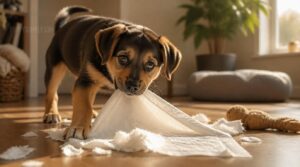
Puppies don’t chew pads to be naughty. Something is usually driving it, whether it’s sore gums or a bored brain. Let’s break down the top five reasons behind this messy habit.
Puppies don’t chew pads out of naughtiness—it’s usually sore gums or a bored brain driving the habit
Teething Discomfort
Your puppy’s urge to chew training pads often boils down to teething discomfort. Swollen gums, extra drooling, and mild fussiness kick in as new teeth push through. Chewing on textured pads feels soothing, like a scratch for an itch. Watch for mouth irritation and redness. If you spot severe symptoms—fever, diarrhea, or extreme distress—those aren’t normal teething signs; call your vet. This discomfort is often linked to primary tooth eruption processes.
Boredom and Excess Energy
Chewing pads isn’t always about sore gums. Often, it’s a sign of excess energy and boredom—think “nothing to do, so I’ll chew.” Puppies crave mental stimulation and movement. Without jobs, they invent their own, grabbing whatever’s soft and handy. Watch for these clues:
If your pup’s chewing feels less about teething and more about pent-up energy, these puppy training tips for aggressive chewing can help redirect that drive into healthier habits.
- Restless pacing
- Whining
- Chewing after naps
- Unsettled sleep
- Seeking your attention
Curiosity About Texture
Sometimes, what draws your pup to a training pad is pure texture curiosity. Soft, crinkly layers and rough edges spark tactile mouth exploration. Pad seams and folds mimic familiar fabric-like feels, making them irresistible for puppy teething relief. Puppies love layered material sensations, so sensory feedback loops keep them coming back. That’s why dog chewing training pads is so common during early developmental stages.
Anxiety or Self-soothing
Chewing pads isn’t always about fun—often, it’s a puppy’s way to self-soothe during anxious moments. Stress from separation, noisy nights, or unpredictable routines can trigger pad chewing as a comfort ritual. That urge grows when your pup feels alone or restless, especially at bedtime.
- Separation distress
- Nighttime anxiety
- Seeking familiar scents
- Predictable routine helps
- Calming sensory cues
Possible Pica Concerns
Ever wonder why your dog eats pee pads? It could be pica—a craving for nonfood items tied to nutritional deficiencies like low iron or zinc. Eating contaminated pads or paint chips can trigger lead toxicity or parasitic infection. Tough pad material causes dental wear and risk of intestinal blockage.
| Risk | How It Shows Up |
|---|---|
| Mineral loss | Ongoing cravings |
| Lead poisoning | Lethargy, illness |
| Parasites | Digestive upset |
| Blockage | Straining, vomiting |
Is Eating Training Pads Dangerous?
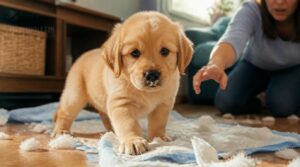
Chewing on training pads isn’t just messy—it can put your puppy at real risk. There are a few dangers you need to watch for if your pup swallows pad material. Let’s break down the biggest health concerns to keep in mind.
Choking Hazards
Choking hazard is real. Training pads break into small, smooth, or tube-like pieces that can block your puppy’s airway. Rapid chewing makes this worse.
Watch for trouble breathing, gagging, or sudden coughing—those are airway obstruction signs. Hard or sticky fragments may lodge deep, making it hard to clear.
Never leave your pup unsupervised with pads.
Intestinal Blockage Risk
Swallowed pad bits can clog your puppy’s gut, creating a serious intestinal blockage. Smaller dogs need only a handful of pad pieces for trouble. Stress slows gut movement, so material builds up faster.
If you’re unsure what else might be risky for your pup to nibble on, this guide on whether dogs can safely eat snow crab covers another common feeding question worth knowing.
If your puppy strains, vomits, or looks bloated after eating pads, these are obstruction warning signs. Multiple small pad snacks add up—don’t ignore repeated pad eating. Emergency surgery may be needed.
Absorbent Gel Expansion
Ever wonder why a dog eating pee pad is risky? The absorbent gel inside swells fast—like a sponge in water. This gel network, packed with polymer crosslink density, grabs liquid and expands. In your puppy’s gut, it can block pathways and cause impaction or gastrointestinal obstruction. Even salt in urine changes swelling, making pad bits unsafe if eaten.
- Gel swells quickly
- Blocks digestive tract
- Internal pores speed uptake
- Salt affects swelling
Dehydration Concerns
Is a dog eating pee pad safe? Not at all. The absorbent material pulls water from your puppy’s body, causing fluid loss and risk of dehydration. Watch for concentrated urine and dry mouth. With less water, electrolyte balance shifts—making pups weak. Heat regulation suffers, and reduced blood volume strains circulation. Digestive upset worsens dehydration.
| Trigger | Physical Sign | Pet Safety Risk |
|---|---|---|
| Fluid loss | Dark urine | Weakness |
| Upset stomach | Dry mouth | Poor thermoregulation |
| Gel ingestion | Lethargy | Circulation stress |
Emergency Warning Signs
Spotting an emergency isn’t guesswork. If you see blue or gray gums, open-mouth breathing, or persistent choking, act fast. Watch for bloody vomit, black stool, or a swollen belly.
Lethargy, collapse, or extreme weakness means trouble. Any vomiting after pad eating or abdominal pain calls for urgent vet help—don’t wait.
What to Do Immediately
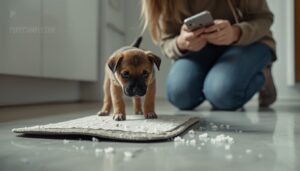
If your puppy eats part of a training pad, quick action matters. There are a few steps you’ll want to take right away to keep things safe. Here’s what you should do next.
Remove Pad Pieces
Sweep up pad fragments right away—don’t let your puppy play scavenger!
Those small pieces hide in carpet or corners, tempting your pup to keep chewing.
Remember, even urine odor sticks to leftovers, so use an enzymatic cleaner after removal.
Seal pad scraps in a lidded trash can.
Every bit left behind can feel like a chewy treat or a puzzle.
Check Mouth Safely
Now that the scraps are gone, time to check your puppy’s mouth. Use slow, gentle hands—don’t pry or force.
Look for red gums, pad fibers, or swollen tongue. Notice any stringy saliva or bad breath. Listen for noisy breathing—that’s a warning.
If your puppy paws at their mouth or won’t let you look, call your vet.
Watch for Vomiting
After checking your puppy’s mouth, keep an eye out for vomiting. Look for repeated gagging, sudden throw-ups after eating the pad, or vomit that’s bloody or looks like “coffee grounds.”
Watch for lethargy or dry mouth—these can signal dehydration. If vomiting keeps happening, or your puppy acts sleepy or confused, it’s time to worry.
Call Your Vet
If your puppy ate a pee pad or you spot vomiting, lethargy, or distress, call your vet right away. Share when the chewing started, what part of the pad was eaten, and any symptoms. Bring the pad brand or a photo. The vet might check for mouth injuries or recommend X-rays to rule out impaction or other canine digestive issues.
- Fast action saves lives.
- Clear info helps your vet.
- Never guess—always ask.
Avoid Panic Chasing
Stop yourself from running or yelling when your dog grabs a pad. Fast movement turns “pad hunting” into a game. Instead, use calm body language and a steady cue like “leave it.” Crouch low, block the pad, and offer a chew toy right away. Keep interactions short. Here’s how it looks:
| Calm Moves | Chase Moves |
|---|---|
| Slow, steady | Fast, frantic |
| Soft voice | Loud, urgent |
| Crouch, block | Reach, grab |
| Toy redirect | No alternative |
| End quickly | Prolong drama |
Stop Pad Chewing Safely
You can make training pads much less tempting for your puppy with a few easy tweaks. The right setup keeps chewing in check and protects your pup from harm. Let’s look at smart ways to secure those pads and keep your puppy safe.
Use a Pad Holder
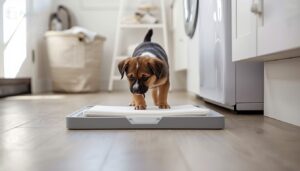
Ever tried a locking pee pad tray? It’s like armor for your pad—corner clamps grip tight, the non-slip base stops sliding, and the tough plastic resists puppy bites. Cleaning’s easy, just rinse or wipe. Pick the right size for your pad.
Here’s how it works:
- Pad flat, no fluff escape.
- Clamps snap, edges safe.
- Holder stays, puppy walks away.
Tape Corners Securely
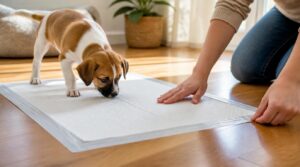
Lock those corners down tight. Flatten each pad edge, smooth out any wrinkles, and press pet-safe tape flush to the floor—no lifted seams, no chewable tabs. Test for movement with a gentle tug. Overlap tape so it covers both sides, and use extra strips if needed. Here’s a quick visual guide:
| Step | Pro Tip |
|---|---|
| Flatten corners | Smooth before taping |
| Clean surface | Dry, dust-free |
| Tape overlap | Cover both sides |
| Test adhesion | Tug gently |
| Check floor fit | Watch for residue |
Try Bitter Spray
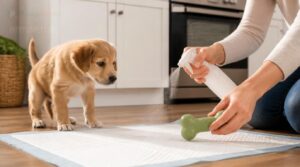
Curious how to stop puppy from chewing pee pad? Try a bitter spray. Spray right after cleaning so the layer sticks. Most dogs pause after tasting the bitter agent—that’s your cue to redirect. Reapply daily or after wiping. Always check ingredient safety and keep sprays out of reach.
- Quick-drying formula
- Safe for pets
- Easy daily reapplication
- Pairs with redirection
Move Pads From Play Zones
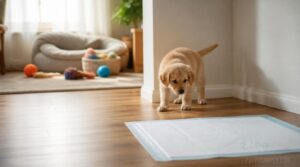
Puppies see potty training pads as playthings when they’re placed in active zones. Shift pads to a quiet corner, away from toys and beds. This spatial separation helps with defining boundaries—your puppy learns that pads are for potty, not fun. Less confusion means less dog eating pee pad incidents. Consistent placement prevents incidental chewing and leads to safer, smarter puppy potty training tips.
Limit Unsupervised Access
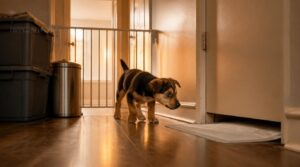
Think your puppy is clever? They’ll sniff out unsupervised access faster than you expect.
Block pad zones with baby gates or closed doors. Remove pads from common hangouts when you can’t watch. Store extras in sealed containers, not out in the open. Trash chewed pads right away.
Treat downtime as a risk window—contain your pup and keep those pads off their radar.
Redirect Chewing to Better Options
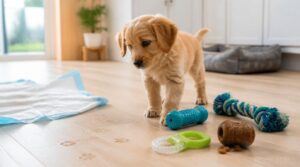
Puppies need safe outlets for all that chewing energy, especially during teething. Swapping the pad for a better option can make a big difference. Here are a few simple choices your pup will love.
Frozen Teething Toys
Give your puppy a frozen teething toy when pad-chewing starts. These toys cool sore gums and distract from destructive habits. Try silicone rings or gel-filled pops—safe, flexible, and textured for relief. Clean daily and supervise use.
- Gel cores stay soft, never sharp
- Silicone teethers massage gums gently
- Ice pop shapes engage and soothe
- Textured surfaces target teething spots
Rubber Chew Toys
Rubber chew toys are your best ally for dog teething relief. Choose ones with textured surfaces—ridges, grooves, nubs—to massage sore gums and keep puppies busy.
Go for durable, tested rubber that resists strong jaws. Pick the right size for your pup.
Clean regularly—most are dishwasher safe. A good chew toy redirects energy, prevents destructive chewing, and keeps your puppy safe.
Puzzle Feeders
Tired jaws need a new challenge? Try puzzle feeders. These toys use clever designs—like a treat ball that releases food as it rolls, a sliding lid feeder with hidden pockets, or a wobble bowl that tips and rewards. Puppies love:
- Scent-searching with nose work mats
- Unlocking maze-style compartments
- Pawing for kibble in moving bowls
Treat-dispensing Balls
Ready for something new? Treat-dispensing balls turn snack time into a game. Your puppy rolls, paws, and chews, working to release tasty bits. These balls offer mental stimulation, slow down feeding, and keep jaws busy. Made from non-toxic materials with adjustable difficulty, they’re safe and easy to clean. A smart fix for bored pups!
| Feature | Benefit | Pro Tip |
|---|---|---|
| Adjustable holes | Slow feeding | Start easy, progress |
| Dishwasher safe | Easy maintenance | Wash weekly |
| Textured rubber | Safe chewing | Inspect for damage |
Durable Rope Toys
Tightly woven rope toys are a solid choice for redirecting those chewing urges. The fiber weave density and synthetic material blends keep these toys tough, even for strong jaws.
Multiple knots boost safety—no loose strands. Machine washing is easy. Pick the right size for your breed.
Rotate with rubber teething toys to prevent destructive chewing and keep your puppy’s mind busy.
Improve Potty Training Routine
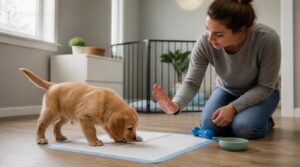
Getting your puppy on track with potty pads takes more than just putting them down. A few simple changes can make the whole routine easier and less tempting for your pup to chew. Here’s what works best for setting clear boundaries and keeping pad time focused.
Keep a Consistent Schedule
Ever feel like potty time is a guessing game? Predictable potty windows make life easier. Stick to set times—after meals, naps, play. Match feeding and water routines so you know when your puppy needs to go. Keep supervision steady, especially after eating. Slowly shift pads toward the door for getting them used to the outdoors. Consistency helps puppies build trust and learn faster.
- Set fixed potty windows
- Feed at the same times
- Limit water before bed
- Supervise closely after meals
- Move pads gradually toward outdoors
Reward Correct Pad Use
Catch your puppy in the act—reward right after they use the pad. Choose high-value treats or favorite toys for fast, clear reinforcement. Keep rewards specific—praise “good potty on pad!” so your pup connects the dots.
Start with every success, then slowly shift to just praise. Only reward correct pad use—never sniffing or wandering. Steady, predictable rewards build strong habits.
Use Clear Potty Cues
Pair a distinct verbal cue (“go potty!” or “!”) with the exact moment your puppy!” or “go poop!”) with the exact moment your puppy starts eliminating. Repeat the cue each time, using the same tone and body position. Stand or kneel facing the pad.
When your puppy finishes, offer a quick treat and praise. Consistency here helps your pup link the cue to the act.
Separate Potty and Play
Ever notice how puppies treat pads like toys? like toys?Defining boundarieskey. Keep the potty zone away from play areas—use a puppy play pen or baby gate. Pads stay in their own spot, never mixed with toys. Clean the area quickly after use. This zoning strategy prevents confusion and helps avoid puppy pad destruction from bored, wandering mouths.
Transition Outdoors Gradually
Ready for the big move outdoors? Start with short outdoor potty sessions right after your puppy wakes or eats. Keep distractions low—pick a quiet corner and use the same potty cue as indoors. Watch for weather changes; puppies often dislike wet or cold grass. Always use a leash to guide and supervise.
Gradually increase time outside, so the yard feels like a potty spot, not a playground.
When to Get Professional Help
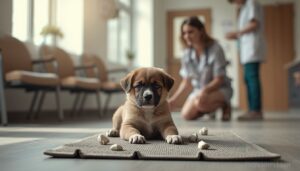
Sometimes, chewing goes beyond normal puppy behavior and needs extra attention. If your puppy keeps eating pads or shows other worrying signs, it’s time to look for expert help. Here are some situations where calling a trainer or vet makes sense.
Repeated Pad Eating
Repeated pad eating isn’t just quirky—it’s a habitual chewing pattern that can become risky. Puppies often get stuck in a sensory satisfaction loop, chewing the pad for comfort or out of boredom. If your dog keeps eating pee pads or chewing training pads despite corrections, you’re facing a repetitive oral fixation. This can signal nonfood ingestion habits or even Pica.
Severe Anxiety Signs
Anxious puppies can show physical restlessness—pacing, whining, or trembling. You might notice rapid breathing or heart palpitations if they’re stressed, especially after separation. Sleep disruption is common, too.
If your puppy looks panicked, refuses food, or self-soothes by chewing pads, those are red flags.
When worry takes over daily life, it’s time for animal behavioral health support.
Obsessive Chewing Behavior
When pad chewing turns into a compulsive cycle, it’s not just boredom or teething. Puppies may get stuck in a loop—chewing for tension relief or sensory satisfaction. Sometimes, the urge feels automatic, especially during stress.
If your dog chews pads even when other options are present, or can’t stop, you need professional help to redirect the behavior.
Suspected Nutritional Deficiencies
Sometimes pad eating isn’t behavior at all. It’s your puppy’s body asking for something missing. True pica often signals nutrient gaps.
Watch for:
- Pale gums (possible anemia)
- Bleeding gums or slow-healing cuts
- Muscle weakness or poor growth
- Diarrhea or odd taste changes
- Tingling, twitching, or muscle spasms
These signs point to digestive or metabolic issues needing a vet’s eye, not just training.
Trainer or Vet Support
Why go it alone when backup is right there? A vet-trainer coordination covers all your bases: medical exam, pica screening, and a real behavior plan tracking progress week to week.
Your vet checks for digestive health issues or nonfood ingestion risks. Your trainer builds dog training solutions around it. Need more? Ask about specialized behaviorist referrals for extra peace of mind.
Frequently Asked Questions (FAQs)
Why does my puppy chew on Pee pads?
Like a sore tooth begging for pressure, your puppy’s gums drive the chewing. It’s usually teething relief, boredom, or sensory satisfaction—sometimes anxiety or nutritional gaps. Mental stimulation matters too.
Whatever the cause, dog eating pee pad habits deserve quick attention, not panic.
Why does my Dog Eat a Pee pad?
Your dog eats a pee pad for a few reasons: teething gum relief, boredom, or sensory texture attraction. It can also signal anxiety coping or nutritional pica. Ingestion risks impaction, so watch closely and redirect chewing toward safer toys.
How to stop a puppy from chewing on Pee pads?
It won’t fix itself overnight, but it’s very doable. Secure pad edges with a holder, redirect to safe chew alternatives, add bitter spray, and boost exercise. Small steps stop destructive chewing fast.
Why is my puppy chewing a pad so much?
Chewing that much usually means teething pain relief, boredom, or self-soothing anxiety cues.
Your pup explores through sensory mouth exploration, and pads feel satisfying to tear.
Wondering is pee pad safe if eaten? No—so redirect fast with better chew options.
How do I get my puppy to stop eating her pee pads?
An ounce of prevention beats a pound of cure. Secure pads, block unsupervised access, and redirect the behavior with chew toys. Reward correct pad use, stay consistent — this stops destructive chewing before it becomes a hard-to-break habit.
Is it bad for puppies to eat pee pads?
Yes, it can be. Hydrogel expansion, choking, and intestinal blockage are real risks. Ammonia-soaked or bacteria-laden pads add stomach upset too. If your pup grabs a bite, don’t panic — just watch closely and call your vet if symptoms show up.
Why do puppies chew training pads?
Sore gums, boredom, and texture curiosity often drive it. Your pup finds teething pain relief in chewing, or turns pads into toys from destructive boredom habits.
Sometimes it’s anxiety self-soothing, or rarely, nutritional pica triggers signaling a deeper issue worth watching.
What are the pee pads that dogs won’t chew?
Look for tear-resistant materials, non-slip backings, and gel-containment technology that keeps pads intact.
Pair any puppy pads with a pad holder or tray using grate-style covers—great for preventing destructive chewing and stopping dog chewing training pad habits fast.
Are certain puppy breeds more prone to pad eating?
Some pups just have stronger breed food drive. Labradors, known for bottomless-stomach appetites, top the list, along with other high-energy breeds.
Genetic predispositions matter, too—individual eating habits and breed-specific pica tendencies can turn a curious sniff into a full pad-eating habit fast!
Does pad eating decrease naturally as puppies mature?
Often, yes. As the teething phase ends and puppies pass through key developmental stages, destructive chewing fades. But habitual patterns or persistent pica risks can keep pad eating going, so maturity alone isn’t a guarantee.
Conclusion
Somewhere, a training pad company is celebrating record sales, thrilled their "durable" pads keep vanishing into puppy bellies. Funny how chewing is actually just your dog asking for help.
Once you understand why is my puppy eating training pads, the fix is simple: cover pads, offer better toys, and reward good choices. Puppies don’t outgrow habits by accident. You guide them there, one small, consistent step at a time, until pad-eating becomes a funny memory, not a daily worry.
- https://honeycarepets.com/blogs/news/dog-eating-pee-pad-risks
- https://www.yiyipad.com/info/how-to-stop-dogs-from-tearing-up-pee-pads-103083906.html
- https://www.petco.com/content/content-hub/home/questions/02/11/818737.html
- https://www.petsmart.com/learning-center/dog-care/the-pros-and-cons-of-puppy-pads
- https://www.akc.org/