This site is supported by our readers. We may earn a commission, at no cost to you, if you purchase through links.
Your dog freezes mid-walk, ears pinned, eyes wide at nothing you can see. Maybe it’s the collar. That flinch isn’t stubbornness or bad manners. It’s fear talking.
Training collars work by causing discomfort, and dogs learn fast when pain shows up unpredictably. Can training collars cause anxiety in dogs? The science says yes, and the signs often hide in plain sight: lip licking, tail tucking, sudden avoidance of you.
Here’s what’s driving that fear, how to spot it early, and what actually builds a calm, confident dog instead.
Table Of Contents
- Key Takeaways
- Yes, Training Collars Can Cause Anxiety
- Why Training Collars Trigger Stress
- Collar Types and Anxiety Risks
- Signs Your Dog Feels Anxious
- How Anxiety Can Become Learned
- Physical Risks That Increase Fear
- Dogs Most Vulnerable to Anxiety
- Safer Alternatives to Training Collars
- Better Tools for Safe Control
- When to Get Professional Help
- Frequently Asked Questions (FAQs)
- Conclusion
Key Takeaways
- Training collars can genuinely cause anxiety through unpredictable pain, creating fear responses that outlast the correction and spread to locations, people, and commands unrelated to the original trigger.
- Watch for warning signs like lip licking, tail tucking, trembling, avoiding you, or sudden freezing, since these often signal fear rather than stubbornness or bad behavior.
- Certain dogs face higher risk, including nervous, excitable, rescue, very young or senior, and pain-sensitive dogs, so a vet check and extra caution matter before using any corrective tool.
- Safer alternatives like positive reinforcement, clicker training, front-clip harnesses, and head collars build trust and control without relying on pain or fear.
Yes, Training Collars Can Cause Anxiety

Yes, training collars can genuinely cause anxiety in dogs. The effects show up in different ways, from the moment of correction to how your dog feels long after training ends. Here’s what that anxiety actually looks like, piece by piece.
That’s exactly why knowing how to introduce a training collar to your dog the right way matters so much before you ever clip one on.
Fear From Aversive Stimuli
When a shock, prong, or vibration jolts your dog without warning, the body reacts before the brain understands why. This is aversive stimulation at work, creating conditioned fear responses that outlast the correction itself. This process occurs when neutral stimuli take on aversive properties through association.
- Trembling or freezing on the spot
- Heightened sensory threat salience
- Anticipatory stress cues before contact
- Escape control loss during restraint
- Unpredictable correction timing fueling anxiety
Stress During Training
That jolt doesn’t end when the correction stops. Inside a session, timing accuracy matters most: late corrections confuse rather than teach. Quick "ask, correct, repeat" cycles push arousal past a healthy threshold, causing learning fatigue.
Mixed handler cues add more uncertainty. Without session decompression, stress compounds fast—leaving your dog mentally worn out, not just tired.
Anxiety Outside Training
That mental fatigue doesn’t stay inside the session. Dogs carry it home through Routine Pre-walk Anxiety—pacing before leash pickup—or Post-training Hypervigilance on ordinary walks.
Watch for:
- Location-based Fear near training spots
- Environmental Trigger Generalization to unrelated sights
- Anticipatory Stress Responses before any cue
This is fear-based training’s quiet cost: emotional stress lingering long after corrections stop.
Individual Dog Sensitivity
Not every dog reacts the same way to a collar correction. Some have naturally higher sensory processing sensitivity, picking up on small changes others miss.
| Trait | What It Affects | Anxiety Risk |
|---|---|---|
| Body sensitivity | Physical discomfort tolerance | Higher |
| Trainability | Learning ease | Varies |
| Emotional reactivity | Stress response intensity | Higher |
Pain threshold variability means identical corrections feel very different dog to dog.
Why Training Collars Trigger Stress

So what’s actually happening under that collar? Stress doesn’t come from just one place. Here are five reasons your dog’s body might be sounding the alarm.
Pain or Discomfort
Pain doesn’t stay put. It spreads into how your dog moves, breathes, and feels about the leash itself.
Neck tissue soreness builds from constant pressure, while skin friction irritation wears down protection with every step. Tight fits can trigger real respiratory distress sensations too.
Left unchecked, this leads to movement gait changes, wound infection risks, and a lasting stress response your dog carries into everyday walks.
Sudden Startle Responses
Ever notice your dog freeze mid-step for no clear reason? A shock or vibration triggers reflexive muscle contractions before your dog even registers what happened.
This causes:
- Rapid heartbeat spikes
- Muscle tensing
- Head-turning away
- Brief freezing
- Heightened defensive reactivity
These autonomic arousal spikes linger, feeding ongoing emotional stress and fear-based training patterns your dog didn’t choose.
Unclear Corrections
How’s your dog supposed to learn the rules when the correction doesn’t match the moment? Timing ambiguity means a shock lands after your dog already shifted position, so the wrong action gets blamed.
Misidentified cues and inconsistent intensity add confusion. Without reward absence addressed, there’s no clear alternative taught. The result is emotional overload—stress, fear-based training, and unwanted behaviors instead of understanding.
Loss of Control
Being stuck makes fear worse. When your dog can’t back away, turn, or create space, that pressure has nowhere to go.
Movement constraints paired with an aversive cue push dogs toward learned helplessness—freezing instead of responding. Add unpredictable feedback and escalating corrections, and your dog stops trying altogether. That’s emotional shutdown, not obedience.
When a trapped dog can’t escape the pain, it eventually stops trying—that’s shutdown, not obedience
Anticipation of Punishment
Some dogs learn to worry before anything even happens. That’s cue-based anxiety—your dog spots the leash or hears a beep and braces for pain, even if you haven’t done anything yet.
This creates hypervigilant scanning, constant watching for what’s coming next. Mismatched timing causes prediction error stress, leaving your dog anxious and confused about what actually earns punishment.
Collar Types and Anxiety Risks

Not all training collars work the same way, and that matters. Each type carries its own risks for your dog’s stress levels. Let’s break down what makes each one different.
If your dog’s energy level seems to fuel the problem, exploring proven techniques for managing a hyperactive dog can help you choose safer alternatives to a training collar.
Shock Collars
Shock collars deliver pulsed electric current, not one steady jolt, through electrodes that must stay pressed to your dog’s skin.
Level settings and coat type affect what your dog actually feels. Even with a remote’s operating range and "shock lock" features, unpredictable timing creates real emotional stress. England’s set to ban them by 2024. That regulatory shift reflects growing concern about fear-based training and its lasting psychological toll.
Prong Collars
Metal links pinch your dog’s neck when the leash tightens, then rotate loose once tension eases.
- 4 to 6 evenly spaced prongs
- Rounded, blunt tips (not needle-like)
- Optional vinyl or rubber end caps
- Martingale-style pull for symmetry
- Fit high behind the ears
Even with smooth prong design, poor placement still risks physical injuries and lingering emotional stress.
Slip Collars
Unlike prongs, a slip collar relies on sliding ring mechanics — the loop tightens as your dog pulls, then loosens once tension stops.
Without a stopper, tightening has no limit, raising choking risk and stress. Stopper designs help control this.
Braided nylon or leather offer durability, but proper neck positioning still matters most for preventing physical injuries and lasting behavioral issues.
Vibration Collars
Vibration collars feel gentler, but that doesn’t mean stress-free. A motor buzzes against your dog’s neck, with vibration intensity settings ranging from mild to strong. Even labeled "no shock," it’s still sensory stimulation your dog didn’t ask for.
Repeated buzzing can build psychological impact over time, especially at higher intensities. So is gentle always safe? Not necessarily—your dog’s reaction matters more than the label.
Remote E-Collars
A remote training collar gives you a handheld transmitter with adjustable intensity levels, controlling shock or vibration collars from a distance. Wireless signal range varies by model, and waterproofing durability ratings matter for outdoor use. But battery charging maintenance issues aside, the real concern is control itself.
That much power in your hands raises the psychological impact on your dog. Stress and anxiety often follow.
Signs Your Dog Feels Anxious
Your dog can’t tell you when something feels wrong. But their body will. Here are five signs worth watching for.
Trembling or Cowering

A shaking dog isn’t cold. It’s scared. That involuntary body shaking often means high stress, especially right after a correction.
Cowering looks like your dog trying to disappear—shrinking physical posture, head low, body pulled in. Watch for fear-based retreat too, where your dog backs away or won’t come close.
Sometimes the shaking starts before anything happens. That anticipatory trembling signals real dread, not drama.
Lip Licking
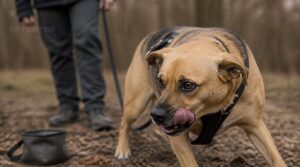
Ever notice your dog licking their lips with no food around? That’s a stress signal, not hunger. Frequent tongue contact wets the lip edges, and the saliva irritation cycle can lead to dryness or fissuring over time—dermatitis symptoms worth watching.
It’s self-soothing, a small comfort during discomfort. Isolated licks are normal. Repeated licking during training deserves attention.
Tail Tucking
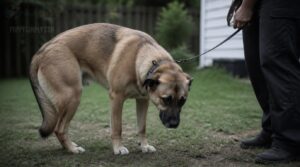
Where does your dog’s tail go during training? A tucked tail is a classic vulnerability signal, often paired with submissive body language.
- Tail pressed low or between the legs
- Lowered head
- Hunched back
- Avoiding eye contact
- Trying to look smaller
Shock collars can trigger this as a sudden threat response. Persistent tucking, though, may point to spinal pain indicators—different from task-related focus while digging or playing.
Avoiding The Handler

Does your dog dodge you during training? That’s handler avoidance, and it’s a real red flag.
Watch for reduced eye contact, distance seeking, or plain disengagement behaviors. Dogs trained with shock collars often link the handler to unwanted behaviors getting punished, not corrected.
This loss of initiative signals fear-based training gone wrong. If approach itself feels risky, that’s a serious problem behavior worth addressing immediately.
Freezing or Shutdown

Sometimes fear doesn’t run. It just stops.
That’s tonic immobility — your dog’s body locking up when escape feels impossible. Muscle stiffness, a distant stare, sensory detachment. Parasympathetic responses kick in, slowing everything down.
This isn’t calm. It’s shutdown from fear-based training or inescapable threat perception.
- Stiff, frozen posture
- Blank or "checked-out" eyes
- No response to cues
Please don’t mistake stillness for obedience.
How Anxiety Can Become Learned

Fear doesn’t always stay in the moment it happened. Your dog’s brain is busy making connections, even when you’re not looking. Here’s how that anxiety can spread to places, people, and words you’d never expect.
Fear of Locations
Places carry memories for dogs, just like they do for us. A yard or hallway where a shock happened can become a place your dog refuses to enter again.
| Location | Trigger | Reaction |
|---|---|---|
| Yard | Shock collar | Avoidance |
| Hallway | Correction | Freezing |
| Bed | Fear response | Refusal |
This environmental trigger avoidance shrinks your dog’s sense of a safe base.
Fear of Other Dogs
Leash corrections near unfamiliar dogs can teach your pup that other dogs mean pain. That’s learned associative fear, not just shyness.
Poor socialization windows, urban density, and past traumatic encounters all raise the risk. Add a shock collar into the mix, and avoidance behavior often follows—your dog may freeze, pull away, or bark defensively whenever another dog approaches.
Fear of Commands
Other dogs aren’t the only trigger—words can become scary too. When a command reliably precedes a shock collar correction, that word turns into a warning sign. This is verbal cue conditioning, and it happens fast.
Inconsistent timing makes it worse. Your dog can’t predict outcomes, so anticipatory stress builds before you even speak—leading to command-driven avoidance and quiet, fearful shutdown.
Fear of The Handler
Words can turn scary, but so can the person holding the leash. Since you control timing and delivery, you become the predictor of shock collars going off—handler proximity fear builds fast.
Your dog may show anticipatory stress cues just watching you reach for gear. That’s breaking trust cycles in real time, showing up as avoidance body language before you’ve said a word.
Trigger Misassociation
Sometimes the blame lands in the wrong place entirely. Your dog can’t always sort out incorrect cause-effect—so leash attachment or a clip sound gets tagged as the threat, not the correction itself.
This is salient stimulus blame: the most noticeable thing, like collar movement, absorbs the fear. That’s predictor confusion at work, and it explains why avoidance learning shows up in unexpected places later.
Physical Risks That Increase Fear

Fear doesn’t always start in your dog’s mind. Sometimes it starts with real pain in her body. Here’s where that physical discomfort usually shows up.
Neck Pressure
A tight collar doesn’t just annoy your dog—it squeezes. Every pull creates Tissue Compression Risks around the airway, a spot dogs guard instinctively.
- Pressure spikes during sudden pulls
- Airway sensitivity makes even brief tightness alarming
- Small dogs feel it more intensely
- Prior neck injuries heighten pain response
That’s Tension Misinterpretation—your dog reads pressure as threat, not correction, fueling stress behaviors that undermine safety and effectiveness.
Skin Irritation
Where a collar rubs, trouble often follows. Friction-induced redness builds up over time, especially if the collar shifts during walks.
Add in hygiene residue buildup—dirt, saliva, leftover shampoo—and you’ve got contact dermatitis triggers sitting right against the skin. This damages the skin barrier, raising secondary infection risks.
Uncomfortable skin means an uneasy dog. Training collars shouldn’t compromise your dog’s wellbeing or overall pet safety.
Burns or Sores
Heat and friction don’t just irritate—they damage. Electric shock collars set too high can cause contact heat burns, ranging from redness to deeper tissue damage. Prong collars create friction injury through repeated rubbing.
- Moisture skin breakdown from sweat
- Open sores at pressure points
- Slower healing on damaged tissue
- Higher infection risk when skin barriers break
These injuries threaten both physical comfort and your dog’s wellbeing.
Choking Risks
A dog’s throat can take only so much before panic sets in. Sudden tension on slip collars causes airway compression, and improper fit makes it worse. You might notice tracheal irritation, coughing, or swallowing discomfort during leash training.
That fear lingers. A dog who’s choked once often braces for it again, undermining leash control and creating new unwanted behaviors rooted in dread, not defiance.
Pain During Walks
Ever notice your dog slowing down mid-walk for no clear reason? That’s often tension-induced discomfort from the collar itself. Watch for gait change indicators like shortened strides or hesitation at corners.
Walking avoidance patterns—stopping, backing away, refusing the leash—signal pain, not stubbornness. Post-walk stiffness often follows. Training collars causing pain during walks can create lasting unwanted behaviors, undermining both trust and effective behavior correction. Your dog’s comfort matters for real animal welfare.
Dogs Most Vulnerable to Anxiety

Not every dog reacts to a training collar the same way. Some pups carry traits that make fear stick faster and hit harder. Here’s who needs extra care before you ever clip one on.
Nervous Dogs
Some dogs carry worry close to the surface. A dropped pan or a stranger’s glance can cross their fear threshold, triggering the same panic a shock might.
Training collars push these dogs further, often causing avoidance behaviors and lasting distress.
Fear-free dog trainers recommend gentler tools here, since unpredictable corrections can deepen anxiety rather than teach anything useful.
Excitable Dogs
Fear isn’t the only path to anxiety. Some dogs bounce into overdrive when you get home, during play, or when guests arrive—jumping, mouthing, grabbing the leash. Add a training collar to that arousal, and corrections land unpredictably. Your dog can’t connect the shock to the behavior, only the chaos. That confusion often breeds leash pulling and reactivity, not calm manners.
Rescue Dogs
Adopted dogs often carry unknown pasts—maybe rough handling, maybe none at all. That mystery matters. Shelter stress, adoption transitions, and gaps in early socialization already prime dogs for fear. Add collar pressure, and you risk deepening it.
Building handler trust takes patience here. Fear-free trainers and gentle behavior modification work best, giving rescue dogs time to feel safe before facing correction-based tools.
Puppies and Seniors
Age sits at both ends of vulnerability. Puppies are still going through rapid sensory development, so a jolt or pinch feels bigger than it will later—and they generalize fast, carrying that fear to new places.
Seniors face different risks: slower reflexes, arthritis pain, fading hearing. A sudden tug can startle a senior dog badly.
- Trembling paws
- Confused backward steps
- Wide, worried eyes
- Reluctance to walk
- Quiet withdrawal from you
Pain-Sensitive Dogs
Some dogs carry pain you can’t see—old injuries, arthritis, healing wounds. Any collar pressure near that spot hurts more than expected.
Watch for altered movement patterns, guarding a limb, or yelping when touched. Appetite may drop too.
These dogs escalate fast under repeated handling—growling, snapping—because they’re protecting themselves. A vet check should come before any training collar use.
Safer Alternatives to Training Collars

Good news: you have better options than fear-based tools. Training your dog doesn’t need pain to work. Here are five methods that build trust instead of breaking it.
Positive Reinforcement
What if training your dog felt like a conversation instead of a correction? That’s the heart of positive reinforcement. You reward what you want repeated, using high-value rewards with timing precision. Shaping behaviors through small steps builds confidence, not fear. Many fear-free dog trainers rely on this reward-based training because it protects trust and overall dog wellbeing.
Clicker Training
Click. That single sound tells your dog exactly what earned the reward. This is marker timing precision at work—the moment you click, your dog knows which action counted.
Before teaching anything new, you’ll want to try charging the clicker: click, then treat, over and over. Soon your dog links that sound with good things coming.
Treat Rewards
Food works fast because it connects with something dogs already want. Ideal timing matters most here—treats delivered within a second or two make the connection clear.
Pick motivating treat values, small and soft, so your dog stays quick and focused. Watch portion size management too; tiny bites prevent early fullness.
As accuracy builds, shift your reward schedule progression gradually, reinforcing lasting, positive training outcomes.
Praise and Play
A cheerful "yes!" the instant your dog sits can mean more than any treat. Verbal timing accuracy cements the behavior.
Keep play sessions short and predictable, matching your dog’s energy so excitement never turns to stress. Use one toy just for training. Consistency here builds trust, strengthens your bond, and delivers positive training outcomes through humane, reward-based methods.
Differential Reinforcement
Want a smarter fix for jumping or pulling? Reward an incompatible action—like sitting instead of jumping—so the unwanted move can’t happen. This is differential reinforcement: precise timing teaches your dog which behavior earns rewards.
Fear-free trainers use this for real behavioral issues, replacing training collars with clear, humane canine behavior modification that builds skills without fear.
Better Tools for Safe Control

You don’t have to choose between control and comfort. The right gear guides your dog without causing pain or fear. Here are five tools worth considering.
Front-Clip Harnesses
A leash clipped to the chest turns pulling into a gentle redirect, no neck pressure involved. That’s pressure distribution across shoulders, not throat.
- Padded, breathable material keeps skin comfortable
- Reflective trim keeps evening walks safer
- Dual-clip options adapt to any training goal
- Snug, two-finger-clearance fit prevents rubbing
Check sizing often—growing or shifting dogs need readjustment.
Head Collars
That gentle chest redirect works for many dogs, but some pullers need more guidance toward the face.
A head collar’s nose loop steers direction without neck pressure. The neck strap sits high behind the ears for stability.
Check leash attachment points and fit weekly—loose gear causes rubbing, tight gear causes stress. Introduce it slowly.
Standard Flat Collars
Sometimes a well-behaved dog just needs the basics. Nylon or leather, a solid buckle, and a fixed D ring for daily walks and ID tags—that’s it.
No corrective mechanism, no neck pressure. Just make sure the fit is snug through regular sizing adjustments, since dogs with good leash manners rarely need anything fancier for everyday handling.
Long Training Leads
If a flat collar works for daily walks, a long line works for the in-between stage—teaching real recall without losing control. Lengths of 15 to 50 feet let your dog explore while you stay tethered.
Practice distance recall in low-distraction spots first. Reward the instant your dog turns toward you.
Choose waterproof material if your dog loves water, and always inspect for fraying before each use.
Proper Fit Checks
Whatever collar you choose, fit matters more than the tool itself. Use the two-finger rule at the neck, check strap position, and confirm hardware placement lays flat.
Test fit through movement testing—walking, sitting, turning. Recheck after weight changes or coat shifts.
Good fit isn’t a one-time task. It’s ongoing care that protects your dog’s wellbeing, no matter which corrective tools or canine temperament you’re working with.
When to Get Professional Help

Sometimes anxiety runs deeper than a collar swap can fix. You don’t have to figure this out alone, and you shouldn’t have to. Here’s how to know it’s time to call in expert support.
Persistent Fear Signs
A dog that’s constantly on edge, not just during training, needs help. Continuous fear behaviors signal chronic anxiety, not a bad day.
Watch for:
- Reduced activity lasting days
- Slow post-trigger recovery
- Escalating fear sequences
- Fear appearing without triggers
This isn’t normal canine temperament. It’s a welfare issue rooted in fear-based training, and it won’t resolve on its own.
Aggression or Defensiveness
When does a snap turn into a real problem? When defensive body language becomes a pattern instead of a one-off moment. Watch for growling, snapping, or lunging tied to training collars or anticipatory aggression before corrections even happen.
These reactive patterns, along with growing avoidance behaviors, point to fear-based training gone wrong. This isn’t a training gap. It’s an animal welfare concern needing expert eyes now.
Trainer Credentials
Who should you trust with your dog’s behavior? Someone with real certification pathways, not just a business card.
Look for documented experience, hands-on skill demonstrations, and clear method alignment with reward-based learning. Ask about continuing education and ethical oversight too.
Fear-free dog trainers with genuine dog trainer expertise put animal welfare first, always.
Veterinary Behavior Support
Sometimes fear runs deeper than training alone can fix. That’s when a vet visit becomes the starting point, ruling out pain or illness first.
Support may include:
- Medication to ease arousal
- Low-stress clinic visits
- Desensitization techniques
Plans get adjusted based on your dog’s response, because healing isn’t a one-time fix. Your vet works alongside you, not instead of you.
Fear-Free Training Plans
Not every method labeled "positive" is equal. Fearfree dog trainers build plans around reading body language, gradual exposure techniques, and cooperative care methods, pairing scary moments with good ones.
| Approach | Focus | Outcome |
|---|---|---|
| Positive pairing | Emotional shift | Trust rebuilt |
| Gradual exposure | Confidence | Less avoidance |
| Cooperative care | Consent | Calmer visits |
Grounded in dog psychology, these plans protect your dog’s wellbeing through patient, humane training methods.
Frequently Asked Questions (FAQs)
Can anxiety from training collars be reversed over time?
Good news: your dog won’t need years of therapy and a mantra journal to bounce back.
Recovery timelines vary, but with replacing aversives, safe exposure, and patience, most dogs rebuild trust and confidence—anxiety often fades through consistent, fear-free handling.
Are training collars legal in every state or country?
No. State and local cruelty statutes vary widely, some ban shock or prong collars outright, others require conditions.
International welfare laws differ too, and cross-border compliance matters, since import regulations can make a legal collar illegal to bring elsewhere.
Does breed influence how dogs react to training collars?
Yes. Neck shape, coat density, and temperament all shape reactions—research on Malinois found pinch collars caused more distress and higher cortisol than e-collars, proving breed anatomy and sensitivity genuinely change how collars feel and register as fear.
Conclusion
Fearful flinches speak louder than any leash tug ever could. So, can training collars cause anxiety in dogs? The evidence says yes, plainly and often.
But that’s not where your story has to end. Swap correction for connection, and watch what shifts. A body gear, a clicker, a pocket of treats—these rebuild trust instead of breaking it. A calm dog isn’t forced into being. It’s grown, one gentle walk at a time.
- https://drlisaradosta.com/why-you-should-not-use-shock-as-a-training-tool
- https://pmc.ncbi.nlm.nih.gov/articles/PMC4153538
- https://spcanevada.org/harmfulcollars
- https://animalbehaviorok.com/shocking-truth-about-shock-collars
- https://dharmahound.com/files/pdf/The-Use-of-Shock-Collars-and-Their-Impact-on-the-Welfare-of-Dogs.pdf