This site is supported by our readers. We may earn a commission, at no cost to you, if you purchase through links.
Imagine this: your puppy nails the pad every time, then stares at you blankly the moment grass shows up under her paws. That’s not stubbornness. It’s confusion, and it happens because pads teach dogs to go on soft, absorbent surfaces indoors, so grass just doesn’t compute yet.
Here’s the good news: moving your puppy from pads to outside doesn’t require starting from scratch. You’re building on habits already there, just redirecting them, one small step at a time.
Get the sequence right, and most puppies make the switch in a few weeks flat. Get ready to turn "pad-trained" into "reliably outside" for good.
Table Of Contents
- Key Takeaways
- Start With One Indoor Pad
- Move The Pad Toward The Door
- Build a Reliable Potty Schedule
- Choose The Outdoor Potty Spot
- Take The Pad Outside Gradually
- Reward Outdoor Potty Immediately
- Watch Your Puppy Closely Indoors
- Handle Accidents The Right Way
- Teach a Door Potty Signal
- Remove Pads Completely
- Frequently Asked Questions (FAQs)
- Conclusion
Key Takeaways
- Gradually move the potty pad in small increments (1-2 feet every few days) from indoors toward the door, then outside, giving your puppy time to adjust without rushing the process.
- Build a consistent potty schedule around key moments—after waking, eating, playing, and before bed—plus regular breaks every 1-2 hours to prevent accidents.
- Reward outdoor potty success immediately with high-value treats and enthusiastic praise within seconds, while never praising indoor pad use, to clearly reinforce the desired behavior.
- Respond to accidents calmly with enzymatic cleaner and redirection rather than punishment, since fear-based reactions slow progress while patience and consistency typically get puppies fully transitioned within two to six weeks.
Start With One Indoor Pad
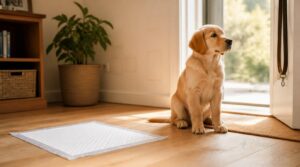
If your puppy has pads scattered all over the house, it’s time to simplify things. One pad, one spot, is the goal here, and getting there takes a few simple moves. Let’s walk through exactly how to set that up.
Start by picking a spot along your puppy’s natural path and clearing away distractions, then follow this step-by-step guide to teaching your puppy to use training pads to make the habit stick.
Remove Extra Pad Locations
Let’s start by clearing out the clutter. If pads are scattered across three rooms, your puppy’s getting mixed signals about where potty time happens.
To consolidate:
- Pick one primary pad spot
- Remove others gradually over 7-14 days
- Track daily accidents
- Note times and locations
Watch closely—rising accidents mean you’re moving too fast. Slow down!
Choose Exit-door Room
Once you’ve got one pad, put it in the room closest to your exit door. Doorway visibility matters here—your puppy needs a clear, straight sightline with no path obstructions blocking the way.
Good lighting helps too. Dim corners confuse puppies during those urgent moments. This simple room choice sets up your whole potty training routine for success as you move your dog toward going outside.
Keep The Area Consistent
Once that pad’s in place, don’t fuss with it. Keep the same surface texture, same corner alignment, same spot on the floor, day after day. Skip new rugs or toys nearby, and keep lighting steady.
Consistency builds a scent-and-sight map your puppy trusts, which is exactly what your potty training routine needs to click.
Avoid Sudden Location Changes
Here’s the thing: puppies don’t do well with surprises. Once your pad’s settled, resist the urge to nudge it "just a little" for cleaning or convenience.
Incremental movement works because it prevents confusion. Sudden shifts cause accidents, backslide behavior, and shaky momentum. If setbacks happen, revert to the last spot for a few days before trying again. Small, steady steps keep your potty training methods working toward that outdoor goal.
Move The Pad Toward The Door
Once your puppy’s nailed that one pad spot, it’s time to start inching things toward the door. This part takes patience, but small moves make a big difference. Here’s exactly how to shift that pad without throwing your pup for a loop.
Shift One to Two Feet
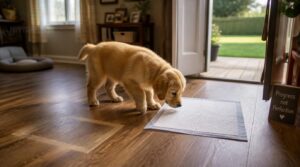
Small steps win the race here. Shift the pad just 1 to 2 feet at a time toward the door, no farther.
- Builds confidence
- Prevents confusion
- Keeps accidents low
- Strengthens doorway association
- Tracks real progress
If your pup hesitates, don’t force it. Small shifts mean steady progress, not a rushed sprint toward the door.
Move Every Few Days
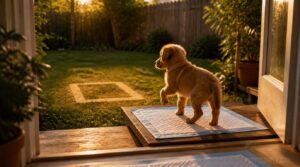
Patience beats speed every time in puppy potty training. Give each incremental distance shift two to three days before moving again, and let your pup prove it’s ready.
| Days Waited | Puppy’s Response | Your Next Move |
|---|---|---|
| 2-3 | Confident, no accidents | Shift the pad again |
| 4-5 | Some hesitation | Hold steady, don’t rush |
| 6+ | Accidents rising | Slow your movement pace |
Watch for Confusion
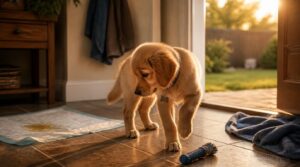
Ever notice your puppy staring back and forth between the door and the old pad spot? That’s hesitation you shouldn’t ignore.
Sniffing the floor, circling, or wandering back to the old location all signal confusion, not defiance. Your pup’s brain is working through sensory mismatch—new textures, new smells. Stay patient here. Calm repetition rebuilds confidence faster than rushing ever will.
Pause if Accidents Increase
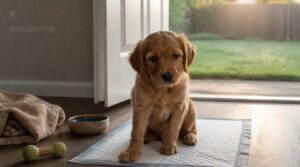
A sudden spike in accidents isn’t failure, it’s feedback. It usually means you moved too fast, so resetting the training routine helps.
Try this:
- Pause moves for 24-48 hours
- Double down on the current cue and spot
- Watch for meal or play patterns
This short reset helps with managing change-related stress without losing progress toward going outside.
Build a Reliable Potty Schedule
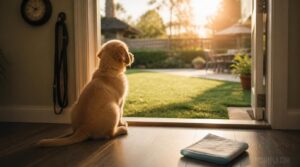
Moving the pad closer to the door is only half the battle. Timing matters just as much, because a predictable schedule takes the guesswork out of potty breaks. Here are the key moments in your puppy’s day when you’ll want to head outside.
After Waking Up
Your puppy’s bladder is full and their body’s just shaking off sleep, so this trip outside can’t wait. Head straight for the door, no detours! This is also prime time for natural light exposure, which kickstarts their internal clock. Grab your own water while you’re at it, and let this become the anchor of your daily potty routine.
After Meals
Food hits your puppy’s stomach and things start moving fast—acid production kicks in within minutes, waking up their whole digestive system. That’s your cue. Give it 15-20 minutes for early digestion to settle, then head straight outside.
Building this into your potty routine now means fewer surprises later, and it keeps your new dog plan running like clockwork.
After Playtime
After a good romp, your puppy’s all wound up—that arousal needs to settle before a successful potty break happens.
- Offer water, then wait 10-15 minutes
- Try calm cuddles, not more running
- Watch for sniffing or circling
- Head to the same quiet spot
- Crate them if you can’t supervise
Skipping this cooldown period invites accidents. Keep the routine consistent, and outdoor success becomes automatic.
Before Bedtime
Last call of the night, and it’s non-negotiable. Take your puppy out right before crate time, using the same route every night so the spot feels familiar and sleep-ready.
Give calm, brief praise—save the excitement for daytime. This final potty break, paired with your wind down routine, dims arousal and helps melatonin doing its job.
Every One to Two Hours
Between those big four moments, don’t just wait around. Set a timer for every one to two hours, especially with young pups whose bladder capacity is still tiny.
If you’re mid-play and things get rowdy, pause and go out anyway—accidents love to strike during fun. Adjust timing as your puppy ages; bladder control improves fast.
Choose The Outdoor Potty Spot
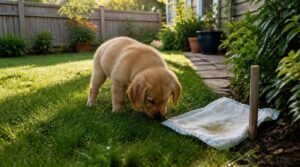
Before you move that pad outside for good, you need to pick the right spot for it to land. Not just any patch of grass will do, either! Here’s exactly what to look for when scouting your puppy’s new bathroom.
Quiet, Low-distraction Area
Picture your puppy trying to potty while a leaf blower roars next door—not happening. Pick a calm corner of the yard, away from traffic noise, barking neighbors, or slamming doors. Skip areas near loud AC units too.
A quiet, predictable spot keeps your pup relaxed enough to actually focus and finish, instead of getting distracted mid-squat and wandering off confused.
Safe Grass or Surface
Not all ground is created equal! Natural grass cushions little paws far better than concrete or pavers, cutting down impact forces during each squat-and-go.
Consider these features when scouting your spot:
- Even, well-drained soil (no muddy puddles)
- Medium-length grass for better traction
- No slick or icy patches
- Soft enough to feel familiar after pad training
- Free of sharp debris or rocks
Easy Daily Access
Rain, sleet, or 6 AM grogginess, your spot needs to work every single time. Pick a door you’ll actually use for quick outdoor potty breaks, not some far-off gate you’ll dread.
A short, unobstructed path keeps your consistent potty schedule realistic. If it takes forever to reach, you’ll skip trips, and that undoes all your pad training progress fast.
Away From Toxic Plants
Before your puppy sniffs out their new bathroom, walk the area like a detective checking for trouble. Foxglove and hemlock hide in outdoor spaces and cause real harm if chewed.
Identifying toxic species matters here. Quick checklist:
- Scan for wild plants nearby
- Remove questionable greenery
- Create physical barriers around remaining risks
Watch for recognizing poison symptoms—drooling or vomiting means calling your vet, fast.
Take The Pad Outside Gradually
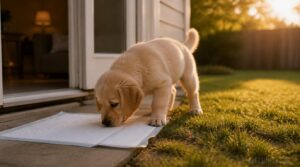
Once your puppy’s a doorway pro, it’s time to keep that momentum going outside. This part takes patience, but small moves make a big difference here. Here’s how to shift that pad step by step without throwing your pup off track.
Place Pad by Doorway
The doorway is your launchpad. Use a 24×36 pad with non-slip matting so it stays put, plus a water resistant cover for easy cleanup.
| Feature | Why It Matters |
|---|---|
| Non-slip backing | Prevents sliding |
| Consistent lighting | Reduces confusion |
| Clear pathway | Stops trip hazards |
Keep the path obstacle free—this doorway routine bridges puppy pads and outdoor potty success!
Move Pad to Porch
Ready to graduate from doorway to porch? Wait until your puppy nails the doorway pad for two solid days before making the jump.
- Pick a shaded, level spot
- Add a slip prevention mat
- Watch weather impact closely
- Keep sessions short (10–15 min)
- Match your indoor schedule
If it’s pouring rain, shorten the outdoor exposure and try again tomorrow—no big deal!
Shift Toward Potty Spot
Now for the real move: porch to potty spot. Track the distance in small chunks—about 20 feet every few days, not one giant leap.
Grass feels different than concrete, so expect a little hesitation during that surface texture shift. If confusion pops up, slow down. A potty attractant spray on the new spot can speed things along nicely! Just as with children, recognizing specific readiness indicators can help make sure the shift is successful.
Keep One Backup Pad
Here’s your safety net: keep one backup pad near the original spot while you finish guiding your dog through this whole process. Match texture and material exactly—surface confusion causes accidents fast.
- Same material consistency
- Fresh (swap worn pads)
- Same general spot
Enzymatic cleaner preserves odor markers, so the puppy pads still smell "right" if things go sideways.
Reward Outdoor Potty Immediately
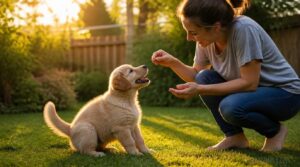
Once your puppy goes outside, the next ten seconds matter more than anything else you’ll do all day. Timing is everything here, and a little sloppiness can undo weeks of progress. Here’s exactly how to make that moment count.
Use High-value Treats
Grab something your pup goes nuts for—real meat or organ-based treats work best here. Think great treat textures like soft jerky bites, small enough to swallow fast so training momentum doesn’t stall.
Stick to caloric intake limits (10% of daily calories) and run quick ingredient safety checks for allergens. Rotate flavors to prevent satiation, keeping this reward-based training tool exciting during high-distraction outdoor sessions.
Praise Right Away
The second your pup finishes outside, praise them—within one second, not five. That split-second timing is what makes positive reinforcement click. Use a short, upbeat phrase every time, lean in with warm body language, and pair it with a treat. Waiting too long just breeds confusion about what earned the reward.
Add a Potty Cue
Once your pup’s outside and moving, add a cue word—"potty" or "go pee" works great. Say it right as they start sniffing in circles, not before. That timing teaches the cue-to-action link fast.
Stick to one word, always. Mixing cues just confuses them. Pair it with the treat every single time, and soon that word alone triggers the desired behavior—no more waiting around!
Keep Sessions Leashed
Clip that leash on before you head out—every single time, no exceptions. It keeps your puppy’s focus on you, not the neighbor’s cat or last week’s pad spot.
Why it works:
- Prevents wandering
- Blocks distractions
- Keeps sessions short (3-5 min)
- Builds recall
- Reinforces routine
Use a well-fitted body gear, log each trip, and stick to your schedule!
Avoid Rewarding Indoor Pads
Here’s the tricky part: if your puppy still gets a "good job!" for using an indoor pad, you’re sending mixed signals. That undercuts everything you’re teaching outside.
Skip the praise for pad use entirely. Save every treat, every happy voice, for outdoor wins only—this speeds up cutting back on puppy pad dependency and stops reinforcing undesirable habits before they stick.
Watch Your Puppy Closely Indoors
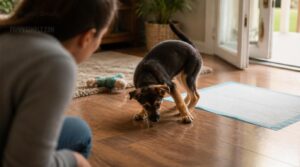
Your puppy can’t tell you in words when nature’s calling, so you’ve got to read the body language instead. This means keeping your eyes on them during those unsupervised moments indoors, not just hoping for the best. Here’s exactly what to watch for, and what to do about it.
Sniffing The Floor
Nose to the floor usually means your puppy’s chasing an old scent trail—maybe from a previous accident, maybe just curiosity. Their nose has millions of scent receptors, so this is normal odor-driven exploration.
But if the sniffing turns into intense, focused circling near a spot with lingering odor, that’s your cue: get outside, fast, before scent-driven habit turns into another indoor accident.
Pacing or Circling
Ever notice your puppy walking the same little loop like they’re wearing a groove in your floor? That’s pacing, and it’s worth watching closely during potty training.
It often means restlessness, boredom, or a full bladder demanding attention.
Recognizing pacing patterns early helps you catch accidents before they happen—get outside fast, and rule out anxiety or health issues if it seems excessive!
Returning to Old Spots
Old habits die hard, and old spots die harder. Even after you’ve pulled up the pads, your puppy’s nose remembers exactly where they used to go.
That’s residual scent doing its work, pulling them back for a sniff-and-squat. Redirect immediately, don’t scold, then clean thoroughly with enzymatic cleaner so the invitation disappears for good.
Use Crate When Unsupervised
You can’t watch your puppy every second, and that’s exactly when the crate earns its keep. Think of it as a safe den, not a punishment box—correctly sized so they can stand, turn, and lie down comfortably.
Add a cozy bed and chew toy to prevent boredom. Keep it in a common area, and don’t exceed their age in months plus one hour of confinement.
Block Former Pad Areas
That crate keeps them safe, but old pad spots still tempt them the moment they’re loose. Block those areas with baby gates or furniture. Consistency matters here, keep barriers up for weeks, not days.
Clean any lingering marks with enzymatic cleaner—regular soap won’t cut it for eliminating indoor odors. Check barriers often; gaps invite regression, and you’ll be back where you started.
Handle Accidents The Right Way
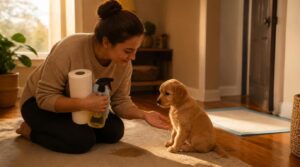
Accidents will happen, even when you’re doing everything right. How you react in that moment matters way more than the accident itself. Here’s exactly what to do, step by step.
Do Not Punish Accidents
Found a puddle by the couch? Take a breath before you react. Yelling or rubbing your puppy’s nose in it doesn’t teach anything—it just teaches fear. Redirection over punishment builds real trust and keeps learning stress-free.
Yelling or rubbing a puppy’s nose in an accident teaches only fear, never the lesson you intended
Your puppy isn’t defying you. It’s a bladder-control issue, not a moral one. Calmly interrupt if you catch the act, then head outside together. That’s how real progress happens.
Clean With Enzymatic Cleaner
Once you’ve handled the mess, grab an enzymatic cleaner, not bleach or an all-purpose spray. Regular cleaners mask odor; enzymes actually break down the proteins in urine, removing the scent markers that pull puppies back to the same spot.
They’re safe on carpet, tile, and most flooring. Let it sit, then blot dry. Store it capped, away from heat, so it stays effective.
Interrupt Calmly if Caught
Catch your puppy mid-squat and freeze first—no yelling, no lunging. Keep your neutral body language, hands loose, voice flat. A simple "ah-ah!" works better than a scolding tone, which just teaches fear, not where to go.
This calm pause matters. Punishing accidents backfires, making your pup hide from you instead of learning. Stay steady, then move fast toward the door.
Go Outside Immediately
Once that "ah-ah!" leaves your mouth, move—don’t walk, don’t chat, just go. Grab the leash if it’s handy, but don’t waste seconds hunting for it.
Speed matters more than flawlessness here. Your goal is simple:
- Scoop the pup up if mid-accident
- Head straight for the door
- Get outside before urgency fades
Timing is everything in potty training. Miss the window, and you’ve missed the lesson.
Supervise After Failed Trips
Twenty minutes outside with nothing happening? Don’t sigh and give up—head back in for a 10 to 15 minute crate break, then try again. Keep eyes on your pup every second after; visual contact catches sniffing or circling before accidents happen.
| Sign | Meaning | Action |
|---|---|---|
| Sniffing | Needs to go | Outside now |
| Pacing | Getting urgent | Grab leash |
| Circling | Almost too late | Move fast |
Teach a Door Potty Signal
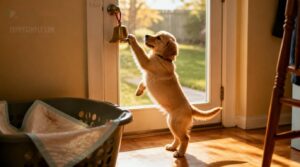
Wouldn’t it be great if your puppy could just tell you when they need to go? Good news—you can actually teach them to do that! Here’s how to set up a simple potty signal your pup will pick up in no time.
Try Potty Bells
Potty bells give your pup a way to actually "ask" to go out, instead of you playing guessing games at the door.
Set them at chest height so no jumping’s needed. Hang tight for 1-2 weeks of daily practice, expect:
- Nose or paw touches
- Occasional bell-for-play attempts
- Slow, steady progress
Stay consistent, every caregiver responds the same way, every time.
Ring Before Each Trip
Once your pup rings that bell (still at chest height, no jumping required), don’t dawdle—head straight outside every single time. This cue timing consistency is what cements the habit.
Keep the routine identical during travel or visits, same bell, same response, so distractions don’t undo your progress. Skipping trips, even once, teaches your puppy the bell doesn’t really matter.
Reward Signal Use
That bell isn’t just noise—it’s a trigger that deserves a real payoff. The second your puppy rings and heads out, follow with high-value treats and genuine praise, paired with your cue word. Vary the reward occasionally to keep motivation sharp.
Track what works, since consistent cue-reward pairing builds the fastest, most reliable habit.
Keep The Cue Simple
One word wins every time. Pick a single cue word—like "outside" or "go potty"—and stick with it. Don’t layer in extra phrases; that’s verbal overload waiting to happen.
Say it the same way, same tone, every trip. Consistent intonation and timing turn your potty cue into a rock-solid signal your puppy trusts, even with the TV blaring or guests around.
Remove Pads Completely
This is the finish line, but don’t rush it! Pulling the pad too soon can undo weeks of hard work, so timing really matters here. Let’s walk through exactly how to know your puppy’s ready and what to do next.
Wait Three to Seven Days
Seven days can feel like forever when you’re staring at a puppy who might have this down. That’s your wait window before pulling pads completely.
- Track daily success
- Watch for accident spikes
- Keep supervision high
- Extend if confusion shows
- Never revert to multiple pads
If accidents climb, stretch toward day seven. Consistency now prevents regression later.
Reduce Outdoor Pad Size
Once the full week passes accident-free, start shrinking that outdoor pad little by little. Pick one shrinking anchor point—a corner—and fold inward from there.
| Week | Pad Size | Watch For |
|---|---|---|
| 1 | Full | Comfort |
| 2 | Half | Hesitation |
| 3 | Quarter | Accidents |
Keep a backup pad handy. Slow down if accidents climb.
Expect Two to Six Weeks
Here’s the part nobody wants to hear: this whole housebreaking journey usually takes two to six weeks, not two days. Breed size, consistency, and how patiently you stick to the schedule all play a role.
- Small breeds often need more time (tiny bladders!)
- Track progress daily—patterns matter
- Setbacks happen; don’t panic
- Stay patient, stay consistent
Stay Consistent Daily
Here’s the secret: consistency beats intensity every time. A predictable potty routine, fixed meal times, and a quick morning reset do more than any single "perfect" session ever could.
| Do Daily | Why It Matters |
|---|---|
| Same wake time | Builds rhythm |
| Track wins visually | Shows progress |
| Reflect each night | Reveals patterns |
| Stick to schedule | Speeds housebreaking |
| Celebrate small wins | Keeps momentum |
Adjust for Your Puppy
Why should your Chihuahua and your Labrador follow the exact same timeline? They shouldn’t. Breed size differences affect bladder control, and puppy energy levels shape focus outdoors.
- Toy breeds may need more weeks
- High-energy pups get distracted easily
- Sensitive temperaments need gentler cues
- Younger puppies require tighter schedules
Watch your individual dog. Adjust your consistent potty schedule based on what you’re actually seeing, not the calendar.
Frequently Asked Questions (FAQs)
At what age should a puppy stop using pee pads?
Picture an hourglass with tiny grains of sand, that’s your puppy’s bladder control filling up week by week.
Most pups ditch puppy pads around 8-10 weeks, using the monthly hold-time rule—roughly one hour per month, though breed size shifts that timeline plenty.
What is the 10-10-10 rule for puppies?
The 10-10-10 rule cycles 10 minutes of play, 10 minutes of training, and 10 minutes of rest—repeated daily. This rhythm helps memory consolidation, prevents overstimulation, and naturally aligns potty breaks with each activity block for steady progress.
How to transition away from puppy pads?
Move the pad closer to the door every few days, then outside, then shrink it. Bladder capacity, distractions, and texture sensitivity all affect pace—so watch for regression and adjust your outdoor potty training schedule accordingly, using attractant sprays to help.
What if my puppy regresses after weeks of progress?
Don’t panic—regression usually means routine change, teething, or stress, not failure. Rule out medical vs training issues first, then tighten your potty schedule, boost supervision, and avoid punishing accidents to get back on track fast.
Should apartment dogs skip outdoor transition entirely?
Not really—skipping it risks indoor reliance and higher urban stress later. Outdoor time builds mental stimulation, socialization chances, and long-term adaptability.
Even apartment pups benefit from a gradual, supervised outdoor potty routine instead of staying pad-dependent forever.
How do multiple puppies affect the transition process?
Pack hierarchy shapes everything—dominant pups claim favorite spots, so collective potty patterns emerge fast.
You’ll need shared supervision, consistent commands across the litter, and reward-based praise for each pup individually to avoid confusion, jealousy, or accidents during the adjustment period.
Conclusion
Think of your puppy’s pad like training wheels on a bike. They build confidence, but eventually they hold her back from riding free. Learning how to move your puppy from pads to outside is simply removing those wheels one turn at a time. Some wobbles happen. That’s normal!
With consistent routine and quick rewards, grass stops feeling foreign and starts feeling like home. Stick with it, and soon she’ll head straight for the yard, wheels gone, riding solo, no looking back.