
This site is supported by our readers. We may earn a commission, at no cost to you, if you purchase through links.
Off-leash freedom is earned, not assumed—and the margin for error is smaller than most dog owners expect. A 2023 study found that 1 in 3 lost dogs never makes it home, with the highest risk occurring during off-leash exercise in unfamiliar terrain.
Dog GPS trackers for off leash training have changed that equation a great deal. Modern devices now update location every 10–15 seconds, hold a signal through dense forest canopy using dual-feed antennas, and send escape alerts before your dog clears the property line.
The nine trackers reviewed here span every training scenario—from suburban recall work to multi-dog hunting runs covering 9 miles of backcountry.
Table Of Contents
- Key Takeaways
- Best Dog GPS Trackers Compared
- 1. Fi Series 3 Smart Dog Tracker Collar
- 2. Tractive Smart Dog Tracker
- 3. Aorkuler GPS Dog Tracker
- 4. Mini portable pet gps tracker
- 5. Tractive XL Smart Dog GPS Tracker
- 6. Dogtra Pathfinder 2 GPS Collar
- 7. Fi New Series 3 Smart Dog Tracker
- 8. Aorkuler Outdoor GPS Dog Tracker
- 9. Garmin Alpha Dog Tracking Bundle
- Choosing The Right GPS Tracker
- GPS Coverage and Accuracy
- Off-Leash Training Features
- Virtual Fences and Escape Alerts
- Battery Life and Charging
- Durability for Outdoor Dogs
- Health and Activity Tracking
- Safety and Legal Considerations
- Best Tracker by Dog Owner
- Frequently Asked Questions (FAQs)
- Conclusion
Key Takeaways
- Modern GPS trackers update location every 2–15 seconds and use cellular, satellite, or RF technology, so matching the right system to your terrain—not just your budget—determines whether you can actually trust it when your dog bolts.
- Subscription costs of $5–$15 per month add up to $120–$360 over two years, making no-subscription RF trackers like the Aorkuler a genuinely smarter long-term investment for off-grid and rural owners.
- E-collars are banned in Germany under the Animal Welfare Act, so if you’re training there, non-aversive recall methods and tone or vibration cues aren’t optional—they’re the only legal path forward.
- The best tracker for your dog isn’t the most feature-rich one—it’s the one that matches your dog’s size, your typical terrain, and your training goals, whether that’s a 9-mile hunting run or suburban recall work.
Best Dog GPS Trackers Compared
Finding the right GPS tracker can genuinely change how confident you feel letting your dog run off-leash. Each option below is chosen for a specific reason — whether that’s off-grid range, health monitoring, or no monthly fees. Here’s a look at nine trackers worth your attention in 2026.
If you’re still weighing your options, this guide to the best dog GPS trackers breaks down exactly what to look for based on your dog’s size, habits, and how much you want to spend.
1. Fi Series 3 Smart Dog Tracker Collar
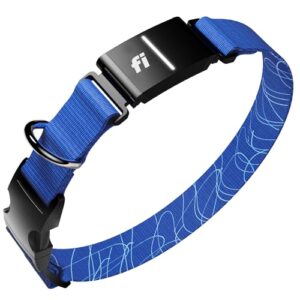
The Fi Series 3 delivers real-time location updates every 10–15 seconds in Lost Dog Mode — fast enough to stay ahead of a dog mid-sprint. It pairs GPS with LTE cellular connectivity, so you’re not dependent on Wi-Fi or a base station.
Battery life stretches four to five weeks under normal use, and the lightweight polycarbonate housing fits XS through XL builds comfortably. Custom Safe Zones trigger instant escape alerts the moment your dog crosses the line.
| Best For | Dog owners who want reliable, real-time GPS tracking and health monitoring for active or escape-prone pets. |
|---|---|
| Tracking Type | GPS (cellular) |
| Subscription Required | Yes |
| Tracking Range | Nationwide |
| App Compatibility | iOS & Android |
| Battery Life | Not specified |
| Device Weight | 77g |
| Additional Features |
|
- Next-gen GPS with real-time nationwide tracking and instant escape alerts via custom virtual fences
- AI-powered health and behavior monitoring, plus Apple Watch integration for on-the-go updates
- Built-in smart vet records storage keeps medical history, vaccine docs, and insurance receipts in one place
- Proprietary collar design means you’ll need to buy a full replacement set if the sizing is off
- GPS updates can lag or lose accuracy in certain environments, like dense woods or rural dead zones
- Initial setup can be tricky — Wi-Fi connection issues and collar assembly hiccups are commonly reported
2. Tractive Smart Dog Tracker

The Fi Series 3 is a strong cellular tracker — but if unlimited global range matters to you, Tractive’s Smart Dog Tracker closes that gap fast.
Weighing just 1.3 oz, it won’t slow your dog down on long hikes. Real-time GPS refreshes every 2–3 seconds, custom geofences trigger instant escape alerts, and heart rate monitoring helps catch health shifts early. The IP67 waterproof rating experiences rain and mud without complaint. Battery life runs up to 14 days per charge.
| Best For | Owners who want comprehensive health monitoring alongside real-time GPS tracking, especially those with senior dogs or pets that roam off-leash in varied terrain. |
|---|---|
| Tracking Type | GPS (cellular) |
| Subscription Required | Yes |
| Tracking Range | Global |
| App Compatibility | iOS & Android |
| Battery Life | Up to 14 days |
| Device Weight | 1.3 oz (37g) |
| Additional Features |
|
- Real-time GPS updates every 2–3 seconds with unlimited global range, so your dog is never out of reach no matter where they wander
- Built-in heart rate and respiratory monitoring gives early warning of health changes — a genuine edge for senior or medically sensitive dogs
- Lightweight at just 1.3 oz with a 14-day battery life and IP67 waterproofing, so it holds up on any adventure without adding bulk
- Full GPS functionality requires an ongoing subscription, and there’s no free trial — you’ll need to enter a credit card just to activate the device
- Geofence breach alerts can lag by several minutes, which isn’t ideal when every second counts during an escape
- Signal dropouts have been reported in dense urban areas and heavy forest cover, the exact places you’d most want reliable tracking
3. Aorkuler GPS Dog Tracker

Tractive wins on range — but sometimes you don’t want a subscription, a phone, or a cloud server knowing where your dog is. That’s where the Aorkuler takes a different lane entirely.
This subscription-free tracker pairs a lightweight 1.08 oz collar unit with a dedicated handheld controller, delivering real-time direction and distance updates every 3 seconds across up to 3.5 miles — no cellular signal required. For remote hikers and hunters working deep off-grid, that independence is hard to argue with.
| Best For | Hikers, hunters, and rural property owners who need reliable off-grid dog tracking without monthly fees or cellular coverage. |
|---|---|
| Tracking Type | GPS (offline standalone) |
| Subscription Required | No |
| Tracking Range | Up to 3.5 miles |
| App Compatibility | None (standalone controller) |
| Battery Life | Up to 24 hours |
| Device Weight | 1.08 oz (30g) |
| Additional Features |
|
- Completely subscription-free and offline — no phone, network, or cloud required
- Impressive 3.5-mile range with real-time direction updates every 3 seconds
- Lightweight and waterproof with a 24-hour battery life built for full days outdoors
- GPS accuracy drops in dense forest, buildings, or anywhere with a limited sky view
- Requires a separate handheld controller instead of using your existing smartphone
- Some users find the attachment strap tricky to remove and the LCD hard to read with polarized sunglasses
4. Mini portable pet gps tracker

Not every trail dog needs a full-featured collar system. If your priority is a lightweight, no-subscription backup, a mini Bluetooth tracker covers the basics — real-time location via free app, a built-in sound alarm for close-range locating, and a compact form factor that clips onto most standard collars. Units weigh as little as 2.5 grams.
The catch: Bluetooth-only range caps usefulness in open wilderness, and some Android users report pairing and sync issues worth knowing before you buy.
| Best For | Budget-conscious pet owners who want a simple, no-subscription backup tracker for dogs or cats in everyday settings rather than remote wilderness. |
|---|---|
| Tracking Type | Bluetooth |
| Subscription Required | No |
| Tracking Range | Bluetooth range |
| App Compatibility | Android only |
| Battery Life | Not specified |
| Device Weight | Not specified |
| Additional Features |
|
- No subscription or monthly fees — just buy it and use it
- Built-in sound alarm makes it easy to find a nearby pet by ear
- Lightweight and portable enough to clip onto a collar, backpack, or luggage
- Bluetooth-only range makes it unreliable for open trails or large outdoor areas
- Some Android users run into pairing problems and app sync bugs
- May be too bulky for smaller cats or tiny dog breeds
5. Tractive XL Smart Dog GPS Tracker
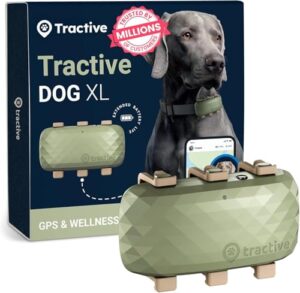
If your dog clears 50 pounds and spends real time outdoors, the Tractive XL is built for that workload. It tracks via GPS, GLONASS, and Galileo simultaneously, delivers live location updates worldwide, and monitors key health signs — heart rate, respiratory rate, sleep, and activity — in one 3.17-ounce unit.
The IP68 waterproof rating holds up across rain, mud, and stream crossings. Battery life stretches roughly four weeks in power-saving mode, and customizable geofences push instant escape alerts to both iOS and Android.
| Best For | Owners of large dogs (50 lbs+) who spend a lot of time outdoors and need reliable real-time location tracking along with health monitoring. |
|---|---|
| Tracking Type | GPS (cellular) |
| Subscription Required | Yes |
| Tracking Range | Nationwide |
| App Compatibility | Android |
| Battery Life | Up to 1 month |
| Device Weight | 3.17 oz |
| Additional Features |
|
- Real-time GPS updates every 2–3 seconds with worldwide coverage, plus customizable geofences that send instant escape alerts
- Tracks vital health data including heart rate, respiratory rate, sleep, and activity levels — all in one device
- Up to one month of battery life keeps monitoring going without constant recharging
- Requires an ongoing monthly or annual subscription for cellular data, adding to the long-term cost
- The silicone attachment band can break under the wear and tear of an active dog
- Bulky and heavy at 3.17 ounces, and not designed for dogs under 50 lbs
6. Dogtra Pathfinder 2 GPS Collar
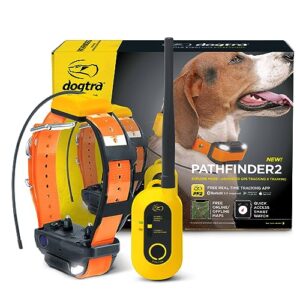
Serious off-leash trainers will appreciate what the Dogtra Pathfinder 2 brings to the field. It tracks up to 21 dogs simultaneously, updates location every 2 seconds, and reaches out to 9 miles — no cellular service, no monthly subscription required.
The integrated e-collar delivers nick, continuous, tone, and vibration corrections directly from your smartphone, Apple Watch, or Galaxy Watch. Offline Mapbox maps keep you oriented when signal drops. At $365.49, it’s purpose-built for hunters and serious trainers who need reliable GPS and training control in one rugged, waterproof system.
| Best For | Hunters, off-leash trainers, and multi-dog handlers who need long-range GPS tracking and e-collar control without relying on cellular service or subscriptions. |
|---|---|
| Tracking Type | GPS (radio standalone) |
| Subscription Required | No |
| Tracking Range | Up to 9 miles |
| App Compatibility | iOS & Android |
| Battery Life | Several days |
| Device Weight | Not specified |
| Additional Features |
|
- Tracks up to 21 dogs with 2-second location updates across a 9-mile range — impressive coverage for serious field work
- Smartwatch compatibility lets you send e-collar commands hands-free, keeping your focus on the hunt or training session
- Offline Mapbox maps (satellite, terrain, general) mean you stay oriented even in dead zones with no signal
- E-collar activation is entirely app-based, so there’s no physical stimulation dial — response time depends on your device
- Battery life with heavy use requires frequent recharging, which can be inconvenient on multi-day outings
- Geofencing has size and shape restrictions, making it less practical for small or oddly shaped containment areas
7. Fi New Series 3 Smart Dog Tracker
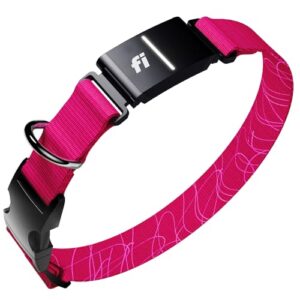
The Fi New Series 3 packs a surprising amount of capability into 77 grams. AI-powered behavior monitoring tracks barking, scratching, and sleep patterns — not just steps — giving you a fuller picture of your dog’s daily routine.
Escape alerts and custom geofences trigger instantly when boundaries are crossed, and Lost Dog Mode switches to continuous live tracking over LTE. The built-in LED improves nighttime visibility.
It’s best suited for urban and suburban owners; rural coverage depends entirely on cellular signal strength.
| Best For | Dog owners in urban or suburban areas who want comprehensive GPS tracking, health monitoring, and instant escape alerts for their pet. |
|---|---|
| Tracking Type | GPS (cellular) |
| Subscription Required | Yes |
| Tracking Range | Nationwide |
| App Compatibility | iOS & Android |
| Battery Life | Not specified |
| Device Weight | 77g |
| Additional Features |
|
- AI-powered monitoring goes beyond step counting to track barking, sleep, and behavior patterns for a fuller picture of your dog’s wellness
- Instant geofence alerts and Lost Dog Mode with continuous LTE tracking give real peace of mind for owners of escape-prone dogs
- Built-in LED light and Apple Watch integration add everyday convenience for nighttime walks and on-the-go location checks
- GPS accuracy can drop significantly in rural areas or anywhere with weak cellular coverage, with location errors potentially reaching several hundred feet
- Only works in the United States, so it’s not an option for owners who travel internationally with their pets
- Collar fit may be too narrow for large breeds, and Bluetooth must stay enabled on your phone for the best experience
8. Aorkuler Outdoor GPS Dog Tracker

No cell signal? No problem. The Aorkuler Outdoor GPS Dog Tracker was built for exactly that scenario — tracking your dog across up to 3.5 miles of open terrain using GPS satellites and a direct radio link, with no app, no subscription, and no data plan required.
If you’re serious about off-leash adventures, pairing this tracker with a durable training collar for off-leash hiking and camping means you’re covered from control to location — even in the most remote terrain.
The handheld controller displays real-time distance and direction every few seconds, updating as your dog moves. At 1.08 oz, the tracker sits comfortably on most collars without restricting movement during long trail sessions.
| Best For | Hikers, campers, and pet owners with large rural properties who need reliable off-grid dog tracking without relying on cell service or paying monthly fees. |
|---|---|
| Tracking Type | GPS (offline standalone) |
| Subscription Required | No |
| Tracking Range | Up to 3.5 miles |
| App Compatibility | None (standalone controller) |
| Battery Life | Up to 24 hours |
| Device Weight | 1.08 oz |
| Additional Features |
|
- Works completely off-grid — no Wi-Fi, cellular, or subscription needed, making it ideal for remote wilderness and areas with zero signal
- Lightweight at 1.08 oz with real-time updates every 3 seconds, so you always know where your dog is headed without slowing them down
- Simple handheld controller with directional arrows means anyone can use it, no tech skills required
- Accuracy can drop near large structures like barns or buildings, which may be frustrating on farm properties
- Not built for chewers or collar-yankers — the device may not hold up well against rough handling
- Battery life varies by use, and the 24-hour max means multi-day backcountry trips will require recharging
9. Garmin Alpha Dog Tracking Bundle
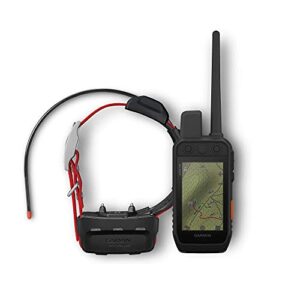
The Garmin Alpha Dog Tracking Bundle is the closest thing to a field command center you can strap to your wrist. The 3.5-inch touchscreen displays real-time dog locations across up to 9 miles, with a 2.5-second update rate pulling from both GPS and Galileo satellites.
Track up to 20 dogs simultaneously, apply 18 levels of stimulation per dog, and draw custom geofence boundaries — all from one device. The integrated inReach satellite messaging means you’re never truly off-grid.
| Best For | Serious hunting dog handlers and field trainers who need real-time tracking, remote communication, and behavior management across large, off-grid terrain. |
|---|---|
| Tracking Type | GPS + Galileo satellite |
| Subscription Required | Yes |
| Tracking Range | Up to 9 miles |
| App Compatibility | iOS & Android |
| Battery Life | Up to 20 hours |
| Device Weight | Not specified |
| Additional Features |
|
- Tracks up to 20 dogs at once with a fast 2.5-second update rate using both GPS and Galileo satellites
- Built-in inReach satellite messaging keeps you connected and safe even in areas with zero cell service
- Geofencing, stimulation, vibration, and tone controls give you a full training toolkit in one device
- Satellite and messaging features require an active paid subscription to use
- Battery life drops noticeably — from 20 hours down to 15 — when inReach is enabled
- The system has a learning curve, especially around map setup, which may feel overwhelming for new users
Choosing The Right GPS Tracker

No two dogs — or owners — need exactly the same thing from a GPS tracker. The right choice comes down to five key factors that shape how well any device actually fits your life. Here’s what to keep in mind before you commit.
Training Goals
Before picking a tracker, define what success actually looks like. Measurable recall benchmarks—like returning within 2 seconds, 9 of 10 times outdoors—give your off-leash training a real target.
Build your goals around five pillars:
- Environmental distraction scaling: advance from quiet yards to busy parks
- Impulse control milestones: timed stays under high-value temptations
- Reward ratio planning: 3:1 rewards to corrections during recall training
- Progressive skill documentation: log dates, environments, and success rates
- Distance benchmarks: reliable recall up to 30 meters off-leash
Consistent professional development opportunities can help owners master these complex training techniques.
Dog Size
Your dog’s weight shapes every hardware decision. Small dogs under 22 pounds need slim, lightweight collars with compact antennas; bulkier units cause chafing and shift uncomfortably during movement.
Large breed dogs exceeding 55 pounds demand reinforced housings and higher-capacity batteries — expect 24–48 hours of active tracking between charges. Giant breeds above 100 pounds benefit from high-gain antennas, since dense musculature can quietly degrade signal path.
Hiking Environment
Where you hike determines which tracker actually works. Dense forest canopy, steep switchbacks, and sudden weather shifts can each cripple a cellular-only collar mid-adventure.
Match your tracker to your terrain:
- Backcountry and off-grid routes need RF or satellite coverage — no cell signal means no real-time GPS tracking.
- Wooded trails demand dual-feed antennas to punch through canopy interference.
- High-altitude ridgelines expose collars to wind, UV, and rapid temperature swings that drain batteries faster.
Budget Range
Terrain narrows your options — budget determines what’s left.
Entry-level GPS collars run $40–$70 upfront, but subscription costs of $5–$15 monthly add up fast. Mid-range smart pet collars ($80–$150) offer the best balance of features and long-term value. Over two years, total ownership often reaches $120–$360 — so factor subscriptions, replacement straps, and accessories before committing to any device.
Subscription Needs
Once you’ve locked in your budget, subscription costs deserve the same scrutiny. No-subscription GPS trackers like the Aorkuler avoid monthly fees entirely — a real advantage for cost-conscious owners.
- Basic plan: $4.99/month, 30-day history, 1 device
- Pro plan: $9.99/month, 180-day history, real-time location monitoring on up to 3 devices
- A 14-day free trial lets you test full features before committing
GPS Coverage and Accuracy
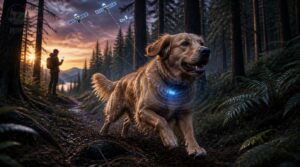
Not all GPS trackers work the same way under the hood, and that difference matters when your dog disappears into the tree line. Coverage and accuracy depend on the technology driving each device — whether that’s cellular networks, satellite signals, or radio frequency. Here’s how each method stacks up.
Cellular Tracking
Cellular-based GPS trackers work by using triangulation accuracy across nearby cell towers — trilateration from at least three towers pinpoints your dog’s real-time location through LTE-M networks.
Tower density matters: urban tracking delivers tighter coordinates than sparse rural areas. Network connectivity gaps can interrupt updates, so cellular-based GPS suits dogs in coverage-rich environments, not deep wilderness.
Satellite Tracking
Satellite positioning systems cut through coverage gaps that stump cellular trackers entirely. Dual-feed GPS antennas pull signals from multiple constellations simultaneously, compensating for Doppler shift effects that can skew real-time GPS tracking during fast movement.
Three satellite advantages worth knowing:
- Orbital signal accuracy holds steady in canyons and dense canopies
- No cell tower dependency — off-leash training stays reliable anywhere
- Hybrid satellite band frequencies extend range far beyond LTE-M limits
Radio Frequency Tracking
When cellular and satellite signals falter, radio frequency technology fills the gap.
RF trackers like the Dogtra Pathfinder 2 use signal triangulation methods — comparing strength and timing across anchors — to pinpoint your dog up to 9 miles out, no cell tower required. That makes RF the go-to for deep wilderness off-leash training where LTE-M networks simply don’t reach.
Update Frequency
How often your tracker pings matters as much as where it pings from. Real-time location updates arrive every 1–5 seconds during active movement — fast enough to redirect a dog mid-sprint.
Drop to hourly or event-driven cadences, though, and you trade precision for battery life. Most devices switch automatically during inactivity, balancing realtime GPS tracking against charge constraints on longer trips.
Signal Reliability
No tracker is bulletproof. Urban canyons create multipath interference that skews position data, while dense foliage and metal fencing degrade RF range.
Most devices handle this through automatic cellular band switching — seamlessly hopping networks mid-run. When signals drop entirely, built-in contingency alerts and queued location logging keep you informed. Satellite fallback adds a safety net in remote areas, though expect higher latency.
Off-Leash Training Features

A good GPS tracker does more than just find your dog — it helps you build the kind of reliability that makes off-leash freedom actually work.
The right training features give you multiple ways to communicate with your dog at a distance, from gentle audio cues to escalating corrections. Here’s what to look for across the five features that matter most.
Recall Support
Recall support is the backbone of safe off-leash dog training. GPS trackers for off-leash hiking dogs log recall success rates over time, letting you spot patterns and improve your approach.
- Progressive distraction training builds reliability gradually
- Humane correction methods minimize stress
- Data-driven recall highlights weak points
- Sensory alert inclusion reinforces the recall command
Your remote recall commands only work if the data backs them up.
Tone Cues
Your voice is its own training tool. Pitch variation tells your dog whether a recall command carries urgency or calm confidence — a higher pitch signals alertness, while a lower, steady tone conveys authority.
Strategic emphasis on words like come sharpens cue salience in noisy outdoor environments. Pair consistent cadence with emotional carryover after corrections, and your dog stays engaged without anxiety.
Vibration Alerts
Where tone cues rely on your voice, vibration mode hands control to the collar itself — a silent, tactile nudge your dog feels instantly, regardless of wind or distance.
Customizing patterns — short pulses for recall, longer sequences for boundary alerts — sharpens meaning without confusion:
- A quick double-pulse signals come back
- A sustained buzz marks a boundary approach
- Alternating rhythms reward goal progress
Adjusting intensity to your dog’s size keeps cueing humane and effective.
Static Correction Levels
Static correction works like an elevation shift in seismic processing — you apply the minimum effective level first, then adjust only if the signal isn’t landing.
Most e-collars offer 1–100 adjustable levels. Start at the lowest noticeable setting your dog notices, not the highest. That precision prevents overcorrection, the same way datum standardization prevents smeared reflections — small calibrations, clean results.
Humane Use Guidelines
Precision matters as much with timing as it does with intensity. Minimum effective level means starting low — always — and only adjusting if your dog doesn’t respond. Non-stimulating cues like tone or vibration should come first.
Reserve corrections for genuine safety moments, pair them with positive reinforcement, and keep handling calm to reduce stress throughout every session.
Virtual Fences and Escape Alerts
Virtual fences let you define exactly where your dog can roam without burying a single wire or setting up physical barriers. The right system gives you instant alerts the moment your dog tests those boundaries, so you’re never caught off guard.
Here’s what to look for across five key areas that separate a reliable geofence from one that leaves you guessing.
Custom Boundaries
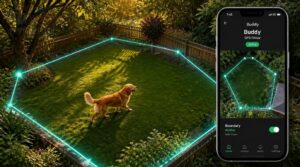
Drawing a boundary on your phone takes seconds — but the shape you choose changes everything. Polygon boundaries hug irregular yards precisely, while circle options work best for open fields.
- Set time-based restrictions to block access at dawn or dusk
- Enable terrain adaptive fencing under heavy canopy
- Use multi-zone training stages to gradually expand freedom
Boundary drift compensation keeps your virtual fence honest when GPS shifts.
Geofence Alerts
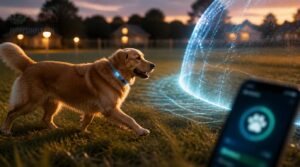
The moment your dog crosses a boundary, virtual fence alerts fire through push notification, SMS, or email — whichever fits your routine best. Exit alerts warn you when your dog leaves a designated safe zone; entry alerts flag restricted areas immediately.
| Alert Trigger | Delivery Option |
|---|---|
| Exit boundary crossed | Push notification |
| Entry into restricted zone | SMS or email |
| Multi-user household | Per-owner custom rules |
Multi-user rules mean each co-owner gets independent notification settings, keeping training partners informed without duplicate confusion during off-leash sessions.
Boundary Accuracy

Accuracy is what separates a useful virtual fence from a frustrating one. Boundary confidence scores reflect real-time satellite geometry — when those scores drop, your custom GPS fence widens its tolerance to compensate, reducing false alerts.
Multipath errors from dense buildings or tree canopy distort perceived edges. Regular calibration against reference points keeps boundary delineation sharp. Firmware updates quietly improve these algorithms, so don’t skip them.
Forest Performance

Tree canopy is the toughest stress test for any virtual fence. Canopy signal interference and dense understory navigation scatter satellite signals, stretching your boundary’s perceived edge by meters.
SpotOn’s Forest Mode counters this with enhanced satellite processing, holding fence accuracy even under heavy cover — critical for offleash training in remote wilderness where a missed alert means a lost dog.
Backup Zones
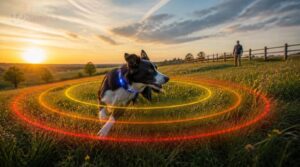
One boundary isn’t enough when your dog is determined. Backup zones create layered redundancy — a second or third perimeter triggers escalating escape alerts if the first is breached.
- Layered defense catches repeat escape attempts
- Automated failover sustains alerts during signal gaps
- Secondary boundaries extend your response window
- Encryption standards protect your geofence data
Dogtra’s 3-Fence Defense is the clearest example.
Battery Life and Charging
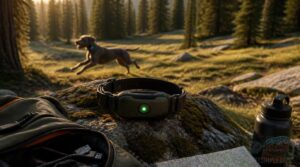
Battery life can make or break a tracking session, especially when you’re miles from the nearest outlet. The right collar keeps up with your dog’s adventures without leaving you scrambling for a charge at the worst moment. Here’s what to know before you pick yours.
Daily Tracking Time
Most GPS trackers deliver 8–24 hours of active tracking per charge, but real-world coverage depends heavily on how often the device pings for a location update. Motion-based systems automatically increase update frequency during walks and dial back during rest — preserving battery without sacrificing continuous monitoring reliability.
For off-leash training, that balance matters. A tracker running low at hour six can’t protect your dog at hour seven.
Standby Battery Life
Standby battery life tells a different story than active tracking time. When your dog’s collar sits idle between sessions, self-discharge rates and background radio activity quietly drain the reserve — even without a single GPS ping firing.
Sleep mode optimization and firmware efficiency determine how little a device draws at rest, with well-managed standby stretching to weeks or months on some models.
Cold Weather Drain
Cold snaps hit GPS dog trackers harder than most owners expect. Battery life shrinks 30–40% below freezing — a real concern for outdoor adventure gear on all-day hikes. Like winter thaw cycles quietly stressing drain joints, the cold degrades capacity without warning.
Charge fully before heading out, and trim your outing length when temperatures drop to protect your dog wearable technology.
Charging Convenience
After a cold-drain day, the last thing you want is a complicated recharge ritual. Magnetic connectors lock onto most smart collars in seconds, and wireless charging pads auto-align with the tracker housing — no fumbling in dim light. Rapid charging restores 50% capacity within 30 minutes.
- Portable power banks keep GPS trackers running mid-trail
- Vehicle adapters charge during long drives to trailheads
- Solar charging kits sustain dog wearable technology in remote kennels
Trip Length Planning
Charging speed only matters if your trip timeline accounts for it. Plan battery cycles around daylight hours — most trackers need one full recharge per 22-hour window, so factor that into rest day scheduling.
Terrain impact matters too; mountainous routes drain batteries 30–40% faster. Build in a rest day every few days to recharge both your dog and your devices.
Durability for Outdoor Dogs

Your dog’s GPS tracker is only as reliable as its ability to survive the conditions your dog actually runs in. Mud, rain, river crossings, and rough terrain put hardware to the test fast, so durability isn’t a nice-to-have — it’s the baseline. Here’s what to look for when the trail gets serious.
Waterproof Ratings
Not every splash is equal — and neither is every waterproof rating.
IP67 protects against immersion up to 1 meter for 30 minutes, while IP68 goes deeper and longer. Key distinctions worth knowing:
- IP67 experiences rain and puddles confidently
- IP68 suits creek crossings and full submersion
- Hydrostatic head testing measures pressure resistance in millimetres
- Seam integrity determines real-world durability
- Hydrophobic coatings degrade over time without maintenance
Choose IP68 for serious trail dogs.
Mud Resistance
Trail mud is relentless — and it finds every gap a collar has.
Hydrophobic polymer coatings shed thick mud within seconds, while multi-stage sealing and connector latching mechanisms prevent mud ingress at every joint. Gasket swelling risks increase with clay-heavy soils, so inspect seals after every muddy excursion. A solid waterproof construction with IP68 keeps ruggedized electronics running clean, no matter what your dog dives into.
Collar Comfort
Comfort becomes a real concern the moment a GPS collar rides a dog’s neck for eight-plus hours. Padded nylon or neoprene linings reduce skin irritation a lot, while round-edge hardware prevents rubbing during constant movement. Three details matter most:
- Two-finger neck sizing — snug but never choking
- Padding thickness — balanced for breathability, not bulk
- Smooth inner lining — critical for offleash training safety
Material breathability keeps heat from building under dense fur.
Strap Strength
A snapped strap mid-trail isn’t a minor inconvenience — it’s a safety failure. Nylon and kevlar straps hold up to 150 pounds of tensile force, while double-stitched seams survive 5,000 pull cycles without fraying. Bar tacks at hardware junctions sustain 200 newtons before loosening.
UV exposure cuts tensile strength by roughly 8 percent after six weeks outdoors, so inspect straps regularly.
Maintenance Needs
Neglect costs more than a replacement collar. Rinse the shell weekly with mild soap, dry thoroughly before reassembly, and inspect the IP67-rated seal after any saltwater exposure — corrosion moves fast.
Firmware updates every one to three months keep GPS calibration sharp. Strap replacement every three to twelve months, depending on use intensity, prevents the silent failure that snapped straps cause mid-adventure.
Health and Activity Tracking

Tracking your dog’s location is only part of the picture—knowing how they’re feeling is just as important for off-leash confidence.
Knowing how your dog feels matters as much as knowing where they are
The best GPS collars now pull double duty, logging everything from daily steps to sleep quality so you can catch small changes before they become real problems. Here’s what to look for across the key health and activity features.
Daily Steps
Daily step counts reveal more than raw distance — they map your dog’s actual movement rhythm throughout the day. Most dog activity trackers target 7,000 to 15,000 steps daily, adjusted for size and age. A sudden drop signals potential discomfort before other symptoms appear.
Accelerometer-based counting filters out shaking or bouncing, keeping step tracking accuracy reliable even when GPS signal briefly gaps.
Sleep Monitoring
Movement data doesn’t stop mattering when your dog curls up for the night. Sleep stage analysis separates light rest from deep recovery, while sleep fragmentation trends flag repeated nighttime restlessness — an early signal of joint discomfort or anxiety.
Trackers monitoring nighttime heart recovery and restless movement patterns give you a clearer picture of canine wellness tracking than daytime data alone ever could.
Resting Heart Rate
Nighttime data gives you one window into recovery — but resting heart rate opens another. A dog’s baseline beats per minute, measured during true rest, reflects cardiovascular efficiency and autonomic nervous system balance over time.
- Spot early stress signals before symptoms appear
- Track fitness adaptation trends across weeks of training
- Catch subtle shifts in baseline health monitoring
Healthy dogs usually settle into consistent rhythms. Sudden spikes in essential signs monitoring often precede visible illness by days.
Behavior Changes
Resting heart rate captures cardiovascular baselines — but behavioral pattern shifts often reveal what raw numbers miss. High-tech monitors track scratching, licking, and sniffing frequency, flagging potential allergies or early joint discomfort before limping starts.
| Behavior Signal | Possible Cause | Recommended Action |
|---|---|---|
| Increased scratching | Environmental allergy | Vet skin assessment |
| Frequent licking | Joint pain or anxiety | Orthopedic evaluation |
| Reduced sniffing | Low motivation or illness | Behavioral reinforcement review |
Catching these changes early keeps your canine behavior modification plan on track.
Fitness Trends
Behavioral shifts tell part of the story — but fitness trend data completes it. Over days and weeks, step counts, strain scores, and activity patterns reveal whether your dog is genuinely thriving or quietly declining.
AI-powered activity monitoring now distinguishes car rides from actual walks, giving you cleaner data to build a custom fitness plan — and catch early signs of fatigue before they become setbacks.
Safety and Legal Considerations

A GPS tracker can give you real freedom with your dog, but that freedom still comes with responsibilities you can’t afford to skip. Before you unhook the leash, there are a few practical and legal checkpoints worth knowing. Here’s what to keep in mind to stay safe, compliant, and prepared.
Local Leash Laws
Germany has no single national leash law — rules shift dramatically by city, district, and even park. In Saxony, there’s no statewide mandate, but urban and protected areas still impose restrictions. Designated off-leash zones (Hundeauslaufgebiete) exist in most cities, yet they’re the exception, not the rule.
Your GPS tracker doesn’t replace knowing where leash-free walking is legally permitted.
E-collar Regulations
Electronic training collars are banned in Germany under the Animal Welfare Act — a prohibition reinforced by a Federal Administrative Court ruling from 2006 that treats the device’s design, not just how you use it, as the issue. Veterinary authorities enforce this, and fines can escalate with repeat offenses.
For off-leash training here, non-aversive recall methods aren’t optional — they’re legally required.
Collar Fit Checks
Slip two fingers between the collar and your dog’s neck while they’re standing, mid-neck — not sitting, not stretched out. If you have to force it, loosen up; if fingers fall through easily, tighten down.
Thick or double coats need fur parted first — you’re measuring skin-to-hardware distance, not fluff. Recheck after grooming or weight shifts, since neck circumference genuinely changes. Redness or hair loss means adjust immediately.
Long-line Backup
A long line isn’t a fallback — it’s a parallel safety system running alongside your GPS tracker during off-leash training.
Use a separate 15–30 foot line with its own anchor point, never sharing hardware with your primary setup. Test failover monthly: drop the GPS signal intentionally and confirm the line holds. Backup line maintenance — checking for fraying, hardware corrosion, and tension — prevents the one moment it matters most from becoming the one it fails.
Signal Loss Plans
Signal loss plans aren’t optional — every off-leash session in remote terrain needs one before you head out.
Map recovery zones in advance, enable data buffering on your tracker so location history stores locally during dropouts, and configure automatic retry logic to reacquire signal at set intervals. Run monthly signal reacquisition drills so when a canyon swallows your GPS feed, your recovery response is already rehearsed.
Best Tracker by Dog Owner

Not every dog owner needs the same thing from a GPS tracker — a weekend hiker has different priorities than a hunter working deep cover or a pet parent managing a 90-pound breed. The right choice comes down to how you actually use it in the field.
Here’s a breakdown of the top picks by owner type to help you find your match.
Best for Hikers
Hikers need a tracker that won’t quit when the trail gets serious. The Garmin Alpha covers remote corridors with preloaded topographic maps and no cellular dependency, while the Aorkuler Outdoor delivers 72 hours of continuous tracking with IP68 waterproofing for stream crossings.
When wildlife sparks a sudden bolt, recall tones cut through the chaos — keeping off-leash freedom genuinely safe.
Best for Hunters
Where hikers follow trails, hunters follow instinct — and so do their dogs.
- German Shorthaired Pointers cover 2–5 miles per hunt
- English Setters sustain 6–8 hours of field work
- Labradors handle cold, marshy terrain with ease
- Vizslas need 4–7 hours of daily activity
- Bloodhounds trail wounded game across rugged, multi-mile tracks
The Dogtra Pathfinder 2’s 9-mile RF range keeps you connected off-grid — no cellular required.
Best for Large Dogs
Big dogs cover ground fast. A Great Dane or Bernese Mountain Dog can clear 50 meters before you’ve finished calling their name — which means rugged housing integrity and high-capacity battery needs aren’t optional extras.
The Fi Series 3’s wide padded straps and impact-resistant enclosure handle the strain of large breed ergonomics without chafing. Expect 72 hours of reliable tracking between charges.
Best Budget Option
Not every training setup needs premium hardware. A budget GPS tracker running $5–$15/month can cover the basics — live location, geofence alerts, and lightweight comfort — without draining your wallet.
Top reasons budget trackers work for off-leash training:
- Updates every 1–5 minutes for real-time awareness
- Weighs under 28 grams — small dog-friendly
- IP67 waterproofing can take rain and mud
- USB-C charging in 2–3 hours
- Basic geofencing included on entry-level plans
Best No-subscription Tracker
Budget trackers cover basics, but no-subscription GPS cuts the recurring cost entirely. A one-time purchase includes device hardware and basic app access — no monthly plan eroding value over time.
RF beacon range can reach 9 miles off-grid, while local data storage logs routes without cloud dependency. Prepaid SIM options extend coverage temporarily without locking you into a plan.
| Feature | Subscription Model | No-Subscription Model |
|---|---|---|
| Tracking Range | Unlimited (LTE) | Up to 9 miles (RF) |
| Data Storage | Cloud-based | Local/periodic sync |
| Ongoing Cost | $5–$15/month | None after purchase |
Offline tracking capabilities make these GPS collars reliable where cellular fails — exactly where remote off-leash dog training demands the most from your gear.
Frequently Asked Questions (FAQs)
Can GPS trackers work across international borders?
Yes — GPS trackers can cross borders, relying on roaming connectivity, eSIM functionality, and satellite backup to maintain signal. Coverage quality depends on carrier agreements and local cellular infrastructure at each boundary.
How do multiple dogs share one tracking app?
Most tracking apps let you manage every dog from a single shared dashboard, each with its own color-coded profile, individual geofence settings, and real-time battery and signal status — all visible at a glance.
At what age can puppies wear GPS collars?
Most puppies are ready for a GPS collar at six months, though small breeds may start at four to five months. Always confirm fit every two to four weeks as they grow.
Do GPS collars interfere with other dog tags?
GPS collars operate on 1–2 GHz radio frequencies entirely separate from metal tag readability. No documented interference occurs — your dog’s ID tags and microchip remain fully scannable alongside any GPS unit.
How often should GPS tracker firmware be updated?
The paradox: the device protecting your dog can quietly become its weakest link — until you update it.
Update monthly or quarterly. OTA updates patch security gaps and sharpen real-time location accuracy. Skipping them risks spoofed signals and degraded tracking.
Conclusion
Like a long line that finally goes slack, dog GPS trackers for off-leash training replace anxiety with quiet confidence. The right device doesn’t just track your dog—it reshapes how boldly you can train.
Real-time location updates, escape alerts, and durable builds turn backcountry runs from gambles into calculated choices. Pick the tracker that matches your terrain, your dog’s drive, and your training goals. Then let your dog run. You’ll both be ready.