This site is supported by our readers. We may earn a commission, at no cost to you, if you purchase through links.
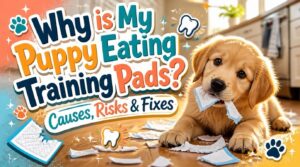
You leave the room for two minutes. You come back to confetti.
Except it’s not confetti. It’s your training pad, shredded into a hundred soggy pieces across the floor.
Sound familiar? You’re not alone, and your puppy isn’t broken. Pad shredding usually comes down to a few simple triggers: teething, boredom, or just plain curiosity. The good news? Once you know why it’s happening, stopping it gets a lot easier. Let’s fix this mess, one pad at a time.
Table Of Contents
- Key Takeaways
- Why Puppies Shred Training Pads
- Stop Pad Shredding Immediately
- Secure Pads Against Chewing
- Choose Tougher Puppy Pads
- Top 3 Pad-Shredding Solutions
- Redirect Chewing and Boredom
- Keep Potty Areas Clean
- Frequently Asked Questions (FAQs)
- Why is my puppy ripping up training pads?
- When to remove puppy training pads?
- What is the 10 10 10 rule for potty training puppies?
- How to prevent dog pads from tearing?
- How long does it take to break the habit?
- Do certain puppy breeds shred pads more often?
- Should I punish my puppy for shredding pads?
- What age do puppies stop shredding training pads?
- Can diet or exercise levels affect shredding behavior?
- Conclusion
Key Takeaways
- Puppies shred training pads mainly due to teething pain, boredom, curiosity, unclear potty zones, or separation anxiety, so identifying the cause is the first step to fixing it.
- Stopping shredding in the moment works best through calm interruption, quick redirection to a chew toy, and immediate praise for correct pad use, rather than punishment.
- Securing pads with holders, tape, covered trays, or barriers, combined with choosing thicker, leak-proof, or washable pads, removes the physical opportunity to shred.
- Long-term prevention relies on daily enrichment (teething toys, frozen Kongs, puzzle feeders, play) plus keeping the potty area clean with enzyme cleaners and quick waste removal to reduce the pad’s appeal.
Why Puppies Shred Training Pads
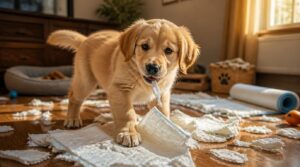
Shredded pads aren’t random bad behavior. Your puppy has real reasons behind the chaos, and most of them are totally normal for their age. Here are the five biggest culprits behind the mess.
Teething Discomfort
When those new teeth start pushing through, your puppy’s mouth just aches. That pressure begs for relief, and a soft pad feels so good to gnaw on.
If the chewing turns into nipping at your hands or ankles, these tips on how to stop puppy biting can help redirect that urge to something safer.
Expect drooling, swollen gums, and restless sleep too. Shredding isn’t defiance here. It’s pure teething pain, and it’ll ease as their teeth finish coming in.
Boredom and Excess Energy
Sometimes it’s not sore gums, it’s a puppy with nowhere to put all that energy. Boredom or lack of stimulation often looks like pacing, whining, or pawing at the pad.
Watch for these boredom signals:
- Restlessness after naps
- Excessive vocalizing
- Zoomies indoors
- Pawing at surfaces
- Chewing anything nearby
Sensory enrichment, routine, and daily play burn off that excess energy fast. It is helpful to provide mental stimulation activities to keep their minds occupied.
Curiosity About Texture
Not all shredding comes from sore gums or pent-up energy. Sometimes your pup’s just doing what puppies do at this developmental stage: exploring the world with their mouth.
Puppies rely on tactile feedback to learn about surfaces. That crinkly, gritty texture? Irresistible. Rougher grit grabs their attention more than smooth surfaces ever will, which explains why shredding a pee pad feels like a five-star sensory activity to them.
Potty-play Area Confusion
Here’s a fun one: your pup can’t always tell "potty spot" from "playground."
If the pad sits near toys, that’s mixed stimuli at work—confusing signals everywhere.
- Bright patterns trigger curiosity
- High-traffic layout invites chewing
- Toy proximity blurs the message
- Texture exploration habits kick in
- Anticipated rewards cause nibbling
Preventing destructive chewing starts with clear zones—stop dog chewing pee pad habits before they form.
Anxiety or Self-soothing
Ever notice your pup shreds pads most when you’re out of sight? That’s often separation anxiety, not mischief.
Ripping fabric gives sensory feedback, like a self-soothing habit. Try sensory warmth comfort (a worn t-shirt), calming touch before you leave, or puzzle feeders for puppy mental stimulation.
Building these small routines helps with real canine behavior modification over time.
Stop Pad Shredding Immediately
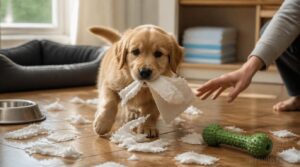
Catching your puppy mid-shred can feel like a race against time. Good news: you don’t need fancy tricks, just the right moves done in the right order. Here are five simple steps to stop the shredding fast and get your puppy back on track.
Interrupt Calmly
Catching your puppy mid-shred? Stay cool, that panic in your voice only fuels the chase game.
- Pause a beat, breathe slow
- Use a calm, low tone
- Keep hands loose, posture open
- Say "ah-ah" firmly, not loud
- Avoid chasing or grabbing fast
A calm interruption stops the behavior without turning it into play. Steady energy teaches your puppy that shredding gets quiet, not excitement.
Redirect to Chew Toys
Grab a toy fast, that’s the trick. Once you calmly interrupt, redirect the behavior within seconds toward something better to chew.
Try swapping in a frozen treat they’ll actually love, like these easy homemade frozen banana dog treats, to make the redirect stick.
Pick chew toys with texture, rubber or silicone work great for teething discomfort. Texture-based redirection grabs attention quicker than plain toys.
Rotate two or three toys weekly. Effective toy rotation keeps things fresh, so pads lose their appeal fast.
Reward Correct Pad Use
Catch the good stuff, not just the bad. The second your puppy toilets on the pad, praise like you mean it and offer a high-value treat within one to two seconds.
- Mark it: "good pad," right away
- Reward instantly
- Add brief playtime
- Stay consistent every time
- Fade treats to praise gradually
That timing builds real positive association, fast.
Remove Torn Pieces Fast
Speed matters here. Once your puppy shreds a training pad, torn bits become a swallowing hazard fast.
Pop on gloves, clear fragments within 30 seconds, and bag them shut. Wipe the area with a damp cloth to grab stray fibers.
Quick fiber removal stops your dog from returning to chew leftover scraps, keeping cleanup safe and your training pad holder area truly hazard-free.
Supervise During Habit Changes
New pads, new rules. The first two weeks after any change deserve your full attention.
Close observation during this window helps you spot shredding patterns before they become habits. Stay calm, keep sessions short, and reward good choices immediately.
Consistency here builds trust. Once your puppy shows reliable pad behavior, you can ease supervision back gradually.
Secure Pads Against Chewing
Sometimes redirecting isn’t enough. Your puppy needs a physical reason why the pad is off-limits. Here are five easy ways to lock it down.
Use a Pad Holder
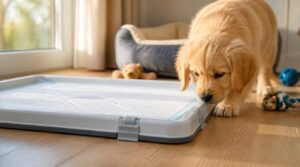
A locking pee pad tray stops the shred-fest before it starts. Edge locking mechanisms clamp the pad flat, so there’s nothing loose to grab.
Look for a non-slip base—it keeps the tray from sliding when your pup investigates. Pick non-toxic, chewproof puppy products sized to your pad, and wipe clean easy-cleaning designs after every mess.
Tape Down Loose Corners
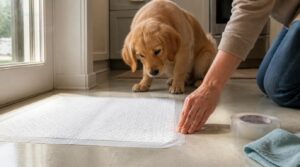
No pee pad holder handy? Tape works fine.
Clean the floor and pad corners first—dust kills adhesion. Press double-sided tape firmly for 5 seconds, corners to center.
Quick tape tips:
- Choose moisture-rated tape near doors
- Skip strong solvents (they degrade pad backing)
- Check daily, since chewing loosens grip fast
Peel gently to avoid residue or torn flooring.
Try Covered Pad Trays
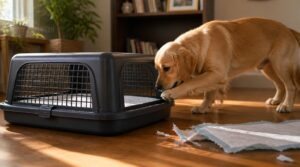
Tape loosens. A covered pad tray doesn’t.
This pad holder fully encloses the pad, blocking teeth and paws from the edges. Look for chewproof puppy products with a locking cover and non-skid base—most fit standard 17×24 pads and clean up with a quick wipe or dishwasher cycle.
Durable plastic construction means no cracking under those needle-sharp puppy teeth.
Place Pads in Quiet Corners
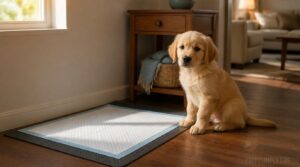
Corner placement matters just as much as the tray itself.
Pick a low-traffic spot, away from food bowls and loud appliances, with a non-slip surface underfoot.
- Reduces scattered scents that confuse potty vs. play zones
- Cuts down startling noises that interrupt elimination
- Keeps supervision easy without hovering
Good visual access from your living area helps calm, confident housebreaking—no chasing required.
Block Unsupervised Access
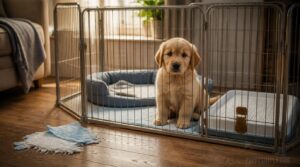
That’s why blocking unsupervised access matters most. Set up physical barriers like a playpen or gate, add safety latches to enclosed tray systems, or try crate training during high-risk hours.
Room restriction works too—close the door.
Managing destructive habits starts with limiting opportunity, not just correction.
Choose Tougher Puppy Pads
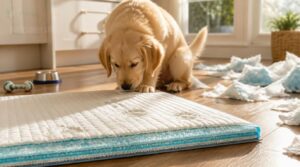
Sometimes the fix isn’t about tricks or training, it’s about the pad itself. Some pads are basically an open invitation to shred, thin, flimsy, and easy to tear. Here’s what to look for when picking one that can actually hold up.
Pick Thicker Layers
Thin pads don’t stand a chance against sharp puppy teeth. Go for multi-layer construction, ideally 0.6–0.8mm thick, so bite force spreads out instead of tearing straight through.
Thicker pads also fight fiber shedding, meaning less loose fluff for your pup to swallow.
- Fewer emergency vet visits
- Less mess to clean up
- More peace of mind for you
Look for Leak-proof Backing
Flip the pad over and check that backing before you buy. A solid moisture barrier stops leaks even when your puppy soaks it fully, protecting floors underneath.
Good backing also resists punctures from paws or teeth, stays flat without curling, and holds up through cleaning solutions without breaking down. That’s real backing durability you can count on.
Avoid Flimsy Disposable Pads
Not all disposable pee pads are built the same, and the cheap ones prove it fast. Single-layer construction tears the second your puppy paws or bites it, scattering fluff everywhere.
Look for multi-layer construction with a puncture resistant surface and reinforced edges instead. These details protect overall strength, so training pads survive real puppy behavior instead of falling apart on day one.
Consider Washable Cloth Pads
Sturdy fabric beats flimsy plastic, hands down.
Washable cloth pads use thick layers built for 300+ wash cycles, made from bamboo fleece or cotton velour that’s gentler on sensitive puppy paws. Waterproof PUL backing locks in moisture, so leaks stay rare.
They’re heavier, harder to shred, and better for the planet than daily disposables. Just follow simple washing tips: cold cycles, no fabric softener.
Watch for Ingestion Risks
Even tough pads can lose the battle sometimes.
If your puppy swallows a chunk, watch for vomiting, bloody stool, or a sudden appetite drop. These signal possible gastrointestinal obstruction. Skip pads with absorbent gel beads, too. They expand once wet and can block intestines.
Notice a battery nearby? That’s an emergency. Call a poison center immediately.
Top 3 Pad-Shredding Solutions
Sometimes the best fix isn’t more training, it’s better gear. A few products out there are built specifically to outsmart determined little shredders. Here are three worth putting on your list.
1. Large Silicone Pet Training Pad Holder

Four snaps. That’s all it takes to lock a pad flat and out of chewing range.
This holder fits pads up to 25×25 inches, with a raised silicone lip that catches spills before they hit your floor. The non-slip base keeps things steady during zoomies, and cleanup is just soap and water. No more bunched-up corners for curious teeth to grab.
For pups who see every pad as a chew toy, this is your first line of defense.
| Best For | Pet owners with chewing-prone dogs who need a secure way to keep training pads flat and in place. |
|---|---|
| Waterproof/Leak Proof | Leak proof construction |
| Material | Silicone |
| Floor Protection | Raised edges protect floors and carpets |
| Reusability | Rollable, reusable design |
| Dimensions | 23.5 x 23.5 x 0.5 inches |
| Multi-Pet Use | Designed for pet housebreaking |
| Additional Features |
|
- Raised silicone lip helps catch spills before they reach your floor
- Rollable, lightweight design makes storage and travel easy
- Snap-lock system keeps pads flat, deterring corner-chewing
- Only fits pads up to 23.5 x 23.5 inches, so larger pads won’t work
- Performs best when paired specifically with Honey Care training pads
- Silicone construction may not appeal to those wanting a more rigid holder
2. Bulldogology Absorbent Dog Puppy Pads
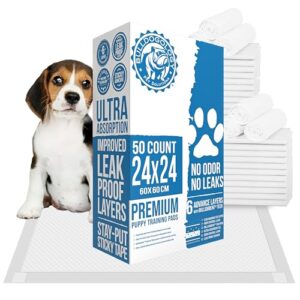
A holder keeps the pad in place, but a tougher pad gives teeth less to work with.
Bulldogology packs six layers of protection, including Bullsorbent polymer that turns liquid into gel fast. That gel-locking action also traps odor, so accidents don’t linger in your living room.
The built-in attractant nudges pups toward using it correctly, and optional sticky tabs stop sliding across smooth floors. At 24×24 inches, it’s a solid, chew-resistant upgrade from flimsy disposables.
| Best For | pet owners housebreaking puppies or managing indoor potty needs for dogs and cats who want a durable, mess-containing pad. |
|---|---|
| Waterproof/Leak Proof | Six-layer liquid-to-gel conversion |
| Material | Polyethylene (PE) and Polymer |
| Floor Protection | Protects floors, tiles, and carpets |
| Reusability | Disposable, single-use pads |
| Dimensions | 24 x 24 x 0.5 inches |
| Multi-Pet Use | Suitable for dogs and cats |
| Additional Features |
|
- Six-layer construction with Bullsorbent polymer quickly gels liquid and locks in odor
- Built-in attractant helps train pets to use the pad correctly
- Optional sticky tabs (including wall placement for male dogs) keep pads secured in place
- Adhesive can leave residue that needs a warm wet towel or remover to clean off floors
- Larger 24×24 inch size may not suit smaller spaces or crates
- Designed mainly for adult and puppy age ranges, so it may not fit every pet’s needs
3. Washable Reusable Incontinence Underpads
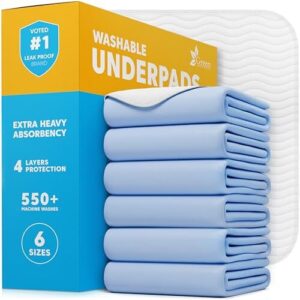
Cloth pads take the "shred it" fun away fast. Heavier fabric doesn’t tear like thin plastic, so puppy teeth mostly just… slide off.
These pads use quilted layers with a waterproof backing, so leaks stay off your floor while the fabric holds up wash after wash. Reinforced seams keep corners from fraying into tempting strings.
Best part? Machine washable means one less product to keep buying. Rinse, wash, reuse — simple as that.
| Best For | Pet owners with chewers or diggers who need durable, leak-proof bedding protection that can survive repeated washing. |
|---|---|
| Waterproof/Leak Proof | Waterproof backing |
| Material | Quilted cloth with waterproof backing |
| Floor Protection | Protects mattresses from leaks |
| Reusability | Machine washable, reusable |
| Dimensions | 30 x 34 inches |
| Multi-Pet Use | Suitable for dogs, cats, or bunnies |
| Additional Features |
|
- Waterproof backing keeps leaks off floors and furniture
- Reinforced seams resist fraying, even with playful teeth and claws
- Machine washable design saves money over disposable pads
- Requires washing between uses, adding an extra chore
- Heavier fabric may take longer to dry than thinner alternatives
- Actual pad size can vary depending on the pack you choose
Redirect Chewing and Boredom
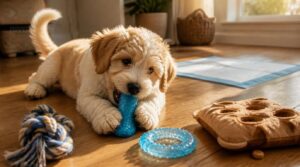
Sometimes the pad isn’t the problem. Your puppy just needs somewhere else to put all that energy and teething urge. Here are five ways to give those jaws a better job.
Offer Teething Toys
Sore gums need something better to bite than your pads. Pick BPA-free silicone or natural rubber, both non-toxic and built for canine teething relief.
Texture matters: nubs and ridges massage gums, easing real discomfort.
Three things to check:
- Safe materials — food-grade, phthalate-free
- Cooling relief — chill (never freeze) for swelling
- Ergonomic grip — sized for tiny paws
Wash toys regularly for good hygiene.
Use Frozen Kongs
Frozen Kongs buy you time and calm your pup down fast. The cold numbs sore gums while the tricky filling keeps their brain busy, not your pads.
Start simple: plain yogurt, mashed banana, or pumpkin puree. Layer soft-to-firm, add a stopper at the bottom, and freeze in breed-appropriate portions.
Rotate flavors weekly. Boredom sneaks back fast otherwise.
Add Puzzle Feeders
Give mealtime a job to do. Puzzle feeders turn eating into cognitive meal engagement, keeping paws and nose busy instead of pads.
- Start easy, high-value treats build confidence fast.
- Pick dishwasher-safe, smooth-edged designs for safety and easy cleaning.
- Increase difficulty gradually to avoid frustration.
This daily enrichment activity sharpens problem-solving skills while curbing boredom-driven shredding altogether.
Play Fetch or Tug
Burn off that extra energy before it turns into pad confetti. Fetch builds stamina in quick 10-20 minute bursts; tug satisfies their gripping instinct.
| Game | Session Length | Key Safety Cue |
|---|---|---|
| Fetch | 10-20 min | Retrieve within 6-12 sec |
| Tug | 5-15 min | "Tug" to "all done" |
| Both | Daily | End calm, praise the return |
Try Safe Shredding Alternatives
Give them something they’re allowed to destroy. Lettuce and cabbage leaves make great edible vegetable substitutes—crunchy, safe, and satisfying for safe texture exploration.
Give your puppy something they’re allowed to destroy, like crunchy lettuce or cabbage leaves
Synthetic or real grass mats offer another natural shredding outlet while doubling as teething relief methods. Rotate these with puzzle feeders and other mental stimulation tools as part of daily puppy enrichment activities, and your training pads stay boring by comparison.
Keep Potty Areas Clean
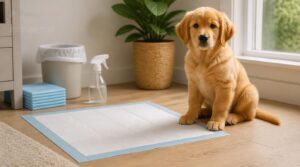
A messy pad isn’t just gross, it’s an invitation. The dirtier it gets, the more your puppy wants to dig in and destroy it. Here’s how to keep things fresh and boring, in the best way.
Remove Waste Quickly
Poop left sitting around is basically a chew invitation. Your dog destroying pee pads often starts with sniffing out old waste, so prompt waste disposal matters more than you’d think.
- Use lidded trash bins to block access
- Practice secure waste storage indoors
- Handle waste spills fast
- Empty bins twice daily
- Focus on minimizing scent attraction
Use Enzyme Cleaners
Regular soap won’t cut it here. An enzyme-based cleaner breaks down urine at the molecular level, targeting the exact proteins that scream "potty spot" to your puppy’s nose.
Let it sit for full enzyme contact time before wiping. Never mix it with other cleaners—chemical reactions can form. Store bottles away from sunlight to keep enzymes potent for true dog odor neutralization.
Wash Reusable Pads Often
Rinse right after every use, cold water only, then do a full wash within 2-3 days. That timeline stops bacterial growth before odor sets in.
Skip fabric softeners. They coat fibers and kill absorbency. Sun-dry when you can—it disinfects naturally and prevents moisture buildup between uses. Rotate pads daily so one’s always clean and ready.
Avoid Bitter Sprays
Skip the bitter spray on potty pads. Sounds like a quick fix for puppy pad destruction, but taste deterrents near the potty area risk scent confusion—your pup may start avoiding the whole spot altogether.
Stick with positive reinforcement instead. Redirect the behavior toward chew toys, track training success, and let canine behavior modification happen through rewards, not deterrent side effects that backfire.
Replace Shredded Pads Immediately
Speed matters here. Once shredding starts, swap in a fresh pad within the hour to stop leaks and surface contamination.
- Grab a same-size replacement
- Bag torn bits for safe disposal
- Check the floor underneath for damage
- Log the shred time to spot patterns
- Reset the pee pad holder for stability
Consistency keeps your training pad routine on track, so your puppy always knows where potty time happens.
Frequently Asked Questions (FAQs)
Why is my puppy ripping up training pads?
Sore gums usually drive it. Teething discomfort hits hardest between 3 and 6 months, and soft pads feel better than hard toys. Boredom, curiosity, anxiety, or mixed-up potty zones can fuel the same destructive chewing too.
When to remove puppy training pads?
Timing isn’t guesswork, it’s evidence. Look for 80% outdoor success over two weeks, puppy at least 12-16 weeks old, and quick outdoor toileting after meals or naps. Fade pads gradually, don’t yank them during regression.
What is the 10 10 10 rule for potty training puppies?
The 10 10 10 rule simply means taking your puppy out within 10 minutes of waking, eating, or playing. These post-activity potty windows catch key triggers fast, building reliable elimination routines that make puppy potty training way more predictable.
How to prevent dog pads from tearing?
Grab a pad holder with edge containment, add adhesive securing strips underneath, and pick durable material pads with reinforced backing. Skip flimsy disposables.
Tray grid systems and chewproof puppy products work great as physical barriers—way better than taste deterrents alone.
How long does it take to break the habit?
Is 66 days really the magic number? Not always. With consistent canine behavior modification, many puppies drop shredding within 18 days to 6 weeks, though deeply rooted habits stretch to 2-3 months of steady practice.
Do certain puppy breeds shred pads more often?
Yes. Small breed tendencies like terriers mean more shredding, thanks to bold exploration drives. Strong chewers such as bulldogs and shepherds hit hardest during teething.
Working breed behavior stays calmer with structured exercise—temperament and stimulation shape the habit more than breed alone.
Should I punish my puppy for shredding pads?
Punishment usually backfires. It builds fear instead of understanding, and won’t teach much given your puppy’s developmental stage. Try positive interruption instead: a calm "ah-ah," then redirect to a toy. Reward-based redirection works far better than scolding ever will.
What age do puppies stop shredding training pads?
Forever, it might feel like. But truth is, most pups ease up by 6 to 9 months, with stable pad habits by a year. Breed size, teething peak, and supervision speed things up—or stretch them out.
Can diet or exercise levels affect shredding behavior?
Absolutely, both matter. Nutritional satiety keeps hunger-driven chewing in check, while routine stability and balanced physical and mental enrichment curb boredom-fueled shredding.
Puzzle feeders, steady meals, and daily play cover both bases, easing dietary discomfort and restlessness that push puppies toward pads.
Conclusion
Somewhere, a training pad is living its best life as confetti, and your puppy is thrilled with the parade it threw. Cute, but you didn’t sign up for daily cleanup duty.
Learning how to stop puppy from shredding training pads isn’t about punishment. It’s about redirecting that energy toward toys, structure, and tougher pads built to survive. Stick with it. Within weeks, that shredder becomes a pad-using pro, and your floor finally gets some peace.
- https://www.yiyipad.com/info/how-to-stop-dogs-from-tearing-up-pee-pads-103083906.html
- https://www.akc.org/expert-advice/training/the-ins-and-outs-of-potty-pad-training
- https://www.goodhousekeeping.com/life/pets/g64411031/best-puppy-pee-pads
- https://www.hartz.com/advantages-of-dog-pads-and-how-to-use-them
- https://www.animalhumanesociety.org/resource/potty-pad-training-your-dog