
This site is supported by our readers. We may earn a commission, at no cost to you, if you purchase through links.

A dog that chews through furniture, barks at nothing, or paces the hallway isn’t being difficult—it’s running on empty. Mental boredom in dogs produces the same restless frustration that humans feel after a long day of doing absolutely nothing. The brain needs work, and when it doesn’t get any, behavior fills the gap.
Dogs need mental stimulation every day, not as a luxury but as a core part of their well-being. Without it, stress hormones build up, mood drops, and destructive habits take hold.
The good news is that meeting this need doesn’t require hours of effort or expensive equipment—it requires consistency and the right approach.
What follows is a practical guide to understanding how much enrichment your dog actually needs, what under-stimulation looks like, and which daily activities deliver the biggest results.
Table Of Contents
- Key Takeaways
- Yes, Dogs Need Daily Mental Stimulation
- How Much Mental Stimulation Dogs Need
- Signs Your Dog Needs More Enrichment
- Best Daily Mental Stimulation Activities
- Mental Stimulation by Age
- Mental Stimulation by Breed and Energy
- Puzzle Toys for Daily Enrichment
- Building a Daily Enrichment Routine
- Measuring Your Dog’s Enrichment Success
- Frequently Asked Questions (FAQs)
- What happens if a dog is understimulated?
- Can mental stimulation replace veterinary behavioral therapy?
- Do rescue dogs need different enrichment approaches?
- How does diet affect a dogs cognitive performance?
- Can too much stimulation cause anxiety in dogs?
- Do dogs benefit from stimulation when left alone?
- Conclusion
Key Takeaways
- Dogs need 20–30 minutes of daily mental stimulation — not as a treat, but as a core health requirement that directly shapes their mood, behavior, and stress levels.
- Boredom shows up as destructive chewing, excessive barking, pacing, or compulsive behaviors, meaning your dog isn’t being difficult — its brain just isn’t getting enough to work with.
- The right enrichment depends on your dog’s age, breed, and energy level, so a senior dog needs gentle scent games while a Border Collie needs structured, job-based challenges to stay balanced.
- Consistency beats intensity every time — short daily sessions spread across the week do more for your dog’s focus, confidence, and calm than one long weekend effort ever will.
Yes, Dogs Need Daily Mental Stimulation

Your dog’s brain needs a workout just as much as their body does.
Interactive toys are one of the best ways to do that, and you can see exactly how interactive dog toys boost mental stimulation and keep boredom at bay.
Mental stimulation isn’t a bonus — it’s a daily necessity that shapes how your dog feels, behaves, and connects with you. Here’s what you need to know about why enrichment belongs in every single day.
Why Daily Enrichment Supports Emotional Balance
When your dog’s brain stays busy, their whole emotional state shifts. Daily mental stimulation promotes neurotransmitter balance and cortical health, which directly aids dog anxiety reduction and mood stability.
Consistent enrichment also helps with stress hormone regulation, keeping anxiety low and emotional wellbeing steady. Plus, that focused time together naturally deepens the bond between you and your dog.
Incorporating balanced play promotes can further boost your dog’s emotional resilience.
How Mental Activity Prevents Boredom
Boredom isn’t just restlessness — it’s what happens when your dog’s brain has nothing useful to do. Without daily mental stimulation, dogs redirect that energy into behaviors you don’t want. Novelty rotation and stimulus variety are your best tools for dog boredom prevention.
A bored dog’s brain doesn’t rest — it finds trouble; novelty and variety are your best prevention
To combat this, implement these strategies:
- Swap puzzle toys weekly to maintain reward anticipation
- Vary treat-hiding spots to sharpen instincts
- Introduce new cues for familiar commands
- Use scent trails to encourage self-directed exploration
- Rotate walking routes to expose your dog to fresh stimuli
Consistent mental enrichment prevents behavior problems through enrichment strategies, while reducing signs of insufficient mental stimulation like destructive chewing or cognitive fatigue.
Mental Stimulation Versus Physical Exercise
A long walk is great — but it’s not the whole picture. Physical exercise burns energy through cardiovascular effort, while mental stimulation builds cognitive vs cardio balance by engaging decision-making and problem-solving. Both are essential for achieving harmony between mental and physical well-being.
| Factor | Physical Exercise | Mental Stimulation |
|---|---|---|
| Primary load | Muscle and heart | Brain and attention |
| Stress reduction | Lowers baseline tension | Provides structured engagement |
| Recovery timing | Needs rest after exertion | Benefits from post-walk timing |
Balancing mental and physical exercise prevents training fatigue interplay, where a tired body can’t support a bored mind.
Why Consistency Matters More Than Intensity
Consistency beats intensity every time. A predictable schedule builds a habit loop your dog can rely on, which facilitates stress mitigation by reducing uncertainty throughout the day.
Short sessions spread across the week improve skill retention far better than one long weekend effort. That steady arousal balance — calm but engaged — is exactly what daily mental stimulation is built to deliver.
How Much Mental Stimulation Dogs Need

The right amount of mental stimulation isn’t one-size-fits-all — it really depends on your dog’s age, breed, and energy level.
That said, there are some solid general guidelines to help you figure out where your dog falls.
Here’s what experts recommend for each stage of life and activity level.
Adult Dogs: 20–30 Minutes Daily
For most adult dogs, 20–30 minutes of daily mental stimulation hits the sweet spot. You don’t need to block it all at once — spreading it across the day works just as well. Consistent timing matters here: predictable sessions help your dog settle between activities.
Try rotating these each week for session variety:
- Hide-and-seek treat games
- Puzzle feeders at mealtime
- Short obedience drills
- Sniff walks on a new route
Puppies: Shorter, More Frequent Sessions
Puppies aren’t wired for long sessions — their attention resets fast, which actually works in your favor. Think of it as microlearning benefits in action: short focused bursts of 3–5 minutes, repeated throughout the day, outperform one stretched 20-minute block.
Mini training bursts with rapid reward cycles keep early enrichment positive and effective.
Frequent play breaks between sessions help puppies process what they’ve just learned.
Senior Dogs: Gentle, Low-pressure Activities
Aging dogs still need daily mental stimulation — just dialed back in intensity. Short, joint-friendly walks, calm scent searches, and soft toy retrieval keep the brain engaged without overtaxing tired bodies. Low-step drills and gentle fetch support enhancing cognitive function while protecting joints.
Benefits of puzzle feeders for senior dogs include age-appropriate mental activities that encourage relaxation techniques and quiet focus.
High-energy Breeds Needing Extra Enrichment
Border Collies, German Shepherds, and similar breeds aren’t wired to coast through a quiet day — their Herding Instincts demand a genuine outlet. For these dogs, mental and physical exercise must work together, and 30 minutes simply isn’t enough.
To meet their needs, incorporate structured strategies like:
- Use Impulse Control Drills to channel drive into focus
- Build Structured Play Sessions around Job-Based Enrichment
- Try Competitive Sport Integration like agility or flyball
Variety in dog enrichment routines prevents the restlessness that leads to destructive behavior.
When 15 Minutes May Be Enough
Sometimes, 15 minutes of mental stimulation is genuinely enough — if it matches your dog’s attention span and energy level. This is the heart of attention span matching and energy level suitability.
Keep a novelty element in each session, adjust difficulty to prevent frustration, and always end while your dog is still interested. These simple guidelines for daily mental activity duration ensure engagement.
By following these principles, every minute counts toward effective mental enrichment.
Signs Your Dog Needs More Enrichment

Dogs are pretty good at telling you when something’s off — you just have to know what to look for. Most of the time, boredom shows up as behavior problems that resemble stubbornness or bad habits, when really your dog is just under-stimulated.
Here are the signs worth paying attention to.
Destructive Chewing or Digging
Chewing and digging aren’t random mischief — they’re your dog telling you something.
Stress-induced chewing often spikes when routines shift or loud noises hit. Instinctual digging follows breed instincts, especially in terriers.
Smart chew toy selection and designated dig zones help redirect these urges.
Preventing destructive behavior through enrichment and daily mental stimulation addresses the root cause: a bored, under-challenged brain.
Excessive Barking or Whining
Barking and whining are your dog’s clearest signals that something’s off. Attention-Seeking Barking often spikes when boredom peaks — the same brain that chewed your shoes is now demanding engagement vocally.
Fear-Related Whining, Crate Vocalization, and Trigger-Based Barking each have distinct patterns, but excessive barking tied to under-stimulation responds well to daily mental stimulation through interactive toys and puzzles, addressing the behavior problems at their root.
Pacing, Restlessness, or Clinginess
When barking isn’t enough, your dog’s body starts talking. Pacing, restlessness, and clinginess are classic signs of insufficient mental stimulation — often driven by trigger cues like doorbells or routine shifts. These behaviors signal unmet cognitive needs.
Anticipatory anxiety keeps dogs in constant motion, creating habit loop pacing that’s hard to break. Stress-driven movement and attachment-seeking behaviors intensify as dogs struggle to cope without mental outlets.
Without intervention, this pattern risks escalating into separation anxiety or hyperactivity. The solution lies in structured cognitive engagement to redirect energy and build resilience before problematic habits solidify.
Tail Chasing or Obsessive Licking
Pacing and restlessness can quietly escalate into compulsive patterns — with tail chasing or obsessive licking as two of the clearest signs. These behaviors have a strong anxiety link, but medical triggers like allergies or impacted anal glands can also play a role.
Without boredom prevention strategies and a consistent mental stimulation regimen, skin injuries from licking become a real concern, pointing toward behavioral therapy.
Poor Focus During Training
Poor training focus can signal the same unmet needs behind compulsive behaviors. When your dog checks out mid-session—sniffing the floor, yawning, or ignoring familiar cues—distraction triggers and training fatigue are often at play.
Reward lag, cue clarity issues, and handler consistency all affect how well your dog engages. These factors collectively influence the training dynamic, creating barriers to sustained attention.
Mental stimulation gaps quietly drain cognitive function, making stress and anxiety harder to manage during training sessions. Addressing these gaps is crucial for maintaining focus and reducing behavioral challenges.
Best Daily Mental Stimulation Activities
The good news is that keeping your dog mentally engaged doesn’t require a lot of fancy equipment or hours of your time. A handful of simple, well-chosen activities can make a real difference in how settled and happy your dog feels each day.
Here are the best options to work into your routine.
Scent Games and Treat Hiding

Your dog’s nose is its superpower — scent work taps directly into that drive. Hide-and-seek treat games are simple to run and deeply satisfying for dogs.
Use a Clear Search Cue like "find it," then apply Progressive Difficulty as your dog improves:
- Start with Treat Scatter Layouts in open areas
- Add Obstacle Navigation using furniture or corners
- Fine-tune Reward Timing to reinforce each find immediately
Puzzle Feeders and Interactive Toys

Puzzle feeders and interactive toys turn mealtime into genuine mental stimulation. Instead of inhaling kibble in seconds, your dog works for every bite.
| Feature | Why It Matters |
|---|---|
| Chew Resistance | Keeps toys lasting longer |
| Material Safety | BPA-free means safer chewing |
| Portable Feeders | Enrichment anywhere, anytime |
| Weatherproof Toys | Outdoor sessions stay practical |
Rotate toys weekly so the challenge stays fresh.
Obedience Practice and Trick Training

Training your dog isn’t just about good manners — it’s one of the richest forms of daily mental stimulation you can offer. A short obedience session challenges your dog’s focus, memory, and self-control all at once.
- Start with Cue Consistency — one word, one behavior, every time
- Use precise Reward Timing to mark the exact correct moment
- Plan Lure Shift early so treats don’t become a crutch
Learning new commands and tricks through positive reinforcement techniques builds trust and strengthens the bond through training. Meanwhile, Distraction-Proofing and avoiding Session-Fatigue ensure obedience training remains genuinely productive.
Sniff Walks and New Environments

A sniff walk is surprisingly powerful mental enrichment. Start with a Decompression Minute near the door, then give your dog a Sniff Cue to signal it’s their time to sniff and explore. Use a longer leash length on low-pressure routes, letting Environmental Scent Variety do the heavy lifting.
New places, nature trails, or quiet parks all deliver rich nose work and meaningful environmental enrichment.
Indoor Obstacle or Agility Games
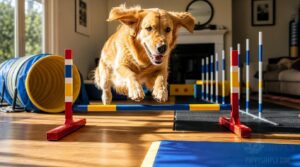
You don’t need a fancy gym to run agility training at home. A simple Course Layout Design using low jumps, a pop-up tunnel, and weave poles gives your dog real decision-making challenges.
Focus on Safety Barrier Setup by clearing loose hazards and using non-slip mats.
Apply Turn Cue Strategies with hand targets, then build through Progressive Difficulty Steps as confidence grows.
Mental Stimulation by Age

A dog’s enrichment needs don’t stay the same from puppyhood to their senior years — they shift quite a bit. The right activity at the wrong life stage can either underwhelm your dog or wear them out.
Mental stimulation should look at each age. Here’s how to tailor it appropriately across their lifespan.
Puppy Enrichment and Attention Spans
Puppies live in a world of constant distraction, so their focus windows are naturally brief — roughly one minute per month of age. That’s why mini training bursts work better than long sessions.
Match reward timing to the moment engagement peaks, introduce novelty pacing gradually, and always train in calm environments.
Early socialization and enrichment for puppies build the foundation every dog needs long-term.
Adult Dog Daily Enrichment Needs
Once your dog reaches adulthood, the enrichment bar shifts. Adults thrive on about 30 minutes of daily mental activity, built around variety rather than volume. Think of it as Sensory Rotation — cycling through different modalities each day:
- Adaptive Food Puzzles matched to your dog’s current skill level
- Scent-based foraging using scatter feeding or snuffle mats
- Short obedience or trick sequences that build on familiar cues
- Cognitive Playdates with people or other dogs for social engagement
- Sniff walks through new environments to introduce fresh stimuli
Enrichment Tracking Apps can help you spot patterns, while Seasonal Activity Themes keep the routine from going stale. Consistent daily enrichment — not occasional marathon sessions — is what actually sustains behavioral stability long-term.
Senior Dog Brain-friendly Activities
As your dog ages, the goal isn’t less enrichment — it’s smarter enrichment. Older dogs benefit most from low-pressure activities that build confidence rather than test limits. Gentle Lick Mats, Memory Cup Games, and Soft Touch Cues are practical ways to support enhancing cognitive function in aging dogs without pushing too hard.
| Activity | How It Works | Confidence Boosting Effect |
|---|---|---|
| Gentle Lick Mats | Repetitive licking during calm indoor time | Reduces anxiety, builds focus |
| Memory Cup Games | Hide treat under one cup, let dog choose | Encourages active decision-making |
| Soft Touch Cues | Nose or paw targeting with lure rewards | Reinforces familiar skills gently |
| Snuffle Mat Feeding | Scatter kibble for scent-based searching | Rewards natural instinct reliably |
| Rotating Variables | Change hide spots, not the whole game | Prevents confusion, sustains interest |
Aging dog cognitive support works best when you’re rotating variables gradually — shift one element at a time. Brain games for dogs facing cognitive decline don’t need to be complex to be effective. Consistency and small wins matter most.
Avoiding Overstimulation in Older Dogs
More enrichment isn’t always better — especially for older dogs experiencing cognitive decline. Arousal Monitoring becomes essential here. Watch for glazed eyes, trembling, or sudden disengagement, because those signals mean the activity has crossed from stimulating into overwhelming. Balancing mental fatigue and stress in dogs this age means knowing when to stop, not just when to start.
Keep these boundaries in mind:
- Use Calm Interaction Zones — quiet, low-traffic spaces where low-intensity puzzle tasks feel safe, not pressuring.
- Apply Decompression Timing: allow 30–60 minutes of rest after every short session.
- Offer a Gentle Sensory Reset — a sniff walk or lick mat — instead of pushing through disengagement.
- Limit sessions to five minutes when signs of fatigue appear.
- Choose age-appropriate mental activities that reinforce familiar skills rather than introducing constant novelty.
The ideal duration of mental stimulation for dogs showing early cognitive decline is shorter than you’d expect — and that’s perfectly okay.
Adjusting Difficulty Over Time
As your dog masters a task, staying at the same level stops working. Progressive Increments keep cognitive training moving forward — add one small step, one new distraction, or one extra second of focus. This Gradual Scaling, tied to Success Thresholds, ensures every session remains productive.
Feedback Loops are critical: Quick success means raising the bar; repeated failure triggers a Difficulty Reset. The table below outlines actionable responses to specific signals:
| Signal | Your Next Step |
|---|---|
| Solves quickly, every time | Increase difficulty |
| Struggles repeatedly | Reset to previous level |
| Disengages mid-task | Shorten session length |
| Consistent success over days | Introduce new challenge |
Mental Stimulation by Breed and Energy

Not every dog runs on the same settings — a Border Collie and a Basset Hound have very different ideas of a fulfilling afternoon. Breed instincts and energy levels shape what kind of mental stimulation actually works for your dog.
Match the right activities to your dog’s natural wiring to ensure their needs are met effectively.
Working Breeds Needing Advanced Tasks
Working breeds are inherently wired to be on a mission — Border Collies, German Shepherds, and similar dogs thrive when given structured handler communication and clear purpose. Mission-Based Training through Multi-Task Drills, obstacle courses, and sophisticated retrieval challenges keeps them focused and content.
Without skill progression through cognitive training and brain games for dogs, boredom builds fast and behavior unravels.
Scent-driven Dogs Enjoying Nose Work
Scent-driven breeds—Beagles, Bloodhounds, Dachshunds—are naturally wired for nose work, making scent-based enrichment activities one of the most effective forms of dog brain enrichment available.
Practicing odor differentiation, container variety, and distraction management sharpens alert consistency and keeps search flow purposeful.
The role of scent work in dog enrichment goes beyond fun; it’s a core piece of daily mental stimulation for dogs.
Small Dogs and Indoor Enrichment
Small dogs don’t need a yard to get quality mental stimulation. Indoor enrichment works beautifully for companion dogs when you use the right tools:
- Snuffle mats and Stuffable Chews for nose-first foraging
- Micro training sessions and Cardboard Retrieval games in tight spaces
- Window Watching and Sound Scanning for calm visual engagement
These daily mental enrichment guidelines keep small dogs sharp without overstimulation.
Low-energy Dogs Needing Gentle Challenges
Even a low-energy dog’s brain needs a workout.
Gentle problem-solving through soft chew puzzles and tranquil brain games gives calm dogs meaningful engagement without pushing them past their comfort zone. Low-impact training, such as short settle cues, slow-walk sniffing sessions, and calm confidence drills, satisfies their mental stimulation needs beautifully.
| Activity | Why It Works |
|---|---|
| Puzzle toys | Gentle problem solving at their pace |
| Lick mats | Calm engagement during meals |
| Slow walk sniffing | Nose work without physical strain |
| Interactive games | Builds confidence through easy wins |
Matching Activities to Temperament
Fearful Dog Strategies work best when you start at a distance and let curiosity lead. High Drive Scent Work suits confident, bold dogs who thrive on challenge. Low Impulse Puzzles help dogs build calm focus before rewards arrive.
Contact-Seeking Play and Novelty-Averse Routines round out a solid approach to tailoring stimulation by dog age and breed.
Puzzle Toys for Daily Enrichment

Puzzle toys are one of the easiest ways to give your dog a real mental workout without rearranging your whole day. They work by turning something your dog already wants — food — into a problem worth solving.
Here’s what you need to know to make puzzle toys a useful part of your dog’s daily routine.
How Puzzle Toys Challenge Problem-solving
Puzzle toys don’t just entertain — they train your dog’s brain to think systematically.
Each toy demands Constraint Navigation, Multi-Step Sequencing, and Pattern Recognition before a reward appears. This mirrors real problem-solving, building stronger canine cognition session by session.
Here’s how puzzle toys sharpen problem-solving through mental stimulation:
- Constraint Navigation — Your dog must move, rotate, or lift specific parts to release hidden treats.
- Multi-Step Sequencing — Food travels through several compartments, requiring ordered decisions rather than random grabbing.
- Pattern Recognition — Dogs learn which locations or openings signal reward, improving accuracy over time.
- Feedback Learning — Immediate success or failure teaches cause and effect, refining your dog’s strategy mid-session.
- Guessing Resistance — Smart designs prevent lucky accidents, so cognitive function — not chance — drives results.
Using Treat-dispensing Toys at Mealtime
Mealtime is one of the easiest opportunities to add mental stimulation without extra effort. Treat-dispensing toys turn feeding time into a working session — your dog earns each bite through licking, nudging, or rolling. This facilitates slow eating, aids digestion, and gives portion control a practical structure.
| Toy Type | Texture Selection | Safety Supervision |
|---|---|---|
| Rubber stuffable | Wet or dry food | Watch for jamming |
| Treat ball | Dry kibble only | Check rolling path |
| Maze feeder | Soft moist food | Confirm lid closure |
Rotate food puzzle toys weekly to keep dog puzzle toys feeling fresh.
Choosing The Right Difficulty Level
Getting the difficulty right matters more than having the fanciest toy. Start with familiar rules your dog can link to a reward, then apply Incremental Step Design — change just one factor at a time, like hiding depth or container type.
Watch for Task Failure Indicators:
- Your dog walks away without trying
- Repeated wrong attempts with no progress
- Glazed eyes or disengagement mid-task
Motivation Matching and Progressive Cue Changes keep puzzle toys working as genuine age-appropriate mental activities for dogs. Use these methods of canine mental enrichment and monitor your dog’s Error Tolerance Threshold to ensure using puzzle toys for dog cognition stays rewarding, adjusting difficulty the moment engagement drops.
Rotating Toys to Prevent Boredom
Even the best puzzle toy loses its pull when it’s always within reach.
That’s where a Limited Toy Set and a Weekly Swap Cycle come in. Store most toys using a Storage Bin Strategy—out of sight, out of mind—then reintroduce them, serving as a Freshness Cue. Sensory Rotation across textures and toy types keeps each session genuinely engaging.
| Rotation Approach | What It Does |
|---|---|
| Weekly Swap Cycle | Resets novelty every 7 days |
| Storage Bin Strategy | Keeps off-duty toys hidden |
| Limited Toy Set | Sharpens focus on fewer options |
| Sensory Rotation | Varies textures and play styles |
DR Catch Dog Puzzle Feeder Use Cases
The DR Catch works well across several real-life moments. Use it as a post-walk cooldown to channel lingering energy into quiet-time focus after outdoor sessions. It also doubles as a travel snack station on road trips or outdoor picnic play days.
For dogs in recovery after surgery, the DR Catch delivers gentle mental stimulation without physical strain, supporting cognitive health during downtime.
Building a Daily Enrichment Routine

Building a consistent enrichment routine doesn’t have to be complicated or time-consuming. A few small, intentional changes to your dog’s day can make a real difference in how settled and engaged they feel.
Here’s how to put it all together in a way that actually works.
Splitting Sessions Into 5–10 Minutes
You don’t need a long session to make a real difference. Breaking daily guidelines into 5–10 minute micro-sessions delivers genuine fatigue prevention while keeping your dog sharp and engaged. This approach ensures practical, effective training without overloading your dog.
Use a clear end cue like "all done" to signal when work stops, reinforcing structure and focus. The frequency vs duration method also enables adjustable difficulty—dialing tasks up or down based on your dog’s response. This flexibility ensures intentional mental stimulation tailored to your dog’s needs, maximizing engagement and progress.
Adding Mental Games After Walks
Coming home from a walk is the perfect moment to layer in a brief mental reset. Using a consistent start cue — like "find it" — signals your dog that calm, focused work begins now. Immediate indoor play keeps arousal from spiking again.
- Brief calming games prevent post-walk restlessness
- Low-arousal tasks reinforce the bond between the dog and their owner
- A timing pause strategy works best if your dog is still wound up
Turning Meals Into Enrichment Time
Most dogs eat twice a day — that’s two built-in windows for enrichment you’re probably not using yet. Snuffle Mat Meals and Meal Scavenger Hunts replace the bowl entirely, turning dinner into nose work.
Portioned Puzzle Feeding and food puzzle toys support Calorie-conscious Enrichment, as kibble comes from your dog’s daily ration.
Adding Training Cue Integration — a "sit" or "wait" before the puzzle feeder drops — takes seconds and sharpens focus.
Rotating Activities Throughout The Week
Repeating the same activity every day is the fastest way to lose your dog’s interest. A simple dog activity rotation — think Weekly Theme Days — keeps the brain engaged without adding time to your schedule.
- Use an Activity Difficulty Ladder to ease up or ramp up the challenge day by day
- Apply Novelty Rotation Strategies like swapping containers or locations mid-week
- Follow Toy Inventory Cycling to reintroduce stored puzzles before they are forgotten
- Build in Schedule Flexibility Tips for low-energy or off days
Balancing Training, Sniffing, and Play
Think of a well-balanced session as a rhythm: scent work first, then training, then play. This Sequential Session Flow uses Sniff Play Integration to shift your dog naturally from calm focus into engagement.
Cue Shift Timing keeps each switch smooth, while a Focused Reset Ritual — a brief pause between activities — aids Energy Modulation, so your dog finishes settled, not wound up.
Measuring Your Dog’s Enrichment Success

Knowing whether your enrichment routine is actually working doesn’t require guesswork — your dog will show you. The changes appear in small, everyday moments that are easy to spot once you know what to look for.
Here are the clearest signs that your efforts are paying off.
Calmer Behavior After Activities
One of the clearest signs your enrichment routine is working? Your dog settles faster after activity.
A solid Post‑walk Cooldown, paired with Settle Cue Training and calm Body Language Signals, helps shift your dog from excited to relaxed.
Low-Stimulus Environment setups accelerate this transition. Watch for:
- Quicker self-settling without prompting
- Calmer Greeting Timing at the door
- Less stress-related panting or pacing
Reduced Destructive Habits
Fewer chewed shoes and quieter mornings are real signs your routine is landing. When dogs get consistent enrichment, destructive behavior drops noticeably — because a busy brain doesn’t need to invent trouble.
| Destructive Habit | Enrichment Fix |
|---|---|
| Redirected Mouthing | Interactive Chew Alternatives |
| Targeted Digging Behavior | Dog enrichment activities |
| Excessive barking | Noise Desensitization |
| Crate anxiety | Crate Comfort Enhancements |
| Boredom chewing | Preventing destructive behavior through enrichment |
Better Focus and Responsiveness
When destructive habits fade, sharper focus often follows. Consistent mental exercise for dogs improves how quickly they respond to your cues during dog training.
With proper reward timing, distraction control, and manageable session length, your dog learns to check in with you more reliably. Arousal management and cue consistency are the backbone of that shift — and you’ll notice it fast.
Improved Confidence and Independence
Sharper focus often signals something deeper is changing — your dog is growing more confident.
When behavioral enrichment includes Self-Soothing Routines, Gradual Novelty Exposure, and Frustration Tolerance Drills, dogs develop real independence:
- They attempt tasks before looking to you for help
- They settle calmly after mental stimulation ends
- They make Confidence-Building Choices using Autonomous Reward Triggers
That’s habit formation in dogs — and it shows.
Signs Your Dog Needs Easier Tasks
Confidence is worth protecting — so watch for signs you’ve pushed too hard. Task avoidance, frustrated whining, and incomplete attempts all point to mental fatigue, not laziness.
If your dog shows brief attention or lack of enthusiasm toward activities they once enjoyed, scale back. These signs of under-stimulation in dogs often mean the challenge level needs adjusting downward, not upward.
Frequently Asked Questions (FAQs)
What happens if a dog is understimulated?
Skip enrichment long enough, and your dog’s world starts to unravel. Elevated cortisol levels build, impulse control declines, and behavioral problems follow — chewing, barking, spikes in aggression, and even social avoidance.
Boredom isn’t harmless; it’s costly.
Can mental stimulation replace veterinary behavioral therapy?
Mental stimulation helps, but it can’t replace veterinary behavioral therapy.
When trigger identification reveals fear, aggression, or compulsive patterns, professional oversight and behavior modification — sometimes with medication integration — address safety concerns that enrichment alone simply can’t resolve.
Do rescue dogs need different enrichment approaches?
Yes — rescue dogs often need gentler, more patient enrichment. Trauma-informed play, predictable routines, and consent-based enrichment help them feel safe before they can truly engage and benefit.
How does diet affect a dogs cognitive performance?
What your dog eats directly shapes how well their brain functions. Omega-3 benefits, such as DHA, support cell signaling.
Antioxidant support slows cognitive decline, while MCT energy fuels aging brains.
Amino acid balance maintains neurotransmitter production.
Can too much stimulation cause anxiety in dogs?
Too much stimulation can absolutely trigger stress and anxiety. When sensory overload pushes a dog past its arousal threshold, stress hormone spikes follow, leaving little room for recovery downtime.
This lack of recovery fuels chronic overstimulation, creating a cycle where the dog struggles to regain equilibrium.
Do dogs benefit from stimulation when left alone?
Absolutely. Enrichment left with your dog during alone time works as a stress reduction strategy, giving them a job to do instead of rehearsing anxiety.
It’s one of the simplest independence training tools you have.
Conclusion
A bored dog isn’t a bad dog—it’s just an unstimulated one.
Do dogs need mental stimulation every day? Absolutely, and the difference it makes is hard to overstate. A short puzzle session, a sniff walk, or a quick training round gives your dog’s brain the workout its quietly craving.
Build that consistency into your routine, and you won’t just see fewer problems—you’ll see a calmer, sharper, more confident dog looking back at you.
- https://www.petmd.com/dog/general-health/ways-to-keep-dog-mentally-stimulated
- https://wearwagrepeat.com/how-much-enrichment-do-dogs-need/
- https://vetster.com/en/wellness/boredom-anxiety-and-destructive-behavior-in-dogs
- https://www.happystaffyco.com/blogs/news/dog-boredom-signs-your-dog-is-understimulated-and-how-to-fix-it-fast?srsltid=AfmBOopQyhMJl4Q3mZVqv0rATOO3lZOUR3pHpIeVt2ugoQJtPyD4sEju
- https://puppod.com/blogs/puppod-blog/the-importance-of-stimulation-why-your-dog-needs-constant-entertainment?srsltid=AfmBOoqr9PvylohA_-LrvQhPYElAX7EqpEh2GH0I6ZwOuiGTS1wmT6Zu