
This site is supported by our readers. We may earn a commission, at no cost to you, if you purchase through links.

Most dog owners think the leash is the tool. It’s not—the leash is just the connection point. What matters is where that connection meets your dog’s body, and getting that wrong has real consequences.
A collar channels every tug, lurch, and sudden stop directly into the trachea and cervical spine. For a small Chihuahua or a Pug already working twice as hard to breathe, that pressure isn’t a minor inconvenience. It’s a genuine health risk. Even for larger, healthier dogs, repeated strain on the neck can quietly accumulate into chronic discomfort or injury.
Knowing when to use a gear instead of a leash collar setup comes down to understanding your dog’s anatomy, breed traits, and behavior—then matching your gear to all three.
Table Of Contents
- Key Takeaways
- Harness Versus Leash Basics
- When Harnesses Are Safer
- When Collars Still Make Sense
- Harnesses for Pulling Dogs
- Choosing Harness Clip Styles
- Breed and Body Considerations
- Activity-Based Harness Choices
- Proper Harness Fit Rules
- Top 3 Harnesses for Walks
- Harness Mistakes to Avoid
- Frequently Asked Questions (FAQs)
- Conclusion
Key Takeaways
- Collars funnel all leash pressure directly into your dog’s trachea and neck, making harnesses the safer choice for small breeds, flat-faced dogs, and any dog prone to pulling or choking.
- Where the leash clips onto a harness matters as much as the harness itself — front-clip styles redirect pulling sideways, back-clip styles suit calm walkers, and dual-clip designs give you both options on one walk.
- A harness only works if it fits correctly: one finger of clearance for small dogs, two fingers for large ones, with monthly checks since weight shifts, coat changes, and puppy growth can quietly throw off the fit.
- Gear doesn’t replace training — a front-clip harness reduces the force of a lunge, but stopping the moment tension builds and rewarding loose-leash walking is what actually breaks the pulling habit.
Harness Versus Leash Basics
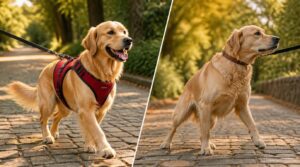
A body vest and a collar both connect to your leash, but they work very differently on your dog’s body. The attachment point changes where pressure goes — and that matters more than most people realize. Here’s a quick breakdown of how each option works and what sets them apart.
Understanding how collar and harness choices affect your dog’s health and behavior can help you make a smarter call before your next walk.
Harness Connects to Leash
A body vest attaches your leash to your dog’s body — usually at the chest or back — rather than the neck. This shifts attachment point pressure across the chest and shoulders, spreading the load more evenly.
Front-clip styles use lateral movement mechanics to gently steer your dog sideways when they surge ahead, making steering guidance feel natural rather than forceful. High-quality options often feature a velvet-lined chest strap to prevent rubbing and chafing.
Collar Connects to Leash
When a leash clips to your dog’s collar, all the tension runs straight to the neck and throat. The connection point is usually a metal D ring — steel or brass — stitched or riveted into the collar body, paired with a spring-loaded bolt snap on the leash.
That single contact point carries every tug.
Different Pressure Points
Think of it like neck muscle stimulation — pressure in the wrong spot causes strain, not relief. A collar concentrates all tension on the trachea. A body vest spreads that force across the chest and back instead.
- Collar — neck strain, tracheal collapse risk
- Vest — pressure distribution across chest
- Front-clip — redirects pulling momentum
- Back-clip — suits calm, trained walkers
- Dual-clip — offers plenty of control options
Safety and Control Differences
Where pressure lands makes a real difference. A sudden lunge on a collar can compress the trachea instantly, while a body vest spreads that same force across the chest and shoulders.
A collar compresses the trachea on impact; a body vest spreads that force safely across the chest
That shift protects the airway and gives you steadier control over your dog’s movements — especially when excitement or distraction sends them darting forward without warning.
When Harnesses Are Safer

A body vest isn’t always the right choice, but for certain dogs, it’s genuinely the safer one. Some physical traits and life stages make neck pressure a real risk, not just a minor concern. Here are the situations where a body vest isn’t just helpful — it’s the smarter call.
Dogs With Neck Sensitivity
Some dogs carry neck pain silently — stiffening, guarding, or refusing collar contact without clear warning.
Signs to watch for:
- Crying out when the neck is touched
- Stiffening or pulling away from collars
- Reluctance to accept leash placement
- Forward head posture or tense shoulders
- Scratching or pawing at the neck area
A body vest distributes force across the chest, reducing cervical strain.
Small Toy Breeds
Tiny bodies carry real vulnerability. Small toy breeds — most weighing under 12 pounds — have delicate tracheas that can collapse under even brief collar pressure during walks.
That’s why a fitted chest vest matters so much. It spreads force across the torso, protecting the airway while keeping your dog comfortable, confident, and safe on every outing.
Flat-faced Breeds
Pugs, Bulldogs, and French Bulldogs already struggle with restricted airways before the leash even clips on. A collar adds neck pressure that can worsen Brachycephalic Obstructive Airway Syndrome, triggering dangerous breathing strain fast.
A vest shifts force to the chest, protecting the airway entirely. Mesh styles also improve airflow — essential for breeds that overheat quickly and can’t cool themselves through normal panting.
Dogs Prone to Choking
Some dogs choke more easily than others. Watch for these warning signs:
- Unproductive gagging or coughing
- Pawing at the mouth
- Excessive drooling
- Visible panic or distress
Food gulpers, brachycephalic breeds, and dogs with tracheal collapse face the highest risk. A body vest keeps neck pressure off the airway — one less factor that could turn a minor blockage into a crisis.
Puppies Learning Leash Manners
Early leash training sets lifelong habits, and a body wrap gives puppies a gentler start. Loose-leash walking is easier to teach when sudden lunges don’t cause gagging.
| Situation | Collar Risk | Vest Benefit |
|---|---|---|
| Excitement surges | Throat compression | Chest redirect |
| Busy environments | Choking from lunging | Controlled movement |
| Positive reinforcement | Pressure at neck | Calm, even guidance |
Pairing positive reinforcement techniques with a front-clip body wrap helps preventing leash pulling before it becomes habit.
When Collars Still Make Sense

Harnesses aren’t always the answer, though — collars still have a real place in your dog’s routine. For some dogs and situations, a collar is genuinely the more practical choice. Here’s when sticking with a collar makes good sense.
Holding Identification Tags
Collars earn their place as the go-to spot for ID tags — durable metal or Tyvek options that display your dog’s name, your number, and rabies info at a glance. Some even integrate QR codes linking to digital profiles.
A flat-buckle collar keeps that tag visible and accessible, which no body vest chest strap reliably matches.
Calm, Trained Walkers
Dogs that walk calmly beside you, responding to cues within moments and maintaining a loose leash, don’t need the structure a vest provides.
- Steady pacing techniques keep movement predictable
- Consistent rewards encourage slack-leash behavior
- Distraction management stays manageable with training
- Body language monitoring catches stress early
- Environmental adaptation prevents arousal spikes
A well-trained walker and a flat collar are genuinely enough.
Short Potty Breaks
Quick potty stops are one place where a flat collar works fine. For most adult dogs, these breaks last under five minutes — just enough time to sniff, go, and get moving again.
A simple quick cue like "potty" signals the moment, and a collar keeps things light and fast without the fuss of strapping on a full vest.
Low-pull Walking Situations
When your dog already walks without lunging or yanking, a collar works just fine. Gentle leash guidance and consistent walking tempo keep things calm — no need for extra gear.
That said, watch for steady leash tension: even low-pull dogs can drift. Environment aware pacing helps you adjust before a squirrel or passing dog turns a relaxed stroll into a tug.
Harnesses for Pulling Dogs
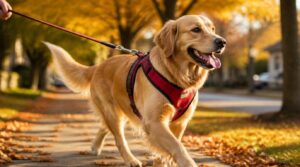
If your dog pulls on the leash, a standard collar isn’t doing you any favors — and it’s likely not doing your dog any favors either. The right gear can actually work with your dog’s movement instead of fighting it, making walks safer and less frustrating for both of you. Here’s what to know about using a vest to manage pulling effectively.
Front-clip Pulling Control
A front-clip vest attaches the leash at your dog’s chest, so when they lunge forward, the momentum redirection turns them sideways instead of letting them barrel ahead. That lateral steering gives you real control without neck strain.
The chest attachment delivers immediate tactile feedback, prompting your dog to check its pace naturally — a far gentler correction than yanking from behind.
No-pull Chest Pressure
No-pull harnesses work by applying gentle chest pressure the moment your dog begins to pull, then releasing it as they settle back. The front chest strap sits below the neck, keeping the trachea clear of compression entirely.
Padding on the chest plate distributes that contact broadly, so strong pullers don’t feel a pinch — just a calm, proportional signal to slow down.
Redirecting Forward Momentum
When your dog lunges forward, their center of mass shifts ahead — and stopping that momentum takes more than just a tight grip. A front-clip gear copes this naturally by turning their body sideways the instant they pull.
- Braking kicks in before reorientation
- Directional stability improves with each redirect
- Loose-leash walking builds from repeated deceleration
That sideways redirect teaches momentum transfer without force.
Positive Reinforcement Pairing
Pairing your walking gear with immediate reward delivery makes the gear itself feel like good news. The moment your dog eases tension on the leash, mark it and treat within two seconds — that timing is everything.
Start with high-priority reinforcers your dog consistently loves, then gradually shift toward praise as the behavior solidifies across different routes and settings.
Avoiding Stronger Pulling Habits
Consistent leash cues matter more than gear alone. Here’s how to stop stronger pulling habits before they form:
- Stop walking the instant tension builds
- Reward only loose-leash walking
- Use a front-clip vest to reduce lunging force
- Keep early sessions short and distraction-free
- Never let pulling reach the destination
Reward timing shapes everything — delayed treats teach nothing.
Choosing Harness Clip Styles
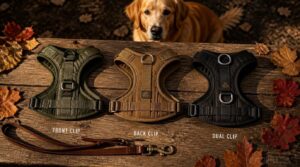
Not all harnesses are built the same, and the clip placement makes a bigger difference than most people expect. Where your leash attaches directly shapes how much control you have and how your dog moves during a walk. Here are the main clip styles worth knowing about.
Front-clip Harnesses
When your dog charges ahead on walks, a front-clip vest quietly changes the game. The leash attaches at the chest, so redirecting momentum sideways naturally turns your dog back toward you — no harsh corrections needed.
That chest pressure also doubles as a training cue, making loose leash walking click faster when paired with consistent rewards.
Back-clip Harnesses
Back-clip harnesses attach the leash at the shoulder blades, leaving your dog’s chest and front legs completely unobstructed. That freedom helps natural gait mechanics and full shoulder mobility — which is why they’re a go-to for well-trained dogs on casual neighborhood strolls.
They’re also gentler on dogs with airway or throat concerns, distributing leash force across the back rather than the chest.
Dual-clip Harnesses
Where back-clip harnesses offer freedom, dual-clip designs give you both options on the same walk.
The front clip redirects pulling by steering your dog back toward you, while the back clip controls calm stretches without intervention. Switching between them lets you manage steering versus restraint as the situation changes — no gear swaps needed, just a quick clip change.
Head-halters for Guidance
Head halters work differently from any clip vest — they guide your dog by directing head movement, not applying neck pressure. The leash attaches under the chin, so when your dog pulls, their head turns back toward you naturally.
A swivel joint prevents leash tangling, while a secondary collar connector keeps them tethered if the halter shifts unexpectedly.
Breed and Body Considerations

Not every dog fits the same vest mold — your dog’s breed and body shape play a big role in what actually works. Some builds create real safety concerns that make gear choice more than just a preference. Here’s what to know for five common body types.
Pugs and Bulldogs
Both Pugs and Bulldogs carry brachycephalic airways — compressed air passages that make any collar pressure around the neck a genuine respiratory risk.
- Choose mesh vest materials for maximum airflow during walks
- Clean facial folds daily to prevent moisture-related skin infections
- Monitor body weight closely to reduce strain on breathing
That’s why a well-fitted vest directly protects their comfort and health.
Terriers and Toy Breeds
Terriers and toy breeds may be small, but they pull with surprising force relative to their size. That intensity puts real pressure on a fragile trachea.
Tracheal collapse is a genuine risk in these breeds, making a well-fitted body vest the smarter daily choice — one that spreads leash pressure across the chest instead of concentrating it at the neck.
Slender-necked Dogs
Sighthound breeds like Greyhounds and Whippets carry elongated cervical spines that are genuinely vulnerable to sudden jerks or collar pressure. Their slender necks look graceful, but that length makes the trachea and cervical vertebrae easier to strain.
A fitted body vest distributes leash force across the chest, protecting the neck entirely — especially during the bursts of speed these dogs are built for.
Large Strong Breeds
When a dog can weigh 200 pounds and pull like a freight train, front-clipping harnesses become essential walking gear. Breeds like Mastiffs and Irish Wolfhounds need control over movement — not pressure on a thick neck.
- Redirects powerful forward momentum sideways
- Protects developing joints during Giant Breed Exercise
- Helps maintain steady, balanced posture across all four legs
Poor mechanics risk long-term Joint Health Management problems.
Fast-growing Puppies
Puppies grow fast — some giant breeds don’t reach full size until 24 months, while small breeds finish by 6 to 8 months. During that window, growth plates stay open, making joints vulnerable to strain from pulling or poor vest fit.
Check fit weekly. A vest that fits perfectly Monday can pinch by Friday.
Activity-Based Harness Choices
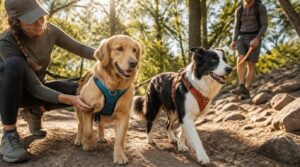
Not every walk looks the same, and your gear choice shouldn’t either. The activity you’re planning shapes which style will actually work best for your dog’s body and your level of control. Here’s how to match the right gear to what you and your dog are actually doing.
Everyday Neighborhood Walks
Your daily route through the neighborhood is where vest comfort matters most. Sidewalks bring close quarters — other pedestrians, cyclists, curious kids — so a front-clip or no-pull vest keeps your dog responsive without neck strain.
That control also makes quick, courteous passes easier, which neighbors appreciate. You’ll both settle into the walk, and discovery happens naturally from there.
Jogging With Dogs
Running at a sustained pace puts far more stress on your dog’s neck than a casual stroll. That’s why a back-clip vest is the go-to for jogging — it distributes force across the chest and torso, keeping movement fluid and natural.
Before you head out, warm up with five minutes of easy walking to prep joints and muscles.
Hiking and Outdoor Trips
Trail hikes demand far more from your walking gear than a neighborhood stroll. A double-clip leash attachment gives you reliable control over your dog’s movements on uneven or unpredictable terrain.
Pack with your dog’s safety in mind:
- Check trail difficulty ratings before you go
- Update your weather forecast every three to five hours
- Carry a navigation backup — map and compass
- Follow Leave No Trace and keep your dog on marked paths
Agility and Active Play
Agility sessions demand more from your dog’s walking gear than simple walks. A back-clip vest allows full shoulder range of motion, so your dog can weave, jump, and pivot freely during obstacle course drills without restriction.
| Agility Activity | Best Vest Feature |
|---|---|
| Directional change training | Back-clip freedom |
| Reaction time games | Secure chest fit |
| Center stability drills | Even weight distribution |
| Obstacle course design | Lightweight mesh build |
| Motor skill development | Unrestricted shoulder movement |
Car Travel Restraint Needs
What happens in a sudden stop can surprise even the most prepared pet owner. Without secure car restraints, your dog becomes a projectile — and the force of crash impact travels fast. A safety vest with a vehicle seat belt attachment spreads that force across the chest and torso, not the neck.
- Clip into the seat belt buckle
- Choose a crash-tested safety vest design
- Confirm the fit before every trip
- Pair restraint with a calm travel routine
Proper Harness Fit Rules
A vest that doesn’t fit right won’t do its job — and can actually cause more harm than good. Getting the fit correct comes down to a few straightforward checks you can do at home. Here’s what to look for before you ever clip on a leash.
Measure Chest Girth
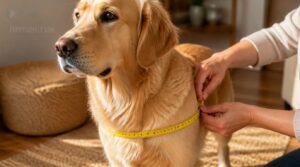
Chest girth is the single most important gear measurement you’ll take.
Wrap a flexible, non-stretchable tape around the widest part of your dog’s chest, just behind the front legs. Keep it level, snug but not compressing the skin, and measure at the end of a normal exhale. Take two readings and average them for reliability.
Measure Neck Circumference
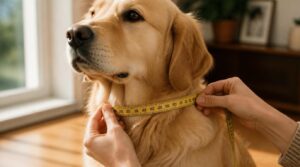
Once you’ve logged that chest measurement, shift your attention to the neck. Place a flexible, non-stretch tape just below your dog’s larynx — that slight bump at the front of the throat — and wrap it horizontally around.
Keep it snug without pinching, and read the measurement after a calm exhale. Two rounds averaged together gives you a number you can trust.
One Finger for Small Dogs

With small dogs, the fit standard shifts to one finger of space between the gear and your dog’s skin. Slide a single finger under any strap — if it glides without forcing, you’re in range.
Too snug risks tracheal pressure on delicate toy breed airways; too loose invites slipping. That single-finger gap keeps control comfortable without compressing the neck.
Two Fingers for Large Dogs
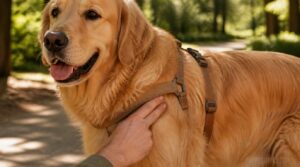
Large dogs need two fingers of space between the gear and their body — not one. Slide two fingers under any strap while your dog stands naturally; they should fit snugly without forcing.
Part the fur first, though. Thick coats can disguise looseness that only becomes obvious mid-walk, when the gear shifts or slips entirely.
Check Rubbing and Slipping
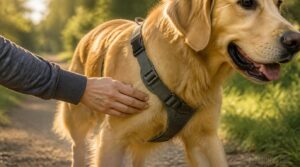
Watching for rubbing and slipping after each walk tells you more than any tape measure. Run your fingers along the chest and armpit areas — redness, hair loss, or warm patches signal friction building up under the straps.
Slipping usually points to strap misalignment, not just looseness. Recheck buckle tension evenly across all points if the gear shifts when your dog accelerates.
Top 3 Harnesses for Walks
With the right fit in mind, the next step is finding a gear that actually holds up on daily walks. There are plenty of options out there, but three stand out for their design, comfort, and reliability. Here’s a closer look at each one.
1. ICEFANG Tactical Dog Harness MOLLE Vest
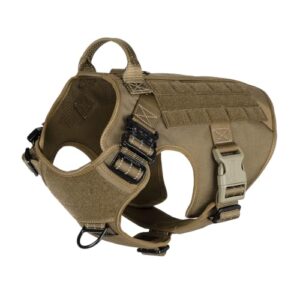
If your dog needs serious gear for serious adventures, the ICEFANG Tactical Gear delivers. Built from heavy-duty nylon with two aluminum metal buckles rated at 2800N, it’s designed for working dogs that don’t go easy on equipment.
The dual leash attachment points — a front chest D-ring and a neck V-ring — give you real pulling control and training flexibility. MOLLE strips on both sides let you clip water bottles or pouches for longer hikes. Size large fits necks 18"–24" and chests 28"–35".
| Best For | Working dogs, large breeds, and active owners who need a rugged, feature-packed harness for training, hiking, or heavy-duty daily use. |
|---|---|
| Leash Attachments | Dual points: neck V-ring and front chest D-ring |
| Pull Control | Front chest D-ring redirects pulling dogs |
| Material | Nylon |
| Chest Girth Range | 28″–35″ (Large) |
| Low-Light Visibility | Not specified |
| Top Handle | Yes, integrated for physical control |
| Additional Features |
|
- Dual leash attachment points (front D-ring and neck V-ring) give you solid control whether you’re training or just out for a walk
- MOLLE-compatible strips let you pack water bottles, bowls, or pouches for longer adventures
- Heavy-duty aluminum buckles rated at 2800N mean this harness can take a beating from even the most energetic dogs
- Runs slightly large, so it’s worth sizing down if your dog is on the border between sizes
- Velcro panels pick up grass, dirt, and debris easily — plan on regular cleaning after outdoor use
- Heavier and bulkier than a standard harness, which may not suit dogs that don’t need the extra hardware
2. Carhartt Nylon Duck No Pull Dog Harness
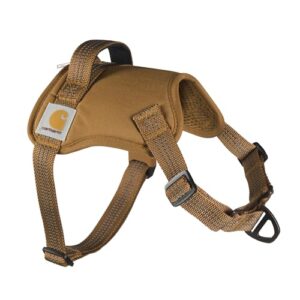
Carhartt’s workwear reputation carries into their dog gear. The Nylon Duck No Pull Vest uses a martingale chest strap that gently redirects pulling rather than punishing it — a practical choice for dogs still learning leash manners.
Built from 500-denier polyester with Rain Defender water-repellent coating, it holds up in light rain without complaint. Reflective stitching keeps your dog visible on dawn or dusk walks, and the spacer mesh backing lets air circulate so bigger, active breeds don’t overheat.
| Best For | Dog owners with large, active, or leash-pulling breeds who need a durable, weather-resistant harness for daily walks and outdoor adventures. |
|---|---|
| Leash Attachments | Single back attachment with martingale chest strap |
| Pull Control | Martingale chest strap reduces pulling |
| Material | 500-denier polyester, nylon, and mesh |
| Chest Girth Range | 26″–35″ (Large) |
| Low-Light Visibility | Reflective low-light stitching |
| Top Handle | No |
| Additional Features |
|
- The martingale chest strap gently discourages pulling without causing discomfort, making it great for dogs still learning leash manners.
- Rain Defender DWR coating and tough 500-denier polyester hold up well in wet or rugged outdoor conditions.
- Reflective stitching and breathable mesh backing make it a practical choice for low-light walks and high-energy dogs that need airflow.
- The over-the-head design can be a challenge for dogs that are sensitive about things going over their face.
- Fit issues — like a looser neck area or improper adjustment — can cause sliding or potential skin irritation.
- May not be suitable for dogs with physical impairments or unusual body shapes that make a secure fit difficult to achieve.
3. Ruffwear Front Range Reflective Dog Harness
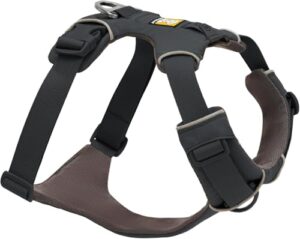
Ruffwear built the Front Range Reflective for dogs that actually go places. Four adjustment points let you dial in the fit for almost any body shape.
The aluminum V-ring on the back is perfect for casual walks, while the reinforced chest clip redirects pulling dogs without harsh corrections. Closed-cell foam padding across the chest and belly means your dog won’t arrive home with rubbed skin after a long hike.
Reflective trim plus a dedicated light loop makes early morning or evening walks noticeably safer.
| Best For | Active dog owners who need a versatile, comfortable harness for everything from daily walks to long hikes with dogs that tend to pull. |
|---|---|
| Leash Attachments | Dual points: back aluminum V-ring and front chest webbing |
| Pull Control | Front chest attachment point improves control |
| Material | Polyester |
| Chest Girth Range | Adjustable via four-point system |
| Low-Light Visibility | Integrated reflective trim |
| Top Handle | No |
| Additional Features |
|
- Dual attachment points (aluminum back ring reinforced chest clip) give you real control without resorting to harsh corrections
- Closed-cell foam padding on the chest and belly keeps your dog comfortable during long outings with no chafing
- Reflective trim and a dedicated light loop make low-light walks noticeably safer
- Getting a symmetrical fit can take some fiddling, especially the first time
- The head opening runs a bit snug, which can make putting it on a challenge
- The top attachment ring is plastic, not metal — a letdown given the otherwise solid construction
Harness Mistakes to Avoid
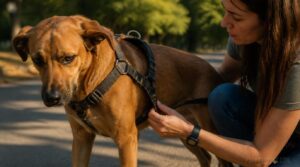
Even the right gear can cause problems if it’s not being used correctly. A few common mistakes can undermine your dog’s comfort, safety, and training progress without you even realizing it. Here are the key ones to watch for.
Too Loose or Tight
Getting the fit wrong is one of the easiest mistakes to make. A gear that’s too loose shifts under the jaw, causing skin irritation and losing chest control. One that’s too tight restricts shoulder mobility and compresses the trachea.
- Red marks or fur loss signal poor fit
- Gaps mean slipping risk
- Indentations mean constriction
Measure chest girth and neck circumference every time.
Ignoring Leash Training
A gear won’t fix pulling on its own — it’s a tool, not a shortcut. Leash training still matters. Dogs that skip structured practice tend to scan the environment instead of checking in with you, and high arousal outdoors makes that worse.
Start "watch me" cues indoors, then transfer them outside gradually, rewarding every glance back your way.
Using Wrong Clip Style
Leash training builds the foundation, but even a well-trained dog can struggle if your clip style doesn’t match the gear design.
A mismatched clip creates uneven pressure distribution, concentrating leash weight on one narrow point — enough to cause chafing or skin irritation over time. Clips that rotate or slip also reduce control, which can encourage pulling or lunging rather than calm walking.
Letting Dogs Pull Constantly
Clip style matters, but so does what happens after you clip in. Letting your dog pull constantly trains them to expect forward momentum — and the gear becomes a brace, not a tool.
Repeated hard pulling strains joints and builds muscle imbalances over time. Dogs also learn that lunging gets results, which raises arousal and makes calm walking harder to achieve.
Skipping Regular Fit Checks
Most dogs change shape over time — weight shifts, coats thicken, puppies grow fast. Regular fit checks catch these changes before they cause problems.
A loose body gear drifts toward the neck, putting pressure exactly where you’re trying to avoid it. Frayed buckles and compressed padding fail quietly. Check the fit, hardware, and reflective strips monthly.
Frequently Asked Questions (FAQs)
Can harnesses help dogs with anxiety during walks?
Yes — some dogs freeze or bolt when overwhelmed, while others stay grounded. A well-fitted dog gear reduces airway pressure and allows calm, steady guidance, supporting canine behavior modification during stressful walks.
How often should harnesses be replaced or upgraded?
Replace your dog’s gear every 12–18 months with daily use, or every 6 months for active dogs. Check weekly for fraying, cracked padding, or stiff hardware — any of these means it’s time for new dog walking gear.
Are harnesses safe for dogs with back injuries?
A collar concentrates force on a fragile neck; a gear spreads it across the ribcage and chest, keeping spinal load distributed and neck torsion minimal — making body harnesses the safer choice for dogs with back injuries.
Do harnesses work well in cold or wet weather?
Yes — most quality harnesses handle cold and wet weather well. Waterproof-rated fabrics resist moisture, reflective stitching stays visible in low light, and quick-release buckles keep functioning even after exposure to salt, slush, and ice.
Can two dogs share the same harness size?
One size doesn’t fit all. Chest girth, neck circumference, and body shape vary between dogs, so even within the same breed, a shared gear size risks poor fit, rubbing, or escape.
Conclusion
A leash without thought is just a rope. Knowing when to use a gear instead of leash is what separates reactive guesswork from informed, confident care.
The collar has its place—identification, calm strolls, trained dogs who walk gently beside you. But when anatomy, breed, or behavior says otherwise, the gear becomes the smarter choice.
Match your gear to your dog, not your convenience. That’s the decision your dog’s body has been waiting for.
- https://www.petmd.com/dog/care/why-flat-faced-breeds-need-dog-harnesses-instead-collars
- https://news.orvis.com/dogs/dog-collars-vs-harnesses
- https://www.happyhounduniversity.com/single-post/harnesses-the-good-the-bad-and-the-ugly
- https://pmc.ncbi.nlm.nih.gov/articles/PMC8450523
- https://www.dogpartners.ca/harness_the_energy