This site is supported by our readers. We may earn a commission, at no cost to you, if you purchase through links.

Every autumn, something notable happens beneath your dog’s fur — follicles that spent summer in a resting state suddenly switch gears, triggered not by a calendar but by the subtle shortening of daylight.
The pineal gland detects those shrinking hours of light, releases a surge of melatonin, and quietly sets off a hormonal chain reaction that transforms your dog’s coat from the inside out.
Most owners notice the extra fur on their couch before they understand what’s actually driving it.
Winter coat growth in dogs isn’t random shedding — it’s a precisely coordinated biological process shaped by hormones, breed genetics, environment, and nutrition.
Understanding how it works helps you support it better.
Table Of Contents
- Key Takeaways
- What is a Winter Coat?
- What Triggers Coat Growth?
- How Melatonin Affects Fur Growth
- Breed Traits That Shape Coats
- Indoor Dogs Grow Coats Differently
- How Long Winter Coats Take
- Nutrition for Healthy Coat Growth
- Health Problems That Affect Coats
- Grooming a Growing Winter Coat
- Frequently Asked Questions (FAQs)
- What triggers a dog to grow a winter coat?
- Should you brush your dog while they’re growing their winter coat?
- Can spaying or neutering affect winter coat growth?
- At what age do puppies grow their first winter coat?
- Should dogs wear jackets despite having thick coats?
- Does stress or anxiety impact seasonal coat changes?
- Conclusion
Key Takeaways
- Your dog’s winter coat isn’t random fluff — it’s triggered by shorter daylight hours, which prompt the pineal gland to release melatonin and kick off a hormonal chain reaction that thickens the undercoat.
- Breed genetics play a huge role, so double-coated dogs like Huskies grow much heavier winter coats than single-coated breeds like Greyhounds, who barely register the seasonal shift.
- Indoor dogs often develop softer, delayed winter coats because artificial light suppresses melatonin and indoor heat removes the thermal signals the body needs to build real insulation.
- Coat quality depends heavily on what your dog eats — enough protein builds strong hair strands, while omega-3 fatty acids and key vitamins keep the skin healthy enough to support steady growth.
What is a Winter Coat?
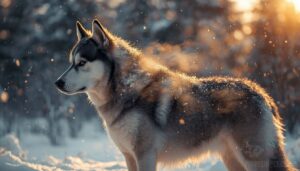
A dog’s winter coat isn’t just extra fluff — it’s actually a well-structured system built for cold-weather survival. It’s made up of two distinct layers, each doing a different job to keep your dog warm and protected.
Think of it as nature’s own layering system — you can see exactly how it works in this breakdown of how double-coated dogs handle cold weather.
Here’s what those layers are and why they matter.
Undercoat Vs. Guard Hairs
Your dog’s double coat is actually two layers working together.
The undercoat sits close to the skin — short, dense, and wavy — acting as a thermal insulation layer by trapping warm air.
Guard hairs extend above it, longer and coarser, providing barrier function and water repellency.
That texture contrast isn’t cosmetic; it’s functional layer interaction that keeps your dog warm and dry.
Regular maintenance is important because dense undercoat requires regular brushing.
How Winter Coats Differ From Summer Coats
That layered structure changes dramatically between seasons. Your dog’s winter coat isn’t just thicker — it’s built differently, with greater undercoat growth and higher insulation loft to trap warmth.
Three key shifts define seasonal coat change:
- Increased coat density and a tighter wind barrier design
- Enhanced moisture management through denser guard hair weaving
- Longer length and coverage with deliberate ventilation tradeoffs
Why Coat Thickness Matters for Insulation
Thickness isn’t just about warmth — it’s about physics.
denser undercoat creates more air pocket density near the skin, which directly slows thermal conductivity and reduces heat loss. That layered double coat also delivers real wind buffering, keeping convective drafts from stripping warmth away.
moisture retention improves, since more fiber volume holds insulation longer during light dampness.
What Triggers Coat Growth?
Your dog’s coat doesn’t just grow on a whim — it’s responding to real signals happening around it every day. Several key factors work together to kick off that seasonal change each fall.
Here’s what’s actually driving it.
Seasonal Shedding and Regrowth
Shedding isn’t random — it follows a precise cycle that your dog’s body runs on autopilot. Follicle Activity Patterns shift in early fall, triggering the Shedding Cycle Overlap where old summer fur releases while new growth begins simultaneously. Skin Sensitivity Shifts during this phase are normal.
Watch for:
- Gradual shedding spanning several weeks before peak coat density arrives
- Uneven texture as new, softer fur grows alongside mature guard hairs
- Increased matting risk around collars and leg joints during seasonal shedding
- Heightened Seasonal Parasite Load irritates more sensitive transitional skin
- Humidity Influence softens undercoat texture during coat changeover periods
Daylight Changes and Photoperiod Cues
Your dog’s coat doesn’t respond to a thermometer — it reacts to a calendar. Through Photoperiod Integration, the body tracks Day Length Thresholds using Circadian Light Reset signals at Dawn Dusk Timing.
This Nonlinear Light Response means small daylight shifts trigger big hormonal changes. The day length effect on dogs activates melatonin, making the photoperiodic response — and the role of photoperiod and melatonin in dogs — central to coat growth.
Temperature Drops and Coat Density
Cold doesn’t just make your dog shiver — it actively signals the body to grow a denser undercoat.
Good nutrition supports that process too, since a quality diet helps your pup through every blue heeler coat growth stage.
Three environmental cues drive this response:
- Temperature drops trigger Cold Acclimation, increasing undercoat loft for better thermal insulation
- Wind Chill Insulation needs push coat thickness higher in exposed dogs
- Moisture Impact collapses fur loft, reducing the protective Skin Microclimate
Heat Transfer slows when that dense layer traps air close to skin.
How Melatonin Affects Fur Growth
Your dog’s body doesn’t just react to cold temperatures — it actually tracks the calendar through hormones. Melatonin is the key messenger that kicks the whole process off, working alongside other hormones to signal that winter is coming.
Here’s how that hormonal chain reaction unfolds.
Melatonin Release in Shorter Days
As fall arrives and nights stretch longer, your dog’s pineal gland quietly gets to work. Reduced daylight triggers a circadian phase shift, prompting increased pineal gland activity that extends the melatonin signal length well into the night.
This dim light onset pattern tells your dog’s body that winter is near. Shorter days mean a longer photoperiod darkness window — and that hormonal regulation of canine fur begins here.
Hormonal Shifts That Start Coat Change
Once melatonin peaks, it sets off a hormone cascade timing sequence your dog’s body follows every year. Pineal gland signaling suppresses prolactin, and that prolactin surge drop tells follicles to shift into growth mode. Circadian rhythm modulation keeps this feedback loop regulation precise.
Here’s what the endocrine system chain actually triggers:
- Melatonin rises with longer nights
- Prolactin levels fall in response
- Follicles enter the active growth phase
- Hormonal regulation of canine fur accelerates
- Photoperiod cues lock the timing in place
Thyroid and Other Endocrine Influences
Thyroid hormone metabolism plays a quiet but powerful role here. Your dog’s thyroid produces T4, which tissues convert to the active T3 through peripheral T3 conversion — directly influencing how follicles grow fur.
TSH feedback loop keeps this calibrated, but hypothyroidism slows coat growth while hyperthyroidism thins it.
Cortisol stress impact and growth hormone interaction also shape the endocrine system’s overall effect on seasonal coat quality.
Breed Traits That Shape Coats
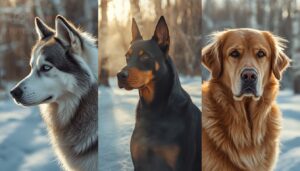
Not every dog reacts to winter the same way, and a big part of that comes down to genetics. dog’s breed shapes how much undercoat they grow, how dense it gets, and how quickly the change happens.
Here’s what drives those differences.
Double-coated Vs. Single-coated Breeds
Not every dog faces winter the same way — and that comes down to coat structure. Double coat breeds like Siberian Huskies have a dense undercoat beneath coarser guard hairs, giving them natural thermal regulation.
Single coat breeds, like Greyhounds, rely on one thin fur layer, so seasonal behavior shifts matter less. These breed differences in coat thickness shape every aspect of winter coat maintenance.
Why Some Dogs Grow Heavier Undercoats
Dogs with cold adaptation genes — like Malamutes and Huskies — are wired to build a thicker undercoat when photoperiod and melatonin signals arrive each fall. Their breed hormonal traits enhance how follicles respond to environmental cues, directing nutrient allocation and skin blood flow toward rapid undercoat production.
This seasonal metabolism shift is stronger in these breeds than in most others.
Genetics, Length, and Density Differences
Genetics shape more than just how a coat looks — they determine how it grows. Three inherited traits work together to define your dog’s winter coat:
- Follicle Count Variation — more follicles mean denser fur
- Shaft Length Genes — allelic influence sets how long hairs grow before resting
- Density Trade-offs — coat layer genetics often favor either length or thickness, rarely both equally
Indoor Dogs Grow Coats Differently
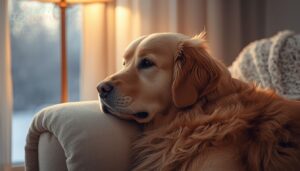
Most dogs living indoors don’t follow the same coat schedule as their outdoor counterparts — and there’s a real biological reason for that. Where your dog spends most of its time actually shapes how its body reads the seasons.
Here’s how indoor living changes the coat growth process in three key ways.
Artificial Light and Delayed Coat Changes
If your dog lives mostly indoors, artificial light quietly interferes with their natural coat timing. Your home’s LEDs emit blue wavelengths that cause Blue Light Suppression of melatonin — the pineal gland never fully receives the "short day" signal that triggers winter fur development. Evening Light Exposure extends perceived daylight, creating Artificial Photoperiod Extension that delays the coat switch.
| Light Source | LED Spectral Impact | Effect on Coat Timing |
|---|---|---|
| Overhead LEDs | High blue wavelength output | Suppresses melatonin production |
| Evening lamps | Extends perceived daylight length | Delays winter coat trigger |
| TV/screen glow | Late-night Circadian Rhythm Disruption | Desynchronizes pineal gland function |
| Natural window light | Accurate daylight length effects | Promotes normal photoperiodism |
| Dimmed warm bulbs | Reduced blue content | Minimal melatonin interference |
Dimming lights after sunset helps restore the photoperiod signal your dog’s biology depends on.
Indoor Heat and Softer Undercoats
Beyond light, Indoor Temperature Regulation plays an equally quiet role. When your home stays warm all day, your dog’s body simply doesn’t receive the thermal cues that signal heavy undercoat buildup.
Here’s what that means in practice:
- Reduced heat loss weakens the insulation demand
- Humidity Impact from heating systems softens undercoat texture
- Airflow and Insulation between fur layers decrease
- Heat Skin Changes slow follicle activity in Thermal Comfort Zones
Outdoor Dogs and Stronger Seasonal Shifts
Outdoor dogs face the full force of photoperiod shifts, wind chill effects, and ground surface temperature drops — all at once. That combination drives stronger, earlier seasonal coat changes than you’ll see in indoor dogs. Snow moisture impact and outdoor exercise frequency also push the body to prioritize thermal insulation.
Seasonal stress behaviors like reduced activity signal the system further, making the indoor vs. outdoor dogs’ difference genuinely measurable.
How Long Winter Coats Take
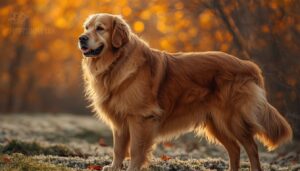
Winter coat growth doesn’t happen overnight — it follows a fairly predictable schedule that most dog owners can learn to recognize. Knowing the timeline helps you understand what’s normal and when to expect changes.
Here’s how the process usually unfolds from early fall through midwinter.
Typical 4- to 6-week Transition
The seasonal coat change normally unfolds over 4 to 6 weeks, driven by photoperiod shifts and rising melatonin that triggers hormonal factors controlling undercoat development.
Don’t expect overnight results — regional growth variance means your dog’s back and sides often thicken before other areas catch up.
Watch for coat uniformity development, increased skin oil distribution from brushing, and the energy metabolism shift that signals your dog’s body is actively rebuilding insulation.
When Shedding Usually Starts in Fall
For most dogs, the seasonal shedding cycle kicks off around September, when shorter days and a temperature drop trigger Seasonal Hormone Fluctuations.
Hormonal Peak Timing varies by Latitude Daylight Variation and Regional Climate Influence, but Owner Detection Methods are straightforward — watch for:
- Clumps of loose undercoat during brushing
- Dull, patchy coat texture
- Increased fur on furniture
- Uneven photoperiod-driven fall coat growth patterns
Peak Coat Thickness in Midwinter
By midwinter, your dog’s double coat hits its peak — undercoat loft is highest, guard hair coverage is fullest, and thermal insulation is working at maximum capacity.
Photoperiod and melatonin have done their job.
Zone thickness variation means the back and chest are densest, while ears and belly stay thinner.
Wind resistance improves considerably when grooming effects are managed well, keeping the coat fluffy and mat‑free.
Nutrition for Healthy Coat Growth
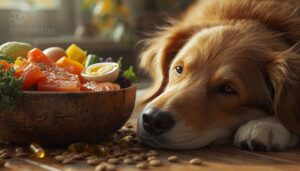
What your dog eats directly affects how well their winter coat comes in. The right nutrients fuel the follicles that grow the thick, protective undercoat your dog needs as temperatures drop.
Here’s what to focus on during coat-growth season.
Protein for Keratin Production
Your dog’s coat is fundamentally built from protein — specifically keratin, which depends on a steady supply of essential amino acids to form properly. Cysteine supply matters most here, because cysteine drives disulfide bond formation, giving each hair strand its structural strength. Without adequate dietary protein quality, protein turnover slows, and hair follicle health suffers noticeably.
A dog’s coat is built from keratin, and without enough protein, every strand pays the price
Watch for these nutritional impacts on coat health signals:
- Dull, brittle fur that breaks easily
- Uneven or patchy winter coat development
- Excessive shedding outside normal seasonal timing
- Slower regrowth after the fall change period
Prioritizing protein intake keeps coat growth on track all season.
Omega-3 and Omega-6 Fatty Acids
Fatty acids do more than add shine — they shape how your dog’s skin holds up under seasonal stress.
Omega-3s like EPA and DHA from fish oil get woven directly into cell membranes, influencing inflammation modulation through eicosanoid balance. Omega-6s matter too, but the dietary ratio between both essential fatty acids determines whether skin stays resilient. Prioritize marine-sourced omega-3s for the strongest coat support.
Vitamin and Calorie Needs During Growth
Vitamins and calories work together behind the scenes — when one falls short, coat quality usually pays the price first.
- Calorie budgeting matters: deficits push the body away from fur growth.
- Vitamin A balance promotes follicle health without fat‑soluble accumulation risk.
- B‑vitamin synergy keeps energy metabolism running for steady hair renewal.
- Zinc optimization through a balanced diet prevents rough, patchy texture.
- Energy density in growth‑formulated nutrition covers both body and coat demands.
Health Problems That Affect Coats
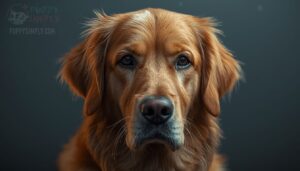
Even with the right food and proper grooming, some dogs still struggle to grow a healthy winter coat — and the reason often comes down to what’s happening inside their body. Certain health conditions interfere directly with how hair follicles function, disrupting the normal cycle of growth and shedding.
Here’s what you should know about the most common issues that can affect your dog’s coat.
Hypothyroidism and Poor Coat Quality
When thyroid function drops, it shows up fast in your dog’s coat.
Hypothyroidism disrupts the follicle cycle, leaving behind dry dull hair, symmetrical alopecia along the flanks and thighs, and skin hyperpigmentation.
Breed coat variability means some dogs look woolly, others just patchy.
Thyroid hormone therapy often reverses these changes — but untreated, endocrine disorders affecting coat quality tend to worsen quietly over time.
Skin Infections and Parasite Irritation
Beyond thyroid issues, parasites can quietly disrupt your dog’s coat just as much. A mite infestation triggers intense scratching that breaks the skin barrier, opening the door to secondary bacterial infection and hot spots.
Flea allergy dermatitis, lice crust lesions, and cutaneous larva migrans cause similar damage — leaving behind dry skin, flaky skin, and allergic dermatitis that stalls healthy fur growth.
Signs of Abnormal Shedding or Thinning
Sometimes coat problems go past normal seasonal shedding. Watch for these warning signs that point to something deeper affecting your dog’s skin health:
- Clump shedding — handfuls coming out at once, not a gradual change
- Patchy alopecia — bald patches that expand or don’t fill back in
- Patterned thinning — consistent hair loss zones hinting at thyroid function issues
- Brittle texture — broken, dull strands instead of intact hairs
- Delayed regrowth — excessive shedding that never fully resets by midwinter
Grooming a Growing Winter Coat
growing winter coat needs a little extra attention to stay healthy and tangle‑free. The good news is that few simple habits go a long way during this seasonal shift.
what to focus on as your dog’s coat fills in.
Brushing to Remove Loose Undercoat
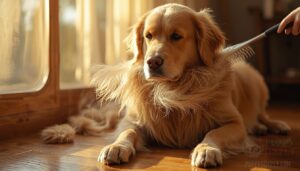
Regular brushing is your first line of defense during seasonal coat changes. Use an undercoat rake with gentle pressure, moving in the direction of coat lay to lift loose hair without stressing the skin.
Long, even strokes work better than short scrubbing. Aim for weekly sessions — a consistent grooming routine keeps the undercoat manageable and protects skin comfort throughout the period.
De-shedding Tools During Coat Changes
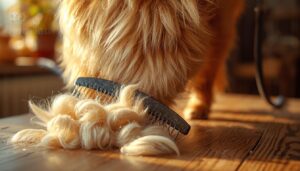
When your dog hits peak shedding season, a Curved Tooth Rake does what a slicker brush simply can’t — it reaches deeper layers to pull out loose undercoat without cutting guard hairs. Unlike clippers (Tool vs Clippers), these tools preserve topcoat structure.
Use an Ergonomic Handle Design for controlled passes:
- Apply a Gentle Pressure Glide — let the tool do the work
- Use an Airflow Dry Lift post-bath to release clumped undercoat
- Incorporate into your regular grooming routine every 4–6 weeks during seasonal shift
Bathing, Mat Prevention, and Paw Care
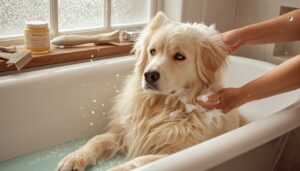
Bathing a thick winter coat takes a bit of strategy. Use lukewarm water for Water Temperature Control, and choose a hydrating shampoo to protect natural oils. Conditioner Application helps coat fibers slide past each other, reducing matting. Always dry thoroughly — lingering dampness knits tangles into mats fast.
| Step | Tool/Product | Why It Matters |
|---|---|---|
| Bathing | Hydrating shampoo | Preserves coat oils |
| Drying | Pet dryer, low heat | Prevents mat-forming moisture |
| Paw care | Dog-safe balm | helps Paw Pad Protection |
Non-Skid Mats keep your dog stable in the tub. After drying, run an undercoat rake through for winter coat grooming that lasts.
Frequently Asked Questions (FAQs)
What triggers a dog to grow a winter coat?
Your dog’s winter coat is triggered by a mix of environmental cues — shortening days, dropping temperatures, and hormonal shifts — that together signal the body it’s time to grow a thicker, warmer fur layer.
Should you brush your dog while they’re growing their winter coat?
Yes — brushing during coat growth is essential.
Regular brushing removes loose undercoat before it mats, helps coat maintenance, and lets you do quick skin sensitivity checks while the new fur comes in.
Can spaying or neutering affect winter coat growth?
Yes, it can — though not in every dog.
Spaying removes ovarian hormones, subtly shifting the anagen-telogen ratio and altering gonadal hormone shift patterns, which may affect coat density variation in roughly 20% of cases.
At what age do puppies grow their first winter coat?
Most puppies begin their initial winter coat development around 4 to 6 months, when juvenile coat development shifts and hair follicle activity increases — though breed maturity age and photoperiod exposure shape the exact undercoat onset age.
Should dogs wear jackets despite having thick coats?
Even the thickest coat isn’t bulletproof. Wind, wet fur, and steep cold can strip warmth fast.
A jacket with water resistance, snug jacket fit, and wind barrier protection adds smart thermal insulation strategies in cold climates.
Does stress or anxiety impact seasonal coat changes?
Yes, stress does affect seasonal coat changes.
Cortisol effects from chronic anxiety disrupt circadian disruption patterns, delay melatonin timing, and trigger stress‑related shedding — making your dog’s coat look uneven or thin during transitions.
Conclusion
It’s almost funny — you spend autumn cursing the fur on your furniture, never realizing your dog’s body is quietly doing something impressive. Every strand accumulating on your couch is evidence of a finely tuned biological system responding to light, hormones, and genetics with precision most of us never notice.
Winter coat growth in dogs isn’t an inconvenience; it’s engineering. Support it with good nutrition, consistent grooming, and a vet’s eye for anything that looks off.
- https://bradshaw-holzapfel-lab.uoregon.edu/PDF/bradshaw_annrevecolsys2008.pdf
- https://www.merckvetmanual.com/dog-owners/skin-disorders-of-dogs/dermatitis-and-dermatologic-problems-in-dogs
- https://enviroliteracy.org/what-is-the-difference-between-ground-hair-and-guard-hair/
- https://huggingface.co/datasets/fhai50032/Be-More-Specific-USER/viewer/default/train?p=1
- https://en.wiktionary.org/wiki/guard_hairs