This site is supported by our readers. We may earn a commission, at no cost to you, if you purchase through links.

A single Labrador can shed enough fur in one week to stuff a small pillow—and that’s not during peak season. If you’ve ever pulled a clump of undercoat the size of a golf ball from your dog’s back, you already know that coat length tells you almost nothing about how much fur ends up on your couch.
A short-haired Lab can out-shed a long-haired Collie by a wide margin, and the reason comes down to follicle density and coat structure.
Knowing your dog’s coat type gives you a real edge—the right tools, the right routine, and far fewer fur tumbleweeds rolling across your kitchen floor.
Table Of Contents
- Key Takeaways
- Heavy-Shedding Dog Coat Types
- Double Coats and Undercoat Density
- Short Double Coats Shed Heavily
- Long Double Coats Trap Fur
- Northern Breeds With Thick Coats
- Sporting and Herding Coat Patterns
- Seasonal Blowouts and Shedding Cycles
- Grooming Routine for Heavy Shedders
- Best Deshedding Tools by Coat
- Diet and Health Influence Shedding
- Frequently Asked Questions (FAQs)
- Conclusion
Key Takeaways
- Coat density, not length, drives how much fur your dog sheds — a short-haired Lab can easily out-shed a long-haired Collie.
- Double-coated breeds shed year-round because each follicle cycles independently, with two intense blowouts triggered by seasonal light changes each spring and fall.
- Your home’s thermostat quietly disrupts your dog’s natural shedding rhythm, spreading what should be two seasonal peaks into a steady, year-round fur problem.
- What your dog eats directly affects shedding — low protein shrinks hair bulbs within two weeks, while omega-3s strengthen the skin barrier and reduce daily fur loss.
Heavy-Shedding Dog Coat Types
Not all heavy shedders look the same — and that’s exactly what trips up most dog owners. Your dog’s coat type is the real clue to how much fur you’ll find on your couch.
Double-coated breeds are especially tricky, and if you’re navigating that awkward puppy phase, this guide to soft fluffy coat puppies and their grooming needs explains why the fur explosion you’re seeing is completely normal.
Here’s what to know about the coat traits that drive heavy shedding.
Coat Traits Linked to Heavy Shedding
Not all heavy shedding comes down to coat length — genetics drive a lot of it. The MC5R shedding gene, particularly in its sh/sh form, directly ramps up undercoat shedding and sebum production levels. The RSPO2 furnishing variant can actually suppress heavy shedding, regardless of breed.
Understanding your dog’s undercoat fiber type helps you predict seasonal shedding patterns and plan ahead.
Shedding peaks twice yearly during spring and fall, when the undercoat replacement shedding occurs.
Why Coat Density Matters More Than Length
Coat type tells part of the story, but follicle density is what really drives shedding volume. A short double coat packed with 3,000–5,000 follicles per square centimeter creates more hidden hair buildup than many long coats.
That density affects allergen load, air insulation, and grooming efficiency far more than length ever could — and it’s the real reason heavy-shedding dog breeds leave so much behind.
Hair Length Versus Undercoat Volume
Don’t let a short haircut fool you—the real measure of shedding lies in undercoat mass, not topcoat length. In double-coated breeds, the relationship between length and volume reveals the truth: a dense undercoat beneath short hair sheds just as heavily as one under long feathering.
- Shorthaired vs. longhaired shedding rates are nearly equal in heavy-shedding dog breeds.
- Perceived shedding often appears lower in longhaired dogs because loose fur stays trapped longer.
- Single-coated breeds lack this insulation-versus-appearance mismatch entirely.
This means single-coated dogs shed more visibly and consistently, as their lack of dense undercoat leaves no room for fur to hide before falling out.
How Coat Type Predicts Cleanup and Grooming Needs
Your dog’s coat type is basically a blueprint for your cleaning routine. Double coat breeds trigger a full vacuum schedule overhaul during seasonal blowouts—sometimes requiring twice-daily attention.
Long coats demand consistent tool rotation, alternating between rakes and slicker brushes to manage tangles and undercoats. Short, dense coats necessitate furniture safeguards, such as washable covers, to combat persistent shedding.
Smart shedding management begins with precise identification of your dog’s coat type. Understanding these characteristics ensures tailored care, minimizing cleanup and maintaining a healthier environment.
Double Coats and Undercoat Density
If you’ve ever wondered why your dog leaves a trail of fur everywhere, the answer is hiding inside the coat itself.
Double-coated dogs have two very different layers working together, and each one behaves in its own way. Here’s what’s actually going on beneath the surface.
Guard Hairs Versus Soft Undercoat
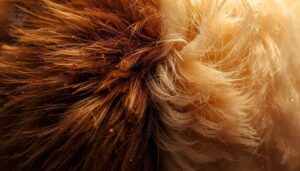
Think of your dog’s double coat as a two-layer system. The outer guard hairs are coarse and stiff — its barrier function is to block moisture, dirt, and debris. Beneath them, the undercoat is dense, soft, and packed closely against the skin.
This texture contrast between layers is what makes heavy-shedding dog breeds feel so plush — and so challenging to brush.
Why Undercoats Release The Most Fur

The undercoat is where most hair loss happens. Each fine fiber follows its own follicle cycle timing — growing, resting, then releasing. When hormonal shedding triggers kick in, hundreds of follicles let go at once.
Because genetic undercoat density packs far more hairs per inch than the outer layer, the impact of double coats on shedding is dramatic — and unavoidable.
Insulation Changes Across Seasons
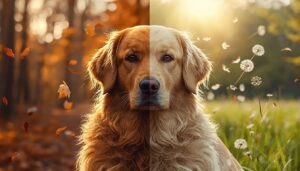
As daylight shrinks each fall, your dog’s body reads that signal and starts building a denser thermal layer—a photoperiod insulation shift driven by hormones, not temperature alone. Air pocket expansion within the double coat traps warmth close to the skin.
Come spring, that same seasonal coat change reverses, releasing seasonal fur density to boost heat exchange efficiency and keep your dog comfortable.
Why Double-coated Dogs Shed Year-round

Your double coat dog doesn’t get a break from shedding — and neither do you. That’s because compound follicle structure means each skin opening grows multiple hairs cycling at different rates. Follicle cycle dynamics keep undercoat hairs in constant turnover, driven by hormonal shedding triggers and environmental light impact.
For heavy shedding dog breeds, year-round shedding is simply how healthy dog coat types work.
Short Double Coats Shed Heavily
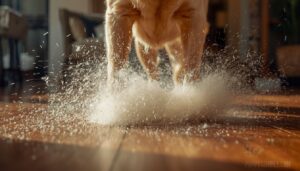
A short coat doesn’t mean a light shedder — and the Labrador Retriever proves that point every day. What’s happening underneath that sleek exterior might surprise you.
Here’s what you need to know about short double coats and why they’re anything but low-maintenance.
Why Short Hair Can Still Mean Heavy Shedding
A short coat doesn’t mean light shedding — not even close. Follicle density is the real driver. Short-haired heavy shedding dog breeds can pack 600–900 follicles per square centimeter, cycling constantly. Add a light cycle trigger each spring and fall, and you get a burst of loose fur across every surface.
Watch for these patterns:
- Short hairs scatter widely due to hair texture visibility
- Home heating influence disrupts natural shedding cycles year-round
- Nutrient-driven shedding worsens on low-protein diets
- Shorthaired vs longhaired shedding differs in feel, not volume
Labrador Retriever Coat Structure
The Labrador Retriever’s double coat functions like a wetsuit, featuring a tough outer layer and a soft undercoat. This oily guard layer provides essential weatherproofing, repelling water and cold. Their distinctive "otter tail" appearance arises from the tail’s dense coat.
The undercoat serves a critical insulation role but is also the source of heavy shedding. Texture standards are vital for the breed; woolly or silky coats are considered incorrect.
| Feature | Detail |
|---|---|
| Outer coat texture | Firm, dense, water-resistant |
| Undercoat role | Insulation and heavy shedding source |
Dense Undercoat in Compact Coats
That dense, woolly underlayer is where insulation efficiency truly lives — not in the length of the outer coat. Compact double-coated breeds like Rottweilers, Akitas, and Belgian Malinois carry surprising amounts of underwool for heat retention and seasonal thermoregulation. During blowouts, undercoat grooming becomes non-negotiable.
Watch for these traits across dog coat types and shedding rates:
- Woolly texture traps air, maximizing warmth
- Dense undercoat renews faster than guard hairs
- Heavy shedding dogs drop fur in volume, not just strands
This underlayer’s rapid renewal and air-trapping structure make it critical for thermoregulation, particularly in breeds with high shedding rates.
Loose Hair Visibility on Floors and Furniture
All that undercoat has to land somewhere — and where it lands matters. On light floors or dark upholstery, surface contrast makes every strand obvious. Finish sheen, fabric texture, and lighting conditions all change how much fur on furniture you notice. Short Lab hair practically glows on smooth hardwood.
Rubber cleaning tools and a strong vacuum cleaner for pet hair make managing pet hair in the home much easier.
Long Double Coats Trap Fur

Long outer coats don’t just look impressive — they quietly collects shed undercoat like a net catching leaves.
That trapped fur creates its own set of grooming challenges, from tangling to matting. Here’s what you need to know about how long double coats hold onto loose hair.
How Longer Outer Coats Hold Shed Undercoat
Think of your dog’s outer coat as a net — and every loose undercoat hair as something that gets caught in it. Through Coat Angle Interlock and Barrier Hair Friction, longer guard hairs physically trap shed fur before it can fall free. This Length Induced Retention creates Surface Pocket Formation deep in double-coat layers, driving Fur Volume Amplification that turns seasonal shedding patterns in dogs into a grooming challenge.
This process intensifies seasonal shedding patterns in dogs, particularly for double-coated breeds, where the amplified fur volume demands specialized grooming attention.
Golden Retriever Feathering and Loose Hair
Golden Retrievers take this trapping effect further because of where feathering grows — the backs of the legs, belly, neck, and tail. These Tangling Zones collect loose undercoat fast, especially during Seasonal Build-up in spring and fall.
Regular Brushing Areas like these need daily attention. For allergy-sensitive households, that trapped fur means more dander, making consistent dog coat grooming tips non-negotiable for this double-coated, heavy shedding breed.
Chow Chow Coat Complexity
Chow Chows come in two varieties — Rough versus Smooth — but both carry a true double coat that sheds heavily year-round.
The Rough coat’s long guard hairs trap shed undercoat beneath the lion-like mane and distinct neck ruff, making its removal tricky.
That texture contrast between coarse outer and woolly inner layers demands consistent grooming tips customized specifically to these heavy-shedding dogs.
Matting Risks in Thick, Longer Coats
Thick, longer coats look beautiful — but they hide trouble underneath. Friction hotspots like the armpits, behind the ears, and under strap pressure points trap shed undercoat beneath the outer layer.
Spotted moisture from rain or swimming turns loose hair into tight knots fast. Preventing matting in thick-coated dogs starts with catching hidden undercoat early, before damp coat hazards seal it in.
Northern Breeds With Thick Coats
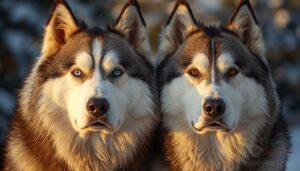
Northern breeds like the Siberian Husky and Alaskan Malamute take shedding to a whole new level. Their coats were built for brutal winters, and that same design means serious fur management for you.
Here’s what you need to know about how these thick coats actually work.
Siberian Husky Blowout Patterns
Siberian Huskies don’t just shed — they unload. Photoperiod triggers signal their double coat to release the undercoat in clumps that can fill a paper bag daily.
Spring heavy shedding is the bigger event; male blowing frequency drops to once yearly, while females cycle twice.
Regional climate impact and humidity influence your timeline, so expect three to six weeks of serious clean-up.
Alaskan Malamute Year-round Shedding
Unlike the Husky’s dramatic seasonal dump, the Alaskan Malamute sheds year-round — no off-switch. Their dense double coat releases clumps steadily, creating fur accumulation zones on furniture and floors every single week.
Artificial light cycles indoors blur natural shedding signals, spreading hair loss across all seasons. Low humidity affects skin health too, increasing flaking.
Weekly brushing strategies are your best clump prevention technique.
Cold-weather Coat Function
That double coat isn’t just fur — it’s an engineered thermal system. The soft undercoat traps still air against the skin for insulation and heat retention, while guard hairs act as a wind barrier and provide moisture repellency.
Together, they handle thermal regulation and energy conservation, ensuring the dog’s body doesn’t burn through calories staying warm.
Heavy shedding and seasonal coat blowout are how this system resets.
Why Northern Breeds Drop Fur in Clumps
Ever wonder why your Siberian Husky or Alaskan Malamute leaves fur tumbleweeds—not just loose strands—across your floors? It comes down to genetic shedding timing and follicle synchronization. A hormonal trigger cycle, driven by changes in daylight, pushes nearly 90% of the undercoat into a resting phase simultaneously.
Huskies and Malamutes shed in tumbleweeds because daylight triggers 90% of their undercoat to release at once
Evolutionary coat adaptation makes this clump formation mechanics possible:
- Undercoat fibers interlock near the skin, forming cohesive clumps up to a golf-ball size.
- Guard hairs hold clumps in place until the seasonal coat blowout peaks around the 10th day.
- Brushing your heavy-shedding dog pulls out 2–4-ounce clumps per stroke.
- New growth begins pushing up immediately beneath the released double coat.
Sporting and Herding Coat Patterns

Sporting and herding breeds bring their own set of shedding quirks to the table.
German Shepherds, Golden Retrievers, and Labrador Retrievers each handles coat loss a little differently — and that affects how you’ll manage fur at home. Here’s what you need to know about each one.
German Shepherd Continuous Shedding
German Shepherds don’t take breaks — their double coat releases loose fur every single day. You’ll spot it on your couch, your clothes, your car. The undercoat is the real culprit, cycling through changes even between blowout seasons.
Stress-Induced Shedding, Hormonal Shedding Shifts, and Nutrient Deficiency Signs can all push that baseline higher.
Routine Grooming Frequency and Home Climate Influence help you stay ahead of it.
| Factor | Effect on Shedding |
|---|---|
| Shedding Season | Peaks in spring and fall |
| Heavy Shedding | Continues year-round |
Golden Retriever Seasonal Peaks
Golden Retrievers run on a reliable hormonal shedding cycle — spring blowouts occur from March through May, while fall peaks follow in September to November. That’s your double coat doing exactly what it was built to do.
Peak Duration Variability is real, though; consistent Grooming Tool Timing shortens blowouts to two weeks.
Daily brushing plus deshedding shampoo are your best Shedding Cleanup Hacks during heavy shedding season.
Labrador Retriever Steady Hair Loss
Unlike Golden Retrievers, Labrador Retrievers don’t follow a tidy seasonal shedding calendar. Their heavy shedding runs steadily all year. That dense undercoat keeps cycling through growth and replacement constantly, leaving hair on your floors and furniture even when the coat looks trim.
Regular brushing helps with dog coat maintenance, but watch for patchy loss — that can signal Hormone Imbalance, Parasite Shedding, Nutrient Deficiency, or Allergy Shedding worth exploring through Vet Diagnostics.
Differences Between Working and Family Heavy Shedders
Working dogs and family dogs both qualify as heavy shedding dogs, but where and how they shed differs. Outdoor performance coats on breeds like Huskies show stronger seasonal burst intensity because they’re constantly exposed to real weather shifts.
Family dogs with indoor lifestyles shed more evenly, spreading fur across sofas and rugs. Your grooming speed needs and fur buildup zones depend heavily on where your dog actually lives.
Seasonal Blowouts and Shedding Cycles
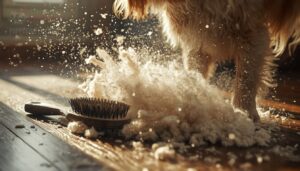
If you’ve ever found clumps of fur rolling across your floor like tumbleweeds, you’ve witnessed a seasonal blowout firsthand. Most double-coated dogs go through this twice a year; the timing, length, and intensity can vary more than you’d expect.
Here’s what each stage of the shedding cycle actually looks like.
Spring Coat Drop
Spring is when the real shedding season hits hardest. As daylight influence lengthens and temperature shifts warm the air, hormonal triggers signal double-coated breeds to release their winter undercoat fast. This seasonal coat blowout in dogs can last several weeks and fill your vacuum daily.
Here’s what to expect during spring shedding:
- clumps appear suddenly — loose fur comes out in tufts, not just strands
- allergy implications spike — more airborne dander means changing home air filters more often
- heavy shedding peaks mid-season — that’s your cue to brush daily
Fall Coat Transition
As days shorten, the Daylight Decline Cue triggers a Hormonal Coat Switch in double-coated breeds, signaling the start of fall shedding. This process initiates the transition from a light summer coat to a denser winter one.
Rising melatonin—the Melatonin Rise Effect—drives the Undercoat Pruning Phase, further refining the seasonal coat transformation.
Since seasonal coat shedding in dogs builds gradually, Pre-blowout Grooming now helps manage the impending heavy shedding effectively.
Typical Blowout Length
Most seasonal coat blowouts in dogs last about 2 to 4 weeks — think of it like a salon longevity window. Your dog’s hair blowout period has a natural refresh schedule built in.
Hair thickness plays a critical role: breeds with denser undercoats, like Huskies, blow their coats more intensely. Humidity’s impact can extend shedding duration, prolonging the process.
Stylist techniques — regular brushing and bathing — help manage seasonal blowouts faster, streamlining the natural cycle.
Indoor Temperature Effects on Shedding
Your home’s thermostat quietly shapes your dog’s coat cycle. Consistent indoor temperatures blur the seasonal signals that a double coat depends on, causing heavy shedding to spread out year-round instead of peaking twice.
Heating systems drive winter shedding as warm, dry air loosens follicles, while air conditioning can trigger early summer coat drops. These artificial climate shifts disrupt natural cycles, forcing dogs into prolonged or irregular shedding patterns.
Low humidity and temperature swing stress further compound the confusion, making indoor environments a significant factor in how climate impacts a dog’s coat. This creates ongoing care challenges for pet owners managing shedding in controlled homes.
What Normal Seasonal Shedding Looks Like
Normal seasonal shedding follows a predictable rhythm. Here’s what to watch for during a seasonal coat blowout in dogs:
- Peak Timeline: Shedding peaks August–November, with a smaller spring surge, lasting 6–12 weeks.
- Diffuse Distribution: Hair releases evenly across the scalp—no bald patches.
- Bulbed Strands: Shed hairs show a white root bulb, signaling healthy telogen release.
- Shower Drain Build-up: Expect heavier drain accumulation, not bare spots.
Regrowth signs follow shortly after.
Grooming Routine for Heavy Shedders

When you own a heavy shedder, grooming isn’t just about keeping them looking good — it’s about staying ahead of the fur before it takes over your home. The right routine makes a real difference, especially during those intense blowout periods.
Here’s what a solid grooming schedule looks like for heavy-shedding breeds.
Daily Brushing During Blowout Season
Daily brushing isn’t optional — it’s damage control during a dog’s seasonal coat blowout. Morning brushing benefits you most, as your dog’s coat is settled and easier to work through. Use the Short Pass Method: 30 seconds per quadrant, covering the full body efficiently.
An undercoat rake with Light Pressure Technique pulls dead fur without irritating the skin. Regular brushing cuts heavy shedding nearly in half.
Weekly Maintenance Between Peaks
Between blowouts, a steady rhythm keeps loose fur manageable. Aim for three to four brushing sessions a week — about 5 to 10 minutes each. Rotate between an undercoat rake and a deshedding tool to cover different coat layers.
Wash bedding weekly, run your vacuum with a HEPA filter routinely, and use grooming time for quick skin checks.
Regular brushing also spreads natural oils, keeping the coat healthier between peaks.
Bathing Before Major Coat Release
A well-timed bath can make your seasonal coat blowing out in dogs so much easier to manage. Use lukewarm water to open the coat fully, then work in a deshedding shampoo down to the skin. Pre-bath conditioning softens dead undercoat, and skin-friendly cleansers protect your double-coated breed’s skin barrier.
Once dry, loose fur practically falls away.
Professional Grooming Every 4 to 8 Weeks
Even after a good bath, dead undercoat keeps building up. That’s why professional grooming for heavy shedders every 4 to 8 weeks makes a real difference for double-coated breeds.
A full session covers what home brushing misses:
- Deshedding removes up to 90% of loose undercoat
- Nail Trimming with Dremel Grinding smooths edges safely
- Ear Cleaning clears debris and prevents infections
- Sanitary Trims keep hygiene areas clean
- Skin Inspections catch hotspots or dryness early
Preventing Undercoat Buildup and Matting
Between professional sessions, daily habits prevent undercoat buildup from turning into mats. Focus your undercoat rake on friction zones—behind the ears, under the collar, and along strap lines. Skin-level brushing removes dead coat before it packs tight.
After baths, post-bath drying and conditioning sprays simplify moisture management, especially during a seasonal coat blowout in dogs.
Best Deshedding Tools by Coat
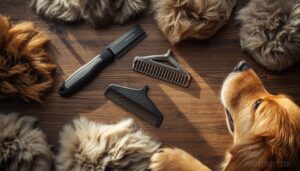
Not every brush works for every coat, and using the wrong one can leave half the undercoat behind. The right tool makes a real difference — less fur on your couch, less time grooming, and a happier dog.
Here’s what actually works, matched to your dog’s coat type.
Undercoat Rakes for Dense Coats
An undercoat rake is your best friend when tackling a dense, double-coated coat. These essential grooming tools for dog hair control even work on wet-coat grooming days.
Dual-row designs pull out more dead fur per pass, while precision pin shape impacts determine how deep the tool reaches without scratching skin.
Choose ergonomic grip benefits for longer sessions — your hand will thank you.
These essential grooming tools for dog hair control even work on wet coats.
Deshedding Tools for Loose Undercoat
When loose undercoat is flying everywhere, a dedicated deshedding tool makes all the difference. The FURminator’s serrated blade edges and stainless steel teeth reach beneath the topcoat without harming guard hairs.
Its self-cleaning brush button ejects collected fur instantly. An ergonomic handle keeps your grip steady during longer sessions.
Follow gentle usage guidelines — twice weekly max — and you’ll see real results fast.
Slicker Brushes for Longer Coats
Brushing a longer coat well starts with picking the right slicker brush. Long-pin designs reach beneath feathering to lift what shorter pins miss — a real Pin Length Benefits win. A Curved Head Advantage keeps pins in contact on rounded areas.
Look for these features:
- Firm Pin Flexibility for thick fur
- Ergonomic Handle for long sessions
- Self-Cleaning Feature to save time
- Wide Head for double-coated breeds
Rubber Curry Brushes for Short Coats
Short coats still mean serious dog shedding — and a rubber curry brush tackles that better than most grooming tools.
The silicone nubs grip loose fur and provide gentle skin stimulation in one pass.
| Feature | Benefit |
|---|---|
| Silicone Nubs | Lifts hair gently |
| Circular Motion | Loosens dead fur fast |
| Wet‑Coat Application | Works during baths |
| Short Coat Efficiency | Less buildup, more control |
High-velocity Dryers for Heavy Blowouts
A high-velocity dryer is a revolution during seasonal coat blowouts in dogs. These dryers push 130–320 CFM, blasting dead undercoat out before it hits your floor. Cone and flat-head nozzle types target different coat layers, while two-stage motors maintain consistent power.
For heavy-shedding dogs and double-coated breeds, this is one of the smartest grooming strategies you can add.
Dog owners should wear ear protection — they’re loud.
Diet and Health Influence Shedding

What your dog eats has a direct effect on how much fur ends up on your floors. A strong diet promotes healthy skin and a more stable coat — but gaps in nutrition can quietly make shedding worse.
Here’s what to know about the key factors that influence shedding from the inside out.
Protein’s Role in Coat Growth
Think of protein as the raw material your dog’s coat is literally built from. Keratin synthesis depends on a steady amino acid supply — especially cysteine needs and methionine cross-linking to form strong hair shafts. For double-coated breeds prone to heavy shedding, getting this right matters:
- Animal proteins deliver cysteine five times more efficiently than plant sources
- Adequate intake promotes anagen phase extension, keeping follicles actively growing longer
- Methionine cross-linking directly improves hair tensile strength — up to 150 grams per strand
- Protein deficits shrink hair bulbs within two weeks, accelerating loss
- A diet rich in protein maintains coat health nutrition year-round
Nutrition and shedding are tightly linked — don’t overlook your dog’s bowl.
Omega-3 Support for Skin and Fur
Protein builds the hair shaft, but omega-3 supplements keep the foundation underneath it healthy. Fish oil delivers EPA and DHA directly to skin tissue, reducing inflammation and sealing the moisture barrier. This results in fewer loose strands floating off double-coated breeds daily. Plant oils offer ALA conversion, though marine sources work faster.
| Omega-3 Type | Best Source | Primary Benefit |
|---|---|---|
| EPA Benefits | Fish/krill oil | Reduces skin inflammation |
| DHA Skin | Salmon, mackerel | Strengthens hair follicles |
| ALA Conversion | Flaxseed, chia | General coat support |
| Fish Oil Dosing | Vet-recommended mg/lb | Targets heavy shedding dogs |
| Omega-3 Supplements | Algae-based options | Aids nutrition and shedding control |
Hydration and Skin Barrier Health
Daily Water Consumption works quietly behind the scenes, much like omega-3s do. A 60-pound dog needs 30–60 ounces daily — less than that, and the skin lipid balance starts slipping fast.
Watch for these dehydration indicators:
- Tacky or dry gums
- Sunken eyes or lethargy
- Darker, reduced urine
- Increased flaking after brushing
- Dull, rough coat texture
Keep Indoor Humidity Levels near 30–50%, and mind bath temperature effects — hot water strips protective skin oils, worsening shedding.
When Shedding May Signal a Deficiency
Sometimes shedding isn’t just seasonal — it’s your dog’s way of flagging a nutritional gap. Protein Deficiency can push daily hair loss from a normal 50–100 hairs up to 500.
Zinc Deficiency causes patchy loss around the face and paws.
An Omega-3 Shortage dulls the coat and weakens the skin barrier.
Biotin Deficiency and Copper Deficiency exacerbate the problem, stripping pigment and structure.
When to Ask a Veterinarian About Excess Hair Loss
Beyond nutrition, some signs point to something more serious. If you notice any of these, book a vet visit:
- Visible skin lesions — red, scaly, or crusted patches beneath thinning fur
- Sudden patch loss or itching self‑trauma like biting and scratching raw spots
- Systemic illness signs — weight loss, lethargy, or increased thirst alongside canine hair loss
These pattern timing clues and veterinary advice for shedding problems can catch health conditions related to excessive shedding early.
Frequently Asked Questions (FAQs)
Can stress trigger excessive shedding in dogs?
Yes — stress can absolutely trigger shedding. Acute stress triggers like vet visits or fireworks can push loose fur out fast.
This hormonal shedding response is temporary, but chronic anxiety shedding may affect coat health long-term.
Do mixed breeds shed less than purebreds?
Not necessarily. Mixed coat genetics make inherited shedding variance unpredictable. Low‑shedding genes must actually be present — purebred predictability helps owners’ grooming expectations far more than a "mixed breed" label ever will.
At what age does heavy shedding begin?
Heavy shedding usually begins around 4 to 6 months, when the puppy coat shift kicks in.
For double-coated breeds, undercoat formation age and your dog’s first seasonal blowout often signal rising shedding levels fast.
Does spaying or neutering affect coat shedding?
Spaying and neutering shift shedding patterns due to hormonal changes. These procedures disrupt the gonadotropin influence, which can trigger undercoat thickening and alter seasonal cycles.
This disruption replaces predictable shedding events, known as "blowouts," with steady, year-round fur loss across a dog’s double coat.
Which environments worsen shedding in heavy-coat breeds?
Dry indoor air, heated rooms, dusty homes, humid climates, and rough contact areas all worsen shedding.
Climate’s impact on shedding is real — environmental factors influencing fur loss can turn a manageable coat into a full-time cleanup job.
Conclusion
Once you crack the code on heavy shedding dog coat types, you hold the skeleton key to a cleaner home and a healthier dog. Coat density, not length, drives the fur storm—and now you know how to read it.
Match your tools to your dog’s specific coat structure, stay consistent with brushing, and support the skin from the inside out. The fur won’t stop, but you’ll always stay one step ahead of it.