This site is supported by our readers. We may earn a commission, at no cost to you, if you purchase through links.
Some puppies stop you in your tracks—not because they did anything, but because coat looks impossibly soft, like something you’d find on a stuffed animal rather than a living creature. That feeling isn’t random.
Coat texture comes down to specific genetic traits, layer structure, and how well the puppy’s nutrition promotes healthy skin and fur.
Poodles, Samoyeds, Bichon Frises, and a handful of other breeds carry coats that stay plush well into adulthood—but each one comes with its own grooming demands and shedding patterns.
Knowing the difference helps you find a soft fluffy coat puppy that actually fits your home and your schedule.
Table Of Contents
Key Takeaways
- Breeds like Poodles, Samoyeds, Bichon Frises, and Coton de Tulears naturally carry the softest coats, but each one comes with its own grooming demands you’ll want to plan around before bringing one home.
- A puppy’s coat softness isn’t just luck — it comes down to genetics, double-layer structure, undercoat density, and what your pup eats and drinks every day.
- No dog is truly hypoallergenic, since allergens live in dander and saliva too, but low-shedding breeds like Havanese and Poodles are genuinely easier to manage in allergy-sensitive homes.
- Matching your lifestyle to your puppy’s coat type matters just as much as the breed itself — daily brushing, regular baths, and the right tools are what keep that soft, fluffy coat actually looking and feeling that way.
Best Soft Fluffy Puppy Breeds
Some puppies just stop you in your tracks — that ridiculous cloud of fluff, those soft curls you can’t help but touch. If you’re looking for a breed that delivers on that promise, you’re in the right place.
Here are six breeds that truly live up to the fluffy hype.
From petite Pomeranians to cuddly Bichon Frises, this guide to small fluffy dog breeds breaks down what makes each one such a perfect cozy-home companion.
Poodle Puppies and Velvet-like Curls
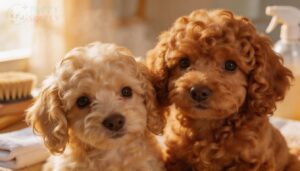
Poodle puppies are basically walking velvet — and that’s no accident. Their curly fur comes from a dominant Genetic Curl Gene, with the Curl Development Timeline kicking in around 6–8 months.
The first signs of curl usually emerge around six to eight months.
- Curls tighten gradually through 12–18 months
- Velvet Curl Maintenance needs brushing every day
- Curl Hydration Tips: weekly baths keep them bouncy
- Seasonal Curl Puffiness increases in humid weather
- Hypoallergenic coat traps dander, not the floor
Bichon Frise Puppies and Cottony Coats
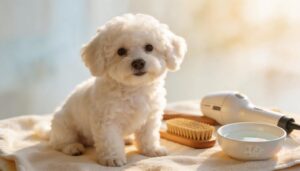
If poodles are velvet, Bichon Frise puppies are straight-up cotton balls. Their cottonlike coat pairs a dense undercoat with springy curls, delivering soft fluffy fur that practically begs to be touched.
That undercoat insulation benefits warmth without bulk.
Keep up with cottony coat maintenance — daily brushing, Gentle Drying Techniques, and Stain-Resistant Care — and you’ll nail coat brightness preservation on that hypoallergenic, cloud-white coat.
Samoyed Puppies and Cloud-like Fluff
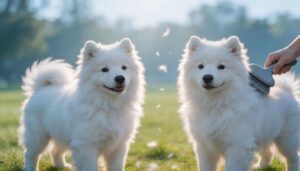
From cotton-soft to cloud-white — Samoyed puppies take fluffy to a whole new level. Their double-layered coat combines coarse guard hairs on the outside with a velvety undercoat underneath, creating that iconic cloudlike coat silhouette.
- Brush regularly for Fluff Retention Tips
- Limit sun exposure for Sunlight Yellowing Prevention
- Shape that Tail Feathering Shape during grooming
Wind Resistance Benefits come built‑in.
Havanese Puppies and Silky Soft Fur
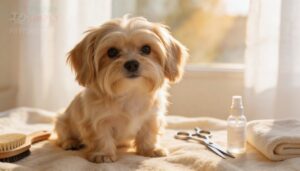
If Samoyeds are clouds, Havanese puppies are pure silk.
Their coat genetics produce long, straight-to-wavy fur with real Fur Sensory Appeal — soft like fine hair, never woolly.
That natural Coat Shine makes Grooming Schedule Optimization worth it: brush daily, use Coat Shine Boosters like detangling spray, and shape those facial Fringe Styling Techniques gently.
Bonus — they’re hypoallergenic, so your dog grooming tips actually help sensitive households breathe easier.
Shih Tzu Puppies and Flowing Coats
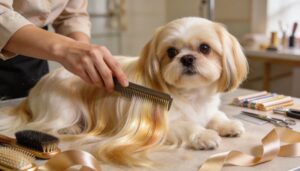
Few puppies pull off elegance quite like the Shih Tzu. Their soft coat grows into a floor-grazing cascade, and the Coat Maturity Timeline runs for about 12–18 months before it fully develops.
Here’s what makes grooming requirements for longhaired breeds so worth it:
- Facial Hair Styling frames those soulful eyes beautifully
- Coat Length Management keeps tangles from taking over
- Brush Type Selection — wide-tooth combs prevent breakage
- Seasonal Color Shifts add visual depth as they mature
Coton De Tulear Puppies and Cotton-soft Texture
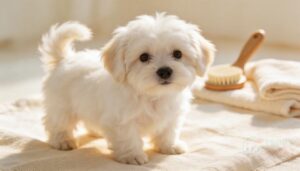
The Coton de Tulear might be the closest thing to carrying a cloud around. Their cotton-like fur features a unique Cotton Fiber Structure — fine, lightweight strands that hold a Plush Silhouette Maintenance even after play sessions.
That dreamy coat does need some upkeep, so it helps to know which low-maintenance affable dog breeds pair effortless charm with simpler grooming routines.
Most start nearly white, with soft Ivory Tint Highlights on ears or tail.
Regular brushing and gentle conditioning keep their soft plush coats meeting Show-Standard Color Uniformity, making these hypoallergenic dogs a dream for thoughtful dog grooming routines.
What Makes Puppy Coats Feel Soft
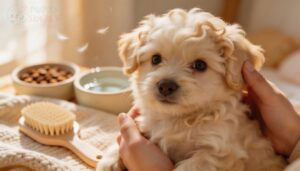
That irresistible softness you feel when you hold a fluffy puppy isn’t just luck — it comes down to real coat science. Everything from curl pattern to what your puppy eats plays a role in how their fur feels.
A puppy’s irresistible softness is pure coat science, shaped by curl pattern, nutrition, and everything in between
Here’s what actually shapes that plush, cloud-like texture.
Curly Coats Vs Silky Coats
Curl definition and silky slip are the two things that set these coats apart.
Dense curly coats form springy ringlets that stand away from the skin, giving soft plush coats their signature bounce.
A silky flowing coat, by contrast, lies flat with a smooth glide.
Curly hypoallergenic coat types trap loose hair inside those curls, while silky coats release it freely — meaning grooming requirements for long-haired breeds can surprise you fast.
Double Coats Vs Single Coats
Think of a double coat like a built-in thermal jacket — there’s a dense insulating undercoat, then a protective topcoat on top. That air trapping between layers is exactly what gives fluffy dog breeds their cloud-like feel and wind protection.
Single-coated dogs skip the undercoat entirely, which means:
- temperature regulation in cold weather
- grooming load overall
- seasonal blowouts to manage
- dog coat maintenance year-round
Double-layered coat dogs, though? Grooming requirements for double-haired breeds are noticeably higher, especially during shedding season.
Undercoat Density and Plush Texture
Undercoat density is what separates a truly plush coat from one that just looks fluffy. In dense plush coats, guard coat separation keeps the two layers distinct — and that space creates air pocket distribution, which is the real secret behind that soft, cloud-like feel.
soft coat maintenance preserves fiber diameter balance, so your doublelayered coat puppy stays irresistibly touchable year-round.
Puppy Coat Changes as Adults Develop
soft puppy fluff won’t last forever — and that’s completely normal. Texture Evolution begins around 4–6 months as Guard Hair Growth and Undercoat Formation reshape your pup’s feel and look.
- Coat turns thicker and coarser
- Color Stabilization creates visible patches during change
- Seasonal Shedding Shift signals your doublelayered coat puppy is maturing
Adjusting healthy soft dog coats for long-haired breeds early helps maintain healthy soft dog coats through dog coat shedding phases.
Nutrition and Hydration for Coat Softness
What your puppy eats shows up in their coat — really.
Omega-3 Fatty Acids from fish oil reduce dryness, while High Quality Protein builds strong, silky fur from the inside out. Biotin Enrichment promotes hair growth, and Mineral Supplementation keeps texture consistent.
Don’t overlook Hydration Management either — fresh water daily helps maintain healthy soft dog coats, especially for hypoallergenic dogs with silky fur.
Skin Health and Natural Oil Balance
Your pup’s skin does a lot of quiet work behind that fluffy exterior. Sebum Barrier oils protect the coat by locking in moisture, while Linoleic Acid promotes healthy skin structure underneath.
Keeping Skin pH Balance stable prevents dryness that dulls fur. For dog coat health, watch for:
- Anti-inflammatory oils that calm irritated skin
- Patch Sensitivity signs before trying new products
- Regular grooming to support hypoallergenic dogs with silky fur
Grooming Soft Fluffy Coat Puppies
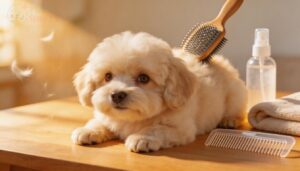
That soft, fluffy coat your puppy rocks doesn’t stay that way on its own — it needs real, consistent care to stay healthy and tangle-free.
The grooming doesn’t have to feel overwhelming once you know what your pup actually needs. Here’s what to focus on to keep that coat looking and feeling its best.
Brushing Frequency for Fluffy Puppies
How often you brush really depends on your puppy’s coat type.
Curly coats need daily or every-other-day brushing, while double coats do well with two to three sessions weekly.
That’s your dog coat brushing schedule sorted by coat-type frequency.
Bump it up during shedding seasons — those Seasonal Brushing Adjustments matter for mat-prevention timing.
Staying consistent makes grooming requirements for fluffy breeds much easier to manage.
Daily Care for Long-haired Breeds
Long silky coats need attention every single day — not just when tangles appear. Beyond brushing, your daily routine covers Ear Hair Maintenance, Paw Pad Hygiene, and Skin Soothing Routines that keep your dog comfortable year‑round.
- ear edges after walks to clear trapped debris
- paw pad fur to reduce dirt buildup between toes
- friction points like collar and armpit zones
- Adjust grooming volume during Seasonal Coat Adjustment periods
De-matting Tools and Detangling Spray
Mats sneak up fast on a fluffy coat, especially around the ears and legs. The right tools make all the difference.
| Tool | Best Use |
|---|---|
| Wide Tooth Brush | Gentle first-pass detangling |
| Slicker Brush Use | Penetrating thicker mats |
| Leave-In Spray | Ongoing slip during brushing |
| Tear-Free Formula | Safe near face and ears |
A leave-in spray with humectant ingredients keeps the soft coat pliable, helping prevent matting before it starts — a must for grooming requirements for long-haired breeds.
Bathing With Mild Puppy Shampoo
Bath time sets the tone for your puppy’s coat health. Use a pH Balanced Formula designed for dogs — it keeps their skin barrier intact without stripping natural oils. A Non-slip Bath Mat helps them stay calm and steady throughout.
For soft and plush dog coats, especially across hypoallergenic breeds with grooming requirements for longhaired breeds, these steps matter most:
- Wet gradually from neck to tail using lukewarm water
- Apply shampoo in gentle circles, avoiding eyes and ears with Gentle Eye Protection in mind
- Rinse thoroughly until water runs completely clear
- Follow Post-bath Drying with a soft towel, then consider Conditioner Application for curly or mat-prone coats
Regular grooming this way keeps soft coats genuinely soft.
Professional Trimming for Curly Breeds
Curly coats need more than a basic brush-out — they genuinely need a skilled hand behind the scissors. Clip Length Guidelines keeps curls springy rather than ragged, usually between half an inch and two inches.
Scissor Blending Techniques smooth transitions between body zones, while Facial Paw Shaping tidies high-tangle spots.
For Post-Trim Maintenance, keep brushing two to three times weekly.
Preventing Knots Around Ears, Legs, and Tail
Knots don’t announce themselves — they just quietly tighten overnight. Three spots need your attention most:
- Ear Section Brushing — Work from skin outward in small sections, using a Gentle Pull Hold near the roots
- Leg Sock Detangling — Brush inner thighs more often than the back
- Tail Base Drying — Moisture Management here prevents matting fast
Shedding and Allergy-Friendly Coat Types
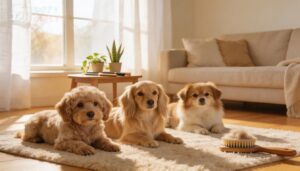
If you or someone in your home suffers from allergies, the type of coat your puppy carries matters more than you might think. Not all fluffy breeds shed the same way, and some are genuinely easier to live with than others.
Here’s what you need to know about shedding patterns and allergy-friendly coats before you bring one home.
Low-shedding Fluffy Puppy Breeds
If you want cuddle-friendly pets with low shedding, breeds like Poodles, Bichon Frise, Havanese, and Bolognese are a natural fit for any allergy-friendly home setup. Their coats come in beautiful coat color variations and align well with different owners’ lifestyle fits.
Regular grooming keeps these soft-coated dog breeds for families at their best year-round.
Hypoallergenic Coat Myths and Facts
Hypoallergenic sounds like a promise, but it’s really more of a suggestion. All dogs produce protein triggers — found in dander, saliva, and skin oils — that cause reactions, regardless of coat type.
- Allergen sources aren’t just fur; dander vs fur confusion is common
- Seasonal allergen peaks rise during heavy shedding periods
- Grooming impact is real — regular brushing reduces trapped proteins
- No hypoallergenic coat fully eliminates allergens from soft-coated dog breeds for families
Breeds That Trap Loose Hair
Some breeds don’t scatter hair everywhere — they hold onto it instead.
Poodles and Bichon Frises use curl pattern retention to trap loose strands within their soft coats, while Samoyeds rely on undercoat trapping mechanics to collect shedding fur deep in their fluffy white coat.
Hair accumulation zones tend to cluster behind ears and around joints, so regular grooming with the right grooming brush types helps prevent matting before it starts.
Seasonal Shedding in Double-coated Puppies
Double coat puppies go through two major shedding periods each year, driven by temperature change triggers and daylight cue influence — not just the calendar.
Undercoat release timing peaks in spring and fall, though indoor heating impact can blur that cycle into something more year‑round.
Puppy coat overlap can make coat shedding look heavier than expected, so consistent grooming requirements for double-coated breeds and smart coat maintenance tips matter most during those weeks.
Dander Control Through Regular Grooming
Regular grooming does more than keep your pup looking good — it actively pulls dander out before it drifts through your home. Brushing outdoors, focusing on ear dander removal and tail brush techniques, clears hidden flakes fast.
Glove grooming benefits pets that resist standard brushes.
After baths, drying particle control matters too — thorough drying keeps loose particles from going airborne. Skin hydration strategies round everything out.
Best Fluffy Breeds for Allergy-sensitive Homes
Once dander is under control, picking the right breed matters just as much. Poodles, Bichon Frise, and Havanese are the top most fluffy puppy breed guides for allergy-sensitive homes — their low-shedding coats support allergen reducing grooming routines naturally.
Pair that with pet free sleeping zones, environmental dust control, and indoor air management, and you’ll breathe easier. When possible, do allergy test trials before committing.
Choosing The Right Fluffy Puppy

Picking the right fluffy puppy isn’t just about which one looks the most huggable — it’s about finding a match that fits your home, lifestyle, and daily routine. The good news is there’s a soft-coated breed for just about every kind of owner.
Here’s what to think about before you fall head over heels.
Best Family-friendly Soft-coated Breeds
If you want a dog that actually fits your family, soft-coated breeds like the Bichon Frise, Poodle, and Havanese check nearly every box.
They’re cuddle-friendly pets with low shedding, respond well to Training Ease through positive reinforcement, and handle Kid Interaction with patience.
Living Space Compatibility and Exercise Needs are manageable, and routine Health Screening keeps these hypoallergenic dog breeds thriving long-term.
Small Fluffy Lap Dog Options
Five small breeds stand out if you’re looking for a fluffy lap dog that fits apartment life easily. The Maltese, Havanese, Bichon Frise, Coton de Tulear, and Cavalier King Charles Spaniel all share a manageable weight range of roughly 7 to 18 pounds.
Their apartment suitability is hard to beat, travel portability is a real bonus, and routine health screening keeps grooming costs predictable long-term.
Large Fluffy Companion Breeds
Large fluffy companion dogs bring a whole different energy to your home. The Bernese Mountain Dog, Newfoundland, Saint Bernard, Great Pyrenees, and Leonberger all tip the scales between 85 and 180 pounds.
Their soft-coated dog breeds for families appeal is undeniable, but Space Requirements, Exercise Needs, and Health Concerns are real. Lifespan Expectations run shorter, and Training Challenges demand consistency from day one.
Matching Coat Care to Your Schedule
Your schedule shapes which fluffy puppy actually works for you.
A Morning Brush Routine of just five minutes keeps tangles from forming overnight.
Stick to a Weekend Bath Schedule every three to six weeks, and use Evening Detangler after outdoor play.
Build a Holiday Grooming Planner, run a Monthly Tool Check, and your regular grooming stays smooth year‑round.
Climate and Coat Insulation Needs
Your puppy’s coat isn’t just cute — it’s climate gear. A Samoyed’s arctic breed coat insulation manages sub‑zero cold beautifully, while a Bichon’s airy curls suit temperate living. Wind chill impact and humidity and dampness effects matter too, since wet fur loses warmth fast.
- Double coat breeds handle cold‑climate dogs’ needs best
- Heat gain management matters in summer — watch for matting
- Shelter strategies reduce heat loss during long outdoor stays
- Activity heat generation helps resting puppies stay warmer briefly
Temperament, Cuddly Traits, and Trainability
Fluffy puppies aren’t just soft to hold — their gentle social behavior and calm interaction style make them genuinely easy to live with. Most learn responsive cue learning within two weeks, using short, consistent sessions.
Their affectionate lap preference and loyal bonding mean they stay close, making them ideal cuddle‑friendly pets and family‑friendly dogs with intelligent dog breeds topping the list.
Frequently Asked Questions (FAQs)
What dog breed has the softest coat?
The Samoyed wins hearts with its cloud-like, ultra-soft double coat, while the Coton de Tulear’s cotton-soft texture rivals it closely.
Both breeds showcase impressive Genetic Softness Markers and silky fur built for pure sensory delight.
How do I spot coat color changes in puppies?
Watch for a gradual shade shift in high-contrast area checks like ears and muzzle. Texture sheen indicators signal normal change.
Flag sudden patches — those are vet concern signs, not typical seasonal pigment timeline shifts.
Can sun exposure damage a puppys fluffy coat?
Yes, sun exposure can damage a puppy’s fluffy coat.
UV coat fading, sunburn risk, and heat stress are real concerns, so protective shading and regular grooming help in maintaining healthy soft dog coats.
What shampoo ingredients should I avoid for puppies?
sulfate irritants, preservative sensitizers, fragrance allergens, alcohol drying agents, and formaldehyde releasers.
These strip natural oils, trigger reactions, and damage soft coats.
Mild, hypoallergenic formulas keep coat care safe and simple.
At what age does a puppys adult coat fully develop?
Most puppies complete their coat maturity timeline between 12 and 18 months, though breed size impact matters — larger breeds may need up to 2 years for full growth phase milestones.
How does hydration affect a puppys coat texture?
Hydration-driven softness starts from the inside out.
When your puppy drinks enough water, moisture-enhanced flexibility keeps hair shafts smooth, water intake impact shows in hydration-linked shine, and moisture balance benefits deliver that silky, luxurious coat texture.
Conclusion
Nearly 70% of dog owners prioritize a soft, fluffy coat when choosing a breed. If you’re among them, finding the right soft fluffy coat puppy means balancing your lifestyle with their grooming needs.
By understanding breed-specific traits and committing to regular care, you can enjoy a lifetime of snuggles with your plush companion.
With patience and the right approach, your home can become a haven for a soft, cuddly friend that brings joy daily.
- https://developers.cloudflare.com/support/troubleshooting/http-status-codes/cloudflare-5xx-errors/error-522/
- https://www.cloudflare.com/5xx-error-landing?utm_source=errorcode_522&utm_campaign=pawsmint.com
- https://thehalopets.com/when-do-puppies-get-their-adult-coat/
- https://openheart.bmj.com/lookup/doi/10.1136/openhrt-2023-002420
- https://arkansasbearcreekgoldensanddoodles.com/puppy/when-a-puppy-coat-sheds-into-adult-fur/