
This site is supported by our readers. We may earn a commission, at no cost to you, if you purchase through links.

Most people spot a fluffy corgi and assume it’s a different breed altogether—maybe a mix, maybe something exotic. It’s not. That cloud of fur comes down to a single genetic quirk: a recessive mutation in the FGF5 gene that extends the hair growth cycle longer than usual. Two standard-coated corgis can produce it, and most owners never see it coming.
The American Kennel Club actually considers long coats a serious fault in Pembrokes—meaning these dogs often can’t compete in the show ring despite being purebred. That gap between pet-quality and show-quality tells you a lot about how the breed world works.
What you get with a fluffy corgi is a dense, silky double coat reaching up to six inches, feathering along the legs, and the same bold little personality underneath. Here’s everything worth knowing before you fall head over heels for one.
Table Of Contents
- Key Takeaways
- What is a Fluffy Corgi?
- Fluffy Corgi Genetics Explained
- Fluffy Corgi Breed Standards
- Fluffy Corgi Appearance
- Fluffy Vs Regular Corgi
- Fluffy Pembroke Welsh Corgis
- Fluffy Cardigan Welsh Corgis
- Fluffy Corgi Grooming Needs
- Fluffy Corgi Health Needs
- Buying a Fluffy Corgi
- Frequently Asked Questions (FAQs)
- Conclusion
Key Takeaways
- A fluffy corgi isn’t a separate breed — it’s a Pembroke or Cardigan Welsh Corgi carrying a recessive FGF5 gene mutation that extends hair growth, and both parents must carry it for a puppy to show the long coat.
- The AKC considers the long coat a "very serious fault" in Pembrokes, which closes off the show ring but doesn’t affect the dog’s temperament, health, or value as a companion.
- Owning a fluffy corgi means committing to daily brushing, baths every four to ten weeks, and professional grooming every six to eight weeks — the coat mats quickly without a consistent routine.
- Beyond grooming, fluffy corgis share the same health risks as standard corgis — spinal disc disease, hip dysplasia, and progressive retinal atrophy — so weight control and regular vet checkups are non-negotiable for a long, healthy life.
What is a Fluffy Corgi?
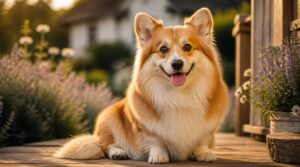
If you’ve ever seen a corgi with a coat that looks almost impossibly soft and full, you were probably looking at a fluffy corgi. They’re not a separate breed — just a long-haired variation that shows up in both Pembroke and Cardigan Welsh Corgis. Here’s what sets them apart and why that extra fluff happens in the first place.
That signature fluffiness comes down to a single recessive gene, and long-haired corgi traits and care tips can help you understand exactly what to expect from these extra-coated pups.
Not a Separate Breed
Despite the name, fluffy corgis aren’t a separate breed — they’re Pembroke or Cardigan Welsh Corgis with a natural coat variation. Major kennel clubs register them under the parent breed, not a new category.
- No separate breed standard exists
- Pedigrees trace back to recognized corgi lines
- The FGF5 gene causes the look
- Fluffiness alone doesn’t change what the breed is
Long-Haired Corgi Variation
What you’re seeing in a fluffy corgi comes down to one thing: a recessive FGF5 gene mutation that extends coat length well beyond the breed’s typical short, weather-resistant fur. Both parents must carry this gene for a puppy to show the long-haired variant — one carrier alone won’t do it.
The result is a denser, silkier double coat that gives these dogs their unmistakably plush look. Owners should prepare for heavy shedding periods throughout the year.
Pembroke and Cardigan Types
The fluffy gene shows up in both corgi varieties, but Pembroke and Cardigan aren’t interchangeable. Four quick distinctions worth knowing:
- Cardigans carry a long foxlike tail; Pembrokes have a naturally short or docked one
- Cardigan ears are rounded and wider-set; Pembroke ears point upward
- Cardigans weigh up to 38 pounds; Pembrokes top out around 30
- Pembrokes tend to be more energetic; Cardigans are usually calmer
Why They Look Fluffier
What sets fluffy corgis apart visually comes down to their double coat structure. The recessive fluff gene mutation produces longer guard hairs and a denser undercoat than standard corgis carry.
That extra undercoat traps air, creating genuine volume. Feathering along the legs and chest amplifies the effect, and during seasonal molt cycles, new growth temporarily makes the coat look even fuller.
Fluffy Corgi Genetics Explained

That fluffy coat doesn’t happen by accident — there’s some interesting science behind it. A single gene is responsible for the whole look, and understanding how it works helps explain why fluffy corgis aren’t as common as you might expect. Here’s what the genetics actually tell us.
The Recessive Fluff Gene
Think of the fluff gene as a hidden switch — it only turns on when a puppy inherits one copy from each parent. That’s recessive inheritance in action.
Carrier parents look completely standard, yet roughly 25% of their puppies can express the longhaired variant. Without genetic testing or reliable lineage records, you simply can’t predict which puppies carry it.
FGF5 Coat Mutation
The gene behind all that fluff is called FGF5, and its job is normally to signal hair follicles to stop growing. When a mutation disrupts this signal, the anagen phase extends — meaning hair just keeps elongating.
That’s why fluffy corgis grow those silky, 3-to-6-inch coats. The mutated protein can’t bind properly to its FGFR1 receptor, so the "stop" message never arrives.
Carrier Parent Inheritance
When both parents carry the recessive fluff gene, each puppy has a 25% chance of inheriting it — even if both parents have smooth, short coats.
Responsible breeders manage this with:
- Pedigree analysis to map carrier history
- Genetic testing to confirm carrier status
- Recessive allele probabilities for litter predictions
- Carrier status disclosure for buyer awareness
- Breeding risk management to reduce affected offspring
Puppy Coat Predictions
Even with genetic testing, predicting a puppy’s adult coat isn’t an exact science. Most Fluffy Corgis don’t reveal their true longhaired variant traits until somewhere between 3 and 9 months old. Early coats often look deceivingly short. Texture shifts, shedding cycle onset, and color maturation patterns all unfold gradually — making consistent coat maintenance your best tool for reading what’s coming.
| Development Stage | What Changes | What to Watch For |
|---|---|---|
| 0–3 months | Soft puppy fuzz only | No reliable adult length prediction yet |
| 3–6 months | Double coat begins emerging | Guard hairs and undercoat appear separately |
| 6–12 months | Adult coat and color settling | True dog coat type and texture stabilize |
Fluffy Corgi Breed Standards
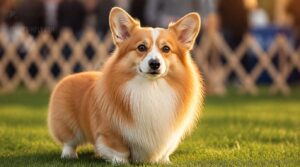
Knowing where fluffy corgis stand with official breed organizations helps you understand what you’re really getting when you bring one home. The rules aren’t the same across the board — Pembrokes and Cardigans are treated differently, and the show ring has its own set of expectations. Here’s what the standards actually say.
AKC Pembroke Rules
The AKC calls the long coat on a Pembroke Welsh Corgi a "very serious fault" in conformation judging — not a disqualification, but close. Judges evaluate breed silhouette standards, movement and gait, and coat presentation against a strict breed standard.
- Level topline
- Smooth, ground-covering gait
- Short, dense double coat
- Alert, upright ears
Fluffy Corgis simply won’t earn champion title requirements in the show ring.
Beyond the show ring, though, everyday care still matters — starting with something as simple as finding the right collar size for your Corgi puppy to keep them comfortable as they grow.
Cardigan Coat Expectations
Cardigans get a little more breathing room. Their medium-to-long outer coat is considered breed-appropriate, giving fluffy variants and longhaired variants a smoother path in evaluation. The undercoat stays soft and dense, delivering real undercoat insulation benefits in cooler weather. Coat length should stay proportional — never drooping over the eyes or dragging unevenly.
| Coat Feature | Cardigan Standard | Fluffy Concern |
|---|---|---|
| Texture and Density | Plush, smooth topcoat | Excess wave or curl |
| Coat Length Proportions | Past chest, near hips | Disproportionate draping |
| Color Pattern Variety | Red, brindle, blue merle | Even color distribution |
| Undercoat Insulation Benefits | Soft, fairly dense layer | Matting risk beneath fur |
| Seasonal Shedding Management | Twice-weekly brushing minimum | Daily brushing during molt |
Show Ring Limitations
The show ring is where fluffy corgis hit a wall. Conformation class eligibility depends on coat texture, length, and how well the dog’s silhouette holds up under a judge’s eye — and that extra fluff can distort proportions fast.
- Breed standard penalties apply to exaggerated coat length
- Lineage documentation rules require verified registered breeding records
- Judges assess silhouette assessment criteria strictly
The AKC calls it a very serious fault.
Pet Versus Show Quality
That "very serious fault" label doesn’t make a fluffy corgi a bad dog — it just means show ring eligibility closes off quickly. For most buyers, that’s completely fine.
Pet-quality fluffies still come from solid pedigree lines, with health screenings and good temperament. You’re choosing companionship over conformation, which, honestly, is what most families need anyway.
Fluffy Corgi Appearance
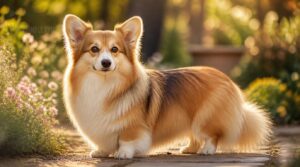
Part of what makes fluffy corgis so hard to scroll past is simply how they look — that coat does a lot of work. They share the same sturdy, compact frame as standard corgis, but with some seriously eye-catching extras. Here’s a closer look at the physical traits that set them apart.
Height and Weight
Don’t let those short legs fool you — fluffy corgis pack a lot into a compact frame. Pembrokes usually stand 10 to 12 inches tall and weigh 22 to 28 pounds, while Cardigans run slightly heavier at 28 to 38 pounds.
Three puppy weight milestones worth tracking:
- Birth weight doubles within two weeks
- Rapid growth peaks between 2–6 months
- Full height stabilizes around 12–14 months
Body condition scoring beats guessing every time.
Coat Length and Texture
That compact frame comes wrapped in something truly impressive. Fluffy Corgis sport a dense double coat with a soft, woolly undercoat beneath coarser outer guard hairs — usually 1.5 to 3 inches long. The contrast between layers gives the coat its signature volume and texture.
Seasonal molting shifts that density throughout the year, with the undercoat thickening noticeably each autumn.
Feathering on Legs
That signature fluff doesn’t stop at the body. Leg feathering — the longer, silky hair flowing along the lower legs — gives Fluffy Corgis an almost regal silhouette.
It traps air close to the skin, offering genuine insulation in cold weather, while also acting as a light shield against brush and moisture. The catch? Those fetlocks mat quickly, so regular brushing keeps them looking their best.
Common Coat Colors
Fluffy Corgis come in five main shades: red, fawn, sable, and black and tan are most common, while chocolate coat shades range from rich espresso to lighter liver tones. Fawn color variations shift from pale beige to deeper sandy gold.
Rare merle and brindle stripe appearances create striking marbled or tiger-striped patterns, and white coats need consistent grooming to avoid white staining prevention issues.
Fox-Like Facial Features
That pointed muzzle and fox-like eye tilt aren’t accidental — they’re baked into the breed’s DNA. The Long-Haired Corgi carries a narrow muzzle profile with a high nose bridge, subtle upward eye corners, and defined jaw contours that sharpen every expression.
What makes the foxlike face so striking:
- Almond-shaped eyes angling upward at the outer corners
- Narrow, refined nose bridge
- Slightly tapering jawline forming a gentle V-shape
- Darker iris ring intensifying the gaze
- Balanced facial symmetry from eyes to mouth
Fluffy Vs Regular Corgi
So how different are a fluffy corgi and a regular corgi, really? Aside from that showstopping coat, the two share more in common than you might expect. Here’s a closer look at where they diverge — and where they’re basically identical.
Coat Length Differences
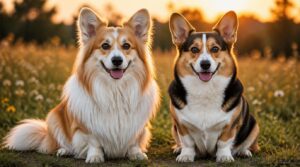
Side by side, the difference is immediate. Fluffy Corgis carry 3 to 6 inches of coat, while shorthaired corgis stay trim and close. That extra length reshapes the whole visual profile — the neck gains mane-like volume, leg feathering sweeps past the pastern, and the body reads bulkier than it actually is.
| Feature | Fluffy Corgi |
|---|---|
| Coat Length | 3–6 inches |
| Neck Coverage | Full mane volume |
Grooming Time Needed
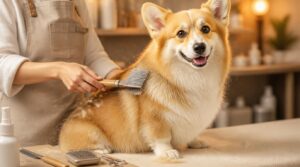
That extra coat demands real time. Daily brushing runs 5 to 15 minutes depending on coat condition, while line brushing stretches to 8 to 12 minutes per session.
| Task | Time/Frequency |
|---|---|
| Daily brushing | 5–15 minutes |
| Line brushing | 8–12 minutes |
| Bathing | Every 4–6 weeks |
| Professional grooming | Every 6–8 weeks |
Short-haired Corgis need maybe a five-minute once-over. Fluffy Corgis need dedicated grooming routines year-round — plus a professional grooming visit every 6 to 8 weeks to stay ahead of matting and coat buildup.
Shedding and Maintenance
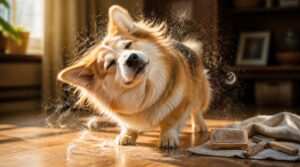
Year-round shedding is the reality with a Fluffy Corgi — two heavy shedding seasons arrive every spring and fall, flooding your floors and furniture with fur.
| Shedding Phase | Best Tool |
|---|---|
| Spring/Fall molt | Undercoat rake |
| Daily upkeep | Slicker brush |
| Managing indoor dander | HEPA filter |
Omega fatty acids in your dog’s daily diet support healthy coat growth. Vacuum high-traffic areas during peak molts.
Same Breed Temperament

All that extra fur doesn’t change what’s underneath. Fluffy and standard Corgis share the same working dog temperament — intelligent, loyal, and occasionally stubborn in equal measure.
| Trait | Fluffy Corgi | Standard Corgi |
|---|---|---|
| Family bonding | Strong, affectionate | Strong, affectionate |
| Energy management | High daily need | High daily need |
| Training methods | Reward-based, consistent | Reward-based, consistent |
| Socialization strategies | Early, structured exposure | Early, structured exposure |
| Mental stimulation | Puzzle toys, agility | Puzzle toys, agility |
Coat length is the only real difference here.
Health Similarities

The coat difference ends there. Fluffy and standard Corgis carry the same genetic health risks — same spine, same joints, same eyes. Joint mobility risks and spinal health management matter for both varieties, since the long Corgi body puts pressure on discs and hips regardless of fur length. Vision monitoring needs and weight control round out the shared canine health checklist.
| Health Area | Shared Risk | Management Approach |
|---|---|---|
| Joint mobility | Hip and elbow disorders | Low-impact exercise, weight control |
| Spinal health | IVDD, disc compression | Ramp use, leash management |
| Vision monitoring | Progressive retinal atrophy | Annual vet eye checks |
| Metabolic weight | Obesity, joint load | Calorie-controlled feeding |
| Skin irritation | Hot spots, matting | Consistent grooming routine |
Fluffy Pembroke Welsh Corgis
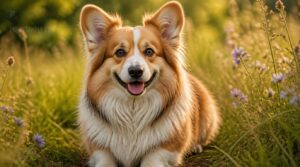
The Fluffy Pembroke Welsh Corgi is probably what most people picture when they hear "fluffy corgi" — and for good reason. These dogs bring together that iconic Pembroke look with a coat that honestly stops people in their tracks. Here’s a closer look at what sets them apart.
Pembroke Body Shape
The fluffy Corgi’s compact frame proportions pack a surprising amount of power into a small package. Your Pembroke Welsh Corgi stands just 10 to 12 inches tall, yet carries:
- A deep, broad chest for balanced weight distribution
- Muscular hindquarter power built for quick bursts
- Short legs anchoring a low, steady stance
- A torso roughly 40% longer than its height
That rolling gait mechanics signature makes every walk unmistakably Pembroke.
Tail and Ear Traits
Those compact hindquarters lead naturally into two of the Pembroke Welsh Corgi‘s most distinctive features.
Tail feathering turns a short natural bobtail into a soft plume. Tail carriage sits slightly elevated, making the tail appear longer. Dense fur around the ear base creates a fuller ear silhouette — that signature plush ear appearance that makes the fluffy Corgi so immediately recognizable.
| Feature | Pembroke Trait |
|---|---|
| Tail carriage | Short bobtail; feathering adds visual length |
| Ear texture | Soft and dense; widens the ear outline |
| Breed standard | AKC accepts the natural bobtail in Pembrokes |
Popular Coat Colors
Classic red sable is the color most people picture — rich reddish-brown fur with darker shading across the back and a lighter undercoat beneath. Sable and white patterns soften that contrast noticeably.
Some Pembrokes carry tan point markings on the muzzle, eyebrows, and legs. Puppies often start lighter, with colors deepening and sharpening as they grow into their adult long haired dog breed coat.
Temperament and Personality
Pembrokes are intelligent, loyal dogs with a streak of stubbornness that keeps training interesting. As classic herding group dogs, they’re alert and energetic — expect two solid daily activity sessions.
They bond deeply with family but can be cautious with strangers, so early socialization between 8 and 12 weeks matters. Positive reinforcement clicks quickly with this breed; treats and praise go a long way.
Fluffy Cardigan Welsh Corgis
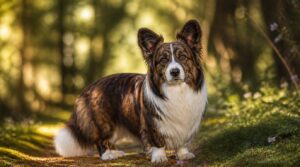
The Fluffy Cardigan Welsh Corgi is a little different from its Pembroke cousin — and in the best ways. From its longer tail to its broader range of coat colors, the Cardigan brings its own personality to the fluffy package. Here’s what sets this variety apart.
Cardigan Body Features
The Cardigan Welsh Corgi carries a longer, heavier torso than its Pembroke cousin — built low to the ground with a deep chest and rounded ribcage that gives the breed its unmistakable sturdy frame.
On a fluffy corgi, that broad chest becomes a showcase for pronounced feathering, where the silky double coat fans outward and adds surprising visual volume to an already substantial body shape.
Long Tail Appearance
That long, sweeping tail is one of the most striking things that sets the Cardigan apart. On a fluffy Cardigan, the tail feathering fans into a full, plume-like silhouette that trails gracefully behind each step.
The double coat’s silky texture gives the tail surprising density and movement — watch it arc slowly when your dog is relaxed, and you’ll understand why it turns heads.
Color Pattern Variety
Fluffy Cardigans come dressed in a wonderful range of patterns. You’ll find bicolor and tricolor combinations, sable and white, red and white, even blue merle — that misty gray-blue swirl unique to this breed.
Saddle and brindle patterns add bold visual texture, while symmetrical white markings on the chest and paws give each dog a quietly polished, individual look.
Pembroke Comparison Points
Side by side, the differences are hard to miss. Cardigans carry a long, full tail and a heavier bone structure, while Pembrokes have a docked or naturally short tail and a lighter frame.
- Cardigans stand slightly lower with a broader chest
- Show ring eligibility differs under AKC breed subtype rules
- Pembrokes have a faster, more animated gait
Two breeds, one fluffy magic.
Fluffy Corgi Grooming Needs
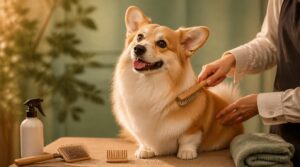
That gorgeous coat doesn’t take care of itself — and with a fluffy corgi, grooming is a real commitment. The good news is that once you build a routine, it becomes second nature pretty quickly. Here’s what you’ll need to stay on top of to keep your pup looking (and feeling) their best.
Daily Brushing Routine
Your fluffy corgi’s coat doesn’t forgive skipped sessions. Reach for a soft slicker brush first to work through the outer layer, then follow with a metal greyhound comb to catch anything hiding underneath.
That combination works for both dog coat types — the silky topcoat and the dense undercoat — without creating the kind of mats that sneak up fast between grooming days.
Line Brushing Method
Once the slicker brush has done its pass, line brushing takes over. Part a finger-width section, brush skin to tip, then move to the next line — working upward from the belly. A wide-tooth comb smooths each section before you continue.
This method combats undercoat density directly and flags mats before they tighten.
Bathing and Conditioning
After line brushing, bath time comes every 4 to 10 weeks. Use pH balanced shampoo at 37–39°C to protect the topcoat without stripping oils. Follow these steps:
- Wet the coat fully before lathering
- Work shampoo through the dense undercoat
- Apply conditioner to coat ends only
- Rinse thoroughly to remove all residue
Blow-dry on low heat — trapped moisture causes mildew fast.
Mat Prevention Areas
Behind the elbows and along the ribcage are your highest-risk mat zones — think of them as your dog’s high-traffic areas where friction never stops. Feathering on the chest and hindquarters tangles just as fast.
Check these spots after every bath. A quick daily sweep through those areas catches knots before they tighten into something a brush can’t fix alone.
Professional Grooming Schedule
Every 2 to 3 months, book your fluffy corgi with a groomer who understands double-coat breeds. A scissor-style trim keeps feathering tidy without stripping length. Ask them to focus on mat-prone chest and elbow areas — these need the most attention between visits.
Seasonal coat changes may push that schedule closer to every 6 weeks during heavy shedding periods.
Fluffy Corgi Health Needs

Fluffy corgis are surprisingly sturdy little dogs, but their unique build and thick coats do come with some health considerations worth knowing.
Staying on top of a few key areas can make a real difference in how long and how well your dog thrives. Here’s what to keep on your radar as a fluffy corgi owner.
Weight Control Importance
Fluffy corgis carry a long spine on short legs — extra pounds make that combination genuinely risky. Excess body weight increases joint load, strains the cardiovascular system, and makes heat dissipation harder for a thick-coated dog. It can also disrupt normal metabolism over time.
Keeping your corgi lean isn’t vanity; it’s one of the most practical health decisions you’ll make.
Spine and Joint Risks
The corgi’s low-slung frame puts real pressure on the spine. Intervertebral disc disease and hip dysplasia are the genetic health problems most likely to develop.
Watch for:
- Sudden stumbling or weakness — a warning sign of spinal stenosis risks
- A skipping gait — classic patellar luxation signs
- Post-exercise elbow stiffness — managed with targeted elbow dysplasia care
IVDD prevention starts with limiting jumps daily.
Heat Sensitivity Concerns
That thick, gorgeous coat works against your dog when temperatures climb. Long, dense fur traps heat close to the skin, slowing cooling and raising heat stroke risk fast — especially in humid weather, where panting becomes less effective.
Walk during cooler hours to protect paw pads from hot pavement. Watch for panting, lethargy, or reluctance to move. These are your earliest warning signs.
Eye Health Monitoring
Your corgi’s eyes can quietly signal trouble. Progressive retinal atrophy is hereditary in this breed — genetic testing helps flag it early.
Watch for:
- Bumping into objects or hesitating in dim light
- Unequal pupil size or slow light response
- Corneal haze or unusual discharge
- Pawing at eyes or squinting
- Watery pooling near the inner corner
Schedule an annual intraocular pressure screening.
Lifespan Expectations
Most fluffy corgis live 12 to 13 years — a solid run, but one that depends heavily on the choices you make every day.
Weight management and routine vet visits do more for longevity than almost anything else. Skipping annual checkups lets small problems quietly compound. Keep your dog lean, active, and seen by a vet regularly, and those years stay fuller.
Keep your corgi lean, active, and vet-checked — small daily choices add up to fuller years
Buying a Fluffy Corgi

Bringing a fluffy corgi home is exciting, but getting there takes a little homework. From finding a breeder you can actually trust to knowing what a fair price looks like, there are a few things worth knowing before you commit. Here’s what to keep in mind as you start your search.
Finding Reputable Breeders
Where you get your puppy matters just as much as which puppy you choose.
A reputable breeder will share health clearance verification documents upfront, provide a signed breeder contract with genetic guarantees, and hand you a puppy health passport at pickup. They’ll welcome your visit, follow ethical breeding guidelines, and stay reachable long after you’ve taken your pup home.
Expected Puppy Cost
Once you’ve found a breeder you trust, the next reality check is the price tag.
A fluffy corgi from a reputable breeder usually runs $1,200 to $3,000, with pedigree dogs or show-line pups pushing past $4,000. Adoption sits far lower at $50–$600. Your first year expenses — vet visits, vaccines, supplies — easily add $800 more. Budget honestly before you commit.
Avoiding Unethical Breeding
Price alone won’t protect you — the breeder behind it will. Watch for sellers who can’t share health clearances or pedigree papers, advertise on generic marketplaces, or won’t let you visit.
Ethical breeders screen for hip dysplasia and progressive retinal atrophy, limit litter frequency, and test for recessive genes. If they dodge basic questions, walk away.
Adoption Possibilities
Reputable breeders aren’t your only path. Corgi rescue organizations occasionally place fluffy variations, and shelter adoption processes can connect you with dogs needing a second home.
- Search breed-specific rescues
- Check local shelters regularly
- Ask temporary caregiver networks
- Explore post-adoption support services
- Review any adoption financial incentives available
Don’t overlook rescue — it’s worth it.
Frequently Asked Questions (FAQs)
Are fluffy corgis good with young children?
Yes, they wear their hearts on their sleeves with kids. With early dog socialization and teaching gentle interaction, these dogs thrive around children — though managing herding instincts and supervising active play keeps everyone safe.
Do fluffy corgis get along with other pets?
Most do well with other pets when socialized early. Their herding instincts can kick in around smaller animals, so calm introductions and consistent training help keep everyone comfortable and minimize chasing or resource guarding.
How much does a fluffy corgi eat daily?
Most adult dogs do well on 5 to 2 cups of dry food daily, split into two meals. For a fluffy corgi weighing 24 to 30 pounds, that targets roughly 670 to 800 calories per day.
Can fluffy corgis live comfortably in apartments?
Small dogs with moderate energy can absolutely thrive in apartments — and fluffy corgis fit that profile well. Daily walks, indoor puzzle sessions, and consistent grooming keep them happy, calm, and well-adjusted in tighter spaces.
Do fluffy corgis bark more than other breeds?
Corgis are herding dogs by nature, and barking was their job. That vocal communication instinct doesn’t disappear indoors. Fluffy or not, your corgi may bark at movement, strangers, or boredom — but consistent training keeps it manageable.
Conclusion
A million dog breeds exist in the world, but nothing quite stops a room like a fluffy corgi trotting in. That wonderful coat isn’t an accident or a gimmick—it’s a quiet genetic plot twist hiding inside two perfectly ordinary-looking parents.
Same bold personality. Same sturdy little body. Just dramatically more fur to love. If you go in knowing the grooming commitment and health priorities, this dog will absolutely reward every brushstroke and vet visit tenfold.