This site is supported by our readers. We may earn a commission, at no cost to you, if you purchase through links.
Around 56% of dogs in the US are overweight or obese—and most of their owners don’t realize it until a vet points it out at a routine checkup. That number has climbed steadily over the past decade, and the consequences go beyond a rounder belly. Excess weight strains joints, shortens lifespan, and raises the risk of diabetes, heart disease, and breathing problems.
The fix isn’t starving your dog. Cutting portions without changing the food often backfires—your dog stays hungry, loses muscle instead of fat, and you’re back to square one. What your dog eats matters as much as how much.
The right dry dog foods for overweight dogs work differently: higher protein to protect lean muscle, lower calorie density per cup, and fiber that keeps your dog full between meals. Knowing what to look for—and what to ignore—makes the difference between a food that actually works and one that just says "weight management" on the bag.
Table Of Contents
- Key Takeaways
- How Weight-Management Dry Dog Food Helps
- Top 9 Dry Dog Foods for Overweight Dogs
- 1. IAMS Proactive Health Chicken Dog Food
- 2. Hill’s Science Diet Small Mini Chicken Dog Food
- 3. ZIWI Peak Mackerel Lamb Dog Food
- 4. Hills Science Diet Adult Perfect Weight Dog Food
- 5. Blue Buffalo Healthy Weight Dog Food
- 6. Pedigree Healthy Weight Dry Dog Food
- 7. Purina Pro Plan Weight Management Dog Food
- 8. Purina ONE Healthy Weight Dog Food
- 9. IAMS Proactive Health Healthy Weight Dog Food
- What to Look for in Weight-Control Kibble
- How to Feed Dry Food for Safe Weight Loss
- How to Choose The Best Formula for Your Dog
- Frequently Asked Questions (FAQs)
- How much weight loss food should I feed my dog?
- How can I determine my dog’s ideal weight?
- What’s the safest rate of weight loss for an overweight dog?
- What are the best low fat dog foods?
- Are grain-free formulas better for overweight dogs?
- How do I read a dog food nutrition label?
- How quickly can my dog lose weight safely?
- Do weight management foods work for all breeds?
- Should overweight dogs take additional vitamin supplements?
- Can wet food be mixed with weight management kibble?
- Conclusion
Key Takeaways
- Over half of US dogs are overweight, and the solution isn’t just cutting portions—what your dog eats (protein, fiber, calorie density) matters as much as how much.
- Effective weight-management kibble should have 25%+ protein to preserve muscle, 280–330 kcal per cup, and fiber sources like beet pulp to keep your dog full between meals.
- Always feed to your dog’s ideal body weight, not their current weight, and measure portions with a kitchen scale—loose cups can hide 20–30 hidden calories daily.
- Before switching foods, consult your vet to rule out conditions like hypothyroidism, set a safe loss rate of 1–2% body weight per week, and transition to new kibble gradually over seven days.
How Weight-Management Dry Dog Food Helps

Weight-management dry food isn’t just lower-calorie kibble — it’s built around specific nutritional levers that work together to help your dog shed pounds safely. The right formula targets muscle preservation, satiety, metabolism, and digestive health all at once. Here’s what each of those factors actually does.
Understanding how dry dog food is actually manufactured helps explain why these nutritional levers work — every ingredient choice is locked in before the kibble even reaches your dog’s bowl.
Higher Protein for Lean Muscle
When a dog loses weight, the body risks burning muscle alongside fat. That’s why high-quality protein matters so much. It supplies leucine, the amino acid that triggers muscle protein synthesis — basically telling the body to build, not break down.
Weight-management kibble with 25%+ crude protein helps preserve lean mass while calories drop, keeping your dog strong through every pound lost. Ensuring adequate dietary protein intake is essential for maintaining healthy muscle mass during weight loss.
Lower Calories Per Cup
Protein builds muscle. Calories control weight.
Weight-management kibble usually delivers 280–330 kcal per cup — meaningfully less than standard adult formulas. Manufacturers use expanded kibble shapes to fill the bowl with fewer actual calories. Moisture content shifts this too; higher moisture cuts calorie density fast.
Always measure with a kitchen scale — a loose cup can hide 20–30 extra calories daily.
Fiber for Better Fullness
Calories matter, but fullness controls behavior.
Fiber works two ways in weight loss kibble:
- Viscous soluble fibers gel in the gut, slowing gastric emptying
- Stomach stretch receptors fire faster when fiber adds meal volume
- Prebiotic fibers raise GLP-1 and peptide YY — key fullness hormones
- Insoluble fiber adds bulk without raising calorie density
- Gut fermentation helps with digestive comfort between meals
Look for beet pulp or pea fiber in the ingredient list.
L-carnitine Metabolism Support
Fiber controls fullness, but L-carnitine controls fuel.
This amino acid compound shuttles long-chain fatty acids across the inner mitochondrial membrane — where they’re burned for energy, not stored. Without it, fat sits in the cytosol unused.
| Function | Benefit |
|---|---|
| Fatty acid transport | Helps mitochondrial lipid oxidation |
| Acyl-CoA buffering | Keeps metabolic enzymes running cleanly |
Weight-management kibbles usually add 250 mg/kg to support this process directly.
AAFCO Nutrition Standards
Every bag making a "complete and balanced" claim must meet AAFCO nutrient profiles — the standard for life stage nutrition, not a direct approval stamp. These profiles set minimums for protein, fat, vitamins like A, D, and E, and minerals including zinc, calcium, and selenium.
For weight control, verify the label’s nutrient adequacy statement matches your dog’s life stage before buying.
Top 9 Dry Dog Foods for Overweight Dogs
These nine options stood out after reviewing dozens of weight-management formulas for protein content, calorie density, and real-world results.
Each one meets AAFCO standards and brings something specific to the table — whether that’s L-carnitine support, high protein ratios, or low-fat kibble your dog will actually eat. Here’s what made the cut.
1. IAMS Proactive Health Chicken Dog Food
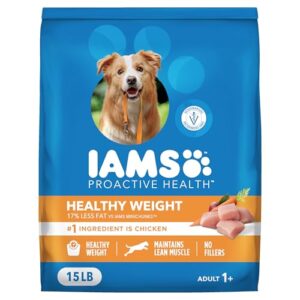
IAMS Proactive Health Chicken Dog Food is a reliable pick for large-breed adults that need weight support without losing muscle. Real chicken leads the ingredient list, and that matters — high-quality animal protein preserves lean mass while your dog burns fat.
L-carnitine is included to help the body use fat for fuel rather than store it. Beet pulp and prebiotics keep digestion stable during the switch.
One thing to flag: at roughly 380 kcal per cup, this isn’t a low-calorie formula. You’ll need to measure portions carefully against your dog’s ideal body weight.
It contains grains and soy, so if your dog has sensitivities, this one’s worth skipping.
| Feature | Detail |
|---|---|
| Primary Protein | Chicken |
| Grain-Free | No |
| Artificial Additives | None |
| Bag Size | 15 lb |
| Key Extras | L-Carnitine, slow-release carbs |
| Best For | Large-breed adult dogs that need help managing their weight while maintaining lean muscle mass. |
|---|---|
| Primary Protein | Chicken |
| Grain-Free | No |
| Artificial Additives | None |
| Life Stage | Adult |
| Calorie Density | ~380 kcal/cup |
| Target Breed Size | Large Breed |
| Additional Features |
|
- Real chicken as the first ingredient delivers quality protein that supports strong, healthy muscles
- L-Carnitine helps the body burn fat for fuel, making it a genuinely useful tool for weight management
- Prebiotics and natural fiber keep digestion on track, especially helpful during food transitions
- The large 15 lb bag requires an airtight container to stay fresh, which adds an extra cost consideration
- Contains grains and soy, so dogs with food sensitivities may need a different formula
- Not a one-size-fits-all solution — dogs with specific medical conditions should be evaluated by a vet before switching
2. Hill’s Science Diet Small Mini Chicken Dog Food
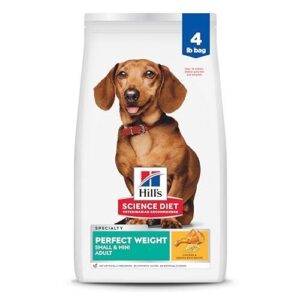
Small and toy breeds face a specific challenge — their tiny frames make every extra ounce count. Hill’s Science Diet Small & Mini is built around that reality, with a triangular kibble shaped for small mouths and a formula calibrated for calorie-controlled weight loss.
Chicken leads the ingredient list, keeping lean muscle protected while your dog burns stored fat. L-carnitine and lipoic acid give the metabolism a direct assist, helping the body use fat for energy rather than store it.
Digestive support is well-handled. ActivBiome Plus promotes microbiome balance, and the recipe skips artificial additives entirely — a practical advantage for dogs with sensitive stomachs.
Clinical data backs the formula: over 70% of dogs lost weight within 10 weeks. Vet-recommended, AAFCO-compliant, and available in a 4 lb bag, it’s a focused option for small breeds that need real results.
| Feature | Detail |
|---|---|
| Best For | Small/toy breed adults, ages 1–6 |
| Primary Protein | Chicken & Chicken Meal |
| Weight Management | Yes |
| Grain-Free | No |
| Artificial Additives | None |
| Bag Weight | 4 lb |
| Key Extras | L-carnitine, lipoic acid, ActivBiome Plus |
| Best For | Small and toy breed adult dogs (ages 1–6) who need calorie-controlled weight management without sacrificing lean muscle. |
|---|---|
| Primary Protein | Chicken & Chicken Meal |
| Grain-Free | No |
| Artificial Additives | None |
| Life Stage | Adult (Ages 1–6) |
| Calorie Density | Not Listed |
| Target Breed Size | Small & Toy Breed |
| Additional Features |
|
- Clinically backed results — over 70% of dogs lost weight within 10 weeks, making it one of the more credible options on the market
- Chicken-forward formula with L-carnitine and lipoic acid actively supports fat metabolism while protecting muscle mass
- Small triangular kibble is sized for tiny mouths, and the recipe is free from artificial additives — a plus for sensitive stomachs
- Hard kibble may be tough on dogs with dental issues, and you might need to add water to soften it
- Results depend on total diet, so treats and table scraps can easily undercut progress
- Some owners noticed a change in scent after opening the bag, which could be off-putting over time
3. ZIWI Peak Mackerel Lamb Dog Food
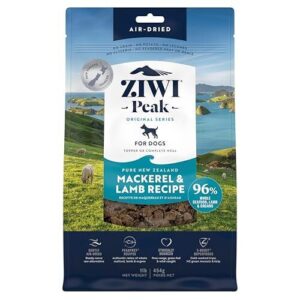
Air-dried and raw-style, ZIWI Peak Mackerel & Lamb operates in a different league from standard kibble. The process preserves natural enzymes and nutrients that high-heat extrusion destroys — which matters if you want your dog eating closer to what nature intended.
Protein sits at a 44% minimum, built from whole wild-caught mackerel, grass-fed lamb, and organ meats. That ratio protects lean muscle while your dog sheds fat. Green mussels and chicory root round out the formula, supporting joint health and digestion without fillers or grains.
One thing to watch: calorie density runs high at roughly 4,500 kcal/kg. Portions need a kitchen scale, not a measuring cup — piece sizes vary too much for eyeballing.
For dogs with grain or poultry allergies, this is a practical, premium solution.
| Feature | Detail |
|---|---|
| Best For | Allergy-prone dogs needing high-protein, grain-free feeding |
| Primary Protein | Mackerel & Lamb |
| Weight Management | Yes (with precise portioning) |
| Grain-Free | Yes |
| Artificial Additives | None |
| Key Extras | Green mussels, chicory root, air-dried raw format |
| Best For | Dogs with grain or poultry allergies who thrive on a high-protein, raw-style diet across all life stages. |
|---|---|
| Primary Protein | Mackerel & Lamb |
| Grain-Free | Yes |
| Artificial Additives | None |
| Life Stage | All Life Stages |
| Calorie Density | ~4,500 kcal/kg |
| Target Breed Size | All Sizes |
| Additional Features |
|
- Made with wild-caught mackerel and grass-fed lamb, air-dried to lock in natural nutrients and enzymes
- Grain-free and free of artificial additives, with added superfoods like New Zealand Green Mussels and chicory root for joint and digestive support
- Versatile enough to serve as a complete meal, food topper, or training treat
- Premium price tag puts it well above standard kibble options
- Strong fish and raw meat scent may be off-putting for some owners
- Inconsistent piece sizes and high calorie density mean you’ll need a kitchen scale for accurate portioning
4. Hills Science Diet Adult Perfect Weight Dog Food
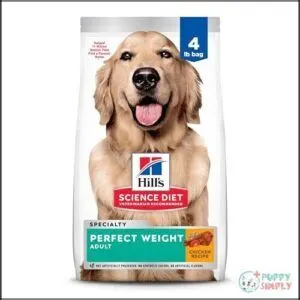
Hill’s Science Diet Adult Perfect Weight is one of the most vet-recommended formulas on this list — and the numbers back that up. At 298 kcal per cup, it sits right in the controlled-calorie range most weight-loss protocols target. Chicken leads the ingredient list, with protein at 24% to help your dog hold lean muscle while dropping fat.
Hill’s doesn’t just promise results. Over 70% of dogs lost weight within 10 weeks in clinical testing. That’s a real claim with real data behind it.
The formula includes L-carnitine for fat metabolism, plus beet pulp and pea fiber to support fullness and digestive stability. No artificial additives.
| Feature | Detail |
|---|---|
| Best For | Adult dogs ages 1–6 needing controlled weight loss |
| Primary Protein | Chicken & Chicken Meal |
| Calories Per Cup | 298 kcal |
| Grain-Free | No |
| Key Extras | L-carnitine, beet pulp, pea fiber, flaxseed |
| Best For | Adult dogs aged 1–6 years who are overweight and need a clinically backed, vet-recommended formula to shed pounds while keeping lean muscle. |
|---|---|
| Primary Protein | Chicken & Chicken Meal |
| Grain-Free | No |
| Artificial Additives | None |
| Life Stage | Adult (Ages 1–6) |
| Calorie Density | 298 kcal/cup |
| Target Breed Size | All Sizes |
| Additional Features |
|
- Clinically proven results — over 70% of dogs lost weight within 10 weeks
- High protein content (24%) helps maintain lean muscle during weight loss
- Includes L-carnitine, beet pulp, and pea fiber for fat metabolism and fullness support
- Only suitable for adult dogs aged 1–6, so it won’t work for puppies or seniors
- Not grain-free, which may be a concern for dogs with grain sensitivities
- Results depend on sticking to the full 10-week clinical timeline
5. Blue Buffalo Healthy Weight Dog Food
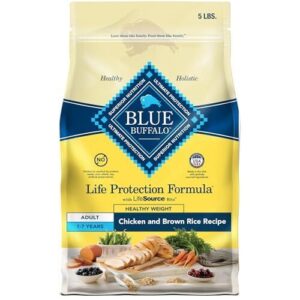
Blue Buffalo takes a clean-label approach here. Real deboned chicken leads the ingredient list, giving your dog a solid protein base to hold lean muscle while calories drop.
At 379 kcal per cup, this sits slightly higher than some competitors — so portion control matters more, not less.
Brown rice, barley, and peas provide steady dietary fiber, keeping your dog fuller between meals without overloading the gut. Those signature LifeSource Bits deliver a cold-formed antioxidant mix that survives the kibble-making process intact — a small but meaningful difference.
Glucosamine and chondroitin are included too, which helps if your dog’s extra weight has been stressing the joints.
One caution: if your dog has chicken or grain sensitivities, check the label before committing.
| Feature | Detail |
|---|---|
| Best For | Adult dogs needing muscle-preserving weight loss |
| Primary Protein | Deboned Chicken & Chicken Meal |
| Calories Per Cup | 379 kcal |
| Grain-Free | No |
| Key Extras | LifeSource Bits, glucosamine, chondroitin |
| Best For | Adult dogs that need to shed extra weight without sacrificing lean muscle, especially those with joint issues from carrying extra pounds. |
|---|---|
| Primary Protein | Deboned Chicken & Chicken Meal |
| Grain-Free | No |
| Artificial Additives | None |
| Life Stage | Adult |
| Calorie Density | 379 kcal/cup |
| Target Breed Size | All Sizes |
| Additional Features |
|
- Real deboned chicken as the first ingredient means your dog gets quality protein to maintain muscle while losing weight
- LifeSource Bits deliver a cold-formed antioxidant blend that actually survives the cooking process, supporting immune health
- Added glucosamine and chondroitin give joint support — a nice bonus for heavier dogs whose joints take extra strain
- Pricier than many comparable weight management formulas, so it may stretch the budget over time
- Bags can arrive damaged in transit, which is frustrating for a premium product
- Picky eaters may turn their nose up at it — you might need to add a topper to get them on board
6. Pedigree Healthy Weight Dry Dog Food
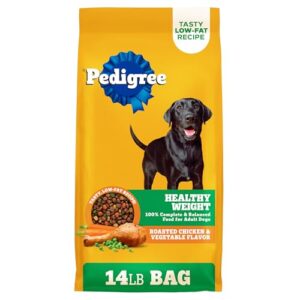
Not every dog owner has room in the budget for premium kibble — and that’s where Pedigree Healthy Weight earns its spot.
At around $16.99 for 14 lbs, it’s the most wallet-friendly option on this list. The low-fat formula sits near 7% fat, which keeps daily calories controlled without much effort on your part. A fiber mix featuring beet pulp helps your dog feel full between meals, and the recipe covers 36 vitamins, minerals, and amino acids for baseline nutritional support.
The trade-offs are real, though. Corn, wheat, and soy appear in the ingredient list, and BHA and artificial colors (Red 40, Yellow 5, Yellow 6) are present. Dogs with food sensitivities likely need a cleaner option.
| Feature | Detail |
|---|---|
| Best For | Budget-conscious owners managing adult dog weight |
| Primary Protein | Chicken By-Product Meal |
| Calories Per Cup | ~243 kcal |
| Grain-Free | No |
| Key Extras | 36 vitamins & minerals, Omega-6, beet pulp fiber |
| Artificial Additives | BHA, Red 40, Yellow 5, Yellow 6, Blue 2 |
| Best For | Budget-conscious dog owners looking for an affordable, low-fat kibble to help manage their adult dog’s weight without sacrificing basic nutrition. |
|---|---|
| Primary Protein | Chicken By-Product Meal |
| Grain-Free | No |
| Artificial Additives | BHA, Red 40, Yellow 5, Yellow 6, Blue 2 |
| Life Stage | Adult |
| Calorie Density | ~243 kcal/cup |
| Target Breed Size | All Sizes |
| Additional Features |
|
- Very affordable at around $16.99 for 14 lbs, making it easy on the wallet for consistent, everyday feeding
- Low-fat formula (~7% fat) with beet pulp fiber helps keep calories in check and dogs feeling full
- Covers 36 vitamins, minerals, and amino acids plus Omega-6 fatty acids for solid all-around nutritional support
- Contains BHA as a preservative and artificial colors (Red 40, Yellow 5, Yellow 6, Blue 2), which some owners prefer to avoid
- Primary ingredients are corn, wheat, and chicken by-product meal — not ideal for dogs with grain sensitivities or food allergies
- Only one protein flavor (Roasted Chicken), so it’s a poor fit for dogs that don’t tolerate chicken well
7. Purina Pro Plan Weight Management Dog Food
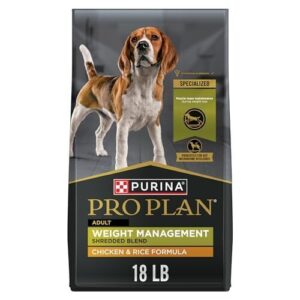
Pedigree keeps costs down, but if your dog’s health is the priority, Purina Pro Plan Weight Management is worth the jump.
Real chicken leads the ingredient list — not a by-product, not a meal. The dual-texture mix of crunchy kibble and shredded chicken pieces keeps picky eaters engaged, which matters when you’re locked into a long-term weight plan.
At 330 kcal per cup, calorie density stays controlled. The formula contains 15% less fat than standard Pro Plan, while maintaining enough protein to protect lean muscle during the weight-loss process. Live probiotics and natural prebiotic fiber support your dog’s gut through the change.
No artificial colors. No artificial flavors. AAFCO-compliant for adult dogs.
The 34 lb bag runs around $77.48 — a premium price, but the macronutrient profile and ingredient quality reflect it.
| Feature | Detail |
|---|---|
| Best For | Picky eaters and adult dogs prone to weight gain |
| Primary Protein | Chicken |
| Calories Per Cup | ~330 kcal |
| Fat Reduction | 15% less than standard Pro Plan |
| Key Extras | Live probiotics, prebiotic fiber, shredded texture |
| Artificial Additives | None |
| Best For | Adult dogs that need to lose weight or maintain a healthy weight without sacrificing muscle mass, especially picky eaters who benefit from a more interesting texture. |
|---|---|
| Primary Protein | Chicken |
| Grain-Free | No |
| Artificial Additives | None |
| Life Stage | Adult |
| Calorie Density | ~330 kcal/cup |
| Target Breed Size | All Sizes |
| Additional Features |
|
- Real chicken is the first ingredient, and the shredded-and-kibble blend keeps dogs interested in mealtime
- 15% less fat than standard Pro Plan, with enough protein to preserve lean muscle during weight loss
- Live probiotics and prebiotic fiber support digestive health through dietary transitions
- Some dogs may feel hungrier than usual and beg more frequently due to the reduced calorie content
- Transitioning to this food can cause temporary digestive upset, including urgent bowel movements
- Occasional reports of packaging issues, including oversized shipping boxes and rare pest problems
8. Purina ONE Healthy Weight Dog Food
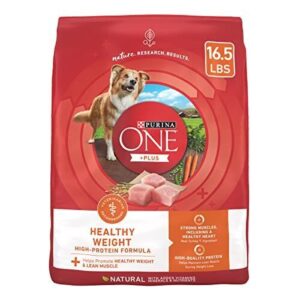
Pro Plan delivers, but not every budget stretches to $77. That’s where Purina ONE Healthy Weight earns its place.
Real turkey leads the ingredient list — a clean, named protein that helps maintain lean muscle while your dog sheds excess weight. At 27% protein and 320 kcal per cup, the macros sit squarely in the right range for gradual, safe fat loss. Beet pulp and added fiber round out the formula, helping your dog feel satisfied without extra calories.
The formula also includes four antioxidant sources and natural glucosamine for joint support — useful for overweight dogs whose joints carry extra daily strain.
At $31.58 for 16.5 lbs, it’s an honest option that doesn’t shortchange essential nutrition. No artificial flavors, no artificial preservatives.
| Feature | Detail |
|---|---|
| Primary Protein | Turkey |
| Calories Per Cup | ~320 kcal |
| Crude Protein | 27% |
| Key Extras | Glucosamine, four antioxidant sources, beet pulp fiber |
| Artificial Additives | None |
| Price | ~$31.58 / 16.5 lb |
| Best For | Adult dogs that need to lose weight while still getting solid protein and joint support — especially if you want real-food ingredients without the premium price tag. |
|---|---|
| Primary Protein | Turkey |
| Grain-Free | No |
| Artificial Additives | None |
| Life Stage | Adult |
| Calorie Density | ~320 kcal/cup |
| Target Breed Size | All Sizes |
| Additional Features |
|
- Real turkey is the first ingredient, delivering quality protein to maintain lean muscle during weight loss
- Added glucosamine and four antioxidant sources support joint health and immunity — a smart combo for heavier dogs
- No artificial flavors or preservatives, and a fiber-rich formula that keeps dogs feeling full between meals
- Contains corn, wheat, and soybean meal, which may not suit dogs with grain sensitivities
- Includes chicken by-product meal alongside the turkey, which some owners prefer to avoid
- Only formulated for adult dogs — not suitable for puppies or seniors with different nutritional needs
9. IAMS Proactive Health Healthy Weight Dog Food
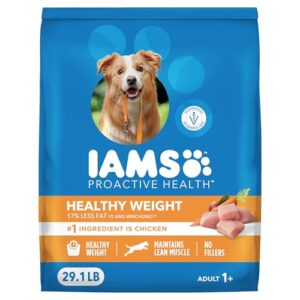
If you want real chicken first and L-carnitine to support fat burning, IAMS Proactive Health Healthy Weight stands out. At 304 kcal per cup, you get manageable portions and a protein profile that helps maintain muscle during weight loss. Beet pulp and prebiotics target digestive health—useful for dogs who struggle with dietary changes.
The 29.1 lb bag costs about $47, making it a practical pick for large breeds. You won’t find artificial flavors or fillers, but corn, soy, and chicken by-product meal do appear, so it’s not the best match for sensitive dogs.
| Best For | Large breed adult dogs who need help managing their weight while maintaining strong muscles and digestive health. |
|---|---|
| Primary Protein | Chicken |
| Grain-Free | No |
| Artificial Additives | None |
| Life Stage | Adult |
| Calorie Density | Not Listed |
| Target Breed Size | Large Breed |
| Additional Features |
|
- Real chicken is the primary ingredient, offering high-quality protein for muscle maintenance.
- L-Carnitine and a tailored fiber blend support fat metabolism and healthy digestion.
- No artificial flavors or fillers, making it a more wholesome option.
- Contains corn, soy, and chicken by-product meal, which may not suit sensitive dogs.
- Large 29.1 lb bag requires ample storage space and an airtight container.
- Transitioning to this food should be gradual to avoid digestive upset.
What to Look for in Weight-Control Kibble
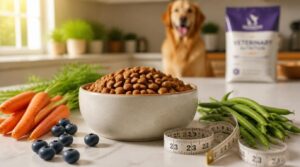
When you’re choosing a weight-control kibble, a few key features matter more than anything else. These markers help you spot foods that support safe, lasting weight loss. Let’s break down what to check for before picking your dog’s next formula.
Named Animal Protein First
The first ingredient on the label tells you a lot. If it reads "chicken" or "salmon," you know exactly what’s driving the protein content. Named animal proteins leave no room for guesswork — unlike vague terms like "meat meal," which could mean almost anything.
For overweight dogs, that clarity matters. High-quality protein helps maintain lean muscle while calories stay controlled.
Fat Under Weight-control Levels
Fat sits at 9 kcal per gram — the densest energy source in any kibble. That’s why crude fat under 10% of dry matter is the target range for weight control.
- Check the Guaranteed Analysis panel
- Compare fat percentage across brands
- Look for metabolizable energy figures (kcal/cup)
- Confirm essential fatty acids are still present
- Avoid cutting fat so low it risks nutritional balance
Lower fat reduces calorie density without shrinking meal volume dramatically.
Calories Per Cup
Calorie density per cup is your clearest comparison tool. Effective weight-loss kibble usually lands between 280 and 330 kcal per cup — enough to satisfy without overloading.
That range matters because two foods with similar fat levels can still differ by 80 kcal per cup based on ingredient composition. Check the bag’s feeding guide, then measure accurately. Volume without calorie context means nothing.
Digestive Fiber Sources
Fiber pulls double duty in weight management: fill the gut, feed it too.
- Soluble fiber gels slow gastric emptying
- Insoluble fiber bulk adds stool volume without calories
- Psyllium hydration benefits extend fullness via gut fill
- Prebiotic inulin fermentation feeds beneficial bacteria
- Beet pulp digestibility stabilizes stool and helps colon health
Look for beet pulp or chicory root listed early among dietary fiber sources.
Ingredient Red Flags
Some labels are designed to obscure, not inform. Vague protein terms like "meat meal" or "animal meal" signal inconsistent quality — nutritional density shifts batch to batch.
Artificial additives — colors, flavors, synthetic preservatives — add nothing to macronutrient balance and can irritate sensitive stomachs.
| Red Flag | Why It Matters | What to Do |
|---|---|---|
| "Meat meal" or "animal meal" | Low-quality protein, variable digestibility | Choose named sources like chicken |
| Artificial colors (e.g., Red 40) | No nutritional value, hypersensitivity risk | Avoid entirely |
| "Natural flavors" | Hides unidentified compounds | Look for transparent ingredient lists |
| Corn gluten meal | Plant protein displaces animal protein | Prioritize high-quality protein first |
| Unspecified fat sources | May introduce impurities, skews calorie counts | Confirm named fat like chicken fat |
Hidden allergen labels — "flavorings," "spices," hydrolyzed proteins — can mask real ingredients your dog reacts to. Digestible protein sources should be clear and named. If the label reads like a puzzle, that’s your answer.
If a dog food label reads like a puzzle, that’s your answer
How to Feed Dry Food for Safe Weight Loss
Choosing the right food is only half the battle — how you feed it matters just as much. Small changes to your routine can make a real difference in how fast and safely your dog loses weight. Here are five feeding habits to put in place right away.
Feed Ideal Body Weight
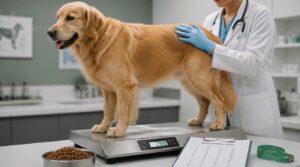
Chasing a number on the scale won’t cut it—feed to your dog’s ideal body weight instead. This approach targets excess fat, not muscle. As your dog loses pounds, recalculate portions to maintain a calorie deficit without risking lean mass. Watch for weight loss plateaus; adjust portions as needed. Body condition scoring offers a clearer view than just tracking pounds.
- Targets fat loss, not muscle
- Encourages gradual weight change
- Requires periodic portion recalculation
- Relies on body condition score
- Adjusts for plateaus and progress
Measure Portions Accurately
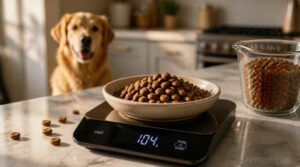
Precision matters. Use a kitchen scale for each meal—grams beat guessing every time. Calibrate before each use and rely on the digital tare function to exclude bowl weight.
For quick jobs, a measuring cup works, but log portions daily to spot trends. If you’re away from home, lean on visual portion cues to avoid overfeeding.
Split Meals Daily

Once you’ve nailed your portions, the next step is spreading them out. Divide the daily ration into two or three meals instead of one.
Smaller servings curb gulping, prevent hunger spikes, and keep your dog’s appetite steadier throughout the day. Consistent timing also makes it easier to track intake and stay within your daily calorie target.
Transition Food Gradually
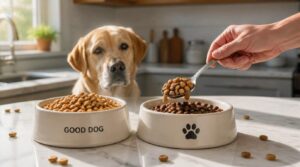
Switching foods too fast can derail even the best plan. Start with 25% new food mixed into 75% old, then shift the ratio every two days — 50/50, then 60/40, reaching 100% new food by day seven.
Watch stool consistency daily. Loose stools or vomiting? Hold the current mix until things settle before trying again.
Limit Treats and Scraps

Treats and table scraps count toward your dog’s daily calorie limit — every bite adds up. Keep all extras under 10% of total daily calories. Read treat labels; if there’s no calorie count listed, skip it entirely.
Table scraps aren’t harmless bonuses. They disrupt caloric intake and unbalance the diet your kibble carefully provides. Keep portions pinky-fingernail small.
How to Choose The Best Formula for Your Dog

Not every weight-management formula fits every dog the same way. Your dog’s size, stomach sensitivities, and budget all factor into what actually works long-term. Here’s what to look at before you commit to a bag.
Match Body Condition Score
Your dog’s body condition score guides formula selection better than scale weight alone. Overweight dogs lose waist tuck and show fat over the lumbar region. Assess these five areas:
- Feel ribs with gentle light pressure
- Look for visible waistline from above
- Check abdominal tuck from the side
- Note spine prominence or fat cover
- Assess lumbar fat and loin definition clearly
Consider Breed Size
Breed size changes everything about how you portion and select a formula.
Small breeds burn more calories per pound, so they often need higher protein percentages and smaller, more frequent meals. Large breeds do better with lower calorie-per-cup formulas — around 290 to 420 kcal — plus glucosamine for joint support during weight loss. Match the bag to your dog’s size category.
Support Sensitive Stomachs
If your dog’s stomach reacts to every new food, weight loss gets complicated. Look for formulas with limited ingredient diets, probiotic gut support, and gentle fiber blends:
- Single protein source to reduce digestive triggers
- Prebiotics and probiotics to stabilize the gut microbiome
- Controlled fat levels to prevent loose stools
These features keep digestion steady while calories drop.
Compare Budget and Premium
Price isn’t always the best guide. Budget formulas can cost 10–25% less per kilogram, but they often rely on unnamed protein sources and inconsistent fiber quality.
Premium weight management kibble usually delivers 25–34% crude protein with named ingredients first. Over 30 days, you might spend $15–40 more — but you get clearer nutrition, better digestibility, and more precise portion guidance.
Ask Your Veterinarian First
Your vet does more than weigh your dog — they assess body condition score, screen for endocrine health issues like hypothyroidism, and review any medications that affect appetite or metabolism.
That’s what makes veterinary-approved canine obesity management different from guessing. They’ll tell you whether your dog needs a prescription therapeutic diet or a standard weight-control formula — and set a safe, realistic pace.
Frequently Asked Questions (FAQs)
How much weight loss food should I feed my dog?
Feed based on your ideal body weight, not current weight. A gram scale beats a measuring cup for accuracy. Split the daily amount into two or three meals to keep portions controlled and hunger steady.
How can I determine my dog’s ideal weight?
Think of it like tuning a radio — there’s always a sweet spot. Body condition score 4–5 on the 9-point scale is ideal. Feel the ribs, assess the waistline from above, then confirm with your vet.
What’s the safest rate of weight loss for an overweight dog?
1–2% of body weight per week is the veterinary-recommended target. Faster than that risks lean muscle loss and nutritional gaps. Slower — around 5% — works when hunger makes the standard rate hard to sustain.
What are the best low fat dog foods?
Ironically, the best low fat dog foods aren’t just about slashing fat — they balance high-protein, low-calorie kibble with digestible fiber and essential fats, delivering proven weight control and satiety without sacrificing lean muscle mass.
Are grain-free formulas better for overweight dogs?
Grain-free doesn’t mean low-calorie. Many formulas swap grains for legumes and starches — still carbs, often more calorie-dense than standard kibble.
Some grain-free diets also carry DCM concerns. For weight loss, total daily calories matter most.
How do I read a dog food nutrition label?
A label tells you more than marketing does. Focus on four sections: guaranteed analysis (protein and fat ratios), ingredient order (what the food is made of), the AAFCO statement (nutritional adequacy), and calories per cup.
How quickly can my dog lose weight safely?
The fastest route to real results is actually going slow. 1–2% of body weight per week is the veterinary recommended target — enough to reduce fat without triggering metabolic adaptation or sacrificing lean muscle mass.
Do weight management foods work for all breeds?
Not exactly. Weight management formulas help most dogs, but breed-specific caloric needs, metabolism, and health conditions vary. A Great Dane and a Beagle both labeled "overweight" won’t thrive on identical portions or protein ratios.
Should overweight dogs take additional vitamin supplements?
Most complete weight-management kibbles already meet your dog’s full vitamin and mineral needs. Adding supplements risks fat-soluble vitamin buildup — excess vitamin D or A can harm bones and organs. Ask your vet before adding anything.
Can wet food be mixed with weight management kibble?
Yes, you can mix wet food with weight management kibble. Just make sure combined daily calories match your dog’s target. Wet food volume doesn’t replace calorie math — adjust both portions accordingly.
Conclusion
Think of weight loss as a long trail, not a shortcut through the woods. Rushing leads to wrong turns—muscle loss, nutrient gaps, and a hungry dog who gives you those eyes at 4 PM.
The right dry dog foods for overweight dogs protect lean muscle, control calories, and keep hunger quiet between meals. Measure portions. Stay consistent. Your dog can’t read the bag—but you can. That’s the advantage.
- https://www.mdpi.com/2076-2615/15/2/210
- https://nutrience.com/products/weight-management
- https://www.aaha.org/resources/2021-aaha-nutrition-and-weight-management-guidelines/weight-reduction-in-the-obese-pet
- https://www.whole-dog-journal.com/food/whats-the-best-dry-dog-food
- https://www.petmd.com/dog/vet-verified/best-dog-food-for-weight-loss