This site is supported by our readers. We may earn a commission, at no cost to you, if you purchase through links.

That mat behind your dog’s ear isn’t just ugly — it’s tugging on skin with every step, every scratch, every shake. Owners often see a small knot and think it can wait until the weekend. Underneath, though, it’s already pulling tight, trapping moisture and hiding skin that hasn’t seen air in weeks.
That’s why learning how to detangle matted dog fur at home matters more than it seems. Done wrong, you risk skin damage and a dog who flinches at the sight of a brush. Done right, with the proper tools and a little patience, you can work through even stubborn mats safely — and know exactly when it’s time to call a professional instead.
Table Of Contents
- Key Takeaways
- Why Matted Dog Fur Needs Prompt Care
- Gather Safe Dog Detangling Tools
- Check Mats Before You Begin
- How to Detangle Matted Dog Fur at Home
- Prevent Matted Dog Fur From Returning
- Frequently Asked Questions (FAQs)
- How to remove matted dog hair naturally?
- Can diet affect how often mats form?
- At what age do puppies need regular brushing?
- How long does a full detangling session take?
- Can matting occur in short-haired dog breeds?
- Can I cut mats out with regular household scissors?
- Is shaving the dog a better option than detangling?
- What if my dog wont sit still for grooming?
- Can cornstarch be used on all coat types?
- How long does it take to fully detangle severe mats?
- Conclusion
Key Takeaways
- Left untreated, mats trap moisture against the skin, creating the perfect breeding ground for bacteria, yeast, and hidden fleas or ticks.
- Always work on dry fur with a detangling spray applied first, then wait five to ten minutes before combing so the product can soften the fibers.
- Use the right tools—a wide-tooth comb to find mats, a slicker brush to smooth loose hair, and a dematting comb for tough knots—since household scissors risk cutting skin.
- If your dog shows signs of pain, swelling, redness, or aggressive behavior during grooming, stop immediately and call a professional groomer instead of forcing it at home.
Why Matted Dog Fur Needs Prompt Care
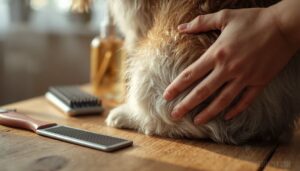
Matted fur isn’t just messy — it’s a warning sign your dog can’t ignore. Left alone, those tight knots can hurt way more than you’d think, and quietly cause real damage underneath. Here’s what’s actually happening beneath that tangled coat.
If you’re dealing with stubborn tangles, this guide on how to safely bathe and wash dogs with matted fur walks you through easing mats out without hurting your pup’s skin underneath.
Pain and Skin Pulling
Every mat tugs on nerve endings buried in the skin—that’s real, sharp pain, not just discomfort. Skin traction builds as knots pull tight, and repeated tugging invites micro injury and irritation.
Every mat tugs on nerve endings, turning small knots into real, sharp pain beneath the skin
Left alone, these spots turn into skin sores, raising infection risk. A gentle detangling spray and proper dematting tools ease that traction, protecting your dog from unnecessary pain.
Restricted Movement
Skin pain isn’t the only cost—a locked-up coat stops moving the way it should. Mat tension keeps hair pulled tight against the skin, so normal fur glide during walking disappears.
That constant skin friction stress wears on the same spot repeatedly. Deep mat resistance at the center makes detangling tools snag instead of glide, raising hair breakage risks and lowering your dog’s grooming tolerance fast.
Moisture and Infections
Here’s what’s brewing under those tangles: trapped moisture. Mats seal off airflow, so sweat and dampness sit against the skin instead of drying out.
That’s a breeding ground for bacterial growth and yeast. Skin gets soft and breaks down—call it maceration—while biofilm buildup thrives. A lingering, sour odor is your warning sign that infection risk is climbing fast.
Hidden Fleas or Ticks
That damp, sealed-off environment doesn’t just breed bacteria — it hides parasites too. Identifying flea dirt means checking for pepper-like specks near the tail base. Detecting tick bumps requires checking skin folds around ears and toes. Ticks hide along inspecting collar lines and fur edges.
Mats let a full-blown flea infestation or other parasite infestations go unnoticed, threatening your dog’s hygiene and welfare.
Sores Beneath Mats
Peel back a mat and you might not like what you find. Recognizing hidden inflammation early matters — trapped moisture invites skin infections, while constant friction causes skin irritation and open sores.
Deciding if a vet visit is necessary is key if you spot swelling, pus, or bleeding. Left alone, canine dermatological issues worsen fast, turning a simple brush-out into a trip to the vet. Neglecting severe tangles may violate the Animal Welfare Act regarding pet health.
Gather Safe Dog Detangling Tools
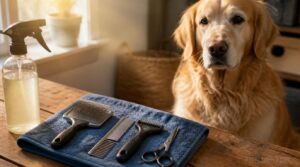
Grabbing the wrong tool can turn a simple detangling session into a painful one. That’s why having the right gear on hand matters just as much as knowing the technique. Here’s what you’ll want within reach before you touch a single mat.
Wide-tooth Metal Comb
Think of the wide-tooth comb as your mat detector. Its wide gaps, usually 4 to 7 millimeters, glide through knots without snagging, while rounded edges protect skin from nicks.
If the comb keeps catching after several gentle passes, switching to a proper dog grooming brush for matted fur can safely finish the job before skin irritation sets in.
Look for stainless steel durability — it resists rust and holds up wash after wash. Rinse and dry it after every session to keep it gliding smoothly next time.
Fine-pin Slicker Brush
Once the comb finds the tangle, the fine-pin slicker brush takes over. Its closely spaced stainless steel pins work through loose hair without dragging on skin.
A cushioned head absorbs pressure, so brushing stays comfortable, not painful. Look for an ergonomic handle and rounded pin tips — they prevent scratches while you detangle dog hair safely, session after session.
Dematting Comb or Splitter
Some mats won’t budge for a brush, no matter how patient you are. That’s where a dematting comb or mat splitter earns its keep — stainless steel blades slice through packed knots without yanking hair from the skin.
Look for rounded blade tips and wide-set teeth; they protect skin while removing mats safely. An ergonomic handle keeps sessions comfortable, and rinsing blades after use maintains sharpness.
Dog-safe Detangling Spray
Slip matters more than scent. A good detangling spray works as a leave-in solution, coating hair so your comb glides instead of grabs.
Look for:
- Alcohol-free formulas with aloe or oatmeal for sensitive skin
- Coconut or jojoba oil for shine and softness
- Fragrance-free options for allergy-prone dogs
Mist root to tip before combing — it’s a simple habit, big payoff.
Treats and Non-slip Surface
A wobbly dog is a stressed dog. Set up a safe grooming environment with a non-slip mat under his paws — good paw traction keeps him calm and still.
| Tool | Purpose |
|---|---|
| Rubber mat | Prevents slipping |
| Treats | Positive reinforcement |
| Calm voice | Reduces grooming anxiety |
| Short sessions | Reward motivation |
Pair both with treats, and grooming stability becomes second nature.
Check Mats Before You Begin
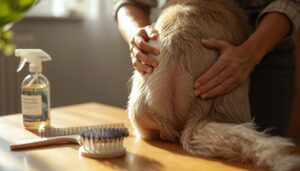
Don’t grab a comb just yet. Before any tool touches your dog’s coat, you need to know exactly what you’re dealing with. Here’s what to check first.
Surface Tangles Versus Tight Mats
Ever run your hand through your dog’s coat and wonder if that’s a real tangle or just fluff? Here’s the difference: surface tangles stay loose, painless, and easy to brush out. Severe mats feel stiff, felted, almost like a solid clump gripping the skin.
That’s why texture matters — mats trap moisture and heat, inviting odor and skin irritation, while tangles dry out fast and cause zero movement restriction.
Finger Test Near Skin
Before you touch a comb to that mat, press it gently near the skin. This quick finger test checks the skin blanching response — healthy skin pales then bounces back fast.
No color change? That’s a circulation health indicator worth noting.
Watch for:
- Pain reactions
- Numb spots
- Persistent redness
- Warmth or swelling
- Slow color return
These signal possible tissue damage before you detangle mats safely.
Ears and Armpits
Now check the two trouble spots — ears and armpits. Ear flap irritation hides easily under matted fur, and mats can cause ear canal blockage near the opening.
Armpits trap sweat fast, so armpit moisture buildup builds behind knots. Comb along natural underarm hair direction — don’t fight it. These friction zones need extra attention before you grab your dematting comb and start work.
Redness, Odor, Swelling
Once you part the mat, look closely at the skin underneath. Redness or unusual warmth signals inflammation, while a foul odor often means bacteria are already at work.
Swelling that feels puffy or tender needs attention too. These three signs together point toward infection, not just tangled fur — and that’s a job beyond your comb and scissors.
When Home Grooming is Unsafe
Some mats just aren’t worth the fight at home. If your dog is squirming, growling, or snapping, stop — aggressive behavior risks turn a grooming session into a bite risk fast.
Slippery floors add tool slip hazards, and severe mats gripping the skin can tear if pulled while your dog struggles. When handling reactive dogs feels unsafe, call a professional groomer instead.
How to Detangle Matted Dog Fur at Home
Once you’ve checked the mat and know it’s safe to handle at home, it’s time to get to work. The order you follow here matters just as much as the tools you use. Here’s the step-by-step process that keeps your dog comfortable and the fur intact.
Work on Dry Fur
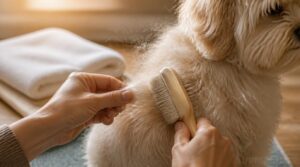
Wet fur seems easier to detangle — but it’s actually your worst enemy here.
Moisture avoidance matters because damp fibers swell and mats tighten like a fist. Work only on a dry coat for proper fiber separation.
Before you start:
- Brush loose ends first
- Keep sections small
- Use a soft bristle brush
- Skip liquids on skin
This reduces friction and protects sensitive skin underneath.
Apply Detangler First
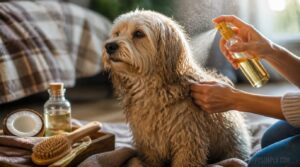
Grab your detangling spray before touching a single knot — it’s your first line of defense against pain.
A good detangling solution coats hair for lubrication benefits and minimizing hair breakage. Check labels for an ingredient safety check — skip alcohol, harsh scents.
| Product | Best For | Watch For |
|---|---|---|
| Cowboy Magic | Tight mats | Dime-sized amount |
| Coconut oil spray | Dry coats | Warm slightly |
| pH shampoo mix | Sensitive skin | Rinse-free formula |
| Aloe mix | Irritated skin | Even coverage |
| Dog conditioner | Daily upkeep | Mid-length to ends |
Wait Five to Ten Minutes

Patience pays off here — literally. That five to ten minute wait isn’t wasted time; it’s product penetration time, letting the detangling solution soften packed fibers before you touch them.
Rushing risks skin tugging and unnecessary pain. Use the pause to prep your next tool, talk softly to your dog, and let stress settle. This small habit builds calmer grooming routines and better results, every time.
Loosen Edges With Fingers
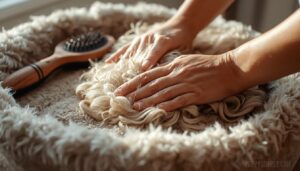
Your fingers are the safest tool you own — no blade, no wire, just skin-safe pressure. Use finger edge relaxation with gentle circular motions to find the mat’s boundary before anything else touches it.
Press lightly, working outward to inward. This minimizes skin tension and helps with sensitivity on tightly tangled clumps. Never pinch. Reapply detangler if resistance builds — that’s smart pet coat maintenance, not extra work.
Comb Ends Toward Skin
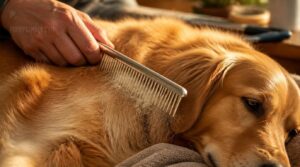
Direction matters as much as pressure. Keep comb teeth pointed toward the skin, not away — this comb angle technique minimizes skin snagging and reduces hair breakage. Use your base grip, comb along hair growth direction, short strokes only.
Rounded teeth on your widetooth comb (or slicker brush) prevent scalp irritation. Proper comb positioning turns a painful yank into gentle, controlled release — no shortcuts here.
Prevent Matted Dog Fur From Returning
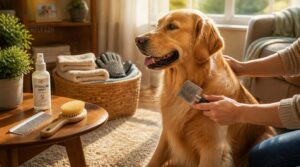
Detangling a mat is only half the job. The real win is never having to fight one again, and that comes down to a few simple habits. Here’s what actually keeps mats from creeping back in.
Brush by Coat Type
Not every coat needs the same tool—that’s the secret pros know and owners often miss.
For smooth coats, a bristle brush distributes oils and adds shine. Medium dense fur needs a slicker brush, then a pin brush to smooth. Silky coats love daily pin brushing plus a wide-tooth comb. Double coats need an undercoat rake. Curly texture calls for a firm slicker, a steel comb, and detangling spray to prevent painful mats.
Check Friction Zones Daily
Once you know your dog’s coat type, the next habit is checking the trouble spots where mats actually start.
High-friction spots — ears, armpits, and collar areas — deserve a quick daily glance. Feel for tangles, do a fast parasite inspection, and check for redness or swelling. This keeps skin irritation and hidden sores from turning into bigger problems, and it’s a fast way to catch trouble before it traps heat against the skin.
Brush Before Bathing
Bath day isn’t just soap and water — it starts with a brush. A quick pass with a slicker brush and dematting brush takes care of pre-wash debris removal before water hits the coat.
Wet mats tighten fast, so brushing first prevents matting from setting in. It also spreads natural oils evenly, cuts down shedding, and eases bath stress. Add detangling spray for extra slip.
Dry The Coat Fully
Once you’ve rinsed out the shampoo, blot with a microfiber towel first — it soaks up excess water without dragging on damp fur.
Then switch to a pet dryer on low heat, moving it 6-8 inches from the coat, following the direction of hair growth.
- Prevents heat damage
- Reduces hair breakage
- Stops matted dog fur from re-forming
- Monitor moisture level
- Air dry 10-15 minutes after
Schedule Regular Grooming
Rarely do mats form overnight — they build up between visits, which is why a consistent grooming schedule matters more than any single detangling session.
Aim for every 4-6 weeks, adjusting for coat type: double coats need extra brushing during seasonal shedding, puppies start with shorter intervals for acclimation, and senior dogs often need sessions every 3-6 weeks. Routine consistency is real preventative pet care.
Frequently Asked Questions (FAQs)
How to remove matted dog hair naturally?
Nature’s got your back here — no need to reach for harsh chemicals. Warmed coconut oil, cornstarch, or an aloe vera spray loosen knots gently, taming even stubborn matted dog fur while keeping your pup’s skin calm and irritation-free.
Can diet affect how often mats form?
Yes — diet matters more than most owners realize.
Protein Energy Balance, Omega Fatty Acids, and proper hydration strengthen the hair shaft, while Blood Sugar Spikes and excess Sebum Production Levels from poor nutrition make fur greasy, weak, and mat-prone.
At what age do puppies need regular brushing?
The gentlest habits build the toughest coats — start brushing around 8 to 12 weeks. This early window shapes puppy socialization and handling desensitization, making daily brushing, coat maturity timing, and lifelong grooming routines far smoother for every dog parent.
How long does a full detangling session take?
Timing swings with mat severity and coat type. Light tangles take 10–30 minutes, moderate ones stretch toward two hours, and severe matting can demand 6–10+ hours across several sessions to protect your dog’s skin.
Can matting occur in short-haired dog breeds?
Short-haired breeds still mat—collar friction, thick undercoats, and debris accumulation trap loose hair. Moisture clumping and coat texture matter more than length, so don’t let short-hair myths skip your dog’s regular grooming safety checks.
Can I cut mats out with regular household scissors?
Household scissors risk jagged edges and can slip against dense mats — leading to accidental nicks. Instead, grab blunt-tipped scissors or a dematting tool for precise cutting, protecting your dog’s skin while safely managing tough, matted hair.
Is shaving the dog a better option than detangling?
Only for severe cases — shaving skips the pain of pulling but disrupts temperature regulation and coat pattern. Detangling protects hair shafts, prevents breakage, and helps with skin irritation better long-term when mats aren’t touching skin directly.
What if my dog wont sit still for grooming?
A wiggly pup turns grooming into a rodeo. Start with desensitization training, short handling sessions, and positive reinforcement rewards. If anxiety persists, ask a professional behaviorist about managing grooming triggers safely.
Can cornstarch be used on all coat types?
Not exactly — it depends on texture specific application. Fine coats absorb it well, dense fur may need pairing with detangler, and curly coats risk trapping powder, causing residue buildup instead of solving matted fur problems.
How long does it take to fully detangle severe mats?
Think of it like untangling a knotted necklace chain—some take seconds, others test your patience for hours.
Session duration varies by coat texture: 30 minutes to 4+ hours. Sectioning speeds things up; distress means breaks. Add 15-30 minutes post-detangle conditioning to finish right.
Conclusion
Picture that once-tangled coat now falling loose and smooth, catching light instead of trapping moisture underneath. That’s the real reward of learning how to detangle matted dog fur at home — a dog who leans into your hand instead of flinching away from it.
Patience beats force every time. Keep your tools ready, check friction zones often, and don’t let a small knot turn into a painful mess. A little care today saves your dog real pain tomorrow.
- https://goldenpawps.com/how-to-groom-a-dog-with-matted-hair
- https://www.barkavedog.com/post/at-home-dog-grooming-made-easy
- https://petcube.com/blog/home-remedies-for-matted-dog-hair
- https://www.petco.com/content/content-hub/home/articlePages/grooming/How-to-Comb-Out-Your-Dog-Matted-Fur.html
- https://cowboymagic.com/blogs/news/8-steps-to-untangle-matted-dog-hair