This site is supported by our readers. We may earn a commission, at no cost to you, if you purchase through links.
A loose leash doesn’t just mean a comfortable walk—it’s the difference between control and chaos when a squirrel darts across the path. Most dog owners pick a leash based on looks or price, then clip it on and hope for the best. That guesswork costs them.
Poorly fitted gear shifts pressure onto the wrong parts of your dog’s body, turns mild pullers into chronic ones, and wears down equipment faster than it should. A collar sitting too high can strain the trachea. A body gear with a misaligned D-ring twists your dog sideways with every step.
The good news: fitting a dog leash properly takes less than ten minutes once you know what to check. These steps walk you through gear selection, correct attachment, and the small adjustments that make every walk safer and calmer.
Table Of Contents
Key Takeaways
- Gear fit is the foundation of safe walks: a collar or harness that’s too loose risks slipping, while one too tight restricts breathing and causes long-term strain.
- Match leash width and length to your dog’s weight and environment—a six-foot leash suits most daily walks, while traffic leashes and long lines serve specific situations.
- Correct attachment matters beyond just clipping on: the D-ring must stay centered, the latch fully closed, and hardware sized to match your dog’s build to maintain real control.
- Building calm leash habits—rewarding loose-leash walking, stopping at the first sign of tension, and rechecking gear mid-walk—prevents pulling from becoming a hard-to-break pattern.
Fit Leash Gear Snugly and Safely
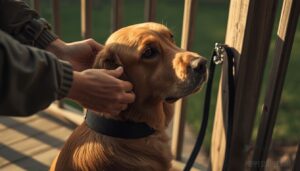
Getting the fit right is the first real step toward safe, comfortable walks for both of you. Before you clip on a leash, you need to make sure the collar or body gear is snug, centered, and secure. Here’s what to check before heading out the door.
If you’re still figuring out timing, knowing what age puppies can safely wear training collars helps you avoid starting too early before their neck is strong enough to handle even a lightweight fit check.
Choose Collar or Harness
Two pieces of dog walking gear, one important decision. The right choice depends on your dog’s size, behavior, and health.
Pick based on what fits your dog’s needs:
- Trachea safety: neck collars risk strain in pullers
- Pressure distribution: harnesses spread force across the chest
- ID tag visibility: collars keep tags accessible
- Breed-specific needs: flat-faced dogs benefit from a harness-style leash
A correct leash fit starts here. For active pets, using a front-clip harness can help discourage pulling behavior.
Measure Before Buying
Once you’ve chosen your gear type, grab a soft measuring tape before opening any product page. Wrap it around your dog’s neck and chest separately, recording both in inches and centimeters — manufacturer size charts vary by brand.
If your dog is still growing, add a small margin to each measurement so the leash fitting stays accurate for months, not just today.
Check Two-finger Fit
Once you have your measurements, slide two flat fingers under the collar or gear strap with your dog standing relaxed. If your fingers feel squeezed, adjust the collar size up. If they slide through easily with room to spare, tighten it.
A loose fit risks preventing collar slipping from failing — and a tight one restricts breathing and movement.
Center All Attachment Points
With fit confirmed, check where the D-ring sits on the midline. It should align with your dog’s sternum or the center of the back — not tilted toward one shoulder.
A skewed attachment creates lateral pulling forces that shift pressure unevenly onto the neck. Adjust the collar or gear until the hardware stays centered when your dog stands naturally and moves forward.
Test for Slipping
Give the clip a firm tug in the direction your dog usually pulls. A secure attachment won’t shift, rotate, or allow the leash to extend. Check that the buckle stays closed and the D-ring holds its position.
Smooth metal surfaces and worn clips slip more easily under sudden force, so inspect the gate for gaps or sticking before every walk.
Choose The Right Leash Size

Leash size isn’t one-size-fits-all — the right choice depends on your dog’s weight, your walking environment, and how much control you need.
Getting this wrong can mean snapped hardware, sore hands, or a dog that slips free at the worst moment. Here’s what to look for when choosing the leash that actually fits your situation.
Match Width to Weight
Weight-based width scaling keeps your dog leash safe under pressure.
For mixed breeds like the Pitbull French Bulldog mix, choosing the right weight-rated leash is especially important given their compact but surprisingly powerful builds.
- Under 30 lbs: use a 3/8-inch leash
- 30–75 lbs: choose 3/4-inch for pull resistance
- Over 75 lbs: select 1 inch or wider
- Strong pullers: choose reinforced wider webbing
- Match hardware strength to your leash width
Narrow straps chafe slender dogs; wider ones protect canine movement freedom on bigger builds.
Use Standard Six-foot Leashes
Six feet is the sweet spot for most daily walks. It gives your dog room to sniff and move while keeping you close enough for quick leash control. That balance matters in urban settings, where cyclists and strangers appear fast.
A six-foot dog leash also makes it easier to use consistent training cues like heel, since the length naturally limits slack without restricting your dog’s movement.
Pick Traffic Leash Lengths
In tight urban spaces, a 12 to 18-inch traffic leash keeps your dog inches from your side — exactly where you need them near curbs and crossings.
Use one when:
- Walking through crowded sidewalks with unpredictable pedestrian flow
- Managing a reactive dog near distractions
- Crossing busy intersections where lunging is dangerous
Lightweight nylon or biothane construction keeps bulk minimal without sacrificing durability.
Use Long Lines Carefully
Long lines — ranging from 10 to 150 feet — offer real freedom during recall training, but they demand careful handling. Always confirm a secure swivel attachment to prevent twisting as your dog moves. Pick a brightly colored line to reduce tripping hazards for you and bystanders nearby.
Train a reliable recall before heading outdoors. Shorten the line near roads, wooded trails, or crowds, and inspect for fraying after every session.
| Situation | Safe Length | Key Precaution |
|---|---|---|
| Open field training | 30–50 ft | Confirm swivel clip is secure |
| Wooded or brushy trails | 10–15 ft | Shorten to prevent snagging |
| Crowded parks | 10–20 ft | Use a high-visibility color |
| Beach recall work | 20–30 ft | Account for soft sand drag |
| Dawn or dusk walks | Any length | Choose a reflective coating |
Avoid Oversized Leash Clips
The clip is easy to overlook, but the wrong size creates real problems. Oversized clips can snag on gear straps, dangle against your dog’s legs, and shift the leash angle enough to reduce your control.
Heavy hardware also wears fabric webbing faster and may not latch securely on smaller D-rings. Match clip size to your leash width and your dog’s collar hardware.
Attach The Leash Correctly
Attaching the leash seems simple, but a few small details can make the difference between a safe walk and a slipped collar. The way you clip and position everything matters more than most people realize. Here’s what to check before you head out the door.
Clip to Secure D-ring
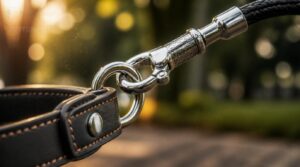
Snap the leash clip firmly onto the D-ring, not the collar ring itself. A spring-loaded latch resists accidental release, but always confirm it’s fully closed before heading out.
- Choose metal or polymer clips rated for your dog’s weight
- Confirm the latch clicks completely shut
- Check breakaway ratings for high-energy dogs
- Test your grip with wet hands
- Inspect the clip regularly for wear
Check Collar Placement

Once the clip is secure, slide the collar up so it sits just below the ears — high enough to prevent backing out, but not so tight it presses on the trachea.
Part dense fur to feel actual skin contact, then use the two-finger rule: if two fingers slip underneath comfortably, the fit is right. Recheck after grooming seasons shift coat thickness.
Check Harness Placement
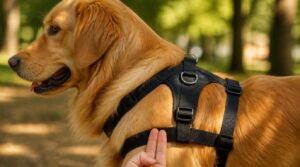
A body gear needs more checkpoints than a collar.
Confirm the dorsal D ring sits centered between the shoulder blades — not tilted or riding up toward the neck. Shoulder straps should lie flat and equally snug on both sides.
Slide two fingers under the chest strap at the sternum; if they move freely, the fit is safe.
Prevent Twisting or Dragging
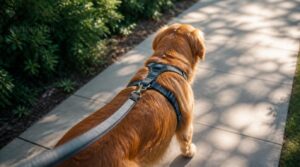
Once your gear sits centered, check that the leash attachment point aligns with your dog’s spine — any offset creates lateral pull that twists the body mid-walk.
Front-clip harnesses naturally redirect motion sideways, so keep that line taut but smooth. If you notice the leash sweeping across your dog’s chest, shorten your grip slightly and walk straight.
Recheck During Walks
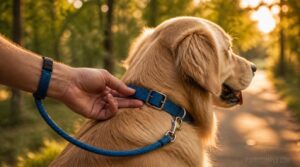
Gear shifts happen — especially after your dog shakes, rolls, or cuts a sharp corner. Every few minutes, glance down and confirm the collar or body gear position hasn’t drifted more than a finger width from its starting point.
Check that the clip is still locked and the leash tension stays taut but not choking. A tucked tail or stiff shoulders means something’s off.
Adjust for Comfort and Control
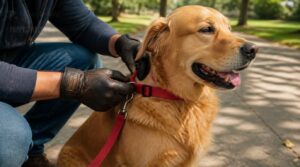
Even the best-fitting gear can cause problems if you’re not paying attention to how you hold and use it during the walk. Small adjustments to your grip, posture, and positioning make a real difference in how comfortable your dog feels and how much control you actually have. Here’s what to keep in mind as you move through each part of the walk.
Keep Leash Slightly Loose
A taut leash tells your dog something’s wrong before anything is. Maintaining slack — about 2 to 4 inches of loose curve — lets your dog move naturally without constant pressure.
Three signs your leash tension needs adjusting:
- The leash forms a straight line instead of a gentle droop
- Your dog’s pace quickens or slows abruptly
- You feel steady resistance in your grip
Slack reinforcement works best when you reward calm walking cadence immediately.
Hold Leash at Waist
Where you hold the leash matters more than most people expect. Keeping it at waist height places the pull at your center of gravity, which reduces spinal stress and keeps you balanced if your dog lunges suddenly.
A hands-free waist setup with bungee tension absorption controls sudden surges smoothly. If you use a side attachment point, it prevents the leash from rotating you sideways during quick direction changes.
Avoid Neck Pressure
Constant collar pressure on a dog’s neck can strain muscles and compress sensitive tissue over time. That’s why body gear attachment points on the chest or back are a safer choice — they shift pressure distribution across the shoulders instead.
A padded body gear also cushions contact points, reducing neck traction during sudden stops. Aim for two fingers underneath any strap near the neck to confirm safe clearance.
Prevent Armpit Chafing
A harness-style leash shifts pressure to the chest, but straps near the armpit can still rub during long walks. Moisture-wicking fabrics and anti-chafing balms reduce that friction a lot.
Check these spots before each walk:
- Position the girth strap over ribs, not soft belly tissue
- Maintain two to three finger widths of clearance from the armpit crease
- Choose smooth clothing designs to minimize rubbing points
- Apply balm to contact areas for skin irritation prevention
Watch Pulling Signals
Your dog telegraphs a pull before it happens. Watch for forward head posture, ears pinned ahead, and a sudden leash tightening as tension builds in the shoulders. A stiff body or raised, curled tail signals rising arousal.
When you catch these cues early, stop walking immediately. That pause interrupts the pattern before it becomes a habit.
Practice Safe Leash Walking

Getting the fit right is only half the battle — how you walk matters just as much. Good leash habits protect both you and your dog, and they’re easier to build than most people think. Here’s what to focus on every time you head out.
Start Indoors First
Start in a low-distraction indoor space — a quiet hallway or living room works well. New gear can feel strange to your dog at first.
- Choose a calm, familiar room
- Let your dog sniff the collar or gear freely
- Clip the leash and let it drag briefly
- Keep early sessions under five minutes
Indoor association building sets a strong, confident foundation.
Reward Calm Behavior
Once your dog is settled with gear on, timing your rewards is everything. Catch calm signals — a relaxed sit, soft gaze, slow breath — and reward immediately. Even a two-second delay weakens the connection between action and outcome. Start with high-value treats, then shift to praise and petting as calm holds. Variable reward schedules keep calm behavior strong without creating anticipation.
Reward calm the instant you see it — even a two-second delay breaks the lesson
| Calm Cue | Reward Type | Timing |
|---|---|---|
| Relaxed sit or down | High-value treat | Immediate |
| Soft eye contact | Verbal praise | Within 2 seconds |
| Loose posture, slow breath | Petting | Immediate |
| Quiet waiting on leash | Favorite toy | After set duration |
| Calm in a new environment | Lower-value treat or praise | Immediate |
Stop When Pulling
Timing is everything here. The moment your dog pulls, stop moving — don’t wait. Stand still for 2 to 5 seconds with neutral body language, no tugging back. Once the leash slackens and your dog returns to your side, resume walking immediately. That forward movement is the reward.
- Stop at the first sign of tension
- Hold still, stay calm, don’t pull back
- Wait for a slack leash before moving
- Use a consistent cue like "yes" when they settle
- Repeat every single time — consistency builds impulse control
Redirect Lunging Early
Once your dog is walking calmly again, stay alert for what comes next. Lunging rarely starts suddenly — you’ll notice early warning signs like a stiffened body or locked gaze first.
The moment you spot them, deliver your redirect cue within 0.5 to 1 second. Follow immediately with a high-value treat when your dog looks back at you. Speed and consistency break the lunge cycle before it builds.
Inspect Gear Often
Even a single walk puts stress on buckles, webbing, and clips. Before each outing, run your fingers along the leash and body gear to check for fraying or corrosion. Test that buckles click and lock firmly. If you spot cracked hardware or loose stitching, retire that piece immediately.
Store gear in a dry, ventilated spot, and keep a simple inspection log to track wear over time.
Frequently Asked Questions (FAQs)
What leash materials work best for chewers?
Like armor against a persistent opponent, Biothane and metal chain leashes outlast most chewers. Kevlar-reinforced options and hybrid designs with metal end segments also hold up well, giving you durability without sacrificing comfort or control.
How do I clean and maintain my dogs leash?
Wash nylon leashes with warm water and mild soap, scrub gently, rinse fully, and air dry away from sunlight. Keep leather conditioned every few months. Store all leashes dry to prevent mold.
At what age should leash training begin?
Leash training begins at 8 to 12 weeks. At this age, puppies absorb new experiences quickly and respond well to short, positive sessions — making it the ideal window to build lasting leash habits.
Can two dogs share one leash safely?
Technically, yes — but only under the right conditions. Both dogs need solid leash manners beforehand. Use a coupler or splitter, not a single clip. Without proper training, opposing pulls can throw you off balance fast.
How often should leash hardware be replaced?
Inspect hardware every one to two months. Metal clips show fatigue after six to twelve months of daily use. Replace immediately if a clip bends, loosens, or won’t close securely — your dog’s safety depends on it.
Conclusion
Proper preparation pays off on every path you take with your dog. When you know how to properly fit a dog leash, you’re not just preventing pulls — you’re building trust with every step.
Gear that fits right removes the guesswork, protects your dog’s body, and keeps you in control when it matters most. Check the fit today. A two-minute inspection before each walk is the smallest habit that makes the biggest difference.
- https://www.coastalpet.com/sizing-guide
- https://ruffwear.com/blogs/explored/the-size-is-right-how-to-measure-for-your-dogs-gear
- https://www.sprenger.de/en/blogs/magazin/harness-how-to-measure
- https://tedhipoonch.com/how-tight-should-a-dog-harness-be-the-two-finger-rule-explained
- https://www.treelinereview.com/gearreviews/best-dog-leashes