
This site is supported by our readers. We may earn a commission, at no cost to you, if you purchase through links.

A dog can shed up to 100 pounds of fur in a single year—enough to knit a sweater, then another, then a few more. For owners of Golden Retrievers, Huskies, or German Shepherds, that number feels less like a statistic and more like a lived reality.
Fur clings to couches, floats into coffee cups, and somehow ends up inside sealed containers.
But constant shedding isn’t always just a breed thing. Diet gaps, hormonal imbalances, parasites, and poor grooming habits all push shedding into overdrive.
Managing excessive dog shedding starts with understanding what’s actually driving it—then working through it layer by layer.
Table Of Contents
- Key Takeaways
- Why Dogs Shed Too Much
- Brush The Coat Correctly
- Bathe Without Overdrying Skin
- Feed a Coat-Healthy Diet
- Keep Hydration Levels Up
- Prevent Parasites and Skin Infections
- Spot Medical Causes Early
- Manage Seasonal Shedding
- Reduce Fur Around The House
- Choose Lower-Shedding Breeds
- Frequently Asked Questions (FAQs)
- How do I get my dog to stop shedding as much?
- Why is my dog shedding extremely?
- Can dog shedding be reduced with clothing?
- Do indoor dogs shed more than outdoor dogs?
- How does exercise affect a dogs coat health?
- Are professional grooming services worth the cost?
- Can stress reduction techniques lower shedding rates?
- Conclusion
Key Takeaways
- Regular brushing—especially with the right deshedding tools—can cut household fur by nearly 90%, making it your single most powerful weapon against shedding.
- What your dog eats shows up in their coat, so a diet rich in protein and omega-3 fatty acids keeps skin healthy and reduces excess fur loss.
- Shedding that comes with bald patches, redness, or brittle fur isn’t normal—it’s your dog’s body flagging an underlying issue like thyroid disease, parasites, or a skin infection.
- Staying ahead of shedding means treating it from the inside out—hydration, nutrition, parasite prevention, and routine vet care work together better than any single fix.
Why Dogs Shed Too Much

Shedding is normal, but sometimes it feels like your dog is leaving fur on every surface in your home. A few key factors drive how much your dog actually sheds, and knowing them helps you take the right steps.
If the fur feels never-ending, these practical tips for reducing dog shedding at home can make a real difference.
Here’s what’s usually behind it.
Breed Coat Type and Undercoat Density
Your dog’s coat tells a story written in genetics.
Coat Layer Genetics determine whether your dog carries a double layer of fur — a dense undercoat beneath a coarser topcoat — or a single coat with no undercoat at all.
Undercoat Density Impact is significant:
- Heavy shedders like Golden Retrievers and Huskies carry thick undercoats
- RSPO2 Variant Effects link curly, low-shedding coats to reduced undercoat loss
- Spitz Undercoat Insulation aids Heat Retention Mechanics, but fuels heavier shedding
Regular brushing helps preserve the protective topcoat of double‑coated breeds.
Undercoat management starts with knowing your breed.
Seasonal Shedding in Spring and Fall
Coat type sets the stage, but daylight length cues are what pull the curtain. Seasonal shedding patterns in dogs are driven by photoperiod hormone signaling — your dog’s body reads shifting light, not just temperature.
Spring and fall shedding peaks hit hardest with double-coated breeds.
| Season | What’s Happening |
|---|---|
| Spring | Undercoat releases as days lengthen |
| Fall | Lighter coat swaps for winter density |
| Year-round | Indoor lighting impact softens but doesn’t stop cycles |
Regional climate variation and microclimate effects shift timing too.
Age, Stress, and Hormonal Changes
Seasonal triggers aren’t the only thing driving excess shedding. Age, stress, and hormonal shifts play a bigger role than most owners realize.
Cortisol stress responses can push hair follicles into early rest phases. Endocrine aging slows skin cell turnover and disrupts growth hormone aging patterns. Sex hormone variability, thyroid disease in dogs, and other underlying health conditions all cause stress-related shedding.
A vet checkup for hair loss helps catch hormonal imbalance early.
Signs Shedding is Abnormal
Hormonal shifts can cross into something more serious. Watch for coat thinning in specific spots, localized hair loss, or a sudden texture shift from smooth to brittle.
Dandruff spikes, odorous skin, and redness are health indicators of hair loss tied to an underlying medical condition — not normal shedding.
Excessive shedding with these signs means a vet checkup for hair loss, including thyroid disease in dogs—shouldn’t wait.
Brush The Coat Correctly
Brushing is one of the simplest things you can do to cut down on shedding, but the tool you use matters more than most people realize. The wrong brush won’t do much, and the right one can make a real difference.
Here’s what works and when to use it.
Bristle Brushes for Daily Maintenance
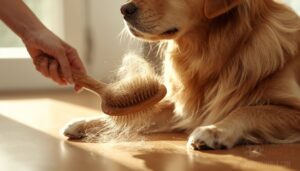
A bristle brush is the quiet workhorse of any dog grooming routine.
For daily shedding control, bristle material choice matters — nylon bristles flex gently, while boar bristles distribute natural oils for better dog coat health.
Cushion head thickness and brush size selection help you reach tricky spots comfortably.
Ergonomic handle design reduces wrist fatigue.
Follow simple cleaning routine tips: remove hair after every session.
Slicker and Wire-pin Brushes for Tangles
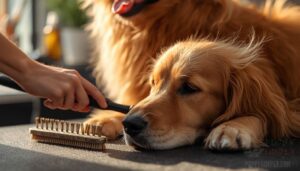
When tangles show up, you need the right tool for the job. Slicker brushes use fine, angled wires with careful Wire Spacing Density to break up mats fast. Wire‑pin brushes feature rounded Pin Tip Shape that glides through knots without scratching skin.
- Gentle Stroke Technique — short, even passes only
- Brush Grip Ergonomics to protect your wrist
- Tool Cleaning Routine after every session
Both grooming tools earn a spot in your dog grooming routine for real shedding control.
De-shedding Tools for Undercoat Removal
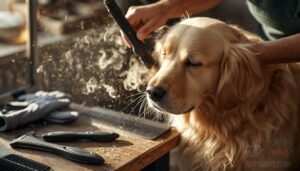
Pulling out the undercoat is where the real work happens.
An undercoat rake lifts dense, trapped fur without thinning your dog’s topcoat. A deshedding glove lets you feel exactly where fur is building up. Dual-sided deshedding tools handle both short and long coats.
Rubber brush and rubber curry combs attract loose hair through static. Comb deshedders glide cleanly through thick undercoat fur without snagging.
Brushing Frequency for Heavy Shedders
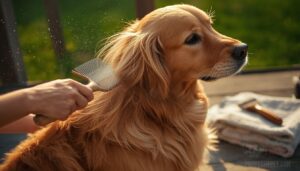
Heavy shedders don’t follow a one-size-fits-all schedule. Tracking Brush Frequency helps you stay ahead of loose coat before it ends up on your couch. Brush your dog regularly — daily during peak seasons, every other day otherwise. Watch for Coat Sensitivity Signs like redness or avoidance, and make Temperature-Driven Adjustments as weather shifts.
- Use an undercoat rake for thick double coats
- Swap your deshedding tool when tines feel dull — Tool Wear Replacement matters
- Keep Grooming Time Allocation consistent with short, full-body sessions
Bathe Without Overdrying Skin

Bathing your dog helps clear loose fur, but the wrong shampoo or too many baths can strip natural oils and dry out the skin — making shedding worse. A good bath routine is really about balance.
Here’s what to keep in mind when it’s time to lather up.
Choose a Gentle Moisturizing Shampoo
Not every shampoo on the shelf is safe for a shedding dog’s skin. Look for a gentle formula with good surfactant balance — mild cleansers like coco-betaine that lift dirt without stripping natural oils.
Humectant benefits come from ingredients like glycerin, which helps skin hold moisture.
pH compatibility matters too, so a shampoo pH balance for dogs keeps the skin barrier intact.
Options like oatmeal shampoo support skin hydration, while fragrance sensitivity and rinse residue are worth watching — always rinse thoroughly to avoid irritation.
Use Conditioner to Reduce Dryness
After shampooing, a good dog conditioner is your skin’s best ally. Conditioner application timing matters — apply it right after rinsing shampoo, let it sit briefly, then rinse with lukewarm water. This promotes hydration and skin health in canines and helps curb dry skin shedding.
- Choose a sensitive skin conditioner with humectants to lock in moisture
- Humectant selection like glycerin draws water into each strand
- Spread conditioner along coat lengths, avoiding the skin, to prevent residue build-up
- Leave-in conditioner benefits include ongoing softness between baths
Bathe Heavy Shedders on a Routine
Once conditioner is rinsed out, your next job is staying consistent. Bath Frequency Guidelines for heavy shedders point to every four to six weeks — enough to keep skin clean without stripping natural oils.
Use lukewarm water, follow Shampoo Residue Removal carefully, and finish with Low-Heat Drying. Bathe your pooch regularly on a dog grooming schedule, and shedding becomes much easier to manage.
Brush After Bathing to Remove Loose Fur
Once your dog is fully dry, that’s your window. Drying Before Brushing matters — a damp coat tangles worse, not better.
- Use Section-by-Section Brushing with slicker brushes or undercoat rakes to lift loose fur gently.
- Apply a Gentle Detangling Method through each area before moving on.
- Finish with Coat Oil Distribution to restore smoothness after deshedding shampoo strips natural oils.
Run a Loose Hair Inspection last — brush your dog’s coat until shedding slows noticeably.
Feed a Coat-Healthy Diet

What dog eats shows up in their coat. A diet built around the right nutrients can make a real difference in how much fur ends up on your couch.
Here’s what to focus on regarding feeding for a healthier coat.
Protein Supports Healthy Hair Growth
Hair is mostly keratin, and keratin synthesis depends directly on amino acid balance from your dog’s diet. When protein intake falls short, hair follicle health suffers first.
| Protein-Rich Foods | Key Benefit | Coat Impact |
|---|---|---|
| Chicken, turkey | Complete amino acids | Promotes keratin synthesis |
| Fish, eggs | High protein quality for coat | Strengthens strands |
| Legume-based kibble | Balanced diet for coat | Reduces excess shedding |
Choose foods where real meat leads the ingredient list.
Omega-3 and Omega-6 Fatty Acids
Protein builds the strand — but fatty acids protect the skin underneath it. Omega-3 and omega-6 work together to support skin barrier integrity and membrane fluidity in your dog’s skin cells.
That balance matters for eicosanoid balance and inflammatory signaling, which directly affects how much your dog sheds.
Top sources of essential fatty acids for nutritional support for coat health:
- Salmon oil or a fish oil supplement
- Flaxseed added to food
- Sardines packed in water
- Omega-rich commercial kibble formulated for coat health
- Vet-approved omega-3 soft chews
Watch the omega ratio guidance too — too much omega-6 without enough omega-3 tips, diet and nutrition for a healthy dog coat in the wrong direction.
Avoid Sudden Diet Changes
Switching foods too fast can undo all your coat-health progress. A gradual food switch — over seven to ten days — protects digestion and provides nutritional support for coat health.
Portion pacing matters too: increase the new food slowly while keeping calorie consistency steady.
Digestive upset management starts here, because vomiting or diarrhea dehydrates skin fast.
Watch for allergen reaction monitoring signs, like itching or redness, during any diet and nutrition for a healthy dog coat change.
When to Ask About Supplements
Before reaching for omega3 capsules, fish oils, or a biotin supplement, talk to your vet first.
A Nutrient Gap Assessment tells you whether your dog actually needs anything extra.
Veterinary Bloodwork can reveal hidden causes behind heavy shedding.
Your vet will provide Dosage Timing Guidance, run a Supplement Interaction Check for any medications, and explain Monitoring Side Effects — so nutritional supplements work for your dog, not against them.
Keep Hydration Levels Up

Most people focus on food when trying to cut down on shedding, but water matters just as much. Dry skin is one of the quieter culprits behind excess fur on your couch and clothes.
Here’s how keeping your dog properly hydrated can make a real difference.
Water Helps Protect Skin Moisture
Think of your dog’s skin as a living barrier — and water is what keeps it strong. The stratum corneum barrier relies on moisture retention to stay supple and functional.
Your dog’s skin is a living barrier, and water is what keeps it strong
Proteins like Aquaporin-3 transport water between skin layers, while humectant mechanisms hold it in place. When water intake drops, barrier lipid integrity weakens, hydration and skin elasticity suffer, and shedding often increases.
Encourage Drinking With Fountains
A pet water fountain does more than look fancy — it actively promotes hydration for dogs by keeping water moving instead of sitting still.
Ideal placement near your dog’s resting spot, quiet operation that won’t startle them, and proper filter rotation keep water fresh and appealing.
Use positive reinforcement to encourage first use, and you’ll notice improved water intake and better hydration and skin elasticity over time.
Add Moisture With Wet Food or Toppers
Some dogs barely touch their water bowl — but that doesn’t mean they’re missing out. Wet Food Moisture fills the gap quietly, since wet food carries 70–80% water compared to kibble’s 5–10%. Broth Toppers Benefits go beyond flavor, and Pumpkin Purée Hydration adds softness without fuss. Try these to boost water intake naturally:
- Pour Low-Sodium Broth over kibble for an easy hydration boost for dogs
- Mix in pumpkin purée for gentle, moisture-rich texture
- Start with Gradual Wet Integration — small amounts first
- Freeze Low-Sodium Broth into cubes as a treat (frozen bone broth works great)
- Combine omega3 supplementation with wet meals for skin and coat support
A pet water fountain helps too, but food moisture works even when they won’t drink.
Dry Skin Can Increase Shedding
Dry skin is often the hidden driver behind heavier-than-usual shedding. When your dog’s skin barrier breaks down, moisture escapes, and the itch-scratch cycle begins — pulling out more fur than normal.
Barrier Repair starts with consistent hydration, omega3 supplementation, and Humidity Management indoors during winter. Balancing skin pH Balance reduces irritation, helps canine coat health, and keeps Seasonal Dryness Prevention working year-round.
Prevent Parasites and Skin Infections
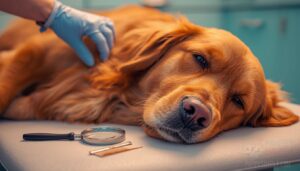
Parasites and skin infections are two of the excessive shedding — and they’re easier to miss than you’d think. A flea you never see can still send your dog into a scratching spiral that pulls out fur fast.
Here’s what to watch for and how to stay ahead of it.
Fleas, Mites, and Lice Trigger Hair Loss
Fleas, mites, and lice do far more than irritate your dog — they actively trigger hair loss.
Flea Allergy Dermatitis causes intense scratching that breaks fur and thins the coat. Mite Alopecia creates crusty skin lesions that pull hairs out as they loosen. Lice Itch Cycle keeps follicles inflamed long after the parasites are gone.
Consistent parasite control stops this damage before Post-Infestation Regrowth becomes your only option.
Redness, Itching, and Scratching Warning Signs
Once parasites take hold, your dog’s skin tells you fast. Localized Redness around the ear edges — Ear Edge Irritation is a classic early signal.
Watch for Nighttime Itch, Persistent Scratching, and Skin Crusting, which all point to skin irritation in dogs.
Allergic dermatitis in dogs and skin inflammation from flea treatments gone overdue can cause itching that targets the same spots repeatedly.
Bacterial and Fungal Skin Problems
Skin infections often follow where parasites leave off. Bacterial cellulitis management matters here — bacteria slip through broken skin quickly.
Fungal ringworm prevention is equally important, since ringworm spreads through contact and looks like a circular, scaly patch. Candida yeast overgrowth is prone to hide in warm skin folds.
Both bacterial and fungal infections worsen shedding substantially. Antifungal shampoo use and skin barrier restoration are key veterinary recommendations for excessive shedding linked to these health issues.
Use Vet-approved Parasite Prevention
Once infections are under control, keeping parasites away is your next line of defense. Your vet can build a monthly dosing schedule based on a regional risk assessment and your dog’s exact weight. Weight-based dosage matters — too little won’t work.
Combination parasite products tackle fleas, mites, ticks, and worms together. Consistent parasite control directly reduces shedding linked to skin irritation.
Spot Medical Causes Early

Sometimes shedding isn’t just about breed or seasons — it’s dog’s body sending a signal that something deeper is going on. Medical conditions can quietly drive hair loss long before other symptoms show up.
Here’s what to watch for.
Thyroid and Adrenal Disorders
Your dog’s thyroid or adrenal glands could be driving that fur overflow.
Hypothyroidism diagnosis often reveals sluggish metabolism, dry skin, and heavy shedding. Hyperthyroidism symptoms run the opposite way — speeding everything up.
Cushing’s disease management targets cortisol excess that thins coats and weakens skin. Adrenal insufficiency quietly disrupts hormone balance too.
Endocrine testing protocol helps your vet pinpoint these underlying health conditions fast.
Kidney and Liver Disease
When kidneys fail, uremic dermatitis can develop as toxin buildup irritates the skin, loosening the coat faster than normal.
Liver trouble brings its own problem — bile acid itch drives scratching that worsens hair loss.
Both conditions cause protein wasting, so hair follicles get starved. Fluid imbalance dries the skin further.
These underlying health conditions need bloodwork, not just grooming fixes.
Medication Side Effects
Some medications trigger more shedding than you might expect. Hormone-altering drugs can disrupt normal hair cycling, and immune system shifts from certain treatments may inflame the skin. Metabolic side effects sometimes show up as a dull, thinning coat. Even flea medication or parasite control can occasionally cause drug-induced itching or medication-induced alopecia.
If shedding started after a dosage change, mention it at your next vet visit.
Bald Patches Need Prompt Vet Care
Bald patches in dogs aren’t just a cosmetic issue — they’re red flag signs that something deeper is going on.
Ringworm contagion alone can spread to your family.
When to seek veterinary care for hair loss is simple: act fast.
Your vet may run a skin scraping test or hair pluck analysis to identify underlying health conditions, then build a targeted veterinary treatment plan.
Manage Seasonal Shedding
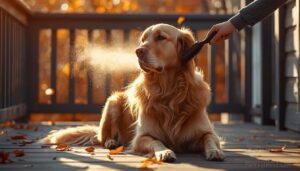
Seasonal shedding is predictable, and that means you can actually get ahead of it. When the weather shifts, your dog’s coat follows — and a few simple adjustments to your grooming routine can make a real difference.
Here’s what to focus on when shedding season rolls around.
Coat Changes During Weather Shifts
Your dog’s coat doesn’t just respond to temperature — it follows daylight. Photoperiod triggers the shedding cycle, meaning coat changes begin as day length shifts, even before warmth arrives.
Seasonal coat change also involves air pocket density in individual hairs, which affects insulation.
Humidity effects and sunlight reflectivity can further influence how quickly your dog sheds through temperature molting transitions.
Increase Brushing During Peak Shedding
When peak shedding seasons hit, your brushing routine needs to shift. Aim for short grooming sessions three to four times a week — daily if your dog has a dense undercoat.
A coat raking with deshedding brushes pulls out loose fur before it lands on your sofa.
Sticking to a peak brushing schedule and consistent owner brushing routine makes grooming techniques for shedding control far more effective.
Support The Coat Before Shedding Starts
Getting ahead of shedding season means preparing the coat before loose fur starts flying. Think of it as building a barrier — moisturizers, a seasonal oil boost with omega-3 fatty acids, and a quick coat inspection checklist each week, all support skin health in dogs.
A steady pre-shedding grooming schedule, paired with balanced nutrition for coat health and proper hydration, makes a real difference.
Adjust Grooming as Temperatures Rise
As temperatures climb, your grooming routine needs to shift too. Take your dog outside first — loose fur releases more easily after some fresh air.
Keep sessions short to avoid overheating, and check your shedding tools for heat buildup during use.
In humid weather, humidity-adjusted brushing with dog grooming gloves helps lift clinging fur.
Heat-safe trimming and cooling grooming sessions make seasonal shedding management for dogs far more comfortable.
Reduce Fur Around The House

Even with a solid grooming routine, fur will still find its way onto your floors, couch, and clothes. The good news is a few simple habits can keep it under control.
Here’s what actually works.
Use Pet Vacuums on Carpets and Furniture
Pet vacuums are built differently from standard models, and that difference matters. Motorized brush heads dig deep into carpet fibers, pulling out embedded fur most vacuums leave behind.
Look for adjustable suction levels, a turbo hair attachment for upholstery, and HEPA filtration to trap dander. Cordless spot cleaning lets you tackle a fur-covered couch in seconds.
A reliable pet hair vacuum is one of the smartest home cleaning strategies to remove pet hair for good.
Keep Lint Rollers and Grooming Mitts Handy
A vacuum takes care of the deep cleaning, but quick daily touch-ups need something faster.
Keep lint rollers and fur removal mitts within arm’s reach using these simple setups:
- Use Quick Access Hooks or a Portable Tool Caddy near your main sitting areas.
- Store grooming gloves in a Compact Mitt Pouch by the door for fast grabs.
- Try Visible Storage Solutions so shedding tools never get buried in a drawer.
For Reusable Roller Maintenance, rinse under warm water and let it dry fully before storing. Pet hair removal techniques work best when your tools are clean and ready.
Wash Bedding and Slipcovers Often
Bedding and slipcovers collect fur faster than you’d expect. Wash sheets weekly — or more often if your dog sleeps nearby — using warm water around 40 to 60°C.
These Temperature Settings and Frequency Guidelines matter for Allergen Reduction.
For Detergent Choice, go mild and fragrance-free. Apply solid Drying Techniques — medium heat, remove promptly.
These Home Cleaning Strategies to Remove Pet Hair, keep furniture protection from pet hair practical and consistent.
Use Air Purifiers for Dander
Air purifiers work quietly in the background, pulling dander from the air before it settles on surfaces. For real results, follow these five steps:
- Choose a true HEPA filter for reliable dander reduction
- Match CADR room ratings for proper CADR room matching
- Use a central placement strategy for full coverage
- Run it continuously for continuous runtime benefits
- Add carbon odor reduction to tackle pet smells
Choose Lower-Shedding Breeds

If you’re still in the planning stage, picking the right breed is one of the smartest moves you can make. Not all dogs shed the same, and coat type matters far more than size or hair length.
Here’s what to know before you choose.
Single Coats Shed Less Than Double Coats
Single coat advantages are real — and the science backs them up.
Double-coated dogs carry a dense undercoat that releases in heavy seasonal waves, leaving fur everywhere. Single-coated dogs skip that cycle entirely, offering coat layer simplicity that keeps shedding more even year-round.
Shedding rate comparison shows it clearly: without that undercoat blow, there’s just less hair to manage daily.
Curly and Woolly Coats Often Shed Less
Curly and woolly coats work differently than you might expect. The curl trap mechanism is real — loose hair gets caught inside the coil instead of floating onto your couch. That’s dense volume retention doing its job. Combined with regular clipping for length and matting risk management, hair fiber cohesion keeps fibers together, making these lowshedding breed options a smart pick over double-coated breeds.
- Less fur drifts onto furniture between grooming sessions
- Brushing feels productive — you gather hair before it escapes
- Clipping keeps curls manageable and reduces daily shedding
- Your vet can recommend shedding prevention tips specific to curl types
- Choosing lowshedding dog breeds gives you real control over household fur
Low-shedding Breeds Can Help Allergies
No dog is truly hypoallergenic — that’s one of the biggest Hypoallergenic Myths worth clearing up. Pet allergies often come from proteins in dander and saliva, not just loose fur.
That said, choosing a low‑shedding breed can support Dander Reduction by limiting how much hair and debris circulates indoors. Pair that with Air Filtration Benefits and regular vet checkups, and you’ll manage dog allergy considerations more effectively.
Doodles and Similar Mixes Vary Widely
Doodle mixes aren’t a guaranteed shortcut. Generation differences matter — an F1b Poodle cross often sheds less than an F1, but coat texture and density matting risk still vary pup to pup.
Size impact is real too; a standard doodle leaves more hair than a mini.
Hypoallergenic myths aside, regular veterinary visits help you catch shedding shifts early and keep your plan on track.
Frequently Asked Questions (FAQs)
How do I get my dog to stop shedding as much?
You can’t stop shedding entirely, but you can manage it. Ways to Reduce Dog Shedding include regular brushing, proper nutrition, and hydration.
Regular Vet Exams help catch Health Issues Related to Excessive Hair Loss early.
Why is my dog shedding extremely?
Excessive shedding often traces back to genetic predisposition, seasonal lighting cycles, humidity levels, allergy exposure, or a disrupted skin microbiome.
Parasites like fleas, thyroid imbalance in dogs, and other health issues related to excessive hair loss are common culprits too.
Can dog shedding be reduced with clothing?
Clothing won’t stop shedding, but dog shirts and antishedding dog suits act like a net — trapping loose fur before it reaches your sofa.
Fit and coverage, fabric selection, and a steady wash schedule make all the difference.
Do indoor dogs shed more than outdoor dogs?
Not exactly. Indoor dogs don’t shed more in total, but you notice it more.
Stable indoor climate impact, lighting cues, and air humidity spread shedding year-round, so surface accumulation feels constant.
How does exercise affect a dogs coat health?
Regular runs and romps boost blood flow, delivering nutrients straight to skin and hair follicles.
Better circulation aids coat renewal cycle, eases stress hormone balance, and promotes active shedding control through consistent movement.
Are professional grooming services worth the cost?
Yes, for most dogs, professional grooming is worth it. Groomer expertise reduces health risks, saves time, and delivers better coat results than most home dog grooming kits can manage alone.
Can stress reduction techniques lower shedding rates?
Stress really can send dog’s coat into overdrive. High cortisol speeds telogen cycle modulation, pushing follicles into rest.
Relaxation techniques and veterinary guidance support cortisol reduction, easing stress-induced shedding over time.
Conclusion
Studies show that regular brushing alone can reduce household fur by nearly 90%. That single habit, paired with the right diet, proper hydration, and routine vet care, makes managing excessive dog shedding far more manageable than it might feel today.
Your dog’s coat reflects what’s happening inside—nutrition, stress, health. When you address the root causes instead of just cleaning up after them, the shedding slows, your home stays cleaner, and your dog feels better for it.
- https://pets.webmd.com/dogs/default.htm
- https://drkarenbecker.com/
- https://www.blueoasispethospital.com/services/dogs/dog-skin-problems
- https://www.linkedin.com/in/kinyonkevin/
- https://pangovet.com/talk-to-a-vet-online-dog-nutrition/?utm_source=dogster&utm_medium=article&utm_campaign=dog-nutrition&utm_content=how-to-reduce-dog-shedding