
This site is supported by our readers. We may earn a commission, at no cost to you, if you purchase through links.
Most dogs won’t tell you their feet hurt—they’ll just start walking funny. A subtle click on the kitchen floor, a slight hesitation before jumping up, a paw they’d rather you didn’t touch.
These are quiet signals, easy to miss until overgrown nails have already started reshaping how your dog moves and stands.
As a vet tech, I’ve seen nails so long they’d curve under the paw, pressing into the pad with every step—and owners who had no idea. Knowing the signs your dog’s nails are too long can spare them real pain before it gets that far.
Table Of Contents
- Key Takeaways
- Clicking Sounds Mean Nails Are Long
- Nails Touch The Floor Standing
- Curving Nails Press Into Paw Pads
- Limping, Slipping, or Tip-Toe Walking
- Licking, Redness, or Paw Sensitivity
- Why Overgrown Nails Are Dangerous
- How Long Dog Nails Should Be
- Safe Ways to Trim Them
- When Professional Nail Help Makes Sense
- Frequently Asked Questions (FAQs)
- How long should a cavaliers’ nails be?
- What do dogs do if their nails are too long?
- What does a vet do for overgrown nails?
- Does walking your dog shorten their nails?
- Can breed affect how fast nails grow?
- Does diet influence nail strength and growth rate?
- At what age do puppies need their first trim?
- Can anxiety make nail trimming harder over time?
- Conclusion
Key Takeaways
- Clicking sounds on hard floors and nails that touch the ground while your dog stands still are the earliest, easiest signs that a trim is overdue.
- Overgrown nails shift weight off the paw pads onto the toe joints, quietly altering your dog’s gait, balance, and long-term joint health with every step.
- Paw licking, flinching when touched, redness near the nail bed, and curling nails pressing into the pad are all pain signals most owners miss until the damage is done.
- Trimming small amounts every 3–4 weeks — and calling a vet when you spot swelling, infection, or severe overgrowth — is the simplest way to protect your dog’s comfort and mobility.
Clicking Sounds Mean Nails Are Long
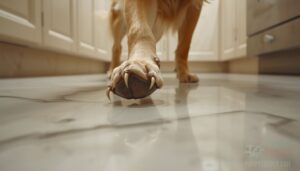
That rhythmic clicking sound your dog makes across the kitchen floor isn’t just background noise — it’s your dog’s nails telling you something.
If the clicking gets constant, it might be time to look into finding a vet who specializes in dog nail trimming before those overgrown nails cause real discomfort.
Most of the time, it means the nails have grown past the point where they should be. Here’s what to listen for and why it matters.
Tapping on Tile, Wood, or Laminate
If your dog’s nails are clicking on the floor, the walking surface tells you a lot. Tile floors, with their rigid subfloor stiffness, intensify every tap sharply.
Laminate’s floating installation creates edge tap variance — those seams ring differently than the middle of a plank.
Even finish acoustic and moisture dampening affect the sound.
But regardless of material, that clicking on hard surfaces usually means the nails are too long.
Why Nail Noise Usually Signals Excess Length
Here’s what’s actually happening beneath that sound. When nails grow too long, they hit the floor before the paw pad does — acting like a levered toe impact that shifts pressure away from the cushioned pad.
That hard surface resonance isn’t random. It’s an audible gait alteration repeating with every step.
Why nail noise matters:
- Long nails strike first, transferring force to the toe joint instead of absorbing it through the pad.
- Hard surfaces intensify each contact, turning subtle nail length into an obvious clicking on the floor.
- The impact frequency correlation is simple — one click per step means it’s happening constantly.
- Pressure shift detection starts here — your dog’s posture quietly adjusts to reduce paw pain.
- What sounds minor often signals weeks of discomfort already building beneath the surface.
Consistent regular small trims help prevent the joint strain caused by overgrown nails.
When Occasional Sound Becomes a Clear Warning
A click here and there isn’t a cause for panic.
But when the sound follows every single step — rising click frequency across tile, hardwood, and laminate — that’s your pre-trim noise cue.
Hard surfaces intensify what’s already happening.
Add a dog startle reaction, limping, or licking their paws after walks, and the pattern is clear.
Make owner listening routine a habit.
Your ears catch what your eyes might miss.
Nails Touch The Floor Standing
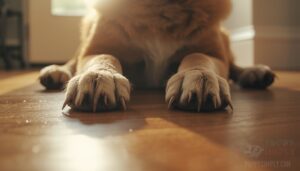
The floor test is one of the easiest ways to know if your dog’s nails need attention. While your dog is standing still, a quick look at their paws tells you a lot.
Here’s what to check for.
How to Check Nail Length While Your Dog Stands
Have your dog stand naturally on a flat surface, then crouch down for a side profile angle. From there, nail tip alignment becomes easy to assess — healthy nails stay level with the paw, not grazing the floor.
Also check paw width from the front; toe spread measurement reveals if nails are pushing toes outward.
Paw pad visibility and both angles together give you a clear, honest read.
Nails Extending Beyond The Paw Pad
Once nails push past the edge of the paw pad, the whole foot starts working against itself. Here are the Pad Pain Indicators to watch for:
- Toe Alignment Change — toes splay or shift outward
- Weight Bearing Shift — pressure moves to the toe tips
- Pressure Point Development — nail digs into soft pad tissue
- Surface Grip Loss — overgrown nails reduce traction
- Symptoms of Nail-Related Discomfort — licking or chewing at paws signals pain
Ground Contact Versus a Healthy, Shorter Nail
Think of it like a heel strike versus a flat-footed shuffle. When nail length is healthy, pad-first impact happens naturally — paw pads absorb the step, traction efficiency stays high, and force distribution spreads evenly across the foot.
Overgrown nails shift that toe angle, flipping ground pressure mapping so the nail hits first. On walking surfaces, that’s exactly what creates the clicking sound.
Curving Nails Press Into Paw Pads
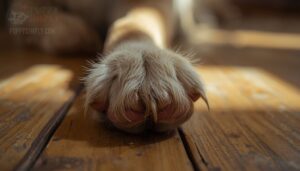
When nails grow too long without regular trimming, they don’t just stay straight — they start to curve. That curl can push the nail into the paw pad itself, and things get uncomfortable fast.
Here’s what to watch for before it gets to that point.
Nails Curling Inward or Under The Paw
When a nail grows long enough, it stops pointing forward and starts bending back toward the paw. That curl creates biomechanical stress with every step — the tip presses into pad tissue like a slow, repeating jab.
Over time, this triggers an inflammation cycle that makes painful paws even worse.
Nail overgrowth and curling nails also shift how weight distributes, causing subtle changes in gait you might not notice right away.
Early Signs of Ingrown or Embedded Nails
Catching an ingrown nail early makes all the difference. Watch for nail corner pain — tenderness where the edge meets the skin — along with pink skin inflammation, redness, or swelling around the nail bed.
Clear fluid seepage, an infected odor, or a small granulation tissue bump signal the nail is already embedding.
Difficulty walking or subtle changes in gait often follow fast.
Dewclaws That Overgrow Without Natural Wear
Dewclaws are easy to forget — they sit higher on the leg and never touch the ground, so they don’t wear down naturally. That’s exactly why owner awareness matters here.
Without regular preventive care, a dewclaw curls inward and presses into the pad, causing real pain. Check them weekly.
Identifying overgrown dog nails includes these too — dewclaw hygiene and timely trimming protect your dog’s paw health.
Limping, Slipping, or Tip-Toe Walking

Long nails don’t just look uncomfortable — they actually change the way your dog moves. You might notice hesitation on slick floors, an odd tip-toe gait, or the occasional slip that makes your stomach drop.
Here’s what’s really going on with your dog’s steps when their nails get too long.
Hesitant Steps and Awkward Posture
Your dog’s walk can quietly change before you ever notice a limp. Overgrown nails force awkward Toe Curling, Stiff Short-Step movement, and subtle Weight Shifts that alter dog mobility without obvious pain signals.
Watch for these on any hard surface:
- Foot Lift higher than normal to avoid nail drag
- Start Hesitation before the first few steps
- Deliberate, careful paw placement instead of a smooth stride
- Uneven loading, shifting weight between legs mid-walk
- Toes curling inward, keeping paw pads from landing flat
Reduced Traction on Smooth Floors
Those hesitant steps get worse on slippery floors.
Long nails cause a Toe Angle Shift that forces Pad Contact Loss — your dog’s hard nails hit the floor first instead of their grips.
That Friction Reduction from poor Surface Microtexture Interaction, combined with Uneven Nail Wear, leaves them skating.
On any hard surface, the impact of nail length on dog posture and gait directly undermines paw traction and dog mobility.
How Long Nails Change Gait and Balance
Poor traction is just one piece of it. The bigger issue is what long nails do to your dog’s whole movement pattern.
Here’s what shifts when nails grow too long:
- Weight Distribution Shift — Paw Contact Timing changes, so your dog lands differently with each step, throwing off balance.
- Toe Pressure Change — Leg Loading Imbalance follows, stressing joints up the entire leg.
- Stance Width Expansion — They widen their footing just to stay upright.
Regular trims protect dog’s joint health and restore natural dog foot biomechanics.
Licking, Redness, or Paw Sensitivity
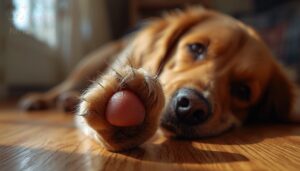
dog’s paws will tell you something’s wrong before you even look at the nails.
Constant licking, visible redness, or pulling away when you touch their feet are quiet signals worth paying attention to.
Here’s what to watch for.
Paw Licking and Chewing From Discomfort
When your dog keeps stopping to lick his paws, something’s bothering him. Overgrown nails shift pressure onto soft tissue, triggering paw pain with every step. That discomfort drives paw licking and stress-related chewing just as reliably as allergy-induced itch, environmental irritants, or behavioral boredom.
| Cause | Licking Pattern | What It Signals |
|---|---|---|
| Overgrown nails | After walks | Paw pain from pressure |
| Allergy-Induced Itch | Constant, both paws | Environmental irritants |
| Nail infection risk | Focused, one paw | Infection signs forming |
| Behavioral Boredom | Random, no pattern | Stress-related chewing |
| Injury or foreign body | Sudden, intense | Localized paw pain |
Swelling Around The Nail Bed
Paw licking often signals something visible is brewing. Look closely at the nail bed — redness or swelling around the nail bed is an early inflammation sign you shouldn’t ignore.
That puffiness, warmth, and tenderness point to paronychia, a nail fold infection triggered by cuticle trauma from overgrown nails pressing into soft tissue.
Left unchecked, abscess development and pus formation follow fast, threatening your dog’s overall paw health.
Flinching When Feet Are Touched
Flinching when you touch your dog’s feet is a quick reflex that’s easy to dismiss — but it’s actually a key behavioral discomfort signal. Pain withdrawal happens the moment pressure activates inflamed tissue near the nail quick.
If your dog only flinches on certain paws, that’s localized pain, not attitude. Nail length directly drives this paw sensitivity, and it usually eases once nails are properly trimmed.
Why Overgrown Nails Are Dangerous

Long nails aren’t just a cosmetic issue — they can cause real harm over time. The damage builds quietly, from the joints up through your dog’s whole quality of life.
Here’s what’s actually at stake.
Joint Stress From Altered Paw Position
Long nails don’t just look uncomfortable — they quietly rewire how your dog moves. When nails hit the floor first, the paw tilts back, triggering a joint loading shift that travels straight up the leg.
Long nails don’t just hurt — they silently rewire every step your dog takes, sending stress straight up the leg
altered gait mechanics pattern increases knee stress and hip joint compression over time. muscle guarding effects follow, as surrounding muscles tighten to compensate — quietly wearing joints down with every step.
Split Nails, Torn Quicks, and Bleeding
Overgrown nails are prone to nail splitting because they catch on surfaces and bend under pressure. When a split deepens, it can reach the quick — the blood vessel inside — causing nail quick bleeding that looks alarming.
For bleeding control techniques, press clean gauze firmly for 30 seconds and apply styptic powder.
Post-trim monitoring matters too: keep the area dry and watch for torn quick symptoms like swelling or limping.
Infection Risks From Pad Punctures
A puncture wound under the paw looks minor — but it rarely stays that way. Nail splitting can push sharp fragments into soft tissue, creating ideal conditions for bacterial contamination and deep tissue spread.
Pseudomonas risk is real here, especially in dogs that walk outdoors.
Foreign body retention keeps infection festering even after surface healing.
Watch for infection warning signs like swelling, warmth, or discharge — your dog’s paw health depends on catching these early.
Lower Activity Levels From Chronic Pain
Chronic pain doesn’t just hurt — it changes how your dog moves through the entire day.
When paw pain becomes constant, dogs quietly pull back from things they used to enjoy. Here’s what that shift looks like:
- Reduced walking steps daily
- Pain-induced sedentary behavior — more lying down, less exploring
- Kinesiophobia impact — fear of movement driving avoidance
- Joint pain limitation affecting posture and gait
- Activity pacing strategies replacing normal play
Dog orthopedic health depends on catching this early.
How Long Dog Nails Should Be

Knowing your dog’s nails are too long is one thing — knowing what "just right" actually looks like is another.
There’s a simple way to check, and it doesn’t require a vet visit or any special tools. Here’s what to look for.
Ideal Nail Length for Standing Dogs
The sweet spot is simple: your dog’s nails shouldn’t touch the ground when they’re standing still. Aim for about 1–2 millimeters of ground clearance.
That gap keeps weight bearing on the paw pads where it belongs, promotes proper joint alignment, and prevents the posture shifts that cause tiptoeing or difficulty walking.
Check monthly — nail growth rate varies, but staying consistent makes a real difference.
Light Nails Versus Dark Nails
Nail color changes everything about how you trim. Light nails offer great color contrast — you can actually see the quick as a pinkish line running through the nail, which makes quick visibility is almost easy. Dark nails? You’re working blind.
For black dog nails, incremental trims are your safest tool preference:
- Trim tiny slivers — 1–2 mm at a time
- Watch for a small dark dot at the nail’s center — that’s your stop signal
- Check for bleeding indicators after each cut, since the quick hides deeper
What The Quick Looks Like
Once you know your dog’s nail color, spotting the quick gets easier. In light nails, it appears as a soft pink line — that’s your Pink Quick Dot guiding each cut.
Dark nails hide it, but trimming reveals a small Black Quick Dot at the center.
That’s your Quick Edge Line. Stop there.
Cut past it, and nail quick bleeding follows fast.
Why Regular Checks Prevent Overgrowth
Spotting the quick is half the battle — the other half is staying consistent. Routine inspection every few weeks keeps you ahead of the growth curve.
Early detection means you’re trimming small amounts before the quick creeps forward.
Owner vigilance is genuinely the best preventive trimming strategy there is.
Regular growth tracking prevents the health risks of long dog nails and protects your dog’s paw health long-term.
Safe Ways to Trim Them
Once you know dog’s nails are too long, trimming them yourself is totally doable — you just need the right approach. A few simple techniques can make the process safer and less stressful for both of you.
Here’s what actually works.
Clippers Versus Grinders

Both nail clippers and grinders get the job done — they just work differently.
Clippers are faster but need precision near the quick.
Grinders offer more control and noise reduction, making them better for anxious dogs, though the buzzing can itself trigger dog anxiety.
Cost comparison-wise, clippers are cheaper upfront; grinders require tool maintenance over time. Try both to see what your dog tolerates.
Trimming Small Amounts at a Time

Whether you’re using nail clippers or a nail grinder, gradual step trimming is your safest move. Take micro-cut intervals — just 1–2 mm at a time — and pause for frequent length checks after each pass.
This incremental tool control keeps you from accidentally cutting the quick, especially on dark nails. Stress-reduced sessions flow naturally from this pacing, and you’ll avoid the limping and clicking sound that signals you’ve gone too far.
Best Angle for a Smooth Cut

Angle matters more than most people realize. Hold the clipper blade at roughly 45 degrees — that’s your sweet spot for clipper blade angle.
Here’s what good jaw alignment and tip contact point look like in practice:
- Keep the full nail width inside the jaw before squeezing
- Lift the paw gently — off-paw lift steadies the toe without twisting it
- Let the blade meet the nail tip, not the underside near the quick
- Avoid going too flat, which squeezes instead of slices
Quick proximity control stays safer when your angle stays consistent.
What to Do if You Hit The Quick

It happens to everyone — you clip a little too far and nick the quick. Don’t panic. Stop immediately, press clean gauze firmly against the nail, and apply styptic powder or any hemostatic agent directly to the tip.
Hold pressure with gauze for about 30 seconds. A light bandage offers protection afterward. Monitor for infection over the next few days, and call your vet if bleeding won’t stop or the nail looks swollen.
Treats and Calm Handling During Trims

Treats aren’t a bribe — they’re your dog’s evidence that this whole experience is survivable. Timing matters most: reward the second your dog lifts a paw or holds still, not after.
- Use high-value treats reserved only for trims
- Treat timing means rewarding each calm moment immediately
- Speak in calm voice cues to avoid spiking arousal
- Apply gentle pressure to toes while feeding
- Swap in lick mat rewards between nails to ease waiting anxiety
When Professional Nail Help Makes Sense

Sometimes the kindest thing you can do is hand off the nail clippers. Whether your dog panics, the nails have gotten seriously out of hand, or something looks infected, there are clear situations where a groomer or vet is the right call.
Here’s how to know when that time has come.
Dogs That Hide Paws, Growl, or Panic
Some dogs make nail trimming genuinely hard — hiding their paws, growling, or full-on panicking the moment you reach for a foot. These aren’t "bad dog" body language cues; they’re fear triggers, talking.
Pain from an overgrown nail quick can spike dog anxiety during grooming, fast.
Desensitization training helps, but if your dog’s stress runs deep, a veterinary pain assessment is the smarter first call.
Signs You Need a Groomer or Veterinarian
Some signs go beyond a simple trim — paw pad ulcers, visible nail cracks, unusual paw odor, or frequent paw scratching that won’t stop; all point toward professional vs DIY nail care being a real decision.
If your dog shows symptoms of nail-related discomfort, grooming anxiety, or any inflammation, a dog groomer or veterinarian is the right call. Don’t wait it out.
Severe Overgrowth, Infection, or Torn Nails
Some cases demand more than a groomer’s table. A pus-filled abscess near the nail bed, chronic paronychia symptoms like persistent nail bed swelling and warmth, or nail plate thickening with discoloration — these need veterinary care fast.
Ingrown nail drainage, torn quicks that won’t stop bleeding, and visible nail splitting are serious infection risks.
Don’t manage those at home.
How Often Most Dogs Need Nail Trims
Most dogs do well with nail trims every 3 to 4 weeks — but that’s just a starting point. Growth Rate Variations mean indoor dogs often need more frequent attention than outdoor ones.
Seasonal Wear Changes matter too; summer pavement does what winter carpet can’t. Build a simple Owner Check Routine monthly, and adjust your nail trimming schedule based on what you actually hear and see.
Frequently Asked Questions (FAQs)
How long should a cavaliers’ nails be?
Short enough to clear the floor — that’s the rule of thumb. Your Cavalier’s nails shouldn’t touch the ground while standing. If you hear clicking, it’s trim time.
What do dogs do if their nails are too long?
When nails get too long, you’ll notice a clicking sound on hard floors, difficulty walking, guarding paws, avoiding jumping, reduced running, reluctant play, and skipping stairs — all signs of real discomfort.
What does a vet do for overgrown nails?
A vet examines, trims, and treats. They assess pain, avoid the quick, use specialized tools, and provide post-trim care — with sedation protocol if needed.
Does walking your dog shorten their nails?
Walking helps, but it depends on the surface. Regular walks on hard surfaces like concrete create exercise-induced wear from abrasive terrain benefits.
Soft ground? Barely any.
Most dogs still need trimming regardless of walking frequency.
Can breed affect how fast nails grow?
Yes, breed plays a real role.
Genetic nail structure, activity-driven wear, hormonal growth rates, and nutrient diet effects all influence breed-specific nail growth patterns — meaning some dogs simply need more frequent trims than others.
Does diet influence nail strength and growth rate?
Diet absolutely shapes nail health.
Protein intake fuels keratin production, zinc levels support growth and repair, biotin supplementation strengthens the nail plate, iron availability aids cell function, and vitamin C effects extend to collagen support around each nail.
At what age do puppies need their first trim?
Most puppies are ready for their first trim around 12–16 weeks, once vaccinations are complete. Starting early paw handling before that helps make the experience calm and stress-free.
Can anxiety make nail trimming harder over time?
Anxiety creates a loop that’s hard to break.
Skipped trims mean longer nails, which means harder sessions next time.
Fine motor impairment, quick fear, and tolerance decline pile up — making long-term neglect almost inevitable.
Conclusion
Studies show that up to 60% of dog owners underestimate how often their pet needs nail trims.
That statistic lands differently once you know what overgrown nails actually cost a dog—sore joints, altered movement, chronic discomfort they can’t voice.
Catching the signs your dog’s nails are too long isn’t about being a perfect owner.
It’s about paying attention to the small things before they become painful ones.
Your dog is counting on that.
- https://pangovet.com/talk-to-a-vet-online-dog-preventative-wellness/?utm_source=dogster&utm_medium=article&utm_campaign=dog-preventative-wellness&utm_content=dog-nails-too-long
- https://www.pethospicevet.com/the-surprising-importance-of-pawdicures-for-pets
- https://hospital.vetmed.wsu.edu/2022/03/10/how-to-clip-a-dogs-nails/
- https://www.justfoodfordogs.com/treats/
- https://smalldogguides.com/what-is-the-proper-length-for-dog-nails/