
This site is supported by our readers. We may earn a commission, at no cost to you, if you purchase through links.
Skip one day of brushing your Maltese, and you might spend the next hour working through knots that formed overnight. That’s not an exaggeration—a Maltese coat can mat within 24 to 48 hours without attention, because that single-layer silk coat has no undercoat to buffer friction and moisture. It’s beautiful, yes, but it demands consistency in a way most dog owners don’t expect when they bring one home.
The good news: once you understand what makes Maltese single-coat maintenance different from caring for other breeds, the daily routine becomes second nature—and keeps that white coat looking like it belongs on a show floor.
Table Of Contents
- Key Takeaways
- Maltese Single Coat Basics
- Essential Maltese Grooming Tools
- Daily Brushing Step-By-Step
- Preventing Mats and Tangles
- Bathing and Conditioning Routine
- Drying Without Damaging Hair
- Tear Stains and Face Care
- Weekly and Professional Grooming Schedule
- Trim Nails Every Two to Three Weeks
- Clean Ears Weekly With Vet-approved Solution
- Brush Teeth at Least Three Times Weekly
- Trim Paw-pad Hair Every Few Weeks
- Schedule Professional Trims Every Four to Six Weeks
- Choose Puppy Cuts for Lower Maintenance
- Use Topknots to Keep Facial Hair Clear
- Balance Home Care With Professional Grooming
- Frequently Asked Questions (FAQs)
- Conclusion
Key Takeaways
- A Maltese’s single-layer silk coat can mat within 24–48 hours, making daily 10–15 minute brushing sessions non-negotiable rather than optional.
- Always work in one-inch horizontal sections starting at the hair tips, using a pin brush followed by a metal comb to catch hidden knots that your brush missed.
- Bathing every one to two weeks with a pH-balanced, hypoallergenic shampoo—plus complete low-heat drying—prevents both coat damage and the moisture-driven mat formation that air-drying causes.
- High-friction hotspots like ears, armpits, thighs, and the tail base need daily attention, and wiping the eye area two to three times daily keeps tear stains from oxidizing into permanent discoloration.
Maltese Single Coat Basics
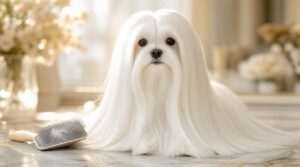
Before you can care for a Maltese coat properly, it helps to understand what you’re actually working with. This isn’t your average dog coat — and that changes everything about how you brush, bathe, and maintain it.
Maltese hair is more like human hair than fur, so bathing a thick-coated dog without damage requires a gentler, more deliberate approach than most owners expect.
Here’s what makes it unique.
How a Single-layer Coat Differs From Double Coats
Think of a double coat like a winter jacket with insulation—built-in warmth, bulk appearance, and seasonal shedding cycles that blow out twice a year. Your Maltese? She’s wearing a silk blouse. This single-layer coat has no undercoat, so insulation efficiency drops, airflow dynamics are minimal, and moisture retention lingers longer.
While double-coated breeds wear insulated winter jackets, your Maltese wears a silk blouse — elegant, delicate, and completely exposed
For low-shedding breeds, that silky coat needs consistent Maltese coat care year-round.
Why Maltese Hair Mats Quickly Without Daily Care
That silk-blouse coat we discussed mats quickly—sometimes within 24–48 hours. Silky fiber fragility causes cuticle wear to accelerate due to daily movement, floor friction, and sleeping postures. Moisture swelling tightens knots after baths, while dust bonding and static buildup from synthetic fabrics exacerbate the issue.
Daily brushing techniques for Maltese are not optional—they are your frontline defense for preventing mat formation in their single-layer coats.
Continuous Hair Growth and Floor-length Coat Potential
Unlike your Maltese’s single-layer coat never stops growing, unlike double-coated breeds. Given the right nutritional support, minimal stress impact, and favorable genetics—yes, Genetic Factors and Hormonal Influences both play real roles—that hair can literally reach the floor.
Environmental moisture also affects growth rate.
But achieving floor-length hair requires protecting every tip through daily brushing techniques for Maltese dogs and consistent coat conditioning and detangling methods.
Low Shedding, Low Dander, and Allergy Considerations
That floor-length coat comes with a quieter bonus: Maltese are genuinely one of the low shedding dog breeds out there. No undercoat means less floating hair and less dander circulating at home. That said, ‘hypoallergenic’ isn’t a guarantee—saliva and skin oils still matter.
Support your single‑layer coat routine with hypoallergenic shampoo, a dander‑reducing vacuum with HEPA air filtration, grooming tool sanitation, and allergen‑free zones where your dog sleeps.
Why White Coats Show Dirt, Stains, and Yellowing Easily
White fur acts as a magnifying glass for stains, with contrast visibility heightened by porous hair absorption. Oils, tear stain residue, and saliva sink in quickly and remain, while hard water minerals leave yellowish halos. Even UV exposure causes gradual yellowing outdoors, and light reflection amplifies tiny spots.
This means white coat maintenance relies on consistent whitening shampoo use, not sporadic damage control. Regular care prevents deep-set discoloration that occasional treatments cannot reverse.
Essential Maltese Grooming Tools
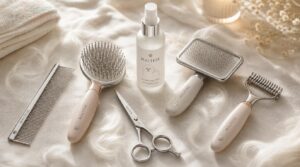
Having the right tools makes all the difference between a calm grooming session and a frustrated dog—and a frustrated you.
Before we get into the daily routine, let’s make sure your kit is actually set up for a Maltese coat, not just any coat. Here’s what you need on hand.
Pin Brush for Daily Coat Separation
Your pin brush is the backbone of daily coat maintenance for Maltese. Look for stainless steel pins with rounded tips—they glide through a single-layer coat without scratching skin. Flexible pin shafts and a spring-loaded base make a real difference in Maltese coat care and grooming.
An ergonomic handle reduces hand fatigue during daily brushing, and rust-resistant storage keeps it working session after session.
Metal Greyhound Comb for Hidden Tangles
Every grooming kit needs a metal greyhound comb—it’s your secret weapon against hidden tangles in a single-layer coat. The Dual Tooth Functionality means one tool manages both coarse knots and fine finishing near the face. Pair it with detangling spray, and the Tine Spacing Optimization, Anti-Static Coating, Ergonomic Grip Design, and Stainless Steel Durability make Maltese coat care and grooming genuinely easier.
The comb is handcrafted in the UK, guaranteeing lasting quality for delicate Maltese coats.
- Catches knots your pin brush completely missed
- Protects fragile silky strands from unnecessary breakage
- Saves you from a last-minute groomer emergency
Slicker Brush for Smoothing Before Baths
Think of the slicker brush as your final sweep before bath time. Those fine-wire bristles—set at just the right bristle angle—lift surface debris and smooth your Maltese’s single-layer coat without aggressive pulling. Nail your pressure control here: light strokes only, or you’ll risk skin irritation.
Clean it after every session—brush hygiene matters more than most owners realize.
Detangling Spray or Diluted Conditioner
Your detangling spray is the unsung hero of Maltese coat conditioning and detangling methods. For ingredient safety, choose a hypoallergenic, dog-safe conditioner—or DIY a diluted mix at a 1:4 conditioner-to-water ratio. Silicone alternatives like aloe vera work beautifully on a single-layer coat.
Use the application mist technique: spray 6–8 inches away, wait 90 seconds, then comb.
Always conduct a patch test first, and follow storage guidelines—in a cool, dark spot only.
Rounded-tip Scissors for Safe Face and Paw Trims
Rounded-tip scissors aren’t optional for Maltese — they’re your safety net. The curved blade curvature safety design glides around sensitive eye contours and between paw pads without snagging.
Look for corrosion-resistant material, ergonomic grip comfort, and precision cutting angles on blades around 5 centimeters long.
For single-coated breeds, maintain a scissor maintenance routine: oil the hinge, keep blades sharp.
Safety precautions when grooming at home start here.
Low-heat Blow Dryer for Complete Drying
Now that your scissors are sorted, grab a portable dryer — your Maltese coat care routine genuinely depends on it.
A low-heat dryer (1,200–1,800 watts) protects that single-layer coat from heat damage. Always use the low or cool setting. A concentrator attachment guides airflow precisely — check your attachment guide.
Keep noise control in mind for anxious pups. Clean the filter regularly for energy efficiency.
Nail Clippers, Grinder, Ear Cleaner, and Toothbrush
Beyond the dryer, your Maltese requires four more tools: nail clippers with a safety guard, a grinder with adjustable speed settings, an enzyme cleaner ear cleaning solution, and a dog-specific toothbrush with flavor-boosted toothpaste.
Don’t skip tool sterilization between sessions. For single-coated breeds, clean tools make a significant difference.
Daily Brushing Step-By-Step

Daily brushing is where good Maltese coat care actually happens — and it’s simpler than it sounds once you know the order of things. The whole routine takes about 10 to 15 minutes, so it fits easily into your morning or evening without much fuss.
Here’s exactly how to work through it, step by step.
Set Aside 10–15 Minutes Each Day
Think of it as time-block planning for your dog — carve out just 10–15 minutes at the same time each day, and your Maltese’s grooming routine almost runs itself. That consistent schedule is what keeps a single-layer coat from turning into a tangled mess overnight.
Your quick grooming checklist for each daily brushing session:
- Same time, every day
- Tools within reach beforehand
- Start calm, stay gentle
Stress-free grooming starts with showing up consistently.
Mist The Coat Lightly Before Brushing
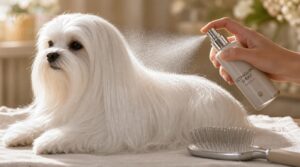
Before your pin brush touches that silky coat, give it a light mist — dry brushing a single-layer coat snags fine hair like thread. Hold your detangling spray 6–8 inches away, mist from scalp to tip, then wait 15–30 seconds. That pause matters.
| Factor | What to Do | Why It Matters |
|---|---|---|
| Mist Timing | Wait 15–30 seconds | Softens knots before brushing |
| Application Distance | Hold 6–8 inches away | Ensures even coverage |
| Spray Ingredients | Choose aloe or oat-based | Gentle on sensitive skin |
| Skin Safety | Skip irritated areas | Prevents stinging reactions |
| Static Control | Light mist post-brush | Keeps coat smooth and separated |
For Maltese coats, fragrance-free detangling spray is your safest daily choice.
Work in Horizontal One-inch Sections
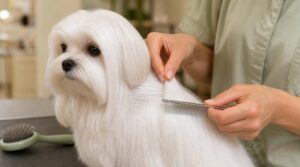
Divide that silky single-layer coat into horizontal one-inch strips — this is the line brushing technique, an essential for Maltese grooming. Use a comb parting line as your visual marker to maintain consistent sections.
Work your pin brush through each strip, then follow up with a metal comb to ensure thoroughness.
Maintain proper brush grip posture, sustain a rhythmic motion, and pause briefly for comfort signal checks to prioritize the dog’s well-being.
Start at The Hair Tips Before Moving Upward
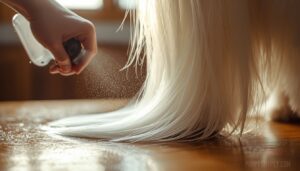
Always start at the tips — never the roots. Tip-first tension keeps you from dragging knots upward into tighter clumps, which is exactly how breakage happens on a single-layer coat.
- Early knot release means less pulling overall
- Smooth strand alignment happens naturally as you work up
- Friction-free ends glide cleanly with detangling spray
- Preventing mat formation in Maltese starts at the very bottom
Your pin brush will thank you.
Use The Comb to Check for Hidden Knots
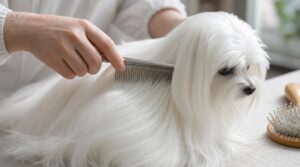
Once your pin brush has done its pass, follow up with your metal comb — this is where the real snag spotting happens. Use a wide-tooth comb with light comb pressure, working an end-to-root sweep through each section.
Thin sections let the teeth reach inner strands where hidden knots love to hide. That section-by-section check is genuinely what separates good grooming from preventing mat formation in Maltese with a single-layer coat.
Focus on Ears, Armpits, Tail, and Thighs
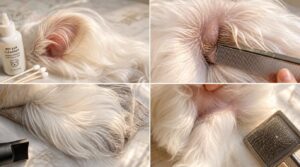
These four zones will betray you if you skip them — and with a single-layer coat, trouble hides fast.
- Ears: Ear hair plucking keeps airflow open; follow up with ear cleaning and infection prevention for dogs every week.
- Armpits: Armpit friction relief starts with separating damp, matted strands under the armpits after walks.
- Tail: Tail coat drying matters — damp folds knot overnight.
- Thighs: Thigh crease monitoring doubles as skin health checks; part the hair and actually look.
Keep Brushing Gentle to Prevent Hair Breakage
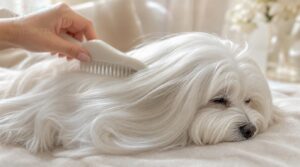
Think of Maltese hair like spun silk — it snaps under pressure, not just neglect. Maintain a calm brushing pace, slow and deliberate; rushed strokes create friction heat that weakens the single-layer coat over time. Your gentle pressure and bristle softness matter more than speed.
After daily brushing, quickly monitor split ends along the tips — this serves as your early warning system.
Preventing Mats and Tangles
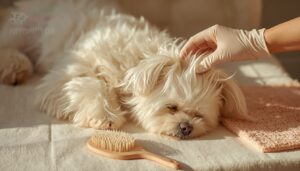
Mats are sneaky — they don’t build up over weeks, they show up practically overnight. Silky Maltese hair has no undercoat to slow things down, so a missed brushing or two is all it takes for tangles to lock in tight.
Here’s what you need to know to stay ahead of them.
Why Mats Can Form Within 24–48 Hours
Maltese hair can go from silky-smooth to knotted mess in less than two days — no exaggeration. That fine, single-layer coat has zero natural resistance to tangling. Here’s what’s working against you overnight:
- Rapid Fiber Looping — silky strands curl into each other with the slightest movement
- Overnight Humidity Build-up — indoor air softens hairs, making them sticky by morning
- Saliva Stiffened Strands — licking creates stiff anchor points where knots lock in
- Dust Particle Clumping — household particles cling and cluster hairs together
- New Length Interlocking — continuous growth means fresh strands weave into existing tangles daily
Daily brushing is your only real defense.
Common Mat Hotspots on a Maltese
Now that you know when mats strike, let’s talk about where they love to hide.
| Hotspot | Why It Mats |
|---|---|
| Chest Leg Junction | Constant leg movement creates friction |
| Ear Neck Fold | Oils and warmth accelerate tangling |
| Groin Tail Zone | Loose hairs collect during walking |
| Shoulder Spine Friction | Furniture rubbing tightens strands |
| Facial Muzzle Area | Moisture locks knots fast |
Check these five zones first — every single day.
How Friction Causes Knots in Silky Hair
Those five hotspots mat fast partly because of physics — specifically, cuticle scale snagging. Each hair strand has tiny overlapping edges that catch neighboring strands during movement. Add anisotropic sliding (friction that’s worse in one direction), surface lubrication loss from dryness, or damage-induced friction from split ends, and knots lock in fast.
Static dryness effects make it worse:
- Dry hair grips instead of glides
- Repeated contact tightens tangles progressively
- Coat conditioning and detangling methods break this cycle early
Why Wet Mats Become Tighter After Bathing
Here’s the thing about wet mats — water makes them worse, not better. Capillary suction pulls hair fibers tighter together, keratin swelling locks neighboring strands, and hydrogen bonding effectively glues them into a dense knot.
Warm, humid bathrooms speed this up.
That’s why immediate detangling matters — and why low-heat dryer usage beats air-drying every time for preventing mat formation in Maltese.
Safe Detangling Methods for Small Knots
Start with Finger Pre-Detangle — feel the knot first, split it into smaller pieces by hand. Then mist with a detangling spray (Slip Spray Technique) and work Outer-to-Center Loosening using Controlled Section Pressure with your soft slicker brush or metal comb. Short passes only. Reapply spray if resistance builds.
These coat detangling techniques make preventing mat formation in Maltese genuinely manageable.
When Mats Should Be Handled by a Groomer
Sometimes, no matter how diligent you are, a mat wins.
If a knot resists several gentle passes with your comb and spray, stop — forced detangling risks skin irritation and hair breakage.
Severe knots behind the ears, near the tail, or covering large areas need professional dematting. A groomer’s safety protocols protect your Maltese’s single-layer coat far better than a frustrated DIY session ever could.
Coat Length Choices for Easier Maintenance
Choosing the right coat length quietly transforms your daily routine. A puppy cut or teddy bear cut — keeping hair one to three inches — dramatically cuts brushing time, speeds up drying, and reduces picking up debris from the floor.
For single-layer coat care, lifestyle trims and seasonal adjustments offer a practical alternative to maintaining a full coat daily. This approach beats fighting a full coat every single day, aligning grooming efforts with your pet’s needs and your schedule.
Bathing and Conditioning Routine

Bath time for a Maltese isn’t complicated, but the order and products you use matter more than you’d think. Get one step wrong, and you’re either dealing with a tighter mat than you started with or a coat that looks dull no matter how much you brush.
Here’s exactly what to do, from start to finish.
Bathe Every One to Two Weeks
Every one to two weeks — that’s your Maltese bathing sweet spot. Go longer and oils, allergens, and staining build up fast on that single-layer coat. Go shorter and you’ll throw off your dog’s skin microbiome balance, causing dryness and irritation.
Schedule consistency matters more than people realize:
- Keeps the white coat visibly bright
- Aids allergen control in your home
- Helps you track shampoo effectiveness over time
- Sets predictable guest expectations at grooming appointments
- Protects sensitive skin from over-washing
Brush Thoroughly Before Every Bath
Pre-bath brushing is your secret weapon for shampoo efficacy — wetting a tangled Maltese coat basically locks those knots in place.
Your pin brush and Greyhound Comb working section-by-section beforehand lifts the single-layer coat, spreads natural oils evenly, and lets the detangler penetrate hidden mats.
Less fighting of tangles means real bath time efficiency — and far less skin irritation overall.
Use Lukewarm Water to Protect Skin
Temperature control during bath time isn’t just comfort—it’s barrier preservation in action. Hot water strips the natural oils from your Maltese’s single-layer coat, leaving skin raw and reactive. Lukewarm water keeps things gentle, supporting real skin health without the aftermath.
Here’s what you’re protecting with every rinse:
- Redness reduction — less heat means less irritation and flushing
- Moisture barrier stays intact, so leave-in conditioner actually works (hello, moisturizer boost)
- Gentle rinsing keeps that silky coat smooth, not brittle
Choose Hypoallergenic White-coat Shampoo
Your shampoo choice matters more than you’d think. A mild hypoallergenic dog shampoo with a pH-balanced cleanser near 7.0 keeps your Maltese coat healthy without stripping natural oils. Skip anything with sulfates or heavy fragrance—opt for a fragrance-free option if your pup has sensitive skin.
| Feature | Why It Matters |
|---|---|
| Sulfate-Free Formula | Cleans without drying out the coat |
| Optical Brighteners | Keeps white coat luminous |
| UV Protective Additives | Prevents yellowing from the sun |
| Hypoallergenic Formula | Reduces irritation risk |
Dog shampoo for white coats is a real category—use it to maintain your pet’s coat health and brilliance.
Apply Oatmeal Conditioner for Softness
Once your pup is shampooed, apply an oatmeal-based moisturizing conditioner from mid-lengths to ends—this is your mid-length moisture zone. Oatmeal’s colloidal compounds smooth each fiber, giving your Maltese coat that silky slip you’ll actually feel. Leave it on for two to five minutes.
This small softness boost makes coat conditioning and detangling methods during brushing significantly easier.
Rinse Until No Shampoo Residue Remains
Now rinse—and Don’t rush this part. Use lukewarm water (Water Temperature Control matters here) and work through each section methodically. Finger-Comb Rinsing moves trapped conditioner and dog-specific oatmeal shampoo outward from the roots. Your Residue Spot Check: Squeeze a strand—if it feels slick or waxy, keep going. For hard water, use filtered or distilled.
- Rinse section by section using the Sectional Rinsing Technique
- Run fingers through each layer toward the tips
- Check under ears and armpits last—residue hides there
Use Leave-in Conditioner Between Baths
Once the coat is fully dry, don’t skip the leave-in conditioner—this is where Maltese coat care truly pays off between baths. A silicone-free selection keeps the single-layer coat light and tangle-resistant, preventing conditioner buildup issues.
Apply lightly to problem areas first, focusing on hotspots like behind the ears, armpits, and thighs. Adjust frequency based on humidity: drier air requires more frequent use, typically 2–3 times weekly.
Drying Without Damaging Hair
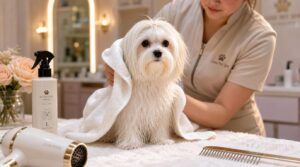
The bath is done — but you’re not out of the woods yet. How you dry a Maltese coat matters just as much as how you wash it, and rushing this step is where most damage actually happens.
Here’s what to do from the moment you reach for that towel.
Gently Squeeze Water With a Towel
Right after the bath, reach for a clean microfiber towel—not a cotton one. Gentle press and sectional blotting are your go-to moves here.
Start at the neck, work toward the hindquarters, and use a light kneading motion to lift moisture. This friction-free drying approach protects that fragile single-layer coat.
A slightly warm towel benefits comfort too—just don’t wring or twist.
Avoid Rubbing The Coat After Bathing
Rubbing is the enemy here—seriously, don’t do it. That silky single-layer hair tangles fast when friction compresses wet strands together.
Instead, use Microfiber Blotting with a hand-supported, sectional approach. This method prioritizes gentle handling to prevent damage.
- Press gently, never scrub.
- Work in Sectional Airflow zones—neck to tail.
- Re-blot with a dry towel if still dripping.
- Finish with a Static Minimizing Spray for skin comfort focus.
Use a Low-heat Dryer Setting
Once the blotting is done, reach for your low-heat dryer—not the high-blast setting you’d use on your own hair. Maltese single-layer coat strands are fine and white, meaning heat damage shows fast. Aim for 80–95°F. Many pet dryers include built-in Heat Sensor Calibration and Temperature Monitoring displays, which take the guesswork out completely.
| Dryer Setting | What It Does |
|---|---|
| Low heat (80–95°F) | Protects fine coat texture |
| Thermal sensor | Prevents hot spots automatically |
| Energy-Saving Settings | Maintains steady airflow safely |
| Cool-Down Phase | Seals the cuticle gently |
| Safe Dryer Positioning | Avoids concentrated heat zones |
Finish with a 30-second cool burst—your Maltese’s coat care and maintenance routine will thank you.
Brush in Sections While Drying
While your low heat dryer runs, work in one-inch sections—use a taut section stretch to keep hair manageable without yanking.
Alternate dry passes across sections for even heat gradient control, giving each area a 6–8 minute break.
Adjust your pin brush angle slightly flat against fine hair, then do a quick section inspection with your metal comb before moving on.
Dry The Coat Completely to Prevent Tangles
Damp fur is basically a tangle magnet — even slightly wet roots mat within hours. Don’t skip complete drying.
- Use your low-heat dryer’s sectional airflow to dry each section fully before moving on
- Check with a moisture detector or just your fingertips — cool spots mean wet spots
- Run a drying timer: 10–15 minutes total keeps you consistent
- A cool-down blast at the end locks the cuticle flat
- Towel-dry first to cut dryer time greatly
Reduce Static With Conditioning Spray
Static is the sneaky enemy of a freshly dried Maltese coat. A light conditioning spray — formulated with humectants like glycerin and polyquaternium polymers — neutralizes charge buildup on that single-layer coat instantly.
Hold the bottle 6–12 inches away, mist lightly in sections, and never saturate.
In dry indoor air especially, this simple step makes coat conditioning and detangling methods dramatically easier afterward.
Keep Long Coats Smooth and Separated
Long coats need active separation — not just a quick once-over. After drying, the coat conditioning and detangling methods really matter for hair mat prevention. Maintaining proper Hair Moisture Balance keeps the silky layers from clumping.
- Run your comb at a consistent Comb Angle Optimization of 45 degrees to lift sections cleanly
- Apply a deep conditioning treatment weekly for Coat Fluff Management
- Revisit Pre-bath Detangling to prevent matting in longhaired dogs before moisture locks tangles tight
Tear Stains and Face Care
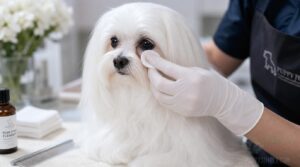
Those reddish-brown streaks under your Maltese’s eyes are one of the most common frustrations owners deal with — and honestly, they’re more manageable than they look.
A consistent face care routine makes a real difference, but knowing where to start helps. Here’s what to focus on.
Why Reddish-brown Stains Appear Under Eyes
Those reddish-brown shadows under your Maltese’s eyes aren’t random—tear film oxidation is the culprit. Canine tears contain iron and porphyrins that literally rust on white fur.
Eyelash irritation increases tear flow, skin fold moisture traps fluid longer, dietary pigments can darken stains, and water mineral load affects concentration. Here’s what drives each factor:
| Factor | What Happens | Stain Impact |
|---|---|---|
| Tear film oxidation | Iron in tears reacts with air | Reddish-brown discoloration |
| Eyelash irritation | Eye irritation boosts tear production | More frequent wetting |
| Skin fold moisture | Damp fur delays drying | Deeper, persistent staining |
| Dietary pigments | Additives color body fluids | Darker stain appearance |
| Water mineral load | Minerals concentrate on fur | Faster stain buildup |
Smart tear stain management techniques start with understanding the root cause—not just the symptom.
Wipe The Eye Area Two to Three Times Daily
Now that you know why those stains form, stopping them early is straightforward — consistency beats any fancy product.
Wipe two to three times daily for real frequency benefits:
- Work from the inner corner outward with light pressure.
- Use a fresh wipe each pass — never re-use.
- Focus on tear stain removal before residue oxidizes.
- Practice post-wipe drying by patting the fur completely dry.
- Watch for warning signs like redness or thick discharge.
Your Maltese’s single-layer coat and dog eye health genuinely depend on this simple habit.
Use Pet-safe Eye Wipes or Damp Cloths
Not all wipes are equal — ingredient safety matters here. For Maltese grooming, choose pet-safe eye wipes labeled ophthalmic-safe, free of fragrance and alcohol.
Your hygiene routine should follow a consistent application technique: wipe inner corner outward, use a fresh section each stroke. Damp cloths work just as well.
Usage frequency — twice daily — keeps tear stain removal effective without irritating that delicate single-layer coat.
Trim Eye-area Hair With Blunt Scissors
Once the eye area is clean, hair length is your next line of defense in tear stain management techniques. Rounded-tip scissors are non-negotiable here — they prevent accidental pokes during Maltese grooming on that delicate single-layer coat.
Keep these in mind:
- Sanitize blades before every session (Blade sanitization protects sensitive eye skin)
- Hold scissors at a slight angle — Angle control prevents tugging fragile strands
- Work in small sections — Sectional planning ensures even, balanced results
- Use calming techniques: soft voice, slow movements, steady hands
- Always do a post-trim inspection to confirm both eyes look symmetrical
Trim just 1–2 millimeters at a time.
Prevent Wet Facial Hair From Spreading Stains
Wet facial hair is basically a stain delivery system — moisture carries pigment straight into that spotless white coat. After meals, dab the muzzle with moisture-absorbing cloths and make dry brushing the muzzle part of your daily routine.
A thin layer of barrier balm on the lips creates real protection.
Trimming strategy matters too — shorter muzzle hair soaks up far less.
Feeding area hygiene keeps everything cleaner between sessions.
Consider Filtered Water and Limited-ingredient Diets
What you put into your Maltese matters more than most owners realize. Filtered water benefits go beyond hydration — removing chlorine and contaminants aids reduced skin irritation and may dial back tear staining over time.
Pair that with a grain-free food built on a simplified ingredient list, and you’re giving sensitive stomach support while improving nutrition impact on coat health for single-coated breeds.
Consistent hydration habits seal the deal.
When Staining May Need Veterinary Attention
Sometimes staining stops being a grooming problem and becomes a health one. Watch for discharge color changes — yellow or green means infection, not just porphyrin buildup.
Eye pain signs like squinting, pawing, or redness point to corneal ulcer risk or eyelash irritation. A blocked tear duct needs vet assessment.
Don’t wait. Prompt care prevents skin infections and worse.
Weekly and Professional Grooming Schedule
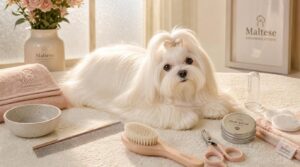
Daily brushing and baths get most of the attention, but the rest of your Maltese’s grooming routine follows a weekly and monthly schedule too. Nails, ears, teeth, and paws each have their own rhythm—skip them, and problems arise fast.
Here’s what a solid, balanced schedule actually looks like.
Trim Nails Every Two to Three Weeks
Nail trimming every two to three weeks keeps your Maltese comfortable and steady on their paws. While indoor life slows nail growth, don’t wait for clicking sounds before trimming. Guillotine or scissor-style clippers are safe, effective options for small breeds.
Clip small amounts at a time, using bright light to locate the quick and avoid discomfort. Finish with a grinder for smooth edges. Treats help reduce stress during the process, making it easier for both you and your dog.
Clean Ears Weekly With Vet-approved Solution
Ear cleaning is a weekly task that’s easy to skip—do not. Use a vet-approved ear cleaner with active ingredients like lactic acid, salicylic acid, and denatured alcohol; these dry and acidify the canal, discouraging buildup.
Apply the cleaner liberally, massage the base for 20 seconds, then wipe with cotton. This process meets the recommended frequency guidelines of one to two times weekly.
Watch for infection warning signs: redness, odor, or discharge. If detected, book a veterinary checkup promptly.
Brush Teeth at Least Three Times Weekly
Dental disease hits small breeds hard—and Maltese are no exception. Brushing three times weekly with dog-safe toothpaste and a dog-specific toothbrush addresses plaque control, gum health, enamel protection, and breath freshening simultaneously.
Enzymatic formulas break down buildup without foaming, offering dental disease prevention on autopilot. This approach ensures comprehensive care with minimal effort.
Three sessions a week are genuinely manageable, making this a practical dental hygiene practice for any Maltese dog owner.
Trim Paw-pad Hair Every Few Weeks
Paws deserve just as much attention as that silky single-layer coat. Trim paw pad hair every few weeks.
Overgrown fur reduces grip enhancement on slick floors and traps debris after walks, making comfort during walks genuinely worse.
Shorter hair also makes pad visibility checks easier, so you can catch redness or cuts early.
Rounded-tip scissors keep it safe.
Schedule Professional Trims Every Four to Six Weeks
For Maltese grooming, a professional grooming visit every four to six weeks keeps that single-layer coat manageable year-round. Four weeks suit longer styles; six works fine for shorter trims.
Book ahead—groomers fill fast in summer. Consistent scheduling truly makes every at-home session easier too.
Choose Puppy Cuts for Lower Maintenance
If you want to simplify your step-by-step Maltese grooming process, a puppy cut is worth considering. Trimming that single-layer coat down to 1–2 inches means daily brushing drops to about 5–10 minutes—simplified home care that actually sticks.
This approach offers budget-friendly grooming, as improved skin visibility helps you catch issues early.
Plan trim intervals every 6–8 weeks for seasonal heat relief.
Use Topknots to Keep Facial Hair Clear
Topknots are your next low-effort win for Maltese grooming after handling the puppy cut. Secure facial hair 1–2 inches behind the ears, as knot placement significantly impacts the look. Use soft fabric ties—the choice of material directly affects comfort and should be monitored daily. Re-tying the topknot each morning helps maintain cleanliness and prevents tangles.
If your dog resists traditional ties, consider an alternative fringe pull instead. This adaptable approach ensures consistent grooming without stress. Either way, your single-layer coat and tear stain management techniques both benefit from this routine.
Balance Home Care With Professional Grooming
Think of home care and professional grooming as a team—not a competition. Your daily brushing and DIY maintenance balance keeps the single-layer coat tangle-free between visits, while the groomer performs precision trimming every four to six weeks.
Good home-groomer communication about recurring problem spots makes every trim more effective. This collaboration ensures the coat remains genuinely manageable long-term.
The Grooming Schedule Sync—combining consistent home care with periodic professional expertise—is key to maintaining a Maltese’s coat health and appearance.
Frequently Asked Questions (FAQs)
What are common Maltese grooming problems?
Mats, tear stains, grooming anxiety, nail overgrowth, ear infections, and coat dullness are the usual culprits. Skin dryness also frequently arises—silky single-coated hair offers little protection, making consistent mat prevention and skin health non-negotiable.
What is the leading cause of death in Maltese?
Heart disease is the leading cause of death in Maltese dogs. Cardiovascular mortality tops the list, especially in elderly dogs.
Regular pet health checks, dental hygiene, and grooming help catch early warning signs.
Can Maltese hair be colored or dyed safely?
Yes, but only with pet-safe dyes—never human hair dye. It contains harsh chemicals that can burn your Maltese’s skin.
Always do a patch test first and ask your vet before trying any color.
How does climate affect single-coat Maltese health?
Climate hits the Maltese hard, with heatstroke risk spiking outdoors and sunburn protection crucial for their white coat. Low indoor humidity can also damage skin health and coat condition.
Cold stress and seasonal allergies further challenge grooming routines, rounding out essential seasonal care considerations.
At what age should Maltese grooming begin?
Start your home grooming routine for Maltese dogs from day one. Early socialization through gentle restraint and puppy handling builds trust fast.
Most first grooming milestones begin around six to eight weeks old.
Do Maltese coats change texture as they age?
Like fine silk that softens with wear, your Maltese’s single-layer coat naturally evolves with age. Gray hair emergence, reduced silkiness, and regional texture shifts are all typical signs of this process.
Consistent coat condition monitoring is essential to track these normal aging signs effectively.
Conclusion
Miss one session, and the coat starts working against you. That’s the quiet truth behind Maltese single coat maintenance—it rewards consistency and punishes gaps faster than almost any other breed.
But here’s what experience teaches: once the routine clicks, it stops feeling like a chore. Ten minutes of brushing, the right tools, a little conditioner—and that silky white coat becomes exactly what drew you to this breed in the first place.
- https://americanmaltese.org/maltese-grooming/
- https://www.petmaltese.com/maltese-grooming
- https://www.spoiledmaltese.com/threads/what-products-to-use.269054/
- https://www.groomers-online.com/how-to-groom-a-maltese-i405?srsltid=AfmBOop7p-90lgcRUwNdxjUOoK9odqL4MmveIONcHKwXQs7tXSEyOA4d
- https://themaltesehomestead.com/2025/08/30/maltese-dog-grooming/