This site is supported by our readers. We may earn a commission, at no cost to you, if you purchase through links.

Twice a year, a Husky doesn’t just shed—it launches a full-scale fur takeover of your home. Clumps roll across hardwood floors like tumbleweeds, furniture disappears under a soft white layer, and somehow fur ends up in your coffee. This isn’t a grooming failure.
It’s biology doing exactly what it’s supposed to. Huskies carry a double coat built for Arctic survival, and that coat follows its own schedule whether you’re ready or not.
The good news: with the right routine, the right tools, and a few diet tweaks, husky shedding coat care goes from overwhelming to manageable. Here’s how to stay ahead of it.
Table Of Contents
Key Takeaways
- Huskies blow their coat twice a year — spring and fall — for 3–5 weeks each time, so daily brushing with an undercoat rake during those windows is non-negotiable.
- Never shave a Husky; it doesn’t stop shedding, wrecks the coat’s ability to regulate temperature, and can cause permanent damage like alopecia.
- Line brushing — working in small sections from the skin outward, rake first then slicker brush — is the most effective technique for actually clearing the dense undercoat without missing spots.
- Diet matters more than most owners realize: high-quality animal protein and a balanced omega-3 to omega-6 ratio directly affect coat health and how much your Husky sheds.
Why Huskies Shed So Much
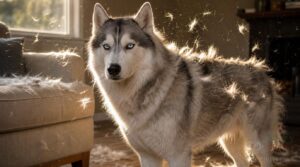
If you’ve ever found Husky fur on your coffee, your couch, and somehow your sandwich, you’re not imagining things — this breed is built to shed.
A good deshedding brush for heavy-shedding dogs can seriously cut down on the chaos — especially if you’ve got kids in the mix.
It all starts with how their coat is actually structured. Here’s what’s going on under all that fluff.
Double-coat Anatomy: Undercoat and Guard Hairs
Your Husky’s coat consists of two distinct layers working in tandem. The soft, dense undercoat sits close to the skin, while the outer guard hairs form a protective shell above it. This structure creates a dramatic fiber density comparison, akin to cotton stuffing beneath a waterproof jacket.
- Undercoat: Short, fluffy, clustered near the hair follicle structure
- Outer guard hairs: Longer, coarser, carrying pigment distribution patterns that define your dog’s color
- Growth cycle differences: Each layer sheds on its own schedule, which is why a double coat seems to shed endlessly
These differing growth cycles contribute to the coat’s perpetual shedding pattern.
shaving removes primary hairs often prevents regrowth and raises skin cancer risk.
How The Undercoat Insulates and Cools
Think of your Husky’s undercoat as a built-in climate system. Air pocket thermodynamics do the heavy lifting — trapped air between dense fibers slows heat transfer both ways.
It’s a natural convective heat barrier in winter and allows evaporative cooling in summer. Seasonal density adaptation keeps this balance tuned year-round.
| Condition | Undercoat Role | Effect |
|---|---|---|
| Cold weather | Traps warm air pockets | Reduces heat loss |
| Hot weather | Allows evaporative cooling | Lowers skin temperature |
| Wet conditions | Absorbs then releases moisture | Buffers temperature swings |
Why Guard Hairs Protect Against Weather
If the undercoat is your Husky’s climate system, the topcoat serves as a weatherproof shell. Guard hairs handle multiple duties: water repellency, solar heat absorption, abrasion defense, and acting as a wind barrier. They repel moisture before it soaks through, channel rain away from the skin, and block debris.
This double-coat function works exactly as nature designed it for temperature regulation in Huskies.
Normal Shedding Versus Excessive Shedding
That weatherproof shell works great — until you’re pulling clumps off the couch daily and wondering if something’s wrong.
Here’s how to read the shedding cycle honestly:
- Seasonal Timing Checks — Blowouts follow a predictable spring/fall pattern. Random, year-round hair loss patterns signal a medical trigger.
- Coat Thickness Changes — Normal shedding keeps coat density even. Thinning or bald patches mean trouble.
- Skin Redness Indicators — Healthy molting cycles don’t cause irritation. Scabs or redness suggest health implications worth investigating.
Why Huskies Are Not Hypoallergenic
Surprised this keeps coming up? Huskies are heavy shedders, and their dander particles, allergen proteins in saliva transfer, and indoor dust make them serious allergy triggers.
No dog is truly hypoallergenic — science backs that up.
| Allergen Source | What It Does |
|---|---|
| Dander particles | Float in air, settle on surfaces |
| Saliva transfer | Coats fur during self-grooming |
| Indoor dust | Traps allergen proteins long-term |
| Shed hair allergens | Carry proteins into soft furnishings |
When Huskies Blow Their Coat
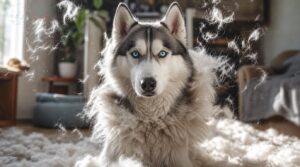
Huskies don’t just shed — they go all in twice a year, in what’s called a coat blowout. Knowing exactly when these happen makes the whole process way easier to manage.
Here’s what to expect throughout the year.
Spring Shedding From March to May
March hits, and suddenly your floors look like a fur factory exploded. Spring shedding kicks off as daylight increases — temperature is only a secondary effect.
More outdoor activity boosts friction from harnesses, stirring loose fur from hotspot zones. Even artificial light shifts indoors can alter timing.
Grab your undercoat rake and start brushing daily. It’s go time.
Fall Shedding From September to November
Fall shedding hits differently from spring. As temperatures drop and days shorten, your Husky’s coat replacement timeline kicks in — swapping the lighter summer coat for a dense winter undercoat.
Expect the undercoat blowout pattern to start heavily, then ease off. You’ll notice a real hair dust phenomenon during brushing.
Indoor heating pulls shed fur indoors quickly, so seasonal shedding management means daily brushing starts now.
How Long Coat Blowouts Usually Last
Each blowout season runs about 3–5 weeks, but don’t expect a clean cutoff. The Blowout Duration Timeline plays out in waves — heavy shedding, a brief pause, then another burst before tapering off.
Watch for these End‑Phase Indicators:
- Brushing pulls fewer dense clumps from skin level
- Coat looks less "puffy" between sessions
- Daily fur piles shrink noticeably
Climate Timing Effects and your Grooming Schedule Impact how fast that finish line actually arrives.
Why Daylight Changes Trigger Shedding
Your Husky’s internal clock runs on light, not a calendar. Shorter days in fall shift the Melatonin Cycle, signaling follicles to shed their coats. Longer spring days flip that switch again.
These Photoperiod Hormones and Circadian Light Timing cues drive Light‑Driven Follicles through Energy Balance Shifts — triggering seasonal coat shedding weeks before temperatures actually change.
That’s why seasonal shedding management for Huskies starts earlier than most owners expect.
Year-round Shedding in Warm Climates
Living somewhere warm doesn’t give your Husky a shedding break — it actually removes the seasonal "off switch." Without clear daylight and temperature swings, indoor temperature and humidity effects keep the coat in a near-constant active cycle. Year-round shedding becomes your new normal.
In warm climates, Huskies never get a shedding off switch — year-round becomes the new normal
Key factors driving this include:
- UV sun exposure dries skin and loosens guard hairs faster.
- High humidity causes loose undercoat to clump instead of releasing cleanly.
- Parasite-driven loss spikes year-round in warm regions — fleas never fully disappear.
- Brush daily all year; skipping even a few days creates dense mats.
- Ventilation strategies (e.g., fans, open windows) spread fur faster through your home.
Temperature regulation in double-coated breeds relies on an intact coat, so avoid overheating Huskies indoors. Always provide cool, shaded rest spots to maintain comfort.
Daily Husky Brushing Routine
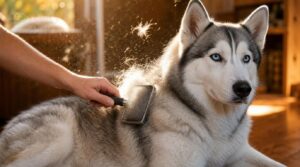
Brushing a Husky isn’t complicated, but it does need to happen on a regular schedule. The good news is that a simple routine keeps shedding manageable and your dog’s coat in great shape.
Here’s exactly what that routine looks like.
Brush 2–3 Times Weekly Between Blowouts
Between blowouts, brush regularly 2–3 times a week — no exceptions. Short targeted sessions in a calm environment work better than one long, stressful ordeal.
Start with light warm-up strokes, then switch to your undercoat rake, followed by a slicker brush. Don’t forget tail focus — fur bunches there fast.
Pre-brush hydration keeps skin supple. Establish a consistent brushing routine now, and managing seasonal coat shedding gets much easier.
Brush Daily During Heavy Shedding Seasons
When shedding season begins, increase brushing frequency to daily from the usual 2–3 times weekly. Morning sessions are ideal, as huskies are calmer and loose fur hasn’t settled yet. Consistency is key to simplifying this process.
Stick to dry brushing with an undercoat rake, and prioritize regular brush cleaning between passes. This maintains effectiveness and prevents mat buildup.
Monitor hair loss daily and make weather adjustments as needed. Tracking progress ensures you adapt grooming efforts to your husky’s specific needs during seasonal transitions.
Focus on Friction Zones and Mat-prone Areas
Once you’re brushing daily, knowing where to focus makes all the difference. Collar friction, underarm tangles, tail base mats, ear fold grooming, and furniture contact mats are your problem spots — they mat faster than other areas.
Hit these four zones every session:
- Collar and strap line — use an undercoat rake
- Underarms and inner legs — slicker brush works best
- Tail base and rump — brush regularly, skin outward
- Elbows and hips — check for hair matting from furniture
Work in Small Sections From Skin Outward
Now that you know your problem zones, how you move through them matters just as much. Think of your dog’s coat like a grid—work one small patch at a time, using an undercoat rake first, then slicker brush.
Start at the skin and brush outward using short strokes. This line brushing method ensures thorough undercoat removal and prevents buried clumps from being missed between sessions.
Use Gentle Pressure to Avoid Coat Damage
Pressing too hard is one of the fastest ways to cause problems. Use the Light Hand Technique — let the tool glide, don’t push it. Watch for Coat Sensitivity Cues like flinching or redness.
- Keep Even Pressure Distribution across the full Brush Contact Surface
- Make Tool Grip Adjustments for sensitive spots
- Stop immediately if skin reddens
Gentle strokes protect your Husky’s coat every time.
How to Line Brush Huskies
Line brushing is the single most effective technique for working through a Husky’s thick double coat without missing a single patch. It sounds fancy, but once you do it a few times, it becomes second nature.
Here’s exactly how to do it, step by step.
Start at The Hindquarters
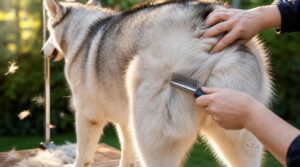
Begin brushing at your Husky’s hindquarters, where the undercoat is thickest. Focus on the croup layer isolation and upper-thigh zones, which trap the most loose fur.
Work with gravity by brushing downward and outward. Use an undercoat rake first, followed by a slicker brush. Practice mindful hindquarter pressure and careful tail-base management to protect sensitive skin throughout the process.
Lift Coat Layers With One Hand
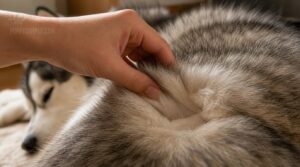
Once you’ve started at the hindquarters, slide one hand gently between the guard hairs and undercoat — this is the Finger Fork Technique. Spread your fingers slightly and keep your wrist steady for Hand Stability Tips, lifting just enough to expose the dense undercoat below.
Keep sections small for Consistent Sectioning and apply Skin Safe Pressure to maintain control without causing discomfort.
Don’t hold the lift too long — Lift Duration Management prevents tangles from reforming.
Brush Small Rows From Skin Outward
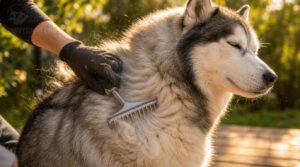
Now you’re ready to actually move the brush. With the coat lifted, press your undercoat rake gently at the skin and stroke outward — short, deliberate passes only.
Row-by-Row Progress is everything here:
- Keep Brush Angle Uniformity consistent across each small section
- Check Skin Contact lightly — never dig in
- Watch for Undercoat Release Timing as fur lifts visibly
- Repeat each row until the section feels lighter
Follow With a Slicker Brush
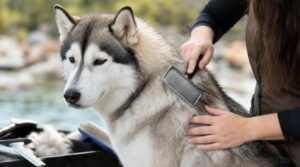
Once the rake has done its job, your slicker brush finish seals the deal. Light brush strokes through the topcoat smooths everything down and catches any lingering loose fur. Think of it as the final polish. Detangling with slicker bristles also breaks up small snags before they tighten.
| Slicker Brush Step | What It Does | Tip |
|---|---|---|
| Light brush strokes | Smooths topcoat | Use gentle, sweeping motion |
| Skin comfort check | Confirms no irritation | Watch for flinching |
| Brush hygiene tips | Clears trapped fur | Clean bristles every few passes |
The Hertzko Slicker Brush works great here — soft enough for a skin comfort check but effective enough to collect what the rake missed.
Check Progress With a Grooming Comb
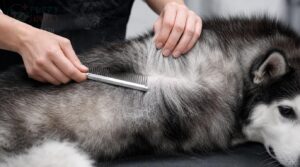
The comb is your truth-teller. After line brushing, run the Andis Steel Pet Comb through each section for real layer verification — wide teeth first, then narrow for snag detection near the skin. If it glides, you’re clear; if it catches, rework that spot.
- Wide tooth spacing manages dense undercoat passes
- Narrow teeth confirm deeper layer verification
- Comb tooth spacing reveals hidden tangles that brushing missed
- Watch comb safety cues — avoid forcing through resistance
Stop if Skin Becomes Irritated
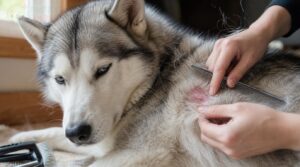
Once the comb clears, keep watching your husky’s skin as you work. Redness warning signs—like pink patches, small bumps, or visible irritation—mean stop grooming right away. Allow that area to rest before continuing.
If irritation reappears in the next session, that’s your cue for a vet consultation.
Gentle brush pressure prevents most skin infections before they start.
Top 5 Husky Grooming Tools
Having the right tools makes grooming your Husky so much easier — and a lot less overwhelming. Not every brush or rake is built the same, so it’s worth knowing which ones actually work for a double coat like your Husky’s.
Here are five tools that get the job done.
1. Furminator Grooming Rake for Cats Dogs
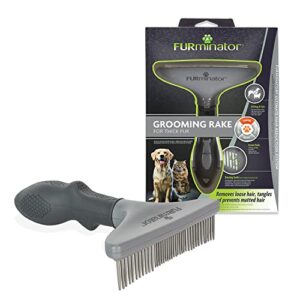
If you’re serious about taming that undercoat, the FURminator Grooming Rake (Model FUR0137) earns its spot in your toolkit. Its rotating stainless-steel teeth glide through your Husky’s dense double coat without cutting the guard hairs — a big deal during blowout season. The ergonomic non-slip handle keeps your grip steady through longer sessions.
Keep each session to 5–10 minutes, use gentle pressure, and you’ll pull out surprising amounts of loose undercoat before it hits your couch.
- Rotating steel teeth work through dense fur without yanking or cutting guard hairs
- Comfortable non-slip handle makes it easy to control, even during longer grooming sessions
- Works on dry or wet coats, and pairs well with a vacuum for faster cleanup
- Sessions cap out at 5–10 minutes, which can add up if you have a large or particularly fluffy pet
- Pricier than your average brush, so it might feel like a big spend upfront
- Not much use on pets with very short or fine coats — you won’t get a lot out of it there
2. Hertzko Self Cleaning Pet Brush
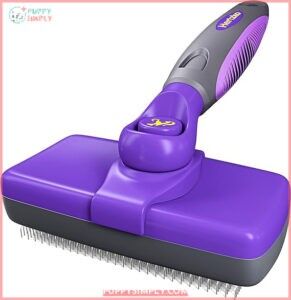
Once you’ve tackled the undercoat with the rake, you’ll want something lighter for daily touch-ups. The Hertzko Self Cleaning Brush ($15.99) is a solid go-to.
Its fine angled bristles pull loose fur from the topcoat without scratching your Husky’s skin. The real win? One push of the back button retracts the bristles and drops the collected fur — no picking hair out by hand. It’s not a deep de-shedding tool, but for quick between-session brushing, it manages the job well.
- One-push self-cleaning drops the fur right off — no picking bristles clean by hand.
- Angled bristles are gentle enough for sensitive skin while still catching loose topcoat fur.
- Lightweight with a non-slip handle, so long grooming sessions don’t wear out your hand.
- Not great for very short coats — you’ll need a light touch or it can irritate the skin.
- Dense shedders (like Huskies in full blow-coat mode) will keep you brushing for a while since it only grabs fur in small batches.
- The push-button mechanism can feel a bit clunky and may not hold up as well with heavy daily use over time.
3. Husky Puppy Training Handbook

Grooming tools handle the coat, but good habits start earlier than that. Establishing routines like feeding schedules, crate training, and socialization from the beginning lays the groundwork for a well-adjusted Husky. The Husky Puppy Training Handbook by Harry Evans ($4.99) serves as a comprehensive guide, covering these essentials alongside early grooming introduction.
Getting puppies comfortable with brushing young transforms future grooming sessions into stress-free experiences. This practical handbook offers new owners a clear, actionable roadmap to prevent bad habits before they form. Think of it as the manual your puppy wished you’d read on day one.
- Covers everything from home prep and supplies to training and grooming in one tidy package
- Written by an actual Husky trainer, so the advice comes from real experience with the breed
- At $4.99, it’s a no-brainer buy for anyone trying to avoid costly bad habits down the road
- Some of the training sections feel pretty general — not as Husky-specific as you’d hope
- No page numbers, so tracking down a specific topic takes more digging than it should
- If your Husky is especially stubborn (and some really are), you’ll likely need extra help beyond what the book offers
4. Maxpower Pet Double Sided Grooming Rake
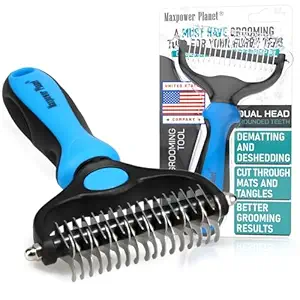
The Maxpower Pet Double Sided Grooming Rake offers two sides, one tool: a 9-tooth side to tackle stubborn mats and tangles, and a 17-tooth side for managing loose undercoat and deshedding. Weighing just 4 oz and priced at $11.99, it delivers exceptional value.
Its rounded steel teeth safely grip dead fur without irritating your Husky’s skin. The lightweight design and dual functionality allow you to flip it over mid-session seamlessly.
With a small head yet big results, this rake excels especially during blowout season, ensuring efficient grooming without compromise.
- Two sides in one tool — flip between deep mat removal (9-tooth) and deshedding (17-tooth) without grabbing a second brush
- Rounded steel teeth are gentle on skin while still pulling out loose undercoat effectively, cutting visible shedding by up to 95%
- At just 4 oz and $11.99, it’s lightweight, budget-friendly, and easy to handle during longer grooming sessions
- The small head makes it slower to cover large dogs — you’ll need more strokes to get through a big coat
- Severely matted fur may need multiple passes or a professional groomer; this rake isn’t a fix-all for extreme tangles
- Loose fur can fly around during use, so keep a vacuum handy if you’re grooming indoors
5. FURminator Medium Dog DeShedding Tool
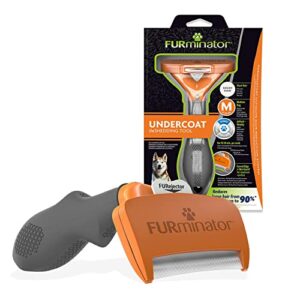
The FURminator Medium Dog DeShedding Tool is the leading choice for tackling stubborn undercoat buildup. Its stainless-steel edge reaches through your Husky’s topcoat to effectively pull loose undercoat without cutting or damaging guard hairs. The curved edge naturally hugs your dog’s body, while the FURejector button instantly drops collected fur.
Use the tool 1–2 times weekly for 10–20 minutes to achieve up to 90% less loose hair in your home. Consistent use ensures noticeable results, minimizing shedding and maintaining a cleaner living environment.
- The stainless-steel edge cuts through the undercoat without harming the topcoat, so your dog’s coat stays intact.
- The FURejector button makes cleanup fast — no picking clumps of fur off the tool by hand.
- Used consistently 1–2 times a week, it can cut loose hair in your home by up to 90%.
- It’s only built for medium dogs with short coats, so it won’t work well for long-haired or thick double-coat breeds like a full Husky.
- The plastic body isn’t as tough as all-metal tools, so rough handling could shorten its lifespan.
- Pressing too hard or grooming too often can irritate sensitive skin, so a light touch matters.
Bathing a Shedding Husky
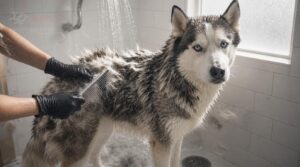
Bathing a shedding Husky isn’t complicated, but the details really do matter. Get one step wrong, and you’re dealing with mats, dry skin, or a coat that takes forever to dry.
Here’s exactly what to do, from timing the bath to getting that thick coat fully dry.
Bathe Every 6–12 Weeks Normally
Most Huskies don’t need a bath every week — that’s actually doing more harm than good. Aim to bathe every 6 to 12 weeks under normal conditions. Overbathing strips the coat’s natural oils, leaving skin dry and irritated.
Always assess bath necessity first — if your Husky isn’t visibly dirty or smelly, skip it.
Use a fragrance-free shampoo and ensure thorough post-bath drying every time.
Bathe Every 1–2 Months During Blowouts
During a blowout, interval timing matters more than routine. Bathe every 6 to 8 weeks — close enough to clear loose undercoat buildup, far enough to avoid stripping natural oils.
Use cool water and a natural gentle dog shampoo to reduce shampoo sensitivity.
After drying, do a quick post‑bath fluffing and skin redness check to catch any irritation early.
Brush Thoroughly Before Bathing
Skipping this step is like mopping a floor without sweeping first — you’re just moving the mess around. Run your Furminator Undercoat Rake through the coat, then follow with a Slicker Brush before any water touches your dog.
- Mat Prevention — dry tangles won’t tighten into painful knots
- Shampoo Penetration — loose undercoat removed means lather reaches the skin
- Drying Efficiency — less trapped fur means faster drying and better Odor Reduction
- Skin Inspection — dry coat makes lumps or redness easier to spot
Use Dog-specific PH-balanced Shampoo
Your dog’s skin sits at a pH of 6.0–6.6 — human shampoos don’t match that. When you bathe your Husky, always grab a dog-safe shampoo labeled "pH balanced." Choosing the right de-shedding shampoo protects the acid mantle, and pH matching benefits go beyond clean fur — it’s real skin irritation prevention.
Shampoo ingredient safety and balancing bath frequency with skin health both start here.
Choose Oatmeal or Aloe for Sensitive Skin
Once you’ve locked in a pH-balanced dog shampoo, the next step is picking the right formula. If your Husky has allergic skin conditions or skin infections, oatmeal barrier repair shampoos calm irritation and strengthen the skin barrier. Aloe soothing hydration works similarly—cooling and gentle.
Both outperform fragrance-free formulas, which skip scent but may still sting. Always do a quick patch test first.
Dry The Coat Completely After Washing
Once the rinse is done, drying is where most owners cut corners — and a damp undercoat invites hot spots fast.
- Towel blotting first with a microfiber towel pulls surface water without agitating the coat.
- Airflow positioning keeps the coat open while low heat drying with a K9 Dryers-style high-velocity dryer pushes moisture out.
- Sectional fur drying plus a final dry check confirms no hidden dampness remains.
Diet for Healthy Husky Coats

What your Husky eats shows up directly in their coat — good or bad. The right nutrition keeps the undercoat dense, the guard hairs strong, and shedding more manageable year-round.
Here’s what to focus on when building a diet that actually facilitates healthy skin and fur.
Prioritize High-quality Animal Protein
Your Husky’s coat health starts with high-quality protein — especially whole food sources like chicken, beef, or salmon — which provides a complete amino profile and high leucine levels to fuel healthy follicle growth.
The digestibility advantage of animal protein ensures more nutrients actually reach the skin. Look for grass-fed labeling when possible, as this further enhances nutritional quality.
Good dog nutrition genuinely impacts a dog’s coat health, making thoughtful dietary choices essential for a vibrant, healthy coat.
Support Skin With Omega-3 Fatty Acids
Once your Husky’s protein base is solid, adding an omega-3 fatty acid supplement can take coat health further. Fish oil aids skin barrier lipids, which helps with hydration preservation and reduces moisture loss.
It also triggers resolvin production for natural inflammation reduction.
Just watch for rancidity — rancid fish oil does more harm than good. Fresh, quality fish oil makes all the difference.
Balance Omega-3 and Omega-6 Intake
Most dog foods lean heavily on omega-6 fats from poultry and vegetable oils — so your ratio monitoring matters. When introducing an omega-3 supplement, choose fish oil over flaxseed; plant versus marine sources differ, and EPA/DHA from fish absorbs better.
Cutting omega-6 oils from treat ingredients helps too. This reduces excess omega-6 intake, supporting a healthier balance.
A consistent feeding plan is what actually maximizes the benefits of omega fatty acids for dog skin over time.
Keep Your Husky Properly Hydrated
Water bowl placement matters. Keep fresh water accessible at all times — especially during blowouts, when seasonal water needs spike. Closely monitor your husky’s panting after walks; excess panting speeds dehydration.
Proper dog water intake and skin health are directly linked. Hydration during blowouts aids coat function, keeping skin supple and reducing that dull, dry look.
Ask Your Vet Before Adding Supplements
Before reaching for that fish oil supplement, consult your vet first. Veterinary consultation provides Dosage Guidance and Safety Assessment tailored to your husky—not just generic label advice. This ensures proper care specific to your dog’s needs.
Ingredient Interactions and Veterinary Monitoring are critical, especially when introducing an omega-3 supplement into an existing routine. Professional oversight helps avoid complications and ensures compatibility with current treatments.
Supplementation for Dog Skin and Coat is most effective when Health Screening confirms your dog actually needs it. Avoid unnecessary additions by verifying deficiencies through veterinary evaluation first.
Watch for Food Allergies and Itchy Skin
Sometimes the very supplement meant to help can be the problem. Allergic skin conditions in dogs often trace back to food — and delayed reaction timing means symptoms like hives, itching, or rashes may appear hours later. Watch for:
- Sudden itching after meals
- Hives or raised welts
- Trigger-food tracking inconsistencies
- Worsening coat despite Omega-3 support
Veterinary allergy testing confirms the real culprit.
Husky Shedding Myths to Avoid
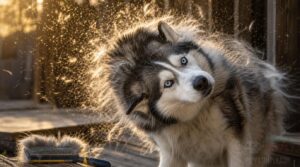
A few common mistakes can actually make your Husky’s shedding worse — and most owners don’t realize they’re making them. Some of the biggest ones come from well-meaning advice that just doesn’t hold up.
Here’s what to stop believing.
Shaving Does Not Stop Shedding
Never shave a Husky—it’s one of the most most common mistakes owners make. Shaving doesn’t halt the follicle growth cycle; your dog will still shed, just with shorter hairs. That perceived shedding reduction? It’s temporary. Microhair shedding persists from the skin upward, regardless of hair length post-shave.
For double-coated breeds, shaving is never recommended. The core reason comes down to one truth: the double coat regenerates from the follicle, not the fur.
Shaving Can Damage Coat Regulation
Shaving a Husky fails to stop shedding—it actively breaks the coat’s ability to function properly. Without the undercoat layer, insulation loss occurs rapidly, leaving the dog vulnerable to temperature fluctuations. UV skin exposure also becomes a significant risk.
What’s worse, shaving can trigger uneven regrowth, "shave shock," and even heighten the risk of alopecia, potentially causing permanent coat damage. These issues undermine the coat’s natural protective and regulatory roles.
Haircuts Are Not The Same as Coat Care
A haircut isn’t coat care — it’s a shortcut that backfires. Real coat care protects Guard Hair Integrity and enhances Thermal Regulation. True Deshedding techniques without shaving focus on three things:
- Removing dead undercoat through brushing
- Mat Prevention before tangles tighten
- Reducing Skin Exposure risks from Regrowth Imbalance
Never shave a Husky. Brush daily all year-round instead.
Frequent Bathing Can Strip Natural Oils
Brushing protects the coat — but overbathing strips those away fast, especially with strong shampoo strength or hot water temperature. Your Husky’s skin produces natural oils that handle distribution throughout the coat.
Aim for proper bathing frequency for Husky coat maintenance: every 6–12 weeks. Always follow with moisturizer application to support barrier restoration and overall dog skin health.
Deshedding Tools Should Not Scrape Skin
The tool matters—so does how you use it. Even the FURminator DeShedding Tool can irritate skin if you press too hard or repeatedly groom the same area.
Safe grooming tools for double-coated breeds work best with light pressure control and proper stroke alignment. Follow these essential steps:
- Follow hair growth direction
- Take interval grooming pauses between sections
- Do a post-groom skin check after every session
A Husky’s Coat Helps in Warm Weather
Skin check done — now here’s something that surprises most people. Your Husky’s coat actually helps with summer airflow, not just winter warmth. After a blow out, the lighter coat aids heat dissipation and moisture evaporation right through the skin. Guard hair thinning reduces insulation naturally — that’s temperature regulation in double-coated breeds doing exactly what it should.
Still, keep your Husky hydrated: warm-climate heat stress is real.
Managing Fur Around Your Home
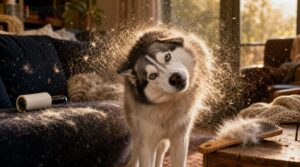
Even with the best grooming routine, Husky fur has a way of showing up everywhere — the couch, your work clothes, that one dark sweater you love.
The good news is a few simple habits can keep it under control. Here’s what actually works for managing the mess at home.
Vacuum Daily During Blowout Season
During blowout season, your floors can look like a snow globe — fur everywhere, constantly. Vacuuming daily isn’t overkill; it’s your best Indoor Cleaning Strategy for Pet Hair before it becomes deeply embedded.
- Use a Pathway Overlap Strategy: straight lines with overlapping passes so nothing gets missed
- Apply Crevice Attachment Tips along baseboards and corners where clumps hide
- Practice Suction Speed Control with slow, steady passes to actually lift hair — not just skim it
Use a HEPA-filter Vacuum or Air Purifier
Even your best vacuuming efforts leave microscopic dander floating in the air — and that’s where a HEPA filter becomes your secret weapon. True HEPA vacuums deliver real dander reduction and are among the best vacuums for husky hair. Pair one with an air purifier sized by CADR sizing for your room.
Watch noise levels, maintain filter maintenance schedules, and you’ll finally win at indoor air quality and pet dander control.
Keep Lint Rollers Near Furniture and Doors
Lint rollers are one of the most underrated indoor cleaning strategies for pet hair — so put them everywhere. Set up Doorway Roller Stations by front and back entrances for quick guest cleanup before anyone tracks fur further inside.
Use Roller Storage Solutions like small wall hooks or end table spots for furniture edge access. This ensures rollers are always within reach for spot treatments.
Their multi-surface use on cushions, lampshades, and throws makes them genuinely worth the investment, tackling pet hair across diverse textures efficiently.
Wash Bedding and Blankets Regularly
Your bedding is a fur magnet — and during blowout season, it needs attention. Wash sheets and blankets weekly using warm water cycles with hypoallergenic detergents to strip embedded dander without irritating sensitive skin. High-heat drying finishes the job by killing allergens left behind.
Keep this simple bedding rotation schedule:
- Sheets and pillowcases: every 1–2 weeks
- Light blankets: every 1–3 weeks
- Pet-use throws: weekly minimum
- Duvet covers: every 2–3 weeks
- Heavy quilts: every 2–4 months
Groom Outdoors When Weather Allows
Taking grooming outside is one of the smartest seasonal shedding management tips for pet owners — especially during spring and fall blowouts. Pick your weather window carefully: skip rain and strong wind, which tangle loose undercoat fast.
Good surface preparation matters too, so lay a non-slip mat on clean ground. Clear debris beforehand and practice tool sanitization after each session.
Keep your dog cool with shade and fresh water nearby.
Consider Professional Grooming Every 4–6 Weeks
A professional groomer every 4–6 weeks isn’t a luxury — it’s a strategy. They catch matting early, de-shed the undercoat properly, and check skin that your hands might miss. Good groomer communication ensures seasonal adjustments happen automatically.
Yes, there’s a cost, but it balances against fewer emergency detangling sessions and supports healthier coat cycles between your DIY care at home.
Frequently Asked Questions (FAQs)
What do groomers use to deshed Huskies?
Groomers rely on an undercoat rake, slicker brush, and deshedding tool like the Furminator, paired with high-velocity drying and a section-by-section method to clear loose coat safely and thoroughly.
Can puppies handle full grooming sessions early?
Don’t run before you can walk — puppies can’t handle full grooming sessions early. Puppy Grooming Age matters: begin with gentle desensitization techniques around 8 weeks, then gradually build up after vaccinations are completed around 10–12 weeks.
Do male and female Huskies shed differently?
Honestly, sex-specific shedding differences in Huskies are mostly a myth. Both males and females follow the same seasonal coat changes driven by daylight and hormonal cycle influence — not gender.
Individual genetics matter far more than sex.
How does stress affect a Huskys shedding?
Stress affects shedding. Cortisol spikes when your Husky feels anxious, and follicle cycle disruption can trigger abnormal shedding fast.
Reducing routine change stress improves recovery time — fur loss usually settles within a day or two.
Should Huskies wear coats in freezing weather?
Most Huskies don’t need a cold weather coat — their double coat manages temperature regulation naturally. But puppies, seniors, and wet or windy conditions change that math fast.
Does spaying or neutering change shedding patterns?
Spaying or neutering can shift shedding patterns slightly, but it rarely stops them.
Hormonal impact is real — undercoat density shifts may occur — yet your husky’s double-coat biology still runs the show.
Conclusion
Fur flies, routines rule, and results follow. That’s the honest truth behind husky shedding coat care. When you brush consistently, feed well, and skip the shortcuts—like shaving, your Husky’s coat works with you instead of against you.
The blowouts won’t disappear, but they stop feeling like a crisis. You know the tools, the timing, and the techniques. Now your home stays cleaner, your dog stays healthier, and shedding season loses its power over you.
- https://www.houndtherapy.com/blog/siberian-husky-grooming/
- https://blog.vetriscience.com/the-best-dog-brushes-by-coat-type-a-vet-recommended-guide
- http://www.huskiesandthehound.com/shedding.html
- https://nativepet.com/blogs/health/do-huskies-shed?srsltid=AfmBOopHEfDQiNx8ST7OGDHyVpznqrJ5VVaKtPggw9eM55Hw9vdfAFSe
- https://flyingpawfect.com/blogs/news/best-brushes-double-coated-dogs