This site is supported by our readers. We may earn a commission, at no cost to you, if you purchase through links.
Run your hand against a schnauzer’s back, and you’ll feel something closer to a firm bristle brush than a dog’s coat—that roughness isn’t a grooming oversight; it’s the whole point. The schnauzer’s wiry coat texture comes from coarse guard hairs with a uniquely stiff cross-section, engineered by centuries of breeding to protect working dogs from rough terrain, cold wind, and wet conditions.
Unlike the soft, plush coats many breeds carry, this texture fulfills a functional purpose that goes far deeper than aesthetics. It evolved to shield the dog from harsh environments, prioritizing durability over softness.
Understanding what drives that distinctive feel helps you make smarter grooming decisions—ones that either preserve the coat’s natural toughness or, unknowingly, strip it away for good. Proper care maintains the protective structure, while incorrect methods can permanently damage the wire-like texture.
Table Of Contents
- Key Takeaways
- Do Schnauzers Have Wiry Coats?
- Schnauzer Coat Layers by Size
- Why Schnauzer Hair Feels Coarse
- Grooming That Preserves Wiry Texture
- Keeping The Coat Healthy
- Frequently Asked Questions (FAQs)
- Do Schnauzers have wiry coats?
- Why does my Schnauzer have coarse hair?
- What should Schnauzers not eat?
- What does a wiry coat feel like?
- Does stress or anxiety impact Schnauzer coat coarseness?
- Are male and female Schnauzers coats texturally different?
- Can crossbreeding soften a purebred Schnauzers wiry coat?
- Conclusion
Key Takeaways
- A schnauzer’s wiry coat isn’t just a texture quirk—it’s a purpose-built system of coarse guard hairs that repels dirt, resists moisture, and insulates the dog against harsh weather conditions.
- Hand-stripping is the only grooming method that preserves the coat’s natural coarseness, because clipping or shaving cuts the guard hairs rather than pulling them out at the root, gradually replacing that signature rough texture with softer regrowth.
- Coat texture varies across the three schnauzer sizes—Miniatures and Giants carry a true double coat, while the Standard has a single wiry layer—so grooming demands and how the coat feels under your hand differ meaningfully between them.
- Diet, indoor climate, and skin health quietly shape coat quality from the inside out, meaning strong guard hairs depend just as much on protein intake, omega fatty acids, and humidity levels as they do on how you groom.
Do Schnauzers Have Wiry Coats?
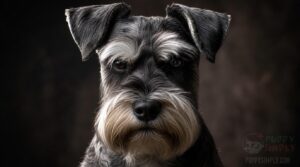
Yes, Schnauzers have wiry coats, and that texture isn’t just a quirky trait — it’s a defining part of what makes this breed so practical and visually striking.
That wiry texture is actually a hallmark of Schnauzer breed characteristics and traits, making the coat naturally resistant to dirt and harsh weather.
The coarseness comes down to specific coat structure, and understanding it helps you care for your dog far more effectively. Here’s what’s actually going on with that rough, bristly feel.
What “wiry Coat Texture” Means in Schnauzers
When you run your hand along a Schnauzer’s back, that bristly, almost rough sensation is exactly what a wiry coat texture feels like — and it’s entirely by design.
Genetic texture influence shapes this coat composition, featuring coarse guard hairs that deliver functional ruggedness benefits, shielding the dog across all seasons. Coat texture aging gradually refines it, typically stabilizing fully between 12 and 24 months.
To maintain the coat’s ideal condition, owners should adhere to a regular hand‑stripping routine.
How Coarse Guard Hairs Create The Wiry Feel
That bristly sensation comes down to structure. Each guard hair has a thick cross-sectional shape that resists bending, making the wiry outer layer feel rigid and rough to the touch. Medullated fibers add stiffness, while air-pocket insulation between the outer guard hairs and undercoat reinforces the coarse feel.
Light reflection off these coarse shafts also gives the protective outer coat its characteristic matte finish.
Why The Coat Stands Slightly Away From The Body
That keratin stiffness in each outer guard hair causes them to grow outward rather than flat, creating a natural guard hair lift that holds the wiry coat away from the skin. This air circulation gap beneath the protective outer coat allows thermal insulation to work efficiently.
Grooming alignment through hand-stripping preserves this growth orientation beautifully, maintaining the coat’s structural and functional integrity.
Differences Between Wiry, Soft, Silky, and Curly Coats
Not all dog coats are built the same. Here’s how the wiry coat stands apart:
- Wiry coats deliver enhanced insulation efficiency and allergy-friendliness, shedding minimally year-round.
- Soft and silky coats sacrifice color retention and shed more freely onto furniture.
- Curly coats trap shed hair internally, demanding a greater variety of tools than wiry coats require for their texture variations and grooming needs.
Schnauzer Coat Layers by Size
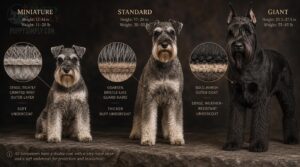
Not all Schnauzers are built the same regarding their coats, and size plays a bigger role than most people expect. Each of the three varieties carries a distinct coat structure that directly shapes how the fur feels under your hand and behaves day to day.
Here’s a closer look at how coat layers differ across the Miniature, Standard, and Giant Schnauzer.
Miniature Schnauzer Double Coat Texture
The Miniature Schnauzer carries a true double coat — a soft, dense undercoat beneath a harsh, wiry outer layer. Understanding this structure means recognizing how its thermal insulation function shifts with seasonal undercoat variation, thickening in winter and thinning in summer.
Color-texture interaction is also significant: nutrition’s impact on texture and growth cycle timing both influence how vivid yet coarse that signature wiry outer layer remains.
Standard Schnauzer Wiry Single-layer Coat
Unlike the Miniature, the Standard Schnauzer is one of the singlecoated dogs — its wiry coat sits close to the body without a thick insulating undercoat beneath. This structure is no accident; its historical working role demanded a coat that moved freely and stayed manageable outdoors.
- Harsh guard hairs repel moisture and dirt naturally
- Handstripping technique and benefits include preserving the show standard coat’s true texture and deep color
- Seasonal coat changes and climate adaptation are less dramatic, since there’s no dense undercoat cycling through
As your Standard Schnauzer ages, the aging coat process can gradually shift texture — especially if grooming routines slip — making consistent care essential.
Giant Schnauzer Dense Double Coat Texture
The Giant Schnauzer’s double coat is built for working dog durability. A dense, soft undercoat manages temperature regulation year-round, while the wiry coat’s coarse outer layer deflects dirt and weather.
Seasonal shedding remains manageable with consistent hand-stripping, which preserves the harsh texture and enhances genetic color intensity. Grooming demands for double-coated dogs increase significantly, as aging can cause coat changes that soften texture if maintenance lapses.
How Undercoat Density Changes The Coat’s Feel
Undercoat density quietly runs the show concerning how your Schnauzer’s coat actually feels. A dense undercoat pushes guard hairs outward, amplifying that signature wiry coat coarseness, while a thinner undercoat lets them lie flatter and smoother.
Seasonal density shifts also matter—colder months trigger undercoat insulation buildup, creating a noticeable temperature-driven fluff shift.
- Keratin density impact: Stronger guard hairs feel firmer and more resilient.
- Oil distribution balance: Adequate sebum keeps the coat pliable without softening its texture.
- Indoor humidity effect: Dry air stiffens a dense undercoat noticeably faster.
- Double coat vs. single coat in Schnauzers: Miniatures and Giants carry more insulating bulk than the Standard, increasing handstripping versus clipping technique demands.
Why Some Schnauzers Feel Softer Than Others
Not every Schnauzer feels like coarse sandpaper — and that’s completely normal. Age progression plays a big role, since puppies naturally carry a softer coat until adult wiriness develops between 12 and 24 months.
Genetic coat variation, hormonal influences, and climate humidity all shift texture too. These factors collectively contribute to the diversity in Schnauzer coat textures beyond the typical coarse feel.
Owner grooming habits matter most, though — handstripping versus clipping techniques determine whether that signature wirehaired dog care result stays coarse or gradually softens over time.
Why Schnauzer Hair Feels Coarse
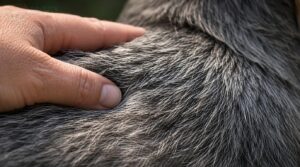
That distinct scratchy feel when you run your hand against a Schnauzer’s back isn’t random — it’s built into the coat’s structure for a reason. The wiry outer layer does a lot more than just look rugged, serving functional purposes beyond aesthetics.
A Schnauzer’s coarse, scratchy coat is no accident — every bristle serves a purpose beyond appearance
Understanding this texture helps you care for it properly, as the coarse feel stems from the coat’s unique design. A closer examination reveals what’s really behind that coarse texture, explaining both its purpose and maintenance needs.
Protective Role of Harsh Outer Guard Hairs
Those coarse guard hairs aren’t just for looks — they’re your Schnauzer’s first line of defense. The wiry outer layer functions as a true protective barrier, built to handle real conditions.
- Wind Barrier – creates a microclimate that locks in warmth
- Heat Retention – dry outer coat preserves insulating air pockets
- Impact Cushioning – rigid shafts absorb abrasion from rough terrain
- Sunlight Reflection – reduces surface heat absorption on bright days
That weather protection works quietly, every single day.
Dirt, Debris, and Water Resistance
That protective barrier doesn’t stop at weather. The wiry outer layer manages everyday grime just as effectively, thanks to Surface Dirt Repellence built into each stiff guard hair.
| Feature | How It Works | Practical Benefit |
|---|---|---|
| Air Pocket Protection | Stiff hairs create micro-gaps between debris and skin | Dirt rides the surface, not your dog’s skin |
| Water Bead Roll-off | Moisture resistance of wiry outer coat causes droplets to slide off | Quick drying after walks |
| Static Dust Shedding | Reduced static cling releases fine particles during movement | Less grooming after dusty trails |
| Targeted Debris Brushing | Debris sits on guard hairs, not embedded deeply | Easy brush-out removal |
| Pest Deterrence | Pest deterrence provided by dense fur limits parasite contact with skin | Natural tick and flea barrier |
Brush root-to-tip after outdoor activity, and that wiry structure does most of the cleanup for you.
Low-shedding Qualities of The Wiry Coat
The wiry outer layer does something most soft-coated breeds can’t match — it holds onto dead hairs rather than releasing them freely. This means minimal loose fur on your couch and effective allergy mitigation for sensitive households.
Shedding control comes naturally here, with reduced seasonal shedding patterns keeping indoor hair deposition low.
Handstripping reinforces this by pulling spent fibers cleanly at the root, maintaining controlling fiber release better than shaving ever could.
How Salt-and-pepper Hairs Affect Texture Appearance
Salt-and-pepper isn’t just a color—it’s what drives so much of the wiry outer layer’s visual character. Light scattering across those high-contrast strands creates visible textured edges, while air-trapped cuticles on gray hairs add that slightly gritty feel.
Humidity fluctuations and strand weight shifts influence how the coat sits daily, making color-specific grooming considerations genuinely matter for maintaining your Schnauzer’s coat texture.
Puppy Coat Versus Mature Adult Coat Texture
Puppy fur softness can catch you off guard the first time you run your hands through a young Schnauzer’s coat — it feels almost plush compared to what’s to come.
The texture evolves through distinct phases:
- Puppies have minimal undercoat and flat-lying, finer guard hairs.
- Adult coat firmness builds as the wiry top coat stiffens and stands away.
- Maturation shedding cycles signal the shift to a denser, coarser double layer.
Age-related grooming shifts matter here — what worked for your puppy won’t preserve that mature texture.
Grooming That Preserves Wiry Texture
How you groom your Schnauzer makes all the difference between a coat that stays wiry and one that slowly loses its texture. The method you choose affects not just the feel, but also the color, density, and long-term health of the coat.
Here’s what you need to know about the grooming approaches that keep that signature rough texture intact.
Hand-stripping for a Harsh, Natural Coat
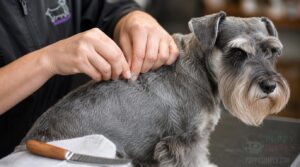
Hand-stripping is the optimal method for maintaining your Schnauzer’s wiry topcoat as nature intended. Finger plucking pulls dead outer hairs from the root, allowing fresh, coarse growth to replace them.
Use stripping tools for grip and control, follow a staged stripping schedule every four to eight weeks, and always monitor skin closely for irritation throughout the process.
Clipping and Why It Can Soften The Coat
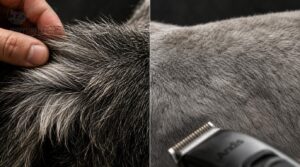
Clipping is convenient, but it quietly works against your Schnauzer’s wiry topcoat over time. Unlike hand stripping, motorized clippers cut guard hairs rather than pulling them from the root, triggering five gradual changes that affect coat texture preservation:
- Clipper Heat Impact warms the skin, causing temporary sensitivity
- Guard Tip Reduction removes the harsh outer tips that create the wiry feel
- Moisture Retention decreases as the shortened coat dries faster against the skin
- Layer Balance Shift lets the softer undercoat dominate what you feel at the surface
- Soft Regrowth Phase follows each clip, with new hair emerging finer before maturing
Repeated clipping versus hand stripping makes a real difference — each clipping cycle reinforces softer regrowth patterns, gradually fading that signature coarse texture you want to protect.
Shaving Effects on Schnauzer Coat Regrowth
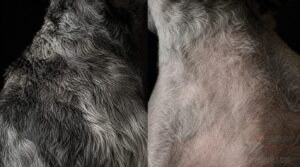
Shaving goes further than clipping, and your Schnauzer’s coat pays the price for months. Removing the wiry layer entirely exposes the skin to sunburn risk and heat stress.
Patchy regrowth returns softer and thinner than before, leading to noticeable texture softening and increased skin sensitivity.
Color can fade noticeably — especially in Miniature Schnauzers.
Handstripping versus shaving for coat health isn’t a close comparison.
Carding to Remove Soft Undercoat Buildup
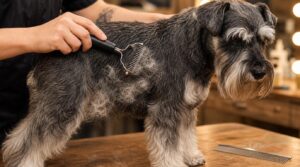
Carding is the unsung hero between hand-stripping sessions, quietly pulling loose undercoat fibers without disturbing wiry guard hairs. Choosing the right undercoat rake matters—finer rakes suit Miniatures, while denser coats require wider tools.
Always maintain proper skin tension with your free hand, move in the direction of hair growth, and keep intervals between sessions consistent.
Follow up with a comb, and avoid heavy post-carding conditioning to preserve the coat’s natural texture.
Best Brushing Tools for Wiry Schnauzer Coats
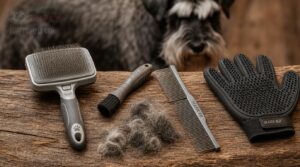
Your toolkit makes or breaks the result. A self-cleaning slicker brush reaches the undercoat without scratching skin, while a narrow-head brush handles precise work around the muzzle. Pair these with a dual-tooth comb for detailed finishing, and use a rubber grooming glove to lift surface debris.
Ergonomic grips are essential—they prevent hand cramps during extended brushing sessions, making the process far more comfortable.
Beard, Eyebrow, and Leg Furnishing Maintenance
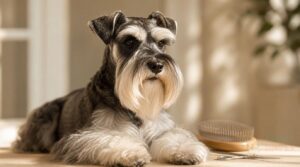
Your Schnauzer’s beard, eyebrows, and leg furnishings deserve daily attention — brush them every morning to distribute natural oils and prevent tangles.
Follow a trimming schedule every four to six weeks, using precision scissors for eyebrow shaping and a mild furnishing shampoo on the beard and chin.
Lightweight leg fur conditioning after grooming keeps those wiry and soft coat layers looking their best.
Keeping The Coat Healthy
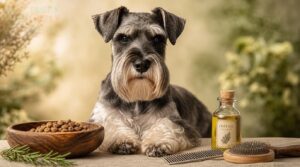
A wiry coat that looks and feels its best doesn’t happen by accident — it starts from the inside out.
What your Schnauzer eats, how often you bathe them, and the environment they live in all play a bigger role than most owners realize. Here’s what to keep in mind to support a strong, resilient coat year-round.
Protein and Omega Fatty Acids for Coat Strength
What your Schnauzer eats directly shows in that wiry topcoat. Complete protein sources supply the keratin-building amino acids that keep each guard hair strong and resistant.
Meanwhile, omega-3 EPA/DHA works alongside omega-6/linoleic balance to reduce skin inflammation and lock in natural moisture. Without proper essential fatty acid supplementation, even a well-groomed coat turns dull.
Nutrition and coat health are impossible to separate — this connection underscores the need for a diet rich in these critical nutrients.
Vitamins That Support Resilient Wiry Hair
Nutrition doesn’t stop at protein and omega-3 fatty acids for coat health — vitamins carry equal weight.
Four vitamins work directly on your Schnauzer’s wiry topcoat:
- Biotin Keratin formation — strengthens each guard hair shaft
- Vitamin A Sebum regulation — keeps follicles moisturized, not brittle
- Vitamin C Collagen synthesis — fortifies tissue around follicles
- Vitamin E Antioxidant protection — shields cells from oxidative damage
Together, they anchor real coat health from the inside out.
Bathing Frequency for Wire-haired Schnauzers
Once your Schnauzer’s vitamin routine is solid, bathing completes the picture. For wirehaired breeds, bath interval guidelines are typically every four to six weeks, though your grooming schedule should adjust to the seasons and your dog’s activity level.
Always use a dog shampoo for sensitive skin, rinse thoroughly, and follow with proper post-bath drying to keep that wiry texture intact.
Environmental Dryness, Heat, and Coat Stiffness
Your indoor climate matters more than most owners realize. Low humidity pulls moisture from your Schnauzer’s skin barrier, leaving the wiry outer coat feeling rougher than usual, while direct heat stress stiffens the coat further. Moisture swings between dry indoor air and outdoor humidity repeatedly stress the skin surface.
- Humidity affects the outer skin layer, drying it and reducing coat pliability.
- Heat stress amplifies moisture loss, making guard hairs feel harsher.
- Protective clothing during cold or hot conditions limits environmental damage.
Skin Issues That Change Coat Texture
Beneath that crisp, wiry exterior lies skin that’s surprisingly reactive. Allergic dermatitis, flea infestation, mange mites, and folliculitis infection can each quietly alter your Schnauzer’s coat texture before you notice anything serious.
Hormonal disorders shift oil production, softening guard hairs. Skin irritation triggers scratching that breaks fibers unevenly.
| Skin Issue | Effect on Coat | Common Sign |
|---|---|---|
| Allergic dermatitis | Dull, uneven texture | Redness, itching |
| Flea infestation | Hair breakage, patchy feel | Excessive scratching |
| Mange mites | Thinning, patchy coat | Scabs, hair loss |
| Folliculitis infection | Roughened, clumped shafts | Bumps, odor |
| Hormonal disorders | Soft, limp guard hairs | Recurring bald patches |
When Coat Changes Need Veterinary Attention
Some changes aren’t just cosmetic — they’re your dog’s way of flagging something deeper. Patchy hair loss that expands quickly, a sudden texture break from wiry to brittle, excessive itching that disrupts sleep, or odor and discharge from the skin all deserve a veterinary visit.
Abnormal shedding outside seasonal patterns, especially paired with lethargy, is another clear signal.
Don’t wait on these.
Frequently Asked Questions (FAQs)
Do Schnauzers have wiry coats?
Yes, Schnauzers do have wiry coats.
Like many wire-haired breeds bred for rugged work, their coarse guard hairs create a bristly, dirt-resistant outer layer that’s harsh to the touch and built to last.
Why does my Schnauzer have coarse hair?
Your Schnauzer’s coarse hair comes down to genetics — specifically Genetic Pigment Genes that shape each guard hair’s structure. It’s simply how wirehaired breeds are built, and it’s completely normal.
What should Schnauzers not eat?
Keep chocolate, xylitol, onions, garlic, grapes, raisins, and macadamia nuts away from your Schnauzer — all are toxic and can trigger serious health emergencies.
From kidney failure to dangerous drops in blood sugar, these conditions demand immediate veterinary attention.
What does a wiry coat feel like?
Run your hand along a Schnauzer’s back, and you’ll notice a dry, rugged feel.
Slightly prickly, almost bristly, with a natural airflow gap that keeps the coat lifted away from the skin.
Does stress or anxiety impact Schnauzer coat coarseness?
Stress and anxiety can quietly degrade coat coarseness.
Cortisol guard hair disruption weakens the skin barrier, triggers anxiety-induced shedding, causes stress oil imbalance, and invites behavioral hair damage — all undermining coat health over time.
Are male and female Schnauzers coats texturally different?
Male and female Schnauzers do not show reliable textural differences.
Coat coarseness depends far more on size, lineage, and grooming method than sex, thus gender alone cannot predict how your dog’s coat feels.
Can crossbreeding soften a purebred Schnauzers wiry coat?
Yes, crossbreeding can soften a Schnauzer’s wiry coat. Hybrid coat genetics dilute inherited wiriness variance, meaning mixed-breed texture outcomes depend on which genes dominate — and softness often wins.
Conclusion
They say you can’t improve on what nature perfected. The schnauzer’s wiry coat texture isn’t a quirk to soften or a problem to fix—it’s a finely tuned system built for endurance. When you understand what that bristly feeling actually does, every grooming choice becomes clearer.
Hand-strip to preserve it, feed to strengthen it, and watch for changes that signal something deeper.
Respect what the coat was designed to be, and it’ll do its job well.
- https://showsightmagazine.com/judging-the-standard-schnauzer/
- https://www.groomers-online.com/how-to-groom-a-schnauzer-i404?srsltid=AfmBOoqd5Y34FPUAe5Pq-ZhtCDStE1F6jZFq1iGMdegKsxAc2iZpbsje
- https://www.merindahfarm.au/miniature-schnauzer-coat-and-grooming
- https://www.eliteschnauzers.com/coat-care
- https://www.schnauzers.us/about_ms.html