This site is supported by our readers. We may earn a commission, at no cost to you, if you purchase through links.
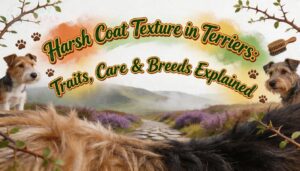
Run your hand along a wire fox terrier’s back and you’ll feel something closer to a stiff bristle brush than a dog coat—coarse, dense, and almost scratchy. That texture isn’t a grooming accident or a quirk of the breed. It’s a precisely engineered weather system.
Harsh coat texture in terriers evolved over centuries of working in cold, muddy British hillsides, where a soft coat would’ve been a liability.
Understanding what makes this coat work—how it repels rain, deflects thorns, and stays surprisingly clean between washes—changes how you care for it and why those grooming choices matter more than most owners realize.
Table Of Contents
- Key Takeaways
- What is a Harsh Terrier Coat?
- How The Double Coat Works
- Breeds Known for Harsh Texture
- Harsh Vs Other Terrier Coats
- Benefits of a Harsh Coat
- Hand Stripping for Proper Texture
- Daily Care and Bathing Tips
- Breed Standards and Show Texture
- Frequently Asked Questions (FAQs)
- What kind of terrier has coarse hair?
- Which dogs do vets not recommend?
- What breeds have a rough coat?
- Can harsh coats trigger allergies in sensitive people?
- At what age does a terriers harsh coat fully develop?
- Do harsh coats change texture after illness or medication?
- Are harsh-coated terriers suitable for warm climates?
- How does diet affect harsh coat quality and growth?
- Conclusion
Key Takeaways
- harsh, wiry coat isn’t just texture — it’s a two-layer weather system where stiff guard hairs repel rain and mud while a soft undercoat traps warmth close to the skin.
- Hand stripping, not clipping, is the only grooming method that preserves that signature rough texture, because it pulls dead hair from the root and lets new wiry growth come through correctly.
- Harsh coats shed less visibly than smooth or fluffy coats because loose hairs stay trapped inside the coat rather than floating onto your furniture.
- Diet directly affects coat quality — enough protein, omega fatty acids, and key minerals are what keep that guard hair stiff and weather-ready from the inside out.
What is a Harsh Terrier Coat?
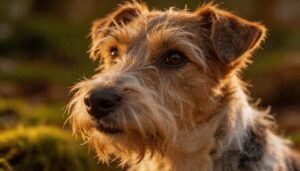
If you’ve ever run your hand across a terrier and thought, "wow, that’s rough," you’ve already met a harsh coat up close. It’s not just texture for the sake of it — there’s real purpose behind every stiff, wiry strand.
That design didn’t happen by accident — wiry coat dog breeds have a fascinating history rooted in hunting, weather, and working life.
Here’s what makes this coat type so distinctive, starting with the basics.
Wiry and Broken Coat Definitions
When terrier folks talk about wiry coats, they mean hair that literally feels like bristle wire — stiff, crisp, and standing away from the body.
A broken coat sits one step softer on that coat density spectrum, looking a bit scruffier with longer trace hair blending across the body.
Both fall under harsh terrier coat types, and both require handstripping to preserve that signature wire-like hair stiffness.
The broken coat characteristics include crisper texture and trace hair on the head, face, and legs.
Coarse Guard Hairs Over a Soft Undercoat
Beneath that wiry outer bristle sits a surprisingly soft undercoat — and together, these two layers do something clever. The coarse guard hairs form a weather‑blocking shell, while the undercoat traps air pockets close to the skin for warmth. That’s a thermal regulation balance built right into the coat’s genetics.
Coarse guard hairs shield against the elements while a soft undercoat traps warmth — nature’s insulation engineered into every strand
- Coarse guard hairs repel rain, mud, and debris naturally
- undercoat air pocket layer retains body heat when wet
- Genetic harsh traits determine texture before grooming even begins
- Seasonal coat shift affects undercoat density throughout the year
Stiff Texture That Stands Away From The Body
That softness underneath does a lot of the heavy lifting, but what you’ll actually notice first is how the outer coat behaves.
Hard guard hairs don’t drape — they push outward, creating a visual silhouette with real definition.
This guard hair rigidity also aids airflow insulation and temperature regulation, trapping a light air buffer near the skin.
When harsh coated terriers move, there’s almost a subtle movement halo around the body.
Why Harsh Coats Shed Less Visibly
That outward push also works quietly in your favor for cleanup.
Loose fibers don’t fall freely — guard hair density holds them inside the coat, and undercoat trapping keeps shed fibers hidden rather than scattered across your sofa.
Airflow filtering carries debris away, surface friction grips what remains, and hidden fiber retention means harsh-coated terriers stay surprisingly tidy through their entire shedding cycle.
How The Double Coat Works
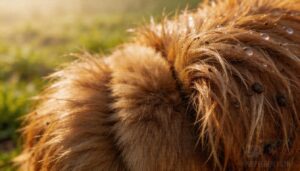
That wiry outer coat isn’t just for looks — it’s actually a pretty clever system working in two layers. Each part has a job, and together they do a lot more than most people expect.
Here’s how the double coat manages everything from a rainy morning walk to a muddy romp through the brush.
Water-resistant Outer Guard Hairs
Think of those coarse guard hairs as your terrier’s built-in rain jacket. A hydrophobic wax layer coats each shaft, activating the water shedding mechanism the moment rain hits.
Oil transfer dynamics keep this barrier self-replenishing between baths.
The cuticle protection on each hair resists abrasion and dirt, making this weather-resistant double coat essential for working terriers traversing tough, wet terrain.
Insulating Undercoat in Cold, Wet Weather
While the outer guard hairs are busy repelling rain, the soft undercoat is quietly doing the heavy lifting on warmth. It traps air close to your dog’s skin — that air loft retention is what actually keeps them comfortable in cold, wet weather.
Seasonal density shifts mean the undercoat thickens naturally in winter, improving double coat insulation right when you need it most. Proper undercoat management, including regular hand stripping, keeps dead fur from packing down those fibers and blocking drying airflow techniques that help moisture escape after a wet outing.
Protection From Mud, Debris, and Thorns
Your terrier’s coarse guard hairs aren’t just stiff by accident — guard hair orientation keeps them upright and angled outward, creating a thorn deflection design that lets branches and debris slide off rather than snag.
This coarse coat structure and function allow impressive debris release dynamics, where mud loosens as the dog moves.
Protective airflow between hairs also prevents packing, making mud repellent grooming far easier after any outdoor adventure.
Functional Movement Without a Heavy Coat
A harsh coat doesn’t weigh your dog down the way a heavy, fluffy pelt would. The wiry, coarse guard hairs stand away from the body, creating natural airflow dynamics that support heat dissipation during active work.
That separation gives your working terrier breed real stride freedom — mobility efficiency without bulk. Agility performance stays sharp because this weather-resistant coat functions in working terriers as a low maintenance coat that simply moves with them.
Breeds Known for Harsh Texture
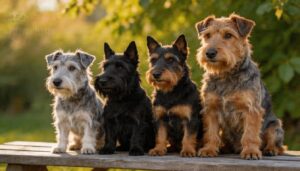
Quite a few terrier breeds carry that signature rough, wiry coat — and each one wears it a little differently. Some are small and scrappy, others are built bigger, but they all share that same tough, weather-ready texture.
Here are the breeds you’re most likely to encounter with a true harsh coat.
Border Terrier
The Border Terrier packs a lot into a small frame — 11 to 15 pounds of energy, drive, and weatherproof wiry coat. That harsh coat isn’t just good looks; it genuinely works. Here’s what makes it stand out for coat texture management:
- Hand stripping twice yearly preserves proper wiry texture
- Grooming tools for wiry coats lift guard hairs without softening them
- Minimal bathing protects the coat’s natural weather resistance
Mental stimulation and consistent Training Tips keep this breed happy indoors across varied Living Environments, while routine vet checks address common Health Concerns early.
Jack Russell Terrier
Don’t let the Jack Russell Terrier‘s compact size fool you — this 13 to 17-pound firecracker was built for serious work. Its wire coat variety features a harsh coat that sheds less and resists dirt like a pro.
| Feature | Smooth Coat | Wire/Harsh Coat |
|---|---|---|
| Hand stripping | Not needed | Recommended |
| Weather resistance | Moderate | High |
| Grooming and maintenance of terrier coats | Minimal brushing | Regular stripping |
High Energy Needs, strong Prey Drive, and Hunting Origins shaped every inch of this breed — including that tough wiry texture. Watch for Patellar Luxation and Dental Health issues too.
Scottish Terrier
From feisty Jack Russells, we step into equally bold territory — meet the Scottish Terrier.
This compact 18 to 22-pound breed carries a big personality and a famously hard wire coat shaped by coat genetics refined over centuries of Scottish hillside work.
That wiry double coat needs hand stripping every 6–8 weeks, making grooming and maintenance of terrier coats a real commitment.
Weight management also matters for joint health.
Welsh Terrier
Welsh Terrier — a wirehaired breed standing about 15 inches tall, weighing 20–22 pounds, with classic black and tan color markings.
ratting history shaped a spirited temperament that’s still obvious today. Grooming and maintenance of terrier coats matters here:
- Hand stripping every 6–8 weeks preserves coat health
- promotes texture between sessions
- Exercise requirements are high — daily activity is essential
- Watch for eye issues and patellar luxation as common health issues
Lakeland Terrier
From Wales to the Lake District — same wiry attitude, slightly different dog. The Lakeland Terrier carries a wire coat built for rugged fell country, where weather-resistant coat functions in working terriers really matter.
standing about 15 inches and weighing 7–9 kg, it packs an energetic personality and strong prey drive into a compact frame.
Grooming and maintenance of terrier coats means hand stripping every 6–12 weeks to keep that texture crisp.
Its urban living adaptation is surprisingly smooth, though high exercise needs and ear infection risk are worth keeping in mind.
Wire Fox Terrier
The Wire Fox Terrier is where wiry coats really show off. That rough outer coat stands away from the body, repels mud, and dries fast — exactly what working history demanded.
Grooming and maintenance of terrier coats here means hand stripping to keep that coat texture preservation on point. Skip clipping if you want that signature rugged feel to last.
Cairn Terrier
The Cairn Terrier brings serious Scottish grit in a compact, 13–14 pound package. Cairn Terrier history traces back to the rugged Highlands, where that harsh, weather‑resistant double coat was pure survival gear.
Cairn Terrier coat types and characteristics worth knowing:
- Stiff guard hairs that shed dirt naturally
- A soft undercoat for insulation
- Wiry texture preserved only through hand stripping
Grooming and maintenance of terrier coats like this one stay simple when you skip the clippers entirely.
Airedale Terrier
If you want a terrier that’s practically a dog in a larger package, the Airedale delivers. Standing 21–23 inches tall and weighing up to 70 pounds, its size and build alone command attention. That weather-resistant double coat — a wiry wire coat over a soft undercoat — sheds mud like a pro.
| Trait | Detail |
|---|---|
| Temperament Profile | Bold, loyal, independent |
| Exercise Requirements | 60–90 minutes daily |
Grooming and maintenance of terrier coats this size means committing to regular hand stripping to preserve texture.
Bedlington Terrier’s Unusual Harsh Feel
The Bedlington Terrier is the oddball of the group, and that’s not a bad thing. Canine coat genetics give it a crisp texture that’s actually a hard-soft hair blend — curly, dense, almost lamb-like.
Unlike typical harsh coats, it skips hand stripping in favor of brushing and a regular grooming schedule every six weeks. Low shedding makes grooming and maintenance of terrier coats like this surprisingly manageable.
Harsh Vs Other Terrier Coats
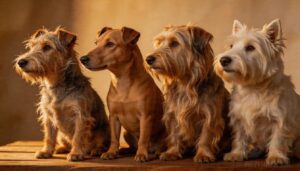
Not all terrier coats are built the same, and the differences go far beyond how they look. Knowing where the harsh coat stands compared to smooth, silky, or soft double coats helps you understand exactly what makes it special.
Here’s how each coat type stacks up.
Harsh Vs Smooth Coats
Run your hand along a smooth-coated terrier like an American Staffordshire, then do the same on a wire-coated terrier — the difference is immediate. One feels like brushed denim, the other like a stiff doormat.
| Feature | Harsh/Wire-Coated Terriers | Smooth-Coated Terriers |
|---|---|---|
| Weather Resistance Differences | High — repels rain and mud | Low — minimal natural protection |
| Shedding Visibility Contrast | Less visible indoors | Noticeable on floors and furniture |
| Grooming Frequency Comparison | Hand stripping vs brushing for coat care — less often overall | Regular brushing needed |
| Maintenance Cost Implications | Occasional strip sessions | Frequent brushing tools required |
| Owner Preference Trends | Working dog and show enthusiasts | Low-maintenance pet owners |
Among harsh-haired dog breeds, the wiry outer layer actively shields against debris and damp. Smooth-coated terriers don’t have that guard-hair armor, so dirt clings more easily and skin exposure increases outdoors.
Harsh Vs Silky Coats
Silky coats — think Kerry Blue — feel like cool satin compared to the rough handshake of a wiry terrier. That contrast tells you everything about how each coat performs.
| Feature | Harsh/Wire Coat | Silky Coat |
|---|---|---|
| Water Repellency | Strong natural barrier | Absorbs moisture quickly |
| Shedding Visibility | Low, hairs stay trapped | Moderate, more noticeable |
| Show Ring Preference | Valued for structure and texture | Valued for sheen and flow |
Grooming frequency differs too — silky coats need regular brushing to prevent tangles, while hand stripping keeps harsh coats properly wiry.
Harsh Vs Soft Double Coats
A soft double coat — like a Samoyed’s — feels uniformly fluffy all the way through. A wire coat is different fundamentally: stiff guard hairs on top, soft dense undercoat beneath.
| Feature | Harsh/Wire Coat | Soft Double Coat |
|---|---|---|
| Water Repellency | Strong natural barrier | Moderate, absorbs more moisture |
| Thermal Insulation | Layered, functional warmth | Uniform, plush warmth |
| Shedding Visibility | Low, hairs stay trapped | High, heavy seasonal shedding |
| Skin Irritation Risk | Lower — less frequent bathing needed | Higher if coat stays damp |
| Grooming Frequency | Hand stripping vs brushing for coat care | Regular brushing, no stripping |
That weather-resistant double coat is what makes harsh-coated terriers so practically tough.
Mixed Coat Patterns in Terriers
Color adds another layer to the wiry coat story. Mixed coat patterns in terrier breeds combine Ticked Patterns, Parti Coloration, Roan Effects, Brindle Genetics, and White Spotting — each showing up differently depending on the dog’s genetics.
| Pattern | What It Looks Like | Coat Maintenance Note |
|---|---|---|
| Ticked | Small pigmented flecks on white | Dirt shows less on darker ticking |
| Parti/Roan | Bold patches or soft speckled overlay | White areas reveal grime faster |
| Brindle | Dark streaks over a lighter base | Stripes may shift slightly after stripping |
Texture Differences Owners Can Feel
Beyond patterns, texture is where harsh coats really speak for themselves. Run your hand along a Border Terrier, and you’ll feel that Guard Hair Stiffness immediately—almost grippy, never slick.
That Grip vs Slip difference separates wire coat breeds from smoother dogs instantly. Underneath, Undercoat Plushness adds surprising Tactile Warmth Perception.
| What You Feel | What It Means |
|---|---|
| Stiff, coarse surface | Healthy guard hairs intact |
| Soft, warm beneath | Dense undercoat working correctly |
Benefits of a Harsh Coat
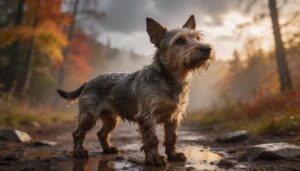
The harsh coat isn’t just about looks — built to actually work. From rainy days to muddy trails, this coat earns its keep in ways that matter to both working terriers and everyday companions.
Here’s what makes it such a practical advantage.
Better Weather Resistance Outdoors
Think of a harsh terrier coat as nature’s rainwear — built-in and always ready. The stiff guard hairs deliver impressive Rain Shedding Dynamics, beading moisture off before it can soak through, while the double coat structure underneath provides Thermal Insulation Performance even when conditions turn ugly.
- Wind Deflection Capacity keeps chilly gusts from reaching the skin
- Cold Weather Flexibility lets your terrier move freely without a heavy, waterlogged coat
- Coat insulation from the dense undercoat holds warmth when temperatures drop
That layered, weatherresistant coats design is why these dogs thrive outdoors.
Less Dirt and Sand Sticking
That weatherproof design does more than handle rain — it keeps your dog surprisingly clean between washes.
The Guard Hair Angle deflects particles away from the skin, while Layer Porosity lets Wind Assisted Shedding carry loose dust off naturally.
Dust Repellent Oils coat each strand, and Particle Deflection Mechanics mean sand simply doesn’t cling.
Hand stripping vs brushing for coat care matters here too — stripping preserves the grooming tools for wiry coats work best with.
Reduced Visible Shedding in The Home
One thing harsh-coated terrier owners genuinely appreciate is how little fur ends up on the sofa. The wiry guard hairs trap loose strands before they go airborne, which makes this coat naturally low-shedding.
During the seasonal shedding cycle, regular coat maintenance — plus smart Indoor Vacuum Techniques, Furniture Covers, Pet Bedding Management, and Lint Roller Use — keeps things tidy.
Many even consider these breeds hypoallergenic-friendly.
A Tidier Look Between Grooming Sessions
Wire-coated terriers stay surprisingly neat between sessions because their stiff guard hairs resist matting on their own.
Still, quick Mat Spot Checks behind the ears, Ear Clean‑up wipes, and Paw Fur Maintenance keep things looking sharp.
Between‑Session Brushing, Quick Drying after wet walks, and a smart grooming schedule mean you’re doing less work overall — and your terrier always looks pulled together.
Practical Value for Working Terriers
If you’ve ever watched a working terrier tear through brambles without missing a beat, you already understand the coat’s value.
That weather-resistant double coat manages Rugged Terrain Performance naturally — guard hairs deflect mud and thorns while the undercoat delivers Cold Weather Endurance across Extended Work Hours.
Hand stripping vs clipping grooming methods matter here too, since stripping preserves coat genetics and guard hair function, supporting Low Maintenance Grooming and Reduced Fatigue over time.
Hand Stripping for Proper Texture
Hand stripping is the one grooming practice that actually keeps a harsh coat doing its job. Done right, it pulls dead hair from the root and lets fresh, wiry growth come through the way nature intended.
Here’s what you need to know to get it right.
Why Stripping Removes Dead Coat Correctly
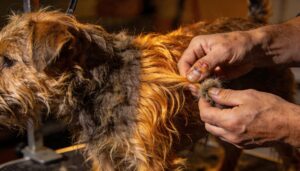
Think of hand stripping like pulling a loose tooth — it comes out cleanly because it’s ready. Dead hair extraction works by removing mature wiry hairs straight from the follicle, not just snipping the shaft.
That matters for three key reasons:
- Follicle stimulation triggers proper regrowth aligned with the natural growth cycle.
- Texture restoration follows because new guard hairs replace old ones with the correct wire coat stiffness.
- Debris prevention improves since trapped dead coat no longer sits against the skin.
Hand stripping benefits go beyond looks — it keeps the coat functioning as intended.
How Hand Stripping Preserves Wiry Texture
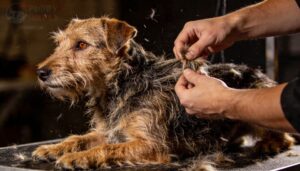
Here’s the real reason hand stripping works so well — it’s all about root-level hair removal. When you pull dead coat from the follicle, the new guard hair grows back with full stiffness intact.
Clipping can’t do that. It leaves the root untouched, and softening prevention becomes impossible over time.
Stripping also promotes natural color retention and weatherproofing enhancement, keeping wiry coats looking and performing exactly as nature intended.
Common Stripping Schedules by Breed

Not every breed follows the same calendar — and that’s by design.
- Border Timing runs roughly every 6–8 weeks before the coat looks shaggy
- Jack Russell Cycle stays tight to prevent fuzzy growth between sessions
- Scottish Interval focuses on muzzle and back outline every 6–8 weeks
- Welsh Frequency targets legs and chest before texture turns ragged
- Lakeland Rhythm keeps the wire coat even and consistent year-round
Tools Used for Harsh-coated Terriers
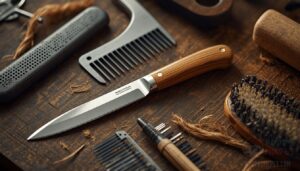
Once you’ve nailed your breed’s schedule, the right tools make all the difference.
A Curved Stripping Knife with Ergonomic Handle Design reduces wrist fatigue during longer sessions.
Pair it with a Vented Stripping Tool for airflow and a Rubber Curry Brush to loosen debris first.
| Tool | Purpose |
|---|---|
| Carding Comb Set | Removes loose undercoat without cutting |
| Slicker Brush | Detangles while preserving guard hairs |
| Boar Nylon Brush | Redistributes oils along growth direction |
Why Clipping Softens The Coat
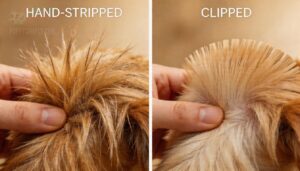
Clipping a wire coat seems harmless, but it changes everything beneath the surface. When guard hair length gets cut down, the coat lies flatter, the undercoat gains prominence, and cut edge bluntness replaces that signature scratchy feel.
Oil distribution change follows too — less shaft length means oils settle differently. Regrowth texture lag means softness lingers for weeks.
Hand stripping vs clipping grooming methods aren’t interchangeable; one preserves, one compromises.
Daily Care and Bathing Tips
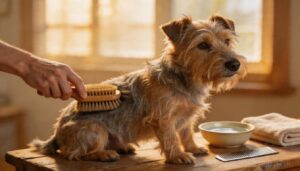
Daily care for a harsh coat doesn’t have to be complicated, but a few habits make a real difference in keeping that wiry texture working the way it should. The goal is to maintain the coat’s natural structure without stripping it of the oils that keep it weatherproof and healthy.
Here’s what consistent, coat-friendly care actually looks like day to day.
Brushing With The Direction of Growth
Brushing a wire-coated terrier sounds simple until the coat starts fighting back. The trick is always brushing in the direction of hair growth — not against it.
Keep these four steps in mind:
- Match your Brush Angle to how the hair naturally lies
- Use short, consistent Stroke Rhythm per section
- Follow Area Patterns — legs differ from the back
- Finish with a light Finishing Pass using gentle Pressure Control
Separating Guard Hairs and Undercoat
Once the brush has followed the grain, the real work begins — pulling those two layers apart.
Your terrier’s coat has a clear hierarchy: coarse guard hairs on top, dense undercoat below. Use the Undercoat Rake Technique with dry coat brushing only — wet hair clumps fast.
| Step | Action | Purpose |
|---|---|---|
| Layer Grip Selection | Part coat to skin | Expose undercoat cleanly |
| Gentle Guard Pull | Lift guard hairs aside | Protect outer texture |
| Skin-safe Separation | Smooth raking strokes | Remove loose undercoat safely |
Done right, coat layering stays intact — and hand stripping becomes far easier afterward.
Preventing Matting in Dense Areas
Even with a low-maintenance harsh coat, certain spots are waiting to cause trouble. Friction Hotspot Management matters most behind the ears, under the legs, around the collar, and along the belly — places where constant movement encourages tangling in the dense undercoat.
Routine Tangle Checks:
- Run your fingers through the coat after every walk
- Focus on Targeted Brushing Techniques on high-friction zones first
- Use Tool Selection Guidance: a metal comb confirms you’ve cleared the underlayer
- Apply Moisture Control Strategies — always dry the coat fully after outdoor exposure
- early knots before hand stripping becomes harder than it needs to be
Bathing Less Often to Protect Texture
Less is more regarding bathing wire-coated terriers. Frequent washing strips the sebum — that natural oil your dog’s skin produces — and throws off microbiome stability while softening the wiry texture you’ve worked hard to maintain.
Seasonal Bathing paired with spot cleaning keeps dirt managed without repeated shampoo contact.
When you do bathe, a Gentle Shampoo protects oil retention and helps coat texture longevity beautifully.
Redistributing Natural Oils After Grooming
After grooming, your terrier’s natural oil sebum production needs a little help getting back to work. Using a warm palm transfer — rubbing a small amount of oil between your hands before pressing through the coat — keeps things even.
Pair that with a press-and-draw motion and low-friction handling, and your post-groom timing becomes part of the coat maintenance routine rather than an afterthought.
Breed Standards and Show Texture
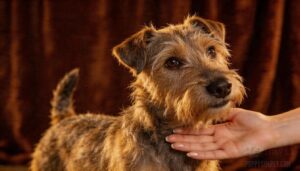
breed clubs don’t just care about how a terrier looks — they care about what that coat can actually do. The standards around harsh coat texture exist for good reasons, and they shape everything from how dogs are judged in the ring to how breeders maintain true coat quality over generations.
Here’s what those standards cover and why they matter.
Why Breed Clubs Value Harsh Coats
Breed clubs don’t value harsh coats just for looks — it goes deeper than that. These standards exist to honor Historical Working Roots, keeping the Functional Aesthetic Appeal that made terriers effective in the field.
Judges Tactile Scoring gives coat genetics a measurable standard; preserving Breed Identity through Standardized Grooming Protocols like hand stripping and coat maintenance — the foundation of any serious breed preservation program.
Cairn Terrier Harsh Coat Expectations
The Cairn Terrier’s harsh coat isn’t just texture — it’s a health indicator and a window into the breed’s working suitability. A properly maintained coat grows at a steady growth pace, staying dense and wiry through seasonal grooming cycles.
Watch for these three things:
- Coarse guard hairs standing away from the body
- A firm, weather-resistant feel when you run your hand against the grain
- A soft undercoat beneath — distinct, never fluffy throughout
Working Function Versus Show Presentation
A working terrier and a show terrier share the same coat — but their grooming schedules serve very different goals.
Performance texture for field work demands a coat that sheds mud and resists rain. Show ring preferences for Cairn Terrier coats prioritize visual crispness and competition coat evaluation.
Understanding those maintenance trade-offs helps you decide which standard matters most for your dog’s actual life.
Coat Texture Faults in The Show Ring
Judges notice coat faults fast — and texture is where many dogs fall short.
A soft finish, flat standing coat, or inconsistent texture across the body signals problems that no last‑minute brushing will fix.
Common coat texture faults include:
- Insufficient density — the coat looks thin, exposing soft undercoat
- Uneven break — harsh in one spot, smooth in another
- Flat standing coat that hugs the body instead of bristling outward
- Hand stripping versus brushing for coat care — over‑brushing removes guard hairs, accelerating faults
Maintaining Breed-true Texture Over Time
Keeping breed-true texture starts long before show day. Consistent hand stripping and coat maintenance, timed with your professional groomer, let the jacket renew properly.
Factor in seasonal nutrition adjustments and environmental moisture control to reduce coat stress management issues.
Genetic lineage preservation matters too — coarse hair dog breeds pass texture through bloodlines, so grooming practices for different coat types must honor that heritage year‑round.
Frequently Asked Questions (FAQs)
What kind of terrier has coarse hair?
Wire-coated terriers like the Border Terrier, Scottish Terrier, and Welsh Terrier naturally grow coarse hair rooted in Coarse Hair Genetics and Coarse Hair Evolution, giving these wire coat breeds their signature rough, weather-ready texture.
Which dogs do vets not recommend?
Vets may steer you away from harsh-coated terriers if your schedule won’t support hand stripping.
Intensive grooming needs, matting complications, and higher veterinary costs from skin irritation risk make owner time commitment a real factor.
What breeds have a rough coat?
Ever wondered which breeds actually have that rugged, rough coat?
The Wire Fox Terrier, Cairn Terrier, Scottish Terrier, Airedale Terrier, and Dandie Dinmont Terrier all do — shaped by working heritage, breed origins, climate suitability, and distinct genetic markers.
Can harsh coats trigger allergies in sensitive people?
Harsh coats don’t trigger allergies directly, but dander production, grooming residues, and trapped indoor allergens can still cause skin irritation.
No dog is truly hypoallergenic — proper allergy management matters more than hair texture types.
At what age does a terriers harsh coat fully develop?
wirehaired terriers begin showing adult wire coat texture around 4 to 8 months, with the mature harsh feel fully settling in closer to 10 to 14 months, depending on breed variation and grooming impact.
Do harsh coats change texture after illness or medication?
Yes, illness or medication can temporarily dull a wire coat’s texture. Fever, stress, and nutrient gaps trigger illness-induced dullness, while medication skin reactions may alter its feel.
regrowth texture timeline changes resolve within one full coat cycle.
Are harsh-coated terriers suitable for warm climates?
Warm weather won’t stop a wiry terrier. Their wire coat allows airflow management and natural heat dissipation, while seasonal shedding lightens the undercoat.
Add shade utilization and fresh water, and they adapt well.
How does diet affect harsh coat quality and growth?
Your terrier’s coat starts in the bowl. Protein Adequity keeps keratin strong, Omega Fatty Acids prevent dullness, and proper Calorie Balance promotes growth.
Mineral Supplementation and Gut Microbiome Influence round out genuine dog coat health.
Conclusion
dog coats just sit there. Harsh coat texture in terriers actually works—repelling rain, shaking off mud, and staying surprisingly presentable between grooming sessions. That function didn’t happen by accident; it was shaped by centuries of real work in rough terrain.
Respect that design, and your grooming choices become less guesswork and more partnership with the breed’s history. Strip it correctly, brush with the grain, and the coat will do exactly what it was built to do.