This site is supported by our readers. We may earn a commission, at no cost to you, if you purchase through links.
A Siberian Husky sleeping comfortably in a snowbank at -10°F isn’t being reckless—it’s engineering. That dense, layered coat functions like a biological parka, trapping body heat through a system of air pockets and moisture-repelling guard hairs that outperforms most synthetic insulation.
What surprises most dog owners is how little the cold actually threatens double-coated breeds under the right conditions—and how quickly that protection collapses when the coat gets wet, compressed, or worse, shaved off.
Knowing exactly how your dog’s coat works, where its limits are, and how grooming either preserves or undermines it changes how you approach every winter walk.
Table Of Contents
- Key Takeaways
- How Double Coats Trap Warmth
- Which Breeds Handle Cold Best
- How Cold is Too Cold
- When Dogs Need Jackets
- Grooming That Preserves Insulation
- Winter Walk Safety Tips
- Paw Care in Snow and Salt
- Shelter, Food, and Cold-Stress Signs
- Frequently Asked Questions (FAQs)
- How cold is too cold for a double-coated dog?
- Do double-coated dogs need a coat in winter?
- What not to do with double-coated dogs?
- How often should a dog bathe with a double coat?
- Can double-coated dogs swim safely in winter?
- Do puppies tolerate cold as well as adults?
- How does indoor heating affect a dogs coat?
- Should double-coated dogs sleep outside in winter?
- Does cold weather worsen joint pain in dogs?
- Conclusion
Key Takeaways
- double coat’s two-layer system — dense undercoat trapping air pockets plus moisture-repelling guard hairs — is what makes cold tolerance possible, and shaving it destroys both functions, with post-clipping alopecia affecting up to 30% of dogs.
- Below 20°F, no double-coated dog should stay outside for long, and wet fur or wind chill can push that danger threshold significantly higher than the thermometer suggests.
- Senior dogs, puppies, and small breeds need extra protection — jackets, shorter walks, and closer monitoring — because age, body mass, and incomplete thermoregulation override whatever breed label is on their collar.
- Consistent brushing preserves the insulating air layer that keeps your dog warm, while over-bathing or clipping strips the natural oils and coat structure that cold-weather protection depends on.
How Double Coats Trap Warmth
Your dog’s coat isn’t just fur — it’s an engineering feat built for cold survival. Two distinct layers work together to regulate body temperature in ways a single coat simply can’t match.
Each layer has its own role, as explained in this double coat shedding breakdown that dives into how the system actually functions.
Here’s how each part of that system does its job.
Undercoat Insulation and Air Pockets
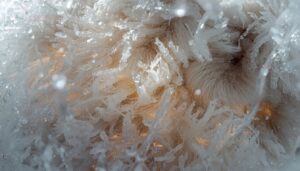
Your dog’s undercoat works like a down jacket — clusters of dense, soft hairs trap small pockets of air close to the skin, slowing heat loss through convection and convection. Air Pocket Density determines how effective that thermal insulation actually is.
When loft compression effects flatten the coat — from moisture displacement mechanics or heavy shedding buildup — cold tolerance drops fast.
Regular brushing preserves the insulating air layer that keeps your dog warm.
This relies on the low thermal conductivity of air to limit heat loss.
Guard Hairs That Block Wind and Moisture
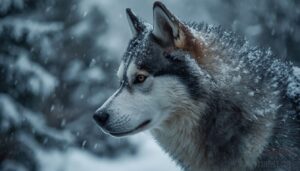
Guard hairs act as your double-coated dog’s first line of defense — each moisture repellent shaft channels rain and snow away before it can reach the insulating air layer underneath.
This wind deflection mechanism reduces direct airflow to the softer underfur, while the overlap layer protection keeps coverage intact as your dog moves.
UV shielding guard hairs even buffer sun exposure, and their durability against wear means the barrier holds through rugged winter conditions.
Why Double Coats Work Better in Winter
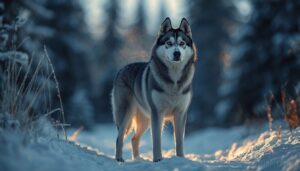
That layered system really earns its value when winter arrives. Double-coated dogs benefit from thermal regulation in dogs, that single coats simply can’t match, thanks to how dog coat layers work together:
- Convection reduction slows cold airflow reaching the skin
- Radiative insulation reflects body heat back inward
- Conductive barrier limits direct contact heat loss
- Thermal inertia maintains warmth through temperature swings
- Insulation efficiency peaks as the undercoat thickens seasonally
Cold tolerance in double-coated dogs runs deep by design.
Why Shaving Hurts Cold Protection
Shaving a double-coated dog doesn’t just remove insulation — it disrupts the skin barrier, strips natural oils, and exposes follicles to direct friction and cold stinging. Wind amplified irritation hits unprotected skin fast.
Post-clipping alopecia affects 25–30% of cases, and without intact guard hairs, the coat type influence on a dog’s temperature regulation collapses entirely.
Cold tolerance depends on what you leave in place, not what you remove.
Which Breeds Handle Cold Best
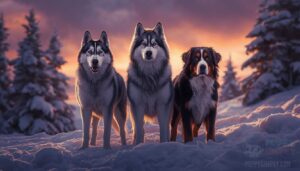
Not every double-coated breed tolerates cold the same way, even if it shares that signature two-layer coat. Genetics, body mass, and coat density vary enough between breeds to make a real difference when temperatures drop.
Here’s a closer look at which dogs are naturally built for the cold — and what that actually means in practice.
Siberian Husky and Alaskan Malamute
Few doublecoated dogs are as purpose-built for cold as the Siberian Husky and Alaskan Malamute. Their cold tolerance isn’t accidental — it’s structural.
- Body shape: Huskies run lean for speed; Malamutes carry load strength in a broader, more muscular frame
- Coat: Both have dense, moisture-resistant undercoats
- Tail curl: Malamutes curl theirs over the nose when resting
- Ear set: Erect, triangular — minimal heat loss
- Energy levels: Huskies run high; Malamutes stay powerful but steadier
German Shepherd and Samoyed
German Shepherds and Samoyeds both carry a true double coat, but they wear it differently.
German Shepherds show notable coat length variation between individuals, and their seasonal shedding patterns shift insulation throughout the winter.
Samoyeds are plush and consistent, built for cold weather endurance.
Both breeds rely on exercise heat generation to stay warm — health issue impacts and energy needs differences mean no two dogs perform identically in winter dog care.
Bernese Mountain Dog and Newfoundland
Both the Bernese Mountain Dog and Newfoundland carry a double coat built for serious cold tolerance, but their winter dog care needs differ in key ways.
- Body Mass Differences — Newfoundlands are considerably heavier, giving them greater heat retention during long outdoor exposure.
- Joint Health Concerns — Cold, damp conditions can aggravate joint stress in both breeds, especially older dogs.
- Breed-Specific Nutrition — Higher caloric intake helps their elevated energy demands in winter.
Why Breed Alone Does Not Decide Tolerance
Breed gives you a starting point, not a guarantee. Undercoat density variability, age and metabolism, nutrition and insulation, and health-related fatigue all shape cold tolerance in dogs more than a breed label ever could.
A young Husky manages 20°F easily. That same breed, older and arthritic, may struggle at 35°F. Activity-induced warmth and coat type influence dog temperature regulation substantially.
Special Caution for Mixed-breed Dogs
Mixed-breed dogs are basically a coat lottery — and winter cold doesn’t play favorites. Coat mix variability means one dog might inherit a dense undercoat while a littermate has almost none. Hidden cold vulnerability also runs deep.
Watch for these custom temperature checks:
- Uneven fur density on the belly or inner thighs
- Trim history gaps from prior clipping that thin insulation
- Size Heat loss risks in lighter, slender-legged builds
- Joint or Mobility issues reducing heat-generating movement
- Dry, uneven pads chilling faster on snow
How Cold is Too Cold
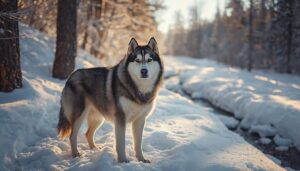
dog built for winter has limits. Knowing exactly where those temperature lines fall can be the difference between a great snowy walk and a dangerous one.
Here’s what the numbers actually mean for your dog.
Safe Outdoor Range for Most Dogs
Most double-coated dogs tolerate ambient temperatures between 32°F and 45°F without significant thermoregulation strain — that’s your practical safe outdoor zone. Below 32°F, caution increases; below 20°F, no dog should stay outside long. Microclimate variability matters too: a sheltered yard at 28°F behaves differently than an open field. Use owner temperature alerts to track real-time conditions.
| Dog Size | Safe Temperature Range | Recommended Outdoor Limit |
|---|---|---|
| Large (60+ lbs) | 20°F–45°F | ~30 minutes |
| Small/Medium ( At 0°F, a walk outside becomes a medical emergency within minutes |
Wind Chill and Wet Fur Risks
Temperature alone doesn’t tell the full story. Wind-driven convective loss strips warm air from your dog’s double coat faster than still air at the same reading — wet fur insulation drops even further when moisture trapping gives way to evaporation cooling.
Watch for these compounding risks:
- Airflow heat loss accelerates through flattened, damp guard hairs.
- Wet fur conducts heat away faster, raising hypothermia risk.
- Moisture frostbite risk climbs before shivering even starts.
When to End a Winter Walk
Your dog communicates cold stress clearly — shivering, paw lifting, sudden energy drop, or seeking a rest spot mid-route, are all signals to turn back immediately. Don’t wait for full hypothermia symptoms.
Guidelines for walking double-coated dogs in cold weather recommend exit timing before distress escalates. When pace drops and pauses lengthen, that’s your cue.
When Dogs Need Jackets
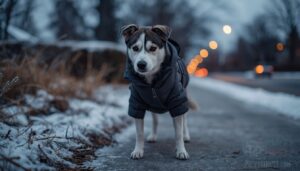
Not every dog tolerates cold the same way, and a double coat alone doesn’t guarantee warmth for every individual. Factors like size, age, and health can shift the equation quickly once temperatures drop.
Here’s when a jacket stops being optional and becomes the smarter call.
Small Dogs in Freezing Weather
Small dogs lose heat faster than large breeds — body size impact on cold tolerance is real and measurable. Their higher heat loss rate means even a well-maintained double coat won’t fully compensate below 32°F.
Cold stress monitoring matters here: watch for shivering within minutes outdoors. Layered blankets for indoor warming tips help recovery fast.
Winter paw care and protection for dogs should never be skipped.
Senior Dogs and Medical Risks
Senior dogs carry more than just age — arthritis management becomes critical when cold stiffens already-inflamed joints, limiting mobility and raising fall risk on icy ground.
Cardiac stress and kidney hydration concerns mean cold intolerance isn’t just discomfort; it’s a clinical hazard.
Cognitive disorientation can intensify outdoors in low light, while reduced immune recovery slows healing after any cold-related setback. A jacket isn’t optional here — it’s protective.
Short Walks Versus Long Exposure
Even a 10-minute outing differs clinically from 45 minutes in the cold.
Short walks let heat production balance ongoing heat loss, limiting skin temperature decline before your dog returns to warmth.
Longer exposure risks an energy level drop and moisture impact as fur absorbs wind-driven damp.
Weatherbased activity planning with individualized walk limits protects cold tolerance in double-coated dogs and helps faster post-walk warm-up.
Choosing Insulated, Well-fitting Layers
Not all dog coats are equal — fit and construction determine whether your dog stays warm or just looks the part.
Look for Adjustable Neck Fit to seal out drafts, Easy-Release Closures that don’t restrict breathing, and Integrated Insulation Design with baffled panels preventing cold spots.
Breathable Shell Material resists wind without trapping moisture, while Weight Distribution Balance keeps the coat stable across the chest and back during movement.
Signs a Coat is Helping
A well-fitted coat does its job quietly — here’s what to watch for:
- Reduced shivering within the first few minutes outdoors
- Stable gait without rushed pacing or reluctance to move
- Warm paw pads that don’t feel icy to the touch
- Consistent breathing without sudden tension or hunching
- Minimal coat flapping, meaning cold air isn’t reaching the skin
Even with a double coat, the influence of coat type on dog temperature regulation varies. The disappearance of these signs of cold stress in dogs confirms that the fit is working.
Grooming That Preserves Insulation
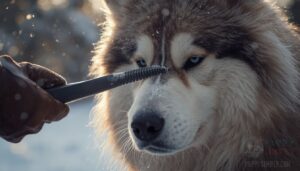
Your dog’s double coat is only as effective as the condition it’s in — and that comes down to how you maintain it. A few grooming habits make a real difference in keeping that insulation working through winter.
Here’s what actually matters regarding protecting your dog’s natural warmth.
Brushing Out Loose Undercoat
Start with the right tool — rake selection tips matter more than most owners realize. An undercoat rake’s longer teeth actually reach past the guard hairs to pull loose undercoat instead of skimming the surface.
Use short, directional strokes with gentle pressure, and try moisture-assisted brushing on a slightly damp coat for better separation. Watch for resistance; that’s a mat forming, not loose hair.
Managing Seasonal Shedding
Once you’ve cleared that loose undercoat, timing your deshedding sessions around seasonal transitions makes all the difference.
Shedding schedule adjustments are worth tracking — coat maintenance demand spikes during seasonal shifts, so increase your vacuuming frequency and layer furniture cover protection over favorite resting spots.
Low indoor air humidity worsens static and dryness, accelerating seasonal shedding. A consistent grooming schedule prevents buildup from compounding later.
Bathing Without Stripping Natural Oils
Bathing frequency matters more than most owners realize. Limit baths to every four to six weeks, using a mild non-soap cleanser on gentle cleansing zones — armpits, groin, and paws — rather than lathering the entire coat.
Lukewarm water preserves skin lipids; hot water strips them. Pat drying technique beats vigorous rubbing, and immediate moisturizer application after towel-drying keeps the skin barrier intact between grooming sessions.
Why Clipping or Shaving Backfires
Shaving a double coat seems like a simple fix, but it triggers insulation reduction that works against your dog all winter. Guard hairs gone means wind exposure hits the skin directly, and moisture soak follows quickly in damp conditions.
Up to 30% of double-coated dogs develop post-clipping alopecia, leaving patchy regrowth that insulates unevenly. Skin micro-damage from clipping adds cold sensitivity exactly when your dog needs protection most.
Deshedding Schedules for Winter Coats
Once the undercoat starts cycling heavily, your deshedding frequency needs to match the peak shedding window — not lag behind it.
practical grooming schedule looks like this:
- Deshedding 2–3 times weekly during heavy seasonal shedding
- Use tool rotation timing: undercoat rake first, then slicker brush
- Switch to light brushing days between sessions to catch stragglers
- Reduce frequency after post-deshedding care confirms minimal loose hair
Winter Walk Safety Tips
Even a well-insulated double coat has its limits when temperatures drop sharply or conditions turn harsh. How you structure your winter walks matters just as much as how long they last.
Here’s what to keep in mind before you head out.
Shorter Walks in Extreme Cold
When temperature drops below 20°F, exposure duration limits matter more than distance. Short walk timing becomes critical — keep outings under 15–20 minutes and build thermal break intervals into your route planning to reduce cold stress accumulation.
Wind and wet fur lower the dog heat index fast, so precautions when walking double-coated dogs in cold weather should include monitoring pace and shivering closely.
Gradual Acclimatization to Lower Temperatures
Cold tolerance isn’t hardwired — it’s built through incremental exposure duration and consistent repetition. Start with short outings at mild temperatures, then apply stepwise temperature increases over several weeks:
- Begin at 40–45°F for 10-minute walks
- Drop 5°F every 5–7 days
- Track acclimatization pace by monitoring shivering and pace changes
- Prioritize hydration during cold to support thermoregulation
- Adjust energy needs as cold demands rise
Slow wins here.
Avoiding Icy, Windy, or Wet Conditions
Even well-insulated dogs face real risk when ice, wind, and wet conditions combine. Route around shaded patches where ice buildup persists longest, and use leeward positioning — placing your dog beside buildings or fences as windbreak barriers.
Raincoat utilization blocks direct wetting while preserving undercoat function. Ice patch detection means scanning ahead for glassy surfaces. Salt on sidewalks irritates pads quickly, so protecting paws from ice and salt with dog booties is your most reliable defense.
Watching Pace, Shivering, and Fatigue
Your dog’s pace tells you more than you think.
Pace Trend Monitoring and Wearable Sensors give you real-time alerts when stride length shortens or stop frequency climbs — both reliable Fatigue Indicators before shivering starts.
Shivering Detection matters because visible trembling means heat loss is already outpacing production.
Combined signals — slowing pace plus shivering — cross the activity limit for safe cold exposure and signal early signs of hypothermia in dogs.
End the walk.
Planning Routes for Safer Exposure
Your route is the first line of defense against cold-stress injury. Before you leave the driveway, a quick GPS tracker review of weekly route analytics can reveal which paths consistently expose your dog to wind, wet ground, or temperature drops.
- Prioritize Wind Shelter Pathways — buildings and tree lines cut heat loss faster than any jacket
- Practice Dry Surface Selection to keep fur from conducting cold against the skin
- Use Sunrise Timing for slightly warmer ambient conditions
- Map Quick Exit Points and Hydration Stop Locations in advance
Set weather thresholds and temperature thresholds for dogs into your tracker for real-time risk assessment using trackers before conditions shift.
Paw Care in Snow and Salt
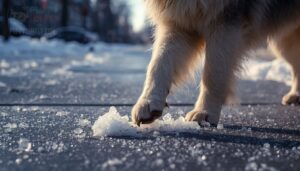
Your dog’s paws take a beating in winter — ice, road salt, and chemical de-icers can cause real damage fast.
A few simple habits after every walk go a long way toward keeping those pads healthy all season. Here’s what to focus on.
Booties and Paw Wax Protection
Your two main options for winter paw care and protection for dogs are booties and paw wax — and each provides a different purpose. Dog booties physically block ice and salt contact; proper bootie sizing means measuring the widest paw point against the manufacturer’s chart. Booties with a traction sole design add grip on icy surfaces, improving paw pad comfort throughout the walk.
Paw wax delivers moisture barrier effectiveness as a semi-permeable pad coating, though wax reapplication frequency matters since slush and friction wear it down fast.
Ice, Salt, and Chemical Irritation
Booties and wax help, but knowing what you’re protecting against matters just as much.
Common ice melts — sodium chloride, calcium chloride, magnesium chloride — create brine residue effects on contact, keeping chemicals pressed against paw pads long after the walk ends.
Salt burn management starts with recognizing that wet deicer residue lowers local tissue temperature while simultaneously irritating skin.
Chemical irritation pathways worsen when pads are already dry or cracked.
For double-coated dogs, especially, salt dust near ground level also raises dust inhalation risks, triggering coughing or throat irritation mid-walk.
Rinsing and Drying Paws After Walks
Once salt residue is on the pads, the clock starts. Use the Lukewarm Rinse Technique — warm water runs over each paw, targeting the paw pads and the Toe-Web Drying zones where salt hides.
Follow with the Towel Press Method, pressing firmly between toes. A Cool Air Blowdry on low finishes moisture removal.
Your Post Clean Inspection confirms no residue remains.
Trimming Paw Fur for Traction
Once paws are dry, check the fur between the pads. Pad Hair Length matters more in winter than most owners realize — long hair traps ice balls and reduces traction on slick surfaces.
Use the Scissor Technique: rounded-tip scissors held flush against the pads, trimming level without cutting too close. Seasonal Trimming every few weeks keeps contact consistent.
Traction Testing after trimming confirms each paw grips evenly.
Checking Pads for Cracks or Burns
After trimming, run your fingers across each pad — this is your Pad Inspection Routine.
Look for Visual Crack Signs: splits, fissures, or hardened edges that snag on fur.
Burn Redness Indicators include angry, raw patches from salt or ice contact.
Texture Change Detection means feeling for tacky or uneven surfaces.
Odor Discharge Checks revealing wetness or crusting signal infection risk requiring veterinary attention.
Shelter, Food, and Cold-Stress Signs
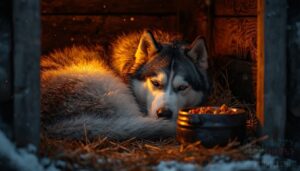
Even with a thick double coat, your dog still depends on you for a warm place to rest, enough fuel to stay warm, and a watchful eye for early trouble. Cold stress can creep up faster than most owners expect, especially overnight or after a long walk.
Here’s what to have in place before winter really bites.
Insulated Bedding and Draft-free Shelter
Even the warmest double coat can’t fully compensate for a cold, damp sleeping surface. Elevated Bed Platforms cut conductive heat loss by lifting your dog off the floor — the coldest zone in any room.
Layer in Thermal Bedding Liners and Moisture Resistant Covers to keep insulation dry and effective.
Draft Blocking Door Flaps, Reflective Insulation Panels, and proper shelter design for cold climates seal the setup.
Extra Calories for Winter Energy Use
Cold weather quietly raises your dog’s energy needs — thermoregulation burns real calories. Body Condition Monitoring tells you more than the calendar ever will.
Watch for these calorie adjustment signals:
- Gradual weight loss despite good appetite → increase High-Energy Foods slowly
- Weight gain → scale back treat portion control immediately
- Reduced drinking → address nutritional and hydration needs before appetite drops
Feeding frequency adjustments and cold-weather dog nutrition tweaks work best when made incrementally.
Early Signs of Hypothermia
Shivering is usually the first red flag — your dog’s body fighting to generate heat.
But don’t relax if the shivering stops; that can mean things are getting worse, not better.
Watch for muscle stiffness, lethargy, confused behavior, cold extremities, and pale gums.
These signs and symptoms of hypothermia in dogs signal real cold stress in pets that demands immediate attention.
When to Warm The Dog Gently
If your dog shows early cold-stress signs, act quickly but calmly. Gentle heat sources work best — no heating pads, no hot water bottles directly on the skin.
- Wrap them in body heat blankets or use the lukewarm towel method against the torso.
- Focus warmth on the chest and core, avoiding hot spots on extremities.
- Keep warm bedding nearby while monitoring dog responsiveness every few minutes.
Improved alertness means it’s working.
When to Call a Veterinarian
Gentle warming helps with mild cold stress, but some signs demand more than a blanket.
Call your veterinarian immediately if you notice blue or pale gums, signs of hypothermia, like sudden lethargy or confusion, uncontrolled bleeding, persistent vomiting, acute pain, or any respiratory emergencies.
Cold tolerance in dogs varies, and health conditions that increase cold risk for pets can turn a chilly walk into a veterinary emergency fast.
Frequently Asked Questions (FAQs)
How cold is too cold for a double-coated dog?
Most double-coated dogs stay comfortable above 45°F.
Below 20°F, core temperature limits are real — wind chill, moisture absorption, and age sensitivity can push the effective temperature index into dangerous territory fast.
Do double-coated dogs need a coat in winter?
Most double-coated dogs don’t need a winter jacket — their layered coat manages cold tolerance well.
However, age-related tolerance, indoor acclimation, and activity level influence when alternative insulation, or a dog winter jacket becomes necessary.
What not to do with double-coated dogs?
Avoid guard shaving, skip frequent baths, and use gentle undercoat brushing only. Low-heat drying protects skin integrity. Monitor skin health consistently — shaving risks postclipping alopecia in nearly 30% of cases.
How often should a dog bathe with a double coat?
Every 6–12 weeks works for most double-coated dogs, adjusted by activity level, skin condition, and seasonal shedding. Active, outdoor dogs may need baths closer to every 4–6 weeks.
Can double-coated dogs swim safely in winter?
Yes, but only briefly and with close supervision. Cold water bypasses dog thermal insulation quickly, and hypothermia risk rises within minutes — regardless of coat thickness or cold tolerance.
Do puppies tolerate cold as well as adults?
Puppies aren’t built for the cold the way adults are.
Smaller surface area ratio and incomplete thermoregulation maturity mean they lose heat fast, especially with puppy metabolism still developing and coat development is unfinished.
How does indoor heating affect a dogs coat?
Indoor heating strips moisture from the air, pulling natural oils from your dog’s skin and triggering dry skin, coat dullness, and increased shedding — consistent brushing and a light humidifier keep that double coat healthy indoors.
Should double-coated dogs sleep outside in winter?
Most double-coated breeds can tolerate cold better than others, but sleeping outside overnight still carries real hypothermia risk.
Proper shelter, temperature monitoring, and your dog’s age and health ultimately drive the owner’s decision.
Does cold weather worsen joint pain in dogs?
Cold weather does worsen joint pain in dogs. Dropping temperatures trigger joint stiffness, arthritis flare, and circulation reduction. Barometric pressure shifts intensify inflammatory pain, especially in seniors.
Conclusion
Jack London knew something most dog owners forget—nature builds better insulation than anything we can manufacture. Your double coat dog’s cold weather resilience isn’t luck; it’s biology refined over generations.
Brush consistently, skip the clippers, watch for shivers, and protect those paws. The coat does its job when you let it.
Respect its limits, read your dog’s signals honestly, and winter stops being something to survive—it becomes something you both handle well.
- https://www.thesprucepets.com/do-dogs-need-jackets-8758268
- https://www.aspcapetinsurance.com/resources/dogs-in-cold-weather-boots-and-coats-for-winter/
- https://www.mdpi.com/2076-2615/13/8/1295/pdf?version=1681129785
- https://www.reptileknowledge.com/reptile-pedia/what-are-guard-hairs-of-an-animals-fur
- https://severynfurs.com/understanding-your-fur-guard-awn-and-down-hairs/