This site is supported by our readers. We may earn a commission, at no cost to you, if you purchase through links.

first-time dog owners obsess over food, vaccines, and training—then discover, often at the vet’s office, that their dog’s mouth has been quietly losing the battle against plaque for months. Eighty percent of dogs show signs of periodontal disease by age three, a statistic that lands harder when you realize the damage is largely preventable.
Dental chews aren’t a magic fix, but chosen correctly, they work around the clock between brushings—disrupting bacterial biofilms, stimulating saliva, and slowing the mineralization that turns soft plaque into stubborn tartar. Knowing which chew fits your dog’s size, life stage, and caloric budget makes all the difference.
Table Of Contents
- Key Takeaways
- Why Dental Chews Matter
- How to Pick a Safe Chew
- How Often to Give Chews
- Dental Chews Versus Brushing
- Top 4 Dog Dental Chews
- Frequently Asked Questions (FAQs)
- Do vets recommend dental chews for dogs?
- Can dogs with pancreatitis have dental sticks?
- When can dogs start using dental chews?
- Can dental chews replace annual vet checkups?
- Do dental chews help with teething puppies?
- Are flavored dental chews safe for sensitive stomachs?
- How do dental chews affect senior dog teeth?
- Conclusion
Key Takeaways
- Eighty percent of dogs show signs of periodontal disease by age three, yet the damage is largely preventable when dental care—including size-appropriate chews—start as early as 8–12 weeks.
- Dental chews work through mechanical scraping, saliva stimulation, and antimicrobial action, but they can’t reach the gumline or interdental spaces where periodontal disease quietly starts, so they supplement brushing rather than replace it.
- Look for the VOHC seal when choosing a chew—it’s the only marker backed by independent clinical trials proving real plaque and tartar reduction, not just marketing claims.
- Chew calories add up fast (a single regular chew can run 89–128 kcal), so always subtract that from daily meal portions and keep all treats within roughly 10% of your dog’s total daily intake.
Why Dental Chews Matter

Your dog’s mouth is working hard every day, and what happens in there affects a lot more than just bad breath. Dental chews are one of the simplest tools you can add to your routine—but knowing why they matter helps you use them right.
If you’re weighing your options, this guide to the best rawhides for dogs breaks down which chews actually support long-term dental health.
Here’s what first-time owners need to understand before picking one up.
How Chews Help Reduce Plaque and Tartar
Every time your dog gnaws on a dental chew, something clinically meaningful happens. Here’s what’s working simultaneously:
- Mechanical Scraping dislodges soft plaque through direct friction
- Saliva Stimulation flushes loosened debris and buffers oral acids
- Antimicrobial Ingredients disrupt plaque-forming bacterial biofilms
- Microbiome Modulation shifts oral bacteria toward healthier populations
- Tartar Inhibition interrupts plaque’s mineralization into calculus
VOHC seal-bearing chews confirm this mechanical cleaning action meets independent clinical standards for dental plaque control.
The benefits of dental chews are supported by the Veterinary Oral Health Council, which approves chews that meet clinical standards.
Why Fresh Breath Matters for Dogs
Bad breath in dogs isn’t just unpleasant—it’s often your first clue that dental plaque control is failing. Halitosis signals bacterial activity, and persistent bad breath in dogs can indicate early periodontal disease or underlying medical issues requiring veterinary attention.
Beyond oral health monitoring, fresher breath genuinely improves daily social interaction and owner comfort, making training, cuddling, and routine care noticeably easier for everyone involved.
Why Dental Chews Are a Supplement, Not a Full Solution
dental chews as a helpful daily habit—not a complete dental care plan. Even Veterinary Oral Health Council-approved options face real plaque access limits; chews can’t reach gumline surfaces or the interdental spaces where periodontal disease quietly starts.
tartar accumulation risk remains without brushing, and hardness-induced tooth wear is a genuine concern with rigid chews. Calorie impact management matters too.
Dental chews are a supplement to professional veterinary cleanings—not a replacement.
When First-time Owners Should Start Dental Care
Starting early is the single most effective thing you can do. Begin gentle handling around 8 weeks old—this builds Owner Comfort Training naturally, before any resistance sets in. By 12 weeks, Gradual Chew Introduction fits the Puppy Teething Timeline perfectly.
- gentle mouth handling at 8 weeks
- Introduce chews around 12 weeks
- Schedule Early Oral Exams with your vet
- Request Veterinary Screening for baseline gum health
- Adjust chew size as your puppy grows
How to Pick a Safe Chew
Not all dental chews are created equal, and choosing the wrong one can do more harm than good. The right pick depends on a few key factors — your dog’s size, age, digestive health, and what’s actually in the ingredient list.
Here’s what to look for before you buy.
Choosing The Right Size for Your Dog’s Weight

Size isn’t just a suggestion—it’s a safety specification. Weight-based sizing ensures the chew dimension guide matches your dog’s jaw force and swallow risk, not just convenience.
If your dog tends to gulp rather than chew, reviewing safe raw bone sizing for dogs by weight can help you choose a piece that’s genuinely too big to swallow whole.
Always use your dog’s current weight for chew size selection; if they’re near the top of a range, move up. Applying the 10 treat rule within your dog’s calorie budget keeps dental health gains from becoming dietary losses.
Matching Chew Texture to Puppies, Adults, and Seniors

Matching texture to life stage isn’t optional—it’s foundational to dental disease prevention. Age-specific abrasiveness and hardness gradation determine whether a chew cleans effectively or causes harm.
- Puppies: Choose fast breakdown speed and gentle coarseness levels—developing teeth can’t handle rigid chews.
- Adults: Firmer texture flexibility maximizes plaque scrubbing through sustained jaw contact.
- Seniors: Soft, pliable chews protect sensitive gums while supporting oral health maintenance routines for pets.
Checking for Digestibility and Splinter Risk
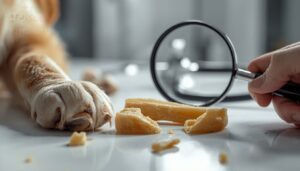
Digestible ingredient testing and splinter hazard assessment separate safe chews from dangerous ones. Digestible dog chews should soften progressively—never splinter.
Avoid rawhide—it fragments unpredictably based on your dog’s size and chewing style. Fiber content analysis and chew hardness ratings help you evaluate hard chew durability before buying.
Monitor fragmentation size during the first session; if sharp shards appear, discard immediately.
Looking for VOHC Approval and Quality Ingredients

The VOHC Seal isn’t just a logo—it’s clinical evidence. The Veterinary Oral Health Council awards it only after a product passes independent trials proving measurable plaque and tartar reduction.
VOHC Seal Verification is your fastest filter when comparing brands.
Look for these on the label:
- VOHC seal confirming Clinical Efficacy Data, not just marketing claims
- Ingredient Transparency with a Preservative-Free Formulation
- Allergen-Free Claims backed by named, identifiable ingredients
Avoiding Common Allergens and Unnecessary Additives

Hidden ingredients can quietly trigger reactions—so ingredient label reading isn’t optional; it’s essential. Wheat, soy, and corn top the allergen list, making grain-free considerations worth discussing with your vet.
| Concern | What to Avoid | Better Choice |
|---|---|---|
| Food sensitivities | Wheat, soy, corn | Allergen-free formulas |
| Additives | Artificial color, preservatives | Limited-ingredient chews |
| Digestibility | Multi-preservative blends | Single-ingredient chews |
How Often to Give Chews

Frequency matters just as much as which chew you pick. Too many chews and you’re quietly adding extra calories your dog doesn’t need — too few and you’re not getting the dental benefit.
Here’s what you actually need to know about building a safe, consistent routine.
Whether One Chew Per Day is Enough
One chew per day works — but only when the weight-adjusted dosage actually matches your dog’s size.
Plaque cycle timing matters here: plaque reforms within hours of eating, so a single chew controls the next buildup window, not existing tartar.
Your dog’s chew consumption rate also plays a role — aggressive chewers who finish in seconds get far less mechanical cleaning benefit.
Age-based needs shift this further; senior dogs with gum recession often require veterinary risk assessment before any routine is set.
Counting Chew Calories in Your Dog’s Diet
Chew calories add up faster than you’d expect. A single regular-sized chew can run 89–128 kcal — a significant share of a small dog’s daily allowance. Calorie Budgeting means reading the label every time, not assuming.
Here’s how to stay on track:
- Read kcal-per-chew directly from packaging (Label Reading Tips matter)
- Subtract that number from daily meal portions (Adjusting Meals prevents silent weight gain)
- Keep treats — including dental sticks — within roughly 10% of total daily intake
Supervising Every Chewing Session
Stay present for every session. Chew Monitoring isn’t optional — Owner Presence is the single most effective Safety consideration for dental chews in dogs.
Keep the environment calm; a Calm Environment reduces gulping and erratic biting.
Watch for Safety Indicators: coughing, pawing at the mouth, or sudden aggression toward the chew.
Session Length should match your dog’s pace, not the clock.
Knowing When a Chew is Too Small to Keep
Even with close supervision, the chew itself can become the hazard. Watch for Gulping Indicators — your dog swallowing rather than chewing, or a treat disappearing suspiciously fast.
Fragment Size Risk climbs when Hardness Break Pattern produces sharp, rapid crumbles.
Chew Length Fit matters too: discard any piece your dog can fully close its jaws around. Shorter Chewing Time Duration signals it’s gone too far.
Storing Chews Safely to Prevent Spoilage
Proper storage matters just as much as choosing the right chew. Keep your supply sealed with Airtight Packaging in a cool, dry spot—Moisture Control and Temperature Management directly affect shelf life.
Apply FIFO Rotation so older chews get used first. Practice Cross Contamination Prevention by storing chews away from cleaning products or wet foods.
Discard anything showing spots or off-odors immediately.
Dental Chews Versus Brushing
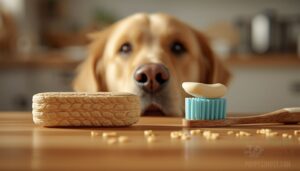
Dental chews and brushing aren’t competing—they’re teammates, each doing something the other can’t. That said, knowing how they differ helps you build a smarter routine for your dog.
Here’s what every first-time owner should understand about how the two compare.
What Dental Chews Can Do That Brushing Cannot
Brushing reaches the obvious surfaces — but it can’t follow your dog into the day. Dental chews work continuously through enzyme plaque breakdown and anti-tartar agents like sodium hexametaphosphate, targeting soft plaque before it mineralizes into tartar. Their variable-density design scrubs interdental zones that brushes miss, while botanical breath aids reduce halitosis at its bacterial source.
Dental chews work where brushing stops, breaking down plaque continuously between sessions
- Enzyme systems disrupt plaque chemistry between brushings
- Anti-tartar compounds interrupt mineralization before calculus forms
- Botanical ingredients address the microbial root of bad breath
Why Brushing Still Gives The Best Plaque Control
Nothing replaces toothbrushing—mechanical plaque removal through direct bristle-to-tooth contact remains the best practice in veterinary recommendations for canine oral care.
Extended brushing time matters: two full minutes remove considerably more plaque than a quick 30-second pass. Fluoride dentifrice delivers enamel protection during that same session.
Daily consistency at the gumline focus keeps bacterial biofilm from maturing—something no chew can fully replicate.
How Professional Cleanings Fit Into Oral Care
Think of professional cleanings as your dog’s oral health reset.
Even with daily brushing and dental chews, hardened tartar builds where bristles can’t reach—that’s where Scaling Benefits and Gumline Access matter most.
Veterinary professionals, following dog dental health guidelines from institutions like Banfield Pet Hospital and VCA Animal Hospitals, use Fluoride Treatment, ultrasonic scaling, and Dental Check-up Integration to restore a clean baseline, your home routine can actually maintain.
When a Dog May Need Veterinary Dental Help
Some warning signs go well beyond what any chew can address. If you notice any of the following, schedule a veterinary dental evaluation promptly:
- Persistent Bad Breath that returns despite daily chews
- Swollen Gums or Bleeding Gums during eating
- Tooth Pain signs—pawing at the mouth, dropping food
- Broken Teeth exposing sensitive inner tissue
- Rapid tartar return signaling active periodontal disease in dogs
These signs, that indicate need for veterinary dental care mean professional veterinary dental cleaning is overdue.
Top 4 Dog Dental Chews
With so many options lining pet store shelves, narrowing it down can feel overwhelming. These four chews consistently earn high marks from veterinarians and owners alike for safety, efficacy, and ingredient quality.
Here’s a closer look at each one.
1. Virbac CET Veggiedent Dog Dental Chews
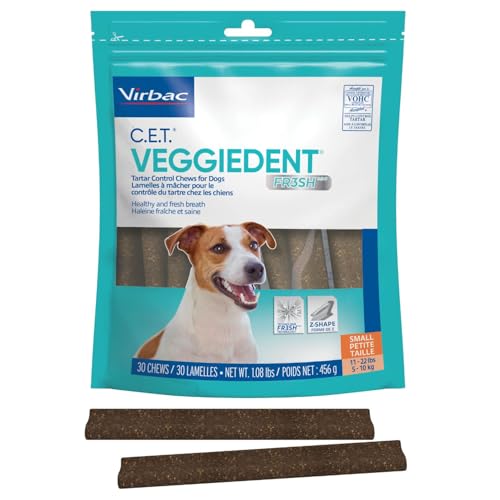
VeggieDent Fr3sh earns its spot here for a specific reason: it’s VOHC-approved, which means it’s cleared independent clinical standards for tartar control — not just marketing claims.
The Z-shaped design reaches between teeth mechanically, and at just 24 kcal per chew, it won’t quietly inflate your dog’s daily calorie count.
It’s also plant-based and gluten-free, making it a practical pick for small breeds (11–22 lb) with sensitive stomachs, thanks to added inulin supporting gut health alongside oral care.
| Best For | Small breed dog owners (11–22 lb) who want a vet-approved, stomach-friendly daily dental chew without the hassle of brushing. |
|---|---|
| Target Dog Size | 11–22 lb (Small) |
| Plaque Control | Yes – VOHC approved |
| Breath Freshening | Yes |
| Artificial Additives | None listed |
| Daily Use | Yes – one chew per day |
| Supervision Advised | Yes – monitor chew size |
| Additional Features |
|
- VOHC-approved for real tartar control — backed by independent clinical standards, not just brand claims
- Plant-based, gluten-free, and low-calorie (24 kcal) with added inulin to support sensitive digestive systems
- The Z-shape design mechanically cleans between teeth, and most owners notice fresher breath within the first day
- Pricier than similar dental chews, and you might find the same bag cheaper at other retailers
- The firm texture can be rough on dogs with sensitive teeth or existing dental problems
- Smaller dogs under 11 lb may need broken-in-half pieces, which kills the Z-shape cleaning action
2. Benebone Dental Chew Toy
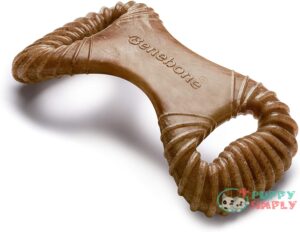
The Benebone isn’t an edible chew — and that distinction matters. Made from high-strength, USA-sourced nylon infused with real bacon throughout, it’s built for aggressive chewers who demolish standard treats in minutes.
The patented dental ridges work mechanically against plaque while your dog gnaws, and the curved ergonomic shape lets them grip it independently.
At 0.5 lb and 9.5 inches, it’s substantial.
Inspect it regularly — once fragments become swallowable, discard it immediately. Not suitable for puppies or dogs with weakened teeth.
| Best For | Dogs that destroy every toy in sight — this one’s made for serious, aggressive chewers who need something that actually lasts. |
|---|---|
| Target Dog Size | Not specified by weight |
| Plaque Control | Yes – mechanical ridges |
| Breath Freshening | Yes |
| Artificial Additives | None listed |
| Daily Use | Yes – as needed chew |
| Supervision Advised | Yes – monitor nylon wear |
| Additional Features |
|
- Real bacon flavor baked into the nylon, not just a coating, so the scent stays strong even after heavy use
- The dental ridges do real work — scraping plaque and massaging gums while your dog just thinks they’re having fun
- Doubles as a tug toy, so you get more out of it than a basic chew
- Hard nylon isn’t safe for puppies or dogs with sensitive teeth — it’s built tough, maybe too tough for some
- You have to keep an eye on it — once pieces start breaking off, it’s time to toss it
- Pricier than your average rubber toy, which stings a little when you’re replacing it
3. Blue Buffalo Dental Bones Dog Treats
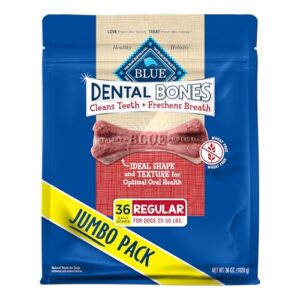
If your dog needs something they can actually eat — unlike the Benebone — Blue Buffalo Dental Bones are worth a look. Sized for medium dogs between 25 and 50 pounds, these grain-free chews skip the corn, wheat, soy, and artificial additives you don’t want.
Potatoes, pea protein, blueberries, and flaxseed make up the backbone of the formula. One caveat: aggressive chewers may finish one fast, cutting short the mechanical cleaning time your dog’s teeth actually need.
| Best For | Medium-sized dogs (25–50 lbs) whose owners want a grain-free, additive-free daily dental chew with wholesome ingredients. |
|---|---|
| Target Dog Size | 25–50 lb (Medium) |
| Plaque Control | Yes – mechanical texture |
| Breath Freshening | Yes |
| Artificial Additives | No artificial preservatives or colors |
| Daily Use | Yes – one chew per day |
| Supervision Advised | Yes – monitor aggressive chewers |
| Additional Features |
|
- Clean ingredient list — no corn, wheat, soy, poultry by-products, or artificial colors and preservatives
- Real food ingredients like blueberries, flaxseed, and pea protein add nutritional value beyond just teeth cleaning
- The 36-oz value bag gives you plenty of chews for consistent daily use
- Aggressive chewers can knock one out in seconds, which defeats the purpose of the slow-chew dental cleaning
- Contains gelatin and soy-derived lecithin, so it’s not ideal for dogs with certain allergies
- Pricier than generic dental treats, which adds up if your dog goes through them quickly
4. Whimzees Small Dog Dental Chews
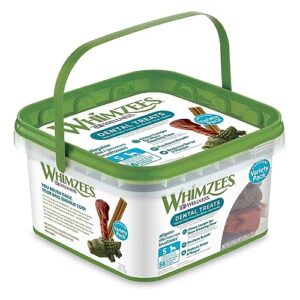
smaller dogs — those in the 15–25 lb range — WHIMZEES Brushzees are worth serious consideration. vegetarian, grain-free chew contains just 89 kcal, making daily calorie management straightforward.
ridged, alligator-shaped design isn’t decorative; those grooves mechanically disrupt plaque along the gumline and between teeth. No artificial colors, preservatives, or GMO ingredients.
One chew per day fits neatly into a dental routine. texture runs firm, though, so monitor senior dogs with softer or compromised teeth closely.
| Best For | Small dogs (15–25 lb) with sensitive stomachs, food allergies, or owners looking for a simple daily dental routine without meat-based ingredients. |
|---|---|
| Target Dog Size | 15–25 lb (Small) |
| Plaque Control | Yes – ridged texture |
| Breath Freshening | Yes |
| Artificial Additives | No artificial colors, flavors, or preservatives |
| Daily Use | Yes – one chew per day |
| Supervision Advised | Yes – monitor picky/small dogs |
| Additional Features |
|
- Grain-free, vegetarian formula with no artificial anything — great for dogs with allergies or sensitivities
- The ridged texture actually does the work, scraping plaque and tartar mechanically with every chew
- Easy to work into a daily routine — one chew a day keeps the doggy breath away
- Pricier than most dental treats on the shelf
- Picky or very small dogs might turn their nose up at the shape or find it too big to enjoy
- Packaging can show up damaged, which is frustrating when you’re just trying to keep your pup’s teeth clean
Frequently Asked Questions (FAQs)
Do vets recommend dental chews for dogs?
Yes — virtually every vet on the planet recommends dental chews as part of a dog’s oral care routine.
They help reduce plaque, freshen breath, and support gum health between professional cleanings.
Can dogs with pancreatitis have dental sticks?
Most dogs with pancreatitis shouldn’t have dental sticks. Many contain fats and oils that can trigger flare-ups. Always check fat content and ask your vet before offering any chew.
When can dogs start using dental chews?
Timing matters more than most owners expect. Puppy-safe chews can begin around 12 weeks, once solid food is established.
Hold off on firmer adult-style options until roughly six months, when adult teeth fully emerge.
Can dental chews replace annual vet checkups?
No — dental chews can’t replace annual vet checkups.
They help reduce plaque daily, but a veterinarian can detect gum disease, tooth fractures, and tartar buildup below the gumline that no chew can address.
Do dental chews help with teething puppies?
Teething puppies chew instinctively—it’s how they manage gum discomfort.
Puppy-appropriate dental chews can redirect that behavior, support saliva flow, and gently begin plaque prevention, but always choose life-stage-specific options, not adult formulas.
Are flavored dental chews safe for sensitive stomachs?
Flavored dental chews can upset sensitive stomachs. Glycerin, starches, and natural flavorings are common culprits.
Start with a simpler ingredient list and introduce gradually — one chew at a time — while monitoring for loose stool or vomiting.
How do dental chews affect senior dog teeth?
Senior dogs accumulate tartar faster due to age-related gum changes, and chews help slow new plaque buildup—but they can’t treat existing periodontal disease or reach below the gumline where problems often start.
Conclusion
Picture a two-year-old Labrador whose owner assumed healthy eating meant healthy teeth—until a routine checkup revealed early-stage periodontitis. A daily VOHC-approved chew, introduced that same week, helped slow progression between professional cleanings.
That’s exactly what the right dog dental chews for first-time dog owners can do: fill the gaps that brushing alone can’t cover.
Choose the correct size, monitor every session, and count those calories. Your dog’s mouth will thank you.