This site is supported by our readers. We may earn a commission, at no cost to you, if you purchase through links.
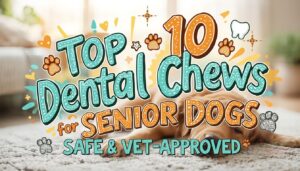
Most dogs over seven years old have some degree of dental disease—but the bigger surprise is that the chews you’ve been giving your dog since puppyhood may now be working against them. Aging changes everything: jaw muscles weaken, enamel becomes brittle, and a chew hard enough to crack a walnut can fracture a senior tooth in one bite. What kept their teeth clean at three can land them in surgery at ten.
The dog dental chews for senior dogs work with an older mouth, not against it—softer texture, safer ingredients, and real plaque-fighting power where it counts.
Table Of Contents
- Key Takeaways
- Why Senior Dogs Need Softer Chews
- What Makes a Chew Senior-Friendly
- VOHC Approval and Dental Efficacy
- Best Ingredients for Aging Dogs
- Top 10 Senior Dental Chews
- 1. Greenies Senior Dental Dog Treats
- 2. Milk Bone Chicken Dental Chews
- 3. Zukes Hip Joint Dog Treats
- 4. Blue Buffalo Natural Chicken Jerky
- 5. Whimzees Dog Dental Stix Treats
- 6. Whimzees Dog Dental Chews
- 7. Virbac Hextra Dental Chews
- 8. Pedigree Dentastix Small Dog Dental Chews
- 9. Virbac CET Veggiedent Dog Dental Chews
- 10. Nutri Vet Dog Dental Soft Chews
- Chews Senior Dogs Should Avoid
- Plaque, Tartar, and Breath Control
- How Often Seniors Should Chew
- Buying Tips for Senior Dog Chews
- Frequently Asked Questions (FAQs)
- Are dental chews good for senior dogs?
- What words do dogs hear best?
- Can dental chews replace professional teeth cleanings?
- At what age is a dog considered senior?
- How do dental chews affect dogs with diabetes?
- Should dental chews be given before or after meals?
- Can dental chews cause allergic reactions in seniors?
- Conclusion
Key Takeaways
- Senior dogs’ teeth become brittle with age, so any chew your thumbnail can’t dent is too hard and risks a painful fracture.
- Look for the VOHC seal—it’s the only sign a chew has been clinically proven to reduce plaque and tartar, not just marketed that way.
- Skip antlers, cooked bones, rawhide, hard nylon, and hooves entirely, as each one poses a real risk of broken teeth, gum injury, or digestive blockage in older dogs.
- soft, low-fat, appropriately sized chew daily keeps plaque from hardening, since tartar starts forming within 48 hours of your last clean.
Why Senior Dogs Need Softer Chews

Your senior dog’s mouth isn’t what it used to be, and that changes everything about what’s safe to chew. Aging brings softer bite strength, more fragile teeth, and a stomach that doesn’t bounce back as easily.
Their jaw muscles weaken too, so checking out safe bone options for aging dogs’ teeth can help you avoid a painful — and expensive — mistake.
Here’s what you need to know before handing over any chew.
Reduced Bite Strength in Aging Dogs
As your dog ages, bite strength quietly fades. Jaw Muscle Atrophy weakens the muscles that power each chew. Saliva Production Decline makes every bite drier and harder. TMJ Pain Impact discourages strong clamping. Tooth Loss Effects reduce stable contact points. Orofacial Discomfort signals pain with pressure.
That’s why Safe Soft Chews for Senior Dogs — ideally VOHC approved and senior‑friendly — matter so much. Untreated periodontal disease progression can accelerate tooth loss in senior dogs.
- Weakened jaw muscles tire faster
- Dry mouth makes chewing uncomfortable
- Joint pain limits bite effort
- Missing teeth reduce chewing stability
- Mouth soreness discourages eating altogether
Higher Tooth-fracture Risk From Hard Chews
Hard chews hit aging teeth hard.
Impact Force Concentration turns each bite into a stress point on brittle enamel.
Tooth Brittleness Aging means even a single crunch can trigger Enamel Microchipping.
Fragment Edge Sharpness worsens the damage.
Pulp Exposure Risks follow quickly.
| Hard Chew Risk | What Happens | Senior Risk Level |
|---|---|---|
| Impact force | Stress concentrates on enamel | High |
| Enamel chips | Tiny cracks form first | High |
| Sharp fragments | Edges deepen fractures | Moderate–High |
| Pulp exposure | Pain and infection risk | Severe |
| Aging brittleness | Less resilience per bite | High |
Safe Soft Chews for Senior Dogs — ideally VOHC approved — protect what’s left.
Throat-safe Sizing to Prevent Swallowing
Size matters just as much as softness.
A chew must be larger than your dog’s throat diameter — wide enough that swallowing whole simply isn’t possible.
Piece length and cross-section width both affect mouth safety.
Rounded shapes with a high fragmentation rate break into smaller, passable bits during chewing.
These Senior Dog Dental Care Tips apply across all breeds.
Stick with VOHC approved Safe Soft Chews for Senior Dogs.
Digestibility Concerns in Older Stomachs
Beyond sizing, your senior dog’s stomach has changed too. Acid production slows with age, making Digestive Enzyme Support harder to come by naturally.
That means Gentle Disintegration Rate matters — chews that break down fast reduce GI strain.
Choose lowfat, Lactose Free Formulas with Fiber-Mediated Stool Softening properties.
VOHC approved, senior‑friendly soft dental chews that are fully digestible keep older stomachs comfortable and consistent.
What Makes a Chew Senior-Friendly
Not every dental chew on the shelf is safe for your senior dog.
The right one checks few specific boxes — and knowing what those are makes all the difference.
Here’s what to look for before you buy.
Dentable Texture That Softens Under Pressure
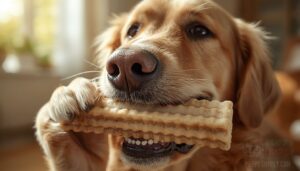
Think of it like memory foam — a good senior chew should give way when pressure hits it. That’s Softening Kinetics in action.
Pressure Yielding Geometry lets the chew compress against teeth, activating Surface Ridge Dynamics that scrub plaque without harsh force.
Micro-Fragment Control keeps pieces safe and digestible. This Mouthfeel Comfort encourages longer chewing, which is the heart of senior dog dental health.
Pliable but Not Crumbly Consistency
A chew that falls apart in seconds isn’t doing its job. For senior dogs, Controlled Chunking and Anti-Pulverization Design matter — soft dental chews should break down gradually, not crumble into dust.
Cohesive Saliva Interaction keeps the chew intact long enough for real cleaning.
Good Mouth Retention Mechanics and a balanced Texture Deformation Profile mean safer, more effective chew texture for older dogs — with or without the VOHC seal of approval.
Low-fat Formulas for Weight Control
Weight sneaks up on senior dogs faster than you’d expect. That’s why low-fat options matter — they support Calorie Density Management without sacrificing chewing satisfaction.
Look for chews with a strong Protein-to-Fat Ratio and Fiber Enrichment to include Satiety Ingredients that keep your dog fuller, longer. Smart calorie management is central to senior dog nutrition, and these Weight Monitoring Tips start right at the treat jar.
Limited Ingredients for Sensitive Seniors

Sensitive seniors deserve simpler ingredient lists. A limited ingredient formula — Single Protein, Focused Carbohydrate, Simplified Fat — makes Allergen Traceability straightforward when reactions happen.
Here’s what to look for:
- One protein source, like turkey
- One carbohydrate, like rice
- Minimal Additives and flavorings
- Short, readable ingredient labels
Fewer ingredients mean fewer guesses when your senior dog’s stomach says no.
Grain-free and Gluten-free Options
Not all grains cause problems, but if your senior dog has cereal sensitivities, grainfree and glutenfree chews are worth considering. These formulas swap grains for Alternative Starches like tapioca or potato — which affects Calorie Density, so check the label.
Label Transparency matters here: grainfree doesn’t always mean glutenfree. Look for clear Protein Sources, Allergen Cross-Contact warnings, and ideally VOHC certification for confirmed senior dog dental health.
VOHC Approval and Dental Efficacy
Not all dental chews are created equal, and that’s where third-party testing comes in. The Veterinary Oral Health Council (VOHC) seal is one of the clearest signals that a chew has actually been proven to work.
Here’s what that seal means — and why it matters when you’re shopping for your senior dog.
What The VOHC Seal Means
The Veterinary Oral Health Council — VOHC — isn’t a government agency. Think of the VOHC seal of approval as a quiet promise backed by real science.
Understanding the VOHC seal of approval means knowing what it actually requires:
- Two independent trials with different scorers or locations
- Strict scoring methodology measuring plaque and tartar reduction
- Safety compliance rules confirming no harm to oral or digestive tissue
Choosing VOHC-approved dental chews gives your senior dog that assurance.
Plaque and Tartar Reduction Standards
The VOHC seal only lands on products that hit real Plaque Reduction Benchmarks — at least 15% plaque reduction and measurable Tartar Removal Criteria under Clinical Efficacy Standards. For VOHC certified chews like Purina DentaLife, trials show up to 57% tartar reduction.
Surface Contact Requirements matter here: the chew must physically touch enough tooth surface to count. That’s your Senior Dog Dental Health Guide baseline.
Mechanical Cleaning Versus Chemical Support
Plaque removal works two ways — and both matter for your senior dog.
- Ridge Geometry creates Mechanical Contact Zones that scrub tooth surfaces during each bite.
- Saliva Dissolution releases oral-care compounds into saliva through Chemical Diffusion.
- Chew Duration determines how much of both actions your dog actually gets.
- Softer chews let seniors chew longer, maximizing mechanical vs chemical cleaning action.
- Safe Soft Chews for Senior Dogs combine both for complete Dental Care Recommendations for Aging Dogs.
Delmopinol and Other Oral-care Ingredients
Only one dental ingredient has earned FDA recognition as an antibacterial agent — delmopinol. Its mechanism works by disrupting the bacterial film before it hardens into tartar.
Products carrying the VOHC seal of acceptance often combine this with chlorhexidine and chlorophyll for real ingredient synergy. These safe soft chews for senior dogs meet strict regulatory approval standards, making them a smart, vet-backed choice.
Why Clinical Testing Matters for Seniors
Clinical studies are what separate good intentions from real results.
Senior dogs face age-related vulnerabilities — fragile gums, weakened immunity, digestive sensitivity — so evidence-based safety and efficacy validation are not optional extras. They’re the baseline.
For senior dogs, evidence-based safety isn’t a bonus — it’s the baseline
VOHC accepted products undergo rigorous testing that confirms long-term health outcomes and risk mitigation for older dogs. Veterinary recommendations for canine oral health depend on that data.
Your senior deserves proven, not just promising.
Best Ingredients for Aging Dogs
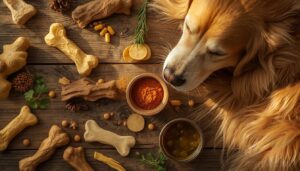
Not all dental chews are created equal — especially when your dog is getting up in years.
The right ingredients can do more than just clean teeth; they can support joints, calm gum inflammation, and freshen breath from the inside out.
Here’s what to look for when you’re reading that label.
Glucosamine, Chondroitin, and MSM Support
Joint health and dental care don’t have to come from separate treats. Many senior-friendly chews now combine glucosamine, chondroitin, and MSM — three ingredients with synergistic effects on cartilage and connective tissue.
What to look for on the label:
- Glucosamine (hydrochloride or sulfate) listed in milligrams per chew
- Chondroitin sulfate sourced from bovine or marine cartilage
- MSM shown separately with its own dosage guidelines
- Shellfish-free options if your dog has sensitivities — ingredient sourcing matters
- Veterinary Oral Health Council‑approved Joint Support Chews for Senior Canines for verified dual‑purpose benefit
Chlorophyll and Spearmint for Fresher Breath
Fresh breath doesn’t mean clean teeth — but it’s still worth caring about. Chlorophyll odor masking and spearmint aroma compounds work as plant-based breath enhancers, neutralizing sulfur odors in your senior dog’s mouth.
Neither replaces mechanical scrubbing, but they make the mint-flavored freshness boost more noticeable after every chew.
| Ingredient | Source | Role |
|---|---|---|
| Chlorophyll | Alfalfa, parsley, sodium copper chlorophyllin | Odor control support |
| Spearmint | Mentha spicata leaf or oil | Natural scent stability |
| Carvone | Spearmint’s main aroma compound | Mild, sweet mint aroma |
| Plant powders | Spinach, green herbs | Fiber and fresh breath |
| Combined effect | Both ingredients together | Mint-flavored freshness boost |
Chlorhexidine for Antibacterial Oral Care
Chlorhexidine works differently than most dental ingredients — it actually binds to enamel through an enamel binding mechanism, then keeps releasing antibacterial activity for up to 12 hours. That’s substantivity duration in action.
Here’s why it matters for your senior dog:
- Bacterial spectrum coverage targets both gram-positive and gram-negative bacteria
- Application methods include rinses, gels, and coated chews
- Staining risks are mild but real with daily use
Veterinary recommendations for canine oral health often prioritize chlorhexidine, though the VOHC seal of acceptance remains the benchmark for proven efficacy.
Probiotics for Gum Health Support
Your senior dog’s mouth is home to hundreds of bacterial species — and balance matters more than most people realize.
Probiotics support Oral Microbiome Balance by crowding out the harmful bugs that cause gum inflammation.
| Factor | What It Means | Senior Dog Benefit |
|---|---|---|
| CFU Potency | Live bacteria count per chew | Higher counts support consistent gum health |
| Strain Diversity | Multiple probiotic species combined | Broader protection along the gumline |
| Prebiotic Boost | Fibers like inulin feeding good bacteria | Sustains probiotic delivery after chewing |
Veterinary recommendation increasingly favors probiotic chews as a daily habit — because plaque rebuilds within 48 hours.
Baking Soda and Mineral-based Cleaning
Baking soda — sodium bicarbonate — quietly does a lot. It buffers mouth acids, polishes away soft debris, and dissolves cleanly in saliva.
Pair that with calcium carbonate polishing, dicalcium phosphate friction, and sodium hexametaphosphate tartar control, and you’ve got real mineral muscle. Zinc mineral odor support rounds it out.
Together, these ingredients give senior dog dental chews plaque reduction power, your aging dog can actually feel.
Top 10 Senior Dental Chews
Finding the right chew for your senior dog doesn’t have to be overwhelming. These ten options stand out for their soft textures, safe ingredients, and proven dental benefits.
Here’s what made the cut.
1. Greenies Senior Dental Dog Treats
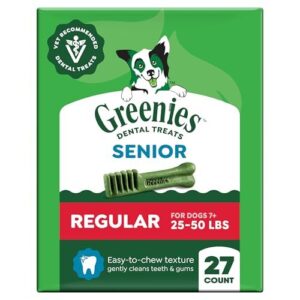
Greenies Aging Care Dental Treats are one of the few chews that actually earned VOHC approval for both plaque and tartar control — and that matters.
The texture is 50% softer than standard Greenies, so older dogs don’t have to fight through every bite.
Each chew includes fish oil, green mussel, and turmeric for joint and immune support.
The regular size suits dogs weighing 25–50 lbs.
One chew daily is all it takes.
| Best For | Senior dogs aged 7+ weighing 25–50 lbs whose owners want a vet-recommended chew that supports dental health, joints, and overall aging care in one daily treat. |
|---|---|
| Primary Purpose | Dental plaque & tartar |
| Rawhide Free | Yes |
| Artificial Additives | None listed |
| Breath Freshening | Yes |
| Target Dog Size | 25–50 lb |
| Country of Origin | Not specified |
| Additional Features |
|
- Softer texture makes chewing easier for older dogs or those with missing teeth, while still scrubbing down to the gumline
- Packed with fish oil, green mussel, and turmeric to support joints and immunity — not just dental health
- Rawhide-free and easy to digest, so it’s a safer option compared to traditional chews
- Pricier than standard Greenies, which can add up with daily use
- Contains wheat gluten, so it’s off the table for dogs with grain sensitivities
- Soft texture means some dogs will polish it off fast, which may feel less satisfying for big chewers
2. Milk Bone Chicken Dental Chews
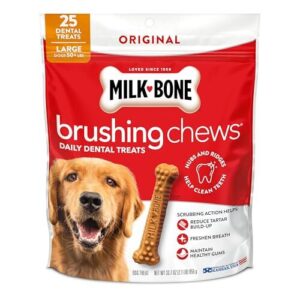
If your senior dog weighs 50 pounds or more, Milk-Bone Brushing Chews are worth a look. Each brush-bone shape — about 4 inches long — has nubs and ridges that scrub teeth as your dog chews. They’re rawhide-free and chicken flavored, so picky seniors usually take to them easily.
The VOHC has accepted these for tartar control, which gives them some credibility. Just note: they do contain artificial colors and BHA, so they’re not the cleanest option on this list.
| Best For | Senior or large-breed dogs (50 lbs+) who need daily dental care but resist regular brushing. |
|---|---|
| Primary Purpose | Dental plaque & tartar |
| Rawhide Free | Yes |
| Artificial Additives | Yellow 5, Yellow 6, BHA |
| Breath Freshening | Yes |
| Target Dog Size | 50+ lb |
| Country of Origin | Not specified |
| Additional Features |
|
- VOHC-accepted for tartar control — that’s a real, vet-recognized seal of approval
- The brush-bone shape with nubs and ridges actually does some scrubbing work while your dog chews
- Rawhide-free and chicken flavored, so most dogs are happy to eat them
- Contains artificial colors (Yellow 5, Yellow 6), BHA, and propylene glycol — not great if you prefer cleaner ingredients
- Only works for large dogs (50 lbs), so smaller breeds are out of luck
- The hardness can be tough on some dogs’ teeth, and it’s no substitute for actual brushing
3. Zukes Hip Joint Dog Treats
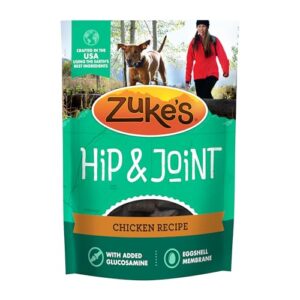
Not every treat on this list is a dedicated dental chew — and Zuke’s Hip & Joint treats are a good example of that. These soft, beef-flavored bites are built around mobility support, with glucosamine and chondroitin packed into each small piece.
For seniors with stiff joints, that’s genuinely useful.
But the soft texture means less tooth‑scrubbing action. Think of them as a smart supplement in treat form — helpful for hips, but not a replacement for actual dental care.
| Best For | Senior or active dogs that need joint support alongside a tasty, soft treat they’ll actually want to eat. |
|---|---|
| Primary Purpose | Joint health & training |
| Rawhide Free | Yes |
| Artificial Additives | None listed |
| Breath Freshening | No |
| Target Dog Size | All sizes |
| Country of Origin | USA |
| Additional Features |
|
- Real chicken is the first ingredient, so dogs tend to love them
- Glucosamine hydrochloride gives older or high-energy dogs some genuine joint support
- Soft texture is easy to break apart for small breeds or portion control
- Soft chews don’t do much for dental health — no real scrubbing action
- Contains sugar, whey, and eggshell membrane, which can be a problem for sensitive dogs
- Serving limits are easy to exceed, and extra treats mean extra calories
4. Blue Buffalo Natural Chicken Jerky
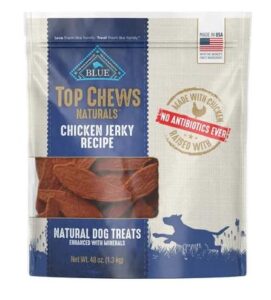
Not all seniors need the same thing. If your dog is less interested in chewing and more motivated by flavor, Blue Buffalo’s Nudges Jerky Cuts might be worth a look.
Made with real USA chicken as the first ingredient — no artificial flavors or preservatives — these soft, tender strips are easy on aging teeth.
You can break them into smaller pieces, which helps with calorie control. They’re a reward-style treat, not a dental chew, so pair them with something that actually scrubs.
| Best For | Senior dogs who are more treat-motivated than chew-driven, especially those with sensitive or aging teeth. |
|---|---|
| Primary Purpose | Long-lasting chew reward |
| Rawhide Free | Yes |
| Artificial Additives | None listed |
| Breath Freshening | No |
| Target Dog Size | All sizes |
| Country of Origin | Not specified |
| Additional Features |
|
- Real chicken, no artificial flavors or preservatives — clean ingredients you can feel good about
- Easy to break into smaller pieces, so calorie control is simple for any size dog
- Dogs go nuts for them — high palatability makes them great for training or rewards
- Price went up after Blue Buffalo acquired the brand, so it’s not the most budget-friendly option
- The large strip size can be a choking risk for small or toy breeds without supervision
- A small number of dogs have had digestive issues like vomiting after eating them
5. Whimzees Dog Dental Stix Treats
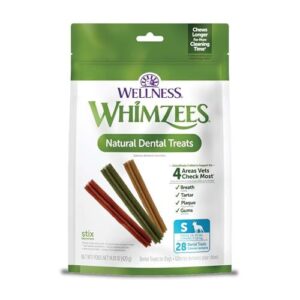
If your dog needs more than just flavor, Whimzees Stix deliver real mechanical cleaning. The ridged, grooved surface works against plaque as your dog chews.
Made from just a handful of plant-based ingredients — potato starch, glycerin, powdered cellulose — there’s no grain, no gluten, and no mystery fillers.
One stick daily covers small-to-medium dogs between 15 and 25 pounds. It’s a clean, simple formula that’s genuinely easy on sensitive older stomachs.
| Best For | Dogs with grain sensitivities or allergies who need daily dental support, especially small-to-medium breeds between 15 and 25 pounds. |
|---|---|
| Primary Purpose | Dental plaque & tartar |
| Rawhide Free | Yes |
| Artificial Additives | None listed |
| Breath Freshening | Yes |
| Target Dog Size | 15–25 lb |
| Country of Origin | Not specified |
| Additional Features |
|
- Clean, plant-based ingredient list with no grains, artificial colors, or mystery fillers — great for sensitive stomachs
- The ridged, grooved shape actually does mechanical work on plaque and tartar as your dog chews
- One stick a day keeps things simple and supports fresher breath over time
- Size-specific design means it’s only safe for dogs in the 15–25 lb range — wrong size is a real choking hazard
- Not a replacement for brushing or professional vet cleanings, just a helpful add-on
- Long-term dental results can vary, so don’t expect miracles from the chew alone
6. Whimzees Dog Dental Chews
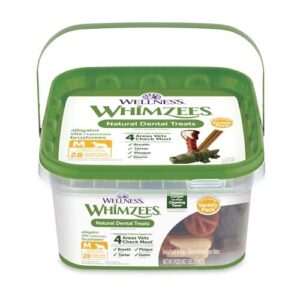
Whimzees Brushzees take a slightly different angle than the Stix. These medium-sized chews — built for dogs between 25 and 40 pounds — feature six distinct functional areas that increase tooth contact with every bite.
That matters for seniors who can’t sustain long chewing sessions. The VOHC-approved formula is grain-free, plant-based, and free from artificial additives.
With 28 chews per box, you get a full month of daily dental support. Simple, effective, and gentle enough for aging teeth.
| Best For | Medium-sized dogs (25–40 lbs) who need daily dental care, especially those with food sensitivities or allergies thanks to the grain-free, plant-based formula. |
|---|---|
| Primary Purpose | Dental plaque & tartar |
| Rawhide Free | Yes |
| Artificial Additives | None listed |
| Breath Freshening | Yes |
| Target Dog Size | 25–40 lb |
| Country of Origin | Not specified |
| Additional Features |
|
- A full month of daily dental support in one box — the unique shape works multiple angles of the tooth with every chew
- Grain-free, vegetarian, and free from artificial stuff, so it’s a safe pick for dogs with sensitive stomachs
- Freshens breath and helps chip away at plaque and tartar without a toothbrush
- Pricier than your average dental treat, which adds up fast if you’re buying monthly
- The hardness can be tough on smaller dogs or those with sensitive teeth
- Gulpers won’t get much benefit — these only work if your dog actually chews them
7. Virbac Hextra Dental Chews
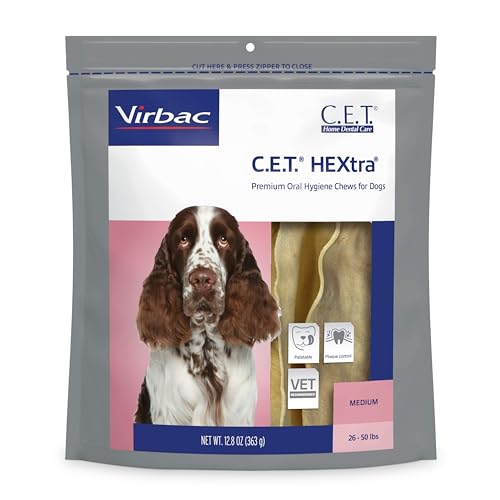
Virbac C.E.T. HEXtra chews bring something most dental chews don’t — a patented chlorhexidine gluconate coating that actively fights bacteria between brushings. That natural abrasion pairs with the 100% beef rawhide to clean teeth from two directions at once.
Medium-sized dogs, 26 to 50 pounds, chew one daily. The poultry flavor keeps reluctant dogs interested.
One caution worth noting: rawhide carries digestive risks for seniors with sensitive stomachs, so monitor your dog closely the first few uses.
| Best For | Medium-sized dogs (26–50 lbs) whose owners want a vet-recommended daily chew that tackles plaque and bad breath through both chemical and mechanical action. |
|---|---|
| Primary Purpose | Dental plaque & tartar |
| Rawhide Free | No |
| Artificial Additives | Preservatives included |
| Breath Freshening | Yes |
| Target Dog Size | 26–50 lb |
| Country of Origin | Not specified |
| Additional Features |
|
- Patented chlorhexidine gluconate coating actively fights bacteria — not just mechanical scrubbing like most chews
- Poultry flavor makes it palatable for picky dogs, supporting a consistent daily routine
- Dual-action formula (chemical abrasive rawhide) gives you more bang for your buck between vet cleanings
- Rawhide poses a real choking and blockage risk, especially for dogs that gulp their chews
- The strong initial odor can be a turnoff for owners
- At $39.78 a bag, it’s pricier than most dental chews on the market
8. Pedigree Dentastix Small Dog Dental Chews
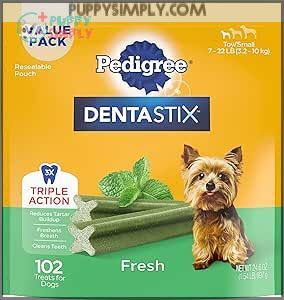
Pedigree Dentastix are a budget-friendly pick for small senior dogs in the 5–22 lb range. The X-shape design scrubs teeth from multiple angles, and the chewy texture is gentle enough for older mouths.
One stick daily controls plaque, tartar, and bad breath — that’s the triple-action promise.
They’re developed with Waltham Science and come in a 102‑treat bag for consistent daily use.
Just note: they contain wheat and artificial colorants, so skip them if your dog has sensitivities.
| Best For | Small and toy breed adult dogs (7–22 lb) whose owners want an easy, once-daily dental hygiene treat to help manage plaque, tartar, and bad breath. |
|---|---|
| Primary Purpose | Dental plaque & tartar |
| Rawhide Free | Yes |
| Artificial Additives | Blue 2, Yellow 5 |
| Breath Freshening | Yes |
| Target Dog Size | 7–22 lb |
| Country of Origin | Not specified |
| Additional Features |
|
- Triple-action formula cleans teeth, cuts tartar, and freshens breath in one daily chew
- X-shape design reaches tough spots, and the chewy texture works well for smaller mouths
- Backed by Waltham Science and comes in a 102-treat bag — great value for consistent daily use
- Contains wheat, gluten, and artificial colorants (Blue 2, Yellow 5) — not ideal for dogs with food sensitivities
- Only sized for dogs up to 22 lb, so larger breeds are out
- Doesn’t replace brushing or professional dental cleanings — it’s a supplement, not a solution
9. Virbac CET Veggiedent Dog Dental Chews
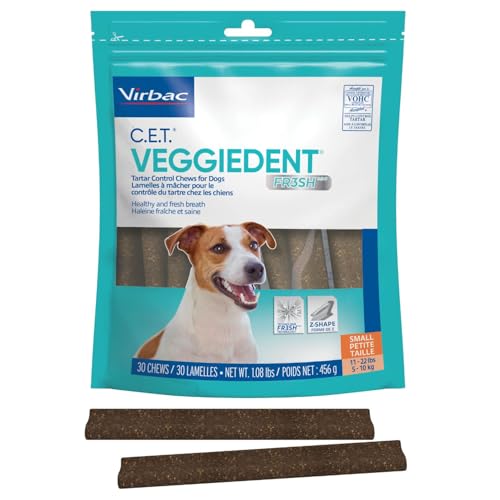
Plant-based and VOHC-approved, these chews punch well above their weight for senior oral care. The patented Z-shape reaches between teeth and along the gumline — angles a straight stick simply can’t cover.
Each small chew delivers 48 kcal, so calorie tracking stays easy. The FR3SH formula adds erythritol, pomegranate, and inulin for fresher breath and gentle gut support.
Gluten-free and soy-based, it’s a smart fit for seniors with sensitive stomachs. One chew daily keeps things consistent.
| Best For | Small-breed dog owners (11–22 lbs) who want a vet-approved, plant-based daily chew to fight tartar and freshen breath without brushing. |
|---|---|
| Primary Purpose | Dental plaque & tartar |
| Rawhide Free | Yes |
| Artificial Additives | None listed |
| Breath Freshening | Yes |
| Target Dog Size | 11–22 lb |
| Country of Origin | Not specified |
| Additional Features |
|
- VOHC-approved for real tartar control — not just a marketing claim
- The Z-shape design gets into the spots a straight chew misses, like between teeth and along the gumline
- Gluten-free with added inulin, so it’s gentle on dogs with sensitive stomachs
- At $27.31 a bag, it’s pricier than a lot of comparable dental chews
- The firm texture can be tough on dogs with sensitive or damaged teeth
- Owners of smaller dogs often have to break chews in half, which defeats the purpose of that Z-shape
10. Nutri Vet Dog Dental Soft Chews
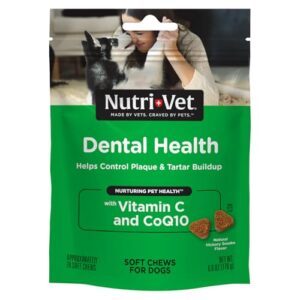
At just 5.3 calories per chew, Nutri Vet’s soft dental tabs are easy to work into your senior dog’s daily routine without upsetting their diet. The veterinarian-formulated blend includes coenzyme Q10, zinc, and quercetin — antioxidants that target gum inflammation right at the source.
Hickory smoke flavor keeps picky seniors interested.
One thing to watch: some chews harden over time, and the small size can be swallowed whole by larger dogs.
| Best For | Small to medium senior dogs with sensitive teeth or those who struggle with hard chews or brushing. |
|---|---|
| Primary Purpose | Dental plaque & tartar |
| Rawhide Free | Yes |
| Artificial Additives | None listed |
| Breath Freshening | Yes |
| Target Dog Size | All sizes |
| Country of Origin | USA |
| Additional Features |
|
- Veterinarian-formulated with CoQ10 and antioxidants that help fight gum inflammation and reduce plaque buildup
- Hickory smoke flavor makes them appealing even to picky eaters
- Soft texture is gentle on seniors, puppies, or dogs with dental issues
- Chews can harden over time and may be swallowed whole by larger dogs, reducing any mechanical cleaning benefit
- Contains garlic powder, which is a concern in multi-pet households with cats or dogs prone to overconsumption
- Results vary — some owners see little to no improvement in breath or overall dental health
Chews Senior Dogs Should Avoid

Not every chew on the market is safe for a senior dog’s teeth and stomach. Some popular options can actually do more harm than good, especially for older dogs with weaker teeth and sensitive digestion.
Here are the ones worth skipping.
Antlers and Slab-fracture Risk
Antlers look natural, but they’re one of the riskiest chews for older dogs. A hardness comparison with dental chews shows antlers rival bone itself — they won’t soften in the mouth. That bite force concentration onto back teeth raises serious fracture risk.
Watch for these fracture warning signs:
- Dropping the chew suddenly
- Blood on the antler or gums
- Pawing at the mouth
- Refusing food on one side
- Swelling below the eye
Dental imaging detection often reveals damage owners never noticed. Safer chew alternatives — soft, dentable options — protect those aging teeth far better.
Cooked Bones and Splinter Hazards
Cooked bones carry real danger — and senior dogs are especially vulnerable. Bone brittleness increases dramatically after cooking, meaning hard bones snap into sharp splinters rather than breaking cleanly. That’s when oral tissue damage happens fast.
| Risk | What It Causes |
|---|---|
| Sharp Splinters | Cuts gums and tongue |
| Esophageal Blockage | Painful swallowing, gagging |
| GI Perforation Risk | Emergency surgery needed |
| Risks of Hard Chews in Older Dogs | Slower gut worsens obstruction |
Skip cooked bones completely.
Hard Nylon Chews and Chipped Teeth
Hard nylon chews look harmless — but Nylon Bite Force transfers directly to tooth surfaces with no give. That’s a real Crack Propagation Risk for senior teeth already worn thin. Premolar Stress Patterns make the upper carnassial tooth especially vulnerable to fractures.
Watch for these Dental Trauma Indicators:
- Sudden refusal to chew
- Blood on the toy
- One-sided chewing
- Bad breath within days
- Swelling below the eye
Material Hardness Scale matters here — if your thumbnail can’t dent it, it’s too hard. Risks of Hard Chews in Older Dogs include tooth fractures that need extraction. Unlike Veterinary Oral Health Council-approved chews that target senior dog dental disease, nylon offers zero mouth safety and zero dental benefit.
Hooves That Can Scrape Gums
Nylon chews damage teeth — hooves go further and hurt the gums. Made from keratin, hoof shells stay rigid even after a full chewing session. Sharp Hoof Rims and Brittle Edge Fractures scrape delicate gum tissue, especially in seniors with recession. Chew Cracking Patterns leave rough points that cause real Gum Tissue Irritation. Unlike VOHC Approved Dental Chews, hooves offer zero Veterinary Oral Health Council recognition.
| Risk Factor | What Happens | Senior Impact |
|---|---|---|
| Keratin Hardness | Shell stays stiff throughout chewing | Gum abrasions worsen |
| Chew Cracking Patterns | Edges splinter into sharp points | Cuts soft gum tissue |
| Brittle Edge Fractures | Exposed layers scrape the gumline | Slow healing in older dogs |
For Chew safety, skip hooves entirely.
Rawhide and Digestive Blockage Concerns
Rawhide is one of the bigger risks hiding in plain sight. Unlike safer soft alternatives, rawhide fragments don’t break down quickly — and with senior digestion slowness, swallowed chunks can sit in the gut for hours. Rawhide fragment size matters enormously here.
A piece that’s barely digestible can trigger gastrointestinal blockage signs like vomiting or lethargy. Supervised chew sessions — and veterinary guidance on senior dog nutrition — remain your best protection.
Plaque, Tartar, and Breath Control
Dental chews don’t just freshen breath — they actually work against plaque and tartar in a few different ways.
shape, texture, and ingredients all play a role in keeping your senior dog’s mouth healthier with every chew.
how it all comes together.
Ridged Surfaces That Scrub Teeth
Think of ridges like tiny scrub brushes pressed against your dog’s teeth. Ridge geometry benefits seniors most because soft flexible ridges compress around uneven enamel, improving tooth surface contact without cracking aging teeth.
Groove debris channels carry loosened plaque away as your dog chews. Wear pattern coverage means fresh edges keep working bite after bite — that’s real mechanical cleaning action supporting plaque and tartar reduction.
Z-shaped Designs for Better Contact
Z-shaped design does something a straight stick simply can’t — it creates multi-plane contact across your senior dog’s back teeth with every bite.
Those angled bite zones mean:
- Side tooth coverage hits premolars and molars where plaque builds fastest.
- Rotational wear distribution spreads chewing across the full chew.
- Center grip optimization gives seniors a natural first bite point.
Soft dental chews with this VOHC approved geometry deliver real plaque reduction where it counts.
Saliva Stimulation for Natural Cleaning
Every bite your senior takes does more than scrub — it triggers saliva flow that rinses, buffers, and lubricates the whole mouth.
| Saliva Benefit | How It Helps | Why Seniors Need It |
|---|---|---|
| Mouth Rinsing | Washes loose plaque off teeth | Older dogs chew less often |
| pH Buffering | Neutralizes acids after eating | Aging mouths stay more acidic |
| Lubrication Benefits | Softens chews from outside in | Reduces jaw fatigue naturally |
Soft dental chews keep that rhythm going longer. Dry mouth management matters too — some senior medications reduce saliva, so a vet-recommended dental chew and fresh water daily support senior dog oral health consistently.
Breath-freshening Ingredients and Additives
Bad breath isn’t just unpleasant — it’s a sign of bacterial activity in your dog’s mouth. The right ingredients tackle it at the source:
- Chlorophyll Volatile Binding neutralizes sulfur compounds that cause odor
- Spearmint Aroma Masking suppresses bacteria while freshening breath immediately
- Probiotic Microbial Competition restores healthy oral balance within days
- Baking Soda pH neutralizes acid and breaks down organic debris
These breath freshening compounds are found in vet-recommended dental chews with VOHC certification.
How Regular Chewing Supports Gum Health
Regular chewing does more than clean teeth — it sparks a chain reaction beneath the surface. The bite-and-release motion triggers gum tissue perfusion, moving fresh blood through sensitive tissue.
That stimulation helps collagen stimulation and enzyme activation, keeping gum structure resilient. It also drives a microbial balance shift and antioxidant release that slow gum disease progression.
One vet recommended dental chew daily makes a real difference.
How Often Seniors Should Chew

Knowing how often to give your senior dog a dental chew matters just as much as picking the right one. Too little, and you won’t see real dental benefits — too much, and those extra calories add up fast.
Here’s what to keep in mind before building a chewing routine.
Daily Use Versus Several Times Weekly
Daily use wins — and the numbers make it clear. Plaque starts hardening into tartar within 48–72 hours, so every skipped day is a real risk.
Here’s how frequency shapes oral health outcomes:
- Plaque Formation Window closes fastest with daily usage
- Exposure Gap Timing stays under 24 hours with daily chews
- Total Contact Minutes reach 70 weekly versus just 30 with three sessions
- Compliance with Label underpins Veterinary Efficacy Claims tied to VOHC testing schedules
- Understanding Senior Dog Oral Health means recognizing that frequency of chewing for effective oral hygiene matters as much as the chew itself
One vet recommended dental chew daily keeps that window tight.
Portion Control for Calorie Management
Frequency matters — so do calories. Dental chews count toward your dog’s daily treat budget, ideally no more than 10 percent of total calorie intake. A senior on 800 kcal daily has just 80 kcal to spare.
Calorie budgeting means checking labels carefully. Splitting chew portions helps manage calorie intake, and meal offset strategies — trimming a small scoop from dinner — keep weight management on track.
Adjusting by Dog Size and Weight
Size matters more than breed. Weight-based sizing is the rule — not what your dog looks like.
A 22-pound senior fits Petite in Greenies but Medium in Dentastix. That’s size label variance in action.
Check your dog’s current weight often. Age-related muscle loss can shift sizing without obvious changes.
Mouth circumference fit and breed-agnostic sizing make sure the chew works safely and comfortably.
Matching Frequency to Medical Conditions
Your dog’s health conditions change everything about chew frequency.
Diabetes Timing means keeping chews on a fixed schedule — random extras can throw off insulin.
Pancreatitis Fat Limits mean one low-fat chew beats several richer ones.
Kidney Disease Planning and Food Allergy Scheduling require matching every chew to your dog’s specific diet.
For Obesity Calorie Control, chews count toward daily totals — always.
Watching for Chewing Fatigue or Discomfort
Beyond scheduling, watch how your senior dog actually chews. Chew Pause Patterns — short bites, then stopping, then trying again — often signal Bite Strength Decline. Dropping Chew Signs and shortened Chew Duration Limits tell you the texture is too firm.
These Mouth Pain Indicators matter. Switch to softer, more digestible soft chews, and follow your veterinary recommendation before continuing.
Buying Tips for Senior Dog Chews
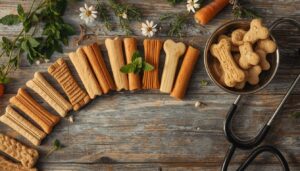
Shopping for senior dental chews doesn’t have to feel overwhelming. A few smart checks at the store can make all the difference between a chew that helps and one that harms.
Here’s what to look for before you buy.
Check Texture, Size, and Dentability
Before you buy, run a quick thumbnail test: press your nail into the chew. It should dent. That one check tells you more than any label claim.
- Compression resistance matters — soft dental chews should yield, not push back.
- Chew length and cross‑section width must match your dog’s weight class.
- Surface hardness should allow senior‑friendly, VOHC‑accepted cleaning without risking fractures.
Choose Formulas for Sensitive Stomachs
If your senior dog has a sensitive stomach, the formula matters as much as the texture. Look for single protein recipes with gentle starch sources like potato or tapioca — they’re easier to digest and simpler to troubleshoot.
Hydrolyzed protein options work well for allergy-prone dogs.
Gut-friendly additives like prebiotic fiber support digestion without harsh fillers.
Fewer ingredients almost always means fewer problems.
Look for Low-fat Senior Options
Fat adds up faster than you’d think. Always check the crude fat analysis and calories per treat figures — not just low-fat marketing claims on the front of the pack.
Look for:
- Single-digit crude fat percentages
- Under 40 kcal per treat for weight-friendly sizing
- VOHC Approved Dental Chews with lean formulas
- Veterinary diet alignment for pancreatitis-prone seniors
- "Weight management" labels as a reliable senior-friendly screening tool
Match Chews to Dental and Joint Needs
Some senior dogs need more than clean teeth — they need joint support too. That’s where Dental‑Joint Synergy matters.
Look for soft dental chews that combine a VOHC‑approved texture with glucosamine or MSM. Check Weight‑Based Dosing on the label, confirm Ingredient Compatibility with any existing conditions, and prioritize Texture‑Strength Matching for your senior dog’s bite.
Vet‑Guided Selection keeps both dental chews and joint support working together.
Ask Your Vet Before Switching Brands
Your vet knows your dog’s full picture — medical history review, allergy screening, and medication interactions included. Before switching brands, a quick dental health assessment can reveal sensitivities you’d never spot on a label.
Budget considerations matter too, so ask about vet-approved treats that balance cost and quality. Choosing dental chews for senior dogs is easier with guidance on VOHC certification and what it actually means for your dog.
Frequently Asked Questions (FAQs)
Are dental chews good for senior dogs?
Yes, dental chews are good for senior dogs. Vet-approved treats with soft texture support plaque reduction and gum health.
Veterinary endorsement and health outcome studies confirm regular use benefits aging mouths meaningfully.
What words do dogs hear best?
Dogs hear plosive consonants — "k," "p," and "t" sounds — most clearly. Sharp command sounds cut through noise.
Consistent cueing and familiar word pairings work best. Tone delivery matters just as much as the word itself.
Can dental chews replace professional teeth cleanings?
No, they can’t.
Dental chews help with plaque reduction and bacterial biofilm control, but they can’t reach below the gumline. Deep gum disease needs veterinary assessment — chews are adjunctive oral hygiene, not a replacement.
At what age is a dog considered senior?
Size-based cutoff matters here. Small breeds hit senior status around 11–12 years. Large dogs get there by 7– Giant breeds? As early as Veterinary guidelines use life-stage charts tied to age-weight correlation.
How do dental chews affect dogs with diabetes?
Carbs in dental chews can spike blood sugar. Time them with meals so insulin is active. Match calories by trimming the meal to avoid glycemic disruption.
Check for xylitol — it’s toxic.
Should dental chews be given before or after meals?
After meals is the safer bet. It promotes stomach comfort, digestive tolerance, and swallowing safety.
Your senior dog is calmer, less grabby, and more likely to chew gently when hunger isn’t driving the moment.
Can dental chews cause allergic reactions in seniors?
Yes, they can. Ingredient cross-contact, allergens like soy or wheat, and immune sensitivity in senior dogs can trigger skin reaction signs. Veterinary allergy testing helps identify triggers fast.
Conclusion
Every chew your senior dog takes from here forward is either helping or hurting. That’s not meant to scare you—it’s meant to sharpen your eye.
The right dog dental chews for senior dogs do quiet, steady work: softening plaque, protecting fragile enamel, and keeping gum tissue healthy through the years that matter most.
You already know what’s at stake. Now you have everything you need to make the safer choice.
- https://www.petmd.com/vet-verified/best-dental-chews-dogs
- https://www.webmd.com/pets/dogs/dog-dental-treats
- https://www.technavio.com/report/dog-dental-chews-market-industry-analysis
- https://pmc.ncbi.nlm.nih.gov/articles/PMC7511057/
- https://caninechews.com/blogs/news/healthy-dog-chews-in-2026-why-long-lasting-natural-treats-are-a-must-for-modern-dogs?srsltid=AfmBOooESE__-7PAJQqlSDqGBhT7tAJ2_ArSl9TO7Y72750cHO20UJ2L