This site is supported by our readers. We may earn a commission, at no cost to you, if you purchase through links.
A Greyhound can lose dangerous amounts of body heat in under ten minutes at 35°F—faster than most owners expect, and faster than the dog will visibly protest. That’s the quiet problem with single-coat dogs: their fur looks functional, but without a dense undercoat to trap warm air against the skin, it’s closer to a thin shirt than a winter jacket. Wind, rain, and even damp ground strip away what little warmth they hold.
temperature sensitivity isn’t a quirk of small breeds or pampered pets—it’s a physiological reality that affects everything from walk length to what gear your dog actually needs.
Table Of Contents
- Key Takeaways
- Do Single-Coat Dogs Get Cold?
- How Single Coats Affect Warmth
- Which Dogs Feel Cold Faster?
- Safe Outdoor Temperatures Explained
- Cold Stress Signs to Watch
- Wind, Rain, and Snow Risks
- Best Winter Gear for Dogs
- Winter Walks Without Overcooling
- Prevent Hypothermia and Frostbite
- When to Call The Veterinarian
- Frequently Asked Questions (FAQs)
- Conclusion
Key Takeaways
- Single-coat dogs lack the dense undercoat that traps warm air against the skin, so cold, wind, and wet conditions strip their body heat far faster than most owners expect.
- Size, age, body fat, and health all shape how quickly a dog loses heat—lean sighthounds, puppies, seniors, and dogs with circulation problems face the highest risk.
- Shivering, paw lifting, hunching, and sudden lethargy are early warning signs that your dog is already losing the cold battle and needs to go inside immediately.
- A well-fitted, chest-covering coat and shortened walks timed to the warmest part of the day are your most reliable tools for keeping a single-coat dog safe in winter.
Do Single-Coat Dogs Get Cold?

Yes, single-coat dogs really do feel the cold — and they feel it faster than most people expect. Their fur simply isn’t built to hold heat the way a double coat does.
Even among thick-coated breeds, cold tolerance varies more than you’d think — factors like age, health, and coat condition all play a role.
Here’s why that happens and what’s actually going on beneath the surface.
Why Single Coats Insulate Less
Think of a single coat like a thin blanket with no batting inside—it covers, but it doesn’t truly insulate. Without an undercoat, your dog loses the Air Pocket Loss advantage that traps warmth close to the skin. Multi-Layer Redundancy simply doesn’t exist here.
Key reasons single-coat dogs lose heat faster:
- Fur Compression Impact flattens the coat during movement or rest, eliminating trapped air.
- Moisture Evaporation Cooling accelerates dramatically when thin fur gets wet.
- Higher Thermal Conductivity skin exposure speeds heat transfer to surrounding air.
- Wind penetrates straight through, replacing warmed air continuously.
- Less loft means cold sensitivity in dogs escalates quickly.
How Fur Density Affects Heat Loss
Fur density is the real difference-maker. A thin coat simply can’t build meaningful Air Pocket Volume, so Wind Penetration reaches the skin quickly—especially below 1,000 hairs per square centimeter.
That gap cuts Conductive Resistance and speeds Radiant Heat Transfer outward.
Hair Length Interaction matters too: shorter, sparser fur compounds cold sensitivity in dogs, explaining why heat loss in small dogs with single coats escalates so fast outdoors.
The insulating effect relies on air trapped in fur to reduce heat loss.
Why Some Single-coat Breeds Stay Heat-tolerant
That heat-loss disadvantage actually flips in summer. Single coat breeds like the Vizsla and Basenji use their thin coat to their advantage through four built-in cooling mechanisms:
- Skin exposure speeds evaporation during panting, efficiency peaks.
- Coat color reflectivity reduces radiant heat absorption.
- Ear heat dissipation releases core warmth through thin, well-perfused tissue.
- Shade seeking behavior cuts overall heat load naturally.
How Single Coats Affect Warmth

Understanding why single-coat dogs feel cold faster starts with how their coat actually works. There’s no fluffy undercoat doing the heavy lifting here — one layer of fur standing between your dog and the elements.
A few key factors explain why gap in warmth matters more than most owners realize.
Lack of Undercoat and Trapped Air
Your dog’s single layer coat is missing something essential: that dense, fluffy undercoat that acts like a built-in sleeping bag. Without it, air pocket collapse happens constantly — warm air that should stay trapped near the skin just drifts away through convection amplification.
This insulation gap means layerless heat transfer occurs freely, raising thermal conductivity and quietly draining your dog’s warmth with every cold gust.
Faster Heat Loss Through Thin Fur
Thin fur doesn’t just insulate less — it actively invites heat out. single layer coats allow airflow penetration straight to the skin, stripping away warmth through convection.
With fewer hair layers, infrared scattering is minimal, so radiative cooling accelerates unchecked.
higher skin conductivity means heat escapes faster where fur is sparsest. For small breeds, an already elevated surface area ratio makes this heat loss even more pronounced.
Why Body Shape Changes Cold Sensitivity
Body shape quietly determines how fast your dog loses heat.
Five factors drive cold tolerance variability in single-coat breeds:
- Surface Area Ratio — a higher surface area to volume ratio in dogs means more skin exposed per pound of body weight.
- Subcutaneous Fat Insulation — leaner builds lose warmth faster with less fat buffering the cold.
- Muscle Heat Generation — low muscle mass reduces internal warmth production.
- Appendage Length Effects — longer legs and ears increase heat-escape surfaces.
- Blood Flow Regulation — extremities cool first when circulation pulls inward.
Size and heat retention are directly linked — smaller, leaner single-layer coat dogs face hypothermia risk sooner.
Which Dogs Feel Cold Faster?

Not every single-coat dog feels the cold the same way. Size, age, body type, and health all play a role in how fast a dog loses heat.
certain dogs – here’s what puts certain dogs at greater risk.
Small Dogs and Toy Breeds
Small breeds like Chihuahuas pack a lot of surface area into very little body mass — meaning heat escapes fast. Thin coats and missing undercoats make this worse. Their Metabolic Heat Needs are higher relative to body size, so caloric intake increase matters in winter.
Carrier Draft Protection helps during brief outings, and indoor heating solutions keep core temps stable between walks.
| Factor | Small Breeds | Larger Breeds |
|---|---|---|
| Heat Loss Rate | Fast | Slower |
| Seasonal Coat Changes | Minimal | More significant |
| Hypothermia/Shivering Risk | Higher | Lower |
Puppies and Senior Dogs
Puppies and senior dogs sit at opposite ends of life, but cold hits both hard. Puppies haven’t finished building muscle or fat stores, so their caloric needs spike and immune vulnerability rises fast in the cold.
Senior dogs face joint pain, reduced circulation, and muscle loss.
Both need protective clothing for dogs, careful hydration management, and shorter outdoor exposure to avoid hypothermia.
Thin, Lean, and Low-body-fat Dogs
Lean sighthound-type builds—think Whippets or Vizslas—lose heat faster because low body fat means less insulation buffering temperature drops. Body Condition Scoring helps you gauge this risk.
Their high Surface Area Ratio accelerates cooling, and thin fur compounds it.
Watch for:
- Increased Caloric Intake Requirements in cold weather
- Earlier signs your dog is cold, even above safe temperature thresholds for dog safety
- Paw Insulation Challenges from reduced fat padding
Dogs With Illness or Poor Circulation
A sick dog is already fighting on two fronts. Conditions like anemia, heart disease, vasculitis, and shock reduce circulation to the skin and extremities — meaning ears, paws, and tails run colder than they should.
Anemic cold sensitivity, cardiac circulation issues, and shock perfusion danger all increase hypothermia risk fast.
Pale gums signal trouble.
Even mild temperatures can trigger cold-induced illness in pets with compromised health.
Safe Outdoor Temperatures Explained
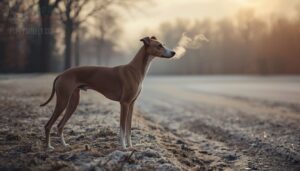
Not every cold day hits your dog the same way, and the temperature outside tells you a lot. For single-coat dogs, there are a few key thresholds worth knowing before you clip on the leash.
Here’s what each range actually means for your dog’s safety.
When 45°F and Above is Usually Fine
Above 45°F, most single-coat dogs handle brief outdoor exposure well—especially when conditions stay dry and calm.
Mild Weather Activity helps generate Metabolic Heat Production, which thin coats alone can’t provide.
A Dry Coat Advantage and Sunlight Warmth Boost make a real difference here:
- Active movement keeps body heat steady
- Dry fur retains whatever warmth exists
- Sunlight offsets some heat loss naturally
- Short outings suit small breeds best
Why 30°F to 45°F Needs Caution
The 30°F to 45°F range is where thin coats start to fail. Wind and damp air widen the Thermal Conductivity Gap quickly, pulling warmth away before your dog’s Exercise‑Induced Warmth can compensate. Dogs with a high Surface‑to‑Volume Ratio—small builds, long legs—and those with Age‑Related Vulnerability cool the quickest here.
| Factor | Effect at 30–45°F | Protective Measures for Dogs in Cold Weather |
|---|---|---|
| Wind chill | Accelerates heat loss sharply | Add a wind-resistant coat |
| Wet fur | Raises Thermal Conductivity Gap | Dry thoroughly after walks |
| Metabolic Heat Demand | Rises to maintain core temp | Keep walks short and active |
| Age‑Related Vulnerability | Seniors lose warmth faster | Limit outdoor time, add layers |
| Signs of Cold Discomfort in Dogs | Shivering, paw lifting | Head inside immediately |
Watch for early Signs of Cold Discomfort in Dogs—shivering signals Hypothermia risk is already climbing.
Why Below 30°F Becomes Risky
Once temps drop below 30°F, the situation changes fast. Your dog’s body can’t generate heat quickly enough to offset convective heat loss from the cold air, triggering a core temperature drop even during short outings.
Energy expenditure surges just to keep shivering going. Peripheral circulation reduction leaves ears, paws, and tails dangerously close to the tissue freezing threshold—meaning hypothermia and frostbite become real, immediate risks.
Why Under 20°F Needs Protection
Below 20°F, core temperature decline can happen within minutes—not hours. Your metabolic heat generation simply can’t keep pace with that level of cold.
Frostbite onset timing accelerates sharply, especially in ears, paw pads, and tail tips. Surface area exposure matters a lot here.
Protect your single-coat dog with:
- An insulated, water-resistant coat covering the chest and belly
- Booties or paw wax as paw protection strategies for winter walks
- Frequent indoor breaks to interrupt cold stress buildup before behavioral cold cues appear
Cold Stress Signs to Watch
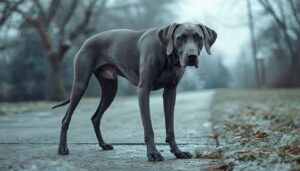
Your dog can’t tell you when too cold, so their body does the talking instead. Knowing what to look for makes all the difference between catching a problem early and dealing with something serious.
Watch for these signs that your single-coat dog is struggling with the cold.
Shivering and Trembling
Shivering is your dog’s first distress signal — don’t dismiss it. When ambient temperature drops past their shivering thresholds, the hypothalamus triggers thermoregulatory shivering, rapidly contracting skeletal muscles to boost metabolic heat production.
Shivering is your dog’s first distress signal — the body’s urgent call to generate heat before the cold wins
Stress trembling from adrenaline tremor can look identical, so context matters.
For hairless dogs or thin dog coat breeds, cold stress in animals escalates fast, and unchecked shivering can slide toward hypothermia.
Curling Up and Hunching
When your dog curls into a tight ball or hunches their back, that’s bundle heat retention in action — their body’s instinct to shrink the surface that cold air can reach. Compact posture benefits them by cutting reduced convective loss and boosting internal heat transfer between warmer core zones.
Watch for these posture energy balance signals:
- Tail tucked under the belly
- Legs drawn close to the chest
- Back rounded and head lowered
- Belly hidden from cold ground contact
- Hunching while standing, not just lying down
Paw Lifting or Refusing to Walk
Cold ground acts fast on unprotected paws. Surface Temperature Triggers include ice, snow, and frozen pavement — all of which cause Weight Shift Behaviors like repeated lifting or a shortened, hesitant stride.
These Gait Alteration Patterns and Neuromuscular Pain Signals can also reflect Paw Injury Indicators such as cracked pads or debris.
Dog boots offer reliable cold weather paw protection, especially for hairless dogs.
Whining, Whining, or Seeking Warmth
Your dog’s whining is a vocal heat signal worth taking seriously.
Watch for these Body Language Cues paired with Whine Timing Triggers — usually right after outdoor exposure:
- Hunching or curling up near a heater
- Lifting paws while seeking warmth and proximity to you
- Restless repositioning with continuous whining
Shelter Seeking Behavior and Warmth Proximity Preference together confirm cold discomfort. Relief comes quickly once warmth is provided.
Lethargy and Slowed Movement
A dog that suddenly loses its spark mid-walk isn’t being lazy — it’s telling you something urgent.
| Cold Stress Sign | What’s Happening |
|---|---|
| Lethargy | Energy Conservation kicks in, slowing responses |
| Muscle Stiffness | Circulatory Constriction limits warm blood to limbs |
| Reduced Coordination | Nerve-muscle function drops, causing unsteady movement |
Lean breeds like Greyhounds show these Behavioral Changes fastest. Recognizing signs of cold stress in dogs early — especially through your dog’s coat condition and movement — makes cold weather precautions for dogs far more effective.
Wind, Rain, and Snow Risks
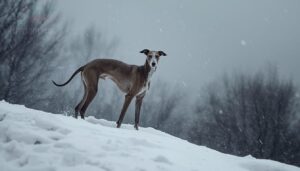
Cold air alone isn’t always your dog’s biggest threat in winter. Wind, wet fur, snow, and damp ground can each strip warmth far faster than the thermometer suggests.
Here’s what’s actually working against your single-coat dog when the weather turns rough.
How Wind Chill Increases Heat Loss
Wind isn’t just uncomfortable—it’s a heat thief. Through Forced Convection, moving air strips away the warm Boundary Layer Loss sitting right against your dog’s coat, triggering Heat Transfer Acceleration before you’ve noticed the drop.
The Wind Chill Index compounds cold sensitivity fast:
- Airflow Gap Exposure bypasses thin fur entirely.
- Wind Chill Effect lowers felt temperature several degrees.
- Heat loss mechanisms accelerate with every mph increase.
- Thermoregulation in dogs fails faster without windbreak shelter.
Why Wet Fur Cools Dogs Faster
Rain changes everything. Water Conductivity pulls heat from your dog’s skin far faster than cold air alone, collapsing the fur’s natural loft and eliminating Reduced Insulation Loft entirely. Moisture-Induced Heat Transfer then works against thermal regulation in dogs continuously.
| What Happens | Why It Matters |
|---|---|
| Wet coat loses air pockets | Evaporative Heat Loss accelerates |
| Vasoconstriction Amplification kicks in | Core warmth drops faster |
Dog coat type influences warmth and cold tolerance considerably when wet.
Why Snow Exposure is More Dangerous
Snow is sneakier than rain.
Beyond Snow Meltwater Cooling that soaks into your dog’s coat and triggers rapid heat loss, UV Reflection off fresh snow can reach 80–90%, adding hidden stress.
Snow Surface Conductivity pulls warmth straight through paws, accelerating hypothermia risk quickly.
- Meltwater refreezes against fur, eliminating insulation
- Frostbite Risk spikes in extremities within minutes
- Snow Glare Damage stresses eyes during bright days
- Ice crystals cling to single-coat fur
- Paw protection strategies for winter walks become non‑negotiable here
How Damp Ground Affects Paw Comfort
Damp ground does quiet damage. Moisture softened pads tear more easily on rough or gravelly surfaces, and mud induced irritation builds fast when grit stays trapped between toes. Lingering wetness creates real yeast overgrowth risk in warm skin folds.
Paw drying techniques like thorough toweling, paw wax, and dog boots work as bootie moisture barriers — your front line for paw protection strategies for winter walks.
Best Winter Gear for Dogs
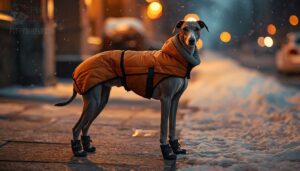
The right gear can make a real difference when temperatures drop and your single-coat dog has no undercoat to fall back on.
Not every product is worth your money, but a few key items genuinely protect against cold, wet, and icy conditions. Here’s what to look for.
Choosing a Warm, Snug Coat
Think of a good dog coat as a miniature parka—it needs to do several things at once.
Look for a wind-blocking shell with tight fabric weaving to slow heat loss, plus meaningful insulation loft to trap warm air close to the body.
A moisture-wicking lining, seam sealing, and adjustable fit straps keep the double layer coat snug without restricting movement.
Why Chest and Belly Coverage Matters
Coverage isn’t just comfort—it’s function. Your dog’s chest holds major blood vessels, making Chest Blood Flow a key target for Vascular Heat Retention.
The belly loses heat fast due to high Belly Surface Area and minimal fur. A dog coat with full Core Insulation Benefits hits these Thermal Comfort Zones:
- Shields the chest from convective heat loss
- Reduces belly exposure to ground-level cold
- Slows overall temperature drop at the torso
- Promotes better cold tolerance during walks
- Delays shivering by protecting core circulation
Dog coat fit guidelines matter—proper coverage changes everything.
When Booties Protect Paws
Booties do more than keep paws dry—they block ice, salt, and frozen ground that drain heat fast. Look for non-slip grip patterns, adjustable elastic straps for a secure fit, and temperature-regulating liners that buffer cold transfer.
An easy removal mechanism matters too, so post-walk checks stay quick.
Combine dog boots with paw wax compatibility for layered paw protection strategies on winter walks, preventing frostbite in canine paws effectively.
How Reflective Gear Improves Safety
Winter walks often happen at dusk or dawn, when visibility drops fast. Reflective gear gives drivers Enhanced Driver Detection and a Nighttime Visibility Boost that plain fabric simply can’t match.
Look for these features in reflective clothing for dogs:
- 360‑Degree Reflectivity — coverage from all angles, not just front-facing
- Motion‑Triggered Light — reflective strips on legs catch headlights mid‑stride
- Prismatic vs Glass‑Bead construction — prismatic reflects farther in dim conditions
- Full dog coat visibility — outlining body shape so drivers gauge size instantly
Picking Water-resistant Materials
Wet fur steals warmth faster than cold air alone — so the material in your dog’s coat matters more than most people realize.
| Feature | What It Does | Why It Matters |
|---|---|---|
| DWR Finish Durability | Beads water off the shell | Delays saturation in light rain |
| Breathable Membrane Choice | Releases trapped vapor | Prevents clammy buildup underneath |
| Quick-Dry Lining | Sheds moisture fast | Reduces post-walk chill |
Prioritize Seam Sealing Techniques and Reproofing Maintenance to keep any waterproof dog coat performing wash after wash.
Winter Walks Without Overcooling
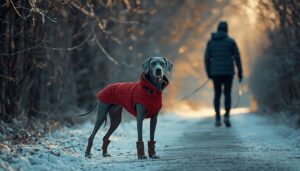
Winter walks don’t have to mean a freezing dog—you just need a smarter routine. A few simple habits can make a real difference in how well your single-coat dog tolerates the cold.
Here’s what to do before, during, and after each outing.
Keeping Walks Short and Frequent
Think of each outing as a short burst, not a marathon. Shorter trips limit total cold exposure and give you natural checkpoints to spot early hypothermia signs before they escalate. Smart energy management and hydration planning also are easier when your dog resets indoors between bouts.
- Keep each outing to 10–15 minutes max
- Watch pace control — steady movement retains warmth better than stopping
- Follow winter walking guidelines for dogs: multiple short trips beat one long one
- Use transport efficiency — minimize waiting time outside before and after
- Treat shivering or refusal to move as a "stop now" signal
Timing Outings for Warmer Daylight
Timing matters more than most owners realize. Afternoon Warmth Peak hours — usually late afternoon on clear days — offer the safest window for single-coat dogs.
Sunrise Window Planning helps avoid the coldest morning dips, while Daylight Saving Alignment keeps your schedule synced with actual daylight. Cloud Cover Impact and Wind Chill Scheduling can drop safe outdoor temperature ranges for pets below the 30°F–45°F caution zone fast.
Drying Your Dog After Walks
Once you’re back indoors, don’t let your dog air dry — that lingering dampness pulls heat straight from the skin.
Use the Towel Patting Technique with a firm pat-dry, not rubbing, to avoid Fur Matting.
Follow a Drying Order Sequence: body first, then belly, legs, and Managing Wet Paws last.
A Low-Heat Dryer Use setting works well for stubborn moisture.
Using Indoor Breaks to Restore Warmth
Once your dog is towel dry, the next step is restoring core warmth through smart Heat Source Placement and Recovery Interval Timing.
- Set up an Elevated Bedding Setup away from drafts — Draft Blocking Techniques like closed doors keep the warm bed stable.
- Use Warm Towel Use before settling your dog onto indoor shelter for cold dogs.
- Apply postwalk warming techniques: let your dog curl naturally to limit heat loss.
- Practice temperature monitoring for pets — don’t head back outside until shivering fully stops.
Prevent Hypothermia and Frostbite
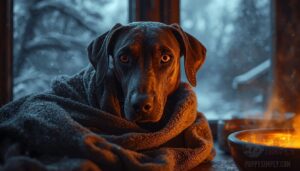
If you think your dog is getting too cold, acting fast makes all the difference. Hypothermia and frostbite can set in quicker than most people expect, especially in a single-coat dog.
Here’s what to do the moment you suspect something’s wrong.
Moving The Dog to a Warm Space
When your single-coat dog comes in stiff and shivering, how you move them matters as much as where you move them. A Gradual Warm Transfer — away from drafts, cold floors, and exterior doors — helps more than rushing them near a heat source.
| Step | What to Do | Why It Matters |
|---|---|---|
| 1 | Draft-Free Relocation away from doors | Stops convective heat loss immediately |
| 2 | Dry Towel Wrap if damp | Eliminates evaporative cooling from wet fur |
| 3 | Insulated Bed Placement on thick bedding | Blocks floor-to-body heat transfer |
| 4 | Calm Indoor Environment, low traffic | Reduces energy spent shivering |
| 5 | Temperature Monitoring for Pets | Confirms recovery; flags lingering cold stress |
Use heat-retaining bedding and indoor dog heating through a warmed room — not a space heater aimed directly at them. Indoor shelter for cold dogs works best when the warm bed stays dry, raised off bare floors, and positioned away from cold walls.
Checking Ears, Paws, and Tail
Once your dog is warm and settled, run your hands over the three spots that lose heat fastest.
Check Ear Flap Temperature first — cold, stiff flaps signal trouble.
Move to Paw Pad Warmth, feeling for firmness or cracking, and note any tucked tail or shivering.
Tail Tip Sensitivity matters too; a chilled tip often reveals lingering cold stress before other signs appear.
Looking for Pale or Bluish Tissue
After checking ears and paws, shift your focus to tissue color. A Mucous Membrane Check reveals early hypothermia — press your dog’s gums and look for pale or bluish color instead of healthy pink.
Nail Bed Coloration and Ear Lobe Cyanosis follow similar patterns.
Central vs Peripheral distribution tells you how serious it is.
Warm-up Color Reversal is reassuring; persistent blue signals a vet call immediately.
Using Lukewarm Water Safely
When warming a hypothermic dog, temperature thresholds matter more than instinct. Lukewarm water—around 98 to 105°F—feels gently warm on your wrist, never hot. That’s your built-in Temperature Check and Burn Prevention test in one.
Keep Short Bath Sessions to a few minutes, then focus on Immediate Drying to prevent evaporative cooling through the dog coat.
Contamination Control means always using fresh water, never reheated leftovers.
When to Call The Veterinarian
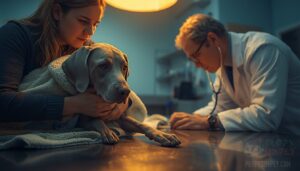
Most cold-related problems in single-coat dogs respond well to home care, but some signs tell you the situation has moved beyond what a warm blanket can fix. Knowing when to pick up the phone and call your vet can genuinely make the difference between a full recovery and a serious outcome.
Watch for any of these warning signs.
Shivering That Does Not Stop
Shivering that stops once your dog is warm and dry? That’s normal recovery.
But persistent tremors after you’ve brought them inside signal something more serious.
Your dog’s muscles are burning energy trying to generate heat, and if they can’t keep up, core temperature keeps dropping.
Do a rectal temperature check — anything below 99°F warrants immediate veterinary intervention. Don’t wait.
Pale Gums or Extreme Lethargy
Pale gums are a red flag you can’t ignore. When your dog’s gums shift from pink to white or gray, blood oxygen levels have dropped dangerously low — a hallmark of hypothermia, but also serious conditions like anemia or babesiosis.
Check for these Emergency Vet Signs immediately:
- Gums that look white, gray, or bluish
- Extreme lethargy — your dog won’t lift their head
- Cold, clammy skin despite being indoors
Call your vet now.
Trouble Walking or Staying Upright
If your single-coat dog suddenly can’t walk straight or keep their balance, don’t wait. Cold exposure can trigger or worsen Neurological Disorders, Muscle Weakness, and Vestibular Dysfunction — all of which show up as stumbling, weaving, or falling.
Sensory Deficits from poor circulation make coordination worse. Combined with lethargy, hunched posture, or a tucked tail, unsteady movement is a veterinary emergency.
Any Frostbite Warning Signs
Frostbite doesn’t announce itself loudly — it creeps in quietly. Check ears, paws, and tail for these warning signs that demand a vet call immediately:
- Numbness shift or pain shift — skin that first stings, then goes silent
- Firm waxy texture — skin feels rigid or shiny instead of soft
- Blistering after rewarming — fluid-filled blisters signal serious cold injury
- Movement impairment or discoloration — pale, gray, or bluish tissue means frostbite has progressed
When Cold Exposure Lasts Too Long
Time matters just as much as temperature. Even if frostbite signs aren’t visible yet, prolonged exposure triggers progressive hypothermia through a slow cycle of vasoconstriction effects, metabolic drain, and energy depletion that’s hard to reverse at home.
Cold-induced illness in pets often peaks after the dog is already inside. If your dog was out too long, call your vet — don’t wait.
Frequently Asked Questions (FAQs)
Do single coat dogs get cold?
Yes, single-coat dogs absolutely get cold. Without a dense undercoat, they lose body heat quickly — making cold tolerance, hypothermia risk, and breed-specific genetics critical factors every owner needs to understand.
Do single-coat dogs sleep differently in winter?
They often do.
Cold ambient temperatures trigger longer rest periods and tighter curling — classic seasonal rest patterns. You’ll notice bed location preference shifting toward heat-retaining bedding and nighttime heat sources as cold tolerance is tested.
Are certain single-coat breeds more cold-resistant?
Not really.
Most single-coat breeds — Greyhound, Whippet, Italian Greyhound, Chihuahua — share low body fat and minimal metabolic heat, making breed-specific cold tolerance in dogs a matter of degree, not true resistance.
How does age affect cold tolerance in dogs?
Age cuts cold tolerance from both ends.
Puppies can’t regulate temperature yet, and senior dogs lose metabolic heat production, muscle mass, and circulatory health — making age-related cold vulnerability in dogs a real concern year-round.
Conclusion
Regarding single coat dogs temperature sensitivity, the margin for error is thin. Your dog won’t always tell you when the cold is winning—they’ll just quietly lose ground.
A well-fitted coat, shortened walks, and eyes sharp enough to catch early shivering are what stand between a safe winter and a vet emergency.
You already know your dog better than anyone. Trust that knowledge, act on what you see, and cold weather stays manageable.
- https://pubmed.ncbi.nlm.nih.gov/29496012/
- https://petkeen.com/why-is-my-dog-shaking-vet-answer/
- https://petcorner.pangovet.com/pet-nutrition/dogs/how-many-calories-does-my-dog-need/
- https://pangovet.com/talk-to-a-vet-online-dog-nutrition/?utm_source=dogster&utm_medium=article&utm_campaign=dog-nutrition&utm_content=do-dogs-feel-the-cold
- https://www.avma.org/resources-tools/pet-owners/petcare/heat-and-cold-safety-tips