This site is supported by our readers. We may earn a commission, at no cost to you, if you purchase through links.
Most training sessions don’t fail because of bad timing or weak rewards. They fail because the treat itself slows everything down. Your dog stops to chew, loses focus, and the moment you wanted to capture slips away. A handful of biscuit chunks the size of dice will do that every time.
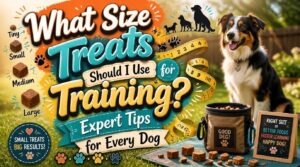
Size matters more than flavor for building fast, reliable responses. A Great Dane and a Chihuahua need wildly different portions, and giving either one the wrong amount can derail the whole exercise. So what size treats should I use for training? The answer depends on your dog’s weight, jaw, and appetite for repetition, and getting it right changes how quickly behaviors stick.
Table Of Contents
Key Takeaways
- Treat size should match your dog’s weight, not their breed, with a simple rule of thumb being no bigger than your dog’s smallest nail, so every reward disappears in one or two seconds without breaking your training rhythm.
- Texture matters as much as size: soft and semi-moist treats work best for fast‑paced or indoor sessions, while crunchy treats are better saved for outdoor training where a little extra chew time won’t cost you your dog’s focus.
- Timing makes or breaks learning, so delivering the treat within one to three seconds of the right behavior (using a clicker or a consistent one‑word marker) is what actually cements the connection in your dog’s mind.
- Keeping treats under 10% of your dog’s daily calories, choosing low‑calorie pieces, and cutting larger treats into smaller bits lets you reward generously and often without risking weight gain.
Best Training Treat Size
Treat size can make or break a training session before it even gets going. The right piece should disappear in one swallow, keeping your dog’s focus on you instead of chewing. Here’s how to size it based on your dog’s weight.
For tiny dogs especially, picking treats that are gentle on teeth matters just as much as size, so check out this guide to keeping your dog’s teeth healthy during training.
Under 25 Pounds
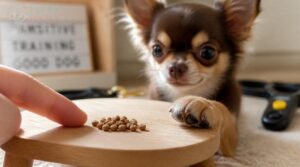
For dogs under 25 pounds, keep treats tiny — we’re talking 1/8 to 1/4 inch, roughly the size of a rice grain or small crumb.
For toy breeds under 10 lbs, go even smaller to eliminate any choking risk.
The treat should disappear in one swallow; no chewing needed, so your training tempo never breaks.
That micro-reward size also protects small breed digestion, letting you deliver 10 to 15 rewards per session without pushing past the daily calorie limit.
Keep treats within the daily caloric limit to avoid overfeeding.
25 to 60 Pounds
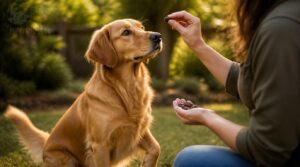
Medium-sized dogs — those between 25 and 60 pounds — do best with treats roughly the size of a blueberry or pea, about 1/8 to 1/4 inch across.
Aim for 0.15 grams per bite to keep rewards quick and calorie-light. Soft or semi-moist textures hold that size consistently, so every reward lands at the same pace without fumbling or breaking apart mid-session.
Over 60 Pounds
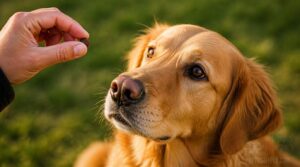
Once you move past that blueberry-sized sweet spot, large dog rewards shift slightly bigger — but not by much.
For dogs over 60 pounds, aim for grape- to Cheerio-sized bites. Keep these rules in mind:
- Stay under ¼ inch to prevent large breed swallowing delays
- Soft textures reduce big dog choking risk
- Each training treat should clear in two seconds
- Match treat size to your dog’s pinky nail
Nail Size Rule
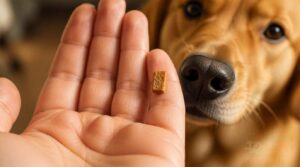
Here’s the Nail Size Rule section:
A quick trick that works across all weight categories: the treat should be no bigger than your dog’s smallest nail. That’s your built-in measuring tool, right on your hand.
| Dog Weight | Recommended Bite Size |
|---|---|
| Under 25 lbs | 1/8 – 1/4 inch |
| 25–60 lbs | 1/4 – 1/2 inch |
| Over 60 lbs | 1/2 – 3/4 inch |
Standardize by weight, not breed, and you’ll stay consistent across sessions. If your dog has dental issues or sensitive gums, err smaller and increase the number of pieces instead. Reassess every few months, especially after any weight change.
One Bite Rewards
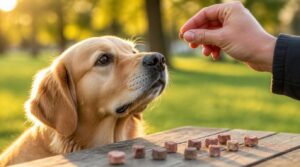
When your treat budget gets smarter, your training does too. One Bite Rewards lets you earn points on every purchase — including small soft high-value treats built for quick-consume, bite-size portioning.
- Earning Bite Points starts at signup with a one-time bonus
- Redeeming loyalty discounts converts 30 bites into $1 off orders
- Point expiry rules reset annually, so use them
Program enrollment bonuses and member perk levels grow with you.
If you’re tracking treat calories as part of your loyalty milestones, this guide on using treats effectively when training dogs makes staying within that 10% budget much easier.
Choose Fast-Eating Treat Textures
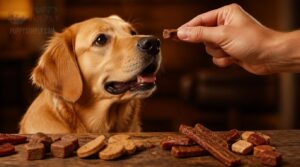
Size isn’t the only thing that matters when picking out treats. Texture plays a huge role too, since some treats slow your dog down while others keep the action moving. Here’s how to match texture to your training style.
Soft Treats
Soft, chewy treats are the preferred method for fast-paced training, and here’s why: your dog can swallow them in one or two seconds flat. That speed keeps your rhythm going, especially indoors where focus matters most.
Soft texture wins for puppies and seniors too, protecting young or aging teeth.
When you want quick, small soft high-value treats, soft is your answer.
Semi-Moist Treats
Semi-moist treats sit right between soft and crunchy — and that balance makes them surprisingly adaptable. Their 20–30% moisture content keeps them pliable enough to swallow quickly, so your training rhythm doesn’t stall. Natural antioxidants like mixed tocopherols preserve freshness without synthetic additives, which matters for sensitive dogs.
Seniors especially benefit here, since the easy-to-chew texture is gentler on aging teeth than anything hard.
Crunchy Treats
Some dogs need a little extra crunch to stay engaged, especially when the backyard is full of distractions. Crunchy treats take 15-30 seconds to chew, so save them for outdoor sessions or noisy settings where that delay won’t break your rhythm.
They’re great for dental health too.
Just watch for floor crumbs, and keep treat size matched to your dog, whether small, medium, or large.
Puppies and Seniors
Young teeth and old teeth have one thing in common: they’re both fragile. That’s why soft textures work best for puppies still cutting molars and seniors managing worn-down or sensitive teeth.
Think about what each life stage actually needs:
- Puppies need gentle treats supporting jaw development
- Seniors need soft bites protecting fewer remaining teeth
- Both benefit from proper treat size for easy chewing
- Dental health stays protected at every age
Outdoor Training
Take training outside and the rules change fast. Crunchy treats turn into liabilities here, since loose gravel and uneven grass already demand footing and focus, and 20 seconds of chewing invites every squirrel within sight to steal your dog’s attention.
Stick with quick consume treats sized for your dog’s breed, keep them in a treat pouch for fast access, and watch weather and terrain so hydration and footing stay solid throughout the session.
Time Treats for Faster Learning
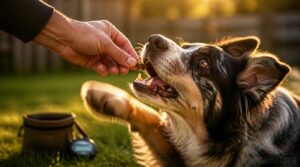
Size and texture only get you halfway there. Your dog learns fastest when the reward lands at exactly the right moment, not a few seconds late. Here’s how to nail that timing every single time.
Three-Second Rule
If you’ve ever wondered why some dogs catch on fast while others seem to stall out, timing is usually the answer.
The three-second rule means delivering the treat within three seconds of the right behavior—one second is ideal.
Wait too long, and you weaken the behavior reward connection. Quick delivery keeps training session flow smooth and builds real reward association timing.
Clicker Timing
A clicker is a precise tool — it marks the exact moment the right behavior happens, not a second after. That split-second click tells your dog, "Yes, that’s it," and the treat confirms it.
Timing drift is a common problem. Record a session occasionally to catch clicks landing too early or too late, and reset to simpler tasks if accuracy slips.
Marker Words
Not everyone trains with a clicker. A marker word works just as well — say "yes" or "good" in a neutral, firm tone the instant your dog nails the behavior.
- Keep it one short syllable for speed and clarity
- Use the same word every session — no switching
- Deliver it within half a second of the behavior
Consistency turns your voice into a precise signal.
Treat Pouch Access
A clear marker word only works if the treat shows up right behind it, which means your treat pouch can’t slow you down.
Look for magnetic closures that pop open with one hand, ambidextrous designs for either side of your body, and modular compartments that keep treats separate from waste bags.
Wipe linings clean between sessions, and clip the pouch at hand level for fast, natural delivery.
Jackpot Rewards
Why settle for one treat when your dog just nailed something hard? That’s where jackpot rewards come in: rapid succession feeding of several high-value treats marks truly excellent behavior.
Use this for breakthroughs, not routine cues. Reward magnitude matters here, so reach for liver or hot dog bits. Remember, treat size matters even mid-jackpot, keeping each piece small enough to swallow fast. This boosts motivation without overfeeding.
Control Calories During Training
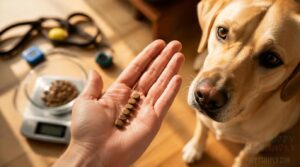
A handful of treats here and there can add up faster than you’d think, especially during a long training session. Numbers help keep things in check without making you feel like you’re counting kibble all day. Here’s what to watch so your dog stays lean, happy, and ready to learn.
Ten Percent Treat Rule
Ten percent isn’t just a guideline—it’s the line between effective training and an overweight dog. Treats should never exceed 10% of your dog’s daily calories, with the rest coming from balanced meals.
Ten percent is the line between effective training and an overweight dog, so keep treats within that limit
That means doing simple daily calorie math:
- Calculate your dog’s total daily calories
- Find 10% of that number
- Divide it across training sessions
- Adjust meals to balance treat calories
This keeps portion control and weight gain in check.
Low-Calorie Pieces
Most low-calorie pieces pack just 1 to 3 calories each, which means you can reward generously without blowing your dog’s calorie budget. Look for lean protein bases that boost satiety through texture, not fat. Portion size for training stays consistent when pieces are pre-sized.
| Texture | Calorie Range |
|---|---|
| Soft | 1-3 cal |
| Crunchy | 2-4 cal |
| Air-puffed | Under 3 cal |
Cut Larger Treats
That freeze-dried liver or hot dog you’re using for tough behaviors? Don’t hand it over whole. Cutting high-value treats into smaller pieces stretches your supply while keeping that reward efficiency high.
This is where uniform sizing really pays off. A sharp knife or food scissors turns one piece into four or five small soft high-value treats, giving you better portion control and treat size for training without sacrificing impact.
Avoid Overfeeding
Overfeeding sneaks up on you — one extra treat here, a handful there, and suddenly your dog’s daily calorie budget is blown. Keep treats under 10 percent of total daily intake.
A training log helps you track cumulative treat calories before you overshoot. When limits are reached, switch to verbal praise or play instead of adding more food.
Sensitive Stomachs
Dogs with sensitive stomachs need extra care regarding training treats. Stick to single protein options — they’re easier to digest and less likely to trigger reactions.
Introduce any new treat gradually across several sessions rather than all at once. Watch stool and appetite after training, and keep sessions short with water breaks to reduce digestive upset.
Top 4 Training Treat Helpers
The right treat can make or break a training session, so choosing well matters more than most people realize. These four options check all the boxes — the right size, texture, and ingredient quality to keep your dog focused and your sessions moving. Here’s what’s worth adding to your training kit.
1. Happy Howies Turkey Training Roll
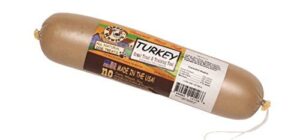
One treat that earns its place in any training bag is the Happy Howies Turkey Roll. Made in Michigan with U.S.
-sourced turkey as the first ingredient, it slices cleanly into tiny, consistent pieces — ideal for rapid-fire reward sequences. The soft, moist texture means your dog swallows each bite in a second or two, keeping session momentum intact.
You can crumble it into micro-sized rewards for small dogs under 25 pounds, or pre-cut jackpot pieces ahead of time for complex drills.
| Best For | Trainers and pet owners looking for versatile, high-value treats that work well for clicker sessions, agility drills, and hiding medication. |
|---|---|
| Primary Use | Dog training treat |
| Net Weight | 2 lb (907 g) |
| Prep Versatility | Slice, grate, freeze, crumble |
| Storage Method | Refrigerate after opening |
| Key Material | Turkey protein, rice flour |
| Key Limitation | Contains garlic and added salt |
| Additional Features |
|
- Made with U.S.–sourced turkey and ingredients, ensuring freshness and quality
- Easily sliced, crumbled, or frozen for different training needs and storage options
- Firm texture stays intact when refrigerated, making it mess-free and ideal for handling
- Contains garlic and added salt, which may not suit dogs with certain health sensitivities
- Formula change has led to more crumbling, making it harder to cut perfectly small pieces
- The large roll size requires extra prep work to create bite-sized training treats
2. Happy Howie Beef Training Roll
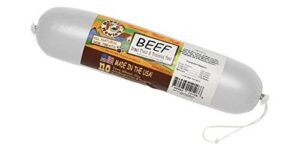
If turkey isn’t your dog’s favorite, the beef version works just as well. It’s a soft, deli-style roll made with real beef and no wheat, corn, soy, or nitrates, so it slices into clean little squares without crumbling in your hand.
That makes it perfect for back-to-back reps, scent work, or even hiding a pill. Freeze extra portions ahead of time, and you’ve got a steady supply of high-value rewards ready to go.
| Best For | dog owners who want a high-value, versatile training treat that holds up well for back-to-back reps, scent work, or sneaking in a pill, even for dogs with sensitive stomachs or picky tastes. |
|---|---|
| Primary Use | Dog training treat |
| Net Weight | 2.1 lb |
| Prep Versatility | Slice, crumble, grate, freeze |
| Storage Method | Refrigerate; use within hours of opening |
| Key Material | Beef protein, US-sourced ingredients |
| Key Limitation | Contains garlic; strong odor may develop |
| Additional Features |
|
- Slices into clean, uniform pieces without crumbling, making it easy to portion out for quick training reps.
- Versatile enough to slice, crumble, grate, or freeze ahead of time for a ready supply of rewards.
- Made in Michigan with US-sourced ingredients and no wheat, corn, soy, or nitrates.
- Contains garlic, which may not be suitable for every dog.
- Needs to be refrigerated after opening and can spoil within a few hours at room temperature.
- It’s meant as a treat only, not a complete diet, and tends to develop a stronger odor once chilled.
3. Mueller Multi Blade Vegetable Chopper
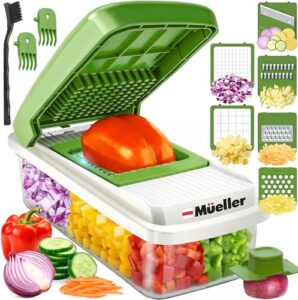
Beef and turkey rolls cover most of your training needs, but homemade veggie bits make a great low-calorie backup, especially for dogs watching their weight.
This is where the Mueller Multi Blade Chopper earns its spot. It comes with three chopper blades for 6mm, 9mm, and 13mm dice, letting you match treat size to your dog’s weight class instantly. The built-in container catches everything, and stainless steel blades stay sharp through daily use.
| Best For | Home cooks and pet owners who want to chop, slice, julienne, or grate vegetables quickly for everyday meals or homemade dog treats without cluttering the kitchen with separate tools. |
|---|---|
| Primary Use | Food prep tool |
| Net Weight | 5.5-cup capacity |
| Prep Versatility | 6 interchangeable blade types |
| Storage Method | Store blades away from children |
| Key Material | Stainless steel blades, food-grade plastic |
| Key Limitation | Small 5.5-cup container capacity |
| Additional Features |
|
- Six interchangeable stainless-steel blades cover chopping, slicing, julienne, and grating in a single device
- The 5.5-cup container snaps directly beneath the chopper frame, so prepped food goes straight into storage
- Dishwasher-safe parts plus the included cleaning brush and scrubbing fork make cleanup fast
- The 5.5-cup container can fall short if you’re prepping large batches at once
- Blades are very sharp, so you’ll need to use the food holder properly to avoid injury
- The plastic housing may show wear over time with frequent use
4. Pet Botanics Mini Training Treats
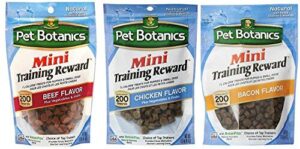
When chopping vegetables takes more effort than you’d like, having a ready-made option already sized right is a win. Pet Botanics Mini Training Rewards come as soft, moist pellets at just 1.5 calories each, so you can reward frequently without blowing your dog’s daily calorie budget.
Each bag holds around 200 treats, and the three flavors — bacon, chicken, and beef — help keep your dog’s interest from flatlining mid-session. They’re small enough for quick swallowing, making them a solid everyday choice.
| Best For | Dog owners who train frequently and want a low-calorie, grab-and-go treat that keeps their pup motivated across multiple sessions. |
|---|---|
| Primary Use | Dog training treat |
| Net Weight | 12 oz (3 bags) |
| Prep Versatility | Ready-to-use pellets, portable bags |
| Storage Method | Resealable bags; seal after each use |
| Key Material | Soft moist pellets, multi-protein blend |
| Key Limitation | Some dogs reject certain flavors |
| Additional Features |
|
- At just 1.5 calories each, you can reward generously without worrying about weight gain
- Three flavors (bacon, chicken, beef) help hold your dog’s attention when one starts losing its appeal
- Resealable, pocket-sized bags make them easy to bring along wherever training happens
- Picky dogs may turn their nose up at certain flavors — beef seems to be the most common miss
- The pellets are quite small, which may not feel rewarding enough for larger breeds
- Freshness drops quickly if the resealable bag isn’t closed properly after each use
Frequently Asked Questions (FAQs)
How big should training treats be?
Bigger isn’t better here. Aim for pea-sized pieces, roughly a blueberry for medium dogs, rice-grain for small ones. The real test: your dog should swallow it in one to two seconds, no chewing required.
What treats work best for high-distraction environments?
High-value treats like freeze-dried liver or hot-dog pieces cut small work best when distractions are high. Your dog needs a reward compelling enough to compete with the environment around them.
How do I know if a treat is high-value?
Your dog’s nose tells the story: does it grab attention within two seconds? That’s a real high-value signal. Look for meaty, aromatic, moist treats your dog consistently picks first during preference checks, even when distractions are nearby.
What ingredients should I avoid in training treats?
Xylitol, BHA, BHT, and artificial sweeteners are the biggest ones to avoid. Also skip wheat, soy, corn fillers, and anything with artificial colors or preservatives — they can trigger allergies, digestive issues, or worse.
How should I store soft training treats?
Store soft treats in an airtight container and refrigerate after opening. Most stay fresh for 5 to 14 days. Let them warm up for a few minutes before your session.
Can I rotate treat values during one session?
Yes, rotating treat values works well within a single session. Use lower-value treats for easy, familiar cues and save the high-value ones for harder moments or new distractions.
Conclusion
treats like keys in a lock: the wrong size jams the mechanism, the right one opens it instantly. That’s the heart of what size treats you should use for training—match the piece to your dog’s build, and every rep clicks faster.
Pea-sized rewards for small breeds, dime-sized pieces for large ones, are soft enough to vanish in one bite. Get this detail right, and training stops feeling like a struggle.
It becomes a rhythm, a conversation your dog finally understands.
- https://aorkuler.com/blogs/blog/best-training-treats-for-dogs
- https://themobilebarkery.com/blogs/natural-dog-treats/best-dog-treats-for-training-expert-guide-to-high-value-rewards-that-work
- https://dogs.superfoodscience.com/best-training-dog-treats-of-2026
- https://k9ti.org/blog/dogtrainingtreats
- https://www.howtotrainadreamdog.com/12-best-puppy-training-treats