
This site is supported by our readers. We may earn a commission, at no cost to you, if you purchase through links.
Most dog owners reward good behavior—but reward it a half-second too late, and you’ve accidentally trained something else entirely. That gap between behavior and treat delivery isn’t a minor detail; it’s the difference between a dog that reliably sits on command and one that’s technically being rewarded for sniffing the ground afterward.
The brain doesn’t wait. Dogs form associations in under a second, and whatever they’re doing at the moment the treat lands is what gets reinforced. Knowing the best time to reward dog behavior, and pairing it with the right marker and reward type, transforms scattered training sessions into real, lasting results.
Table Of Contents
Key Takeaways
- Reward your dog within one second of the correct behavior — anything longer, and their brain starts linking the treat to whatever they did next, not what you intended.
- A marker (clicker or a clear "yes") closes the timing gap by freezing the exact moment your dog earns the reward, so the treat can arrive a beat later without losing accuracy.
- Match the reward to what actually motivates your dog — food, play, praise, or even a sniff break — because the right currency keeps engagement high and learning clean.
- Start by rewarding every correct response to build a solid foundation, then gradually shift to unpredictable rewards to make the behavior stick long-term without creating treat dependency.
Best Time to Reward Dog Behavior

Timing is everything regarding rewarding your dog — a split second can mean the difference between teaching a behavior and confusing your dog entirely. Dogs don’t process rewards the way we do; they connect the treat to whatever they were doing the moment it arrived. Here are the key timing rules that actually make training stick.
If you want to sharpen your instincts before your next session, understanding reward timing in dog training breaks down exactly why a one-second delay can send your dog the wrong message.
Reward Within One Second
The single most important rule in dog training is this: reward within one second of the behavior.
Think of it like catching a ball — hesitate, and the moment’s gone.
When you deliver the treat immediately after it occurs, your dog’s brain connects that exact action to the outcome, strengthening the neural pathways that make behaviors stick.
Research shows that immediate reward enhances persistence in both humans and animals.
Mark The Exact Behavior
A marker — whether a clicker or a firm "yes" — closes the moment by telling your dog exactly which action earned the reward.
Without it, your dog guesses. Did the treat come for sitting? For glancing up?
Isolating specific actions this way prevents blurred learning, where several behaviors blur together.
The marker bridges timing gaps, defining the correct behavior before the treat even arrives.
Avoid Five-second Delays
Even with a solid mark-and-reward habit, five-second delays quietly undo your work. That gap is a distraction window — long enough for your dog to sit, glance away, sniff the ground, and shift weight before the treat arrives. By then, reward timing is broken.
- Delays past five seconds weaken the behavior-reward link
- The dog’s next action often "steals" the reward association
- Engagement drops fast when no consequence follows the behavior
- You may accidentally teach extra movements during the gap
- Immediate rewards keep session flow smooth and learning clean
Reward Before Distractions Happen
Timing the reward before a distraction reaches your dog is one of the cleanest moves in training. If your dog sits and you deliver the treat while they’re still locked on you, the lesson lands clearly. That window — calm, focused, undivided — is your target.
| Situation | Strategy |
|---|---|
| Near other dogs | Increase distance first |
| Busy sidewalk | Reward immediately after cue |
| Open yard | Use high-value treat |
| New environment | Shorten sessions, reward often |
Reward before distractions arrive by working at a distance where your dog can still focus. Gradually close that gap only once they’re responding reliably.
How Dogs Connect Rewards

Your dog’s brain is doing something specific every time you hand over a treat — it’s drawing a line between what just happened and what came next.
That connection is the foundation of every behavior you’ll ever train, and how well it forms depends almost entirely on what you do in the moments around the reward. Here’s what’s actually happening inside that process.
Behavior-reward Association
Your dog’s brain is wired to detect patterns — when a behavior reliably predicts a reward, that action-outcome link strengthens through repeated experience. Each consistent pairing deepens the neural pathway, making the behavior more automatic over time.
Reinforcement contingency is the key: the reward must depend on the behavior, not random timing, or your dog simply can’t learn what actually worked.
Timing each reward to the exact moment your dog succeeds is what makes treat timing in dog training so powerful—it removes the guesswork and tells your dog precisely what earned the reward.
Immediate Versus Delayed Rewards
When a reward arrives within a second, your dog’s brain locks onto the behavior that just happened — the neural association forms fast and clean.
Delay it by five seconds, and something else has already filled that window, giving your dog’s brain a different behavior to connect the treat to, often by accident.
Why Timing Matters
What your dog learns in training depends almost entirely on when the reward lands. Every fraction of a second matters because operant conditioning works through precise cause-and-effect chains, not general impressions. Here’s why reward timing shapes everything:
- Neural pathway strength builds fastest when the mark and reward happen within one second of the correct behavior.
- Maintaining engagement windows keeps your dog mentally present, reducing the chance nearby distractions interrupt the learning moment.
- Reducing learner confusion depends on consistent reinforcement timing — your dog shouldn’t have to guess which action earned the treat.
- Mitigating distraction interference means rewarding before your dog’s attention drifts, keeping the behavior-reward connection clean and unambiguous.
Prevent Accidental Reinforcement
Your dog doesn’t just learn the behavior — it learns everything that happened right before the treat arrived. This is superstitious timing control in action. If you hesitate even a few seconds, your dog may repeat a head tilt or a shuffle step, not the sit, because those movements occurred closest to the reward.
Your dog doesn’t reward the sit — it rewards whatever happened right before the treat arrived
Precise behavior selection breaks this cycle. Mark and reward the exact moment — paws hit the floor, eyes meet yours — not "somewhere around there." Letting accidental behavior reinforcement slide even occasionally teaches your dog that a personal ritual, not your target command, earns the treat.
Use Markers for Better Timing
Even perfect timing can slip through your fingers if there’s a gap between the moment your dog performs and the moment the treat arrives. That’s exactly where markers come in — they act as a bridge, locking in the behavior the instant it happens. Here’s what you need to know to use them effectively.
Clicker Training Basics
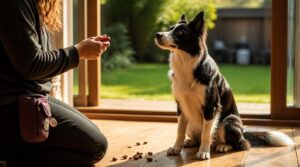
A clicker is one of the most precise tools you can use for bridge conditioning. The instant your dog sits, you click — that sound becomes a bridge between the behavior and the incoming treat.
Aim for 8–10 repetitions per minute during shaping work. Consistency in that click is everything; one delayed or misplaced click muddies the feedback loop entirely.
Verbal Marker Words

A verbal marker word — commonly "yes" — works like a snapshot: it freezes the exact moment your dog did something right. Unlike a clicker, your voice is always with you.
- Use a short, consistent sound
- Speak in a calm, clear tone
- Keep one meaning only
- Apply it distraction-free
- Guarantee household cue consistency
Marker Before Treat

The sequence always goes marker first, then treat — not the other way around.
Think of the marker as a camera shutter: it captures the exact moment your dog earns the reward, so your hand reaching into the treat bag doesn’t distort what gets reinforced.
This event bridge function is what makes the whole system precise.
Keep Signals Consistent

Consistency is what turns a marker into a reliable promise. Your dog learns fast when the same word, tone, and timing appear every single session — not just most of the time.
- Use one marker, always
- Match your body language every rep
- Keep household cues identical
- Reward timing window stays under one second
- Never reward approximations accidentally
Choose The Right Dog Reward

Not every dog gets excited about the same thing, and that’s actually good news for your training. Knowing what makes your dog light up — whether it’s food, a game of tug, or simply permission to sniff — lets you pick rewards that actually work.
Here are the main options to explore so you can match the right reward to your dog.
High-value Training Treats
Not all treats are created equal. For new or difficult commands, high-value training treats — small, soft, and aromatic — trigger the strongest motivation.
Freeze-dried beef liver or real-meat morsels, with 40–60% protein by dry weight, deliver quick consumption and sharp focus.
Keep pieces under 3 calories to manage intake across multiple sessions without sacrificing your dog’s drive.
Praise and Affection
Food treats might carry sessions, but praise and affection pull equal weight for socially motivated dogs who live for your approval.
- A warm "Good sit" links your words directly to the action
- Upbeat tone signals success faster than any treat
- Brief, calm petting beats rough ruffling every time
- Soft eye contact reinforces without overwhelming
- Immediate delivery keeps the behavior-reward connection clean
Toys and Play
For toy-driven dogs, play rewards can outperform treats entirely. A short game of fetch or a quick tug rope session after a solid "come" engages your dog’s natural drive.
Squeaky toys and squeaky balls trigger excitement fast, making them ideal for movement reinforcement. Test what your dog lunges for — that’s your highest-value reward.
Sniffing as Reward
Sniffing is a life reward your dog earns through curiosity alone. When you let your dog pause and investigate a scent trail after a correct behavior, dopamine sniffing connection fires naturally — reinforcing the moment without a single treat.
- Sniffing bouts are rhythmic and motivated, not passive
- Use odor-guided reinforcement by releasing your dog to sniff after a cue
- Permission to sniff builds a scent library over time
- Keep reward latency tight — release within one second
Match Your Dog’s Motivation
Every dog has a currency — find it. Watch what your dog gravitates toward first: a tossed toy, a treat, your touch. That’s your primary motivator.
Breed background shapes this too; retrievers lean toward play, while scent hounds often rank sniffing highest. Match the reward to the moment, and your dog stays genuinely engaged.
Best Reward Schedules for Training

How you time rewards is only half the equation — how often you give them matters just as much. The right schedule can make a behavior stick for life or fade the moment you stop treating. Here’s what you need to know about building a reward schedule that actually works.
Reward Every Correct Response
When you’re teaching a new command, reward every correct response — no exceptions. Think of it like learning a new language: constant feedback tells your dog exactly what’s working.
Continuous reinforcement during early learning builds confidence and strengthens the behavior link fast. Skip a reward here and there, and your dog starts guessing. Consistency keeps the cause-and-effect loop crystal clear.
Switch to Variable Rewards
Once your dog reliably performs a behavior, it’s time to shift to a variable ratio schedule — rewarding after an unpredictable number of correct responses instead of every single one. Think of a slot machine: because the payoff is uncertain, players keep pulling. Your dog works the same way.
Intermittent reinforcement builds stronger extinction resistance, meaning your dog keeps responding even when a reward doesn’t come immediately.
Maintain Learned Behaviors
Once your dog knows a behavior, your job shifts from teaching to keeping it sharp. Intermittent reinforcement works best here — reward occasionally and unpredictably during daily life, not just formal sessions.
Practice across locations, surfaces, and times of day to build environmental variety.
Short, frequent check-ins beat long monthly reviews.
Maintenance is quiet, steady work, not a one-time achievement.
Avoid Reducing Rewards Early
One of the most common early success pitfalls is pulling back rewards the moment your dog gets something right a few times. That quick improvement feels like a green light to start fading rewards, but your dog’s understanding is still fragile.
Maintain reinforcement frequency until the behavior holds reliably across multiple sessions, before adjusting your reinforcement schedule.
Prevent Treat Dependency
Fading the lure is the natural next step. Once your dog performs reliably, rotate reward modalities — swap treats for praise, a quick tug, or a sniff break.
Keep treats out of sight to reduce treat visibility, ending each session with a clean success.
Variable reinforcement types prevent overreliance on treats while keeping your dog genuinely engaged.
Top 4 Dog Training Rewards
The right reward can make or break a training session, and having the right tools on hand makes all the difference. Whether your dog responds best to treats, toys, or a combination of both, a few well‑chosen products can support everything you’ve learned about timing and reinforcement.
Here are four trainer‑recommended options worth adding to your toolkit.
1. Blue Buffalo Duck Training Treats
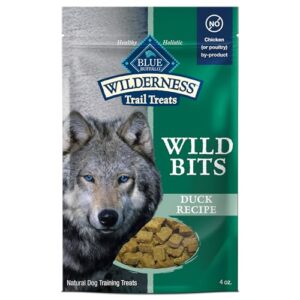
When you’re training on the go, treat quality matters. Blue Buffalo Wilderness Duck Training Treats are soft, chewy, and small enough to deliver in under a second — exactly what precise reward timing demands.
Deboned duck, as the first ingredient, means a strong aroma and real palatability, so your dog stays locked in. They’re grain-free and free of artificial additives, making them a smart pick for dogs with sensitivities who still need a high-value motivator during sessions.
| Best For | Dog owners who train regularly and want a high-quality, grain-free treat that keeps sensitive pups motivated and focused during sessions. |
|---|---|
| Product Type | Training treat |
| Training Style | Treat reward |
| Life Stage Fit | All life stages |
| Key Benefit | Grain-free protein |
| Dimensions | 8×5×2 in |
| Main Limitation | Frequent repurchasing |
| Additional Features |
|
- Real deboned duck as the first ingredient delivers strong aroma and palatability that keeps dogs engaged
- Soft, chewy texture allows for fast, precise reward timing during obedience or agility training
- Grain-free and free of artificial additives — a solid option for dogs with digestive sensitivities
- The 4 oz bag is small and can run out quickly if you’re training multiple dogs or long sessions
- Higher price tag compared to standard grain-based training treats
- Contains potato, tapioca, and whey, so dogs with specific food allergies may still have reactions
2. Positive Reinforcement Dog Training
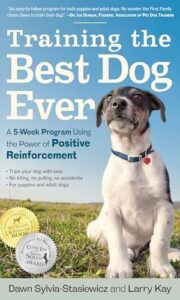
Treats get your dog’s attention, but it’s the method behind them that builds real skills. Positive reinforcement works because it tells your dog exactly which behavior earns the reward — no guesswork, no frustration.
Think of it like a paycheck: your dog performs, you pay immediately, and they show up enthusiastically next time.
Pair this approach with precise timing and the right reward, and you’re not just training behaviors — you’re building a dog that genuinely wants to work with you.
| Best For | Dog owners at any stage — whether you’re starting fresh with a puppy, working with an adult dog, or helping a rescue settle in — who want a structured, trust-based approach to training at home. |
|---|---|
| Product Type | Training book |
| Training Style | Treat-based reinforcement |
| Life Stage Fit | Puppies to adults |
| Key Benefit | 5-week curriculum |
| Dimensions | 6×0.6×10 in |
| Main Limitation | Eye contact required |
| Additional Features |
|
- Clear five-week structure with short daily sessions makes it easy to stay consistent without feeling overwhelmed
- Step-by-step photos and weekly worksheets help you track progress and understand exactly what you’re doing
- Covers a solid range of skills, from basic cues like sit and stay to more advanced topics like bite inhibition and water safety
- Relies heavily on eye contact, so easily distracted dogs may need extra techniques beyond what the book covers
- Not a replacement for a professional trainer if your dog has serious behavioral issues
- The use of a "no" command isn’t consistent throughout, which can make the guidance feel a little mixed in places
3. Positive Dog Training Handbook
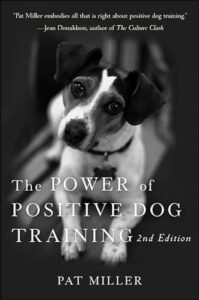
If you want a resource that ties everything in this article together, the Positive Dog Training Handbook is worth keeping on your shelf.
Recognized as the Best Overall Dog Training Book of 2025, it walks you through a six-week step-by-step program built entirely on the clicker method — with real guidance on phasing out treats over time.
It also includes a training diary, treat recipes, and a glossary, so you’re never left guessing what to do next.
| Best For | Beginners and owners switching to positive reinforcement who want a structured, step-by-step program to build a well-behaved, happy dog. |
|---|---|
| Product Type | Training book |
| Training Style | Clicker & treats |
| Life Stage Fit | All ages |
| Key Benefit | 6-week program |
| Dimensions | 6×0.69×9 in |
| Main Limitation | Fast-paced program |
| Additional Features |
|
- Walks you through a clear six-week program, so you always know what to work on next
- Covers body language, treat recipes, a training diary, and a glossary — everything in one place
- Built on reward-based methods that strengthen your bond with your dog rather than relying on fear or punishment
- The pace may be too quick for very young puppies or dogs that need a slower, more gradual approach
- Heavily treat-focused, with little guidance on shifting to non-food rewards as training progresses
- Lighter on some key topics like crate training and how to use "no" effectively
4. Kong Classic Stuffable Dog Toy
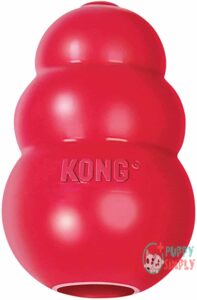
The Kong Classic is a stuffable rubber toy that doubles as a training tool and a mental workout. Pack it with kibble or peanut butter, freeze it, and your dog spends real time working to earn each bite — which naturally reinforces slow, focused behavior.
Its erratic, unpredictable bounce also makes it effective for play-based rewards.
Durable, dishwasher-safe, and vet-recommended, it’s a multi‑purpose addition to any reward rotation.
| Best For | Dogs that need mental stimulation, are prone to boredom or anxiety, or whose owners want a versatile toy that works for training, crate time, and interactive play. |
|---|---|
| Product Type | Interactive toy |
| Training Style | Treat-stuffing puzzle |
| Life Stage Fit | All sizes (caveats apply) |
| Key Benefit | Mental stimulation |
| Dimensions | 8.23×5.43×2.76 in |
| Main Limitation | Too large for small dogs |
| Additional Features |
|
- Stuffable and freezable design keeps dogs engaged for extended periods, making it great for crate training and separation anxiety
- Made from durable, vet-recommended natural rubber and easy to clean in the dishwasher
- The unpredictable bounce adds a fun, interactive fetch element beyond just treat-dispensing
- May be too large for toy breeds or small dogs whose tongues can’t reach inside to access the treats
- Aggressive chewers can eventually wear down even the tough rubber over time
- New toys may have a strong rubber smell that needs to be aired out or briefly boiled before use
Frequently Asked Questions (FAQs)
How do you train multiple dogs simultaneously?
Work each dog separately at first, then alternate cues. Mark and reward each dog at its own earned moment — never together — so every dog learns its own clear behavior-reward link.
Should training differ for anxious or fearful dogs?
Yes — anxious dogs need more distance, shorter sessions, and higher-value rewards. Fear shrinks their ability to learn, so you’re working with a smaller window where they can actually take treats and focus.
How does breed affect a dogs reward preferences?
Your dog’s breed shapes what motivates them most. Retrievers respond strongly to food, while herding breeds often prefer toys. Matching rewards to your dog’s natural drive makes training noticeably faster.
When should professional dog training help be sought?
Seek professional help when aggression, reactivity, or safety risks appear. If three months of consistent effort shows no progress, don’t wait. A certified trainer gives you clarity, structure, and a plan that actually works.
Conclusion
Strike while the iron is hot—and in dog training, that window is measured in milliseconds, not minutes. The best time to reward dog behavior is the instant it happens, marked clearly and consistently so your dog’s brain makes the right connection.
Get that timing sharp, choose rewards your dog actually wants, and build a schedule that fades treats without fading reliability.
Do this right, and you won’t just train behaviors—you’ll build trust that holds under pressure.
- https://joyofdogsports.fi/2026/03/foundations-of-dog-training-part-1-reward-and-timing
- https://vitomalia.com/en/blogs/hundelexikon/timing-hund
- https://mountainhumane.org/making-eye-contact-with-your-dog-copy
- https://www.thrivingcanine.com/blog/rewarding_before_vs_after_release
- https://aggressivedog.com/2022/09/14/expanding-communications-in-training