
This site is supported by our readers. We may earn a commission, at no cost to you, if you purchase through links.

A dog’s nails tell you more than you’d expect. When they grow past the paw pad, each step forces the toes to splay outward and shifts pressure onto joints that weren’t designed to carry it. Over months, that mechanical stress quietly rewires how a dog stands, walks, and moves—long before any obvious limping appears.
What happens if you never cut a dog’s nails isn’t just cosmetic neglect; it’s a slow chain reaction that touches nerves, tendons, and bone. Knowing the signs early and what to do about them keeps your dog moving the way they should.
Table Of Contents
- Key Takeaways
- What Happens if Dog Nails Grow Too Long?
- Why Overgrown Nails Hurt Dogs
- How Long Nails Change Walking
- Can Long Nails Cause Infections?
- What Nail Problems Look Like
- How Often Should You Trim Nails?
- How to Trim Nails Safely
- Can Dogs Wear Nails Down Naturally?
- When to Call a Vet
- Frequently Asked Questions (FAQs)
- What happens if you don’t cut your dog’s nails?
- What happens if you Neglect Your Dog’s Nail care?
- Do dogs need their nails cut?
- What happens if a dog has long nails?
- Is it bad if I never cut my dog’s nails?
- How long can a dog go without cutting nails?
- Do dogs quicks get longer if you don’t trim their nails?
- Do overgrown nails affect a dogs mental health?
- Can neglected nails lead to permanent foot deformities?
- Are certain dog breeds more prone to nail overgrowth?
- Conclusion
Key Takeaways
- overgrown nails force your dog’s toes to splay outward with every step, quietly shifting pressure onto joints and tendons until the damage shows up as limping, stiffness, or arthritis.
- When a nail splits, cracks, or curls into the paw pad, it opens a direct path for bacteria — infections can escalate to abscesses or require surgery faster than most owners expect.
- The quick grows forward as nails get longer, shrinking your safe trimming zone over time and making every future trim riskier and more painful for your dog.
- every two to four weeks is the simplest way to prevent pain, gait problems, joint damage, and infection — no condition caused by overgrown nails is worth the cost of skipping it.
What Happens if Dog Nails Grow Too Long?
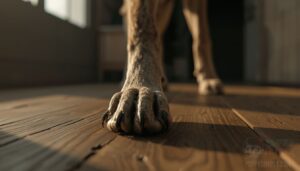
When dog nails grow too long, the problems go far beyond cosmetics — your dog’s whole body starts to pay the price. Even a few extra millimeters can trigger a chain of physical issues that affect how your dog moves, stands, and feels every day.
Regular trimming with a quality tool — like one from this guide to the best nail grinders for dogs — can help prevent the joint strain and gait issues that come with overgrown nails.
Here’s what actually happens when nails go untrimmed for too long.
Constant Pressure on The Toes
When nails grow too long, every step becomes a problem. The nail hits the floor first, pushing backward into the toe — that’s Toe Pad Compression in action.
This weight-bearing pressure causes Nerve Irritation and Blood Flow Restriction in the nail bed. Over time, your dog develops Gait Compensation and Joint Overload, quietly accelerating joint degeneration with every walk.
Nails Curling Into Paw Pads
Left unchecked, overgrown nails curl under and press directly into the paw pad — like a thorn your dog can’t escape. This causes Pad Tissue Damage, Nail Induced Inflammation, and Micro Bleeding Risks with every step.
warmer months accelerate nail growth So more frequent trims are advisable.
Watch for these signs of dog paw pad injury:
- Redness or swelling near the nail fold
- Your dog licking or chewing one paw repeatedly
- Reluctance to walk on hard floors
- Visible nail curling toward the pad
- Tenderness when you touch the toe
Over time, chronic skin thickening and foot structure deformation develop — and ingrown toenails can create a nail infection that goes deeper than the surface.
Paw injury prevention starts before it reaches that point.
Splitting, Cracking, and Breaking
Curling nails aren’t the only threat. Overgrown nails develop layer weakness that leads to nail splitting, nail cracking, and nail breaking — often without warning.
| Problem | Cause | Risk |
|---|---|---|
| Progressive Fracture | Stress Concentration at base | Quick exposure |
| Moisture Accumulation | Fragment Edge gaps | Infection entry |
| Nail cracking | Repeated bending forces | Deeper splits |
Each step worsens existing nail injuries.
Snagging on Carpets and Floors
Splitting and cracking don’t just hurt — they create hooked nail points that snag carpet fibers with every step. That fiber pull damage lifts loops right off the backing, and carpet edge lifting follows quickly in high-traffic areas.
On hard surfaces, clicking on hard floors signals floor micro abrasion building up over time. Snag mitigation starts with keeping nails trimmed before they catch and tear.
Overgrowth of The Quick
Here’s something most owners don’t realize: the quick grows forward as nails get longer. That quick growth timeline means your safe trimming zone shrinks over time.
Quick tissue inflammation becomes a real risk with overgrown nails, and the quick pain threshold drops noticeably.
Your quick trimming strategy should stay gradual — small cuts, styptic powder ready — to avoid a bleeding nail while slowly encouraging quick retraction.
Dewclaw Overgrowth Risks
Dewclaws are easy to forget — they don’t touch the ground, so they never wear down naturally. Overgrown canine nails here curl inward fast, and dewclaw snagging on carpets or rugs can tear the nail clean off.
Dewclaw splits open infection pathways quickly. ingrown dewclaw pressing into soft tissue causes serious skin irritation and, if ignored, progresses into painful dog foot problems requiring veterinary care.
Why Overgrown Nails Hurt Dogs
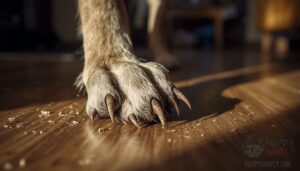
Overgrown nails don’t just look bad — they actively hurt your dog in ways that aren’t always obvious. The pain can show up in several places and for different reasons, depending on how far the overgrowth has gone.
Here’s where that discomfort usually comes from.
Pain From Pressure on Nail Beds
Think of the nail bed as a nerve-rich cushion — when nails grow too long, every step grinds that cushion against the ground. Overgrown canine nails create painful pressure through Microtrauma Accumulation, Nail Bed Inflammation, and Pressure‑Induced Edema.
Every step on overgrown nails grinds a nerve-rich cushion, turning walking into silent, compounding pain
Here’s what’s happening beneath the surface:
- Nerve Irritation fires even without visible injury
- Nail bed bleeding can occur from repeated impact alone
- Weight‑Bearing Discomfort worsens with each step
- Dog paw biomechanics shift to compensate — straining joints
Soreness When Standing or Walking
Every step your dog takes on overgrown nails sends pain signals straight to the brain — and that changes everything. Weight-bearing pressure shifts unevenly across the foot pads, triggering foot pad inflammation and altered gait. Muscle fatigue builds fast, and balance instability follows.
behavioral cues: hesitation, reluctance to walk on rough surfaces, or stiffness from musculoskeletal stress.
The impact of long nails on dog joint health adds up quietly, step by step.
Sensitivity After a Nail Breaks
A broken nail hurts more than it looks. When the nail quick gets exposed, nerve exposure pain kicks in fast — and even light contact can feel sharp to your dog. You’ll notice swelling management becomes urgent as inflammation builds around the nail bed.
Watch for these signs:
- Constant licking behavior targeting the paw
- Flinching when the paw touches hard floors
- Moisture discomfort during walks or baths
- Tenderness that worsens with activity
Apply styptic powder immediately for home remedies for bleeding dog nails. The healing timeline for most dog nail injuries is several days, but pain management for dogs with exposed quick tissue requires keeping the area clean and dry.
Pain From Ingrown Nails
An ingrown nail doesn’t just scratch the surface — it drives nerve irritation deep into soft tissue with every step. That throbbing pressure builds until even resting becomes uncomfortable for your dog.
| Sign | Cause | Action |
|---|---|---|
| Localized tenderness | Nail piercing skin | Inspect paw immediately |
| Behavioral indicators like hiding | Lowered pain threshold | Schedule vet visit |
| Licking or biting paw | Nail infection developing | Begin pain management for dogs |
Preventing ingrown toenails in dogs starts with consistent trimming of overgrown nails.
Discomfort in Front and Rear Paws
Overgrown nails don’t just hurt one paw — affect all four. Here’s what that looks like across your dog’s body:
- Paw Pad Sensitivity increases as altered gait forces unnatural contact with the ground
- Toe Joint Stiffness builds from chronic abnormal weight bearing shift
- Gait Compensation spreads stress unevenly across limbs
- Dog paw pressure distribution shifts, accelerating joint wear
- Chronic Pain Indicators appear in both front and rear paws simultaneously
How Long Nails Change Walking
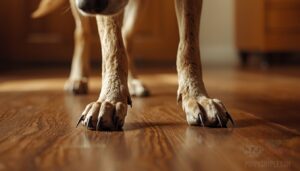
Long nails don’t just look unkempt — they actually change the way your dog moves. The effects go beyond simple discomfort and can quietly reshape how your dog stands, steps, and plays.
Here’s what’s really happening with every step they take.
Altered Stance and Posture
Long nails quietly rewire how your dog holds its body. As nails hit the ground too early, a Toe Angle Shift forces the paw to roll inward — a Paw Roll movement that disrupts natural foot contact. Your dog compensates through Body Tilt Compensation, leaning away from discomfort. These patterns reflect altered gait driven by Joint Flexion Adjustment and an Asymmetric Step Pattern.
| Posture Change | What You’ll Notice |
|---|---|
| Body Tilt Compensation | Dog leans subtly away from painful paw |
| Toe Angle Shift | Toes contact ground before pads do |
| Joint Flexion Adjustment | Joints stay slightly bent to avoid nail pressure |
Over time, this musculoskeletal stress in dogs contributes to joint problems that outlast the nails themselves.
Uneven Weight Distribution
That postural shift doesn’t stop at stance — it changes how weight moves through every step.
When one paw feels tender, your dog loads the opposite leg harder, creating a Joint Load Imbalance that forces Muscle Compensation on the "good" side.
This Postural Asymmetry and Gait Phase Shift drive Limb Stress Redistribution, unevenly spreading weight-bearing pressure and accelerating musculoskeletal stress in dogs over time.
Stress on Joints and Ligaments
All that uneven loading hits the joints next. Each awkward step creates joint capsule strain and ligament tension around the toes and up through the leg.
Tendons take on forces they weren’t built to handle — tendon overload, in plain terms. Over time, this biomechanical imbalance accelerates arthritis in dogs and drives deeper canine orthopedic problems that are hard to reverse.
Shorter Steps and Reduced Traction
When nails grow too long, they shift your dog’s footpad contact forward, reducing the grip that flat paw pads naturally provide. That’s gait instability in action — a shortened stride, cautious steps, and compensatory balance adjustments with every footfall.
Reduced grip makes smooth floors especially risky.
This impact of nail length on canine gait and posture compounds the joint problems linked to nail overgrowth already building below the surface.
Limping or Favoring One Paw
When a nail is constantly painful, your dog doesn’t just slow down — they shift weight away from it entirely. That’s pain guarding at work.
Asymmetric step timing follows quickly, with one paw spending less time on the ground. Limb load redistribution then overworks healthy legs, triggering secondary muscle strain.
Overgrown nails and joint problems often develop together, making dog mobility issues far harder to reverse.
Reduced Play and Activity
When paws hurt, play is the first thing to go. Overgrown nails create a cycle of pain-conditioned avoidance that quietly shrinks your dog’s world.
Watch for these signs of reduced activity levels:
- Shorter play sessions and decreased fetch interest
- Limited jumping ability and rough surface avoidance
- Reduced endurance, with more rest breaks mid-activity
These mobility issues and joint problems worsen fast — the impact of nail length on dog gait is easy to underestimate.
Can Long Nails Cause Infections?

Yes, long nails can absolutely lead to infections — and it happens faster than most owners expect.
When a nail splits, breaks, or grows into the paw pad, it creates an open door for bacteria.
Here’s a closer look at how these infections develop and what they can mean for your dog’s health.
Openings Created by Splits and Breaks
A cracked nail isn’t just a cosmetic issue — it’s an open door for trouble.
When your dog’s nail splits, Edge Roughness and Crevice Formation create tiny gaps where Debris Traps collect dirt and grit with every step.
Moisture Seepage makes it worse, keeping the area damp and prolonging irritation.
This Nail Bed Exposure increases the risk of infection before you even notice something’s wrong.
Bacteria Entering The Nail Bed
Once that nail fold barrier breaks down, bacteria don’t wait for an invitation. Staph Colonization happens fast — Staphylococcus aureus moves in quickly, followed by Enterobacteriaceae presence from everyday environmental contact. Moisture Accumulation keeps the area warm and damp, perfect for biofilm formation. Here’s beneath the surface:
- Bacteria enter through micro-tears in damaged skin
- Nail fold tissue loses its protective seal
- Moisture traps pathogens against the nail bed
- Biofilms resist your dog’s immune response
- Inflammation spreads, deepening the nail infection
Nail overgrowth consequences don’t stay surface-level. Nail bed health deteriorates quietly — infection prevention becomes much harder once that cycle starts.
Infections From Ingrown Nails
Ingrown nails are deceptively dangerous. When a nail curls into the paw pad, it punctures the skin and triggers an inflammatory response almost immediately.
Bacterial Colonization follows quickly—warm, moist paw conditions make infection inevitable.
Preventing ingrown toenails in dogs means catching overgrowth early. Without proper dog nail care and hygiene prevention measures, that small wound can deepen, making antibiotic therapy options and even surgery necessary.
Swelling, Redness, and Discharge
Once infection sets in from ingrown nails, your dog’s body reacts fast. Vascular Dilation brings extra blood to the site, causing visible redness and skin warmth around the nail.
Fluid Build-up leads to Edema Discomfort — that tight, puffy swelling you’ll notice on the toe. Pus Formation signals active nail infection.
Watch for:
- Red, hot skin around the nail
- Swollen, puffy toe that looks uneven
- Yellow or cloudy discharge near the nail bed
- Crusting where weeping fluid has dried
- Foul odor from nail overgrowth or infection prevention failure
Early action matters. Catching these signs before abscess formation begins can save your dog serious pain.
Abscesses and Deeper Tissue Damage
When swelling goes untreated, things can escalate quickly. Pus pocket formation marks the start of true abscess formation — a painful, pressurized pocket that’s hard to miss.
From there, soft tissue injury in dogs can deepen fast. Tissue necrosis can set in, and with bone proximity risks in the toe, deep tendon involvement becomes a real concern.
Chronic scarring often follows.
Risk of Veterinary Treatment or Surgery
At that point, your dog’s care moves well beyond a simple trim. Veterinary expenses climb fast when health risks of overgrown dog nails reach this stage:
- Emergency veterinary care with sedation risks and anesthesia complications
- Surgical wound infection requiring antibiotics and follow-up visits
- Post-operative pain management and bleeding management after partial nail removal
Joint problems and chronic infection can follow without prompt treatment.
What Nail Problems Look Like

Spotting nail problems early can save your dog a lot of discomfort. Once you know what to look for, signs are usually pretty obvious.
Here are the most common things you’ll notice when your dog’s nails have gotten too long.
Clicking on Hard Floors
That rhythmic clicking you hear when your dog walks across tile or laminate isn’t random — it’s your floor sending you a message. Long nails strike hard surfaces instead of the toe pads, creating a sharp tap with every step. Floor material influence matters too: tile and sealed concrete increase the sound more than carpet ever would.
| What You Hear | What It Means |
|---|---|
| Steady clicking on each step | Nails consistently too long |
| Clicking only during turns | Paw angle variation shifting nail contact |
| Uneven click frequency patterns | Different nails at different lengths |
| Louder click on one paw | Possible break or curl on that side |
| Clicking that speeds up | Dog shortening stride from discomfort |
Nail surface texture also affects the sound — dry, rough nails tend to produce a sharper strike. Think of it as one of the simplest acoustic detection tools you have at home. If you’re hearing it regularly, your dog’s nails need attention now.
Nails Extending Past Paw Pads
When your dog’s nails visibly extend past the edge of the paw pad, the risks of overgrown dog nails become real.
Paw Pad Abrasion starts immediately — nails press into soft tissue with every step, raising Quick Exposure Risk and creating pressure wounds.
Weight Shift Compensation stresses Toe Joint Strain over time, threatening dog paw health and increasing the chances of Foot Pad Ulceration.
Curling Toward The Ground
Once nails curl toward the ground, Nail Angle Shift changes everything. Instead of pointing forward, they press down with each step — increasing Ground Contact Pressure on soft tissue and triggering Toe Tissue Irritation.
Paw Skin Friction follows, and your dog begins Gait Compensation to avoid the discomfort.
Overgrown nails at this stage actively threaten dog paw health through mounting joint problems. A consistent dog nail trimming schedule prevents this.
Licking or Chewing at Paws
When your dog won’t stop licking or chewing at a paw, that’s a pain sign worth taking seriously. Overgrown nails press on the nail bed, triggering discomfort that pulls their attention downward.
Saliva Skin Damage follows quickly — Moisture Bacterial Growth and Hot Spot Formation can develop quickly.
Allergic Itch Triggers and Stress Compulsion may also drive this behavior, sometimes leading to paw pad infection.
Reluctance to Walk or Run
A dog that hesitates at the leash isn’t being stubborn — Pain Memory is real. Overgrown nails create Surface Sensitivity with every step, and Behavioral Avoidance sets in fast.
Leash Resistance and Anxiety Triggers often follow once your dog connects walking with discomfort.
That reluctance signals the Impact of nail length on canine gait and posture, limiting dog mobility and increasing joint pain caused by overgrown nails.
Bleeding After Snagging or Splitting
split nail bleeds fast because the nail quick — the tissue holding blood vessels and nerves — sits closer to the surface than you’d think. immediate pressure, then use styptic powder to stop the flow.
deep quick injury bleeds longer and needs careful bleeding monitoring.
Bandaging strategies help prevent re-snagging.
Home remedies for bleeding dog nails work for minor cuts, but heavy bleeding needs a vet.
How Often Should You Trim Nails?
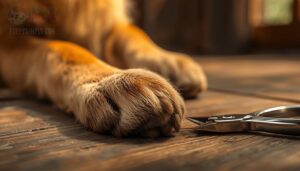
How often you trim depends on your dog — there’s no single answer that fits every paw. A few key factors shape the right schedule for yours.
Here’s what to think about.
Typical 2–4 Week Schedule
Most vets recommend trimming your dog’s nails every two to three weeks, though every 3 to 4 weeks can work for slower-growing coats. Think of it like a standing appointment — consistency is the whole point.
Trim frequency guidelines should account for seasonal growth variations, since nails grow faster in warmer months. Monitoring nail length weekly keeps your dog nail maintenance schedule on track.
Faster Growth in Some Dogs
Some dogs simply grow nails faster — and that’s not random.
Breed Genetics, Nutrition Impact, and Growth Hormone Levels all shape your dog’s nail growth rate. Puppy Development Rate is especially fast, meaning young dogs may need trims more often than adults. Hormonal Influence from thyroid function or neutering status can also shift things noticeably.
Watch for these three triggers:
- Rapid weight gain or diet changes
- Active growth phases in puppies
- Hormonal shifts after spaying or neutering
Rear Nails Growing Quicker
Your dog’s rear paws carry most of the body’s load during walking and turning, which means rear paw friction and Matrix Overactivity can quietly push the dog nail growth rate faster than you’d expect.
Quick Advancement follows close behind — as overgrown nails lengthen, the nail quick moves forward too.
Breed Genetics and Moisture Irritation add pressure, so rear nails, including dewclaw nails, often need dog nail trimming first.
How Activity Affects Wear
Your dog’s activity level directly shapes how fast nails wear down. Walking on rough surfaces raises the Surface Abrasion Rate naturally.
Soft grass reduces Load-Induced Grinding to almost nothing. Jumping Impact and quick direction changes add friction drag effects that smooth the tips.
A Toe Angle Shift from overgrown nails, though, disrupts even contact — so regular exercise on rough surfaces alone won’t keep every dog’s nails in check.
Signs It’s Time for a Trim
Your dog’s nails send clear signals when they need attention. Watch for these five signs:
- You hear clicking on hard floors with each step.
- Nails extend past the paw pad edge.
- Pink Quick Visibility increases — the quick looks larger than before.
- Paw Pad Redness or Excessive Paw Scratching appears.
- Uneven Nail Growth or Stiff Paw Movement changes how your dog walks.
Differences for Puppies, Adults, and Seniors
Age changes everything regarding nail care. Puppies grow fast and snag nails easily during play, so they need trims every two to three weeks.
Adults follow a steadier rhythm, though Quick Length Progression accelerates if trims are skipped.
Senior dogs face Pain Tolerance Shifts from arthritis, making the Risks of overgrown dog nails especially serious — Age-Based Trimming keeps them moving comfortably.
How to Trim Nails Safely
Trimming your dog’s nails doesn’t have to be stressful — for you or your dog. With the right tools and a little know-how, it becomes a straightforward part of your routine.
Here’s what you need to get it done safely.
Choosing Clippers or a Grinder
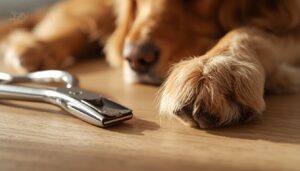
Choosing the Right Nail Trimming Tools comes down to your dog’s temperament and your comfort level.
Dog nail clippers — guillotine or scissor-style clippers — work quickly, making Speed Precision easier once you’re practiced.
A dog nail grinder files gradually, improving nail grinder safety by reducing overshoot risk.
Tool Noise and Dog Anxiety matter too: clippers snip suddenly, while grinders hum continuously.
Keeping Tools Sharp and Clean

Sharp, clean tools aren’t optional — they’re essential for safe trims. Dull dog nail clippers crush instead of cut, and a dirty dog nail grinder becomes a rust and infection risk.
Follow this simple Sanitization Protocol after each session:
- Dust Removal — wipe blades thoroughly with a dry cloth
- Rust Prevention — store tools dry, never damp
- Tool Inspection — check for chips or loose screws before each use
Trimming Small Amounts at a Time
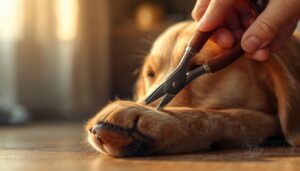
Think of each trim as one small step, not a finish line.
Gradual Length Reduction through Incremental Trim Sessions means removing just a sliver at a time — then pausing. This Micro Check Technique lets you reassess nail length and shape before continuing.
It’s especially useful for dog nail trimming anxiety, keeping sessions short and Low-Stress Trimming-friendly for wiggly or nervous dogs.
Avoiding The Quick
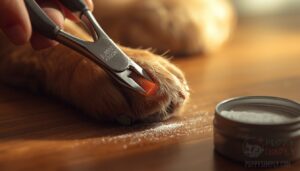
The quick is the living core of your dog’s nail — cut into it, and you’ll cause real pain and bleeding.
Your best defense is Gradual Length Reduction: trim tiny slivers and use Color Cue Monitoring to watch for a darker center circle. Quick Spotting Technique signal to stop.
Maintain Tool Angle Control at 45° for Light Nail Visualization clarity.
Keep styptic powder nearby for managing pain from accidental quick cuts — it stops quick bleeding fast.
Handling Dark Nails Carefully

Dark nails make Visual Quick Detection nearly impossible — you simply can’t see where safe ends and painful mistakes begin. That’s why the Incremental Snipping Technique matters most here: take tiny slivers, then check the cut surface for a dark central dot signaling the quick.
A Grinder Passes Strategy works well too. Always keep styptic powder ready.
Helping Anxious Dogs Stay Calm

Some dogs panic at the sight of clippers — and that’s where a Predictable Handling Routine helps the most.
Keep sessions short, use Controlled Exposure by introducing tools without trimming first, and pair each step with treats.
Watch for Body Language Cues like lip licking or freezing.
Environmental Calm Setup and Enrichment During Settling reduce baseline anxiety, making desensitizing dogs to nail trims far more effective over time.
Can Dogs Wear Nails Down Naturally?
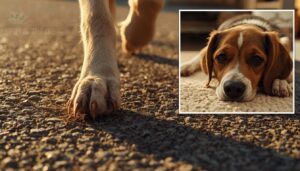
Some dogs do wear their nails down on their own — but it depends entirely on their lifestyle. A dog that spends most of its time indoors on soft flooring won’t get nearly the same natural wear as one that runs daily on pavement.
Here’s what actually keep nails shorter between trims.
Walking on Concrete or Rough Surfaces
Walking on concrete does help wear nails down — but only partially. The surface offers poor shock absorption, which means heel pad compression increases with every step, adding joint stress over time.
Traction variability on rough textures also forces subtle gait adjustments.
Sole stiffness effects matter too: harder ground alone rarely trims nails evenly, especially on less active dogs.
Running, Hiking, or Jogging
More intense activity helps, but it’s not a fix on its own.
Trail Surface Impact matters here — loose gravel, mud, and roots create constant Stride Adaptation, shifting load across toes with every step. Toe Friction Loss on wet terrain increases jamming risk.
Speed-Related Fatigue compounds this, and Footwear Interaction only goes so far when nail length is already affecting canine gait and joint stress.
Safe Digging Activities
Digging gives your dog a surprisingly effective workout for the nails. When you let your dog dig in a designated sandbox or dirt area, the repeated contact with soil acts like a natural file against the nail tip.
It won’t replace trimming, but it contributes to gradual wear — especially on the front paws, where digging pressure is greatest.
Using Emery Boards or Grinders
Filing at home gives you real control over nail length between trims. Keep angle control steady, and always sanitize tools before use.
A dog emery board works well for light smoothing — grit selection matters, so start coarser to shorten, then switch to fine for edges.
A nail grinder or Dremel filing tool lets you adjust speed for comfort and noise reduction.
Why Natural Wear is Not Enough for Many Dogs
Even with daily walks, many dogs simply can’t wear their nails down enough on their own.
Here’s why natural wear falls short:
- Indoor Flooring Limitations — carpet and smooth floors offer almost no abrasion
- Breed-Specific Growth — some breeds outpace any surface’s ability to keep up
- Dewclaw Wear Neglect — dewclaws never touch the ground, so they never grind
- Activity Level Variability — short bathroom trips don’t count as real wear
- Quick Advancement Risk — even partial wear lets the quick creep forward
A consistent dog nail maintenance schedule is the only reliable solution.
When to Call a Vet

Most nail issues can be handled at home, but some situations need a vet’s attention right away. Waiting too long can turn a minor problem into something much harder to treat.
Here’s when you should pick up the phone and call your vet.
Quick Cut With Heavy Bleeding
Cutting the quick of a dog’s nail can look alarming — but don’t panic. Your first step is Immediate Pressure Application using a clean cloth.
Styptic Powder Use is your most reliable Bleeding Control Tool; cornstarch works as a home remedy for bleeding dog nails in a pinch.
The Elevation Technique helps slow nail quick bleeding. If it won’t stop after five minutes, Emergency Vet Contact is essential.
Swelling, Pus, or Bad Odor
Swelling around your dog’s nail isn’t something to watch and wait for. When overgrown nails break or dig in, nail infections can develop quickly. Watch for these warning signs:
- Pus Coloration: yellow-white, thick discharge — not clear fluid
- Heat Sensation and Tissue Warmth: the toe feels noticeably hotter than surrounding skin
- Odor Severity: a foul smell, even before visible swelling
These signs point to infection and abscesses forming beneath the surface. Call your vet promptly.
Suspected Infection or Abscess
An abscess isn’t just a swollen toe — it’s a pus pocket forming deep in the tissue.
Look for tender swelling that feels squishy, a heat sign where the skin is noticeably warm, or a tiny punctum presence at the center.
Cellulitis extension — spreading redness beyond the core — means the infection is moving. These are clinical signs of nail infection that need same-day veterinary care.
Nails Embedded in The Paw
When a nail curves far enough to pierce the dog paw pad, you’re dealing with nail tip penetration — a mechanical injury that quietly worsens with every step.
Tissue entrapment locks the nail in place, and weight shift compensation stresses neighboring toes.
Don’t wait.
This needs same-day veterinary care to prevent deeper inflammatory response and begin proper healing strategies, including preventing ingrown toenails in dogs from recurring.
Trouble Walking or Obvious Pain
If your dog is limping, hesitating on stairs, or slow to rise after rest — that stiffness after rest is pain talking. Altered paw placement and compensatory limb loading quietly shift stress onto joints, accelerating wear.
These mobility issues reflect real impact of long nails on dog joint health.
Don’t wait for things to worsen — call your vet today.
Repeated Nail Injuries or Chronic Overgrowth
Chronic overgrowth isn’t just a cosmetic problem — it rewires how your dog’s nails grow permanently.
Repeated trauma triggers Matrix Dystrophy, Cuticle Seal Failure, and Nail Bed Thickening.
Left unchecked, Onychogryphosis Development produces thick, curved, claw-like nails that worsen daily.
Dewclaws fall into their own Dewclaw Trauma Cycle.
If you’re identifying and treating nail injuries in dogs repeatedly, your vet needs to intervene now.
Frequently Asked Questions (FAQs)
What happens if you don’t cut your dog’s nails?
Skipping regular trims leads to Health Risks of Overgrown Dog Nails — including joint pain, infections, and behavioral anxiety — plus Home Damage, Owner Safety concerns, rising Medical Costs, and serious Training Challenges over time.
What happens if you Neglect Your Dog’s Nail care?
Like a small stone in your shoe, neglected nail care quietly damages your dog’s health — triggering joint degeneration, behavioral changes, weight gain, floor damage, and serious health risks of overgrown dog nails over time.
Do dogs need their nails cut?
Yes, most dogs need regular nail trims.
Without enough wear from hard surfaces, overgrown nails press into paw pads, alter gait, and stress joints — making consistent dog nail care best practices essential.
What happens if a dog has long nails?
Think of dog’s nails like a stone in their shoe — one they can never remove.
Long nails cause pain and discomfort, joint degeneration risk, and behavioral changes with every single step.
Is it bad if I never cut my dog’s nails?
Absolutely.
Overgrown nails aren’t just a cosmetic issue — they cause real pain, alter your dog’s gait, and create long-term joint damage.
Skipping trims is one of the most overlooked forms of neglect in dog nail care best practices.
How long can a dog go without cutting nails?
An ounce of prevention is worth a pound of cure.
Most dogs need trimming every 2–4 weeks, as nails grow roughly 1–2 mm weekly — though Growth Rate Variability means some need attention sooner.
Do dogs quicks get longer if you don’t trim their nails?
When you skip trims, the quick grows forward with the nail.
This vascular nail growth means more nerve exposure risk over time, making safe incremental trimming harder and raising your dog’s pain threshold concerns.
Do overgrown nails affect a dogs mental health?
Yes, they can.
Chronic nail pain triggers anxiety escalation, irritability spikes, and mood depression. Dogs experiencing discomfort often show social withdrawal and stress-induced aggression — clear behavioral changes due to nail pain that shouldn’t be ignored.
Can neglected nails lead to permanent foot deformities?
Ironically, something as simple as skipping nail trims can permanently reshape your dog’s feet.
Chronic toe alignment shift, soft tissue scarring, and bone remodeling are real consequences — permanent foot deformity isn’t dramatic; it’s just neglect compounding quietly.
Are certain dog breeds more prone to nail overgrowth?
Some breeds are simply more prone to nail overgrowth. Greyhounds, Dachshunds, and small breeds like Chihuahuas often outgrow their nails faster due to genetic nail predisposition and size-related wear differences.
Conclusion
The smallest act of care—a few minutes with a nail clipper—prevents the biggest cascade of harm. What happens if you never cut dog’s nails isn’t a distant worst-case scenario; it starts quietly, one overgrown millimeter at a time. Pain, infection, and joint damage don’t announce themselves until they’re already well underway.
But you can stop all of it before it begins. Keep the nails short, and you keep your dog moving freely for years.
- https://www.dogster.com/dog-health-care/what-happens-if-you-dont-cut-your-dogs-nails
- https://www.softpetpaws.com/blogs/happy-paws-blog/what-happens-if-you-never-trim-your-dogs-nails
- https://scoopydoosdelraybeach.com/blogs/news/the-dangers-of-overgrown-dog-nails-how-grooming-improves-mobility-and-comfort
- https://smalldogguides.com/what-happens-if-you-dont-trim-your-dogs-nails/
- https://designerpawssalon.com/the-silent-ticking-clock-why-long-nails-are-stealing-years-from-your-dogs-life/