This site is supported by our readers. We may earn a commission, at no cost to you, if you purchase through links.
Roughly 10 to 20 percent of people with dog allergies still share their homes with dogs—not because they’re reckless, but because the right dog makes it manageable. The phrase hypoallergenic dog coat characteristics gets searched thousands of times a month by people hoping a curly-coated Poodle or a hairless Xolo will finally let them breathe easy. That hope isn’t misplaced, but it does rest on a few widespread misconceptions worth clearing up.
Coat type genuinely influences how much allergen circulates through your home, though the mechanism works differently than most people expect. Understanding exactly what drives that difference puts you in a far better position to choose wisely.
Table Of Contents
- Key Takeaways
- What Hypoallergenic Dog Coats Mean
- Coat Types That Shed Less
- How Coat Texture Traps Dander
- Shedding Patterns and Allergen Load
- Common Low-Allergen Coat Breeds
- Grooming That Reduces Coat Allergens
- Coat Traits to Match Your Lifestyle
- Choosing a Dog With Allergy-Friendly Fur
- Frequently Asked Questions (FAQs)
- Conclusion
Key Takeaways
- No dog coat is truly allergen-free, but single-layer and tightly curled coats keep shed hair and dander closer to the skin, which meaningfully lowers how much allergen floats through your home.
- The main culprit behind dog allergies is a protein called Can f 1, which travels through saliva, skin cells, and airborne dander—so your reaction depends more on your dog’s individual output than on breed labels alone.
- Consistent grooming, including weekly brushing, regular baths, and trimming every six to eight weeks, can cut airborne allergens by up to 84 percent, making routine upkeep just as important as the coat type you choose.
- Your allergy severity, available grooming time, and home setup should all shape your breed decision—spending time with a specific dog before adopting, rather than relying on breed reputation, gives you the clearest picture of how your body will actually respond.
What Hypoallergenic Dog Coats Mean

If you’ve ever been told a dog is hypoallergenic, you’ve probably wondered what that actually means. The word gets used a lot, but it doesn’t mean what most people think.
It’s a label that gets misapplied constantly, as this breakdown of whether pugs are truly hypoallergenic makes pretty clear.
Here’s what’s really going on with these coats and why it matters for your allergies.
Why “hypoallergenic” Means Lower Allergen Exposure
When you hear "hypoallergenic," think less likely to cause a reaction — not "reaction-proof." It signals reduced allergen exposure, not zero.
Remember that there’s no federal standard for the term, so a hypoallergenic label lacks regulation and doesn’t guarantee safety.
Four things actually shape that exposure:
- How much your dog sheds dander
- Your home air quality and ventilation
- Your dog’s pet skin health and coat type
- Your owner’s lifestyle impact on grooming routines
How Can F 1 Spreads Through Saliva, Skin, and Dander
Can f 1 doesn’t stay put — it travels.
Your dog’s saliva deposits allergen proteins directly onto fur during grooming, while skin particles and dander aerosol release carry it through the air. Skin contact transfer happens when you pet or handle your dog, and grooming tool contamination turns brushes into home surface reservoirs that keep redistributing Can f 1 long after bath time ends.
Why No Dog is Completely Allergen-free
Every dog sheds skin through natural cell turnover, which means dander — and the Can f 1 it carries — is always present, regardless of coat type.
A hypoallergenic coat, whether a single‑layer coat or double‑layer coat, reduces allergen potential but can’t eliminate it.
Individual variability between dogs, allergen persistence on surfaces, cross‑environment contamination, and measurement limitations all explain why no breed is truly allergen‑free.
- All dogs produce skin cells continuously
- Dander carries Can f 1 regardless of shedding level
- Allergens settle on furniture, floors, and clothing
- Individual dogs within the same breed vary in allergen output
- No standardized test reliably predicts your personal reaction
Coat Types That Shed Less
Not all coats behave the same way regarding shedding, and that difference matters a lot for allergy sufferers. The structure and texture of a dog’s coat largely determines how much hair and dander ends up floating around your home.
Here are the three coat types most associated with lower shedding and reduced allergen spread.
Single Coats Versus Double Coats

Think of a dog’s coat like bedding — a single layer is just a sheet, while a double layer adds a thick blanket underneath.
That dense undercoat traps dander close to the skin, increases grooming effort, and triggers seasonal blowouts.
A single-layer coat offers better heat tolerance, easier undercoat access, and stronger allergen reducing properties, making it a smarter starting point for allergy-prone households.
Curly, Wiry, and Tightly Coiled Textures
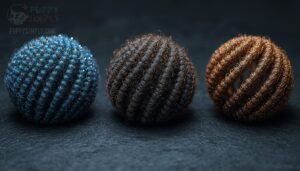
Curly, wiry, and tightly coiled textures work like a natural filter — coil tightness effects keep loose hairs locked close to the skin, so dander clinging mechanics prevent particles from floating freely into the air. That texture density advantage also boosts mat resistance, meaning less scatter between grooming sessions.
In hypoallergenic breeds, these curly or wiry coat qualities consistently reduce your everyday allergen exposure.
Breeds with tightly curled or wiry textures—common among wavy coat dog types—also tend to shed far less than their double-coated counterparts.
Hairless Coats and Allergen Carriers

Hairless breeds like the Xoloitzcuintli might seem like the obvious answer for allergy sufferers, but skin oil control and skin cell shedding still happen without fur.
Dander spreads through surface contact spread — exposure via clothing or upholstery is common.
Allergen testing before adoption helps clarify your personal response, since even a hairless variety produces enough skin-based proteins to trigger symptoms in sensitive individuals.
How Coat Texture Traps Dander

Coat texture does more than just look good — it actually plays a quiet but important role in keeping allergens from floating through your home. The way dog’s fur curls, coils, or lies flat determines how much dander escapes into the air you breathe.
really happening beneath the surface.
Loose Hair Held Close to The Skin
When a dog’s hair loses its anchoring strength at the follicle, it doesn’t just fall away — it stays trapped close to the skin. In hypoallergenic dog fur, this retention process is actually a feature.
Coat texture in low-shedding coat breeds creates skin friction that keeps shed strands woven inward, reducing dispersion. Without regular grooming frequency, though, matting tendency rises quickly in these single-layer coat hypoallergenic breeds.
Less Airborne Dander Release
low-shedding coat acts like a natural filter — trapping dander before it ever floats into your breathing space. The single-layer coat structure in many hypoallergenic breeds keeps particles woven close to the skin, releasing far fewer airborne allergens than high-shedding alternatives.
strategies work together:
- Run HEPA air purifiers continuously in shared rooms
- Upgrade to a MERV filter for your HVAC system
- Switch to hard flooring surfaces where your dog rests
- Use a door closure strategy for bedrooms
- Keep up with regular lint rolling on upholstered furniture
Why Grooming Changes Allergen Spread
Grooming timing matters more than most people realize. Brushing your dog right before they settle indoors removes loose dander before it migrates onto furniture.
Brush direction impact is real too—working with the coat pulls trapped particles out cleanly, while rushing against it flings dander airborne.
Tool cleaning frequency keeps allergens from cycling back onto the coat, and maintaining skin moisture balance through appropriate bathing prevents excess flaking.
Shedding Patterns and Allergen Load

How much a dog sheds directly affects how much allergen ends up in your home, and not every coat behaves the same way. Some dogs grow hair continuously without ever having a major shed, while others drop their entire undercoat with the seasons.
Understanding these patterns can help you figure out which type of dog is a better fit for your household.
Continuously Growing Coats
Breeds like Poodles and Bichons don’t follow the typical shed-and-replace cycle — their continuous hair growth just keeps lengthening, much like your own hair. That steady Growth Rate Management matters because the Allergen Accumulation Curve rises quietly between sessions, with Length Dust Interaction trapping dander inside the curl.
Inconsistent Continuous Coat Maintenance increases Matting Risk Factors, turning your dog’s low-shedding coat into a hidden allergen reservoir.
Seasonal Shedding in Double-coated Breeds
Unlike the steady growth cycle you just read about, double coat breeds work on a different schedule entirely. Photoperiod Signals — shifts in daylight length — and Temperature Shifts trigger seasonal shedding cycles twice yearly, driving Undercoat Clumping that floods your home with Seasonal Dander Peaks.
Watch for:
- Spring releases of the dense winter undercoat
- Fall regrowth adding insulating layers
- Indoor Heating Effects blurring these peaks year-round
Why Individual Dogs Vary Within Breeds
Even within the same breed, two dogs can affect your allergies very differently.
Genetic allele differences in coat genetics shape curl tightness and follicle behavior, which directly influence allergen-reducing properties.
Age-related coat changes, microbiome influence, grooming frequency impact, and health condition effects all shift the genetic basis of hypoallergenicity — making dog allergen production just as important as breed averages.
Common Low-Allergen Coat Breeds

Some breeds consistently stand out concerning lower allergen exposure, and that’s largely down to how their coats are built. A few key traits — like curl pattern, shedding rate, and coat layer — make a real difference in how much dander actually gets into your home.
Here are five breeds worth knowing about.
Poodle Coat Characteristics
Poodles are one of the most recognized hypoallergenic breeds, and their single-layer coat is a big reason why. The tight ringlet density traps loose hair close to the skin, limiting airborne allergen release.
Left unmanaged, curls shift into a corded coat requiring careful separation and drying. Their wool-type clipping schedule — every six to eight weeks — helps allergen retention control while preserving the coat’s functional trim design.
Bichon Frise Coat Characteristics
The Bichon Frise takes a slightly different approach than the Poodle. Its curl density and undercoat softness create that signature cloud-like fluffiness, but the real advantage is its hair growth rate — the coat keeps growing rather than shedding seasonally, which keeps allergens closer to the skin.
Regular grooming and matting prevention are non‑negotiable, since neglected curls tangle fast.
Portuguese Water Dog Coat Characteristics
The Portuguese Water Dog brings something a bit different to the table. Its low-shedding coat comes in two forms — wavy or curly — and neither type includes a dense undercoat, which means dander stays closer to the skin rather than floating freely.
That curl density effect, combined with natural water-resistant insulation and coat thickness benefits, makes it a genuinely practical choice for allergy-sensitive households.
Soft Coated Wheaten Terrier Coat Characteristics
The Soft Coated Wheaten Terrier stands out among hypoallergenic breeds for its single, flowing coat that naturally minimizes dander dispersal. Unlike double‑coated dogs, it carries no dense undercoat, which keeps loose hair — and the allergens attached to it — close to the body.
Its low‑shedding coat features:
- Flowing Coat Dynamics that fall naturally rather than standing upright
- Abundant Body Coverage with especially profuse leg hair length and head furnishings
- A warm Wheaten Hue Range shifting from pale beige to deep gold
Matting risk management through regular brushing keeps that soft, silky texture intact.
Xoloitzcuintli Coat Characteristics
Few breeds take "low shedding" as literally as the Xoloitzcuintli.
The hairless variety produces negligible fur — just small wisps of Wisp Hair Length on the forehead and nape, making Hairless Crest Distribution minimal across the body. Even the coated type shows reduced Coated Belly Hair, with a thin, single-layer coat that keeps dander low and your grooming routine simple.
| Feature | Hairless Variety | Coated Variety |
|---|---|---|
| Shedding Level | Near zero | Very minimal |
| Dander Risk | Very low | Low |
| Grooming Routine | Skin wiping | Weekly brushing |
Color Markings Impact allergen perception, not output — Skin Oil Production remains the real factor among hypoallergenic breeds.
Grooming That Reduces Coat Allergens

Even the best low-shedding coat won’t do much good if grooming habits let allergens build up unchecked. The right routine makes a real difference in how much canine dander ends up floating around your home.
Here’s what to focus on regarding brushing, bathing, and the tools that actually work for curly and wiry coats.
Weekly Brushing for Low-shedding Coats
Weekly brushing might seem like a small habit, but for low-shedding coat types, common in hypoallergenic breeds, it’s genuinely one of the most effective parts of an allergen containment routine. Regular brushing removes loose hair and dander before they spread.
Use sectioned coat brushing to cover dense patches thoroughly, and consider an outdoor brushing area to keep debris out of your living space. Consistent grooming frequency makes a real difference.
Bathing and Trimming Schedules
Bathing does more than clean the coat — it physically rinses away Can f 1 residue that brushing alone can’t reach. For hypoallergenic breeds with a low-shedding coat, bathing 1–2 times weekly considerably lowers allergen load, while regular grooming and trim interval timing every 6–8 weeks prevent mat buildup.
- Follow Bath Frequency Guidelines based on your dog’s activity level
- Schedule Professional Grooming Timing every 6–8 weeks for curly coats
- Make Seasonal Bath Adjustments during high-activity months
- Always prioritize thorough Post-Bath Drying to avoid skin irritation
- Align grooming frequency with your coat maintenance routine consistently
Best Tools for Curly and Wiry Coats
The right dog grooming tools make all the difference for curly or wiry coats. A pin brush with rounded tips loosens tangles gently, while slicker brush technique works best for surface mats.
Undercoat rake usage pulls loose fur from deeper layers, and dematting tool tips help with stubborn knots.
For regular grooming, clipper blade selection matters — finer blades suit hypoallergenic breeds needing precise coat maintenance.
Coat Traits to Match Your Lifestyle

Picking the right coat type isn’t just about allergies — it’s also about how much time you can realistically give to grooming, and whether a small or large dog fits your daily routine. The good news is that once you know what to look for, matching a coat to your lifestyle gets a lot simpler.
Here are the key factors worth thinking through before you decide.
Choosing Based on Allergy Severity
How severe your allergy symptoms are should drive your breed decision more than anything else. Think of your body as having a personal exposure limit — cross it, and symptoms escalate fast.
Your allergy severity is the non-negotiable foundation of every breed decision you make
- Mild symptoms — a single-layer coat or low-shedding coat may work
- Moderate symptoms — prioritize allergen reducing properties and restricted access zones
- Severe symptoms — only dogs with strict allergen tolerance management qualify
- All levels — medical guidance helps define your symptom threshold before adopting
Severity-based selection isn’t optional; it’s the foundation of a safe, lasting match.
Matching Coat Type to Grooming Time
Once you’ve matched your allergy severity to a coat type, your available grooming time becomes the next honest question.
A curly coat timing routine runs weekly — sometimes more — while wire coat grooming often demands hand‑stripping on a set schedule.
Single coat upkeep stays lighter, and hairless care schedule focuses on skin rather than fur. Double coat seasonal blowouts need extra attention during shedding peaks.
Small-breed Versus Large-breed Upkeep
Dog size shapes upkeep more than most people expect. Here’s how small and large low-shedding breeds compare:
- Grooming Time — Small dogs bathe in a kitchen sink; large breeds need a tub and often a helper.
- Food Cost — Smaller portions mean lower grocery bills.
- Exercise Needs — Large low-shedding coat breeds like Standard Poodles need 60–90 minutes daily.
- Vet Risks — Larger dogs face higher cancer and bone-disease rates; smaller dogs carry more cardiac and respiratory risk.
Regular grooming and living space matter equally across both.
Choosing a Dog With Allergy-Friendly Fur

Picking the right dog isn’t just about falling in love with a face — it’s about making sure that dog fits your allergies, your home, and your daily routine. Before you commit, there are a few practical steps that can save you a lot of sneezing down the road.
Here’s what to focus on when making your choice.
Meeting The Dog Before Adoption
Before committing to adoption, treat your first meet-and-greet as informal allergen testing and breed selection in action. Spend time near the dog without immediately petting, then allow controlled interaction gradually.
Ask about grooming history, including recent bathing or brushing, since a freshly cleaned low-shedding coat behaves differently than one overdue for trimming.
Bringing household members helps assess environmental compatibility for everyone sharing the home.
Evaluating Coat Density and Shedding Level
Once you’ve spent time with a dog, shift your attention to what the coat is actually telling you. These five observations help you evaluate shedding level and coat density before you commit:
- Run your fingers through the coat to feel undercoat volume assessment — thick, layered fur signals a double-layer coat.
- Check shedding quantification by brushing once and noting collected hair.
- Look for temperature-induced density change during seasonal transitions.
- Assess coat density metrics by pressing gently to gauge how compact the fur feels.
- Confirm whether it’s a single-layer coat or double-layer coat by parting the fur at the base.
Low-shedding coat types with finer hair fiber thickness tend to release fewer airborne allergens, making shedding reduction more manageable at home.
Balancing Coat Type With Home Conditions
Your home environment matters just as much as the dog you choose.
| Home Condition | Best Coat Match | Why It Helps |
|---|---|---|
| Hard flooring | Low-shedding coat | Easier allergen cleanup |
| Upholstered furniture | Single-layer coat | Less embedded dander |
| Small rooms | Hairless or curly coat | Reduced airborne spread |
Ventilation Compatibility improves when HEPA air purifiers work alongside regular grooming routines. Humidity Control, Pet-Free Zones, and Flooring Suitability all shape how well any low-shedding coat performs in your space.
Frequently Asked Questions (FAQs)
What type of fur do hypoallergenic dogs have?
Hypoallergenic dog fur isn’t one single texture — it’s usually a low-shedding coat with fine hair density and surface dander retention, meaning loose hair stays close to the skin rather than floating through your home.
Can diet reduce a dogs allergen output?
Yes, diet can help. Omega-3 supplementation, limited ingredient diets, and novel protein sources support skin health, reducing dander and allergen output — though no diet eliminates allergens entirely.
Do male and female dogs shed differently?
Technically, yes — but barely enough to matter. Hormonal shedding cycles, heat-related shedding, and post-lactation hair loss can shift things temporarily, but breed and coat type still drive the bigger picture.
Are puppies less allergenic than adult dogs?
Not really. Puppies produce the same dog dander, saliva allergen levels, and Growth Phase Shedding as adults.
Higher Activity Dispersal and Size-Related Allergen Load can make hypoallergenic puppies just as triggering.
Does stress affect how much a dog sheds?
Stress does affect shedding. Cortisol shedding spikes during anxiety hair loss episodes, and skin irritation from routine stress or noise shedding can worsen dander levels even in a low-shedding coat.
Can allergy shots help with dog coat reactions?
Allergy shots can help, though they target your dog’s immune response to specific triggers like dog dander and Can f 1, not the coat itself — so results depend heavily on a proper veterinary assessment protocol first.
Conclusion
Studies suggest that consistent grooming can reduce airborne allergens by up to 84 percent—a number worth holding onto when you’re weighing your options.
Hypoallergenic dog coat characteristics don’t promise a sneeze-free life, but they do shift the odds meaningfully in your favor. The right coat type, paired with a solid grooming routine and honest self-knowledge about your allergy severity, gives you a realistic path to sharing your home with a dog who truly fits.