This site is supported by our readers. We may earn a commission, at no cost to you, if you purchase through links.
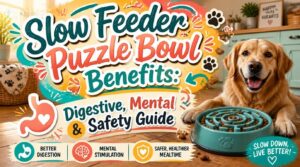
Your dog empties his bowl in under 60 seconds, then paces the kitchen looking for more. Minutes later, he’s gagging, burping, or worse. That’s not just messy eating. Fast eating strains the gut, raises the risk of bloat, and skips the body’s natural fullness signals entirely.
Vets see this pattern constantly, especially in deep-chested breeds and dogs who once had to compete for food. The fix isn’t complicated, though. Slow feeder puzzle bowl benefits go beyond pacing meals. They tap into your dog’s natural foraging instincts, ease anxiety, and turn a rushed routine into a moment of calm focus. What follows breaks down exactly why gulping happens, and how the right bowl solves it.
Table Of Contents
- Key Takeaways
- Why Dogs Eat Too Fast
- Digestive Benefits of Slow Feeders
- Mental Benefits of Puzzle Bowls
- Choosing The Right Slow Feeder
- Best Dogs for Puzzle Feeders
- Frequently Asked Questions (FAQs)
- What are the benefits of a slow feeder dog bowl?
- Are puzzle feeders good for dogs?
- How do I choose a slow feeder bowl for my Dog?
- Why should you eat a slow feeder?
- Do slow feeder bowls actually help?
- Do vets recommend slow feeder bowls?
- Why are puzzle bowls good for dogs?
- Are slow feeder bowls mentally stimulating?
- How long should a dog use a slow feeder daily?
- Can slow feeder bowls work with wet food?
- Conclusion
Key Takeaways
- Fast eating strains your dog’s digestion, increases the risk of bloat and GDV, and skips natural fullness signals, so slow feeders pace intake to protect your dog’s health.
- Dogs gulp food due to hunger, competition, anxiety, breed traits, or past food insecurity, so identifying the cause helps you pick the right solution.
- Slow feeders offer mental benefits too, tapping into foraging instincts, reducing boredom, and cutting destructive behaviors like tail chasing and furniture nipping.
- Choosing the right slow feeder means matching bowl depth, puzzle difficulty, and safe materials to your dog’s specific size, breed, and needs.
Why Dogs Eat Too Fast
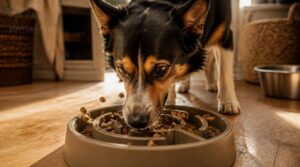
Fast eating rarely comes from bad manners. Your dog’s speed usually points to something specific going on, whether it’s instinct, stress, or habit. Here are the main reasons dogs gulp their food instead of eating at a normal pace.
If you’re feeding a husky, understanding how a raw diet affects digestion and pacing can help explain why some dogs gulp their meals so fast.
Hunger and Competition
Ever notice your dog inhale food the second the bowl hits the floor? That’s hunger-driven motivation at work. Caloric deficit shifts focus straight to eating.
In multi-dog homes, social feeding hierarchies fuel the rush. Dominant dogs eat fast, others rush to compete, and resource guarding can follow. Slow feeder bowls and puzzle feeders slow eating speed, easing this competitive drive naturally.
Anxiety Around Mealtime
Competition isn’t the only trigger. Some dogs feel genuine stress before food even hits the bowl, showing physical anxiety symptoms like panting, pacing, or a racing heart.
That tension often speeds up eating speed even further. Fast, frantic bites become a coping habit. Slow feeders interrupt this pattern gently, giving anxious dogs a structured, calmer way to approach mealtime.
Breed Eating Habits
Some of this comes down to genetics, not just personality. Greyhounds, with their lean build and long necks, often gulp food if meals aren’t paced. Deep-chested breeds like Great Danes face real bloating risk when eating fast. Brachycephalic dogs risk choking due to short snouts. Knowing your dog’s breed traits helps you choose the right slow feeder. Certain dogs, like Dachshunds, exhibit extremely rapid eating speeds that may require intervention.
Past Food Insecurity
Genetics aren’t the only driver behind fast eating. Dogs who once faced nutritional scarcity—shelter dogs or rescues from unstable homes—often gulp meals from learned survival habits.
Economic shocks and inconsistent access teach dogs to eat fast, favoring calorie-dense food over savoring it.
- Rescue dogs with uncertain pasts
- Dogs from multi-pet, resource-limited homes
- Former strays used to scavenging
This history calls for gentle behavioral modification, not punishment.
Signs of Gulping
What does gulping actually look like at the bowl? Watch for visible throat movements, loud swallow sounds, and a raised head after each rapid bite.
You’ll also notice tense shoulders or a stiff jaw—airway tension signs tied to mealtime anxiety reflexes. Left unchecked, fast eating raises the risk of bloating, gastric dilatation-volvulus, and digestive distress. A slow feeder bowl interrupts these patterns early.
Digestive Benefits of Slow Feeders
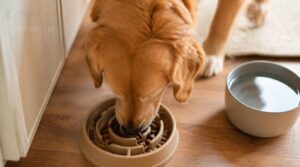
Fast eating doesn’t just look messy, it puts real strain on your dog’s body. Slowing things down gives the digestive system a fighting chance to do its job right. Here’s what actually improves once mealtime slows to a manageable pace.
Less Bloating and Gas
A gulping dog swallows air along with kibble, and that trapped air is a major driver of bloat and GDV. Puzzle bowls slow the pace, cutting air intake and gut fermentation.
Beyond slowing mealtime, durable treat-dispensing puzzle toys channel that same restless energy into calm, focused engagement long after the bowl is empty.
Gradual stomach filling, better saliva mixing, and steadier hydration all support smoother digestion — reducing gas, distress, and that uncomfortable post-meal swelling.
Lower Choking Risk
Big, dry chunks swallowed whole are a real airway obstruction risk. A slow feeder bowl forces smaller mouthful size, so your dog can’t grab and gulp a dangerous clump.
Puzzle feeders promote improved oral processing — more chewing, more saliva, less risk. This reduces gulping behavior and builds controlled swallowing rhythms, making mealtime genuinely safer for pet safety overall.
Reduced Vomiting
Does your dog vomit right after finishing dinner? Fast eating overwhelms the stomach, and a slow feeder bowl fixes this by pacing intake.
- Reduces air ingestion
- Relieves stomach pressure
- Times satiety signals better
- Stabilizes post-meal digestion
- Prevents gulping
This directly helps with preventing bloat in dogs and easing digestive distress.
Better Chewing Habits
A slow feeder dog bowl forces your dog to work for each bite, which naturally slows chewing rate. This boosts saliva production, helping neutralize acids and support digestion. Thorough chewing improves nutrient absorption, conditions jaw muscles, and reduces plaque buildup—supporting better oral hygiene. Pairing puzzle bowls with fiber-rich foods like carrots reinforces these eating habits, building lasting dental and digestive benefits.
Healthier Portion Pacing
Your dog’s stomach can’t say "I’m full" instantly—it takes time. A slow feeder dog bowl allows satiety hormone release to catch up with intake, improving fullness signal timing.
Benefits include:
- Better portion control
- Managing rebound hunger
- Reducing intake pressure
- Smarter calorie distribution strategies
- Support for dog digestive health
Slow feeding methods also add mental stimulation, keeping mealtime calm and controlled.
Mental Benefits of Puzzle Bowls
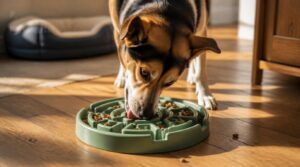
A slow feeder does more than protect your dog’s stomach. It gives your dog’s brain a job to do at mealtime. Here’s how that mental workout pays off.
Natural Foraging Behavior
Wild canines don’t get food handed to them. They search, sniff, and problem-solve for every meal, relying on sensory search patterns to track scent trails.
A puzzle slow feeder leans into that same drive. Your dog uses smell and memory to find hidden kibble, mimicking foraging and scavenging behavior nature built into their brain.
Reduced Boredom
Boredom relief comes down to novelty. A dog gulping from a flat bowl finishes in seconds, then has nothing left to do.
Puzzle bowls stretch that gap. Rotating patterns and hidden compartments keep curiosity alive, preventing the repetitive routine of "eat and wait." That mental engagement combats sedentary habits between meals, giving your dog’s brain the workout it craves alongside its stomach.
Calmer Mealtime Focus
Solving a puzzle takes concentration, and that shift changes everything. Instead of gulping, your dog reads pacing stress signals and slows down naturally.
This kind of mental engagement replaces frantic energy with focus. A slow feeder dog bowl turns mealtime into a calm ritual, supporting mindfulness and satiety instead of rushed, anxious eating.
Confidence Through Problem-solving
Every ridge cleared or compartment solved is a small win — that’s building self-efficacy through mastery experience growth.
Puzzle bowls demand:
- Trial and error
- Strategy adaptation skills
- Managing cognitive load
This repeated success creates positive feedback loops. The mental stimulation from these dog enrichment toys builds real problem-solving behaviors, not just cognitive stimulation for its own sake.
Less Destructive Behavior
Give a bored dog a job, and the chewing, pacing, and guarding tend to fade. Puzzle feeding cuts tail chasing and object guarding by 25% within a month, while furniture nipping drops 30%. Crate pacing shrinks from eight minutes to two.
Give a bored dog a job: puzzle feeding can cut destructive habits like tail chasing and furniture nipping within a month
That’s mental stimulation doing real work—channeling energy into problem solving behaviors instead of impulse biting or restless destruction.
Choosing The Right Slow Feeder
Not every slow feeder works for every dog, so picking the right one takes a little thought. Size, material, and design all play a role in whether your dog actually benefits. Here’s what to check before you buy.
Bowl Size and Depth
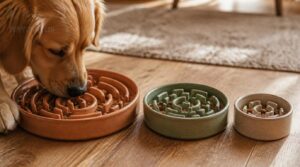
Size isn’t just about how much food fits—it controls pacing. Ideal well depth runs 1.5 to 3 inches, increasing snout travel distance and slowing gulpers down.
Match diameter to your dog:
- Large or giant breed? Go wider for diameter foraging simulation
- Small dogs need shallower wells (1–1.75")
- Rim height utility (0.5–1") stops spillage
Capacity versus pacing matters most for true slow feeding solutions.
Puzzle Difficulty Level
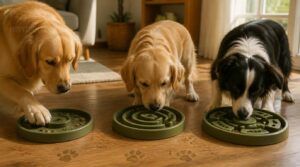
How hard should the puzzle actually be? Match it to measuring solving steps—easy levels need one nudge, hard ones demand multi-step sequences.
| Level | What’s Required |
|---|---|
| Easy | Simple paw nudge |
| Medium | Sequenced moves |
| Hard | Rotating, twisting parts |
Watch for visual feedback cues signaling progress, and pick puzzles offering skill progression paths so your dog advances without frustration.
Safe Bowl Materials
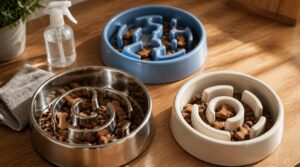
Material safety matters as much as puzzle design. Food-grade stainless steel resists bacterial growth and won’t leach chemicals over time. BPA-free plastic works fine too, though scratches can harbor bacteria—check regularly.
Ceramic bowls need non-toxic glaze safety verification; lead-free finishes are non-negotiable. Whatever you choose, prioritize hygienic cleaning methods and material durability testing to keep mealtime genuinely safe, not just fun.
Muzzle Shape Fit
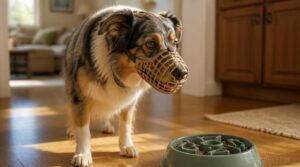
Wait, this is about slow feeders, but if your dog wears a muzzle too, fit matters just as much. Snout length impact guides depth. Cheek width clearance and nose bridge curvature prevent rubbing and gaps. Facial profile variations change opening size. Adjustable strap security keeps it snug without restricting breathing during ergonomic pet feeding or puzzle bowl sessions.
Cleaning and Durability
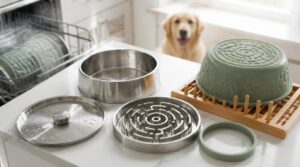
A slow feeder is only as good as its next wash. Look for BPA-free plastic, stainless steel, or silicone with low surface porosity, so odors and bacteria don’t linger.
Dishwasher safe parts and easy component disassembly make daily sanitization quick.
Prioritizing material longevity now means fewer cracks, stains, or replacements later—your dog gets safe pet products that actually last.
Best Dogs for Puzzle Feeders
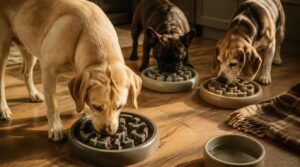
Not every dog needs a puzzle bowl, but some really do. Certain body types, ages, and personalities benefit the most from slower, more mindful meals. Here’s a look at which dogs top that list.
Puppies Learning Patience
Eight to twelve weeks is prime time for impulse control drills. A slow feeder dog bowl turns mealtime into practice: pups wait, then eat. Reward timing matters—praise the instant they pause. Start with three-second waits, build gradually, and stay consistent across routines. This mental stimulation curbs frustration and shapes calmer eating habits that stick for life.
Large Deep-chested Breeds
Great Danes, Mastiffs, Saint Bernards, and Irish Wolfhounds face real GDV risk when they gulp meals fast. A slow feeder dog bowl paces intake, easing pressure on that deep chest.
- Watch for restlessness or a bloated belly after eating
- Schedule cardiovascular health checks yearly
- Track breed growth monitoring through 18-24 months
- Pair meals with joint impact management
- Skip exercise right after eating
Overweight Dogs
Body deep-chested breeds need speed control for safety—overweight dogs need it for portion control. A slow feeder dog bowl stretches mealtime, curbing calorie creep from fast gulping.
- Pair with body condition scoring, not just scale weight
- Keep treats under 10% of daily calories
- Target energy imbalance: intake versus burn
- Recheck body condition monthly for obesity health risks
Anxious Fast Eaters
Fear-driven gulping looks different from hunger-driven gulping—trembling, avoided eye contact, rapid breathing. A slow feeder dog bowl interrupts that spiral by forcing pauses.
- Add mindful breathing breaks every 10-15 bites
- Keep mealtime routine consistent to lower stress hormones
- Reduce environmental noise and clutter nearby
This won’t fix bloat risk alone, but it calms the nervous system driving fast eating.
Dogs Needing Enrichment
Some dogs just need more to do. If your pup seems restless, bored, or fixated on food between meals, a slow feeder dog bowl satisfies natural foraging instincts while delivering real mental stimulation.
Pair it with rotating enrichment stimuli—different puzzle bowls, occasional olfactory scent games—to match their cognitive progression level. This combo builds emotional balance routines and offers genuine dog boredom relief, one thoughtful meal at a time.
Frequently Asked Questions (FAQs)
What are the benefits of a slow feeder dog bowl?
Funny how the fastest eaters often need the slowest bowls. A slow feeder dog bowl boosts nutrient absorption, improves satiety signal timing, builds impulse control, simulates foraging instinct, and lowers gastric dilatation and volvulus risk.
Are puzzle feeders good for dogs?
Yes. Puzzle bowls mimic foraging instinct, easing gastric dilatation and volvulus risk while boosting cognitive stimulation.
They slow gulping, support canine digestive health, and turn mealtime engagement into real problem-solving—reducing mental fatigue and boredom-driven behavior in most healthy dogs.
How do I choose a slow feeder bowl for my Dog?
Match the bowl to your dog’s size, food type, and problem-solving skill. Check bowl stability, compare material safety between stainless steel and BPA-free plastic, and consider dietary needs.
The right slow feeder dog bowl balances mental stimulation with safe, comfortable eating.
Why should you eat a slow feeder?
Is fast eating just a quirky habit, or a real hazard? It’s the latter.
A slow feeder dog bowl slows gulping, cuts air ingestion, aids gastric dilatation prevention, and boosts nutrient absorption—protecting digestion while adding mental stimulation to daily feeding behaviors.
Do slow feeder bowls actually help?
They genuinely do. A slow feeder dog bowl reduces bolus size, helps with aerophagia prevention, and paces satiety signal timing.
Result: better mechanical food breakdown, steadier post-meal energy, lower gastric dilatation-volvulus risk, plus real mental stimulation for digestive health and calmer feeding behaviors.
Do vets recommend slow feeder bowls?
Veterinarians often suggest slow feeder bowls as part of preventative veterinary care, especially for fast eaters prone to bloat. They’re a practical, low-risk bloat prevention strategy that aids digestive health and helps reduce gastric dilatation-volvulus concerns in at-risk breeds.
Why are puzzle bowls good for dogs?
Slowing down to eat actually speeds up recovery: foraging instinct stimulation turns mealtime into gentle work, giving satiety signals time to register while supporting gastrointestinal health and steady nutritional absorption—proof that a slower bowl means a healthier dog.
Are slow feeder bowls mentally stimulating?
Yes. Puzzle bowls tap into foraging instinct mimicry, requiring trial-and-error learning to reach food. This builds cognitive skills, rewards problem-solving behaviors, and delivers real mental fatigue benefits—turning mealtime into genuine enrichment rather than a quick, mindless gulp.
How long should a dog use a slow feeder daily?
Daily use works fine for most dogs, no breaks needed. Aim for 12 to 20 minutes per meal, twice daily. Watch for satiety signals and eater fatigue, adjusting sessions if your dog seems frustrated or finishes too fast.
Can slow feeder bowls work with wet food?
Wet dog food works well with shallow groove designs that guide licking.
Silicone bowls resist odor retention and clean easily, though narrow channels can trap residue.
Choose smooth surface patterns to prevent sticking and simplify post-meal cleaning.
Conclusion
A rushed meal is a sprint; a puzzle bowl turns it into a walk. That shift matters more than it looks.
The real slow feeder puzzle bowl benefits aren’t just fewer burps or less bloat. They rebuild trust between your dog and his food. You’re not just slowing a bowl down, you’re calming a nervous system.
Choose the right fit, and mealtime becomes a small daily win. Your dog eats safer, thinks sharper, and rests easier.
- https://shopyomp.com/blogs/magazine/the-science-behind-slow-feeders-how-they-improve-your-dog-s-eating-habits
- https://farmtopettreats.com/blogs/word-on-the-treats/why-you-should-use-slow-feeders-for-dogs
- https://thepuzzlefeeder.com/blogs/news/why-puzzle-feeders-are-essential-for-dogs-a-guide-to-healthier-eating-habits
- https://wefeedraw.com/blog/what-is-a-slow-feeder-dog-bowl
- https://www.healthypawspetinsurance.com/blog/dog-care/vet-recommended-slow-feeders-and-bowls.html