This site is supported by our readers. We may earn a commission, at no cost to you, if you purchase through links.
That expensive puzzle toy gathering dust in the corner didn’t fail because your dog is "too smart" or "not motivated." It failed because it didn’t match your dog’s skill level. A beginner dog faces a locked box designed for graduate-level problem solving, gets frustrated within thirty seconds, and walks away.
This happens more than most owners realize. How to choose puzzle toys comes down to matching difficulty, size, and safety to your dog’s actual abilities, not the flashiest option on the shelf.
Get this right, and mealtime becomes a confidence-building ritual instead of a battle. Get it wrong, and even the best toy ends up ignored on the floor.
Table Of Contents
- Key Takeaways
- Match Toys to Your Dog’s Skill
- Choose The Right Puzzle Type
- Consider Size and Chewing Style
- Check Safety and Materials
- Match Toys to Daily Goals
- Rotate and Introduce Puzzle Toys
- Frequently Asked Questions (FAQs)
- What are popular puzzle brands?
- What are 3/4 main characteristics that a popular toy must have?
- How often should I give my dog a puzzle toy?
- What are the three types of puzzles?
- What age is best for starting puzzle toys?
- Do puzzles help develop fine motor skills?
- How many pieces should a beginner puzzle have?
- What safety standards should puzzle toys meet?
- How can parents tell if a puzzle is too easy?
- Conclusion
Key Takeaways
- Choose puzzle toys based on your dog’s actual skill level, starting with easy gravity-based dispensers before progressing to sliding tiles and multi-step puzzles.
- Match toy size and durability to your dog’s jaw strength and chewing style, checking that no piece is small enough to swallow or lodge in the throat.
- Prioritize safety by verifying non-toxic materials, smooth edges, and secure moving parts, and always supervise play sessions.
- Keep sessions short (5-10 minutes), use high-value treats, rotate toys weekly, and watch your dog’s body language to build confidence and prevent frustration.
Match Toys to Your Dog’s Skill
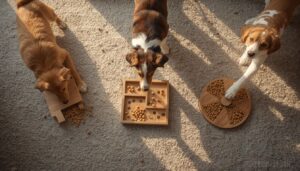
Every dog solves problems at a different pace, so the right puzzle toy depends on where your dog is starting out. Picking one that matches your dog’s current skill level keeps play fun instead of stressful.
If you’re unsure how frequently to introduce these challenges, this guide on how often dogs should play with puzzle toys can help you find a rhythm that fits your dog’s pace.
Here’s how to spot the right fit, from first-timers to seasoned pros.
Beginner Treat Dispensers
Where should your dog start? With something simple. Beginner dispensers rely on gravity-based release or gentle wobble toy physics, letting kibble tumble out as your dog nudges it.
- Wide openings prevent frustration
- Food-grade, dishwasher-safe materials
- Right kibble size selection matters
Using interactive puzzle toys can provide essential cognitive challenges for growing pups.
Sanitize after each session. This builds confidence before tougher puzzles.
Intermediate Sliding Puzzles
Once your dog masters gravity dispensers, sliding puzzles add real logic puzzle demands. Fixed-grid tiles move only horizontally or vertically, using one empty space as the pivot.
Your dog nudges tiles section by section, building pattern recognition skills. Grid size matters: smaller grids suit beginners, while larger ones test critical thinking and problem-solving skills through longer solution paths.
Advanced Multi-step Toys
Sliding tiles look simple next to these. Multi-step toys demand sequential action planning—sliding compartments, rotating lids, and push-pull parts in a set order.
- Requires multiple moves before treats release
- Uses internal pathway logic for hidden compartments
- Offers adjustable challenge levels as skills grow
- Built for durability for chewers
- Rewards timed to encourage each correct step
Avoid Frustration Early
Multi-step toys are impressive, but rushing into them sets your dog up to fail. Start with quick success paths—simple wins within 3 to 5 minutes.
| Do This | Avoid This |
|---|---|
| Easy wins first | Complex toys too soon |
| Watch stress signals | Ignoring yawns, licking |
End sessions positively. Stress signal monitoring protects confidence before challenge increases.
Increase Difficulty Gradually
Rarely does a dog master a puzzle overnight, so let skill build in small steps. Track your dog’s success rate before adding complexity.
- Add one new twist at a time
- Watch completion speed, not just success
- Extend solve time gradually
- Introduce sliding lids before locking ones
- Reset to easier levels if frustration creeps in
Gradual scaffolding keeps confidence intact while sharpening problem-solving skills.
Choose The Right Puzzle Type
Not every puzzle toy works the same way, and that’s a good thing. Your dog’s personality, from food-driven to nose-led, points toward the best fit. Here are five types worth knowing before you buy.
For senior dogs with sensitive gums, this guide to choosing dental-friendly puzzle toys breaks down soft, rounded designs that make chow time gentler on aging teeth.
Treat-dispensing Balls
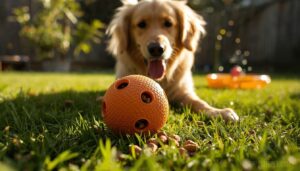
Roll it, nudge it, watch the kibble fall. These balls release treats through built-in openings as your dog plays, with adjustable holes to control difficulty.
Look for impact resistant shells for tough chewers, plus dishwasher-safe, BPA-free materials. Some even float, making them great for water play on hot days.
Snuffle Mats

Snuffle mats hide treats in fabric loops, tapping into your dog’s natural scenting behavior for rich sensory exploration.
Loop density varies difficulty—denser mats challenge pro sniffers. Look for a non-slip backing so play stays put.
Most mats are machine washable; toss in cold water, skip the dryer. This builds problem solving skills through tactile, engaging play.
Lick Mats
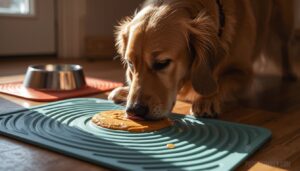
Slow, steady licking turns snack time into calming sensory play. Made from food-grade silicone, quality mats resist tearing, survive freezing and dishwashing, and stay non-toxic even with heavy use.
Ridged textures slow the pace, supporting digestion and easing anxiety. Wipe clean or toss in the dishwasher—maintenance takes seconds, making lick mats an easy daily addition to your dog’s routine.
Hide-and-slide Puzzles
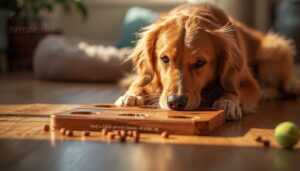
Hide-and-slide puzzles ask your dog to think several moves ahead, not just paw at one spot.
Look for rounded edges and channels that keep tiles gliding smoothly, since jamming leads to frustration. Quality builds use non-toxic, durable materials that hold up under repeated pushing and nudging—rewarding patience with real, satisfying results.
Interactive Feeder Toys
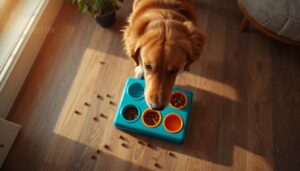
What if mealtime became your dog’s favorite brain workout? These toys reward foraging behavior naturally, tapping into instincts your dog already has.
- Watch tails wag as kibble finally drops
- Feel proud seeing your dog problem-solve
- Notice calmer energy after a good mental workout
- Enjoy slower, safer eating habits
- Build trust through play
Look for adjustable difficulty settings and easy cleaning maintenance—dishwasher-safe parts save real time.
Consider Size and Chewing Style
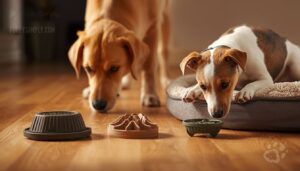
Not every dog plays the same way, and puzzle toys need to match that. Size, jaw strength, and chewing habits all affect what’s safe and what lasts. Here’s what to look for before you buy.
Small Dog Toy Sizes
Why does size matter so much for tiny breeds? A Chihuahua’s mouth width differs greatly from a Pomeranian’s. Aim for 2 to 3 inches in diameter for puzzle toys. If you’re just starting out, check out these beginner treat puzzle toys sized right for small breeds to find options that won’t disappear into your dog’s mouth.
Always test that a toy can’t fit fully inside your dog’s mouth—this prevents swallowing. Measure width, not just weight, since a light toy can still pose a choking hazard.
Large Dog Durability
Big dogs need toys built for serious force. Look for nylon copolymer construction rated for bite force resistance up to 3000 psi.
Check for structural ribbing inside hollow shapes, plus high-mass design that adds at least 20% more material than standard toys. Strong abrasion ratings matter too, since rough play wears surfaces down fast over time.
Gentle Chewers
Not every dog wants a workout at mealtime. Gentle chewers do best with plush fabric or soft rubber that cushions their mouth, not rigid plastic.
Choose pliable materials with rounded, smooth edges. Soft textures support calm play, aid dental hygiene, and offer sensory engagement through squeaks or gentle resistance—without choking risks from parts breaking off.
Heavy Chewers
Some dogs treat every toy like a demolition project. For them, you need reinforced rubber or nylon composites built to resist jaw forces above 200 psi.
Look for internal ribbing and vulcanized rubber, which resist tearing and won’t collapse under repeated bite pressure. Modular replacement parts let you extend a toy’s life instead of replacing it whole.
Choking Hazards
What’s small enough to swallow but big enough to lodge? Any piece under 1.25 inches counts as a risk.
- Detachable components, like bells or plastic buttons, can break loose during chewing
- Small fragments from cracked plastic or splintered wood create sharp, swallowable pieces
- Loose stuffing from torn plush toys can block airways if inhaled
Inspect toys often. Replace anything with loosening parts immediately.
Check Safety and Materials
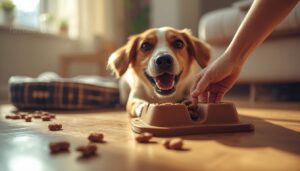
A fun puzzle toy only works if it’s also a safe one. Before you hand it over, check carefully what it’s made of and how it’s built. Here’s what to check before letting your dog dig in.
Non-toxic Materials
Your dog’s chew toy shouldn’t be a hidden hazard. Look for BPA-free plastics and medical-grade silicone, both built to resist saliva without breaking down. Reputable brands back their claims with food-grade certifications and heavy metal testing, ruling out lead or cadmium.
Wooden puzzles should use water-based finishes, not solvent-based coatings. Think of it like choosing snacks for a toddler: you check the label before you trust it.
Smooth Edges
Run your finger along every seam before handing a toy over. Rounded corner safety stops sharp bites from forming, and precision milling keeps radii consistent batch after batch.
- Prevents micro-splinters near gums
- Non-snagging contours protect fur and collars
- Passes tactile smoothness checks
- Resists cracking under heavy chewing
Rough spots invite injury; smooth ones invite confident play.
Secure Moving Parts
Sliding compartments and spinning treat wheels only stay fun when they stay attached. Check for secure moving parts with tight mechanical linkage stability, no wobbling joints. Vibration resistance bolts keep pieces from loosening during enthusiastic play.
Trial and error is part of learning, but loose parts turn discovery into choking warnings. Well-built housings protect fingers, noses, and curious paws alike.
Easy Cleaning
Slobber and mashed treats build up fast, so non-porous coatings matter. Wipe-clean surfaces beat porous ones every time.
Look for:
- Smooth, sealed materials
- Removable compartments
- Dishwasher-safe parts
- Quick-dry designs
- No hidden treat pockets
Simple sanitizing routines keep bacteria away. Durable, easy-clean builds save you time and protect your dog’s health long-term.
Supervised Play
Even the safest puzzle toy still needs your eyes on it. Stay within arm’s reach, watch behavioral cues like pacing or fixating, and step in before frustration builds.
| Watch For | Action |
|---|---|
| Stress signals | Rotate toy |
| Loose parts | Remove immediately |
| Fatigue signs | End session |
| Mouth sores | Post-play inspection |
Choking hazards demand quick intervention strategies, not delayed reactions.
Match Toys to Daily Goals

Every puzzle toy should solve a real problem for your dog, not just sit in a toy bin. Think about what your dog needs most right now, whether that’s a calmer mealtime or a busier mind. Here’s how to match the right toy to the right goal.
Slow Down Eating
Why do some dogs inhale their food in seconds? Puzzle feeders force mealtime pacing by making dogs work for each bite. This slower rhythm aids digestion and helps regulate fullness cues, so your dog stops eating before overdoing it. Slower meals also curb glucose spikes after eating. A treat-dispensing ball or lick mat turns gulping into a mindful, satisfying routine.
Reduce Boredom
Once mealtime pacing is handled, the next goal is keeping your dog’s mind busy between meals. Boredom often leads to chewing, barking, or restlessness. Rotating puzzle types provides ongoing mental stimulation and prevents the same old habits from creeping back.
- Snuffle mats engage scent-driven exploration
- Hide-and-slide puzzles add variety rotation
- Rotate toys weekly for cognitive engagement
Burn Mental Energy
Working a puzzle toy demands real cognitive load, not just physical effort. Your dog’s brain burns extra glucose solving multi-step problems, similar to a logic puzzle for humans.
Watch for mental fatigue signs like slower attempts or lost interest. Sustained focus builds gradually, so choose toys that stretch problem-solving skills without overwhelming young or developing minds.
Ease Separation Stress
A puzzle toy tied to a predictable departure ritual eases alone-time anxiety. Set it down in your dog’s dedicated safe space right before you leave.
Pair it with calming background noise to mask outside triggers. Time it for peak mental enrichment, keeping minds busy for those first anxious minutes—while you manage attachment bias across family members.
Support Training Routines
Puzzle toys double as training tools when you pair them with clear goals and positive reinforcement. Use consistent visual cues, like a hand signal, before revealing the puzzle.
Good session timing matters: five to ten minutes builds focus without exhausting your dog. This routine sharpens problem-solving skills and concentration, supporting long-term cognitive development while giving muscles time to recover between challenges.
Rotate and Introduce Puzzle Toys
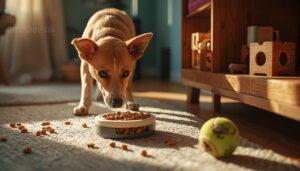
Bringing home the right puzzle toy is only half the job. Your dog also needs a smart way to start using it, so it builds confidence instead of giving up. Here’s how to introduce and rotate toys the right way.
Start With Easy Wins
Pick one toy with a single moving part and let your dog solve it in under two minutes. Quick success builds confidence fast. Keep that first session to 5-7 minutes, then stop. Praise calmly the moment they win—this pairs the puzzle with good feelings, not frustration, right from the start.
Use High-value Treats
Grab your dog’s attention with nutrient-dense rewards like real meat or cheese, not regular kibble. These outperform everyday snacks in high-distraction environments and keep focus locked on you.
- Rotate flavors to prevent taste fatigue
- Break treats small for portion control
- Pair with verbal praise for clarity
- Manage caloric intake across sessions
- Save the best rewards for first attempts
Keep Sessions Short
Five to ten minutes is the sweet spot—long enough for learning through play, short enough to avoid cognitive fatigue.
| Session Length | Best For | Watch For |
|---|---|---|
| 5 min | New toys | Frustration signs |
| 8 min | Practiced toys | Sustained focus |
| 10 min | High-energy dogs | Boredom cues |
End on success. That final win fuels tomorrow’s motivation.
Rotate Weekly Toys
A weekly swap keeps novelty alive and prevents your dog from losing interest. Store off-rotation toys out of sight, then reintroduce them with a quick, playful presentation to spark curiosity again.
Track which toys you’ve used to avoid repeats. This structured rotation helps with learning through play, sharpens concentration, and builds skill progression steadily, one engaging session at a time.
Watch Engagement Signs
Your dog’s body tells you everything. Ears perked forward, weight leaning in, tail wagging slow and broad — that’s focused enjoyment, not stress.
Perked ears, a leaning body, and a slow wagging tail reveal focused enjoyment, not stress
- Soft panting that quickens with each new attempt
- A low grrr or soft chirp during tricky moments
- Quick glances at you after a successful solve
- Nuzzling the toy, asking for round two
Silence, then success? That’s mastery in action.
Frequently Asked Questions (FAQs)
What are popular puzzle brands?
Nina Ottosson, Outward Hound, and Kong lead the pack, with puzzle feeders praised for durability and clever design. Trixie and PetSafe also offer solid options, blending mental stimulation with sturdy builds dogs can’t easily destroy during enthusiastic play sessions.
What are 3/4 main characteristics that a popular toy must have?
A great toy needs open-ended play that grows with your dog’s skills, durable construction to survive rough chewing, and tactile engagement through textures and grips. Add easy maintenance and safe, secure parts, and you’ve got a toy built for lasting engagement.
How often should I give my dog a puzzle toy?
Too much, too soon, and your dog checks out. Three to four sessions weekly works well, 10–15 minutes to start. Puppies need shorter bursts, seniors gentler pacing, and watch for fatigue signs before extending playtime.
What are the three types of puzzles?
Puzzles generally fall into three categories: logical deduction games requiring reasoning without guesswork, pattern recognition tasks predicting sequences, and spatial manipulation challenges like sliding puzzles.
Each builds different skills, so choosing across all three keeps your dog’s mind sharp and engaged.
What age is best for starting puzzle toys?
Early curiosity signals readiness, early handling skills confirm it: most puppies can start around 12 to 16 weeks, once basic cognitive development allows for simple cause-and-effect toys, then progress gradually as skill level and chewing habits mature.
Do puzzles help develop fine motor skills?
Yes, nose-to-paw manipulation builds pincer grasp development and dexterity through play.
Sliding pieces and lifting flaps sharpen hand-eye coordination, bilateral coordination, and motor planning skills, giving your dog practical problem-solving skills alongside sharper paw dexterity.
How many pieces should a beginner puzzle have?
A first-timer once completed a 500-piece landscape and swore off puzzles forever. Piece count wasn’t the problem—image complexity was.
Aim for 100 to 300 pieces with bold, simple imagery. Build skills before increasing difficulty.
What safety standards should puzzle toys meet?
Look for ASTM compliance, non-toxic materials, and secure parts sized to prevent choking. Rounded edges and simple sanitization matter too. These safety standards protect your dog through trial and error, letting exploration stay safe and fun.
How can parents tell if a puzzle is too easy?
Fast completion, no trial and error, and quick boredom cues signal it’s too easy. Rapid success without problem solving or concentration means minimal cognitive development is happening—your dog needs more logical reasoning challenges to stay engaged.
Conclusion
Picture a nervous rescue dog named Biscuit, ignoring every toy until his owner swapped a locked puzzle box for a simple treat-dispensing ball. Within minutes, he was nudging it eagerly across the kitchen floor.
That small shift proves the real point behind how to choose puzzle toys: success isn’t about complexity, it’s about fit. Match skill, size, and safety first. Do that, and your dog won’t just play. He’ll thrive, one solved puzzle at a time.
- https://playroomcollective.com/blogs/our-blog/wooden-toys-safety-guide-everything-parents-need-to-know
- https://opalautism.com/how-to-choose-toys-and-activities-that-support-development-in-children-with-autism
- https://www.siammandalay.com/2021/05/19/suitable-puzzles-for-my-child-age-type-and-gender
- https://castorland.pl/en/blog/how-to-choose-a-puzzle-for-children
- https://www.melissaanddoug.com/blogs/living-playfully/choosing-puzzles-for-your-child