This site is supported by our readers. We may earn a commission, at no cost to you, if you purchase through links.

Your dog shreds the couch cushion, digs a crater by the fence, then barks at nothing for twenty minutes straight. That’s not defiance. That’s an idle brain looking for a job.
Dogs bred to herd, hunt, or track need work for their noses and paws, not just their legs. A tired body doesn’t guarantee a settled mind, and daily walks alone rarely fix it.
The right mental stimulation toys for bored dogs turn that restless energy into focused, satisfying effort. Below, you’ll find ten vet-backed picks built to challenge, calm, and genuinely wear out even the busiest brain.
Table Of Contents
- Key Takeaways
- 10 Best Mental Stimulation Toys for Bored Dogs
- 1. LiveKey Dog Snuffle Feeding Mat
- 2. Nina Ottosson Dog Brick Puzzle
- 3. Tuffy Corn Dog Durable Plush Toy
- 4. KONG Classic Stuffable Dog Toy
- 5. TRIXIE Gambling Tower Dog Puzzle
- 6. Pet Zone IQ Treat Ball
- 7. Outward Hound Hide-A-Squirrel Plush Dog Toy
- 8. StarMark Small Interactive Dog Toy
- 9. Zogoflex Interactive Treat Puzzle
- 10. Wooden Interactive Dog Puzzle Toy
- Choosing Toys for Bored Dogs
- Best Toy Types for Enrichment
- How Mental Toys Help Dogs
- Keeping Dogs Busy Safely
- Frequently Asked Questions (FAQs)
- How to mentally stimulate a bored dog?
- What toys mentally stimulate dogs?
- How to stimulate an understimulated dog?
- What is the best boredom busting toy for dogs?
- How often should dogs play with puzzle toys?
- What age should dogs start using puzzle toys?
- Do mental toys help with separation anxiety issues?
- How long until dogs master a puzzle toy?
- Conclusion
Key Takeaways
- Destructive behaviors like chewing, digging, and barking usually signal an understimulated brain rather than defiance, so mental enrichment matters as much as physical exercise.
- Match a toy to your dog’s skill level, size, and chewing style, since a puzzle that’s too hard or a toy that’s too fragile will frustrate or fail fast.
- The five main toy types—puzzle toys, treat dispensers, snuffle mats, stuffable chews, and plush hide-and-seek toys—each engage different instincts, so rotating them weekly keeps enrichment effective.
- Consistent safety habits, like supervising first sessions, cleaning toys regularly, and replacing damaged ones quickly, are just as important as choosing the right toy in the first place.
10 Best Mental Stimulation Toys for Bored Dogs
A bored dog can turn into a destructive one fast, and the right toy makes all the difference. You don’t need a dozen gadgets, just a few smart picks that match your dog’s habits and skill level. Here are ten toys worth adding to your dog’s routine.
If your pup tends to chew through everything in sight, check out this guide to best chew toys for bored dogs for picks built to last.
1. LiveKey Dog Snuffle Feeding Mat
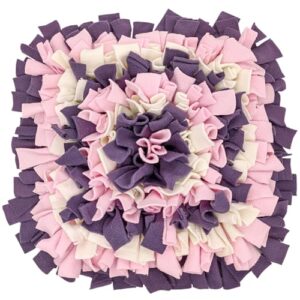
Some dogs inhale their food like it’s a race. This mat fixes that by hiding kibble in dense fleece strips, forcing your dog to sniff and paw their way to each bite.
The non-slip base keeps it steady during enthusiastic foraging, and it’s machine-washable for easy cleanup. Best of all, the modular design lets you connect multiple mats for larger dogs or bigger challenges.
It’s not a chew toy, though, so keep an eye on aggressive chewers.
| Best For | Dogs who eat too fast, get bored easily, or just need a fun way to use their nose and brain during mealtime. |
|---|---|
| Material | Polar fleece |
| Supervision Required | Yes |
| Difficulty Level | Beginner |
| Cleaning Method | Machine washable |
| Chewer Suitability | Not for chewers |
| Primary Purpose | Foraging mat |
| Additional Features |
|
- Slows down speed-eaters, which helps with portion control and digestion
- Machine-washable and built with reinforced stitching for easy, lasting cleanup
- Modular design lets you link mats together for bigger dogs or bigger challenges
- Not meant for heavy chewers, since they can damage the fleece fibers over time
- A single mat may be too small for very large breeds or multi-dog households
- Needs supervision during rough play, since excessive digging can wear down the stitching faster
2. Nina Ottosson Dog Brick Puzzle
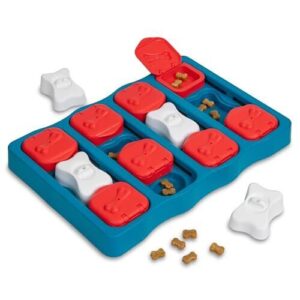
If your dog’s mastered the snuffle mat, this puzzle raises the stakes. The Dog Brick hides treats under 20 compartments, using flip lids, sliding blocks, and removable bone covers dogs must nudge aside.
At Level 2, it’s built for dogs who already understand basic puzzle mechanics, not total beginners.
You can adjust difficulty just by rearranging the bones over different compartments. It’s hand-wash only, and durable plastic holds up to daily use, though supervision matters since pieces detach.
| Best For | Dogs who’ve already gotten the hang of simpler puzzles and are ready for a more advanced mental challenge. |
|---|---|
| Material | Plastic |
| Supervision Required | Yes |
| Difficulty Level | Intermediate |
| Cleaning Method | Hand wash |
| Chewer Suitability | Not indestructible |
| Primary Purpose | Treat puzzle |
| Additional Features |
|
- Keeps dogs mentally engaged with 20 hiding spots and multiple interaction styles (flip lids, sliders, bone covers)
- Slows down fast eaters while doubling as a fun brain workout
- Difficulty can be adjusted by rearranging the bones, so it grows with your dog’s skills
- Not indestructible, so it needs supervision during play
- Hand-wash only, which adds a bit of extra upkeep
- Best suited for dogs with some puzzle experience, not total beginners
3. Tuffy Corn Dog Durable Plush Toy
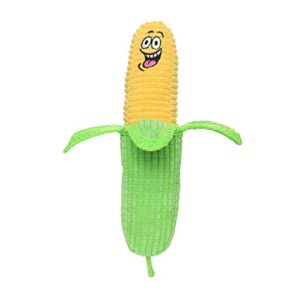
Not every enrichment toy needs compartments and sliding blocks. Sometimes your dog just wants to shake something and hear a squeak, which is where the Tuffy Corn Dog earns its spot.
Its two-in-one design lets the corn cob slide out from the stalk, turning tug time into a hide-and-seek puzzle. Four fabric layers and covered seams resist tearing, while the enclosed squeaker adds auditory stimulation without exposing choking hazards during rougher play sessions.
| Best For | Puppies and light-to-moderate chewers who love squeaky toys and interactive play, but aren’t hard on their toys. |
|---|---|
| Material | Plush fabric |
| Supervision Required | Yes |
| Difficulty Level | Beginner |
| Cleaning Method | Machine washable |
| Chewer Suitability | Not for aggressive chewers |
| Primary Purpose | Interactive plush toy |
| Additional Features |
|
- Multi-layer plush construction with reinforced stitching adds extra durability
- Built-in safety pockets keep squeakers secure during play
- Floats in water and is machine-washable for easy cleanup after outdoor fun
- Not built to withstand aggressive or heavy chewers
- Squeakers are removable, so supervision is needed to prevent ingestion
- Stuffing may start to come loose over time with regular use
4. KONG Classic Stuffable Dog Toy
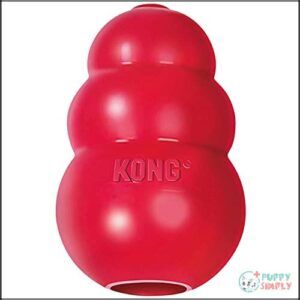
Squeaky toys have their charm, but sometimes your dog needs a slower, chewier challenge. Enter the KONG Classic, a red rubber icon built for stuffing with kibble, peanut butter, or KONG treats.
Its erratic bounce keeps fetch interesting, while the durable natural rubber holds up for average chewers. Freeze it stuffed for longer engagement, or rotate fillings to keep things fresh. Dishwasher safe and made in the USA, it’s a reliable, no-fuss pick for daily mental workouts.
| Best For | dogs with average chewing habits who need mental stimulation, boredom relief, and a long-lasting treat-stuffed challenge. |
|---|---|
| Material | Natural rubber |
| Supervision Required | Not specified |
| Difficulty Level | Beginner |
| Cleaning Method | Dishwasher safe |
| Chewer Suitability | Average chewers |
| Primary Purpose | Chew toy |
| Additional Features |
|
- Durable natural rubber holds up well for everyday chewers and is vet-recommended
- Hollow design lets you stuff it with kibble, peanut butter, or treats for extended engagement, and it’s dishwasher safe for easy cleanup
- Erratic bounce adds excitement to fetch and interactive play sessions
- Not built to withstand very heavy or aggressive chewers over time
- Initial rubber smell can be strong until washed or briefly boiled
- Medium size may be too big for toy breeds or very small puppies
5. TRIXIE Gambling Tower Dog Puzzle
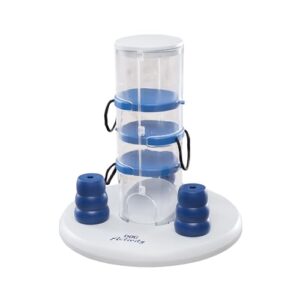
Three discs, three cones, one clever dog trying to outsmart it all — that’s the TRIXIE Gambling Tower. Treats hide inside both layers, so your dog has to lift, pull, and slide pieces to cash out the reward.
Since puzzle toys like this work best in short bursts, pace sessions using age-appropriate exercise guidelines for puppies to keep playtime fun without overtiring your pup.
Start easy by filling just one or two spots, then load up more hiding places as your dog gets sharper. At roughly 10 inches wide and 10.5 tall, it’s compact enough for apartments but still challenging. The blue-and-white plastic body wipes clean with warm, soapy water.
| Best For | food-motivated puppies, senior dogs, and small-to-medium breeds who need mental stimulation without being aggressive chewers. |
|---|---|
| Material | BPA-free plastic |
| Supervision Required | Yes |
| Difficulty Level | Intermediate |
| Cleaning Method | Not dishwasher safe |
| Chewer Suitability | Not specified |
| Primary Purpose | Treat puzzle |
| Additional Features |
|
- Two-level design with lift-up cones and slide-out drawers keeps dogs engaged and thinking
- Difficulty adjusts easily by adding more treats or hiding spots as your dog improves
- BPA-free, lead-free plastic with non-slip rubber feet makes it safe and steady during play
- Plastic parts are on the flimsy side and won’t hold up well against strong chewers or larger dogs
- Requires supervision since pieces can be knocked over, chewed, or create a choking hazard
- Not dishwasher safe, and the crevices can trap water if it isn’t cleaned thoroughly by hand
6. Pet Zone IQ Treat Ball

Roll it, nudge it, watch the kibble drop — that’s the whole game with the Pet Zone IQ Treat Ball. An interior disc lets you dial difficulty up or down as your dog gets smarter, no tools required.
It comes in 3-inch and 4-inch sizes, so small and large breeds both get a fair shot. The hard plastic shell disassembles for easy washing, though owners note the top can loosen and the ball gets loud on hardwood.
| Best For | medium to large dogs weighing 40–90 pounds who need extra mental stimulation and could benefit from eating more slowly. |
|---|---|
| Material | Rigid plastic |
| Supervision Required | Not specified |
| Difficulty Level | Adjustable |
| Cleaning Method | Disassembles for cleaning |
| Chewer Suitability | Not for aggressive chewers |
| Primary Purpose | Treat ball |
| Additional Features |
|
- Adjustable interior disc lets you increase difficulty as your dog gets better at the game
- Disassembles easily for thorough cleaning
- Helps slow down fast eaters while keeping them mentally engaged
- Not suitable for toy breeds, very small dogs, or aggressive chewers
- Top half can loosen over time and the plastic may chip with heavy use
- Can be noisy on hard floors and a bit fiddly to refill
7. Outward Hound Hide-A-Squirrel Plush Dog Toy
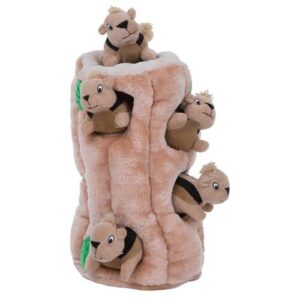
Hide a squirrel, and you’ve basically declared war on your dog’s boredom. This 2-in-1 plush puzzle hides squeaky squirrels inside a soft tree trunk, rewarding your dog with sound and scent as they dig them out.
It comes in four sizes, fitting everything from terriers to retrievers. Just don’t expect it to survive committed chewers — tails and ears tear easily, so supervise play and swap it for tug or fetch once the hunting’s done.
| Best For | This toy is best for dog owners looking for a mentally stimulating game that taps into their pup’s natural foraging instincts, whether they’ve got an energetic puppy or a scent-driven adult dog. |
|---|---|
| Material | Polyester |
| Supervision Required | Yes |
| Difficulty Level | Beginner |
| Cleaning Method | Spot clean |
| Chewer Suitability | Not for heavy chewers |
| Primary Purpose | Hide-and-seek toy |
| Additional Features |
|
- Combines hide-and-seek fun with squeaky play for lasting engagement
- Soft, cuddly plush design doubles as a comfort toy when playtime’s over
- Versatile enough for fetch, tug, or solo sniffing sessions
- Not built to withstand heavy or aggressive chewers
- Small parts like tails and ears can tear off and pose a choking risk
- Needs supervision at all times, so it’s not a hands-off solution for boredom
8. StarMark Small Interactive Dog Toy
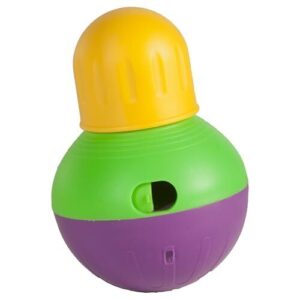
Small mouths need small challenges, and this Bob-A-Lot-style roller fits the bill nicely. Nudge it, and treats drop from a central cavity with adjustable openings, so you control how fast the rewards come.
Built for dogs in the 15-40 pound range, it’s light enough to roll across hardwood without denting your floors or your dog’s enthusiasm. Removable inserts make cleanup simple, though supervise early sessions since small parts are involved.
| Best For | Small to medium, food-motivated dogs (roughly under 40 lbs) who need mental stimulation and slower mealtimes, including determined chewers. |
|---|---|
| Material | Molded plastic |
| Supervision Required | Not specified |
| Difficulty Level | Intermediate |
| Cleaning Method | Not fully disassembles |
| Chewer Suitability | For aggressive chewers |
| Primary Purpose | Treat dispenser |
| Additional Features |
|
- Adjustable dispensing gate lets you control kibble flow and difficulty level
- Heavy, impact-resistant plastic holds up well to rough play and aggressive chewers
- Dual access points (top lid and bottom slot) work for both meals and treat puzzles
- Small top fill hole is tricky to load without a funnel or similar tool
- Bottom door can pop open on its own, making the puzzle less challenging
- Can’t be fully taken apart for cleaning, and it’s noisy on hard floors
9. Zogoflex Interactive Treat Puzzle
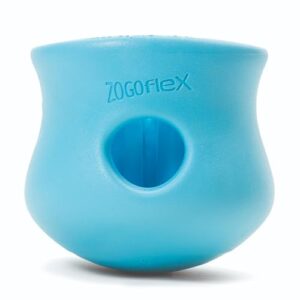
Qwizl treat puzzles reward persistence, not luck. The Zogoflex construction resists chewing while dogs rotate and tug to release kibble or peanut butter from hidden cavities.
It’s BPA-free and dishwasher safe, so cleanup won’t eat your evening. Freeze it for cooling relief, or use it as a training reward dispenser between sessions.
Available across sizes for small to large breeds, it works solo or with a handler nearby. Just supervise strong chewers—no toy survives determination unchecked.
| Best For | Dog owners looking to slow down fast eaters, curb boredom, and add mental stimulation to mealtime or training sessions. |
|---|---|
| Material | Zogoflex plastic |
| Supervision Required | Yes |
| Difficulty Level | Beginner |
| Cleaning Method | Dishwasher safe |
| Chewer Suitability | Not for aggressive chewers |
| Primary Purpose | Treat puzzle |
| Additional Features |
|
- Durable, BPA-free Zogoflex material that’s top-rack dishwasher safe for easy cleanup
- Versatile enough to hold kibble, wet food, peanut butter, or frozen treats for extended play
- Encourages problem-solving and slows down fast eaters, reducing mealtime anxiety
- Not recommended for aggressive chewers, who may damage the toy
- Requires adult supervision to prevent ingestion of small parts or treat pieces
- Larger sizes may not fit standard dishwasher racks, so dimensions should be checked first
10. Wooden Interactive Dog Puzzle Toy
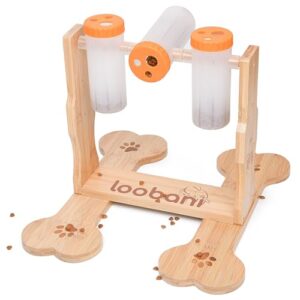
Solid wood construction with a smooth, non-toxic finish gives this puzzle real staying power against determined paws. Sliding panels and lift lids hide treats in multiple compartments, rewarding precise, deliberate movement rather than brute force.
The weighted, non-slip base keeps it steady during play. Adjust difficulty by removing compartments as your dog progresses.
Wipe with a damp cloth—never soak, since wood warps easily. Best for small to medium dogs, sessions run 5 to 20 minutes for solid mental payoff.
| Best For | This puzzle is best for small to medium breed dogs, including puppies and seniors, who need mental stimulation and slower, more deliberate mealtimes. |
|---|---|
| Material | Wood |
| Supervision Required | Not specified |
| Difficulty Level | Intermediate |
| Cleaning Method | Dishwasher safe |
| Chewer Suitability | Not specified |
| Primary Purpose | Slow feeder |
| Additional Features |
|
- Three adjustable bottles and height settings let you customize difficulty as your dog progresses
- Heavy-duty, non-slip base keeps it stable during even determined play
- Large capacity (up to 8–11 cups) makes it useful as a slow feeder to curb overeating
- Not ideal for large breeds, since it’s designed with small to medium dogs in mind
- Requires manual adjustment of bottle heights and lids to change difficulty—no automatic settings
- Wood construction means it needs gentle cleaning (damp cloth or careful rinsing) rather than a deep soak
Choosing Toys for Bored Dogs
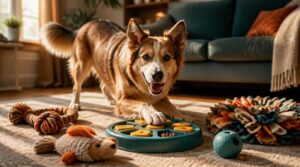
Not every toy fits every dog, and picking the wrong one can leave your pup frustrated or bored all over again. A few simple factors make the difference between a toy that gets ignored and one that gets used every day. Here’s what to check before you buy.
Match Your Dog’s Skill Level
Ever handed your dog a puzzle way above their pay grade, only to watch them give up in ten seconds? That’s a frustration signal, not a training failure.
A dog giving up on a puzzle in ten seconds isn’t failure, it’s frustration talking
Start by checking their mental level honestly:
- Beginners: one-step treat dispensers
- Intermediates: multi-compartment puzzles
- Pro dogs: sequential task building
- Watch for pawing, whining, or walking away
Scale difficulty progressively, reinforcing mastered skills before introducing harder interactive puzzles. This builds real problem-solving skills, not just boredom relief. You can also incorporate environmental enrichment strategies to keep your pet engaged and mentally sharp.
Pick The Right Toy Size
Muzzle width is your best starting point—toys should be 2 to 3 times that measurement for safe carrying. Small breeds under 20 pounds need 4-6 inch toys; medium dogs, 6-8 inches; large breeds, 8-12 inches to prevent choking hazards.
Puppies start smaller (4-5 inches), scaling up through growth stages. Senior dogs often do best with slightly larger, softer options for easier handling.
Consider Chewing Habits
Size matters, but how your dog chews matters just as much. Aggressive chewers need durable pet products built for heavy jaw pressure, while gentle nibblers do fine with softer options.
- Aggressive chewers: choose reinforced, heavy-duty toys
- Anxious chewers: pick calming, repetitive-motion toys
- Side-favoring chewers: rotate toys to balance jaw muscles
- Gentle chewers: softer, lighter materials work fine
Choose Safe Materials
Jaw strength isn’t the only safety factor — what the toy’s made of matters just as much for long-term pet wellness.
Look for nontoxic materials like natural rubber (KONG Classic) or food-grade plastics (Pet Zone IQ), both offering durable, safe chew resistance.
Check for BPA-free certification and non-toxic coatings on painted surfaces.
Reputable brands share material safety data, so you’re never guessing what your dog’s mouthing.
Prioritize Easy Cleaning
Grimy toys breed bacteria fast, so cleanup matters as much as durability. Stick to washable material selection — smooth plastics or coated fabrics over deep-textured fabrics that trap grime.
Favor dishwasher safe plastics like West Paw Toppl or Pet Zone IQ, and detachable component design for rinsing inner compartments.
Minimizing dirt traps and antimicrobial coating benefits keep treat-dispensing toys sanitary between washes, supporting safer canine enrichment long-term.
Best Toy Types for Enrichment
Not every enrichment toy works the same way, and that’s actually the point. Some challenge your dog’s problem-solving skills, while others tap into scent or chewing instincts. Here’s a rundown of the five main toy types worth having in your dog’s rotation.
Puzzle Toys
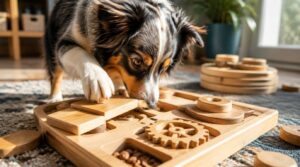
Sliders, rotating gears, hidden compartments—these force your dog to think, not just chew. Spatial reasoning skills get real exercise as they align pieces or match patterns to reach treats.
Layered designs add steps for tougher problem-solving progression, while adaptive difficulty settings let you scale challenges up as skills grow. That’s genuine canine enrichment, turning idle paws into a working brain—one of the smartest dog toys for boredom you’ll find.
Treat-dispensing Toys
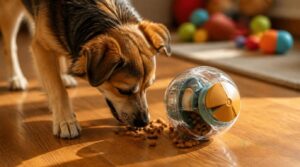
Gravity, pawing, and rotating chambers all work together to make treats fall in unpredictable patterns, keeping dogs guessing. Adjustable disks let you tune difficulty from easy to hard as your dog improves.
Check capacity limits before filling (most hold 1/4 to 1 cup), and inspect regularly for cracks. Dishwasher-safe designs make cleaning simple, turning boredom into genuine mental stimulation.
Snuffle Mats

Ever watch your dog’s nose take over their whole brain? That’s a sniff mat at work—fleece strips hide treats, tapping into pure foraging instinct.
Nose work slows fast eaters and builds calm through sensory play.
- Fleece folds trap kibble for scent work
- Machine-washable, multiple sizes available
- Non-slip base keeps mats steady
Supervise early sessions; fabric durability matters most with enthusiastic sniffers.
Stuffable Chew Toys

Stuffable chew toys turn plain rubber into a puzzle: pack it with kibble or peanut butter, and your dog works for every bite.
Textured ridges clean teeth while gnawing, and freezing the filling doubles the challenge on hot days.
| Feature | Benefit | Example Fill |
|---|---|---|
| Adjustable openings | Controls speed | Kibble |
| Puncture-tested rubber | Durable | Peanut butter |
| Textured surface | Dental cleaning | Treat paste |
This prevents destructive behavior through lasting enrichment.
Plush Hide-and-seek Toys
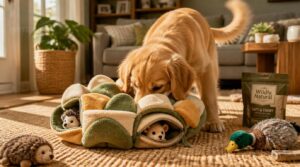
Some dogs just want to dig for treasure. Plush hide-and-seek toys use a hidden burrow design, tucking small toys or treats into fleece pockets your dog sniffs out and unzips.
- Reinforced stitching resists tugging
- Fabric holds scent between sessions
- Squeakers reward each discovery
This taps olfactory engagement and problem-solving mechanics at once, turning simple hide and seek into real mental stimulation that helps enrich their lives daily.
How Mental Toys Help Dogs
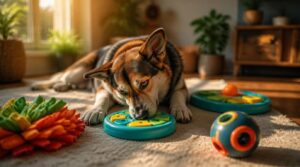
Mental stimulation isn’t just a nice bonus for your dog, it’s a real need with real benefits. The right toy can change behavior, mood, and even how your dog ages. Here’s what these puzzles and games actually do for him, day in and day out.
Reduce Boredom Behaviors
Bored dogs chew, dig, and bark simply because their brains have nowhere else to go. Puzzle toys and lick mats redirect that energy, easing destructive chewing while satisfying restless minds.
Repetitive licking releases calming hormones, cutting anxiety and mental fatigue. Give your dog a KONG or snuffle mat before you leave, and you’ll likely return to a calmer house, not a shredded couch.
Encourage Natural Foraging
Nose work connects with instincts your dog’s ancestors relied on daily. Scattering treats across a room mimics patch foraging, encouraging wide searching instead of instant handouts.
- Use scent trails toward hidden rewards
- Rotate hiding spots weekly
- Try cheese or peanut butter for olfactory boosters
- Track progress as difficulty increases
- Swap scents seasonally to fight habituation
Snuffle mats and treat-dispensing toys make this enrichment easy and rewarding.
Support Calmer Crate Rest
Crate rest doesn’t have to mean total shutdown. Adding scent enrichment through a slow-release toy keeps your dog’s brain gently engaged without overstimulation.
| Element | Purpose | Example |
|---|---|---|
| Calming audio | Masks noise | White noise |
| Bedding comfort | Joint support | Orthopedic mat |
| Routine consistency | Reduces anxiety | Fixed rest times |
A predictable crate environment paired with mental stimulation toys curbs destructive behavior and eases boredom during recovery.
Build Confidence Through Play
Success builds courage. Start with easy puzzle wins, add a consistent cue like "Solve," and reward effort immediately. Gradually raise difficulty once your dog nails the easy version in under a minute.
- Watch for stiffness or retreat—pause if you see it
- Praise every attempt, not just solved puzzles
- End on a win, always
That’s how mental enrichment sticks.
Help Senior Dog Cognition
How much can a puzzle toy really do for an aging brain? More than you’d think. Cognitive decline prevention starts with daily engagement—scent work, easy puzzles, brief cue refreshers.
| Senior Support | Toy Match |
|---|---|
| Scent work | Snuffle mats |
| Anxiety relief | Predictable puzzles |
| Diet boost | Treat-dispensing toys |
Pair enrichment with senior diet benefits like omega-3s. This combo helps manage canine cognitive dysfunction before it takes hold.
Keeping Dogs Busy Safely
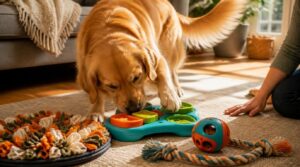
Picking the right toy is only half the job, since safety depends on how you use it too. A little know-how goes a long way toward keeping playtime fun instead of risky. Here are five simple habits every dog owner should build into their routine.
Supervise First Play Sessions
That first puzzle toy session sets the tone, so stay within arm’s reach and watch closely. Have a simple safety plan ready before you start, know where to redirect if things escalate.
Check in every few minutes, watching for frustration cues like pawing hard or walking away. Set clear start and end signals, then jot quick notes on engagement and safety for next time.
Rotate Toys Weekly
Even the best puzzle toy gets boring after enough repeats. Swap toys on the same day each week so your dog starts anticipating the change.
- Puzzle toy one week
- Snuffle mat the next
- Plush toy after that
Rotation schedules prevent boredom and keep enrichment fresh, especially for high-energy breeds needing 5-7 day cycles instead of longer stretches.
Use Treats in Moderation
Treats power those puzzle toys, but they’re still calories. Keep treats under ten percent of daily food intake, measured with a scale or cup, not guesswork.
Pick low-calorie fillers like veggies for treat-dispensing toys, and rotate flavors to dodge palate fatigue. Small pieces prevent overstimulation, letting your dog stay engaged with the toy, not just the food.
Clean Toys Regularly
Grimy toys breed bacteria and mold, sabotaging the mental stimulation you’re working so hard to provide.
Wipe hard surfaces weekly with mild soap, rinsing and drying fully to prevent mold. Machine-wash plush toys in a mesh bag; deodorize with baking soda first. For electronics, power down, wipe casings only, never submerge.
Set a cleaning schedule and stick to it.
Replace Damaged Toys Fast
A cracked wobbler or frayed snuffle mat isn’t just ugly, it’s a hazard waiting to happen. Run quick safety inspection protocols before every session, checking seams and joints.
Keep an essential repair kit handy, but know when repair vs replacement makes sense. If structural integrity’s compromised, replace it. Offer a safe interim alternative while sourcing parts, and this keeps mental stimulation toys for dogs working, preventing destructive behavior from boredom creeping back in.
Frequently Asked Questions (FAQs)
How to mentally stimulate a bored dog?
Combine indoor scent games, short 5-10 minute training sessions, and rule-based social play.
Rotate scents daily, stimulate foraging instincts through hiding treats, and add interactive pet toys or dog puzzle toys to prevent destructive behavior and boredom fast.
What toys mentally stimulate dogs?
You don’t need fancy gadgets to see results.
Snuffle mats, puzzle toys, and treat dispensers activate foraging instincts and problem-solving reward loops, delivering real olfactory enrichment and cognitive health benefits your dog actually craves, one sniff and paw-swipe at a time.
How to stimulate an understimulated dog?
Give her daily enrichment routines mixing scent trail games with puzzle toys, rotate play themes weekly, and use variable reinforcement schedules.
This multi-sensory engagement curbs boredom relief needs while genuinely supporting long-term cognitive health.
What is the best boredom busting toy for dogs?
There’s no single "best" — it depends on your dog. Puzzle toys suit food-driven problem solvers, snuffle mats reward natural sniffers, and treat-dispensing toys keep active breeds moving.
Matching the toy to your dog’s personality beats chasing a bestseller list.
How often should dogs play with puzzle toys?
Your dog isn’t training for a cognitive Olympics, so relax.
Aim for three to four sessions weekly, adjusting for puppy play frequency, senior dog stamina, and mealtime pacing—always watching for mental fatigue before it wrecks the fun.
What age should dogs start using puzzle toys?
Eight weeks old is the sweet spot, as long as you keep sessions short and gentle. Puppy attention spans are brief, so watch for frustration, choose teething-safe materials, and always supervise those first curious, wobbly attempts at problem-solving.
Do mental toys help with separation anxiety issues?
Chaos outside, calm inside: yes. Puzzle toys create reward loops that redirect anxious energy, easing separation anxiety through problem-solving, calming endorphin release, and gradual desensitization—turning departures into predictable, less stressful routines for anxious dogs.
How long until dogs master a puzzle toy?
Give it 5 to 15 minutes for first success, then 1 to 2 weeks of daily practice for easy puzzles. Harder ones take 2 to 4 weeks, and motivation drives everything—some dogs plateau, never fully mastering the toughest challenges.
Conclusion
That couch-cushion demolition project? It’s not rebellion, it’s a bored brain begging for a task. The right mental stimulation toys for bored dogs turn chaos into calm, giving your dog a job worth doing.
Start with one puzzle or snuffle mat, watch engagement grow, then rotate toys to keep curiosity alive. A busy mind doesn’t dig craters or bark at shadows. Give your dog purpose, and peace follows naturally home.
- https://www.aspca.org/pet-care/dog-care/general-dog-care
- https://www.playpetbrands.com/collections/enrichment-toys/feature_enrichment
- https://www.thesprucepets.com/best-interactive-dog-toys-8363714
- http:///goto?url=CAESbgHuR6pN_EFhWdk1_6oPBhzHAvKQ5O4iv9wXt-kPd_sly7qZbLOZV5BJB-xUjZsdEqXstt0Jj6IKv14UD4jMFh4pdB83OgMaY1fg7RupxnBEkARV3xuU8q-nsFJrEFg5kAPQwXQuB_Uc8OU52Pec
- https://petsourcenc.com/best-interactive-dog-toys-reviews