This site is supported by our readers. We may earn a commission, at no cost to you, if you purchase through links.
Your dog inhales dinner in under a minute, then stares at you like the bowl owes him an apology. Sound familiar? That gulp-and-go habit isn’t just messy, it can lead to real digestive trouble.
The fix isn’t complicated. Beginner treat puzzle toys turn mealtime into a job your dog actually wants to do, slowing him down while giving his brain something to chew on besides your couch cushions.
Below, you’ll find ten toys built for first-timers, plus tips on picking the right fit and introducing puzzles without frustrating your pup (or yourself).
Table Of Contents
- Key Takeaways
- Top 10 Beginner Treat Puzzle Toys
- 1. Outward Hound Lick N Flip Puzzle
- 2. Nina Ottosson Dog Brick Puzzle
- 3. Advanced Dog Puzzle Treat Dispenser
- 4. Trixie Adjustable Snuffle Bowl
- 5. StarMark Small Interactive Dog Toy
- 6. LiveKey Dog Snuffle Feeding Mat
- 7. Tuffy Corn Dog Durable Plush Toy
- 8. KONG Classic Stuffable Dog Toy
- 9. TRIXIE Gambling Tower Dog Puzzle
- 10. Pet Zone IQ Treat Ball
- Benefits of Beginner Puzzle Toys
- Choosing The Right Puzzle Toy
- Best Puzzle Types for Beginners
- Introducing Puzzle Toys Safely
- Frequently Asked Questions (FAQs)
- Conclusion
Key Takeaways
- Beginner treat puzzle toys slow down fast eaters, easing digestion and reducing boredom-driven behaviors like chewing and barking.
- Choosing the right toy depends on matching difficulty level, dog size, treat opening size, and durability to your dog’s needs.
- Puzzle types range from snuffle mats and treat balls to wobblers and slow feeder bowls, each offering mental and sensory challenges.
- Introducing puzzles safely means starting with easy wins, using high-value treats, supervising early sessions, and rotating toys to keep your dog engaged.
Top 10 Beginner Treat Puzzle Toys
Finding the right puzzle toy doesn’t have to feel overwhelming, even with so many options out there. I’ve picked ten beginner-friendly favorites that cover every budget, style, and chew strength. Here’s a closer look at each one, starting with a personal favorite for first-timers.
If you’re not sure where your pup falls on the chewing-strength spectrum, this guide to interactive dog treat dispenser games breaks down which styles suit gentle nibblers versus determined chewers.
1. Outward Hound Lick N Flip Puzzle
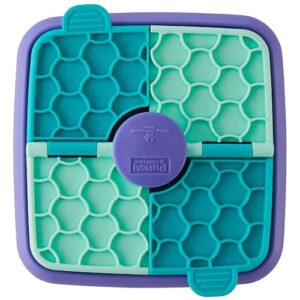
If your dog inhales meals in ten seconds flat, this one’s a game changer. The Lick N Flip combines a lick mat with flip-up layers hiding over 90 treat compartments.
It’s a true Level 1 puzzle, built for first-timers and food-motivated pups. The textured licking surface calms anxious dogs, while flipping the layers adds light problem-solving.
BPA-free and dishwasher safe, it’s easy to keep clean between sessions.
| Best For | Puppies, novice puzzlers, and fast eaters who need a gentle introduction to slow feeding and mental enrichment. |
|---|---|
| Difficulty Level | Level 1 Beginner |
| Material | BPA-free hard plastic |
| Mental Stimulation | Yes |
| Slow Feeding Function | Yes |
| Cleaning Method | Top-rack dishwasher safe |
| Supervision Needed | Recommended |
| Additional Features |
|
- Combines a lick mat, slow feeder, and simple puzzle in one easy-to-use design
- Non-slip weighted base and three rotating layers make it sturdy and simple to fill or clean
- BPA-free, dishwasher safe, and great for calming dogs during crate time, travel, or stressful moments
- Small fastener clips can be tricky to handle during cleaning
- Compartment spacing may not suit toy breeds or very small dogs
- Experienced puzzlers may outgrow the challenge fairly quickly
2. Nina Ottosson Dog Brick Puzzle
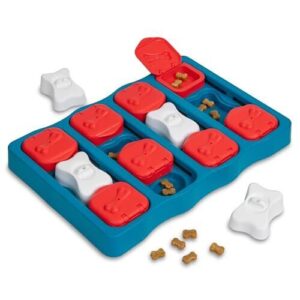
Ready for a bit more of a challenge? The Dog Brick steps things up to Level 2, mixing flip lids, sliding blocks, and removable bone pieces over three treat zones.
Dogs use nose and paws together, which builds real problem-solving skills. Pull the bones off early sessions, then add them back once your pup gets confident.
At 31.5 x 21 cm, it suits medium to large breeds. Parts hand-wash easily, and durable plastic holds up to daily use.
| Best For | medium to large breed dogs (and their owners) looking for a step-up brain game that channels natural foraging instincts into calm, focused play. |
|---|---|
| Difficulty Level | Level 2 Intermediate |
| Material | BPA/PVC/lead/phthalate-free plastic |
| Mental Stimulation | Yes, 30 min equivalent |
| Slow Feeding Function | Yes |
| Cleaning Method | Hand wash |
| Supervision Needed | Required, constant |
| Additional Features |
|
- Three treat zones with flip lids, sliders, and removable bone pieces keep dogs mentally engaged and away from boredom-driven mischief
- Doubles as a slow feeder, so mealtime slows down and digestion benefits along with it
- Made from food-safe plastic (no BPA, PVC, lead, or phthalates) and easy to hand-wash after use
- Needs constant supervision, so it’s not a "set it and forget it" toy for solo playtime
- Small removable bone pieces mean regular checks for wear or breakage are a must
- At Level 2 difficulty, it may be too tricky for puzzle-toy beginners without first mastering an easier version
3. Advanced Dog Puzzle Treat Dispenser
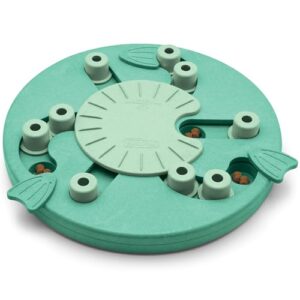
Once your dog masters simpler puzzles, this dispenser gives them a real workout. It’s a Level 3 challenging toy requiring swivel flippers, a spin wheel, and scoot blocks worked in sequence.
Multiple lock configurations let you adjust difficulty as your dog improves. It holds up to ¼ cup of kibble, with a removable tray for quick loading.
Built from food-safe, BPA-free plastic, it’s lightweight and easy to clean. Just know: clever pups may crack the first lock fast, and heavy chewers need supervision.
| Best For | dogs who’ve outgrown basic puzzle toys and need a serious mental challenge to burn off energy and curb boredom-driven habits like chewing or digging. |
|---|---|
| Difficulty Level | Level 3 Advanced |
| Material | Food-grade plastic |
| Mental Stimulation | Yes, 15 min equivalent |
| Slow Feeding Function | Yes |
| Cleaning Method | Easy to clean |
| Supervision Needed | Recommended |
| Additional Features |
|
- Multi-step challenge (flippers, wheel, and blocks) delivers real mental stimulation, roughly equal to 30 minutes of physical play
- Adjustable lock configurations let you scale difficulty as your dog gets smarter
- Made from food-safe, BPA-free plastic and is lightweight, easy to clean, and simple to load
- Very clever or small dogs may breeze past the first lock, cutting into the initial challenge
- Not built for aggressive chewers, who can break pieces down over time
- Plastic parts can be noisy and may develop sharp edges, so supervision is a good idea
4. Trixie Adjustable Snuffle Bowl
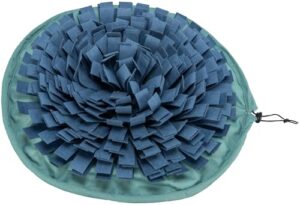
Not every dog wants a workout right away, and that’s fine. This felt bowl turns feeding into gentle nose work, with a drawstring that adjusts difficulty as your dog improves.
The non-slip base keeps things steady during sniffing sessions, and the felt is machine-washable. It holds dry kibble well, slowing down fast eaters while easing digestion.
| Best For | This snuffle bowl is best for puppies, adult dogs, seniors, and even compatible cats who eat too fast and need gentle mental stimulation during mealtime. |
|---|---|
| Difficulty Level | Level 1 Beginner |
| Material | Felt/silicone base |
| Mental Stimulation | Yes |
| Slow Feeding Function | Yes |
| Cleaning Method | Hand wash only |
| Supervision Needed | Recommended |
| Additional Features |
|
- Drawstring lets you adjust difficulty as your pet gets better at foraging
- Non-slip silicone base keeps the bowl steady during sniffing sessions
- Slows down fast eaters, which helps with digestion and reduces bloating risk
- Not ideal for large breeds, who may be able to overpower or damage the mat
- Felt surface can wear out faster with aggressive chewers
- Requires hand-washing, since it’s not dishwasher-safe
5. StarMark Small Interactive Dog Toy
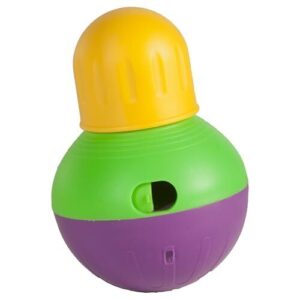
Small dogs need toys sized for them, and this one gets it right. Under a pound empty, it’s easy for tiny paws to nudge and roll without frustration.
If you’re worried about tummy troubles, it’s worth reading up on how dental chews can affect a small dog’s digestion before picking the right size.
The wobble-and-dispense design releases kibble as your dog bats it around. Inside fins guide treats toward the opening, so nothing gets stuck.
It disassembles for cleaning, which matters after slobbery play sessions. Built for light-to-moderate chewers — tough dogs may eventually wear it down, so keep an eye on things.
| Best For | Food-motivated small to medium dogs who need mental stimulation and slower mealtimes, including moderate to aggressive chewers. |
|---|---|
| Difficulty Level | Adjustable |
| Material | Impact-resistant plastic |
| Mental Stimulation | Yes |
| Slow Feeding Function | Yes |
| Cleaning Method | Not fully disassemblable |
| Supervision Needed | Recommended |
| Additional Features |
|
- Heavy, impact-resistant plastic holds up well to rough play and tough chewers
- Adjustable dispensing gate lets you tailor difficulty for larger kibble
- Keeps dogs mentally engaged and occupied for 15–30 minutes per session
- Small top fill hole is tricky to load without a funnel or tool
- Bottom dispensing door can pop open unintentionally, making it less of a challenge
- Can’t be fully disassembled for cleaning, and it’s noisy on hard floors
6. LiveKey Dog Snuffle Feeding Mat
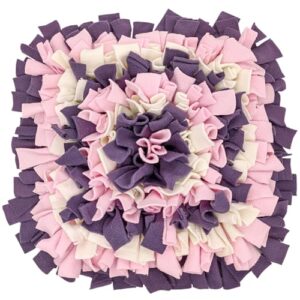
Nose work doesn’t get much easier than this. The mat uses dense fleece strips folded into little 3D tunnels, so kibble tucks right underneath.
Start with treats on top so your dog learns the motion, then bury them deeper as confidence builds. The non-slip backing keeps things steady on hardwood or tile.
At roughly 13 to 17 inches, it’s compact enough for apartments, and it folds flat for travel. Machine washable, too — just air dry to protect the fibers.
| Best For | Dog owners who want to slow down fast eaters and give their pup a mentally stimulating nose-work activity, whether at home or on the go. |
|---|---|
| Difficulty Level | Beginner |
| Material | Polar fleece |
| Mental Stimulation | Yes, nose-work |
| Slow Feeding Function | Yes |
| Cleaning Method | Machine washable |
| Supervision Needed | Recommended |
| Additional Features |
|
- Encourages natural foraging instincts while slowing rapid eating for better digestion
- Non-slip backing keeps it steady on hardwood or tile, even during enthusiastic sniffing
- Folds flat for travel and is machine washable for easy cleanup
- Not built to withstand heavy chewing, so persistent chewers may wear it down over time
- Compact size may not suit very large breeds or multiple dogs feeding together
- Needs supervision during use, since excessive digging can loosen the stitching faster than normal
7. Tuffy Corn Dog Durable Plush Toy
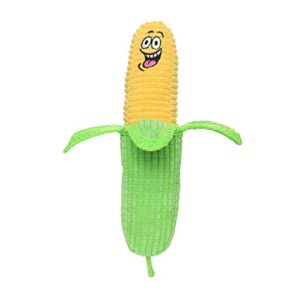
Two toys in one, this plush corn dog gives your pup a squeaky cob that slides right out of its stalk.
Four fabric layers and seven rows of stitching keep it tough enough for tug and fetch, with webbing covering the seams for extra protection.
It floats, so lake days are fair game, and it’s machine washable when things get slobbery.
Keep in mind: it’s built for play, not power-chewing — supervise sessions so the squeaker stays put.
| Best For | Puppies and light-to-moderate chewers who love tug, fetch, and splashing around in the water. |
|---|---|
| Difficulty Level | N/A |
| Material | Plush fabric |
| Mental Stimulation | Limited |
| Slow Feeding Function | No |
| Cleaning Method | Machine washable, air dry |
| Supervision Needed | Required |
| Additional Features |
|
- Reinforced multi-layer construction with heavy stitching and webbed seams stands up to regular play
- Floats and is machine washable, making it easy to bring along for water play and quick cleanups
- Removable squeakers tucked into safety pockets add fun sound without falling out during normal use
- Not built to survive aggressive or power chewers, who may tear through it quickly
- Squeakers need supervision to prevent your dog from accidentally swallowing one
- Stuffing can start to work its way out over time with heavy use
8. KONG Classic Stuffable Dog Toy
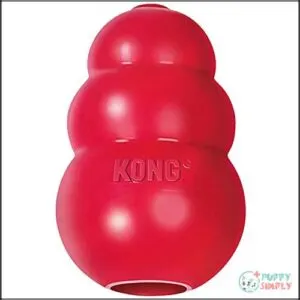
Ask ten trainers for a go-to toy and nine will say KONG Classic. This red rubber staple has been around for decades, and for good reason.
Stuff the hollow center with kibble or peanut butter, freeze it, and you’ve got crate-time enrichment that lasts.
Its erratic bounce doubles as a fetch toy, while the wide bottom opening makes filling and dishwasher cleanup simple.
Built for average chewers — power chewers may need something tougher.
| Best For | Medium-weight dogs with average chewing habits whose owners want a durable, vet-recommended toy for mental stimulation, treat-stuffed enrichment, and interactive fetch. |
|---|---|
| Difficulty Level | N/A |
| Material | Natural red rubber |
| Mental Stimulation | Yes |
| Slow Feeding Function | Yes, when stuffed |
| Cleaning Method | Dishwasher safe |
| Supervision Needed | Recommended |
| Additional Features |
|
- Durable natural red rubber that’s vet-recommended and made in the USA, backed by a satisfaction guarantee
- Hollow, dishwasher-safe design makes it easy to stuff with kibble or peanut butter for lasting crate-time enrichment
- Erratic, unpredictable bounce adds versatility for fetch, training, and outdoor play
- Not built to withstand extreme or heavy chewers, who may damage it over time
- Comes with a noticeable rubber odor at first, though washing or a brief low-heat boil helps reduce it
- Medium size may be too large for toy-breed dogs or very small puppies
9. TRIXIE Gambling Tower Dog Puzzle
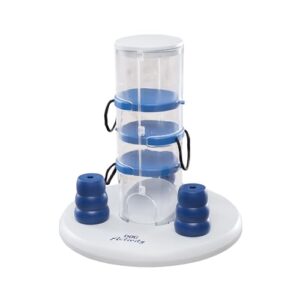
Think of this one as a mini casino for your dog’s brain. The vertical tower design hides treats across three discs and three hollow cones, so dogs pull, lift, and tug their way to the payout.
Start easy by loading the bottom shelf, then raise the stakes as your dog levels up. It’s BPA-free, water-resistant, and stands about 10 inches tall — a solid pick for small-to-medium breeds craving a challenge.
| Best For | food-motivated small-to-medium dogs, puppies, and seniors who enjoy a supervised mental challenge. |
|---|---|
| Difficulty Level | Two-Level Adjustable |
| Material | BPA-free plastic/rubber |
| Mental Stimulation | Yes |
| Slow Feeding Function | No |
| Cleaning Method | Not dishwasher safe |
| Supervision Needed | Required |
| Additional Features |
|
- Two-level design with lift-up cones and slide-out drawers keeps dogs engaged and problem-solving
- Difficulty adjusts easily by adding more treats or pulls as your dog gets better
- BPA-free, lead-free plastic with non-slip rubber feet for safer, steadier play
- Plastic parts are fairly lightweight and may not hold up to strong chewers or large dogs
- Requires supervision, since it can be knocked over or chewed, creating a choking risk
- Not dishwasher safe, and crevices can trap water if not cleaned thoroughly
10. Pet Zone IQ Treat Ball

Rolling is the whole game here. The Pet Zone IQ Treat Ball has an adjustable interior disc, so you control how fast kibble falls out as your dog noses and paws it around.
It comes in two sizes — a 3-inch for smaller mouths and a 4-inch for medium-to-large breeds — and takes apart easily for washing with warm soapy water.
Start on the easy setting for a beginner, then tighten the disc as they get the hang of it. Simple, durable, and great for slowing down speedy eaters.
| Best For | Medium-to-large dogs (40–90 lb) who eat too fast or need extra mental stimulation to curb boredom and separation anxiety. |
|---|---|
| Difficulty Level | Three Levels |
| Material | Rigid plastic |
| Mental Stimulation | Yes |
| Slow Feeding Function | Yes |
| Cleaning Method | Disassembles for cleaning |
| Supervision Needed | Recommended |
| Additional Features |
|
- Adjustable interior disc lets you control difficulty and kibble flow as your dog learns
- Disassembles easily for cleaning with warm soapy water
- Slows down eating for better digestion while doubling as a problem-solving activity
- Not safe for toy breeds, very small dogs, or aggressive chewers, since jaws may fit through the opening
- Top half can loosen over time and may chip with heavy use
- Refilling can be a hassle, and it tends to be noisy on hard floors
Benefits of Beginner Puzzle Toys
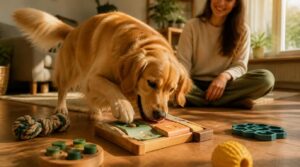
Puzzle toys aren’t just something to fill time, they actually change your dog’s day for the better. From calmer behavior to a stronger bond between you two, the payoffs go way beyond keeping paws busy. Here’s what these simple toys can really do for your pup.
Reduces Boredom Behaviors
A bored dog turns into a creative dog, and that’s rarely good news for your couch. Dog puzzle toys give restless minds a job, cutting down on destructive chewing, excessive barking, and aimless pacing.
Working a beginner puzzle feeder also curbs digging instincts and furniture chewing. Fifteen minutes of play offers mental stimulation similar to a thirty-minute walk—proof that reducing boredom starts with a little brainwork, not just exercise.
Slows Fast Eaters
Speed-gulping isn’t just messy, it’s hard on digestion. A slow feeder bowl or beginner puzzle feeder forces careful licking instead of gulping, giving saliva time to work and easing digestive strain.
Slower meals also improve satiety signaling, so your dog feels full before overeating. That extra chew time helps impulse control and cuts mealtime stress, turning dinner into calm, steady progress instead of a race.
Supports Indoor Enrichment
Slow eating is just the start. A beginner puzzle also brings inner enrichment to life, giving your dog a job to do on rainy days.
Incorporating sensory enrichment activities can further boost your dog’s well‑being.
Think scent-based sniffing, textured surfaces for tactile play, even squeaky sounds for auditory engagement. Some setups add vertical platforms or mini obstacle courses.
That variety keeps boredom out and mental stimulation flowing, right in your living room.
Builds Dog Confidence
Here’s the confidence piece: every flap flipped or ball rolled is a tiny win. Mastering small tasks like this builds real self-efficacy—your dog learns "I can figure this out."
Every flap flipped is a tiny win that teaches a dog it can figure things out
That’s genuine dog cognitive training. Gradual difficulty jumps sharpen problem-solving skills while building behavioral mental toughness, so your pup faces new challenges with curiosity instead of worry, and stays calmer under stress long after the puzzle’s empty.
Strengthens Owner-dog Bonding
When you kneel beside your dog cheering on that first flipped flap, you’re both getting a shared dopamine boost—that’s bonding through play in action.
Puzzle sessions become joint problem-solving time, not just feeding time.
Your praise creates a positive reinforcement loop, while calm togetherness builds emotional synchrony. Regular interactive play, even five minutes daily, turns beginner puzzles into real cooperative play routines strengthening trust.
Choosing The Right Puzzle Toy
Not every puzzle toy fits every dog, and that’s okay. The right pick depends on a few simple factors, from size to skill level. Here’s what to check before you buy.
Match Difficulty Level
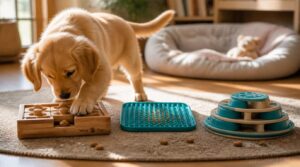
Not every dog needs the same challenge. Evaluating cognitive skills first helps you pick a beginner puzzle that builds confidence instead of frustration.
Watch how quickly your dog solves each step, then start tailoring difficulty levels accordingly. Adjustable difficulty toys let you increase mechanical complexity gradually. Track skill progression over weeks, and always monitor frustration levels—if your dog gives up, drop back a level.
Consider Dog Size
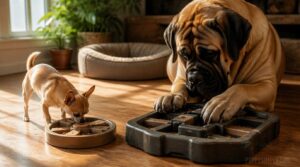
Because a Chihuahua and a Mastiff experience the world through very different mouths, breed weight ranges matter as much as difficulty level when picking dog puzzle toys.
Mouth size matching and jaw strength assessment prevent frustration or breakage. Giant breeds need sturdier builds; toy breeds need gentler mechanisms.
Calorie intake scaling and joint health considerations also factor in—smaller frames benefit from breed-specific toy sizing, making best puzzle toys for small dogs genuinely different from large-breed options.
Check Treat Openings
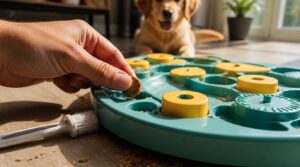
Ever jammed a treat that just wouldn’t fit? That’s an opening problem, not a dog problem.
Check that openings match your dog’s usual treat size so nothing crumbles or clogs during loading. Adjustable mechanics let you widen for easy refills or narrow things down as difficulty increases.
For cleaning, pick designs that let you reach narrow crevices easily—crumbs left behind attract bacteria fast, especially with soft or crumbly treats.
Choose Durable Materials
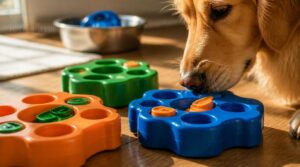
No dog toy is truly indestructible, but material choice gets you close.
Look for polypropylene or ABS plastics—both resist cracking under repeated chewing and drooling. Non-toxic polymers with saliva resistance keep openings from swelling or softening over time.
Toys built for chew resistance often pass abrasion testing and hold up across seasons, from freezer storage to warm rooms, without losing thermal stability or shape.
Pick Washable Designs
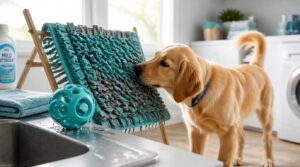
Slobbery snuffle mats and treat balls need regular baths—here’s how to keep them fresh.
- Choose nylon or polyester coated fabrics for quick drying
- Wash on gentle cycles with mild, no-bleach detergent
- Air dry printed surfaces to protect colors
- Pick dishwasher safe plastic puzzles for easy rinsing
- Look for anti-microbial finishes that fight odor
Machine washable, removable covers make cleanup painless and keep puzzle feeders sanitary between meals.
Best Puzzle Types for Beginners
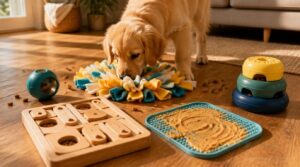
Not all puzzle toys work the same way, and that’s a good thing. Some challenge your dog’s nose, some challenge their paws, and some just slow them down at mealtime. Here are five beginner-friendly types worth trying first.
Snuffle Feeding Mats
Nose work is a dog’s favorite job, and a snuffle mat turns feeding time into that job. Treats hide in fabric folds, sparking real sniffing enrichment.
| Feature | Why It Matters |
|---|---|
| Fabric folds | Boost scent pathways |
| Foldable design | Easy portability |
| Machine washable | Simple upkeep |
Look for tear-resistant fabric and adjustable foraging difficulty as your dog masters basic sniffing.
Treat-dispensing Balls
Treat-dispensing balls work through gravity-fed dispensing: roll it, and kibble drops through aligned openings.
Look for adjustable opening mechanics to control release speed, plus size-specific diameters (2.5"–5") matching your dog’s breed.
Choose BPA-free plastic meeting material safety standards, with no small parts. Most are dishwasher-safe—easy cleaning maintenance keeps this interactive dog toy fresh for beginner pups mastering their first treat ball.
Wobbling Food Toys
Rolling toys teach paw-eye coordination, but wobblers add a fun twist: unpredictable motion mechanics. Think Kong Wobbler—its weighted base keeps it upright while treats spill unpredictably.
That randomness reinforces natural foraging behavior, turning snack time into real dog mental stimulation.
Quick perks:
- Adjustable dispensing rates
- Weighted base stability
- Impact resistant materials
- Multi-angle engagement
- Slower eating
Unlike a slow feeding bowl, wobblers move—doubling as an interactive dog toy and workout.
Plush Hide-and-seek Toys
Plush hide-and-seek toys turn snack time into a scent-driven hunt. The Outward Hound Hide-A-Squirrel Plush Puzzle hides squeaky critters inside a burrow, encouraging digging and searching.
Squeakers add auditory cues, while varied textures keep noses busy. The ZippyPaws Milk and Cookies Burrow uses zippered pockets for adjustable difficulty.
Durable, machine-washable fabric takes gentle tugging—perfect for enrichment toys that reward curiosity, not brute force.
Slow Feeder Bowls
Slow feeder bowls are a solid choice if your dog inhales food like it’s a contest. Maze designs force winding paths, so eating slows down naturally—no more gulping.
This helps with bloating prevention and better appetite control. Look for BPA-free plastic, removable inserts for cleaning maintenance, and angled shapes for good feeding posture. Start slow, supervise early sessions, and watch fast eaters become mindful eaters.
Introducing Puzzle Toys Safely
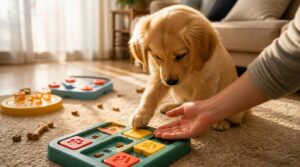
Bringing home a new puzzle toy is exciting, but a little strategy makes all the difference. Setting your dog up for success early on builds good habits that stick. Here’s how to introduce these toys the right way.
Start With Easy Wins
Pick one beginner puzzle toy and a simple target: retrieve all treats in under 10 minutes.
Track each session on a 1-to-5 confidence scale to spot progress. Keep sessions short, watch for stress signs, and jot a quick note on what worked before your next try.
Use High-value Treats
A few real chicken pieces or a bit of warm cheese can turn a shrug into serious effort. Save these high-value treats for first tries with new beginner puzzle toys.
- Real meat or organ bits
- Small, bite-sized pieces
- Served slightly warm for scent stimulation
- Rotated often to dodge palate fatigue
Time your reward timing right after success, and watch caloric management so treats don’t crowd out meals (skip anything triggering dietary allergies).
Supervise First Sessions
That first puzzle session sets the tone for everything after. Watch closely for the first three to five minutes, since that’s when frustration cues like lip licking or head turning show up.
Keep the environment calm, note how quickly your dog engages, and jot down what worked. This documentation guides your next steps and keeps mental stimulation on track.
Rotate Toys Weekly
Even the best puzzle toy gets boring if it’s the only game in town. Maintaining novelty keeps your dog’s brain engaged.
- Rotate 2-3 toys weekly for small and medium dogs
- Store extras sealed away to preserve that "new toy" excitement
- Track engagement to spot when interest fades
Small breeds do best on a weekly schedule—their attention spans just aren’t built for repetition.
Inspect and Clean Regularly
A grimy puzzle toy isn’t just gross, it’s a bacteria breeding ground.
Give feeders a quick rinse after each use, then a proper soak in warm water with non-toxic soap weekly. A small nylon brush takes care of crevice cleaning around treat openings.
Dry completely before storing, since leftover moisture invites mold. Check for cracks or material wear—cracked plastic isn’t dishwasher-safe forever, and worn parts need replacing fast.
Frequently Asked Questions (FAQs)
How often should I introduce a new puzzle toy?
Aim for best rotation schedules: every 7-14 days for most dogs, 5-7 days for puppies.
Watch observing interest levels—bored dogs need faster cycles, anxious ones need slower ones.
Scaling toy complexity gradually keeps your dog’s enrichment routine fresh and mentally engaging.
What age can puppies start using puzzle toys?
That first wobbly sniff at six weeks is puppy development in action, tiny nose leading tiny brain.
Passive puzzles suit 6 to 8 weeks; by 8 weeks, try one-step feeders. True treat dispensing toys wait until 12 weeks, once teething and focus mature.
Are treat puzzles safe for multiple dogs together?
Yes, with the right setup. Place puzzles apart, use individual portioning, and supervise closely to prevent resource guarding. Match difficulty to each dog, watch for group anxiety, and pause play if any competition or tension pops up.
How long should a beginner puzzle session last?
Stick to 5 to 15 minutes, starting with short 2-3 minute wins. Watch for fatigue signs like yawning or pacing, extend gradually, and always end sessions on success to keep mental stimulation positive and frustration low.
Conclusion
Back in the telegraph days, patience was the only speed speed dial anyone had, and that’s exactly what these toys teach your dog. Beginner treat puzzle toys turn frantic gulping into focused, happy work.
Start simple, watch confidence grow, then level up together.
Your dog isn’t just eating slower, he’s learning to think, and that’s a bond no store-bought bowl can build. Slow down, dig in, and enjoy the journey.
- https://www.rover.com/blog/are-puzzle-toys-good-for-dogs
- https://www.businessinsider.com/guides/pets/best-dog-puzzle
- https://www.dogmeetsbaby.expert/post/best-puzzle-toys-for-dogs
- https://bestfriends.org/pet-care-resources/best-dog-toys-keep-dogs-busy
- https://www.mountainsidevets.com/blog/dog-enrichment-toys