This site is supported by our readers. We may earn a commission, at no cost to you, if you purchase through links.
Your dog finishes a dental chew, wags his tail, and an hour later you’re cleaning up the mess he left on the kitchen floor. It happens more than most pet owners expect.
Dental chews carry a reputation for being safe, even beneficial—and many are—but the ingredients inside them don’t always agree with every dog’s stomach. Sorbitol, glycerin, pea fiber, wheat gluten—these aren’t household names, yet they show up in popular chews and directly influence how your dog’s gut responds.
Knowing which ingredients cause trouble, which dogs are most at risk, and how to spot early warning signs helps you make smarter choices before the next treat hits the bowl.
Table Of Contents
- Key Takeaways
- Yes, Dental Chews Can Upset Stomachs
- Ingredients That Trigger Digestive Problems
- Digestive Symptoms to Watch For
- Diarrhea After Dental Chews
- Blockage Risks From Dental Chews
- Dogs More Likely to React
- Greenies and Similar Dental Treats
- Choosing Safer Dental Chews
- Introduce Dental Chews Safely
- Call Your Veterinarian Immediately
- Frequently Asked Questions (FAQs)
- Conclusion
Key Takeaways
- Ingredients like sorbitol, glycerin, and wheat gluten can pull extra fluid into your dog’s gut or trigger sensitivities, making them common culprits behind diarrhea, vomiting, and gas after a dental chew.
- Puppies, senior dogs, small breeds, and dogs with IBD face a higher risk of digestive reactions, so these groups need extra caution and often a vet’s input before introducing any chew.
- A swallowed chunk — especially from rawhide or compressed chews — can expand or lodge in the digestive tract, turning what looks like stomach upset into a blockage that needs emergency care.
- Checking labels for xylitol and harmful additives, matching chew size to your dog’s weight, starting with half portions, and supervising every session are the most reliable ways to keep dental chews safe.
Yes, Dental Chews Can Upset Stomachs

Dental chews can absolutely cause digestive problems, and it happens more often than most owners expect. The reaction can range from mild stomach upset to something that needs a vet’s attention. Here’s what you should know about how dogs commonly respond.
Even small overindulgences add up quickly, so knowing how often dogs should have dental chews can save you an unplanned vet visit.
Common Digestive Reactions
Most dogs handle dental chews without trouble, but some react quickly. The most common digestive reactions include:
- Loose stools or sudden diarrhea
- Vomiting shortly after chewing
- Fiber-induced gas or bloating
- Gastrointestinal upset from laxative sugar alcohols
- Stomach discomfort from treat overconsumption risks
Puppies especially show puppy digestive sensitivity since their systems are still developing. These issues may disrupt hormonal control mechanisms within the body.
Mild Versus Serious Symptoms
Not all reactions to dental chews look the same. Some are minor bumps in digestive health—a little loose stool, one vomiting episode, or mild gas that clears up fast. Others are red flags.
| Mild GI Indicators | Serious Distress Signs |
|---|---|
| Brief loose stool | Persistent diarrhea |
| Single vomiting episode | Repeated vomiting |
| Mild gas | Bloody stool |
| Keeps fluids down | Can’t keep fluids down |
| Normal activity level | Collapse or wheezing |
Hydration monitoring matters with any GI upset. Dehydration risk climbs when vomiting won’t stop. Watch for symptom escalation—worsening diarrhea, vomiting, or signs of intestinal blockages like straining—and act quickly.
Why Some Dogs React
Not every dog reacts the same way to dental chews, and that’s worth understanding.
Individual temperament, digestive health history, and even ingredient sensitivities all play a role. A dog with a sensitive gut, past food allergies, or underlying pain may respond to the same chew that another dog tolerates without any trouble at all.
Ingredients That Trigger Digestive Problems
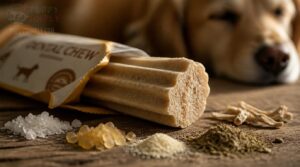
The label on your dog’s dental chew tells a real story — and some of those ingredients are worth a second look. Certain compounds affect digestion more than you’d expect, even in small amounts. Here’s what to watch for.
Sorbitol and Laxative Effects
Sorbitol is a sugar alcohol found in some dental chews that acts as a hyperosmotic laxative — it pulls water into your dog’s intestines. That extra fluid softens stool and can trigger loose stools or diarrhea fairly quickly.
Unabsorbed sorbitol also reaches the colon, where gut bacteria ferment it, producing gas and cramping. Even small amounts can push a sensitive dog past their diarrhea threshold.
Glycerin and Loose Stools
Glycerin shows up in many dental chews as a softening agent, but it also acts as an osmotic water-puller in your dog’s gut. It draws extra fluid into the intestines, softening stool faster than normal.
For small dogs especially, even a single chew can deliver enough glycerin to trigger noticeably loose stools within hours.
Wheat Gluten Sensitivities
Wheat gluten shows up in many dental chews as a binder, but some dogs can’t tolerate it well. Here’s what that sensitivity can look like:
- Vomiting shortly after chewing
- Loose stools or diarrhea
- Visible stomach discomfort
- Reduced appetite
- Recurring digestive upset
If your dog reacts consistently, switching to grain-free chews is a reasonable first step.
Pea Fiber and Gas
Pea fiber is a common ingredient in dental chews, and it’s one that can quietly cause gas and bloating in some dogs. Because dogs can’t fully digest fiber in the small intestine, it travels to the large intestine where bacteria break it down through fermentation — and gas is a natural byproduct of that process.
Artificial Dyes and Preservatives
Those brightly colored dental chews may look appealing, but artificial dyes and preservatives can irritate your dog’s digestive system.
Synthetic dyes are often petroleum-derived and may trigger color additive intolerance, causing vomiting or diarrhea in sensitive dogs. Preservatives work similarly — some act as chemical irritants in the gut, leading to soft stools or digestive upset, especially with repeated exposure.
Digestive Symptoms to Watch For

Knowing what to look for after your dog chews is half the battle. Some symptoms show up quickly, while others creep in over a few hours. Here are the key digestive signs worth keeping on your radar.
Vomiting After Chewing
Some dogs vomit shortly after finishing a dental chew, and speed is often the culprit. When your dog gulps the chew quickly, there’s no time for saliva to soften it, and rough or bulky pieces irritate the upper digestive tract. Strong flavors or coarse textures can also trigger nausea fast.
If vomiting keeps happening or you spot swelling, pain while eating, or loose teeth, it’s worth reading up on what dog tooth extraction involves and when it becomes necessary.
| Trigger | What Happens | What You May See |
|---|---|---|
| Fast gulping | Stomach overfills quickly | Gagging or vomiting |
| Coarse chew texture | Throat irritation | Retching after chewing |
| Strong artificial flavors | Nausea in sensitive dogs | Vomiting within minutes |
Diarrhea or Soft Stool
Loose stool is one of the more common signs that a dental chew didn’t sit well. Soft or watery stool that appears shortly after a new chew is a clear signal of digestive upset.
If it happens multiple times within 24 hours, that pattern lines up with acute diarrhea — not just a one-off soft stool.
Excessive Gas or Bloating
Gas and bloating can hit just as hard as loose stool. When your dog gulps a chew too fast, air swallowing pushes extra gas into the digestive tract. Add fermentation triggers like pea fiber or sorbitol, and gut bacteria produce even more.
A visibly tight belly after treat time is worth noting.
Loss of Appetite
A tight belly might grab your attention, but a dog that suddenly stops eating is just as telling. Appetite loss after a dental chew often means nausea is at work — the body’s way of saying something didn’t sit right.
- Skip one meal if mild
- Track water intake closely
- Offer plain food to restart eating
Hydration support matters here since eating less also means less fluid from food.
Lethargy or Discomfort
A dog that seems low-energy after a chew isn’t just tired — post treat lethargy can signal real discomfort. The digestive fatigue link is real: when the gut is struggling, energy drops. Watch for chew induced sluggishness, especially in puppies or seniors. Track changes for 24 hours during recovery monitoring.
| Sign | What to Do |
|---|---|
| Unusual stillness | Limit activity, observe closely |
| Won’t engage in play | Withhold next chew |
| Slow or dull response | Offer water, monitor appetite |
| Persists beyond 12 hours | Contact your vet |
Diarrhea After Dental Chews

Diarrhea after a dental chew isn’t always a mystery — there’s usually a pretty clear reason behind it. Your dog’s gut is more sensitive to sudden changes than most people realize. Here are the most common triggers worth knowing about.
Sudden Ingredient Changes
Sometimes the chew your dog loved last month isn’t quite the same product anymore. Formula swap shock is real — manufacturers quietly reformulate dental chews, changing fiber sources, sweeteners, or fat levels without updating the packaging.
Your dog’s gut has no warning. That sudden ingredient change can disrupt gut fermentation almost immediately, triggering diarrhea or soft stool within a day.
Too Many Chews
Even a well-intentioned extra chew can quietly push your dog past their gut tolerance limits. Most dental chews are designed as occasional treats, and overfeeding chews — even by one or two — floods the digestive system with more irritants than it can process at once.
- Stacked chews mean stacked ingredients
- More chews equal more caloric load
- Delayed symptoms can catch you off guard
High-fiber Formulas
Many high-fiber dental chews contain fermentable fiber that gut bacteria break down in the large intestine, releasing gas as a byproduct. Ingredients like sweet potato and pumpkin are common sources.
This fermentation can shift stool consistency noticeably — sometimes within the same day — especially if your dog’s digestive health wasn’t built for a sudden fiber increase.
Rich Animal Proteins
Some dog dental chews pack a serious protein punch — and that richness can work against sensitive stomachs. Here’s what’s happening internally:
- High protein impact increases nitrogen waste, which can loosen stools
- Digestive enzyme demand spikes when protein load is sudden
- Collagen protein content adds to the richness, straining sensitive guts
- Animal fats in coatings slow stomach emptying
- Animal protein allergy risk rises with repeated exposure
Protein sensitivity management starts with watching your dog’s stool after introducing high-protein chews.
Temporary Probiotic Adjustment
Some probiotic-enriched dental chews can quietly trigger a Microbiome Shift Phase when first introduced. Your dog’s gut needs time to adjust — this Gut Adaptation Period may cause temporary loose stool or mild gastrointestinal distress before things settle.
| Factor | What Happens | Timeline |
|---|---|---|
| Probiotic Strain Effects | New bacteria alter gut balance | Days 1–3 |
| Stool Consistency Changes | Soft or loose stool appears | Days 2–7 |
| Adjustment Timeline | Digestive health normalizes | 1–2 weeks |
Blockage Risks From Dental Chews
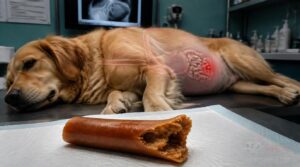
Digestive upset is one thing, but a blockage is a whole different problem. When a dog swallows a large piece of a dental chew, it can get stuck somewhere in the digestive tract and cause serious trouble fast.
Here’s what you need to know about the specific blockage risks that come with dental chews.
Swallowed Large Pieces
When a dog bites off a large chunk of a dental chew and swallows it whole, that piece doesn’t disappear — it becomes a choking hazard or worse.
It can lodge in the esophagus, creating an esophageal blockage that makes swallowing painful or impossible. If it travels further, it may cause a gastrointestinal obstruction, blocking normal digestion entirely.
Rawhide Expansion Risk
Rawhide is one of the sneakier risks in the dental chew category.
When your dog swallows a piece, moisture absorption begins almost immediately — saliva and stomach fluid cause size expansion that turns a manageable chunk into something far harder to pass. That swelling mechanism can create serious gastrointestinal obstruction, especially in smaller dogs with narrower digestive passages.
Compressed Chew Hazards
Compressed chews carry their own set of risks. Because they’re designed to break apart during chewing, a dog that gulps or chews too quickly can swallow large pieces that digest unevenly — raising the chance of intestinal obstruction or choking hazards.
- Binder overload increases indigestible residue in the gut
- Faster texture disintegration can overwhelm digestion in sensitive dogs
- Greater surface area accelerates breakdown, worsening GI upset
Overflow Diarrhea Signs
Blockages don’t always look obvious. One misleading sign is overflow diarrhea — loose or watery stool that leaks around a partial intestinal blockage. Your dog may strain repeatedly with little result, yet still produce liquid output.
You might also notice pellet-like stool mixed with watery discharge, abdominal bloating, and a persistent urge without real relief.
Emergency Warning Symptoms
When overflow diarrhea appears, it’s often your dog’s body sending a louder distress signal than it seems. Intestinal blockages can escalate fast. Watch for these five emergency warning symptoms:
- Persistent vomiting that won’t stop or produces nothing
- Blood in stool or black, tarry output
- Distended belly that feels tight or painful
- Nonproductive straining with visible discomfort
- Breathing trouble or sudden collapse
Dogs More Likely to React

Not every dog processes dental chews the same way. Some are simply built with digestive systems that are more sensitive, more vulnerable, or less equipped to process certain ingredients. Here are the dogs most likely to have a reaction.
Puppies Under Six Months
Puppies under six months are still building their digestive systems, which makes them far more sensitive to new treats. Their gut simply isn’t ready for the ingredients packed into most dental chews for dogs.
During puppy teething, aggressive gnawing increases swallowed fragments, raising both choking and digestive upset risks.
Introduce chews cautiously, watch stool changes closely, and never exceed recommended amounts.
Senior Dogs
Older dogs carry a quieter vulnerability. Their digestive sensitivity often runs higher than younger dogs’, so a dental chew that seems harmless can still trigger soft stools or vomiting. Slower gut motility, changing hydration patterns, and a declining ability to chew effectively all stack against them.
Ask your veterinarian before adding new chews to a senior dog diet.
Small Breed Dogs
Small breed dogs face a stacking set of risks with dog dental chews. Their tiny tummy sensitivity means a single chew can deliver a disproportionately large dose per pound.
With fewer digestive buffer limits, upset shows up faster — and because small dogs dehydrate quickly, even brief loose stools carry a hydration risk worth watching closely.
Dogs With IBD
Dogs with IBD live with chronic gut inflammation that makes even small dietary changes risky. Because IBD disrupts the intestinal barrier and reduces nutrient absorption, a single dental chew can trigger a flare.
Ingredients like animal proteins or high fiber push an already sensitive system over the edge — leading to vomiting, diarrhea, or worsening symptoms fast.
Always clear new treats with your vet first.
Fast Gulpers
Some dogs treat dental chews like a race — swallow first, chew later. Fast gulpers skip the chewing process and send large pieces straight to the stomach, raising the risk of digestive upset, choking hazards, and intestinal blockages.
Supervised feeding sessions paired with chew portion control can slow things down and keep dental treats from becoming a problem.
Greenies and Similar Dental Treats

Greenies are one of the most popular dental chews on the market, but they’re not without their quirks. Some dogs handle them just fine, while others end up with loose stools or worse after the first chew. Here’s what you should know before making them part of your dog’s routine.
Possible Diarrhea Triggers
Greenies are popular, but they’re not without digestive fine print. Glycerin in the formula can soften stool fairly quickly in sensitive dogs. When you add that to other potential triggers, the effects can stack:
- Feeding frequency changes can disrupt gut rhythm
- Bully sticks may irritate the colon lining
- Ingredient synergy between additives amplifies gastrointestinal irritation
Watch your dog’s water intake — loose stool signals something’s off.
Size Selection Matters
Picking the right size isn’t just a convenience — it directly affects your dog’s digestive safety. A chew that’s too small for your dog’s breed gets gulped down fast, skipping the chewing process entirely. That rapid intake can mean digestive upset or worse.
Match the product’s recommended weight category to your dog’s size, and you’ll support safer fragmentation, better portion control, and less risk of blockages.
Swallowing Risks
Even when you get the size right, rapid intake remains a real hazard. Some dogs swallow large fragments whole, creating airway obstruction or esophageal blockage before you notice anything is wrong.
Chew texture plays a role too — slippery or compressible pieces are harder to control in the mouth, raising aspiration risk and the chance of intestinal blockages.
Ingredient Sensitivity Concerns
Beyond swallowing risks, what’s actually inside the chew can be just as problematic. Greenies and similar products often contain glycerin, plant fibers, or wheat gluten — ingredients that may trigger ingredient sensitivity or digestive upset in some dogs.
Every dog processes these differently, so one pup tolerates them fine while another reacts right away.
Safe Feeding Habits
Knowing what’s inside the chew is only half the battle — how you give it matters just as much.
Start small, keep sessions supervised, and always offer fresh water before and after. Follow the package’s portion sizes based on body weight, and count those calories toward your dog’s daily intake to avoid overconsumption.
Choosing Safer Dental Chews

Not every dental chew on the shelf is a safe bet for your dog. The good news is that a few simple checks can help you pick one that cleans teeth without wrecking digestion. Here’s what to look for before you buy.
Check Ingredient Labels
The ingredient label is your first line of defense. Ingredients are listed by descending weight, so what appears early makes up most of the product.
Scan for sugar alcohols like sorbitol, artificial dyes, and preservatives by their chemical names. Watch for hidden allergens buried in blends, and check for fiber sources listed near the top, as higher placement means higher amounts.
Avoid Xylitol Completely
Xylitol is one ingredient you should never overlook. It’s a sugar-free sweetener that causes rapid blood sugar crashes in dogs, sometimes within 30 minutes of ingestion, and can progress to seizures or liver failure within 24 to 48 hours.
Xylitol can send a dog into seizures or liver failure within 48 hours of a single ingestion
Check labels carefully. "Sugar-free" or "tooth-friendly" wording doesn’t confirm xylitol is absent — always scan for the exact word xylitol in the ingredient list.
Match Size to Breed
Size isn’t just a convenience — it’s a safety factor. Match the chew to your dog’s weight range using the label’s guidance, since a chew too small can be gulped whole, while one too large strains the jaw and breaks into oversized fragments.
Larger breeds need sturdier, bigger chews; smaller breeds need dimensions their mouths can fully grip and work through.
Choose Digestible Textures
Texture matters more than most people realize.
A soft chew breakdown happens when the chew softens with saliva, fragments into small pieces, and moves through your dog’s digestive system without resistance.
Chews with a moisture softening effect and flexible texture design reduce the chance of digestive upset or intestinal blockages — especially for gentle chewers.
Look for VOHC Options
Not every dental chew that markets itself as a teeth-cleaner has actually proven it works.
That’s where the VOHC Seal of Acceptance comes in. Products earning this seal from the Veterinary Oral Health Council have met real, measurable standards — at least a 15 percent plaque or calculus reduction in clinical trials. It’s independent verification, not just a marketing claim.
Introduce Dental Chews Safely
Even the safest dental chew can cause problems if you introduce it the wrong way. A little patience upfront saves you a lot of cleanup later. These simple steps make the process much smoother for your dog.
Start With Small Portions

Think of the first dental chew as a test run, not a full serving. Give a reduced starter portion — roughly half the recommended amount — so your dog’s digestive system faces a smaller load. This helps you catch early reactions before a larger dose causes real trouble.
Here’s how to build up safely:
- Offer half the serving on day one and watch for loose stool or vomiting.
- Gradually increase the amount over several days only if your dog shows no signs of upset.
- Stop immediately if any GI symptoms appear, even mild ones, and don’t retry a larger portion.
Pairing the first chew with or after a meal also reduces stomach irritation compared to offering it on an empty stomach. And don’t forget — chew calories count, so trim the main meal slightly to keep your dog’s daily intake balanced.
Monitor Stool Changes

Your dog’s stool is one of the clearest signals that something’s off.
After introducing a dental chew, check for changes in color, consistency, or frequency over the next 24 to 48 hours. Soft blobs, mucus, or unusual odor can all point to digestive upset. If loose stool persists beyond two days, that’s your cue to pause the chew and contact your vet.
Supervise Every Chew Session

Watching your dog’s stool tells you a lot — but watching your dog chew tells you even more.
Stay in the room the entire session. Check that your dog chews steadily rather than gulping large pieces, and remove the chew immediately if it shrinks to a swallowable size. Offer water nearby, and stop the session at the first sign of gagging or discomfort.
Limit Daily Treat Calories

Keeping an eye on chew sessions is only half the picture. Calories matter just as much. Dental chews can be surprisingly calorie-dense, and following the 10 percent rule helps protect your dog’s daily calorie budget:
- Track chew calories against your dog’s daily requirement
- Reduce meal portions on treat days
- Choose lower-calorie chews when frequency is high
Store Chews Properly

Good calorie habits go hand in hand with proper storage. Once a bag is opened, airtight container storage keeps chews fresh and prevents moisture from softening them. Store in a cool, dry spot away from sunlight and heat.
Before each session, do a quick check — discard any chew that smells off, looks moldy, or feels sticky.
Call Your Veterinarian Immediately

Some symptoms aren’t a "wait and see" situation — they’re a "call right now" situation. If your dog shows any of the following after eating a dental chew, don’t hesitate to contact your veterinarian. These are the warning signs that need immediate attention.
Repeated Vomiting
One or two episodes mightn’t be alarming, but repeated vomiting after a dental chew is your signal to call the vet.
Some dogs develop a cyclic pattern — vomiting several times within an hour, then seeming fine, only for it to start again. That kind of cycling, paired with lethargy or loss of appetite, can point to a blockage or serious digestive reaction.
Bloody Diarrhea
Bloody diarrhea isn’t something to wait out. If you see blood in your dog’s stool after a dental chew — whether bright red streaks or dark, tarry melena — call your vet right away.
This can signal intestinal bleeding or infection, and the fluid loss alone raises serious dehydration risks that may require urgent treatment.
Swollen Abdomen
A swollen abdomen after your dog eats a dental chew is a red flag. It can mean gas-induced distension from high dietary fiber, fluid buildup risks tied to intestinal blockages, or partial blockage signs from a swallowed chunk expanding inside the gut.
Don’t wait to see if it resolves. Call your vet immediately.
Straining Without Stool
Straining without stool is a serious sign that something may be blocking your dog’s digestive tract. A swallowed chunk from a dental chew can cause physical blockages that trigger tenesmus — the urge to go without result.
If your dog is repeatedly squatting, straining, and producing nothing, call your vet immediately.
Wheezing or Collapse
Wheezing or collapse after a dental chew isn’t a digestive issue — it’s a medical emergency. A sudden allergic reaction can trigger airway narrowing, face and tongue swelling, and breathing distress within minutes.
If your dog is wheezing, losing consciousness, or collapsing, don’t wait. Call your vet or emergency clinic immediately.
Frequently Asked Questions (FAQs)
Are dental chews hard for dogs to digest?
Some dental chews are genuinely hard for dogs to digest, especially when swallowed in large pieces. Digestive load impact varies widely depending on ingredients, chew hardness, and how thoroughly your dog actually chews.
What are the risks of giving dogs dental chews?
Dental chews carry real risks: digestive upset, intestinal blockages, ingredient sensitivity, and choking risk. Certain ingredients and chew sizes can cause harm depending on your dog’s age, breed, and gut health.
Can dental sticks upset dogs’ stomach treatment?
Yes, dental sticks can upset a dog’s stomach. Ingredients like sorbitol, glycerin, and certain fibers are common culprits behind vomiting, loose stools, and gas in sensitive dogs.
Can dental chews interact with my dogs medications?
Think of dental chews like a wildcard tossed into a carefully planned routine. They can shift medication timing, disrupt drug absorption, or trigger stomach upset that complicates how your dog tolerates treatment. Ask your veterinarian before combining them.
How do dental chews affect dogs with pancreatitis?
For dogs with pancreatitis, even one chew can trigger vomiting. High-fat dental chews increase digestive load and stress the pancreas, making flare-ups more likely. Always get veterinary advice before offering any treat.
Do dental chews expire and become harmful over time?
Yes, they can. Past the "best if used by" date, texture degrades, ingredients break down, and preservatives weaken — all of which can trigger digestive upset in sensitive dogs.
Conclusion
Here’s the quiet irony: the treat designed to protect your dog’s teeth can also be the one that upsets his stomach by morning. Dental chews can cause digestive problems in dogs when the wrong ingredients meet a sensitive gut, portions run too large, or the wrong size chew meets the wrong breed.
Read labels carefully, start small, and supervise every session. Your dog’s teeth deserve real care—and so does everything working behind the wag.
- https://www.houndsy.com/blogs/modern-tails/can-dog-dental-chews-cause-diarrhea-understanding-the-risks-and-benefits
- https://www.webmd.com/pets/dogs/dog-dental-treats
- https://www.nutrichomps.com/dog-chews-for-sensitive-stomachs
- https://houstonpetdentals.com/blog/dog-dental-chews
- https://www.feltonveterinaryhospital.com/blog/the-good-the-bad-and-the-ugly-not-all-dental-chews-are-created-equal