This site is supported by our readers. We may earn a commission, at no cost to you, if you purchase through links.
Most dog owners assume a daily dental chew covers their bases—and that assumption costs dogs their teeth. Periodontal disease affects roughly 80% of dogs by age three, and dental chews alone don’t come close to stopping it. A chew can scrub accessible tooth surfaces, but the gumline and the tight spaces between teeth stay mostly untouched.
Plaque doesn’t wait. Within 24 to 72 hours, it starts hardening into tartar, and once that happens, no chew on the market can remove it. Whether dental chews replace brushing your dog’s teeth isn’t a matter of preference—it’s a matter of biology. What follows breaks down exactly what chews do, where they fall short, and how to build a routine that actually protects your dog’s mouth.
Table Of Contents
Key Takeaways
- Dental chews can reduce plaque by up to 40%, but they can’t reach the gumline or the tight spaces between teeth where periodontal disease actually starts.
- Plaque starts hardening into tartar within 24 to 72 hours, so a chew given a few times a week simply can’t keep up with how fast buildup forms.
- Brushing your dog’s teeth two to three times a week with dog-safe toothpaste is the only reliable way to disrupt the plaque cycle before it causes lasting damage.
- When choosing dental chews, look for the VOHC seal of acceptance—it means the product passed independent testing, not just the manufacturer’s own claims.
Why This Myth Persists
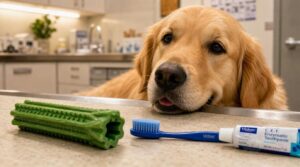
The idea that dental chews can fully replace brushing isn’t just a rumor—it’s one that many well-meaning pet owners genuinely believe. A few common factors keep this myth alive, and they’re worth understanding before we sort fact from fiction. Here’s what’s actually driving the confusion.
Dental chews like the Himalayan dog chew do help scrape away plaque, which is exactly why so many owners assume they’re doing enough.
Chews Look Like Easy Cleaning
Dental chews look like they’re doing the job. You watch your dog gnaw away, and it genuinely seems like something productive is happening.
The chew has ridges, it creates friction, and your dog seems satisfied — so it’s easy to assume plaque is being removed. That visible chewing action makes the product feel like a hands-off oral hygiene routine.
Marketing Claims Can Confuse Owners
Marketing adds another layer of confusion. Terms like modern plaque control or "best in class" sound impressive, but they rarely come with proof.
Without independent verification — like the VOHC seal — those claims can mean very little. It’s easy to take the packaging at face value, especially when the product looks polished and the wording feels authoritative.
Plaque Control Needs Daily Habits
Part of why this myth sticks is simpler than marketing. Plaque forms every day — and it hardens into tartar within about 48 hours. A dental chew given a few times a week can’t keep up with that pace.
Daily brushing and gumline cleaning are what actually interrupt that cycle consistently enough to matter. Consistent hygiene is also necessary to prevent gum disease and maintain oral health.
Dental Chews Do Not Replace Brushing
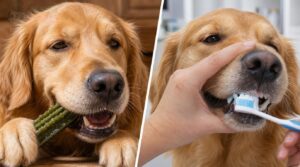
Dental chews can help, but they can’t do everything a toothbrush does. There are a few specific reasons why brushing still matters, even when your dog chews daily. Here’s what’s actually happening inside your dog’s mouth.
Brushing Reaches The Gumline
When you angle a soft-bristled toothbrush at 45 degrees toward the gumline and use a gentle pressure technique with slower brushing strokes, the bristles actually slip into the narrow groove where the gum meets the tooth. That’s where plaque hides.
A full gumline brushing routine covering front, back, and molar margins is the only reliable way to protect your dog’s periodontal health.
Chews Miss Tight Tooth Spaces
Think of your dog’s teeth like a row of books on a shelf — the gaps between them are too narrow for anything but a thin tool to reach. Dental chews simply can’t fit into those tight spaces.
Here’s what that means for interproximal plaque:
- Chew surfaces contact broad areas but skip narrow gaps between teeth
- Tight space access requires direct, narrow tools like bristles
- Gumline cleaning gaps remain even after consistent chew use
- Uneven biting pressure leaves some contact points completely untouched
Brushing vs chewing isn’t a close comparison here — bristles conform to tooth geometry in ways no chew can match.
For extra backup, certain dental-health dog foods carry the VOHC seal confirming they genuinely help control plaque and tartar.
Plaque Hardens Quickly
Speed matters here. Plaque mineralization begins within 24 to 72 hours, as calcium and phosphate from saliva soak into soft plaque and start hardening it.
Plaque begins hardening within 24 hours as saliva minerals quietly turn soft buildup into stubborn tartar
| Stage | Timeline |
|---|---|
| Soft plaque forms | 0–24 hours |
| Mineralization begins | 24–72 hours |
| Enamel bonding occurs | 3–10 days |
| Tartar fully established | 10–14 days |
Once hardened, dental chews and brushing dogs teeth routines can’t remove it — only a vet can.
Best Used as a Supplement
Think of dental chews as a helpful teammate — not the star player. They support oral health between sessions, but brushing dogs’ teeth two to three times weekly still does the heavy lifting for plaque removal.
A daily chew routine adds value without replacing brushing. Veterinarians consistently recommend this combined care approach for lasting results.
How Dental Chews Actually Help

Dental chews aren’t just glorified treats — they actually do some real work inside your dog’s mouth. They just work differently than a toothbrush does, and understanding that difference helps you use them more effectively. Here’s what they’re actually doing when your dog chews away.
Mechanical Scrubbing Action
When a dog chews, the friction contact patterns between the chew’s surface and each tooth physically dislodge loose plaque through mechanical abrasion.
Here’s what that action actually does:
- Pressure-driven loosening pushes the chew into micro-contacts with debris
- Surface area coverage depends on jaw motion and chew shape
- Chewing motion dynamics create repeated scrubbing cycles across tooth faces
- Abrasion effectiveness drops on dense, well-adhered buildup
Saliva Production Benefits
Chewing does more than scrub surfaces — it triggers saliva production, and that matters more than most owners realize.
Saliva buffers acids, delivers minerals, and carries antimicrobial proteins that limit harmful oral bacteria. It also rinses away loose debris, reducing the raw material plaque needs to form.
That’s a quiet but meaningful layer of protection built into every chew session.
Tartar-Control Ingredients
Some dental chews go beyond texture — they include active chemical ingredients designed to slow tartar formation at the molecular level.
- Pyrophosphate crystal inhibition blocks calcium and phosphate from hardening into calculus
- Zinc citrate reduces bacterial load, slowing how fast plaque mineralizes
- Delmopinol hydrochloride creates a barrier that limits bacterial attachment to tooth surfaces
Ingredients like sodium hexametaphosphate and polishing abrasives add another layer, disrupting the biofilm before it sets.
Plaque Reduction Limits
Even with active ingredients working on your side, dental chews have real limits. Studies show they can reduce plaque by 12% to 40%, but that range depends heavily on chew frequency limits and fit.
Plaque reaccumulates quickly, and chews simply can’t reach interproximal gaps or molar plaque the way brushing can.
Breath Freshening Support
Bad breath is often the first sign owners notice, and some chews genuinely help.
Ingredients like xylitol odor control, zinc compounds, and enzymes work to reduce the oral bacteria that cause odor. Probiotic oral balance formulas go a step further, helping shift the bacterial environment in your dog’s mouth. Saliva boost chews also wash away food particles, giving you a fresher-smelling dog between brushings.
Choosing Safer Dental Chews
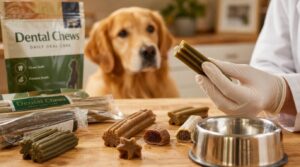
Not all dental chews are created equal, and picking the wrong one can do more harm than good. The label might look impressive, but there are a few specific things worth checking before you toss one in your cart. Here’s what to look for.
Look for VOHC Seal
Not all dental chews are equal, and that’s where the VOHC seal earns its keep. This "Seal of Acceptance" from the Veterinary Oral Health Council means a product passed at least two independent trials — not just one promising dataset.
You’ll find the seal labeled for plaque control, tartar control, or both, so you know exactly what you’re getting.
Match Size to Weight
Once you’ve checked for the VOHC seal, the next thing to match is size. A chew that’s too small gets swallowed fast, barely touching the teeth. One that’s too large won’t let your dog chew through it properly.
- Small dogs (under 25 lbs): petite or small-sized chews
- Medium dogs (25–50 lbs): standard sizing
- Large dogs (50+ lbs): large or extra-large options
Most brands include weight-based size categories right on the packaging.
Avoid Very Hard Chews
Not all chews are created equal, and some can actually hurt your dog’s teeth. Very hard chews — think antlers or dense bones — apply enough force to crack tooth enamel, cause gum abrasions, or produce sharp fragments your dog might swallow.
Veterinarians recommend choosing a chew that wears down gradually, rather than one that resists your dog’s bite entirely. Supervise chew time closely.
Watch Calories and Ingredients
Don’t let the word "dental" on the packaging fool you — these are still treats, and calories add up fast. Many dog dental chews contain added sugars, starchy fillers, and flavor enhancers that quietly push your dog’s daily intake over the limit. Treats shouldn’t exceed 10% of their daily calories.
Always scan the ingredient list for sugar, corn syrup, or synthetic additives. Prioritize dog dental treats made with natural, high-quality ingredients and a VOHC seal.
Skip Risky Rawhide Options
Rawhide might seem like a natural option, but it carries real risks. It can splinter into sharp fragments, causing choking or intestinal blockages that sometimes require emergency surgery. Many rawhide products also contain chemical residues from processing.
- Splintering creates sharp edges that damage the throat
- Swallowed pieces can block the digestive tract
- Some rawhides contain bleach or preservative residues
- They don’t reliably reduce plaque or tartar
- Vet-recommended alternatives include VOHC-approved chews
Build a Better Dental Routine
Good dental care for your dog doesn’t have to be complicated, but it does take more than one tool. Combining a few simple habits makes a real difference in keeping plaque, tartar, and gum disease at bay. Here’s what a well-rounded routine actually looks like.
Brush Two to Three Times Weekly
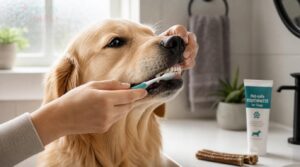
Aim to brush your dog’s teeth two to three times weekly as a solid starting point.
Each session should focus on gumline cleaning technique, angling the bristles where tooth meets gum — that’s where plaque quietly collects. Consistent brushing disrupts the biofilm before it hardens into tartar, keeping oral health problems from compounding over time.
Use Dog-Safe Toothpaste
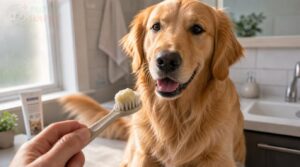
The toothpaste you use matters just as much as how often you brush. Human toothpaste is unsafe for dogs — xylitol and fluoride can cause serious harm, even in small amounts. Always reach for a dog-safe toothpaste formulated specifically for canine oral health.
Look for these qualities when choosing:
- Enzymatic formula that breaks down plaque-causing compounds
- Non-foaming design so swallowing small amounts stays safe
- Palatable flavor profiles like poultry to encourage cooperation
Add Approved Dental Chews

Once you’ve got brushing down, dental chews can pull their weight as a daily add-on. Look for products carrying the VOHC Seal of Acceptance — that label means independent testing confirmed real plaque or tartar reduction. Brands like Greenies Original and OraVet Dental Hygiene Chews carry that seal.
Always match the chew size to your dog’s weight, and keep chews within 10% of daily calories.
Check Gums and Teeth
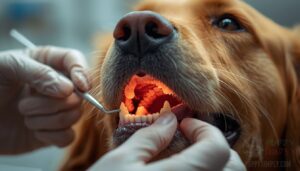
Beyond brushing and chews, take a few minutes each week to check your dog’s mouth. Healthy gums should be firm and pink — redness, puffiness, or bleeding points to early gingivitis. Run your eyes along the gum line for yellow tartar buildup, and sniff for bad odor, which often signals hidden plaque long before visible damage appears.
Also scan teeth for cracks or fractures, especially on back molars.
Schedule Veterinary Dental Exams
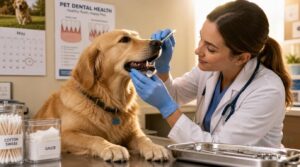
Once you’ve checked your dog’s mouth at home, bring what you notice to a professional. Most dogs need annual dental exams, but small breeds and seniors — usually dogs over seven — often benefit from visits every six months.
Bad breath that lingers despite brushing and visible plaque buildup are both signs your dog needs a veterinary cleaning sooner rather than later.
Frequently Asked Questions (FAQs)
Can greenies replace brushing?
No, Greenies can’t replace brushing. They help reduce surface plaque through chewing, but bristles are the only way to reach the gumline where bacteria actually cause disease.
At what age can puppies start dental chews?
Most veterinarians recommend waiting until your puppy is at least six months old before introducing dental chews, once adult teeth have fully erupted and teething sensitivity has settled.
Can dental disease affect my dogs organs?
Yes, it can. Oral bacteria from periodontal disease can enter the bloodstream, putting stress on the heart, kidneys, and liver over time. Dental disease isn’t just a mouth problem.
How much do professional dog teeth cleanings cost?
A routine dental cleaning commonly runs between $300 and $600 at a general vet, while a specialist may charge $1,000 to $2, Anesthesia, X-rays, and geographic location all affect your final bill.
What ingredients in toothpaste are toxic to dogs?
Human toothpaste is dangerous for dogs. It often contains xylitol, which can cause life-threatening low blood sugar, and fluoride, which dogs can’t safely swallow. Always use dog-specific toothpaste instead.
How often should dogs get veterinary dental exams?
Most dogs need at least one dental exam yearly, but seniors or high-risk dogs often need checkups every six months. If you spot bleeding gums or broken teeth, don’t wait — call your vet now.
Conclusion
The theory that a daily chew keeps your dog’s mouth healthy sounds reasonable—but the biology tells a different story. When you ask whether dental chews replace brushing your dog’s teeth, the honest answer is clear: they don’t, and they can’t. Chews support a solid routine, but they don’t reach where disease starts.
Brush regularly, choose VOHC-approved chews, and schedule those vet exams. Your dog’s teeth depend entirely on what you do daily, not occasionally.
- https://www.avma.org/resources-tools/pet-owners/petcare/pet-dental-care
- https://pmc.ncbi.nlm.nih.gov/articles/PMC8966107/
- https://www.ahajournals.org/doi/10.1161/circresaha.114.302721
- https://my.clevelandclinic.org/health/diseases/10953-plaque
- https://alz-journals.onlinelibrary.wiley.com/doi/10.1002/alz70855_101337