This site is supported by our readers. We may earn a commission, at no cost to you, if you purchase through links.
Most pet owners scrub their dog’s bowl when it looks dirty—but appearance is a poor measure of safety. A bowl that passes the sniff test can still carry a dense layer of biofilm, a sticky bacterial community that clings to surfaces and resists casual rinsing.
Pathogens like Salmonella and E. coli thrive inside that invisible film, and every time your dog eats from a contaminated bowl, those microbes transfer right back.
Knowing how often dog food bowls should be cleaned—and doing it correctly—closes most overlooked gaps in household pet hygiene.
Table Of Contents
- Key Takeaways
- Why Dog Bowls Need Cleaning
- Clean Food Bowls After Every Meal
- Clean Water Bowls Daily
- Wash Bowls The Right Way
- Use Dishwasher Cleaning Safely
- Disinfect Bowls Weekly
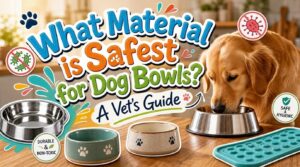
- Choose Hygienic Bowl Materials
- Manage Bowls for Multiple Dogs
- Keep Feeding Areas Cleaner
- Frequently Asked Questions (FAQs)
- Conclusion
Key Takeaways
- Food bowls need washing after every single meal — wet and raw food especially, since leftover residue becomes a bacterial breeding ground within hours.
- A clean-looking bowl can still carry a hidden layer of biofilm that casual rinsing won’t remove, so hot soapy water, a non-scratch sponge, and a weekly bleach soak are all part of a complete routine.
- Your choice of bowl material matters long-term — stainless steel stays the safest because it’s nonporous, dishwasher-safe, and doesn’t hold bacteria in scratches the way plastic or cracked ceramic does.
- The feeding area beyond the bowl — your hands, the food scoop, the mat, and storage containers — spreads germs just as easily, so keeping all of it clean is what actually closes the loop.
Why Dog Bowls Need Cleaning
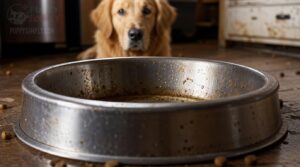
Your dog’s bowl looks clean, but looks can be deceiving. Every meal leaves behind moisture, food particles, and invisible bacteria that multiply fast.
Cracks in the bowl make this even worse — bacteria love to hide there, so it’s worth knowing how to choose the right dog bowl size and material before buildup becomes a real problem.
Here’s why regular cleaning matters more than most owners realize.
Bacteria and Biofilm
Even a bowl that looks clean can harbor a bacterial biofilm — a slimy, protective layer bacteria build through predictable Biofilm Formation Stages, starting with Biofilm Adhesion Factors that lock microbes onto the surface. Quorum Sensing Role kicks in as cell density rises, coordinating Bacterial Resistance Mechanisms that soap struggles to penetrate.
A clean-looking bowl can still harbor biofilm — a bacterial shield that soap alone cannot break
Pathogens like Salmonella and E. coli thrive here, creating serious Pathogen Transmission Risks.
That’s why you should wash your dog’s bowls consistently.
Wet Food Residue
Wet food leaves more than just a mess. Its protein-and-fat residue sticks to surfaces through Residue Adhesion Science — hardening as it dries, trapping bacterial biofilm underneath.
That buildup creates serious Bacterial Growth Risks fast.
Buildup Prevention Strategies start simply: rinse with hot soapy water right after meals. Stainless steel helps, but no bowl material escapes wet food’s sticky grip without consistent cleaning.
Household Germ Exposure
Dirty bowls don’t stay in the corner. Hand Contamination happens the moment you pick one up and then touch your fridge handle, a cutting board, or your child’s snack.
That’s Zoonotic Disease Spread in real time — bacteria like Salmonella crossing into your kitchen through everyday contact.
Splash Zone Risks add another layer: rinsing bowls sends droplets onto nearby surfaces, turning your sink area into one of the quieter household germ hotspots.
Surface Cross-Contamination builds fast in moist environments, because Moisture Germ Growth thrives wherever damp conditions linger.
Following basic sanitation guidelines and adjusting your cleaning frequency breaks that chain before it starts.
The kitchen sink germ hotspot can harbor over 500,000 bacteria, outpacing many other surfaces.
Risks for Vulnerable Dogs
Some dogs face steeper odds. Puppies, seniors, and those on immunosuppressants have reduced immune response — meaning bacterial growth from Salmonella or E. coli hits harder and faster.
Raw diet contamination raises the stakes further, since residue lingers between meals.
Age susceptibility, dehydration risks, and missed illness signs can all quietly stack up, making consistent bowl cleaning your first real line of disease prevention.
Clean Food Bowls After Every Meal
How often you clean your dog’s food bowl depends on what you’re actually putting in it. The type of food matters more than most owners realize, and the rules shift depending on your feeding style.
Here’s what the schedule looks like for each situation.
Dry Kibble Schedule
Kibble looks harmless after a meal, but dry food residue still builds up — oils, crumbs, saliva — and that’s enough to grow bacteria overnight. A simple cleaning schedule keeps things safe:
- Wash after each meal with hot, soapy water
- Log feeding consistency and portion adjustments weekly
- Observe an overnight fasting window between evening and morning meals
Daily washing matters more than you’d think.
Wet Food Schedule
With postmeal cleaning isn’t optional — it’s urgent. wet food residue left sitting even briefly becomes a breeding ground for bacterial contamination.
Wash the food bowl after every meal with hot, soapy water, and follow smart Refrigeration Rules: store uneaten portions covered and chilled. Portion Adjustments to reduce leftovers, watch for Spoilage Signs, and match Serving Frequency to your Meal Timing Tips for consistent food safety practices.
Raw Feeding Schedule
Raw feeding raises the stakes considerably. Raw Meal Timing matters because bacteria like Salmonella and E. coli multiply fast in leftover residue — so wash the bowl with hot soapy water immediately after each meal, no exceptions.
Use Bowl Rotation Systems to keep a clean set ready.
Weekly Sanitization Post-Raw means soaking in bleach diluted with water, rinsing completely, then air‑drying before Storage Safety Rules apply.
Free-feeding Bowl Checks
Free-feeding sounds convenient, but it creates a hygiene gap that’s easy to overlook.
Daily Inspection Habits matter here — check bowls at least once every day for stale food, food residue, and lingering dampness.
Moisture plus leftover bits accelerate biofilm and bacterial buildup fast.
Use Residue Check Methods like a quick visual and finger-touch test.
Rotate bowls regularly to break microbial contamination cycles before they start.
Keep Spare Bowl Sets
Having two sets of bowls on hand makes post-meal cleaning convenient. With a simple rotation system, one set stays in use while the other goes through hygiene steps — rinsing, scrubbing with a dedicated sponge, and drying completely.
Choose dishwasher safe, stainless steel sets, apply labeling codes to track each set, and do wear checks during cleaning to catch cracks before bacteria do.
Clean Water Bowls Daily
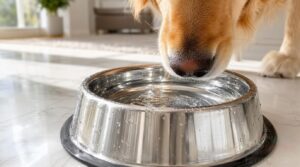
Water bowls get overlooked more often than food bowls, but they’re just as capable of harboring harmful bacteria.
That slimy feeling on the inside of the bowl isn’t just unpleasant — it’s a sign that things have already gone wrong.
Here’s what to know about keeping your dog’s water bowl clean and safe.
Prevent Slimy Biofilm
That slimy film coating your dog’s water bowl isn’t just unpleasant — it’s biofilm, a bacterial community actively protecting itself from casual rinsing. Immediate rinsing techniques alone won’t break it down. To prevent buildup, follow these steps daily:
- Scrub bowl edges using Edge Scrubbing Methods
- Wash your dog’s bowls with hot soap on a non‑porous material surface
- Apply heat‑assisted drying completely
- Use Bowl Storage Solutions to keep clean bowls dust‑free
Biofilm removal protects your dog every day.
Refresh Water Often
Even with a clean bowl, stagnant water carries real risks. Refresh your dog’s water at least once daily — twice if your dog drools heavily, since saliva introduces contaminants fast.
Cooler water, around 15–20°C, also encourages better hydration.
For outdoor bowls, check after rain or wind; debris and insects turn clean water into a contamination problem surprisingly quickly.
Two-day Minimum Guideline
The FDA guidelines set the bar at cleaning your water bowl at least once every 2 days — but most vet recommendations push for daily.
Here’s why that gap matters: bacteria follow a tight Bacterial Growth Timeline, doubling roughly every 20 minutes on damp surfaces. Skipping days lets the biofilm anchor itself, making foodborne illnesses more likely.
For wet food adjustments, tighten that schedule further.
Outdoor Bowl Concerns
Outdoor water bowls face a whole different set of Cleaning Challenges. Weather impact alone — sun, rain, and wind — speeds up contamination faster than you’d expect.
Watch for:
- Biofilm forms quicker in warm, humid conditions
- Waterborne pathogens introduced by insects or debris
- Shared water bowls spreading illness between neighborhood dogs
- Material durability issues cracking nonporous material surfaces
- Stability solutions preventing spills that attract pests for pest prevention
Empty and disinfect outdoor bowls daily — regular disinfection isn’t optional here.
Wash Bowls The Right Way
Washing your dog’s bowl sounds simple enough, but the details really do matter.
A few small habits — like water temperature, your choice of sponge, and how you dry — can mean the difference between genuinely clean and just clean‑looking.
Here’s what to focus on each time you wash.
Hot Soapy Water
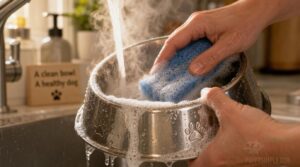
Hot water and soap are your first line of defense. Water temperature impact matters here — aim for 43 to 60°C (110 to 140°F) when you hand wash your dog’s bowls. That heat accelerates grease removal efficacy by speeding up micelle formation, which lifts food oils cleanly off the surface.
Warm water with dish soap also triggers biofilm breakdown mechanism, loosening bacterial colonies before rinsing. Rinse technique importance can’t be overstated — flush thoroughly until no suds remain.
Non-scratch Sponge
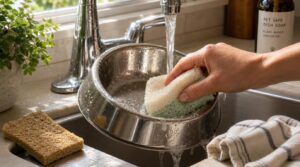
The tool you scrub with matters just as much as the soap. A dedicated dog bowl sponge made from non‑scratch material prevents tiny grooves that trap bacteria.
Consider your options:
- Dual-sided designs — soft sponge plus gentle scrub layer
- Eco-friendly options — plant fiber or cellulose blends
- Antimicrobial features — reduces odor between uses
Follow basic sponge maintenance tips: rinse thoroughly and replace when fraying.
Thorough Rinsing
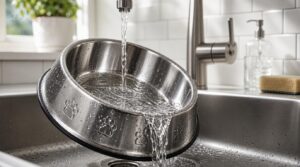
Rinsing is where most people cut corners — and it’s a bigger deal than it sounds. Leftover dish soap or sanitizer residue can irritate your dog’s stomach just like food residue can. Run warm water over every surface until it runs completely clear. No suds, no scent, no shortcuts.
| Essential Rinse Steps | Material Rinse Techniques |
|---|---|
| Start with warm water flow | Stainless steel: rinse and drain fast |
| Apply Residue Removal Methods | Ceramic: sweep corners thoroughly |
| Check for soap or sanitizer residue | Plastic: slow pour reduces splashing |
| Confirm no dish soap scent remains | Silicone: gentle pressure only |
| Air-dry immediately after rinsing | Avoid hot water on delicate materials |
Rinse Water Temperature matters too — aim for 40–60°C. That range dissolves residue efficiently without warping your bowls. Rinsing Equipment Use is simple: a steady faucet and good angles do the job.
Clean Drying Rack
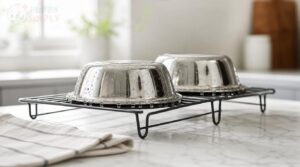
Where you set your bowls to dry matters more than most people realize.
A stainless steel rack with an open grid design and integrated Drainage Solutions promotes Airflow Optimization, so bowls dry completely — no trapped moisture, no mold.
These Space-Saving Designs fit most counters without crowding.
As a Hygiene best practice, stick to Nonporous materials for Contamination prevention and wipe the rack regularly.
Mild Dish Soap Options
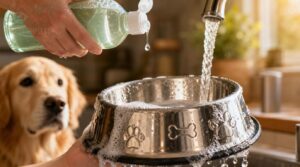
Not all dish soaps are created equal — and the one you grab matters for your dog’s safety.
Look for these qualities:
- Gentle surfactants like alkyl polyglucoside for effective grease removal without harsh residues
- Hypoallergenic choices that skip synthetic fragrances and SLS
- Eco-friendly formulas that are biodegradable and phosphate-free
- Safe brands designed for hand wash use with warm water
Use Dishwasher Cleaning Safely
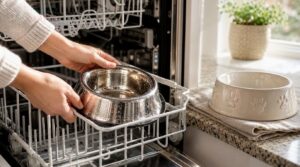
If hand-washing isn’t always in the cards, the dishwasher can be a genuinely effective backup — but only when you use it the right way. A few simple details make the difference between truly clean bowls and ones that just look clean.
Here’s what to keep in mind before you load them up.
Dishwasher-safe Labels
Not every bowl is dishwasher-safe — and using the wrong one can warp the material or compromise its coating. Before loading up, check for a dishwasher-safe label on the bottom. Label materials matter here: polyester and polypropylene labels survive repeated cycles without peeling, while vinyl holds firm up to 150°C.
Use this quick guide:
| Label Material | Heat Resistance | Adhesion Tips |
|---|---|---|
| Polyester | High — survives many cycles | Press firmly on clean, dry surface |
| Polypropylene | Moderate — flexible under heat | Avoid curved edges for best bond |
| Vinyl | Up to 150°C | Works well on glass and plastic |
| Silicone-based | Oil and water resistant | Ideal for bowls rinsed frequently |
Durability tests and NSF International study data back stainless steel and ceramic as the safest dishwasher-safe choices, aligning with FDA regulations on material safety.
High-heat Wash Cycle
Once your bowl passes the dishwasher-safe check, the right cycle does the heavy lifting. A sanitizing dishwasher setting heats water to 140–160°F — that’s the ideal temperature range for killing E. coli and Salmonella without you lifting a sponge. Stainless steel and ceramic bowl options handle this heat well, making dishwasher sanitation genuinely effective.
- High-heat wash cycles excel at grease removal, dissolving fatty residue from wet food effortlessly
- Odor elimination improves considerably when heat volatilizes smell compounds clinging to bowl surfaces
- Cycle duration runs longer than standard settings to sustain sanitizing temperatures throughout
- Energy efficiency tradeoffs exist, but the sanitation benefit outweighs occasional higher energy use
- Dishwasher-safe stainless steel consistently shows the lowest post-cycle bacterial counts in studies
Complete Air-drying
After the high-heat cycle finishes, don’t rush to stack your bowls. Air dry them inverted on a drying rack in a well-ventilated area — this simple inversion benefit drains trapped moisture and aids bacterial growth prevention.
Drying time factors like humidity control and material dry rates matter here: stainless steel dries fastest, while plastic retains micro‑moisture longer.
Nonporous materials following hygiene best practices stay cleaner, longer.
Avoid Damaged Bowls
Before loading up the dishwasher again, run a quick check — that’s where good Inspection Techniques pay off. Cracked ceramic bowls and scratched plastic bowls trap bacteria even after a hot cycle. Safe Handling Tips start with spotting damage early.
Stainless steel and other nonporous materials hold up far better.
Thermal Shock Prevention matters too: don’t rush cold bowls into hot water.
Disinfect Bowls Weekly
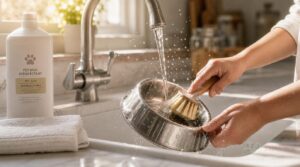
Daily washing keeps bowls clean, but it doesn’t fully eliminate all bacteria lurking in the grooves and surfaces of your dog’s bowl.
That’s where a weekly disinfecting routine comes in — it’s a simple step that takes your hygiene game from good to thorough. Here’s exactly what that process looks like.
Diluted Bleach Solution
Once a week, disinfect your dog’s bowls using a pet-safe diluted bleach solution — mix one-third cup of household bleach per gallon of water.
This chlorine-based disinfectant follows proven bleach dilution ratios that deliver real pathogen effectiveness against bacteria like Salmonella and E. coli.
Prepare the sanitizing solution fresh each time, since solution shelf life is under 24 hours before it loses potency.
Ten-minute Soak
Once you’ve prepared that sanitizing solution, soak it for a full ten minutes. That window isn’t arbitrary — it gives the dilute bleach enough contact time to disinfect and sterilize your dog’s bowl thoroughly. Here’s what makes this soak work:
- Soak Benefits: Loosens dried residue and fat without aggressive scrubbing
- Temperature Tips: Use water around 100–110°F for better residue removal
- Material Safety: Stainless steel withstands soaks easily; plastic stays warp‑free at ten minutes
- Soak Frequency: Weekly keeps biofilm from quietly rebuilding between daily washes
Rinse Chemical Residue
After any bleach disinfection, rinsing isn’t optional — it’s the step that makes the whole process safe. Diluted bleach and chlorine-based disinfectants leave residue that can irritate your dog’s stomach, and puppies are especially sensitive.
Use warm running water and watch for suds or film — those are your Residue Detection Methods in action.
Hard water affects rinsing too, since mineral buildup traps sanitizer and dish soap against the surface. Tilt the bowl, check the seams, and rinse until the water sheets off cleanly.
Sanitize After Raw Food
Raw food changes everything. Pathogens like Salmonella and E. coli don’t wait, so your Sanitization Methods need to match the risk. After raw meat handling, standard washing isn’t enough for reliable Pathogen Prevention.
- Remove all visible residue before sanitizing
- Apply your chlorine based disinfectant immediately after washing
- Honor the full Sanitizer Dwell Time — don’t rush it
- Use Dedicated Tools to prevent cross contamination
- Rinse completely after bleach disinfection
Remove Stubborn Buildup
Dried food doesn’t scrub off easily — and leftover residue feeds surface biofilm formation quickly. A paste of baking soda and water gently lifts caked-on dog food without scratching. Vinegar soaks soften mineral stains, while enzyme solutions break down proteins at the molecular level. Steam clean for stubborn spots, and keep dedicated scrub brushes on hand for weekly deep cleans.
| Method | Best For | How to Use |
|---|---|---|
| Baking Soda Paste | Caked-on dog food | Apply, wait 5 min, scrub |
| Vinegar Soaks | Stain removal techniques | Soak 10 min, rinse well |
| Enzyme Solutions | Protein residue buildup | Apply per label, scrub brush |
Choose Hygienic Bowl Materials
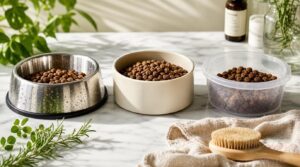
The bowl you choose matters more than most people realize. Some materials stay cleaner with less effort, while others quietly hold onto bacteria no matter how well you scrub.
Here’s what you need to know about each option.
Stainless Steel Benefits
Stainless steel is the benchmark for sanitary pet accessories — and for good reason. Its hygienic surfaces are nonporous, so bacteria can’t hide in scratches the way they do with plastic.
It’s dishwasher-safe, offers real temperature tolerance, and withstands diluted bleach without damage, making chemical safety a non‑issue.
The durability advantage and long-term value make it a smart, non‑scratch material choice with excellent rust prevention for metal bowls.
Ceramic Crack Risks
Ceramic bowls look clean, but a hairline crack changes everything. Thermal shock from hot dishwasher cycles, impact damage from drops, glaze defects, and manufacturing flaws all create stress fractures — tiny gaps where bacteria quietly multiply.
Once cracked, no amount of proper bowl maintenance makes them truly safe again. For infection risk alone, discard any ceramic bowl showing visible damage, no matter how small.
Plastic Scratch Problems
Plastic dog bowls seem convenient, but every scratch tells a story you don’t want to read.
Those microgrooves from regular scrubbing create perfect hiding spots for bacteria in scratches — places soap and water simply can’t reach. Scratch depth can compound over time, turning a dishwasher safe bowl into a bacterial buildup trap.
Preventing bowl scratches starts with soft sponges and scratch‑resistant materials, but plastic bowl longevity has real limits.
Replace when surfaces dull.
Bamboo Hygiene Concerns
Bamboo bowls have an eco-friendly appeal, but bamboo moisture risks make them a poor long-term choice for pet bowl sanitation. The material absorbs water easily, swells, and develops micro-cracks where bamboo bacterial growth quietly takes hold.
Bamboo surface wear accelerates with regular washing, and chemical cleaner damage can strip protective coatings, raising contamination risks.
For reliable germ control, bamboo replacement timing comes sooner than most expect — usually within one to two years.
When to Replace Bowls
No bowl lasts forever, and knowing when to retire one matters more than most owners realize. Material wear and structural damage are your clearest signals. Replace bowls when you notice:
- Deep scratches causing plastic bacterial buildup despite cleaning
- Glaze cracks on ceramic dog bowls exposing porous surfaces
- Rust or pitting on stainless steel dog bowls
- Persistent odors that survive thorough sanitizing
- Any visible mold, warping, or sharp edges
Basic lifespan guidelines reduce real health risks for your dog.
Manage Bowls for Multiple Dogs
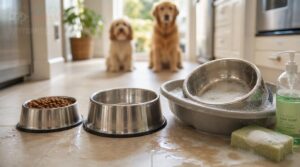
multi-dog household adds a layer of complexity to your bowl routine that single-pet owners never have to think about. Shared bowls can quietly spread bacteria, germs, and even medication between your dogs without any obvious warning signs.
Here’s what to keep in mind when managing bowls for more than one dog.
Separate Food Bowls
When you’re feeding multiple dogs, shared food bowls quietly invite cross-contamination, food guarding, and portion confusion.
Each dog deserves its own dedicated bowl, separate food scoop, and sanitized feeding tools — this facilitates diet customization and stress reduction at mealtime.
| Benefit | Why It Matters |
|---|---|
| Portion Control | Track each dog’s intake accurately |
| Bowl Spacing | Reduces guarding and feeding tension |
Separate Water Access
Food bowls aren’t the only contamination risk. Dedicated Water Stations matter just as much — shared water bowls spread saliva, bacteria, and food particles between dogs quickly.
For better Water Station Hygiene and Cross-Contamination Prevention:
- Place each dog’s water bowl away from food dishes
- Wash the water bowl daily to stop biofilm buildup
- Use distinct Bowl Placement Tips like color-coding for quick identification
Separate clean water access means Reduced Bacterial Transfer and consistently fresh drinking water for every dog.
Medication Cross-contamination
Medication cross-contamination is a surprisingly easy problem to create.
If one dog takes liquid medication, tiny residue droplets can linger inside an unwashed bowl — then dissolve right into another pet’s next meal.
Pill Handling Risks are real: crushed tablets leave dust, and shared scoops spread that residue fast.
Cleaning Failures like quick cold-water rinses won’t remove dried Medication Residues.
Thorough hot soapy washing between each pet’s feeding is essential hygiene practice.
New Pet Quarantine Bowls
When you’re quarantining a new pet, dedicated bowls aren’t optional — they’re your first line of infection control. Cross-contamination happens faster than you’d expect.
Look for these features in quarantine materials:
- Color-Coded Systems to instantly distinguish new-pet bowls from your resident animals’
- Spill-Proof Design that limits surface contact and odor spread
- Disinfectant Compatibility with standard 1:32 bleach solutions
- Sanitation Tracking stickers to maintain a consistent cleaning routine
- BPA-free, dishwasher-safe construction for fast, reliable contamination prevention
Rotate Clean Bowl Sets
Keeping a spare set on hand makes your regular cleaning schedule far easier to stick to.
Label each bowl clearly — Bowl Labeling is simple but surprisingly effective for Cycle Tracking across multiple dogs.
While one set gets washed and air-dried, the other stays in rotation.
This Rotation Hygiene system helps prevent bacteria spread and eliminates cross-contamination without disrupting your dogs’ meal routine.
Keep Feeding Areas Cleaner
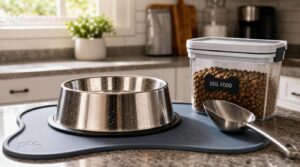
Clean bowls matter, but the whole feeding area plays a role in your dog’s health too.
Germs don’t stop at the bowl’s edge — they spread to mats, scoops, and storage containers just as easily.
A few simple habits around the feeding zone can make a real difference.
Wash Hands Before Feeding
Your hands are a surprisingly common contamination source — and handwashing timing matters more than most pet caregivers realize. Wash your hands prior to handling dog food, not just after.
Use soap and running water, scrubbing for 20 seconds, then dry thoroughly with a clean towel.
Wet hands transfer germs faster than dry ones.
For immunocompromised individuals in your home, hand hygiene isn’t optional — it’s essential protection.
Clean Food Scoops
Your food scoop touches every meal — yet it’s one of the most overlooked bacterial sources in your feeding routine. Follow this daily cleaning routine to stay safe:
- Hand wash with hot, soapy water after each use
- Use a non-scratch sponge — scoop material safety depends on avoiding surface scratches
- Rinse completely, then air-dry to stop moisture-driven bacterial growth
- Store in a dedicated spot for effective cross-contamination prevention
Dishwasher-safe scoops simplify things considerably.
Wipe Feeding Mats
Your dog’s feeding mat is basically ground zero for splatter — and a soggy, food‑streaked mat breeds bacteria fast.
Stick to a daily cleaning routine — quick wipe after meals, full wash weekly.
Silicone and rubber nonslip dog mats win for hygiene practices: they’re waterproof, durable designs that wipe clean in seconds.
Raised edges handle spill containment beautifully.
Mat materials and mat sizes matter, so choose dishwasher-safe options that fit your setup.
Store Food Safely
Where you store kibble and canned food matters just as much as how you clean the bowl.
Use airtight containers with a secure lid to lock out moisture and pests.
Follow food rotation — oldest stock first, newest in back.
Keep fridge temperatures at or below 40°F for wet food.
Good pantry organization and storage hygiene prevent contamination before it ever reaches the bowl.
Disposable Travel Bowls
Travel changes your routine, and that includes feeding time. Disposable dog bowls make travel feeding solutions genuinely practical — no washing required.
Look for eco-friendly disposable bowls made from bagasse or PLA-coated paper, which break down in compost within 60–180 days. Many feature leak‑proof features and microwave safety for reheating meals.
Portability design and material innovations keep food safety for pets intact, even far from home.
Frequently Asked Questions (FAQs)
What is the number one food you should never feed your dog?
Think of chocolate as a slow-acting poison.
It’s the number one food you should never feed your dog — theobromine buildup triggers Toxicity Symptoms quickly, and Emergency Protocols can’t always undo the damage.
What is the 80/20 rule for dog food?
The 80/20 rule means roughly 80 percent of your dog’s meal comes from quality animal protein and fat, while the remaining 20 percent includes vegetables, fruits, and fiber for balanced pet nutrition safety.
Can dogs share water bowls during playdates?
Technically, dogs can share water bowls during playdates, but it’s not ideal.
Shared bowls are a real crosscontamination risk — bacteria and pathogens spread easily through saliva, especially for puppies whose immune systems aren’t fully developed yet.
Should bowl-cleaning routines change by season?
Yes, slightly.
Warmer months speed up pathogen growth and humidity mold risks, so increase wash frequency.
Winter dryness effects matter less, but seasonal dietary residue changes may call for adjusted temperature control during cleaning.
Are elevated bowls harder to keep bacteria-free?
Elevated dog bowls aren’t automatically cleaner.
Bowl Design Flaws like crevices and Biofilm Crevices create Moisture Trap Risks and Residue Retention that complicate your hygiene routine — Cleaning Complexity often increases, making them unexpected germ hotspots in the home.
Do puppies need more frequent bowl cleaning?
Puppies have developing immune systems, making them more vulnerable to saliva contamination and wet food risks.
Their puppy cleaning needs call for washing after every meal — diarrhea triggers and puppy immunity concerns leave little room for shortcuts.
Conclusion
A thousand invisible threats hide in plain sight every time your dog lowers their head to eat.
Understanding how often dog food bowls should be cleaned—and following through daily—removes one of the most consistent sources of bacterial exposure in your home.
Clean bowls, dry surfaces, and smart material choices aren’t optional extras; they’re the baseline.
Your dog trusts you completely with every meal. That trust deserves a bowl that’s genuinely safe.
- https://www.akc.org/expert-advice/health/wash-dog-bowl
- https://food52.com/story/24164-how-much-do-i-need-to-clean-dog-bowl
- https://pmc.ncbi.nlm.nih.gov/articles/PMC10701922
- https://www.fda.gov/animal-veterinary/animal-health-literacy/tips-safe-handling-pet-food-and-treats
- https://www.seaportanimalhospital.com/blog/should-i-use-a-ceramic-plastic-or-stainless-steel-food-bowl-for-my-pet