This site is supported by our readers. We may earn a commission, at no cost to you, if you purchase through links.

Most dog owners spend real money on premium kibble, vet checkups, and orthopedic beds—then grab whatever bowl looks cute at the pet store. That mismatch matters more than you’d think.
A bowl that’s too deep forces your dog to crane its neck awkwardly at every meal, while one that’s too shallow sends food skidding across your floor. Bowl depth affects how comfortably your dog eats, how much air it swallows, and for certain breeds, it can even influence serious health risks like bloat.
Getting the depth right is a small change with a surprisingly long reach.
Table Of Contents
- Key Takeaways
- Dog Food Bowls Should Be 1–4 Inches Deep
- Measure Depth by Snout Length
- Choose Depth by Dog Size
- Use Bowl Capacity Wisely
- Adjust for Breed Needs
- Consider Bowl Height Too
- Know Bloat Risk Factors
- Pick Safe Bowl Materials
- Compare Food and Water Bowls
- Try Practical Bowl Examples
- Frequently Asked Questions (FAQs)
- Conclusion
Key Takeaways
- Bowl depth should match your dog’s size and snout length, ranging from 1–2 inches for toy breeds to 3–4 inches for large and giant dogs, to prevent neck strain and awkward eating posture.
- Going deeper than 4 inches backfires — it causes dogs to gulp air, raises the risk of bloat, especially in deep-chested breeds like Great Danes and Dobermans.
- Your dog’s snout shape matters as much as size: flat-faced breeds like Pugs need shallow bowls of 1–2 inches, while long-snouted dogs like Collies do better with 2–4 inches of depth.
- Stainless steel is the safest bowl material — it won’t harbor bacteria in scratches, won’t leach chemicals, and lasts years longer than plastic, which needs replacing every 6–12 months.
Dog Food Bowls Should Be 1–4 Inches Deep
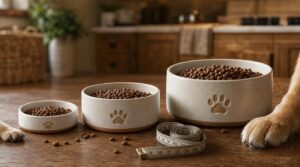
Bowl depth is one of those things that looks simple but actually matters more than most people think. The right depth depends mostly on your dog’s size, and the range runs from just 1 inch for tiny breeds up to 4 inches for large dogs.
For a more tailored fit, the Breed Depth Guidelines for dog bowls break this down by specific breed so you’re not left guessing.
Here’s how it breaks down by size.
Toy Breeds: 1–2 Inches
For toy breeds, a bowl just 1 to 2 inches deep is the sweet spot. Tiny mouths and short snouts need that shallow reach — anything deeper forces awkward neck flexion and can discourage eating.
A 1-inch depth suits most dogs under 5 pounds, and cleaning simplicity is a real bonus.
Non-slip bases improve paw access and mat compatibility during mealtimes.
Medium Dogs: 2–3 Inches
Step up to 2–3 inches for medium dogs, and you’ll notice the difference right away. That depth helps maintain neck alignment during meals, reduces whisker fatigue, and gives you clear portion visibility without guessing.
A 2.5-inch bowl fits most 15–25 lb dogs comfortably. Add slow-feed ridges if your dog wolfs food down, and prioritize stainless steel for easy cleaning.
Large Dogs: 3–4 Inches
Large dogs need 3–4 inches of depth — enough for jaw width fit and comfortable snout access without forcing the neck down. A 3-inch bowl suits most large breeds, while giant breeds with longer snouts do better at 4 inches. Check your dog bowl dimensions and recommended bowl height together.
Good edge roundedness and whisker clearance make a real difference at mealtime.
Avoid Overly Deep Bowls
Going deeper than 4 inches in dog bowls backfires. This depth causes dogs to gulp more air, raising the risk of bloat, a serious concern for deep-chested breeds. Preventing bloat in these dogs requires avoiding excessive air intake during feeding.
Whisker irritation intensifies as the bowl’s sides press against the dog’s face repeatedly. Visibility challenges also arise, leading dogs to miss kibble. These issues compound when dogs shift awkwardly to access food, causing spillage.
To avoid these problems, adhere to recommended bowl height and dimensions. Properly sized bowls minimize neck strain in dogs, ensuring comfortable and safe mealtimes.
Measure Depth by Snout Length
Your dog’s snout length is one of the most overlooked clues for finding the right bowl depth. A bowl that fits one breed perfectly can frustrate another — or even cause discomfort at mealtime.
How snout length should guide your choice — this insight ensures mealtime remains comfortable and stress-free for your pet.
Short Snouts Need Shallow Bowls
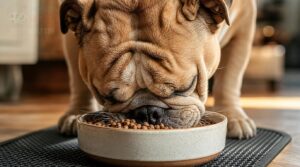
Short snouts like those on Bulldogs and Pugs need bowls just 1–2 inches deep. Anything deeper causes nasal obstruction, pushing food toward the nose and making breathing nearly impossible mid-meal.
Shallow bowls also prevent whisker fatigue by keeping whiskers clear of the rim.
Look for an anti-spill design with a non-slip base — this ensures muzzle alignment stays natural and eating remains comfortable.
Long Snouts Need More Depth
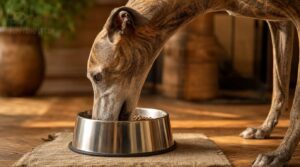
Dogs with long snouts—such as Collies, Greyhounds, or German Shepherds—benefit from deeper bowls, roughly 2–4 inches depending on their size. Their extended muzzle reach optimization means shallow bowls force awkward head tilting.
Proper bowl depth supports a dog’s natural eating posture, maintains whisker clearance, and allows the nasal cavity to perform scent detection without pressing against the rim. This design ensures comfort and functionality during mealtime.
Match Mouth Access Comfortably
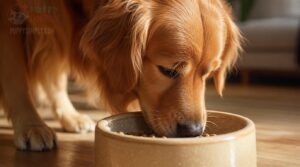
Getting the mouth opening width right makes a real difference at mealtime. Here’s what comfortable access actually looks like:
- Mouth opening width should match your dog’s muzzle — roughly 2.5 to 4.5 inches for most breeds.
- Rim smoothness prevents lip abrasion during repeated licking.
- A jaw-friendly interior uses gentle curves to guide natural chewing motion.
- Snout clearance gap of at least 0.5 inches keeps the nose from pressing the bowl’s sides.
- Lip comfort design means no sharp edges — ever.
Prevent Nose and Whisker Pressure

Think of your dog’s whiskers as tiny sensors — they hate being crammed against hard edges. Whisker-friendly rims and soft lip edges make a real difference, especially for nose-sensitive breeds.
Bowl angle matters too; a slightly tilted design with anti-scratch surfaces lets your dog eat without constant contact.
Good bowl ergonomics for pets means food reaches the mouth, not the face.
Choose Depth by Dog Size
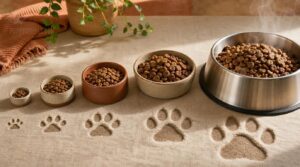
Bowl size isn’t one-size-fits-all — your dog’s weight plays a big role in getting the depth right. A Chihuahua and a Great Dane have very different needs.
Matching the bowl to your dog’s size makes mealtime more comfortable and safer.
Here’s a quick breakdown by weight range to help you find the right fit.
Dogs Under 5 Pounds
For the tiniest pups — those under 5 pounds — a bowl just 1 to 1.5 inches deep is recommended for dogs in this weight range. That shallow profile reduces whisker fatigue, enhances grip safety with a non-slip base, and simplifies portion control.
Travel bowl options in this size also address noise concerns on hard floors, matching any small dog bowl size chart perfectly.
Dogs 10–20 Pounds
At 10 to 20 pounds, your dog hits a sweet spot — big enough to need real capacity, small enough that bowl depth still matters a lot.
Aim for 2 to 3 inches deep and a 6 to 8 inch diameter. This facilitates healthy meal timing, simplifies calorie tracking, and suits most food texture preferences.
Use a small dog bowl size chart to confirm the right bowl height for your dog’s weight.
Dogs 20–35 Pounds
Step up from the 10–20 lb range, and your medium dog — think Beagle or Corgi — needs a bowl about 2.5 inches deep and 5–6 inches wide. Check a medium dog bowl size chart to match dog weight to dog bowl capacity.
For this group, keep in mind:
- Bowl depth promotes dental health — shallower means less food packing around teeth
- Meal frequency and calorie tracking stay easier with right-sized portions
- Seasonal adjustments and activity level may shift how full that bowl gets daily
Dogs Over 50 Pounds
Once your dog crosses the 50-pound mark — a Labrador, Husky, or similar — a bowl 3 to 4 inches deep works best. Use a large dog bowl size chart to match dog weight to bowl capacity accurately.
Proper depth facilitates calorie management, joint support, and dental care, as a neutral neck posture reduces strain during every meal.
Giant Breed Bowl Depth
Giant breeds—such as Great Danes, Bernese Mountain Dogs, or Mastiffs—do best with a bowl depth of 3 to 3.5 inches. Any deeper risks neck strain and gulping air.
To ensure proper sizing, refer to a dog bowl height chart and large dog bowl size chart for breed-specific measurements in centimeters. Adjustable depth inserts are particularly useful for households with multiple giant breeds.
Giant dogs also require bowls that hold at least 10 cups, following the four‑times rule guideline. This ensures adequate capacity for their larger portions.
Use Bowl Capacity Wisely
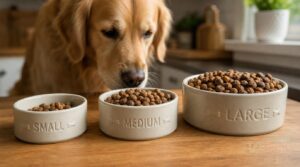
Bowl size affects more than just how much your dog eats — it quietly shapes how you pour, scoop, and eyeball portions every single day. A bowl that’s too big can trick you into filling it more than you should, even when you’re trying to be careful.
Here’s what to keep in mind when matching your dog’s meals to the right bowl capacity.
Match Meals to Bowl Size
Think of your dog’s bowl as a measuring tool, not just a dish. Matching meal size to bowl capacity simplifies calorie tracking and meal scheduling. A medium dog consuming 1.5 cups of food fits ideally in a bowl sized 480–600 ml.
Factor in growth stage adjustments for puppies, and match food texture to depth: use shallower bowls for wet food, and slightly deeper ones for kibble.
Avoid Oversized Bowls
Oversized bowls mess with your brain more than you’d think. It’s called the Illusion Effect — your portion perception shifts when food looks tiny in a wide bowl, encouraging you to add more.
Oversized bowls trick your brain into serving more — a wide dish makes a full portion look tiny
To accurately measure portions, match the bowl’s diameter to your dog’s actual meal volume. Use a dog bowl height chart and a breed-specific bowl size guide to avoid choosing unnecessarily large sizes.
Leave Space Above Food
Always leave at least one inch of space between the food surface and the rim — this isn’t just tidiness. That gap facilitates airflow enhancement, letting your dog breathe easily while eating, and promotes moisture reduction along the bowl rim. It also functions as a digestion cue, giving your dog room to sniff before diving in.
For treats or toppers, that variable headroom doubles as treat placement space, keeping meals contained without overflow. Your dog bowl height chart should factor this clearance into bowl ergonomics for pets, since ideal feeding height for dogs depends on both bowl height and usable interior space.
Prevent Overfeeding Mistakes
Bowl size quietly shapes how much you serve — that’s the visual illusion at work. A bowl that looks "almost empty" tricks you into topping it off.
- Use Portion Measurement: weigh meals on a gram scale
- Follow a Feeding Schedule: two measured meals daily
- Practice Calorie Awareness: dry kibble runs 300–450 calories per cup
- Apply Treat Moderation: count snacks toward daily totals
- Reference a dog bowl sizing chart conversion to match dog bowl size in cm with correct portions
Adjust for Breed Needs
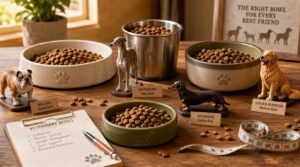
Every dog is a little different, and bowl depth isn’t a one-size-fits-all situation. Your dog’s breed, face shape, chest structure, and age all play a role in finding the right fit.
Here’s what to keep in mind for some of the most common breed-specific needs.
Flat-faced Breed Bowls
Flat-faced breeds like Bulldogs and Pugs require a shallow rim bowl—ideally 1.5 to 2.5 inches deep—with a tilted angle that pushes food forward. This design ensures nose clearance and prevents whisker edges from pressing against the sides. An anti-spill lip contains meals without forcing the head down, supporting proper shoulder height and reducing neck strain in dogs.
Specific breed recommendations are outlined below, emphasizing tailored features for comfort and accessibility:
| Breed | Recommended Depth | Key Feature |
|---|---|---|
| Chihuahua | 1–1.5 inches | Wide shallow rim |
| French Bulldog | 1.5–2 inches | Tilted angle bowl |
| Pug | 1.5–2 inches | Nose clearance design |
| English Bulldog | 2–2.5 inches | Anti-spill lip |
| Shih Tzu | 1.5–2 inches | Rounded whisker edges |
Deep-chested Dog Concerns
Deep-chested breeds like Great Danes and Dobermans carry a hidden vulnerability—their anatomy creates real orthopedic strain and raises serious bloat risk. To protect their thoracic breathing space, maintain bowl depth at 2–3 inches, avoid post‑meal exercise, and prioritize weight management.
Watch for these four warning signs your setup needs adjusting:
- Gulping air rapidly during meals
- Restlessness or a distended belly after eating
- Labored breathing during or after activity
- Visible neck strain from awkward dog eating posture
Bernese Mountain Dog Sizing
Bernese Mountain Dogs are large dogs with an equally big appetite, making it crucial to get mealtime right. Standing 23–28 inches tall, their stature requires a bowl height of 25–30 cm to accommodate their size.
Their moderately long snouts necessitate a depth of 3–4 inches in their feeding bowls, ensuring comfortable access during meals.
Breed-specific bowl size is critical, particularly given their chest depth and joint support nutrition needs. Opt for a large bowl with a diameter of 19–25 cm to align with their physical structure and health requirements.
Senior Dog Comfort
As dogs age, their joints tell a different story than when they were pups. A whisker-free rim bowl on an adjustable height stand, set at shoulder level, reduces neck strain and promotes joint comfort for senior dogs.
Add traction flooring under the bowl, keep a quiet feeding zone nearby, and maintain consistent water availability. These senior dog feeding solutions make every meal easier.
Puppy Growth Changes
Puppies don’t stay the same size for long. During the Chewing Phase Shift — typically occurring between 3 to 6 months — changes in teeth and muzzle length development impact how comfortably they can reach food. Body Fill Impact also plays a role, as their shoulders begin to widen.
Adjusting bowl depth and dog bowl height is critical during four distinct growth stages:
- 3–4 months — Use breed-specific bowl size guides to start.
- 6–7 months — Reassess bowl size in cm as height nears adult range.
- 8–12 months — Check the dog’s shoulder height to determine ideal feeding height.
- Growth Plate Timing closure — Finalize Weight Stage Adjustments.
Consider Bowl Height Too
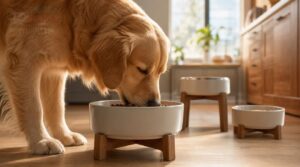
Bowl depth matters, but height is just as important for your dog’s comfort and health. Getting the right feeding height can protect their neck, back, and joints over time.
Here’s what to keep in mind regarding how high or low your dog’s bowl should sit.
Shoulder-height Feeding Basics
Shoulder-height feeding provides ergonomic positioning for your dog. When the bowl sits at your dog’s shoulder height, the feeding angle keeps the neck neutral, supporting spinal alignment and joint comfort during every meal. This mobility assistance matters especially for seniors or arthritic dogs.
For ideal feeding height, match the bowl to your dog’s shoulder — roughly 5–30 cm depending on breed size.
Low Bowls for Small Dogs
For small dogs, floor-level bowls often work perfectly. A bowl sitting 5–10 cm off the ground matches their low shoulder height, keeping the neck relaxed.
Whisker comfort matters too — shallow, breed-specific bowl sizes around 1–2 inches deep prevent nose pressure.
Temperature control is easier with stainless steel, and travel-friendly shallow options in eco-friendly materials support both dental health and ideal feeding height for dogs.
Raised Bowls for Comfort
Raised bowls genuinely change mealtime for many dogs. An Ergonomic Stand Design with an Adjustable Height Mechanism allows you to match the bowl to your dog’s shoulder height—the sweet spot for the ideal feeding height for dogs.
Key benefits of a quality raised dog feeder include:
- Weighted Base Stability prevents sliding on hardwood or tile
- Whisker Relief Shape reduces nose pressure during meals
- Elevated Bowl Hygiene keeps the bowl off dirty floors
Neck and Back Strain
Every time you are adding musculoskeletal load to the neck and upper spine when your dog dips its head into a bowl that’s too low. Repeated thoracolumbar flexion—meal after meal—causes real neck fatigue over time.
Matching dog bowl height to dog shoulder height promotes cervical alignment and postural ergonomics. That’s how you prevent neck strain in dogs and keep meals comfortable long-term.
Know Bloat Risk Factors

Bloat is one of the most serious conditions a dog owner can face, and certain feeding habits can raise that risk.
A few key factors—your dog’s breed, bowl setup, and eating speed—all play a role.
Here’s what to watch for.
Deep-chested Breeds
Deep-chested breeds like Great Danes and Greyhounds pose a real risk. Their rib cage length and chest depth create anatomy that traps gas quickly. Watch for these early signs of GDV:
- Restless pacing after meals
- Swollen, tight abdomen
- Unsuccessful retching
- Sudden drooling or distress
Use breed-specific bowl size guidelines—shallower bowls (2–3 inches) reduce gulping and air intake considerably.
Elevated Feeder Caution
Elevated feeders may seem ergonomic, but they can increase GDV risk in large, deep-chested dogs by accelerating air intake during meals. To mitigate this, use adjustable height systems set at elbow level—not shoulder height—as part of a preventive strategy.
Always pair these systems with a non-slip base and ensure material compatibility between the bowl and stand. Before selecting a feeder, check a raised dog feeder height chart tailored to your breed’s specific needs.
Fast Eating Risks
Fast eating is one of the sneakier bloat triggers. When your dog inhales meals, air swallowing increases dramatically — and that trapped air sets the stage for gastric dilation-volvulus (GDV).
Large bites slow digestion, disrupt meal timing, and can cause choking incidents or calorie overload before fullness signals even register.
Slow feeder bowls interrupt this dangerous dog eating behavior, and they’re one of the simplest tools for preventing canine bloat.
When to Ask Your Vet
Some signs shouldn’t wait. If your dog shows appetite loss, repeated vomiting, breathing changes, lethargy, pain, or urination changes after mealtime, call your vet promptly.
Dogs with megaesophagus or GDV risk need vet-recommended feeding equipment and guidance on ideal feeding height. Proper support for these conditions starts with professional advice.
Preventing canine bloat and supporting canine health and feeding posture begins with the right setup — and the right professional advice.
Pick Safe Bowl Materials

Bowl depth matters, but the material your dog eats from matters just as much. The wrong choice can harbor bacteria, leach chemicals, or chip in ways that quietly create health risks.
Here’s what you need to know about the most common options.
Stainless Steel Bowls
Food-grade stainless steel dog bowl — grade 304, also called 18/8 — is your safest choice. It won’t react with food, won’t harbor bacteria in micro-scratches, and remains dishwasher safe for years.
Look for practical features like rolled rims, a non-slip base, and double wall construction for hot foods. These design elements enhance durability and safety.
Some models even include measurement marks inside, simplifying portion control and making dog bowl size in cm easy to track.
Ceramic Bowl Safety
Ceramic bowls are a solid choice when selecting the right one. Always check for lead-free certification and food-grade material standards — glaze toxicity poses a real concern with imported or unbranded pieces.
Inspect for chips regularly, as cracks can harbor bacteria quickly.
Most quality ceramic bowls are generally dishwasher-safe, but avoid thermal shock by allowing cold bowls to warm gradually before adding hot food.
Plastic Bowl Drawbacks
Plastic bowls might seem convenient, but they come with real trade-offs. Surface scratches develop quickly, creating bacterial harborage spots that won’t wash clean. Odor retention is another issue—fatty foods leave scents behind even after scrubbing.
Chemical leaching risk rises with heat and wear, and BPA-free labels don’t guarantee safety from other plastic chemical additives. They’re also environmental waste, needing replacement every few months.
Silicone Travel Bowls
Silicone collapsible bowls solve what plastic can’t. These travel bowls fold flat to 3–4 inches, weigh under 100 grams, and pop open to a 2–3 inch depth—practical for any dog size on the go.
Their foldable design and portability, combined with heat resistance up to 200°F and measurement markings, simplify portion control during outdoor adventures.
Eco-friendly reuse ensures less waste on every trail, making them a sustainable choice for pet owners.
Non-slip Bowl Bases
Nonskid bases prevent bowls from sliding across kitchen floors, addressing a common mealtime frustration. Their anti-tip design and compatibility with tile, hardwood, and laminate surfaces ensure stability during use.
Materials like rubber grip strength or silicone base texture provide the necessary traction. These features keep bowls securely in place, enhancing both safety and convenience.
Most nonskid bowls are dishwasher-safe, simplifying maintenance. Base cleaning requires minimal effort: rinse, dry, repeat to maintain hygiene and functionality.
A nonslip dog bowl material also supports better feeding posture, promoting ergonomic comfort for pets during meals.
Compare Food and Water Bowls
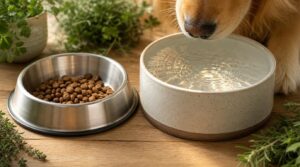
Food and water bowls are not one-size-fits-all — they serve distinct purposes, which influences how you select each. Your dog’s food bowl can be shallower, but the water bowl requires sufficient space to ensure hydration throughout the day.
Here’s what to consider for each: The food bowl’s design accommodates portion control, while the water bowl prioritizes capacity to meet daily drinking needs.
Food Bowls Can Be Shallower
Food bowls can actually be shallower than you’d expect. For dry kibble or wet food, a depth of 1–3 inches works well for most dogs — enough for easy access without excess.
Shallower designs offer Whisker Pressure Relief, support Stress-Free Feeding, and even provide a subtle Dental Health Boost by reducing awkward chin-tucking.
They’re also a quiet Weight Management Aid, making portions visually clearer at a glance.
Water Bowls Need Capacity
Water bowls work differently — capacity matters far more than depth. A medium dog needs roughly 2–3 daily liters, while large and giant breeds may require 3–6 liters or more during warmer months for proper seasonal hydration.
In multi-pet homes, cumulative water needs add up quickly. Always check your dog bowl sizing chart to match reservoir size to actual milliliter and cup capacity requirements.
No-spill Water Designs
No-spill bowls solve a real daily headache. A curved rim deflects splashes inward, while a reservoir buffer underneath reduces backflow onto your floor. Sensor dispensing releases 5–15 ml per lick, and gravity return channels route overflow back to the tank. Dual compartment designs catch drips separately.
For water bowl size selection, match bowl diameter to your dog’s breed—ensuring the diameter and capacity in centimeters align with your dog’s specific needs.
Separate Feeding and Drinking
Keeping food and water in separate spots isn’t just tidier — it’s genuinely better for your dog’s health. A Multi-Station Setup using Behavioral Feeding Zones makes a real difference:
- Cross-Contamination Prevention keeps bacteria from traveling between bowls
- Hydration Monitoring Benefits let you track daily water intake accurately
- Station Placement Strategy reduces moisture near food, keeping meals fresh
- Breed-specific bowl size and dog bowl size in cm stay easier to manage per station
- Ideal feeding height for dogs improves when each station is positioned independently
Try Practical Bowl Examples
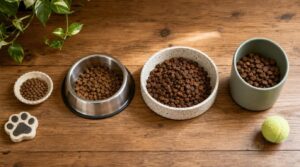
Sometimes the easiest way to find the right bowl is to see real examples side by side. A few good options cover most dogs, from tiny breeds to deep-chested giants.
Here’s a look at four worth considering.
Personalized Stainless Steel Bowl
A uniquely yours stainless steel bowl serves double duty — it’s practical and unmistakably yours.
Choose food-grade stainless steel in the right dog bowl size (cm) for your breed-specific size, add an engraved name, pick from color accent options, and select custom texture patterns that suit your dog’s personality.
The non-slip base keeps things steady, and the dishwasher-safe design makes cleanup a breeze.
Large Slow Feeder Bowl
Large slow feeder bowls take mealtime seriously — and your dog’s digestion will thank you. With maze complexity built into the interior, these bowls make large dogs work for every bite, reducing the risk of gulping and bloat.
Look for a 4–7 cup capacity, 20–25 cm diameter, and a removable silicone mat for noise dampening and floor grip.
Eco-friendly build options exist too, though travel foldability isn’t typical at this size.
Best Fit by Dog Size
Matching weight-based sizing, snout length, and shoulder height match are critical for selecting the right dog bowl. These factors ensure comfort and accessibility during mealtimes.
A 5-pound Chihuahua requires a 9–10 cm bowl with a depth of 1–2 inches, accommodating their small stature and delicate snout.
For a 30-pound Labrador, a larger 15–19 cm bowl with 2–3 inches of depth provides adequate space and proportionate access.
Giant breeds necessitate bowls of 25+ cm in diameter, paired with ergonomic shapes to maintain muzzle comfort during feeding.
When to Replace Bowls
Even the best bowl wears out. Watch for scratch indicators — deep grooves harbor bacteria no scrubbing can reach. Persistent odors after washing, a warped base, or base slippage during meals all signal it’s time to replace.
Post illness swap is smart too.
Plastic needs replacing every 6–12 months; stainless steel lasts years, making it the better long-term, eco-friendly choice.
Frequently Asked Questions (FAQs)
What size bowl for bernese mountain dog?
Like fitting shoes to big paws, sizing a Bernese Mountain Dog’s bowl matters.
For this 80–115 lb breed, choose a wide-rim design, 3–4 inches deep, with a slow-feeder maze and mat placement underneath.
Can bowl depth affect my dogs digestion?
Yes, it can. The wrong depth changes chewing mechanics, increases swallowed air, and adds stomach workload. Poor bowl fit can disrupt gut transit and nutrient absorption — small shifts in dog bowl height matter more than most owners realize.
How often should I replace my dogs bowl?
Ironically, most dog bowls outlive their welcome. Replace yours when you spot visible cracks, persistent odors, stain discoloration, or dishwasher wear causing material degradation.
For plastic bowls, replacement is recommended every three to six months to ensure hygiene and durability.
Do multiple dogs need separate bowls?
Each dog needs their own bowl. Separate bowls support individual portion control, food guarding prevention, and behavioral stress reduction.
Color-coded bowls simplify the cleaning routine, making it easy while keeping each dog’s feeding bowl distinct.
Should puppies use adult-sized bowls?
No, puppies shouldn’t use adult-sized bowls. A small pup needs a shallow, appropriately sized bowl to eat comfortably without straining their neck or missing food entirely.
Can bowl depth impact a dogs dental health?
Bowl depth can indirectly affect chewing mechanics and saliva flow. A poorly fitted dog feeding bowl encourages gulping incidence, raises oral bacterial load, and slows plaque accumulation control.
However, daily brushing still matters most.
Conclusion
It’s the little things that add up. Knowing how deep a dog food bowl should be puts you ahead of most pet owners who overlook this completely. Match depth to your dog’s snout, size, and breed—and you’ve solved a problem most people don’t even know exists.
A properly fitted bowl means easier eating, less swallowed air, and fewer mealtime struggles. Your dog eats every single day. Make every one of those meals count.
- https://www.houndsy.com/blogs/modern-tails/what-size-dog-food-bowl-do-i-need-a-comprehensive-guide-for-pet-owners?srsltid=AfmBOopJZMYTz1ci9IsXeUvT7y75HQRwSAKDJWMQ2yLQvJlbMPXFxli7
- https://www.uahpet.com/blogs/post/dog-bowl-size-by-breed-a-comprehensive-guide-for-pet-owners?srsltid=AfmBOor3r4y3QvbZkWg6shWD2f380CzwQ-J24eFAPVMHYDZeC59BcCq7
- https://www.thepetempire.com/en/choose-the-right-size/dog/
- https://www.barneysranch.com/the-perfect-dog-food-bowl/
- http://www.shutterstock.com/gallery-6719p1.html