This site is supported by our readers. We may earn a commission, at no cost to you, if you purchase through links.

A single click changed everything for my neighbor’s reactive Border Collie—three weeks of clicker work undid six months of frustrated commands and frayed leashes. That’s not unusual.
Dogs trained with a clicker commonly learn new behaviors 40% faster than those trained with verbal cues alone, because the click removes all the guesswork. Your dog stops trying to decode your tone, your body language, your mood—the click means one thing and one thing only: that exact moment was right.
Teaching your dog with a clicker gives you a communication tool sharp enough to shape anything from a basic sit to complex tricks, one precise moment at a time.
Table Of Contents
Key Takeaways
- The click works because it marks the exact moment your dog does something right, removing all guesswork about what earned the reward.
- Timing is everything—click during the behavior, not after, or you’ll accidentally reward the wrong action.
- You don’t need food every time forever; gradually fading treats while keeping the clicker active builds a dog that listens because the habit is real, not just because a snack is guaranteed.
- Almost any dog can learn this way, but the method only works if everyone in the household uses the same cues, hand signals, and reward rules consistently.
What is Clicker Training?

Clicker training is one of the simplest, most effective ways to teach your dog exactly what you want — without confusion or frustration. It’s built around a small handheld device that tells your dog, "Yes, that’s it!" the instant they do something right. Here’s what you need to understand before you pick up that clicker.
Once you’ve got the basics down, teaching basic commands with a clicker becomes surprisingly fast — dogs pick up on the precise timing better than you’d expect.
Meaning of The Click
That small, sharp sound from a clicker isn’t random — it’s a precisely timed signal that tells your dog, "Yes, that’s exactly what I wanted." In operant conditioning, this sound becomes a conditioned reinforcer, a nonverbal communication tool your dog learns to associate with something good.
Think of it as a snapshot, freezing the exact behavior you want to reward. The device is designed to produce a short, hard sound to mark the behavior.
Clicker as a Reward Marker
Once your dog understands what the click means, it becomes a reward marker — a precise signal that says "that action just earned you something good." The click bridges the gap between the behavior and the treat, keeping the connection crystal clear.
It even works for distance training, letting you mark correct behavior from across the room.
Why Timing Matters
Timing is everything in clicker training. The click has to land at the exact moment the behavior happens — not a second later. That narrow reward window keeps your dog connected to what just earned the treat.
| Element | Good Timing | Poor Timing |
|---|---|---|
| Click Precision | Marks behavior instantly | Marks the wrong action |
| Learning Speed | Faster skill gains | Plateaus and confusion |
| Distraction Timing | Cuts through competing stimuli | Dog loses focus |
Miss that window, and your behavior marker loses its meaning.
Clicker Alternatives
A standard clicker isn’t your only option. Verbal cue markers like a crisp "Yes" work just as well. Whistle training signals cut through noise outdoors, while a finger snap technique keeps your hands free. A mechanical buzzer delivers fast, consistent tones when clicking feels awkward.
Colored target mats and hand signal markers suit hearing-impaired dogs.
Best Dogs for Clicker Training
Almost any dog can learn with a clicker, but some take to it faster. High energy breeds like Border Collies, Belgian Malinois, and German Shepherds thrive because they’re built to work. Dogs with strong food drive lock in quickly — every click means a treat they actually want. Temperament matters too:
- Confident dogs shape new behaviors without shutting down
- People-oriented dogs stay focused between rewards
- Calm dogs make capturing natural moments much easier
Why Clicker Training Works

Clicker training isn’t just a trend — there’s real science behind why it works so well. Dogs learn faster and stay more engaged when the rules are clear and the rewards are consistent. Here’s what makes this method so effective.
The best clicker training techniques take full advantage of this science, giving you a clear roadmap to faster, more reliable results.
Positive Reinforcement Basics
Think of positive reinforcement as a simple deal: your dog does something right, and you make it worth repeating.
The moment you click and reward a behavior, your dog’s brain files it away as a winner. Deliver that treat within one second, and the connection sticks. Miss that window, and the message blurs.
Clear Canine Communication
One thing dogs crave above all else is clarity. With clicker training, you give them exactly that — a precise, consistent marker that says, "Yes, that exact thing."
Dogs crave clarity, and clicker training delivers it with one precise, consistent signal
- Click only the behavior you want repeated
- Keep your verbal cue and hand signals consistent every time
- Stick to one behavior definition per session
When your criteria stay stable, your dog stops guessing and starts communicating back.
Faster Behavior Learning
Clicker training cuts learning time because every click lands at the exact right moment. That timing precision removes all the guesswork — your dog doesn’t waste repetitions wondering what earned the reward.
Pair that with small, consistent shaping steps and a high reinforcement rate, and your dog stays locked in, making correct choices faster with every session.
Builds Confidence and Focus
Every small win builds your dog’s belief in the process. When you use incremental rewards during shaping, your dog experiences success often, and that steady stream of positive reinforcement grows real confidence over time.
Short sessions keep that momentum going. A focused five-minute clicker training routine, repeated daily, trains your dog to lock in — especially when you reward eye contact first.
Makes Training Feel Fun
Training doesn’t have to feel like homework — for you or your dog. When you mix in game drills, playful warmups, and dog choice activities, sessions become something your dog actually looks forward to.
- Use timed game drills for quick, energetic practice
- Rotate treats and toys for reward variety
- Try outdoor scent play to spark curiosity
- Let your dog pick between cues for agency
- End with a favorite reward to seal the fun
Gather Your Clicker Training Supplies
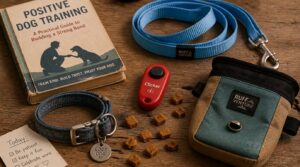
Before your first training session, you’ll want to have a few key items ready to go. Having the right supplies makes the whole process smoother and keeps your dog engaged from the very start. Here’s what you’ll need to get going.
Choosing a Dog Clicker
Not all clickers are created equal, and the one you pick can make a real difference in your sessions. Look for ergonomic design with a contoured grip and non-slip surface so it feels natural in your hand. Sound consistency matters too — every click should sound identical to your dog, reinforcing the same clear auditory marker every time.
Material durability keeps your mechanical noisemaker reliable through drops and outdoor use, while volume options let you match the click to your environment — softer for sensitive dogs, louder for noisy parks. A compact size with a wrist strap or belt clip covers your portability features, so it’s always within reach when the moment calls for it.
Small High-value Treats
You’ve got your clicker sorted — now let’s talk treats. The right reward can make or break your session.
High-value treats should be small, around pea-sized, so your dog can eat them instantly and stay focused. Think boiled chicken, turkey bites, or small jerky pieces — strongly scented options keep motivation high.
Keep calories in check by choosing low-calorie options (1–3 calories each):
- Tiny lean meat pieces reward behavior without overfeeding
- Soft, chewy textures release aroma fast, boosting your dog’s drive
- Bite-sized portions allow dozens of repetitions without guilt
Portion your treats ahead of time, and balance them against your dog’s daily meals.
Treat Pouch Benefits
Now that you’ve prepped your treats, you need a reliable way to carry them. A treat bag keeps rewards at your fingertips — no fumbling in pockets mid-session.
Look for quick access rewards features like a wide opening, a sturdy belt clip, and moisture protection lining. A travel-friendly pouch with a compact, durable design keeps your clicker training momentum strong anywhere you go.
Quiet Training Space
Your treat pouch is ready — now set the scene. Pick a low-traffic corner of your home, away from the TV, kitchen, and laundry room. Use the same spot every session so your dog settles faster.
- Remove toys and clutter from the area
- Face your dog toward a plain wall
- Close curtains to block outside movement
- Turn off background noise like TVs or radios
- Keep family members out during the session
Rewards Beyond Food
Food isn’t the only motivator your dog has. Many dogs go wild for a quick game of tug, a belly scratch, or even permission to sniff the grass. Matching the reward to what your dog actually loves makes your clicker training far more effective than treats alone ever could.
| Reward Type | Example |
|---|---|
| Toy Play | Short tug or fetch game |
| Praise & Affection | Upbeat "Yes!" plus gentle petting |
| Sniff Exploration | Release to sniff after the click |
| Access Reward | Door opens only after calm sit |
Use the clicker first, then release the reward immediately — whether that’s a toy, praise, or a sniff break.
How to Clicker Train Your Dog
Now that your supplies are ready, it’s time to put them to use. Clicker training follows a simple sequence, and once you understand each step, the whole process clicks into place. Here’s how to get started.
Charge The Clicker First

Before your dog can learn anything from a click, that sound needs to mean something. This step is called charging the clicker, and it’s basically loading the clicker with value.
Click once, then immediately deliver a small treat. Repeat this 10–20 times. You’re not asking for any behavior yet — just building the association. Once your dog looks up expectantly after each click, it’s charged.
Click at The Right Moment
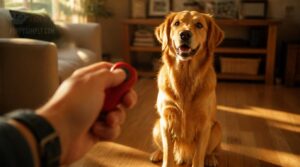
Timing is everything. Click at the exact moment your dog performs the behavior — not a second before or after. Think of it like taking a photo: you want to capture the precise instant, not the moment before your dog shifted position. If you click late, your dog connects the sound to whatever just happened, which may be the wrong action.
Stay watchful and ready. Momentary opportunities appear fast, especially during natural movement or play. The click needs to land while the behavior is still happening. Practice your trigger finger during everyday moments, like clicking when a ball hits the ground, to sharpen your timing precision.
Keep your criteria consistent across every session. Click only when the behavior clearly matches your target — not for close attempts or half-efforts. This consistency removes confusion and helps your dog build a stable, repeatable habit, even as distractions creep in.
Reward After Every Click
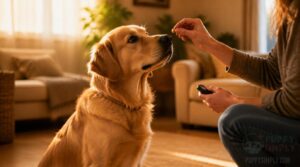
Every click you make is a promise. Follow through on that promise immediately — deliver the treat within one second of the click, every single time. That’s what consistent treat delivery means, and it’s the foundation of effective clicker training.
Here’s how to keep your click treat timing tight:
- Keep treats pre-loaded in your fingers before the rep starts.
- Move your hand fast the moment you click — don’t pause to think.
- Use small, soft pieces so your dog eats quickly and refocuses.
- Match reward value to difficulty — harder behaviors deserve high value rewards.
- Never skip a reward after a click, even if the rep felt sloppy.
Reward frequency management matters too. While your dog is still learning, reward after every single click. This immediate reinforcement schedule keeps the behavior sharp and your dog engaged. Missing a reward after a click breaks the association you’ve worked to build, turning a clear signal into a confusing one. Consistency here is what separates frustrating sessions from real progress.
Add Simple Verbal Cues

Once your dog understands the click means a reward is coming, it’s time to attach a word to the behavior. This is called cue pairing, and it’s simpler than it sounds. Say the word clearly — "sit," "down," "stay" — just before the behavior happens, then click and reward the moment it does.
Fade Treats Gradually
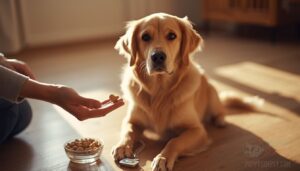
At some point, your dog doesn’t need a treat every single time — and that’s actually the goal. Treat frequency reduction works best when it’s gradual. Start rewarding 4 out of 5 correct responses, then 3 out of 5. Here’s a simple step-by-step fading plan:
- Reward every correct response for the first few sessions
- Drop to rewarding 4 out of 5 successes once the behavior is reliable
- Shift toward rewarding only the fastest or cleanest responses
- If your dog struggles, step back and reward every attempt again
- Keep the clicker active even as treats become less frequent
This lure distance decrease and reward expectation increase keeps motivation high. The goal is food independence — your dog follows cues because reinforcement still exists, just less predictably.
Teach Commands With a Clicker

Once your dog understands what the click means, it’s time to put that knowledge to work with real commands. Each method below matches a different learning style, so you can meet your dog where they are. Here are five ways to start building solid commands with your clicker.
Teach Sit With Luring
Start with the lure path technique: hold a treat right at your dog’s nose, then slowly move it up and slightly back over their head. As their nose follows the treat upward, their head angle guidance naturally lowers the rear end into a sit. The moment their hindquarters touch the ground, click instantly — that’s your reward marker timing doing the work.
Keep the treat close to their face so they don’t jump forward. Once they sit reliably, begin the gradual fade process by using the same hand motion without visible food, adding your verbal cue just before the gesture. After each repetition, release them with a word like "free" so they know the exercise is done — that’s your release cue usage keeping things clear and consistent.
Teach Down Step-by-step
Once your dog sits reliably, "down" is the natural next step. Start the lure down technique by holding a treat at your dog’s nose, then slowly drawing it straight down toward the floor. Their nose follows, their front legs slide forward, and their chest drops — that’s exactly what you want.
Click the instant their belly touches the floor, not while they’re still lowering. That split-second matters because your clicker training is marking the finished position, not the movement toward it. Follow every click with a treat delivered right at nose level to keep them in place.
Once they’re laying down consistently, add your verbal cue. Say "down" once, just before you move the treat toward the floor. Use the same word, same tone, every time.
For down duration building, wait one extra second before clicking, then two. Use a clear release cue like "okay" so they know when it’s truly done.
Capture Calm Behavior
Not every behavior needs to be taught — some just need to be noticed and rewarded in the moment.
Capturing calm means clicking the instant your dog naturally settles, like pausing mid-walk or resting quietly on their mat. That click marks the exact second of stillness. Follow it immediately with a treat, and your dog starts choosing calm on purpose.
Shape New Behaviors
Capturing calm is reactive — shaping is proactive.
With shaping, you’re actively building a brand-new behavior, one small step at a time, using successive approximation. Instead of waiting for the finished action, you reward each tiny move toward your target behavior, then raise the bar slightly with each click.
Practice Around Distractions
Once your dog knows a behavior at home, it’s time to test it where life actually happens. Start with mild distractions — a person walking nearby, a toy on the floor — and click the moment your dog stays focused.
If they lose it, don’t panic. Reset to an easier setup, rebuild a few quick successes, then try again.
Frequently Asked Questions (FAQs)
Can clicker training fix existing behavioral problems?
Yes, clicker training can help with many behavioral problems by reinforcing calmer, better alternatives. But for serious aggression or fear, it works best alongside a full behavior plan and professional support.
How often should training sessions happen each week?
Aim for 3 to 5 short training sessions per week. Each one should last around 5 to 10 minutes. Rest days between sessions help your dog consolidate what they’ve learned.
Is clicker training suitable for older rescue dogs?
Clicker training works beautifully for older rescue dogs. Short sessions, gentle luring, and a louder click or verbal marker make it joint-friendly, anxiety-reducing, and perfectly matched to senior dogs’ pace.
What if my dog is not food motivated?
Some dogs just aren’t treat-driven. Try toys, praise, or play instead. If treat refusal is sudden, check with your vet — pain or stress can quietly kill food motivation.
Can multiple family members train the same dog?
Absolutely — multiple family members can train the same dog. The key is everyone using the same cue words, hand signals, and reward policy so your dog never gets mixed messages.
Conclusion
You don’t need perfect timing or a professional background to get real results. Teaching a dog with clicker training is built for everyday people, not just experts—the clicker does the hard work of bridging the gap between what you want and what your dog understands.
Stay consistent, keep your sessions short, and trust the process. One click at a time, you’re not just training behaviors—you’re building a language only the two of you share.
- https://www.akc.org/expert-advice/training/clicker-training-your-dog-mark-and-reward
- https://bestfriends.org/pet-care-resources/guide-clicker-training-pets
- https://www.purina.com/articles/dog/puppy/training/puppy-clicker-training
- https://www.shadybrookvet.com/puppy-and-kitten-center/clicker-training-basics
- https://www.successjustclicks.com/timing-is-absolutely-critical