This site is supported by our readers. We may earn a commission, at no cost to you, if you purchase through links.

The difference between a puppy that comes sprinting back to you and one that ignores you completely often comes down to one thing: what you’re holding in your hand. Recall and leash manners are two of the most safety-critical skills your dog will ever learn, and the treat you choose can quietly make or break your progress.
A bland biscuit won’t compete with a squirrel. The right puppy training treats for recall and leash training, though, give you a genuine edge—something your puppy finds worth choosing over every distraction the world throws at them. Knowing which treats work, when to use them, and how to use them strategically separates trainers who get results from those who wonder why nothing sticks.
Table Of Contents
- Key Takeaways
- Best Puppy Training Treats for Recall
- 1. Pupford Beef Liver Training Treats
- 2. Pupford Freeze Dried Chicken Training Treats
- 3. Blue Dog Bakery Beef Soft Training Treats
- 4. Wellness Soft Grain Free Puppy Treats
- 5. Blue Buffalo Puppy Training Treats
- 6. Buddy Biscuits Bacon Soft Chewy Training Treats
- 7. Pupford Chicken Soft Training Treats
- 8. Pet Botanics Mini Bacon Training Treats
- Treat Features That Matter Most
- High-Value Treats for Distractions
- Recall Training Treat Strategy
- Leash Training Reward Timing
- Nutrition and Puppy Safety
- Homemade Versus Store-Bought Treats
- Training Gear for Treat Success
- Frequently Asked Questions (FAQs)
- Conclusion
Key Takeaways
- The treat you pick for recall training needs to beat whatever distraction your puppy is facing — bland biscuits won’t cut it when there’s a squirrel in the picture.
- Tiny, soft, low-calorie pieces let you reward dozens of times per session without filling your puppy up or blowing past their daily calorie limit.
- Reward timing is everything — a treat delivered within one second of the right behavior is what actually teaches your puppy what they did right.
- Fading treats too early stalls progress; wait until your puppy hits an 80–90% success rate before you start stretching out the reward schedule.
Best Puppy Training Treats for Recall
Recall is one of the most important skills your puppy will ever learn, and the treat you use can make or break it. The right reward needs to be exciting enough to compete with everything else in your puppy’s world. Here are eight training treats that consistently deliver results.
Choosing wisely really does matter — these best puppy training treats for obedience and group classes tend to outshine the competition when distractions are at their peak.
1. Pupford Beef Liver Training Treats
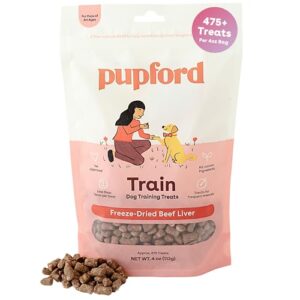
Pupford Beef Liver Training Treats are a reliable go-to for recall work. Each bag packs 475+ tiny, freeze-dried pieces made from just three ingredients — beef liver, beef heart, and mixed tocopherols. That minimal formula means fewer allergens and no artificial junk.
The mess-free, non-crumbly texture keeps your hands clean during fast-paced sessions, and the strong liver aroma grabs your puppy’s attention fast. No refrigeration needed, so they’re just as useful at the park as they are in your living room.
| Best For | Dog owners who train frequently and want a clean, low-calorie treat that won’t upset sensitive stomachs. |
|---|---|
| Package Weight | 4 oz |
| Calories Per Treat | Under 1 kcal |
| Primary Protein | Beef liver & heart |
| Treat Texture | Freeze-dried, dry |
| Free-From Claims | No artificial additives |
| Training Suitability | Obedience, tricks, agility |
| Additional Features |
|
- 475 tiny pieces per bag means you get a lot of reps without blowing through your supply fast
- Just three ingredients — great for dogs with allergies or tricky digestive systems
- No mess, no grease, and no crumbling all over your hands mid-session
- Pricier than a lot of comparable training treats on the market
- Only one flavor, so if your dog is beef-sensitive, you’re out of luck
- Mixed tocopherols are natural, but some owners would rather skip preservatives entirely
2. Pupford Freeze Dried Chicken Training Treats
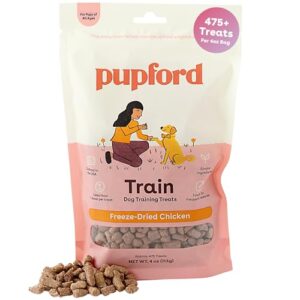
If you’re after a chicken-based option, the Freeze Dried Chicken Training Treats from Pupford are worth a close look. Each bag holds roughly 475 bite-sized pieces, all under one calorie each — so you can reward generously without worrying about your puppy’s waistline. The single-ingredient formula (chicken plus natural tocopherols) keeps things clean and simple.
They’re grain-free, lightweight, and leave no oily residue on your hands, which makes them easy to use during fast recall repetitions.
| Best For | Dog owners who want a clean, low-calorie chicken treat for high-repetition training sessions — especially those managing their dog’s weight or working in agility and service training. |
|---|---|
| Package Weight | 5 oz |
| Calories Per Treat | 3 kcal |
| Primary Protein | Salmon |
| Treat Texture | Soft and chewy |
| Free-From Claims | No corn, wheat, soy |
| Training Suitability | Puppy training, hikes |
| Additional Features |
|
- Nearly 475 bites per bag keeps you stocked for long training sessions without constant restocking.
- Under one calorie each means you can reward freely without throwing off your dog’s diet.
- No oily residue or crumbs — your hands and gear stay clean, even during busy outdoor sessions.
- The per-ounce cost runs higher than most standard training treats, which adds up fast for frequent trainers.
- Once opened, they need an airtight container or they’ll harden and develop a pretty strong smell.
- It’s a single-flavor product, so dogs that get bored easily — or just don’t love chicken — may lose interest over time.
3. Blue Dog Bakery Beef Soft Training Treats
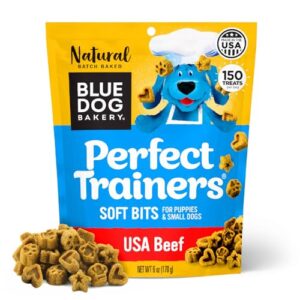
For something a little different, Blue Dog Bakery Beef Soft Training Treats bring real beef front and center. At just 3 calories per treat, they’re a solid pick for frequent recall rewards without overloading your puppy’s daily intake.
The soft, chewy texture holds up well during repetition-heavy sessions, and each piece breaks apart easily if you need smaller bites.
They’re made in the USA with no artificial colors or preservatives — straightforward ingredients you can feel good about.
| Best For | Small dogs, puppies in training, and seniors who need a gentle, low-calorie treat they can earn often without the extra calories adding up. |
|---|---|
| Package Weight | 4 oz |
| Calories Per Treat | Under 1 kcal |
| Primary Protein | Chicken |
| Treat Texture | Freeze-dried, dry |
| Free-From Claims | No artificial additives |
| Training Suitability | Obedience, agility, service work |
| Additional Features |
|
- Only 3 calories per treat, so you can reward frequently without guilt
- Made in the USA with real beef and no artificial colors or preservatives
- Soft and chewy — easy on young or sensitive teeth
- Texture can run firmer than some other soft treats on the market
- Contains citric acid and tocopherols, which some owners prefer to avoid
- Not ideal for larger breeds who may find the extra-small size too tiny
4. Wellness Soft Grain Free Puppy Treats
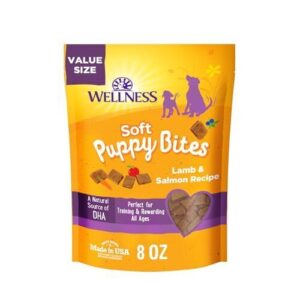
If you’re training a grain-sensitive puppy, Wellness Soft Grain Free Puppy Treats are worth keeping in your pouch. At 6 calories per treat, they’re manageable for frequent rewarding without throwing off your pup’s daily intake. The soft, bite-sized chews are easy on tender mouths and break apart cleanly for smaller pieces.
What sets these apart is the DHA from salmon, which promotes brain development during those critical early months — a genuine plus, not just marketing.
| Best For | Puppy owners focused on training who want a low-calorie, grain-free treat that supports brain development and works for sensitive stomachs. |
|---|---|
| Package Weight | 6 oz |
| Calories Per Treat | 3 kcal |
| Primary Protein | Beef & sweet potato |
| Treat Texture | Soft and chewy |
| Free-From Claims | No artificial colors, flavors, preservatives |
| Training Suitability | Puppy training, obedience |
| Additional Features |
|
- DHA from salmon gives real brain-development support during those early, critical months
- Soft texture is easy on puppy teeth and gentle enough for senior dogs too
- Only 6 calories each, so you can reward often without overdoing it
- The 8 oz bag goes fast, especially if you have more than one dog
- Not an option for pups with fish or lamb allergies
- A few buyers have found occasional hard pieces mixed in, which is worth watching for
5. Blue Buffalo Puppy Training Treats
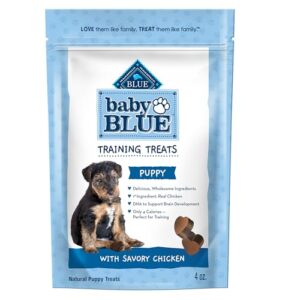
Blue Buffalo’s Baby BLUE Puppy Training Treats punch above their weight for a store-bought option. Real chicken leads the ingredient list, and the soft, heart-shaped pieces break apart easily for smaller rewards during rapid-fire recall sessions.
They’re also free from corn, wheat, and soy — a solid choice if your pup has a sensitive stomach. The added DHA from fish oil promotes brain development, which matters most during these early learning months.
| Best For | Puppy owners who want a clean-ingredient training treat that’s gentle on sensitive stomachs and supports early brain development. |
|---|---|
| Package Weight | 8 oz |
| Calories Per Treat | 6 kcal |
| Primary Protein | Lamb & salmon |
| Treat Texture | Soft, bite-sized |
| Free-From Claims | No corn, wheat, soy, artificial colors |
| Training Suitability | Puppy and potty training |
| Additional Features |
|
- Real chicken is the first ingredient — no fillers like corn, wheat, or soy
- Soft, heart-shaped pieces break apart easily for smaller rewards during training sessions
- Added DHA from fish oil supports brain development during those critical early months
- Treats can be crumbly and leave a bit of a mess on your hands and floors
- The 4-oz bag goes fast if you’re doing intensive training — expect to reorder often
- Contains fish oil and egg-derived whey, which could be a problem for dogs with food sensitivities
6. Buddy Biscuits Bacon Soft Chewy Training Treats
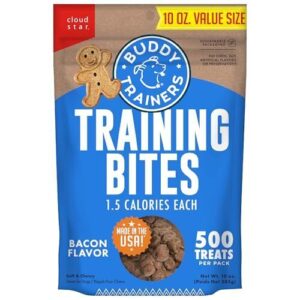
Buddy Biscuits Bacon Soft Chewy Training Treats are a reliable pick when you need something your pup genuinely gets excited about. The natural pork liver base with added bacon flavor gives these treats real scent appeal — useful when you’re competing for your puppy’s attention.
That scent-driven focus makes them especially handy when working through reliable dog recall training techniques where consistent motivation is everything.
At roughly 1.5 calories per piece, you can reward frequently without worrying about the calorie load adding up. The soft, chewy texture lets your pup consume each piece quickly, keeping momentum in your training session.
| Best For | Small and toy breed dogs whose owners train frequently and want a low-calorie, soft treat that keeps sessions moving without filling their pup up. |
|---|---|
| Package Weight | 4 oz |
| Calories Per Treat | Not listed |
| Primary Protein | Chicken |
| Treat Texture | Soft, bite-sized |
| Free-From Claims | No corn, wheat, soy, artificial preservatives |
| Training Suitability | Obedience and potty training |
| Additional Features |
|
- At just 1.5 calories each, you can reward your dog constantly without guilt — great for longer training sessions.
- The soft, chewy texture is easy on smaller mouths and dogs with sensitive stomachs.
- The resealable pouch keeps treats fresh and makes them easy to toss in a bag for walks or classes.
- Not every dog loves bacon flavor — some picky eaters may just walk away.
- Contains allergens like egg, barley, peanuts, and added sugars, so dogs with dietary restrictions may need to skip these.
- For bigger, high-energy dogs, the tiny calorie count means you’ll burn through the bag fast, which gets pricey.
7. Pupford Chicken Soft Training Treats
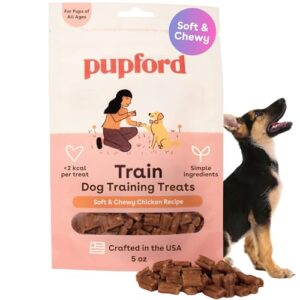
Pupford Chicken Soft Training Treats keep things clean and simple — and that matters when you’re deep into a recall session. Real chicken leads the ingredient list, followed by sweet potato, honey, and rosemary, with no artificial preservatives anywhere in the formula.
Each piece comes in under 2 kcal, so you can reward generously without watching the calorie count spiral. The soft, chewy texture breaks apart easily, making it a smart pick for puppies still developing their bite strength.
| Best For | Dogs of all ages — especially puppies and seniors — whose owners want a mess-free, low-calorie treat for high-frequency training sessions. |
|---|---|
| Package Weight | 10.08 oz |
| Calories Per Treat | ~1.5 kcal |
| Primary Protein | Pork liver & bacon |
| Treat Texture | Soft and chewy |
| Free-From Claims | No corn, soy, artificial flavors |
| Training Suitability | Training and behavior shaping |
| Additional Features |
|
- Real chicken is the first ingredient, and the short list stays clean with no artificial additives
- Under 2 kcal per piece means you can reward often without worrying about weight gain
- Soft, chewy texture works great for puppies and older dogs with sensitive teeth
- Large breed owners may need to give several pieces at once, which adds up fast
- Only one flavor, so dogs with poultry allergies or picky palates are out of luck
- Some dogs may experience an upset stomach if they get too many in one session
8. Pet Botanics Mini Bacon Training Treats
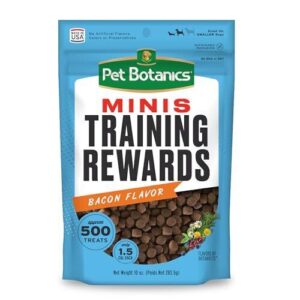
When 500 treats come in a single bag, you’re set for weeks of solid recall work. Pet Botanics Mini Bacon Training Treats weigh in at roughly 1.5 kcal each, so frequent rewarding won’t derail your puppy’s diet.
The bacon and pork liver aroma is strong enough to cut through outdoor distractions, keeping focus where it belongs. Soft, chewy, and easy to break apart — these fit naturally into fast-paced recall drills without slowing you down.
| Best For | Small-breed dog owners and puppy parents who train frequently and want a low-calorie, high-value treat they can give over and over without guilt. |
|---|---|
| Package Weight | 5 oz |
| Calories Per Treat | Under 2 kcal |
| Primary Protein | Chicken & sweet potato |
| Treat Texture | Soft and chewy |
| Free-From Claims | No artificial additives |
| Training Suitability | Obedience and trick training |
| Additional Features |
|
- About 500 treats per bag means you’re covered for weeks of daily training without constantly restocking.
- At ~1.5 kcal each, you can reward generously during recall drills or house-training without messing with your pup’s diet.
- The bacon and pork liver smell is strong — great for keeping a distracted dog locked in during outdoor sessions.
- Contains grains and legumes, so dogs with sensitivities to brown rice, barley, or peas may not do well with these.
- Has added cane sugar and molasses, which rules them out for dogs on low-sugar or restricted diets.
- The tiny size works perfectly for small breeds, but bigger dogs may need a handful at a time to feel like the reward actually means something.
Treat Features That Matter Most
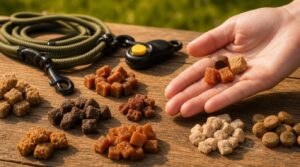
Not every treat works well for training — size, texture, and delivery speed all affect how quickly your puppy learns. The right physical features can mean the difference between a distracted pup and one laser-focused on you. Here’s what to look for when choosing treats for recall and leash work.
Pea-sized Reward Pieces
Size matters more than you might think. Pea-sized reward pieces let you reward your puppy dozens of times in a single session without filling them up. That means more repetitions, better focus, and no sluggish pup halfway through.
Keeping portions consistent also simplifies daily calorie management, so treats don’t quietly tip your puppy toward overfeeding. Always remember to limit daily treat intake to ten percent of their total calories.
Soft, Chewy Textures
Texture is one of those things that quietly makes or breaks a training session.
Soft, chewy treats don’t crumble in your pocket or take forever to chew — your puppy takes them quickly and stays focused on you. That gentle chew also reduces jaw fatigue, which matters when you’re running through recall repetitions back to back.
Low-odor Indoor Options
Texture helps your puppy stay focused — and so does smell. If you’re training indoors, low-odor treats make a real difference. Strong aromas linger on furniture and distract your dog mid-session.
- Freeze-dried chicken stays compact and nearly scent-free in a sealed container.
- Pupford Beef Liver treats are widely praised for their minimal aroma compared to fish or dairy options.
- Single-protein, limited-ingredient treats reduce cross-scent and keep your training area fresh.
Store them in an airtight container between sessions.
Breakable Firm Treats
Some treats hold their shape just long enough to matter. Breakable firm treats snap cleanly into smaller pieces, so you’re not fumbling with crumbs during a recall. Their crumbly interior breaks along natural stress lines, producing clean edges with no sharp fragments.
Each piece weighs roughly 1–2 grams, making weight management simple even across multiple daily sessions. Aroma releases quickly on contact, which is exactly what you need when your puppy is mid-sprint toward you.
Store them in an airtight container below 60% humidity, and they’ll stay fresh and breakable for up to six weeks.
Fast Reward Delivery
Breaking firm treats cleanly buys you a second — but what really seals a recall is how fast that reward reaches your puppy’s mouth. Reward timing is everything. A half-second delay can blur the connection between the behavior and the treat.
In recall training, a half-second delay between behavior and treat can cost you everything
Keep high-value treats pre-portioned in a waist treat pouch so your hand moves without thinking:
- Instant access means your puppy learns exactly what earned the reward
- Small size prevents fumbling mid-session
- Ease of use keeps momentum going during fast-paced recalls
High-Value Treats for Distractions
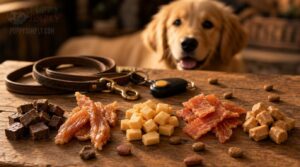
When your puppy hits a wall — squirrels, kids, other dogs — ordinary treats just won’t cut it anymore. That’s when you need something that stops them in their tracks and makes coming back to you the obvious choice. These five high-value options are the ones that actually deliver when the stakes are high.
Freeze-dried Liver Rewards
Few treats stop a distracted puppy in its tracks quite like freeze-dried liver. The aroma alone is enough to cut through most distractions — that strong, natural scent makes it one of the highest-value rewards you can use during recall training.
Break pieces down to pea-sized fragments for fast delivery, and store them somewhere cool and dry to keep that irresistible texture intact.
Salmon Training Bites
Salmon training bites punch well above their weight in high-distraction environments. The natural aroma draws your puppy’s focus even when competing smells are everywhere.
Many formulas list real salmon as the primary protein, with added omega-3s that support brain development during those critical early months.
Keep pieces small — pea-sized portions keep calorie counts manageable across a full recall session.
Boiled Chicken Pieces
Few treats match boiled chicken for sheer simplicity and effectiveness. A 100-gram serving of boneless, skinless breast delivers around 31 grams of protein with roughly 165 calories — an excellent ratio for a puppy burning energy through recall drills.
Boil boneless pieces for 12–20 minutes, cool completely, then refrigerate within two hours. Store extras in the freezer for up to four months.
Cheese for Hard Recalls
When a recall feels impossible — maybe a squirrel just bolted past — cheese for hard recalls is often your fastest fix. A small cube of cheddar or string cheese cuts through distraction like almost nothing else. That rich fat content spikes motivation quickly.
Keep pieces pea-sized so your puppy swallows fast and stays focused on you, not the treat.
Squeeze-tube Meat Purees
Squeeze tubes might be the most underrated tool in your training kit. These meat purée rewards deliver a quick lick of smooth, protein-rich flavor — no crumbs, no fumbling. Common bases include chicken, beef, and turkey, each offering mild flavor dogs accept eagerly.
Here’s why trainers reach for them constantly:
- Mess-free reward delivery during movement-heavy leash training
- Smooth tube purée texture flows instantly — no chewing delay
- Easy portion control keeps calories in check
- Works outdoors without distractions from strong odors
Recall Training Treat Strategy

Getting recalls right isn’t just about having good treats — it’s about knowing when and how to use them. Your strategy matters just as much as what’s in your treat pouch. Here’s what to focus on as you build a reliable recall with your puppy.
Reward Every Early Recall
Every early recall your puppy gets right deserves a reward — no exceptions at this stage.
Immediate treat delivery, within one second of your pup reaching you, is what locks in the behavior. That tight window creates a rapid reward association your dog can actually learn from. Delay it, and the connection fades fast.
Use Jackpot Rewards
Think of a jackpot reward as your puppy’s version of hitting the lottery — unexpected, exciting, and impossible to forget.
Occasionally drop five to ten treats in rapid succession the moment your pup nails a recall. That unpredictable bonus keeps motivation high, because your dog never knows when the big payout is coming. Inconsistency here actually works in your favor.
Avoid Cue Poisoning
Jackpots build excitement, but one mistake can quietly unravel all of it.
Cue poisoning happens when your recall word gets linked to something unpleasant — like a bath or leash removal. Your puppy starts hesitating or ignoring the call entirely. If that’s happening, change the cue completely. Pick a fresh word or a nonverbal whistle signal, then recondition from scratch using high-value treats.
Increase Distance Slowly
Once you’ve rebuilt a cue, the next step is stretching the distance — carefully.
Increase recall distance by no more than 10 percent per week. Start at 5 yards, then add 5 yards only after three clean recalls at the current mark. If your puppy misses at the new distance, step back. No exceptions.
- Deliver high-value treats within two seconds of every successful recall at a new distance.
- Train in low-distraction environments before expanding range outdoors.
- End each session with a confident recall at a distance your puppy already owns.
Fade Treats Gradually
Once distance is solid, start pulling treats back — but only after your puppy hits the Cue Reliability Threshold of 80–90% successful recalls.
| Gradual Reduction Plan Step | Action |
|---|---|
| Step 1 | Reward every recall |
| Step 2 | Reward every third |
| Step 3 | Widen the Reward Gap Progression |
| Step 4 | Use intermittent reward schedule |
| Step 5 | Practice reward-free recall |
Leash Training Reward Timing
Leash training clicks when your treat lands at exactly the right second — too late, and your puppy has no idea what they did right. Timing isn’t just helpful here; it’s the whole game. These five reward moments will sharpen your delivery and keep your walks moving in the right direction.
Mark Loose-leash Walking

Loose leash walking starts with your body position. Stand tall, face forward, and keep your dog parallel to your leg — that alignment is the foundation.
From there, leash length management matters: a 4-to-6-foot leash should drape loosely, never taut. Use a marker word the moment your dog holds that calm position, then reward immediately.
Reward Beside Your Leg

Where you deliver the treat matters just as much as when. Reward beside your leg — at knee to hip height — keeps your puppy aligned with your body rather than swinging ahead or behind.
Pick one consistent side and stick with it. Over time, that hip position becomes a cue in itself, and your puppy learns that staying close is always worth it.
Treat Before Pulling Starts

Most pulling happens before you even react — the leash goes taut while you’re still deciding what to do.
That’s why the pre-walk reward works so well. Offer a small, high-value treat the moment your puppy takes that first calm step.
You’re not waiting for a mistake. You’re making the right choice irresistible from the start.
Reinforce Attention Outdoors

Outdoors, your puppy’s attention is constantly being pulled in five directions at once. That’s why reinforcing attention early matters more than waiting for a mistake.
The moment your puppy glances back at you — even briefly — deliver a high-value treat immediately. That eye contact is your opening. Reward it, and you’ll build a puppy that checks in habitually, even in high-distraction environments.
Keep Sessions Short

Five minutes is enough. Puppies lose focus fast, and long sessions backfire — you’ll see refusals and wandering before any real learning sticks.
Keep each leash training block to about five minutes, and run two or three short sessions daily instead. That spacing actually improves recall retention and lets you end every session on a win.
Nutrition and Puppy Safety
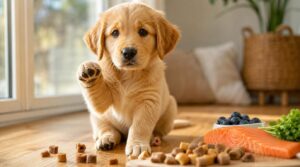
Training treats do more than reward good behavior — they become a regular part of your puppy’s daily diet. Choosing the wrong ones can lead to weight gain, digestive upset, or ingredients your pup simply doesn’t need. Here’s what to pay attention to when evaluating treats for your puppy’s health and safety.
Count Treat Calories
Treats add up fast — and daily calorie limits matter more than most new puppy owners realize. Use these calorie tracking methods to stay on track:
- Treat calorie labels list calories per piece or per serving — always verify the unit
- Freeze-dried liver runs 3–6 calories per piece; soft chews average 2–5
- Portion size guidelines recommend treats stay under 10% of daily intake
- Break larger pieces to stretch calorie-controlled treats further without losing value
Weigh treats on a kitchen scale before sessions. Log every reward — high-value treats and low-value treats alike — so adjusting treat intake stays simple and accurate.
Choose Simple Ingredients
The label on a treat tells you a lot — if you know what to look for.
A single protein source like chicken, beef, or fish as the first ingredient keeps things clean and traceable. Whole food ingredients with minimal processing, such as freeze-dried liver or plain chicken jerky, reduce the guesswork. Short ingredient lists mean fewer surprises during recall training sessions.
Avoid Artificial Preservatives
Once you’ve got the ingredient list sorted, the next step is checking for preservatives.
Artificial preservatives like BHA, BHT, and ethoxyquin are common in lower-quality treats. For puppies with sensitive skin or ears, cutting these out matters. Here’s what to look for instead:
- Freeze-dried liver — moisture removed naturally, no additives needed
- Air-dried treats — concentrated flavor, clean preservation
- Vacuum-sealed packaging — extends shelf life without synthetic chemicals
- Natural antioxidants — vitamin C or rosemary extract keep things fresh safely
Clean label ingredients and proper storage in a cool, airtight container do the rest.
Watch Digestive Reactions
Even clean, single-ingredient puppy training treats can cause digestive upset in sensitive puppies. High-value treats like cheese or freeze-dried liver are rich, so large portions may trigger loose stool.
Watch for stool texture changes — firm to soft is often the first signal. Track timing of symptoms carefully; reactions can appear hours later, making the connection easy to miss.
Consider Probiotic Treats
One small addition worth considering is probiotic-enriched treats. Strains like Lactobacillus and Bifidobacterium help support digestive balance, which means fewer random stomach upsets interrupting your recall training sessions.
Look for labels listing exact strain names and CFU counts at the use-by date. Soft, chewy formats work best — easy to break into small pieces and puppy-friendly during fast-paced leash manners work.
Homemade Versus Store-Bought Treats

Regarding training treats, you’ve got two real options: make them yourself or grab something off the shelf. Both work well, and the right choice depends on your schedule, your pup’s dietary needs, and how much control you want over ingredients. Here’s a closer look at what each path looks like in practice.
Homemade Chicken Rewards
Making your own homemade dog treats puts you in full control of what goes into your puppy’s mouth. Plain, skinless boiled chicken cut into pea-sized pieces is one of the simplest and most effective rewards you can prepare for recall training.
Here’s what makes chicken work so well:
- Chicken portion control keeps each piece at roughly 1–2 calories, so you can reward repeatedly without pushing past that 10% daily treat limit
- The natural aroma boost from freshly cooked chicken is strong enough to cut through outdoor distractions during recall sessions
- Shelf-stable jerky made by drying chicken in a low oven or dehydrator extends usability for longer training drills
- Practicing allergy safety checks before introducing chicken and rice bites ensures your puppy tolerates the new protein without digestive trouble
- Storage best practices are simple: airtight containers keep fresh pieces good for three days in the fridge, or up to three months frozen
Always cook chicken to 165°F and skip any salt, garlic, or seasoning. Keep pieces uniform so every reward feels consistent. High-value treats don’t need to be fancy — sometimes the plainest option is the one your puppy works hardest for.
Peanut Butter Biscuits
Peanut butter biscuits give you a high-value treat with full ingredient control. Bake them at 170–190°C until firm but breakable — that texture works well for recall training because you can snap pieces down to pea size.
Each biscuit runs 60–120 calories, so count them into your puppy’s daily intake. Swap in honey or oats to adjust flavor and nutrition without complicating the recipe.
Sweet Potato Chews
Sweet potato chews are a surprisingly adaptable homemade treat for recall training. Here’s why they work:
- Single-ingredient simplicity — just dried sweet potato, nothing else
- Naturally low in fat with fiber that helps digestion
- Soft to chewy textures suit different puppy ages and jaw strength
- Age-appropriate sizes break easily for pea-sized reward pieces
Dehydrate thin slices at low heat, then store in a cool, dry place to prevent mold.
Commercial Convenience Benefits
Store-bought treats make consistent training genuinely easier. Resealable bags and bulk packaging mean you’re never scrambling mid-session, and auto-reorder options keep your supply steady without extra shopping trips.
Many brands offer quick access, bite-sized pieces — already portioned, low odor, and easy to use. Some even include digital integration via QR codes linking directly to training tips.
Ingredient Control Tradeoffs
Homemade treats give you full control, but that comes with tradeoffs. Single-ingredient options simplify allergen tracking, yet limit variety. Grain-free recipes cut carbs but cost more and can affect texture. Natural preservatives avoid synthetic additives while shortening shelf life.
And high-value ingredients like liver boost motivation but add calories — so always factor treats into your puppy’s daily intake.
Training Gear for Treat Success
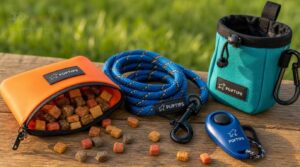
The right treats are only half the equation — the gear you use to deliver them matters just as much. A few simple tools can make your training sessions smoother, faster, and more consistent. Here’s what’s worth having on hand.
Waist Treat Pouches
Your treat pouch is only as good as your access to it. A waist treat pouch with an elastic waist pocket and one-hand access design lets you reward your puppy the moment recall happens — no fumbling.
Split compartments keep high-value dog treats separate from everyday ones, while water-resistant fabric and reflective piping make it practical for any training session.
Long Training Lines
A long training line is your safety net before your puppy earns off-leash freedom. Start with 15 feet, then work up to 30 as recall improves. Flat nylon or biothane resists dirt and won’t burn your hands.
Keep the line off the ground while moving, and always pair every recall with high-value treats to build a strong response.
Clickers for Marking
Once the line is doing its job, a clicker takes your timing to the next level.
Marker timing precision matters more than most new trainers expect — the click needs to land within one second of the desired behavior. That split-second clicker sound calibration tells your puppy exactly what earned the reward, cutting confusion before it starts.
Recall Training Whistles
A clicker executes the precision work up close, but a whistle cuts through distance noise in a way your voice never quite can.
For recall training whistles, there are three main options worth knowing:
- Pealess whistles deliver a consistent tone no matter how hard you blow.
- High-frequency whistles reach small dogs reliably at distance.
- Dual-tone whistles let you assign two separate recall commands.
A stainless steel body resists rust through wet outdoor sessions, and an adjustable mouthpiece ensures a comfortable, secure fit for any handler.
Toy Reward Alternatives
Not every puppy trains best with food.
For toy-motivated dogs, swapping treats for a quick bubble chase session or a round of tug play on a designated mat can be just as powerful. Social praise, brief toy access, or even a photo moment with your pup keeps reward systems fresh without adding extra calories to their daily intake.
Frequently Asked Questions (FAQs)
At what age should recall training begin?
Recall training starts early — around 8 weeks old. The early puppy window of 8–16 weeks is ideal. For six-month refinement, gradually increase difficulty as impulse control improves.
How do training treats differ by breed size?
Breed size shapes every treat choice. Small breeds need pea-sized, soft bites; medium dogs handle slightly larger pieces; large breeds benefit from chewier, breakable portions.
Calorie needs vary considerably across sizes.
Can treats alone replace positive verbal praise?
No, treats alone can’t do the full job. Verbal praise builds an emotional connection that food simply can’t replicate — and dogs trained with both rewards tend to stay responsive even when treats aren’t around.
How many daily sessions does a puppy need?
Most puppies thrive with 3 to 4 short sessions daily. At 8–10 weeks, keep each under 5 minutes. As your puppy matures, gradually extend to 15 minutes while reducing frequency slightly.
Do training treats work for rescue puppies?
Yes, training treats work well for rescue puppies. Soft, pea-sized pieces they can eat in a second keep focus sharp. Start with high-value options like chicken or liver to build trust fast.
Conclusion
Think of recall and leash training like teaching a young pup to navigate a powerful river current—the right treat acts as the current that steadily carries them back to safety every time.
The puppy training treats for recall and leash training you choose become your strongest line of communication. Pick wisely, reward consistently, and your puppy won’t just follow commands—they’ll choose you, every time, over every distraction the world sets in their path.