This site is supported by our readers. We may earn a commission, at no cost to you, if you purchase through links.
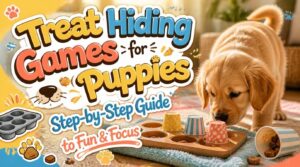
Your puppy’s nose contains 300 million scent receptors—yours has about 6 million. That gap explains why five minutes of sniffing tires out a puppy faster than a half-hour walk. Nose work isn’t a bonus activity; it’s a biological need most owners never tap into.
Treat hiding games for puppies turn that untapped horsepower into focus, calm, and genuine tail-wagging joy. A muffin tin, a stack of paper cups, a scrap of cotton towel—that’s all it takes to build a scent-tracking session that rivals any store-bought toy. Grab a handful of kibble, and let’s put that nose to work.
Table Of Contents
Key Takeaways
- Puppies have roughly 50 times more scent receptors than humans, making nose work games a biological need rather than optional fun.
- The "Find It" cue is the foundational skill behind every treat-hiding game, built by showing the treat, using one consistent cue word, and praising instantly upon success.
- Keep sessions short—around five to ten minutes, two to four times daily—and always end on a win to prevent frustration or fatigue.
- Safety matters as much as fun: supervise every game, inspect toys for damage, wash food puzzles regularly, and count treat calories toward your puppy’s daily food total.
Best Treats to Hide for Puppies
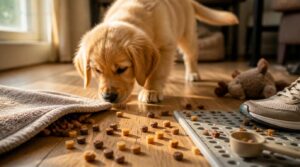
Not every treat belongs in a hiding game, since size, texture, and calorie count all matter once your puppy starts sniffing them out. The right pick keeps your pup motivated without turning training into an accidental all-you-can-eat buffet. Here’s what to grab before you start hiding anything.
If you’re unsure where to start, this guide on what makes a good treat for puppy training breaks down exactly which qualities to prioritize before your pup goes hunting.
Soft Training Treats
Grab a handful of soft training treats before your next session — they’re the secret to fast, mess-free reinforcement. Pick chicken or peanut butter flavors, break pieces small for pacing, and check for quality protein without fillers.
- Dissolves quickly, speeding up reward timing
- Low calorie per piece for frequent use
- Soft texture keeps paws and floors clean
Using organic soft treats can also provide high-quality ingredients for your growing puppy.
Try Duck Venison Sausages for sensitive tummies — puppies love the flavor variety.
Kibble Meal Portions
Soft treats are great for pacing, but your puppy’s regular kibble works just as well for a Kibble Hunt — and it’s free! Use their actual meal portion (calorie density matters here, usually 350–380 kcal per 100g), adjusted for activity level and growth needs.
A kitchen scale ensures measuring precision, while hiding kibble adds mental stimulation without extra calories or body condition risks.
Puppy-safe Fruits
Kibble’s a solid go-to, but fresh fruit adds variety and antioxidant benefits to your hide-treat rotation. Blueberries, small apple pieces (seeds and center removed), and seedless watermelon all work well.
Keep pieces bite-sized, introduce one fruit at a time, and rinse everything first. Skip grapes and raisins entirely — they’re toxic to dogs, even in tiny amounts.
Avoid Choking Hazards
Fruit and kibble are only safe if the pieces themselves are safe — that’s where choking hazard prevention comes in. Cut everything pea-sized, cook hard veggies soft first, and skip bones or jagged foods entirely.
Clear the play area of small objects — beads, screws, buttons — and learn to recognize coughing, gagging, or pawing at the mouth. Keep a first aid plan ready, just in case.
Count Daily Calories
Constantly rewarding with treats adds up fast, so treat calories count toward your puppy’s daily total — not just meals.
- Weigh kibble portions
- Skip liquid calorie add-ins
- Reserve 10% of daily food for training treats
- Adjust portions based on activity level
Overfeeding sneaks in through "just one more" hides. Track everything; your pup’s waistline (and vet) will thank you.
How to Teach Find It
Find It" is the foundation trick behind nearly every treat-hiding game you’ll teach, so nailing it early pays off big time later.
Once your pup masters "Find It," reward them with treats from durable, hygienic dog food bowls for large breeds built to handle daily training sessions.
It’s simpler than it looks, but a few key steps make the difference between a confused puppy and a confident little sniffer. Here’s exactly how to build that skill from scratch, one round at a time.
Show The Treat First
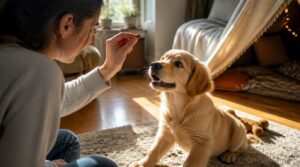
Want your puppy laser-focused before the search even starts? Show the treat first.
Hold it at nose level, let her sniff and see it, then hide it as she watches. This visual cueing builds reward anticipation and creates a clear association between the game and something delicious—setting up positive reinforcement before the hunt begins, no guesswork required.
Use One Clear Cue
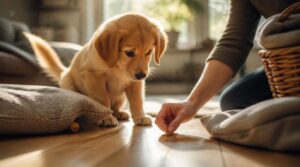
Pick a phrase and stick with it—"Find it" works great, so does "search now"—then say it the exact same way every single time.
Consistent intonation matters more than the words themselves: calm, steady, no rising pitch. Deliver the cue right as you reveal the treat, then track your puppy’s response speed each session. Mixing cues sends mixed signals and stalls progress in this focus-building exercise.
Cover With a Towel
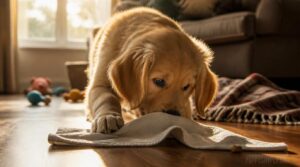
A small towel introduces gentle mystery without overwhelming your pup. Drape it loosely, letting them nose underneath to find the hidden treat—this builds scent-tracking skills and mental stimulation simultaneously.
Choose breathable cotton or terry cloth for safe wrap techniques that prevent overheating. Keep sessions brief to avoid puppy anxiety, and always wash the towel afterward; hygiene matters when mouths and treats mix during these puppy training techniques.
Praise Every Successful Find
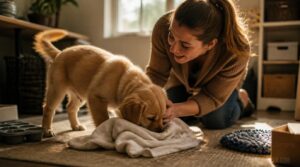
That "yes!" the instant your pup’s nose finds the treat isn’t just cute—it’s the glue of positive reinforcement training.
- Use a bright, happy tone
- Say exactly what worked: "great sniffing!"
- Praise the second they find it, not seconds later
- Add a quick chest scratch
- Stay consistent every single round
Body language matters too: smile, lean in, make eye contact. Consistency builds trust—and a reward-based training habit that sticks.
Keep Sessions Short
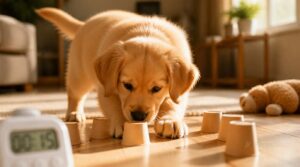
Ten minutes is plenty—shorter beats longer every time with a young pup’s attention span.
Set training timers, run 2-4 blocks daily, and watch for fatigue signs like yawning or head-turning. End on a win to keep focus work fun, not frustrating.
Tracking session success (finds per round) helps you fine-tune frequency—managing frustration starts with quitting while you’re ahead.
Easy Indoor Treat Hiding Games
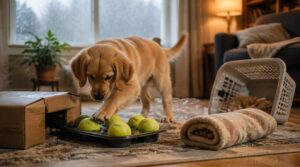
Once your puppy’s got the "Find It" basics down, it’s time to raise the stakes with some real games. You don’t need fancy equipment—just everyday items already sitting in your kitchen and closet. Here are five rainy-day favorites that’ll turn your living room into a puppy’s personal treasure hunt.
Three-cup Shuffle
Three plastic cups, one treat, and your pup’s nose against the clock — that’s the entire setup.
Scent tracking kicks in as your puppy watches you hide the treat, then noses each cup in a focused sequence. Keep shuffles slow at first; this isn’t about deception, it’s genuine focus training. This simple game builds real canine cognition through low-stakes, high-reward nose work.
Muffin Tin Puzzle
Grab a standard 12-cup muffin tin and you’ve got twelve independent hiding spots instead of just three cups — that’s a serious upgrade for systematic checking habits and memory use.
Drop treats in random cups, cover with tennis balls, and watch olfactory discrimination kick into gear. Increase difficulty by filling more cups over time. This budget-friendly puzzle delivers genuine mental stimulation without expensive interactive dog toys.
Towel Roll Game
Muffin tins test memory across cups; a towel adds pure scent tracking instead.
Lay it flat, tuck a soft treat inside, and say "find it" as your puppy noses through lint-free fabric. Vary fold complexity—loose rolls first, tighter twists later—to stretch search time without triggering frustration. Keep sessions under five minutes, supervise closely, and you’ve got a genuine boredom buster disguised as cuddle time.
Chair Leg Searches
Once your puppy’s nailed towel rolls, real furniture makes an excellent next step—no shovel required.
Chair legs offer natural geometric hide spots, with heights ranging 4–12 inches depending on style.
Before hiding treats:
- Check for splinters or loose joints
- Confirm stable, non-wobbly stability and durability
- Verify wood/metal finish is safe
- Use legs as visual search cues
- Rotate chairs for variety
Cardboard Box Hunt
Save an empty tissue box (12–24 inches) for this one—your pup will treat it like buried treasure. Untreated cardboard grips paw pads nicely, offering texture puzzle boards can’t match.
Hide soft treats inside, layer scents across multiple boxes for longer searches, and toss the lid for easy access. Check for staples first, and watch for fatigue—five minutes is plenty for this scent work session.
Puppy Puzzle Toys That Work
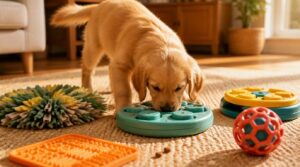
Once your puppy’s mastered the towel-and-cup routine, it’s time to level up with gear built specifically for sniffing and problem-solving.
Not every puzzle toy on the shelf is worth your money, though—some hold up to determined paws and repeated washes, others fall apart in a week. Here are five options that actually earn their keep.
Snuffle Mats
Snuffle mats turn your floor into a nose-powered treasure hunt, and honestly, that’s canine enrichment at its finest.
Fleece loops hide treats while a non-slip base keeps zoomies in check. Look for:
- Grip dots
- Reinforced edges
- Machine-washable fabric
- Adjustable difficulty
- Portable, foldable design
Wash monthly—fully dry those loops to dodge mildew.
Slider Puzzle Boards
Sliding tile boards borrow classic 15-puzzle logic for a doggy brain workout, where nudging one tile at a time solves grid puzzles through pure spatial reasoning.
Grid size variations (3×3 to 5×5) let you scale difficulty as your pup levels up, while parity-based solvability rules keep things fair.
Bold colors and tactile tiles make these interactive food puzzles genuinely engaging—no shovel required, just paws and patience.
Rolling Treat Dispensers
Gravity does the heavy lifting here: nudge, roll, repeat. Look for a wobble base design that creates unpredictable movement and adjustable dispensing speed control for slowing down chunky Labs.
Choose BPA-free, phthalate-free plastics for material safety, and stick to low-calorie kibble.
This interactive food puzzle builds impulse control training and slow eating benefits—genuine dog training exercises disguised as playtime.
Plush Burrow Toys
Ever watch a puppy dig at a blanket like buried treasure’s underneath? That’s the digging instinct these toys tap into. A fabric burrow hides mini plush figures with squeakers or crinkle inserts for auditory stimulation, rewarding each retrieval.
Mixed textures add tactile variety, while washable components keep hygiene simple.
Rotate burrows into your sniffing-game lineup—this sensory play rotation keeps enrichment devices fresh and mental stimulation genuinely challenging.
Beginner Difficulty Levels
Not every puzzle needs a black belt in sniffing. Beginner difficulty levels keep hide accessibility high and frustration low, so success reinforcement happens fast.
- One to two visible hides
- Sessions under five minutes
- Two to three finds tracked
- Short dog hiding treats searches
This builds mental stimulation without overwhelm—simple dog training tools that turn Hide Treat games into confident wins, not guesswork.
Safety Tips for Treat Games
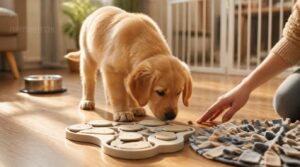
All that fun and focus only works if your puppy stays safe while playing, so a few ground rules go a long way. Treat games involve small parts, food residue, and an excited puppy nose—three things that need your attention, not just your good intentions.
Here’s what to keep in mind before you hide the next treat.
Supervise Every Game
Watching your puppy hunt for treats is half the fun, but active supervision keeps things safe. Stay close during every training game, scanning for choking hazards or overexcited gulping. This hazard monitoring encourages positive behaviour and lets you jump in fast.
Quick incident documentation—noting what happened and when—helps you improve future indoor pet activities and catch risky patterns early.
Check Toy Damage
Once those eyes are on your pup, take a second look at the gear itself. Identifying cracks in plastic puzzle toys or frayed seams on plush hiding spots stops sharp edges before they cut gums.
Check loose fasteners and screws too—wobbly bases invite tipping. Material degradation from chewing or sun exposure makes any rawhide-free dog treat dispenser risky if ignored, so swap damaged pieces before pet engagement continues.
Wash Food Toys Often
Fixing damage matters little if grime lingers—biofilm buildup on food dispensing toys breeds bacteria fast.
Wash plastic dog treat toys after each session using warm water and mild soap; rinse thoroughly, since soap residue risks irritate gums.
- Wipe silicone weekly
- Machine wash fabric toys
- Air dry fully to prevent mold
Sunlit spots speed drying and support pet wellness while keeping boredom relief for pets safe and germ-free.
Start With Easy Hides
Clean toys mean nothing if your hides are too tough right out of the gate. Begin at chest height—right at nose level—so scent, not sight, guides the search.
Rotate spots between rounds, track each Find It win, and keep Hide N Seek sessions short. This reward-based training builds confidence fast, no shovel required.
Stop When Puppy Tires
Ever notice your pup yawning mid-hunt or suddenly ducking eye contact? That’s fatigue, not boredom—stop before physical exhaustion hits. Watch for lip licking, slower pace, or extra mouthing.
Yawning or ducking eye contact mid-hunt is fatigue talking, so stop before exhaustion sets in
Balance energy by alternating Find It rounds with calm settling. End every Hide N Seek session on a relaxed sit—mental stimulation works best in short bursts, not marathons. Quality trumps quantity here.
Frequently Asked Questions (FAQs)
What words do dogs hear best?
Paws down, short and snappy wins: crisp consonant sounds like sit, come, and stay cut through noise best.
High pitch, upbeat tone, and consistent vocal delivery boost keyword recognition, making every reward-based training moment click faster.
How often should I play treat hiding games weekly?
Aim for 3 to 5 sessions weekly while learning, building toward daily play once your pup reliably finds hides. Keep sessions short, watch for fatigue, and never exceed 7 weekly rounds—overdoing it breeds frustration, not focus.
What if my puppy loses interest quickly?
Check hunger levels, environment distractions, and health indicators first. Then rotate toys, switch up your reward schedule, or try a fresh Find It variation—novelty rekindles focus fast, turning a bored pup back into an excited little detective.
Are scent trails better than hidden treat puzzles?
Neither wins outright—it’s olfactory vs tactile skill-building. Nosework sharpens focus fast; puzzles build patience through manipulation.
Mix scent trails with "find it" hunts and hidden treats for balanced cognitive growth, keeping engagement duration high and boredom low.
How do toys serving meals affect feeding schedules?
Slower bites and playful eating patterns mean extended feeding durations, so shift meal timing earlier or split portions smaller.
A puzzle feeder adds mental stimulation but demands calorie intake management—count those calories toward the day’s total, not extra.
Conclusion
That muffin tin sitting in your cabinet is about to become the most requested toy in the house—your puppy just doesn’t know it yet. Treat hiding games for puppies aren’t a rainy-day distraction; they’re a daily appointment with a nose built for the job.
Start with one towel and a single cup, celebrate every find, and quit before tired turns cranky. Master these basics now, and you’ll raise a calmer, sharper dog for years to come.
- https://www.healthydogma.com/blogs/insights/mental-stimulation-ideas-for-dogs-without-rawhide-chews
- https://www.purina.co.uk/articles/dogs/puppy/behaviour/puppy-scent-training
- https://mywoof.com/blogs/articles/the-best-nose-work-games-to-play-at-home-for-happier-smarter-more-engaged-dogs
- https://www.laylopets.com/blogs/barkives/fun-engaging-scent-work-games-for-dogs
- https://www.aspca.org/pet-care/dog-care/canine-diy-enrichment