This site is supported by our readers. We may earn a commission, at no cost to you, if you purchase through links.
Your dog paces the same five feet of hallway before you even grab your keys. Heart rate up, ears pinned, tail low—this is what a nervous system on high alert looks like. Most owners reach for calming chews or background TV, but a busy brain often needs a job, not a distraction.
That’s where puzzle toys for anxious dogs earn their keep. Working for food engages a dog’s natural foraging drive, and studies on "contrafreeloading" show many animals prefer earning a reward over getting it for free. The focus required to nose out a treat leaves less room for worry.
Below, you’ll find ten vet-backed picks, plus the science and safety steps that make them actually work.
Table Of Contents
- Key Takeaways
- Top 10 Puzzle Toys for Anxious Dogs
- 1. LiveKey Dog Snuffle Feeding Mat
- 2. Nina Ottosson Dog Brick Puzzle
- 3. Tuffy Corn Dog Durable Plush Toy
- 4. KONG Classic Stuffable Dog Toy
- 5. TRIXIE Gambling Tower Dog Puzzle
- 6. Pet Zone IQ Treat Ball
- 7. Outward Hound Hide-A-Squirrel Plush Dog Toy
- 8. StarMark Small Interactive Dog Toy
- 9. Zogoflex Interactive Treat Puzzle
- 10. Wooden Interactive Dog Puzzle Toy
- How Puzzle Toys Reduce Dog Anxiety
- Choosing The Right Puzzle Toy
- Using Puzzle Toys Safely
- Signs Your Dog Needs More Help
- Frequently Asked Questions (FAQs)
- Do dog puzzles help with anxiety?
- What is the 3-3-3 rule for dog anxiety?
- What toys help dogs with anxiety?
- Should you say goodbye to your dog when you leave?
- How many puzzle toys should a dog have?
- Can puzzle toys replace daily walks entirely?
- What age can puppies start using puzzles?
- Are puzzle toys safe left unsupervised overnight?
- How much do quality puzzle toys typically cost?
- Conclusion
Key Takeaways
- Puzzle toys ease anxiety by engaging a dog’s natural foraging drive, giving nervous energy a job instead of letting it turn into pacing, barking, or destructive chewing.
- Matching a toy to your dog’s skill level, chewing strength, size, and material safety prevents frustration and keeps play both effective and safe.
- Supervised, gradual introduction—starting with easy puzzles, short sessions, and high-value treats—builds confidence and keeps enrichment sustainable over time.
- If a dog shows persistent destructive behavior, ongoing distress when alone, or stays anxious despite enrichment, it’s time to consult a vet or certified behaviorist rather than relying on toys alone.
Top 10 Puzzle Toys for Anxious Dogs
Every dog calms down differently, so the right puzzle really depends on what makes yours tick, whether that’s sniffing, licking, or working for a treat.
If you’re not sure where to start, this guide on choosing the right puzzle toy for your dog’s skill level breaks it down step by step.
You’ll find options here for every skill level, chewing strength, and budget, from soft snuffle mats to sturdy rubber classics.
Take a look at these ten picks and see which one fits your dog’s personality best.
1. LiveKey Dog Snuffle Feeding Mat
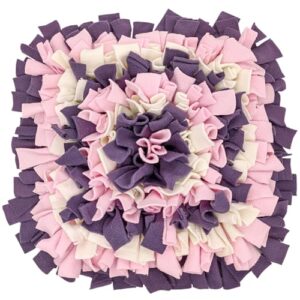
LiveKey Dog Snuffle Feeding Mat turns mealtime into a nose-work game your dog actually has to think through. Fabric strips hide kibble across the fleece surface, so instead of gulping food in seconds, your dog sniffs and searches, engaging natural hunting instincts that calm an anxious mind.
The non-slip backing keeps it steady on hardwood or tile, and it’s machine washable when things get messy. Bury treats deeper for a bigger challenge, or link mats together for larger dogs.
| Best For | Dog owners looking to slow down fast eaters while giving their pups a mentally stimulating, boredom-busting activity that taps into natural foraging instincts. |
|---|---|
| Material | Anti-pilling polar fleece |
| Difficulty Level | Beginner foraging |
| Supervision Needed | Recommended |
| Primary Use | Foraging mat |
| Cleaning Method | Machine washable |
| Best For | Anxious sniffers |
| Additional Features |
|
- Encourages natural foraging behavior, offering great mental stimulation and nose-work practice
- Slip-resistant base and machine-washable fleece make it both stable during use and easy to clean
- Modular design lets you connect multiple mats for bigger layouts or larger dogs
- Not built to withstand persistent chewing, so aggressive chewers may wear down the fibers over time
- A single mat may be too small for very large breeds or multiple dogs feeding together
- Needs supervision during play, since excessive digging can wear out the stitching faster than normal use
2. Nina Ottosson Dog Brick Puzzle
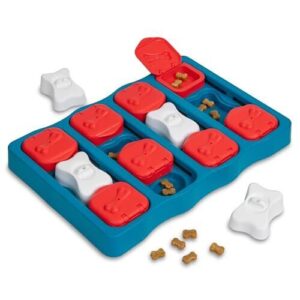
Once your dog masters basic sniffing, this brick-shaped puzzle asks for more strategy. Three compartments hide treats behind flip lids, sliding blocks, and bone-shaped covers, so your dog has to sequence steps rather than just sniff and paw randomly.
It’s rated intermediate, a solid step up once mats feel too easy. Made from durable, dishwasher-safe plastic, it measures about 12.75 by 8.75 inches and holds up to ¾ cup of kibble, a great option for dogs ready for a bigger mental workout.
| Best For | This puzzle is best for dogs who’ve outgrown basic sniffing games and are ready for a more strategic, multi-step challenge. |
|---|---|
| Material | BPA-free plastic |
| Difficulty Level | Level 2 intermediate |
| Supervision Needed | Required |
| Primary Use | Treat puzzle |
| Cleaning Method | Hand wash recommended |
| Best For | Food-motivated dogs |
| Additional Features |
|
- Three-in-one design with flip lids, sliders, and bone covers keeps dogs mentally engaged
- Adjustable difficulty settings let you tailor the challenge as your dog improves
- Made from food-safe plastic, free of BPA, PVC, lead, and phthalates
- Requires constant supervision, so it’s not a toy you can leave your dog alone with
- Not indestructible and needs regular checks for damage or loose parts
- Small ¾ cup capacity means it’s better suited for treats or portioned meals than full feedings
3. Tuffy Corn Dog Durable Plush Toy
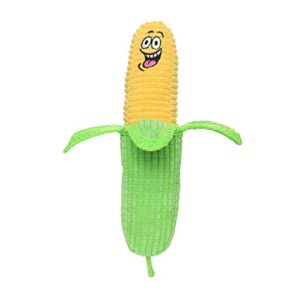
Not every anxious dog wants a brainteaser, some just need something sturdy to shake, squeak, and tug on. That’s where this toy comes in.
Built with up to four layers of bonded fabric and reinforced stitching, it holds up to moderate chewing and floats for water play. The corn cob piece detaches from the stalk, giving you two play styles in one toy. The squeaker sits in a protective pouch, and it’s machine-washable, though strong chewers will still wear it down quickly.
| Best For | dogs that are moderate chewers and enjoy tugging, tossing, or splashing around with a squeaky toy, rather than dogs that chew aggressively. |
|---|---|
| Material | Reinforced plush fabric |
| Difficulty Level | Beginner play |
| Supervision Needed | Required |
| Primary Use | Tug and fetch |
| Cleaning Method | Machine washable |
| Best For | Puppies and moderate chewers |
| Additional Features |
|
- Multi-layer construction with reinforced stitching holds up well to regular tug and fetch play
- Floats in water and is machine-washable, making cleanup and water play easy
- Squeaker sits in a protective pouch, adding a layer of safety during play
- Not built to withstand aggressive or heavy-duty chewers, who can destroy it quickly
- Stuffing may start to escape over time with continued use
- Squeaker is removable, so supervision is still needed to prevent accidental ingestion
4. KONG Classic Stuffable Dog Toy
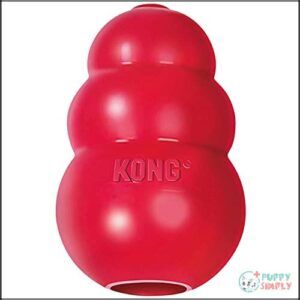
KONG Classic Stuffable Dog Toy brings back a familiar face after that plush detour, and for good reason.
Its hollow natural red rubber center holds kibble, peanut butter, or treat paste, giving anxious dogs a productive outlet for chewing. Freeze it for longer engagement.
The erratic bounce adds unpredictability dogs enjoy, while the rubber resists odor and abrasion. Dishwasher safe and vet-recommended, it’s a solid pick for crate training or solo downtime, especially for medium-weight, average chewers who need steady, low-drama enrichment.
| Best For | Medium-weight, average chewers who need mental stimulation and a productive chewing outlet for crate training, anxiety relief, or solo downtime. |
|---|---|
| Material | Natural red rubber |
| Difficulty Level | Beginner-intermediate chew |
| Supervision Needed | Recommended |
| Primary Use | Chew and treat toy |
| Cleaning Method | Dishwasher safe |
| Best For | Average chewers |
| Additional Features |
|
- Hollow design lets you stuff it with kibble, peanut butter, or treats, and freezing it extends engagement even longer
- Durable, dishwasher-safe natural red rubber resists odor and abrasion while standing up to regular play
- Erratic bounce keeps fetch and interactive play unpredictable and fun for dogs
- Not built for extreme or very heavy chewers, who may wear it down over time
- New toys can have a noticeable rubber smell at first, though washing or a quick low-heat boil helps
- Medium size may be too big for toy-breed dogs or very small puppies
5. TRIXIE Gambling Tower Dog Puzzle
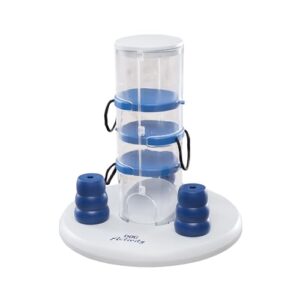
Three green cones, three discs, and a tumble of hidden treats make the TRIXIE Gambling Tower feel more like a game night than a feeding session.
If your pup seems stumped at first, start with just one cone lifted to build confidence, a trick covered in this guide to dog puzzle feeders for small apartments.
Dogs pull loops to release rewards, with treats tumbling down through a hollow base as each shelf action succeeds. Beginner mode uses fewer hiding spots; higher levels add obstacles as your dog progresses.
Slip-resistant feet keep it steady, and the BPA-free plastic wipes clean easily. Great option for dogs who need a job to focus their nervous energy.
| Best For | Food-motivated puppies, senior dogs, and small-to-medium breeds who need supervised mental stimulation to curb boredom-related chewing. |
|---|---|
| Material | BPA-free plastic |
| Difficulty Level | Adjustable multi-level |
| Supervision Needed | Required |
| Primary Use | Treat puzzle |
| Cleaning Method | Not dishwasher safe |
| Best For | Small-medium breeds |
| Additional Features |
|
- Two-level design with lift-up cones and slide-out drawers keeps dogs engaged and problem-solving
- BPA-free, lead-free plastic with non-slip rubber feet makes it safe and stable during play
- Difficulty adjusts easily by adding more treats or pulls, so it grows with your dog’s skill level
- Plastic components are relatively flimsy and may not hold up to strong chewers or large dogs
- Not dishwasher safe, and crevices can trap water if not cleaned thoroughly
- Improper assembly of the clear tubing can let dogs cheat, and advanced puzzle solvers may outgrow it quickly
6. Pet Zone IQ Treat Ball

Roll it, nudge it, watch the kibble fall — that’s the whole appeal of the Pet Zone IQ Treat Ball.
An adjustable interior disc lets you set difficulty as your dog’s skills grow, and it comes in 3-inch and 4-inch sizes for small versus medium-large breeds. The hard plastic disassembles for washing, though it’s not meant for aggressive chewers.
Expect some noise on hardwood floors, and check that the top screws on snugly before each use.
| Best For | Medium to large dogs (40–90 lb) who need extra mental stimulation and could benefit from eating their kibble more slowly. |
|---|---|
| Material | Rigid plastic |
| Difficulty Level | Three difficulty levels |
| Supervision Needed | Recommended |
| Primary Use | Treat ball |
| Cleaning Method | Disassembles for cleaning |
| Best For | Medium-large dogs |
| Additional Features |
|
- Adjustable interior disc lets you increase difficulty as your dog gets better at the puzzle
- Slows down fast eaters, which can support healthier digestion and weight control
- Hard plastic construction disassembles easily for thorough cleaning
- Not safe for toy breeds, very small dogs, or aggressive chewers, since jaws may fit through the opening
- Top half can loosen over time, and the plastic may chip with extended use
- Can be noisy on hard floors and a bit of a hassle to refill
7. Outward Hound Hide-A-Squirrel Plush Dog Toy
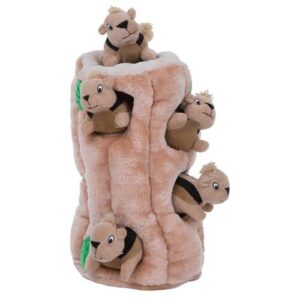
Six squeaky squirrels hide inside a soft plush trunk, waiting for your dog to sniff, tug, and pull them free one by one.
That hide-and-seek mechanic plays into natural hunting instincts, giving anxious dogs a job to focus on instead of pacing or whining.
The plush is gentle on gums, but it’s not built for heavy chewers—tails and ears can tear with rough play. Keep sessions supervised, and swap in fresh squirrels once the originals wear thin to keep things interesting.
| Best For | dogs who love to sniff, forage, and hunt for hidden treasures, making it a great mental workout for anxious pups or anyone needing a boredom-busting distraction. |
|---|---|
| Material | Polyester plush |
| Difficulty Level | Beginner hide-and-seek |
| Supervision Needed | Required |
| Primary Use | Hide-and-seek plush |
| Cleaning Method | Spot clean |
| Best For | Puppies and playful dogs |
| Additional Features |
|
- Taps into natural hunting instincts with a fun hide-and-seek design
- Six squeaky squirrels keep playtime varied and engaging
- Soft plush material is gentle and easy to carry or cuddle
- Not suitable for heavy chewers or aggressive players
- Tails and ears on the squirrels can tear with rough use
- Requires constant supervision to prevent your dog from swallowing small parts
8. StarMark Small Interactive Dog Toy
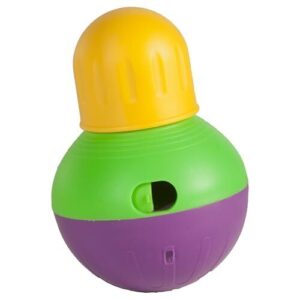
Small paws, big brains—that’s the idea behind this compact rubber toy built for dogs who need something to fiddle with, not fight.
Inside are hidden chambers that hold kibble or small treats, releasing them as your dog noses and paws the toy around. The adjustable opening lets you slow things down for beginners or speed things up for pros.
It even floats, so bath time doubles as puzzle time. The chew-resistant rubber holds up to moderate gnawing without falling apart.
| Best For | food-motivated small to medium dogs who need extra mental stimulation and slower mealtimes. |
|---|---|
| Material | Durable molded plastic |
| Difficulty Level | Adjustable gate difficulty |
| Supervision Needed | Recommended |
| Primary Use | Treat dispenser |
| Cleaning Method | Cannot fully disassemble |
| Best For | Small-medium dogs |
| Additional Features |
|
- Adjustable dispensing gate lets you customize difficulty as your dog gets better at solving it
- Heavy-duty, impact-resistant plastic stands up to rough play and aggressive chewers
- Keeps dogs engaged for 15–30 minutes per session, great for solo playtime
- Narrow top fill hole makes loading kibble a hassle without a funnel
- Bottom door can pop open on its own, making the puzzle too easy
- Can’t be fully taken apart for cleaning, and it’s noisy on hard floors
9. Zogoflex Interactive Treat Puzzle
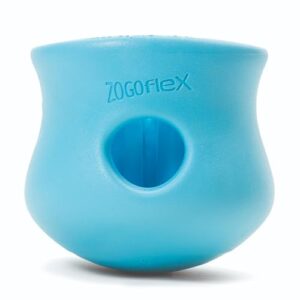
Some dogs need a toy that can take a beating, and this is where Zogoflex material earns its reputation. Built from recyclable, non-toxic plastic, it resists cracking under strong jaw pressure while staying gentle enough for daily play.
Treats load into a contoured cavity, releasing gradually as your dog noses or chews the toy. It’s dishwasher safe for easy cleanup, floats for water play, and comes in multiple sizes—so whether you’ve got a determined chewer or a gentle nibbler, there’s a fit that works.
| Best For | This puzzle toy is best for dogs of all sizes who are moderate chewers and could use extra mental stimulation and slower mealtimes. |
|---|---|
| Material | Zogoflex recyclable plastic |
| Difficulty Level | Beginner-intermediate |
| Supervision Needed | Required |
| Primary Use | Treat puzzle |
| Cleaning Method | Dishwasher safe |
| Best For | All sizes |
| Additional Features |
|
- Interactive design keeps dogs mentally engaged and helps curb boredom or anxiety
- Versatile treat compartment works with kibble, wet food, or frozen treats
- Durable, BPA-free Zogoflex material is top-rack dishwasher safe for easy cleanup
- Not recommended for aggressive chewers, who may damage the toy
- Needs adult supervision to prevent dogs from ingesting small parts or treat pieces
- Larger sizes may not fit in all standard dishwasher racks
10. Wooden Interactive Dog Puzzle Toy
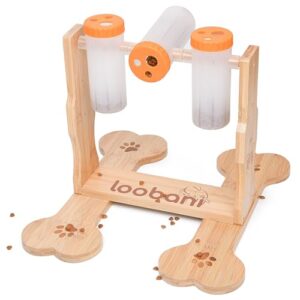
Beech wood puzzles bring something plastic can’t: real weight and grain your dog can sink teeth into safely. Sliding panels and rotating cogs hide treats up to 1 cm wide, and smooth, rounded edges protect noses during excited pawing.
Non-toxic finishes handle occasional chewing, while a built-in base tray catches stray kibble. Add extra blocks to raise difficulty as skills grow. Clean with mild soap and warm water, never soak, and always supervise early sessions so curious chewers don’t turn puzzle-solving into demolition.
| Best For | This wooden puzzle is best for small to medium breed puppies and senior dogs who need mental stimulation, slower feeding, and relief from boredom or separation anxiety. |
|---|---|
| Material | Wood |
| Difficulty Level | Intermediate flipping |
| Supervision Needed | Recommended |
| Primary Use | Slow feeder |
| Cleaning Method | Dishwasher safe |
| Best For | Small-medium breeds |
| Additional Features |
|
- Adjustable bottles and three height settings let you customize difficulty as your dog’s skills improve
- Heavy-duty base resists tipping, and the large capacity (up to 8-11 cups) makes it useful as a slow feeder for mealtimes
- Easy to clean with warm water and soap, or simply toss it in the dishwasher
- Best suited to small and medium breeds, so it may not hold up well with larger, more powerful dogs
- Bottle heights must be adjusted manually each time you want to change the size of your dog
- The intermediate difficulty level, which requires flipping and balancing bottles, may be tricky for beginner dogs without removing the lids first
How Puzzle Toys Reduce Dog Anxiety
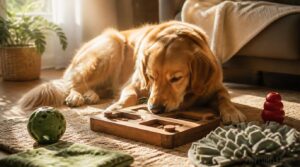
A puzzle toy isn’t just something to keep your dog busy, it actually works on their brain and body in ways that calm them down. Understanding why these toys help makes it a lot easier to pick the right one for your dog’s specific worries.
Here’s a closer look at the five main ways puzzle toys ease anxiety.
Mental Stimulation Benefits
Working the brain hard is exactly what an anxious dog needs. Puzzle solving builds working memory and sharpens problem-solving, while each success triggers dopamine reward cycles that ease frustration and support calm mood. Engaging in these activities can help improve cognitive function through regular mental exercise.
- Strengthens neural plasticity and cognitive reserve
- Builds impulse control through wait-and-try patience
- Diverts nervous energy from pacing
- Sharpens pattern recognition and focus
- Encourages calm, focused enrichment
Boredom and Barking Control
A quiet mind barks less. When your dog’s attention gets absorbed by a puzzle, that pent-up energy driving nuisance barking simply has nowhere to go.
Interactive toys can cut vocalizing by keeping focus locked for 15 to 25 minutes at a stretch. Pair that with a predictable daily routine, and you’ll often see barking episodes drop within weeks, not months.
Separation Anxiety Support
Silence at the door doesn’t have to mean panic. Puzzle toys work as genuine distraction tools during those first shaky minutes alone, easing your dog into departure rehearsals with something better to focus on.
Pair this with:
- A predictable routine
- Calm exits
- A dedicated calming zone
- Visual barriers like closed doors
- Watching for pacing or whining
Consistency builds real anxiety relief over time.
Slow Feeding Benefits
Mealtime worries and stomach upset often go hand in hand. A good slow feeder stretches a meal out to 15–30 minutes, cutting down on gulping, preventing stomach distension, and supporting steady nutrient absorption.
That gentler pace also brings real anxiety relief, giving your dog a calming task that doubles as mental enrichment while managing satiety cues along the way.
Calming Scent-based Play
Pairing a puzzle toy with a gentle scent turns problem-solving into full sensory enrichment. Try lavender for general soothing, or chamomile for sensitive pups, dabbed on a cloth inside the toy sleeve.
Keep sessions to 5–10 minutes to prevent scent fatigue, and watch your dog’s response closely, calm engagement means you’ve found a winning combo for anxiety reduction.
Choosing The Right Puzzle Toy
Not every puzzle toy fits every dog, and picking the wrong one can leave your pup frustrated instead of calm. A few simple factors make all the difference between a toy that gets ignored and one that becomes a favorite. Here’s what to check before you buy.
Match Difficulty Level
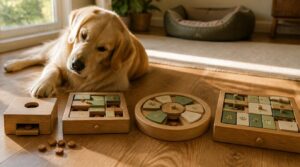
Difficulty should fit your dog, not the other way around. Start easy to assess frustration thresholds, then progress gradually.
Look for:
- Fewer steps (easy)
- Multiple compartments (moderate)
- Sliding parts (hard)
- Pattern-matching (expert level)
- Adjustable openings
Track solve times—quick wins build confidence, while longer struggles signal it’s time to simplify, keeping cognitive load manageable for real anxiety reduction.
Consider Chewing Strength
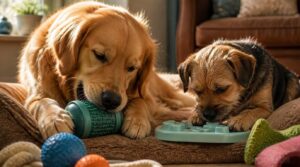
Not every dog bites down with the same force, and that’s largely thanks to jaw muscle conditioning, breed size, and even dental health.
A working breed can out-chew a toy breed easily.
Watch for chewing fatigue signs—drooling, jaw tremors, sudden disinterest—and match treat texture to strength so puzzles build confidence instead of frustration or sore gums.
Choose Safe Materials
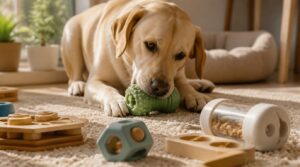
What’s actually in your dog’s puzzle toy matters as much as how it works. Look for non-toxic plastics that are BPA-free, natural rubber safety-tested for chewing, and no harmful phthalates.
Wood puzzles should have safe, sealed finishes, while treat compartments benefit from edible-grade coatings. Choosing genuinely pet-safe materials protects your dog from chemical exposure during every enthusiastic chew session.
Check Toy Size
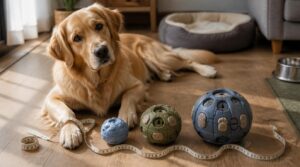
Size isn’t a detail you can eyeball. Small dogs do well with toys 2 to 6 inches, medium dogs 6 to 8, large breeds 8 to 12, and extra-large pups may need up to 18 inches.
Measure your dog’s standing height and mouth width first. Matching size to breed prevents choking hazards and keeps interactive dog toys genuinely calming, not stressful.
Prioritize Easy Cleaning

Here’s a gross truth: a dirty puzzle toy can undo all the calming benefits it’s supposed to give.
Look for dishwasher safety, translucent chambers for spotting residue, and modular components you can pull apart for a rinse. Smooth, non-porous surfaces prevent odor buildup and bacteria. Clean toys mean fewer skipped play sessions, which keeps enrichment toys working as real stress reduction tools instead of forgotten clutter under the couch.
Using Puzzle Toys Safely
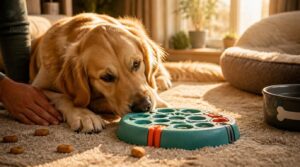
Picking the right puzzle toy is only half the job, since how you use it matters just as much. A few simple habits can keep playtime safe, effective, and actually enjoyable for your dog. Here’s what to keep in mind once that new toy comes home.
Supervise First Sessions
Hand your dog a new puzzle toy and walk away, and you might come back to chewed-up plastic or a frustrated pup who’s given up entirely.
Walk away too soon, and a new puzzle toy can turn into chewed plastic or a pup who’s simply given up
Watch the first few sessions closely. Notice how she paws, noses, or mouths the toy, then step in only if she seems stuck or stressed. This early guidance builds confidence and keeps canine anxiety management on track from day one.
Start With Easy Puzzles
That early supervision only works if the puzzle itself matches your dog’s skill level. Building confidence starts with easy wins—choose a level 1 puzzle or single Toppl unit, not a four-star challenge.
Keep first sessions short, around 15-20 minutes, so she doesn’t lose interest or get frustrated.
Once she’s solving it easily, gradual progression to harder puzzles keeps anxiety reduction steady and sustainable.
Use High-value Treats
What goes inside the puzzle matters as much as the puzzle itself. High-aroma, protein-rich rewards—think chicken or salmon—keep her engaged far longer than dry kibble ever will.
- Freeze-dried meat bits
- Soft chicken chunks
- Salmon treats
- Allergy-safe options for sensitive dogs
- Dehydrated organ pieces
Rotate flavors to prevent habituation, and watch treat calories so positive reinforcement doesn’t tip into overfeeding.
Rotate Toys Regularly
Even the best treats get boring if the puzzle around them never changes. Swap toys every 1 to 2 weeks, keeping 4 to 6 in circulation—treat dispensers, plush puzzles, interactive types—stored in a labeled bin so nothing’s forgotten.
This novelty lowers cortisol, curbs idle barking, and prevents wear on any single toy. Track engagement: if she loses interest fast, rotate sooner.
Clean After Repeated Use
Rarely does a puzzle toy stay germ-free after just one round of licking and pawing. Saliva residue builds up fast, and leftover soap can irritate gums, so rinse thoroughly.
- Scrub with mild soap
- Rinse completely
- Air dry to prevent mold
- Check for wear
Choose nontoxic, food-safe materials, wipe with pet-safe disinfectant, and let everything dry fully before your dog plays again.
Signs Your Dog Needs More Help

Puzzle toys work wonders for a lot of dogs, but they’re not a cure-all for every anxious pup out there. Sometimes the stress runs deeper than a toy can fix, and that’s important to recognize early. Here are five signs it might be time to look beyond the toy box for support.
Persistent Destructive Chewing
Persistent destructive chewing that continues despite puzzle toys often signals unmet needs, not stubbornness. Watch for worn furniture legs, frayed cords, or damaged baseboards—classic chewing targets tied to boredom or separation stress.
If your dog ignores enrichment and still gnaws hard surfaces, dental wear and gum injury become real risks. That’s your cue: this isn’t a toy problem anymore, it’s a behavior modification conversation worth having with a professional.
Excessive Barking When Alone
Why does the barking start the second you grab your keys? That’s often separation anxiety, not defiance—especially paired with pacing or accidents indoors.
Puzzle toys ease boredom-driven vocalization, but if barking continues despite enrichment, gradual desensitization to departures may be needed. A certified dog behaviorist can build a real plan, since ongoing distress signals more than a toy problem.
Refusing Puzzle Toys
Turning away from a puzzle isn’t stubbornness, it’s information. Sensory overload triggers—busy textures, odd smells, cold surfaces—can cause instant avoidance, especially with tactile sensitivity issues.
Watch for frustration avoidance patterns too, where repeated failed attempts build stress instead of confidence. Sometimes it’s physical: jaw pain or arthritis makes chewing hurt. Check your setup, since environmental mistakes (wrong height, cluttered space) discourage engagement before play even starts.
Stress Despite Enrichment
Sometimes the puzzle works perfectly, and your dog still seems on edge. That’s not failure, it’s individual response variation—arousal, environmental stressors (noise, owner absence), or habituation risks from repetitive play can override enrichment’s calming effect.
If stress persists despite matched difficulty and good technique, you’re likely facing an enrichment mismatch, not managing high arousal correctly. This signals deeper support may be needed for your dog’s mental wellbeing.
Contact a Dog Professional
Your vet should be the first call, ruling out medical causes before anything else. From there, ask for a referral to a certified behaviorist—verify credentials, request a written behavior plan, and confirm they follow welfare-focused, ethical methods.
Bring your dog’s medical history to that first assessment. Understanding canine psychology takes training; professional support turns confusing behavioral challenges into a clear, manageable path forward.
Frequently Asked Questions (FAQs)
Do dog puzzles help with anxiety?
Yes. Like Aesop’s tortoise winning through slow, steady effort, puzzles work gradually: cognitive engagement, foraging instincts, and endorphin release combine to lower cortisol, easing dog anxiety while building lasting mental strength through calming, brain-focused activity.
What is the 3-3-3 rule for dog anxiety?
The 3-3-3 rule breaks new-dog adjustment into stages: three days of sensory overload, three weeks building routine and trust, and three months reaching true home settling in, with confidence and security growing steadily throughout each phase.
What toys help dogs with anxiety?
Snuffle mats, lick mats, and treat puzzles work best, using scent-driven foraging, licking, and slow feeding to calm nerves. Heartbeat plushies add rhythmic comfort too.
Together, they provide sensory input calming and cognitive stimulation, easing everyday stress naturally.
Should you say goodbye to your dog when you leave?
A brief, calm goodbye works better than skipping out unnoticed. Use a consistent phrase and gentle pet, then leave calmly, this predictable cue eases separation distress and helps your dog settle faster than a hurried, emotional exit would.
How many puzzle toys should a dog have?
Too few puzzles bore your dog; too many overwhelm them. Two to four puzzle feeders, rotated weekly, hits that sweet spot, one beginner and one intermediate at a time, keeping engagement high without tipping into puzzle overload or lost interest.
Can puzzle toys replace daily walks entirely?
No, they can’t. Physical vs mental needs differ: walks build cardiovascular health and muscle tone, while puzzles sharpen cognitive stimulation. Sensory enrichment gaps remain too—outdoor smells and sights simply can’t be replicated indoors, even with great enrichment activities.
What age can puppies start using puzzles?
Around 8 weeks old, once teeth emerge and grasping improves, puppies can try gentle treat-dispensing toys. Keep early sessions short, 5 to 10 minutes, watching for frustration signs, and always supervise closely to protect developing coordination and teething safety.
Are puzzle toys safe left unsupervised overnight?
Not always. Choking hazards and unsupervised chewing dangers rise overnight—loose parts, bacterial growth on wet treats, or wood warping can compromise safety. Choose durable, non-porous puzzles, inspect for damage, and reserve overnight use for toys your dog plays with calmly and safely alone.
How much do quality puzzle toys typically cost?
Budget options run $5–20, while premium puzzles reach $30–60 for durable, dishwasher-safe designs. Bulk buying and choosing quality materials upfront often deliver better long-term value than repeatedly replacing cheap toys that anxious dogs quickly destroy.
Conclusion
Like a knight puzzling over a locked chest before a joust, your dog needs a task to settle a racing mind. The right puzzle toys for anxious dogs turn nervous energy into focused effort, one sniff and nudge at a time. Start easy, watch closely, and rotate often to keep the challenge fresh.
Some dogs need more than a toy can offer, and that’s okay too. A calmer dog gets built one small win at a time.
- https://toegrips.com/mental-stimulation-toys-for-dogs
- https://www.businessinsider.com/guides/pets/best-dog-puzzle
- https://wooof.co.uk/blogs/news/what-are-the-best-dog-enrichment-toys-for-anxious-dogs
- https://www.kongcompany.com/dog-toys/treat-dispensing
- https://www.akc.org/expert-advice/lifestyle/snuffle-mats-for-dogs