This site is supported by our readers. We may earn a commission, at no cost to you, if you purchase through links.
Most dog owners trim nails with the best intentions—and still manage to cut too far. One small slip, a sharp yelp, and suddenly there’s blood on the bathroom tile and a dog who won’t let you near his paws for a month.
The frustrating part? Knowing how to tell if dog nails are too short isn’t something most people learn until after that moment happens.
Nail length sits in a narrow window: long enough to protect the quick, short enough to keep your dog’s weight distributed properly across each toe. Miss that window in either direction, and you pay for it—either with a bleeding nail bed or a dog whose joints absorb stress with every step.
Understanding where that window is, and how to spot it before you’ve already crossed the line, makes every future trim less of a guessing game.
Table Of Contents
- Key Takeaways
- How Short is Too Short?
- Signs Your Dog’s Nails Are Too Short
- Signs Your Dog’s Nails Are Too Long
- Find The Quick Before Trimming
- Safe Length for Light and Dark Nails
- What to Do After Overtrimming
- How to Prevent Cutting Too Short
- Best Tools for Safer Trimming
- When to Call a Groomer or Vet
- Frequently Asked Questions (FAQs)
- Conclusion
Key Takeaways
- The quick—the nerve-and-blood-vessel core inside every nail—is your real boundary, and stopping about 2 mm from it protects your dog from pain, bleeding, and lasting grooming anxiety.
- Light nails show a pink center as you get close; dark nails reveal a chalky white ring—either way, that visual cue is your signal to put the clippers down.
- Nails that are too long cause just as much trouble as nails cut too short, quietly shifting joint load, splaying toes, and altering your dog’s gait long before any limping shows up.
- If you nick the quick, press styptic powder firmly on the tip for 10–15 seconds, keep the paw elevated, and watch for spreading redness or discharge over the next 48 hours—those are signs that need a vet.
How Short is Too Short?
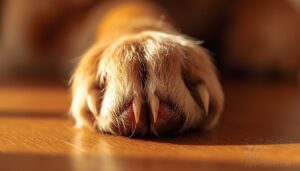
Getting the length right isn’t as complicated as it sounds, but there’s a clear line between safe and too short. A few simple markers tell you exactly where that line is.
Here’s what to look for before you make the next cut.
The Safe Nail Length Rule
Think of nail length benchmarks like a simple checkpoint: when your dog stands naturally, the nail tips shouldn’t touch the floor. That’s your ideal length target. Quick proximity estimation matters too — the quick usually sits about 2 mm from the tip.
If you’re unsure whether you’re hitting that sweet spot, this guide on ideal dog nail length and trimming benchmarks walks you through exactly what to look for.
- Nails clearing the floor completely
- No audible clicking when walking
- Smooth, forward-pointing nail angle
Why The Nail Should Not Hit The Floor
When nails brush the floor with every step, the pressure adds up fast.
Floor Contact Pain starts subtly — a little extra load on the toe joints, some Toe Joint Strain, and altered gait.
Over time, that can mean real dog mobility issues.
| Problem | What Happens |
|---|---|
| Floor Contact Pain | Tip pressure irritates nail and toe structures |
| Toe Joint Strain | Load shifts away from paw pads |
| Carpet Snag Risk | Nails catch fibers, causing sudden pulls |
| Surface Damage | Scratches accumulate on wood and finishes |
| Slip Hazards | Worn spots create uneven traction for everyone |
What “too Short” Means for Dogs
Cutting a dog’s nails too short means you’ve reached the quick — living tissue packed with nerves and blood vessels. This causes nail quick bleeding, triggering an immediate pain response and mobility impairment.
Repeated quick tissue injury over time leads to chronic sensitivity and grooming anxiety, turning future trims into battles.
Repeated quick injuries build chronic sensitivity, turning every future trim into a battle of anxiety
Signs Your Dog’s Nails Are Too Short
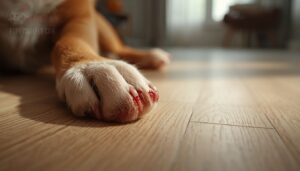
When you’ve cut too short, your dog won’t stay quiet about it. The signs show up fast — and they’re pretty hard to miss. Here’s what to watch for.
Bleeding From The Nail Tip
Bright red blood at the nail tip is the clearest sign you’ve cut into the quick — the living tissue packed with nerves and blood vessels. It happens fast and can look worse as it mixes with moisture on the paw.
Your first move: press styptic powder firmly against the tip. No styptic powder? Cornstarch works as a clotting agent option. Keep the paw elevated and hold gentle pressure.
Bleeding from the quick usually slows within a few minutes with consistent pressure bandaging.
Sudden Yelping or Paw Pulling
When you cut a dog’s nails too short, acute pain cues come instantly — a touch-induced yelp, a sharp paw withdrawal reflex, sometimes both at once. That sudden vocal warning isn’t drama; it’s localized nail discomfort telling you the quick was hit.
If your dog yanks their paw away mid-trim, stop immediately. The painful break needs attention before you continue.
Limping or Favoring One Paw
Limping or favoring a paw after trimming isn’t subtle — it usually shows up within minutes. Weight shifting away from the affected foot is your clearest signal that the quick was nicked. Sometimes a short quick can aggravate underlying issues like front‑leg shoulder instability.
Watch for:
- Uneven gait or irregular steps
- Reluctance to bear weight on one leg
- Swelling or tenderness around the nail bed
- Paw pad pain causing the dog to hold the foot up
Trust your gait analysis here.
Excessive Licking After Trimming
Excessive licking after a trim is your dog’s way of saying something feels off.
If the licking persists, check for redness or swelling — these are often early signs your dog’s nails are causing discomfort that shouldn’t be ignored.
It can signal pain-induced licking from a near-quick cut, sensory change at the nail tip, skin irritation, or simple stress soothing after handling.
Watch closely — if licking persists beyond a few hours, comes with swelling, or shows signs of nail infection in pets, that’s when first aid steps for bleeding dog nails and a vet call matter most.
Signs Your Dog’s Nails Are Too Long

While cutting nails too short causes immediate pain, letting them grow too long creates a whole different set of problems. Your dog’s body will usually tell you when things have gone too far.
Here are the clearest signs to watch for.
Clicking on Hard Floors
That clicking sound isn’t your floors — it’s a clear signal that your dog’s nail length has crossed the line. When nails contact hard surfaces like tile or laminate with every step, the impact sound frequency matches each footfall exactly.
Watch for these gait adaptation clues:
- Clicking intensifies during turns or running
- Steps shorten to reduce nail impacts
- Toe spread effect alters normal stance
- Nail wear patterns appear near paw contact zones
Curled or Hooked Nail Shape
A hooked nail isn’t just a cosmetic issue — it’s a warning sign. As curl progression advances, the nail curve pulls edges inward, causing edge digging into surrounding skin and toe irritation even before bleeding starts. Fabric snagging becomes common too, catching on rugs mid-step.
| Warning Sign | What It Means |
|---|---|
| Inward nail curve | Curl progression is worsening |
| Uneven wear on nail edges | Abnormal ground contact |
Splayed Toes When Standing
Watch how your dog stands on a hard floor — do toes fan outward instead of sitting neatly together? That’s a sign of poor forefoot stability.
Overgrown nails disrupt toe alignment and shift pressure distribution across the paw, forcing balance compensation that changes healthy paw posture. This ground surface effect quietly impacts dog gait and posture long before limping ever starts.
Reluctance to Walk or Jump
A splayed stance often comes with a behavior shift too. Jump hesitation is one of the clearest red flags — your dog may stop mid-approach, back away, or choose stairs over a single step.
Floor sensitivity can make every landing feel jarring. You might notice paw guarding during play pauses, a change in landing posture, or speed reduction that signals real pain and discomfort before limping ever appears.
Find The Quick Before Trimming
Before you make a single cut, you need to know where the quick is. It’s the living part of the nail — and nicking is exactly what causes bleeding and pain.
Here’s what to look for, whether your dog has light or dark nails.
What The Quick Is
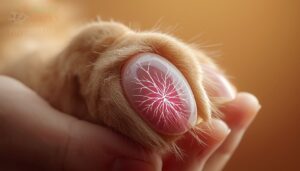
Think of the nail’s living core—the quick—which contains blood vessels and nerves. This is precisely why cutting into it hurts and bleeds.
Quick anatomy varies by dog, making its position unpredictable.
The good news? With careful, gradual trimming, the quick recedes over time, ensuring safer, less stressful future cuts for both of you.
How Light Nails Show The Quick

Light-colored nails give you a real advantage—you can actually see the quick before you cut. It shows up as a pink window running through the nail’s center.
Trim in thin, incremental slices and watch the cross-section closely. As you get closer, the color shift in the center becomes obvious. Bright lighting helps you catch it early, so stop the moment pink appears.
How Dark Nails Show a White Ring
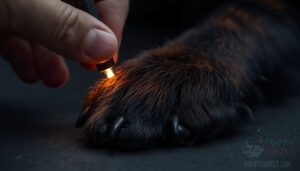
Dark-colored nails don’t show pink, but they do leave clues. The transillumination technique helps here—hold a light behind the nail to spot the chalky white ring that signals the quick nearby.
- Position the light at a low angle
- Look for a pale, circular band mid-nail
- Notice ring shape variations by thickness
- Stop trimming once ring visibility increases
That ring is your boundary.
Why The Quick Matters

The quick isn’t just a trimming boundary — it’s a living structure inside the nail containing blood vessels, nerves, and tissue that drives nail growth.
| Quick Function | Why It Matters |
|---|---|
| Blood Vessel Supply | Feeds the nail bed |
| Nerve Sensitivity | Triggers pain feedback instantly |
| Growth Regulation | Controls ongoing nail formation |
| Healing Process | Repairs tissue after injury |
| Pain Feedback | Signals overtrimming immediately |
Cut it, and your dog feels it.
Safe Length for Light and Dark Nails
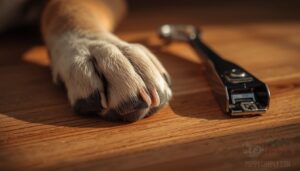
Knowing when to stop cutting is really the whole game — and the answer looks different depending on your dog’s nail color. Light nails give you a clear visual advantage, while dark nails make you work a little harder.
Here’s what to watch for in both cases.
Spotting The Chalky Center in Dark Nails
Dark-colored nails keep their secrets until you’re almost through them. That’s why incremental trimming is non-negotiable — take thin slices using edge-first snipping, and check the cut surface each time.
With good side lighting and careful nail angle positioning, you’ll spot the dry, chalky white center before you’re past it.
This pale ring detection moment is your stop sign for quick identification.
Stopping Before The Nail Touches The Pad
Even after spotting the chalky center, there’s one more check before you’re done. A weight-bearing assessment tells you more than a raised paw ever will.
Do a quick pad clearance test by letting your dog stand naturally—if the nail tip makes contact with the floor, you’re not short enough yet.
However, the toe compression check during stance is your real guide for load-based trimming.
Recognizing The 2 Mm Safety Buffer
Think of the 2 mm safety buffer as your built-in stopping signal — the last checkpoint before cutting a dog’s nails too short becomes a real risk. Using an incremental trim approach, remove tiny amounts and pause after each pass.
Nail thickness variation means some nails close in on the quick faster than others. Consistent edge timing and watching for quick proximity signals help you stop before trouble starts.
What to Do After Overtrimming
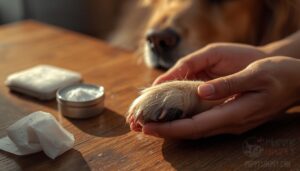
Cutting the quick stings — for both of you — but it happens, even to experienced owners. The good news is that a quick fix is usually all it takes to stop the bleeding and keep your dog comfortable.
Here’s exactly what to do, step by step.
Apply Styptic Powder Fast
Styptic powder is your fastest first-aid move when a nail bleeds. Press it directly onto the bleeding tip — that direct pressure is what activates the clot. Hold it there for 10 to 15 seconds without wiping.
Keep paw positioning steady so the powder stays on target, not smeared into fur. Use minimal powder, and avoid pad contact completely.
Use Cornstarch or Baking Soda if Needed
No styptic powder on hand? Cornstarch or baking soda works as a solid DIY emergency powder in a pinch. Cornstarch’s absorbency helps pull moisture away from the bleeding tip, while baking soda’s clotting support creates a dry barrier that slows blood flow.
For powder application, press a small pinch directly onto the quick. Avoiding powder contamination of surrounding skin keeps irritation minimal.
Clean The Area After Bleeding Stops
Once the bleeding stops — whether you used styptic powder, cornstarch, or baking soda — give the area a gentle rinse with cool running water.
Clean the surrounding skin with mild soap, then pat dry with clean gauze.
Apply a diluted antiseptic solution and skip the alcohol. Use a barrier bootie outdoors, and preventing licking keeps the wound clean while it heals.
Watch for Swelling or Discharge
Once the wound is clean, your job isn’t done. Keep watching the paw over the next 24–48 hours. Swelling or redness that spreads — not shrinks — is your first warning sign. Here’s what to monitor closely:
- Redness progression past the nail base
- Warmth around nail and paw pad inflammation
- Pus characteristics — thick, cloudy, or foul-smelling discharge
- Pain escalation or continued limping
- Systemic fever with lethargy
Those are infection risk signals. Call your vet.
How to Prevent Cutting Too Short

Cutting too short is usually a technique problem, not a knowledge problem — and the fix is simpler than you think. A few small habits can make the difference between a clean trim and a quick cut every single time.
Here’s what to keep in mind before you pick up the clippers.
Trim Small Bits at a Time
Think of trimming like the micro-cut technique — small, controlled bites rather than one big chop.
Pre-trim soaking softens the nail, making clipper grip control easier and cleaner.
Trim small sections, pausing between each pass for incremental progress tracking.
Preventing nail quick injury really comes down to patience, training yourself as much as your dog.
That’s how you stay on the safe side of how short is too short.
Stop When The Center Looks Chalky
Each small snip gives you a chance to check the cut surface. That’s your Visual Inspection Timing window — use it.
Chalky Center Cue works through Incremental Snipping Technique:
- Look for a dry chalky white center after each pass.
- Notice Color Specific Indicators — dark nails need this more than light ones.
- Stop immediately when the surface shifts from solid to powdery.
That powdery look means quick recession is nearby.
Keep a Regular Trimming Schedule
Consistency is your best defense against overtrimming. A nail maintenance routine — checking every one to two weeks — keeps growth manageable and the quick easier to locate each session.
Factor in Activity Frequency and Seasonal Trim Adjustments, since indoor dogs or winter months often mean faster overgrowth. Owner Record Keeping and Paw Health Checkpoints help you track Growth Rate Monitoring patterns, so your nail trimming schedule stays accurate, not just habitual.
Reward Calm Behavior During Trims
Rewarding your dog in the moment — not after the whole session — is what makes positive reinforcement actually work. Treat Timing matters: give the reward the second your dog stays calm, not when you’re done.
Pair Specific Praise with Calm Handling, keep Short Sessions to reduce dog anxiety during trimming, and use Tool Predictability through desensitization training. Using treats during grooming builds trust one nail at a time.
Best Tools for Safer Trimming
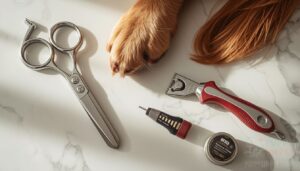
The right tool makes a real difference for trimming safely. Some work better for certain dogs, nail types, and comfort levels — yours and theirs.
Here’s a look at your main options.
Clippers Vs. Grinders
Both tools get the job done — but they work very differently.
Dog nail clippers offer speed efficiency with one clean snip, though one wrong placement near the nail quick can cause bleeding fast.
A nail grinder safety advantage is better edge finish and gradual control, but heat generation and noise sensitivity can stress some dogs.
Dog preference should guide your choice.
Why Dog-specific Tools Matter
Using human nail clippers on your dog is like cutting a steak with a butter knife — technically possible, but you’ll regret it. Dog-specific tools are built for thicker nails, better grip, and precise length control. Here’s why proper tool selection for dog nails matters:
- Reduced Quick Injuries — Dog nail clippers are sized to encourage small, controlled cuts, keeping you away from the nail quick.
- Improved Grip — Pet tools are ergonomically shaped for one-handed control, so the paw stays steadier.
- Noise Reduction — Many grinder tools run at lower speeds, reducing vibration that triggers paw pulling.
- Comfortable Paw Position — Correct tool sizing prevents awkward angles that cause pinching or snagging.
- Nail Quick Identification — Stopping frequently is easier when your tool allows incremental trimming, giving you time to spot warning signs before reaching for styptic powder.
Using a Grinder Without Overheating
A grinder feels gentle until it doesn’t — heat builds fast when you hold it in one spot too long. For safe dog nail care, think short passes: grind for a few seconds, then pause.
| Grinder Habit | Why It Matters |
|---|---|
| Burst Trimming | Prevents heat buildup at the nail bed |
| Cooling Pauses | Lets tool and nail surface recover |
| Pressure Control | Light contact reduces friction and discomfort |
| Ventilation Setup | Open space helps dissipate motor heat |
Check the nail between each pass.
Why Human Clippers Are Risky
Human nail clippers aren’t built for dog nails — that’s a blade geometry mismatch from the start. The teeth cut hair, not dense keratin, and speed control issues make it easy to overshoot the quick, the sensitive part inside.
There’s no guard, so you lose nail clipping safety instantly.
Add noise-induced fear and cross-contamination risk, and you’re one twitch away from reaching for styptic powder.
When to Call a Groomer or Vet

Sometimes, handing the clippers to a professional is simply the smarter call. There’s no shame in it — even experienced owners run into situations where home trimming just isn’t working.
Here’s when it’s time to reach out to a groomer or vet.
Thick or Dark Nails
Some dogs are simply harder to trim safely at home. If your dog has thick nails — where keratin thickness impacts the quick harder to gauge — or dark-colored nails where spotting the quick is guesswork, a groomer or vet is worth it.
Breed-specific growth rates also vary, and professionals recognize nail plate anatomy differences that most owners don’t.
Don’t risk cutting a dog’s nails too short when expert hands are available.
Anxious or Wiggly Dogs
An anxious dog makes quick detection methods nearly impossible. Watch for Tail Tuck Signals, Whale Eye Indicator, Displacement Licking, Pacing Behavior, or Vocalization Cues — these tell you that your dog is too stressed for safe trimming.
Forcing it risks sudden movement, accidental cuts, and a worsening fear cycle.
A professional trained in gradual desensitization and positive reinforcement during trimming manages a dog’s anxiety during grooming far better than a wrestling match at home.
Repeated Quick Cuts at Home
If quick detection methods keep failing at home, the pattern itself is the problem. Repeated quick cuts create a fear cycle that makes every future session harder.
Watch for these warning signs that it’s time to hand off:
- Cutting a dog’s nails too short happens more often when session spacing is too tight
- Stress signals intensify after each injury, reducing cooperation
- Incremental trims become harder without proper tool pressure control
- Post-trim recovery takes longer with each repeated injury
- Home nail care techniques for dogs lose effectiveness when trust breaks down
A professional resets that cycle.
Signs of Infection or Ongoing Pain
Sometimes a painful nail injury doesn’t end when the bleeding stops. If you notice swelling or redness spreading around the nail bed, heat sensitivity when you touch the toe, pus production, or a bad smell — that’s a nail infection developing, not normal healing.
Persistent gait changes, like ongoing limping days later, also signal it’s time for a vet, not more styptic powder.
Frequently Asked Questions (FAQs)
How do I tell if I cut my dog’s nails too short?
Bleeding at the tip is the clearest quick injury sign. If your dog yelps, pulls away, or shows paw sensitivity after a trim, you’ve likely cut too far.
How long should a cavaliers’ nails be?
For a Cavalier, the right nail length means pad clearance — nails shouldn’t touch the floor when standing.
Indoor lifestyle dogs need trimming every one to two weeks since outdoor wear is minimal.
How long should cocker spaniel nails be?
For a cocker spaniel, the ideal nail length means no floor contact when standing. Aim for a 1–2 mm clearance.
That simple floor clearance measurement keeps paw pad pressure low and promotes long-term paw health.
Can overgrown nails permanently affect a dogs posture?
Yes — overgrown nails can cause lasting Gait Alteration, Joint Stress, and Spine Compensation.
Chronic nail overgrowth leads to Muscle Imbalance and, in severe cases, Long-Term Deformities that persist even after nail length is corrected.
At what age should puppy nail trimming begin?
Start around 2–3 weeks old with gentle paw handling and tiny tip trims.
Early Socialization through Gradual Trim Sessions and Puppy Paw Desensitization builds lasting comfort — making safe dog nail trimming practices second nature.
Do certain breeds need more frequent nail trims?
Yes — breed nail growth varies considerably. Chihuahuas, Beagles, and Pugs often need trims every one to two weeks, while active outdoor dogs self-wear nails naturally and need less frequent attention.
Conclusion
Nail care doesn’t have to feel like walking on eggshells—or paws. Once you know how to tell if dog nails are too short, every trim becomes a confident decision instead of a nervous guess.
The quick quick is your boundary. The chalky center is your stop sign. The 2mm buffer is your margin for error.
Stay within those markers, respond fast when you don’t, and your dog keeps walking comfortably while you keep your nerves intact.
- https://www.walkervillevet.com.au/blog/why-dog-yelping/
- https://www.confidu.com/en/magazin/artikel/pain-in-dogs
- https://ohmytail.com/blogs/medical-conditions/dog-yelps-and-shakes-the-hidden-reasons-owners-often-miss
- https://learningandyearning.com/why-does-my-dog-suddenly-yelps-for-no-reason/
- https://www.semanticscholar.org/paper/f2c40a97fb29efe33e0cb02d78cc5a67a091b2bf