
This site is supported by our readers. We may earn a commission, at no cost to you, if you purchase through links.

Your dog disappears into the treeline, and the silence that follows is the kind that makes your stomach drop. It happens faster than you’d think—a scent catches their nose, instinct takes over, and suddenly you’re alone on a trail with no idea which direction they went. Search and rescue teams report that off-leash dogs are among the most common wilderness calls they respond to, and most of those situations unfold within minutes of the dog leaving sight.
The good news: the technology gap between "I hope they come back" and "I can see exactly where they are" has closed dramatically. Modern dog GPS trackers for hiking adventures now combine satellite networks, cellular fallback, and adaptive battery management into collars that weigh less than most carabiners. Knowing which technology actually works under a forest canopy—and which ones go dark the moment you leave cell coverage—makes all the difference.
The nine trackers below cover every terrain type, trip length, and budget.
Table Of Contents
- Key Takeaways
- Top 9 Dog GPS Trackers for Hiking Adventures
- RF Vs. Hybrid Vs. Cellular: Which Tech Wins?
- Do GPS Dog Collars Work in The Woods?
- Battery Life on Multi-Day Hiking Trips
- Waterproof and Durability Ratings That Matter
- How to Track a Dog in The Woods
- Subscription Costs Vs. No-Fee Trackers
- Key Features to Look for in a Hiking Tracker
- How to Choose The Right Tracker for Your Dog
- Frequently Asked Questions (FAQs)
- Conclusion
Key Takeaways
- RF-only trackers like the Garmin Alpha T20 are your most reliable option in true backcountry — no cell towers, no subscription, just a direct radio signal up to 9 miles.
- Cold weather quietly steals 25–40% of your tracker’s battery before you’ve covered a mile, so pre-warming cells and carrying a 10,000 mAh power bank aren’t optional on multi-day trips.
- Subscription costs compound fast — a $15/month plan hits $540 over three years, making no-fee devices like the Aorkuler a smarter long-term buy if you hike regularly.
- Dense canopy and ravines can degrade GPS accuracy by 10–30 meters and kill cellular entirely, so matching your tracker’s technology (RF, hybrid, or satellite) to your actual terrain is the one decision that matters most.
Top 9 Dog GPS Trackers for Hiking Adventures
Not every tracker holds up when the trail gets serious — cell service vanishes, temperatures drop, and your dog has other plans. The nine options below were chosen for real backcountry performance, not just app aesthetics. Here’s what made the cut.
1. Garmin Alpha 300i Dog Tracker
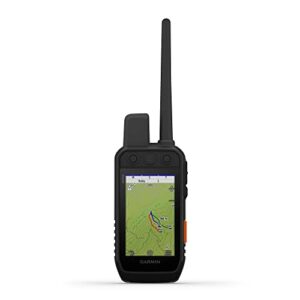
The Garmin Alpha 300i is the go-to handheld for serious backcountry dog tracking.
It pairs especially well with purpose-built gear covered in this guide to dog training collars for off-leash hiking and camping, where real-time tracking across 9 miles makes every trail safer.
It monitors up to 20 dogs across a 9-mile range, with 2.5-second location updates displayed on a sunlight-readable 3.5-inch touchscreen.
When cell service disappears, Iridium inReach satellite keeps two-way messaging and an interactive SOS live.
Preloaded TopoActive maps, a barometric altimeter, and an electronic compass round out a genuinely capable field tool.
The catch? You’ll need an active inReach subscription to activate satellite features.
| Best For | Hunters, backcountry guides, and working dog handlers who need reliable multi-dog tracking and emergency communication in areas with no cell service. |
|---|---|
| Weight | 1.3 oz (37 g) |
| Battery Life | Up to 50 hours |
| GPS Range | Up to 9 miles |
| Water Resistance | Not specified |
| App Compatibility | Garmin / inReach app |
| Update Interval | 2.5 seconds |
| Additional Features |
|
- Tracks up to 20 dogs across a 9-mile range with fast 2.5-second updates, so you always know where your pack is
- Built-in Iridium satellite messaging and SOS means you’re never truly off the grid, even in the most remote terrain
- Preloaded TopoActive maps, barometric altimeter, and compass make it a full-featured navigation tool, not just a dog tracker
- Satellite features require an ongoing inReach subscription, adding to the total cost of ownership
- The software interface feels dated compared to modern smartphones, which can make setup and navigation a bit clunky
- Physical buttons only work when the screen is awake, which adds an extra step in fast-moving field situations
2. Fi Smart Dog Tracker Collar
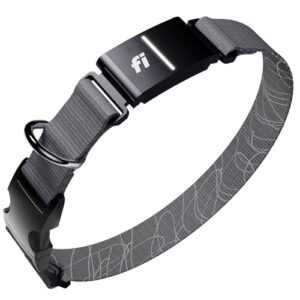
Where the Alpha 300i demands a dedicated handheld, the Fi Smart Collar takes a simpler approach — your phone is the receiver.
It runs on LTE-M cellular with satellite backup kicking in after 5 minutes of zero signal, delivering location updates every 15 minutes off-grid. Battery lasts 10–12 days under typical use, though cold weather and heavy canopy will cut that. Subscription required. Best for day hikes where cell coverage is mostly reliable.
| Best For | Dog owners who want smartphone-based real-time tracking and health monitoring without the hassle of a separate handheld device. |
|---|---|
| Weight | 2.72 oz (77 g) |
| Battery Life | Up to 6 months |
| GPS Range | Nationwide (LTE) |
| Water Resistance | Not specified |
| App Compatibility | iOS & Android, Apple Watch |
| Update Interval | Real-time |
| Additional Features |
|
- Next-gen GPS with up to 2× improved accuracy keeps you locked onto your dog’s location in real time
- AI-driven health and behavior monitoring tracks everything from activity levels to barking and eating habits, making it easy to catch issues early
- Seamless Apple Watch, iPhone, and Android integration means you can check in on your pup hands-free, even mid-walk
- Battery life regularly falls short of the advertised 6-month claim, so expect more frequent charging than promised
- Full functionality requires an ongoing subscription — without it, tracking features are significantly limited
- GPS accuracy can slip by several hundred feet in dense urban areas or rural settings, which may matter in a pinch
3. Tractive Smart Dog Tracker

Tractive takes a cellular-first approach with a collar that weighs just 1.3 oz — light enough that your dog won’t notice it. Live updates hit every 2–3 seconds in active mode, with location history stored in the app for route replay.
IP67 waterproofing manages stream crossings and mud without issue. Battery runs up to 14 days on standard settings.
Signal dropouts can occur in heavy forests. Subscription required.
| Best For | Dog owners who want real-time GPS tracking and health monitoring for active or free-roaming dogs, especially those with senior or medically sensitive pets. |
|---|---|
| Weight | 1.3 oz (37 g) |
| Battery Life | Up to 14 days |
| GPS Range | Unlimited (cellular) |
| Water Resistance | IP67 |
| App Compatibility | iOS & Android |
| Update Interval | 2–3 seconds |
| Additional Features |
|
- Live GPS updates every 2–3 seconds with global coverage and full location history
- Built-in heart rate and respiratory monitoring catches health issues early
- Lightweight (1.3 oz) and IP67 waterproof — barely noticeable and built for the outdoors
- Full GPS features require an ongoing subscription with no free trial
- Geofence alerts can lag by several minutes, which matters in an escape situation
- Signal can drop in dense forests or heavily built-up urban areas
4. FitBark 2 Dog Activity Tracker
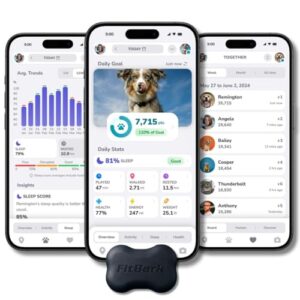
Not every hiker needs live GPS. Sometimes what matters most is knowing how your dog is doing — not just where.
The FitBark 2 tracks activity, sleep quality, distance, and calories 24/7, all from a 9.07 g device that clips to any standard collar. No GPS, no subscription fees. Battery lasts up to 6 months, making it ideal for working or therapy dogs. Share data directly with your vet via the app.
| Best For | Dog owners — especially those with working, therapy, or multi-dog households — who want ongoing health and activity insights without paying monthly fees or needing real-time location tracking. |
|---|---|
| Weight | 0.32 oz (9 g) |
| Battery Life | Up to 6 months |
| GPS Range | No GPS |
| Water Resistance | Waterproof |
| App Compatibility | iOS 12+, Android 6+, Fitbit |
| Update Interval | N/A |
| Additional Features |
|
- Tracks activity, sleep, distance, and calories around the clock with no subscription required
- Up to 6 months of battery life means almost no interruptions for working or therapy dogs
- Easy data sharing with vets, trainers, or co-owners for smarter, more informed care
- No GPS, so it won’t help if your dog goes missing
- The zip-tie attachment can loosen or snap during rough play, requiring spare ties on hand
- Occasional sync dropouts mean you may need to open the app manually to keep data flowing
5. SpotOn GPS Dog Fence Collar
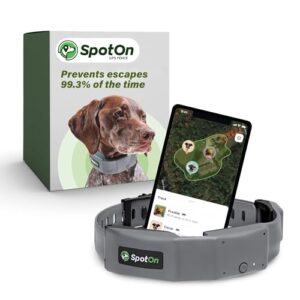
Forget physical fences. The SpotOn GPS Fence Collar creates virtual boundaries up to 100,000 acres using a dual-feed antenna connected to 128 satellites — no cell service needed.
It weighs just 3.17 oz, supports IP67 conditions, and runs 40 hours standalone or 25–35 hours with a tracking subscription. Off-Grid Mode keeps boundaries active deep in the backcountry. Forest Mode reduces false alerts under dense canopy.
Real-time tracking and escape alerts require an optional subscription — plan accordingly.
| Best For | Outdoor adventurers, ranchers, and pet owners who need flexible, fence-free containment across large or rugged properties where traditional fencing isn’t practical. |
|---|---|
| Weight | 3.17 oz (90 g) |
| Battery Life | Up to 40 hours |
| GPS Range | Unlimited (cellular) |
| Water Resistance | IP67 |
| App Compatibility | iOS & Android |
| Update Interval | Real-time |
| Additional Features |
|
- Connects to 128 satellites with dual-feed GPS, giving you reliable boundary accuracy across huge areas — up to 100,000 acres
- Works completely off-grid with no cell service or internet required, making it ideal for remote backcountry use
- Lightweight at 3.17 oz and IP67-rated, so it holds up through rain, snow, and swimming without slowing your dog down
- Real-time tracking, escape alerts, and remote recall all require a paid subscription on top of the collar’s purchase price
- GPS accuracy can slip under heavy tree cover or in rough weather, which may trigger unintended static corrections near boundaries
- Battery needs recharging every one to two days with regular use, which can be inconvenient on longer trips or for working dogs in continuous deployment
6. Garmin Astro 430 Dog Tracker
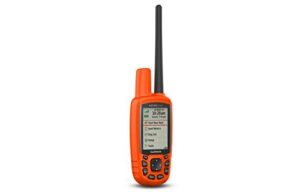
If you’re tracking a pack of hunting dogs across rugged backcountry, the Garmin Astro 430 was built for exactly that.
It tracks up to 20 dogs simultaneously, updating each position every 2.5 seconds via GPS and GLONASS. Range hits 9 miles in open terrain. The 2.6-inch color display shows preloaded U.S. topo maps and Hunt Metrics — distance, time afield, on-point events.
IPX7-rated and AA-powered, it runs up to 20 hours. Premium price (~$600), but unrivaled in multi-dog field control.
If managing a large hunting pack is your priority, the best dog training collars for multi-dog field use break down which systems justify that premium investment.
-only, so it’s less useful for hunters who cross into Canada or hunt internationally
- The collar can run bulky, and you’ll need Garmin BaseCamp software to manage maps and updates
| Best For | Serious hunting dog handlers who need to track multiple dogs across large, remote terrain without relying on cell service. |
|---|---|
| Weight | Not specified |
| Battery Life | Up to 20 hours |
| GPS Range | Up to 9 miles |
| Water Resistance | IPX7 |
| App Compatibility | Garmin app |
| Update Interval | 2.5 seconds |
| Additional Features |
|
- Tracks up to 20 dogs at once with 2.5-second updates and a 9-mile range — serious coverage for serious hunters
- Dual GPS GLONASS and preloaded topo maps keep you oriented in the most remote backcountry
- Hunt Metrics give you real performance data to sharpen your dogs’ training over time
- At ~$600, it’s a significant investment, and the rechargeable battery pack costs extra on top of that
- Mapping is U.S.
7. Tractive Smart Dog GPS Tracker

When the trail goes deep and cell service dies, you need a tracker that doesn’t quit. The Tractive Smart Dog GPS Tracker covers both worlds — LTE cellular plus satellite backup that kicks in after five minutes without signal.
Updates hit every 2–3 seconds in live mode. IP68-rated and built for dogs over 8 lb, it runs up to 14 days between charges.
Just budget for the subscription — it’s required for full functionality.
| Best For | Dog owners who frequently hike or explore areas with spotty cell coverage and want real-time location tracking plus health monitoring in one device. |
|---|---|
| Weight | Not specified |
| Battery Life | Up to 14 days |
| GPS Range | Unlimited (cellular) |
| Water Resistance | IP68 |
| App Compatibility | iOS & Android |
| Update Interval | 2–3 seconds |
| Additional Features |
|
- Live GPS updates every 2–3 seconds with IP68 waterproofing, so it holds up on any adventure
- Tracks heart rate and respiratory rate, giving you an early heads-up on potential health issues
- Custom virtual fences with instant alerts and full location history keep your dog’s safety covered 24/7
- Full GPS functionality requires an ongoing subscription, which adds to the long-term cost
- Geofence alerts can occasionally be delayed by several minutes, which matters in urgent situations
- Heavy use — frequent alerts or constant live tracking — can cut the 14-day battery life noticeably short
8. Apple AirTag 2nd Generation Tracker

The Apple AirTag 2 isn’t a GPS tracker — and that distinction matters on the trail. It relies entirely on the Find My network, which means it needs nearby Apple devices to relay your dog’s location. In dense backcountry, that network thins out fast.
Where it earns its place: urban hikes, trailheads, and suburban parks with solid foot traffic. Precision Finding gives directional arrows and distance readouts on iPhone 15 or Apple Watch Series 9 and later. Battery lasts over a year on a single CR2032 coin cell.
| Best For | Dog owners and everyday carry users who frequent busy urban trails, trailheads, and suburban parks where Apple device density is high. |
|---|---|
| Weight | 0.48 oz (13.6 g) |
| Battery Life | 1+ year |
| GPS Range | No standalone GPS |
| Water Resistance | Not specified |
| App Compatibility | iPhone / Apple Watch |
| Update Interval | N/A |
| Additional Features |
|
- Precision Finding delivers real-time directional arrows and distance on iPhone 15 or Apple Watch Series 9 and later, making it fast to locate a nearby pet or lost item
- The 50% louder speaker with a distinctive chime makes auditing for a hidden item much easier
- A CR2032 coin battery lasts over a year, so you’re not constantly swapping cells
- Relies entirely on the Find My network — in remote or backcountry areas with few Apple users nearby, location accuracy drops significantly
- Precision Finding with UWB is locked to newer devices (iPhone 15/Series 9); older iPhones only get basic Bluetooth-based location
- Not a true GPS tracker, so it can’t report your dog’s location in real time without other Apple devices in range
9. Garmin Alpha T20 Dog Tracker
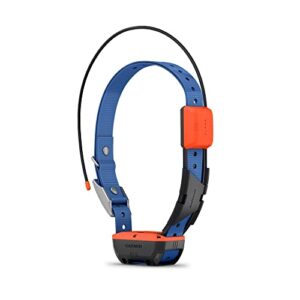
The Garmin Alpha T20 is built for one thing: finding your dog in places where other trackers go quiet.
Paired with a compatible Alpha handheld, it pushes location updates every 2.5 seconds across up to 9 miles of open terrain. Battery life stretches to 68 hours standard — or 136 hours with the expanded pack. It’s RF-only, so no subscription fees.
The catch? You need the handheld. Without it, the collar is just a collar.
| Best For | Hunters, hikers, and outdoor enthusiasts who need reliable, long-range tracking for their dogs in remote areas where cellular coverage is nonexistent. |
|---|---|
| Weight | 9.27 oz (262.7 g) |
| Battery Life | Up to 136 hours |
| GPS Range | Up to 9 miles |
| Water Resistance | Not specified |
| App Compatibility | Garmin handhelds only |
| Update Interval | 2.5 seconds |
| Additional Features |
|
- Extremely long range — up to 9 miles with fast 2.5-second location updates keep you locked onto your dog in real time
- Impressive battery life of up to 68 hours (or 136 with the expanded pack), making it ideal for multi-day trips
- Multicolor LED makes it easy to spot your dog in low-light or nighttime conditions
- Requires a compatible Garmin Alpha or Pro 550 Plus handheld to function — a significant added cost
- No cellular or LTE connectivity, so it only works within RF range of the handheld unit
- Expanded battery pack costs extra and adds weight to the collar
RF Vs. Hybrid Vs. Cellular: Which Tech Wins?
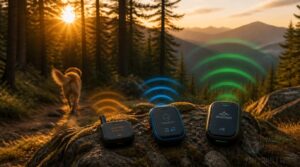
Not all GPS technology works the same way in the backcountry, and the difference can matter a lot when your dog disappears into the tree line. The tracker you choose is really a choice between three distinct technologies — each with real trade-offs in range, reliability, and cost. Here’s how they stack up.
RF Trackers for No-cell Zones
When cell service vanishes, RF technology steps in. The Garmin Alpha 400i uses dedicated radio frequencies to reach up to 9 miles line-of-sight — no towers needed. Dense forest cuts that range sharply, and triangulation via handheld receivers gives only approximate locations. Still, for true off-grid tracking, RF remains the most reliable option where no signal exists.
For longer distances, hybrid RF‑GPS devices can extend coverage to about two miles.
| RF Feature | Field Reality |
|---|---|
| Max range | Up to 9 mi (open terrain) |
| Forest range | A few hundred meters |
| Location method | Handheld receiver triangulation |
| Subscription required | No |
| Beacon interval | Configurable; affects battery life |
Hybrid LTE Plus Satellite Backup
When RF’s range limits start to pinch, hybrid trackers pick up the slack. The Fi Smart Collar Series 3 fuses LTE with satellite backup — switching automatically after just 5 minutes without cell signal. Updates then arrive every 15 minutes via satellite, keeping you connected deep in the backcountry without lifting a finger.
| Feature | LTE Mode | Satellite Mode |
|---|---|---|
| Update interval | Near real-time | Every 15 min |
| Coverage | Urban/suburban corridors | Remote alpine terrain |
| Energy draw | Low | Higher |
Cellular-only Tracker Limitations Outdoors
Hybrid trackers shine where cell coverage exists — but cellular-only trackers expose their weakness the moment you leave it behind.
Cellular dead zones plague remote wilderness areas, ravines, and dense canopy, cutting location updates entirely.
That 2–5‑minute update interval? It stretches much longer during outages.
Cell tower dependency means your dog’s last known position is all you’ve got.
Satellite-only for True Backcountry Use
When cellular fails completely, satellite-only tracking takes over. Devices running on the Iridium network cover virtually every latitude — dense forest included.
You get remote SOS reliability and two-way messaging without a single cell tower involved.
The trade-off is latency; satellite messages run slower than LTE.
Keep your dog in open sky view whenever possible to maintain signal lock.
Do GPS Dog Collars Work in The Woods?

GPS dog collars work in the woods — but how well depends on the tech inside and the terrain you’re dealing with.
Dense canopy, deep ravines, and rocky ridgelines each throw different challenges at your tracker’s signal.
Here’s what’s actually happening to that signal under the trees, and why some devices handle it better than others.
Dense Canopy Signal Degradation Explained
Think of the forest as a giant signal sponge. Dense leaf layers absorb and scatter radio frequencies, cutting strength by 10–20 dB over surprisingly short distances. Wet foliage makes it worse — moisture amplifies absorption sharply.
- Multipath errors occur when signals bounce off branches, arriving late and skewing your dog’s position
- Ravines compound shadowing, creating sudden dead zones even when your dog is close
- Canopy gaps cause patchy, inconsistent updates along the trail
Multi-constellation GNSS Accuracy Benefits
The fix starts with multi-constellation GNSS — receivers that pull signals from GPS, GLONASS, Galileo, and BeiDou simultaneously. More satellites in view means better geometric spread, which tightens accuracy to 3–5 meters under open sky.
Under partial canopy, when one constellation drops out, others pick up the slack — keeping your dog’s position locked without waiting.
Ravines and Terrain Interference Effects
Ravines are where GPS trackers earn their keep — or quietly fail. Steep walls create satellite shadowing, cutting visible satellites down to a sliver of sky. That triggers terrain-induced jitter: your dog’s dot hops erratically on the map.
Cliff faces bounce signals back as multipath, causing brief position glitches.
Update reliability can drop up to 20 percent in the tightest corridors.
Sensor Fusion During Brief Signal Loss
When the canopy swallows your signal, sensor fusion keeps the track alive. A Kalman filter blends GNSS with IMU dead reckoning — estimating your dog’s position using motion data when satellites drop out.
Confidence scores downweight noisy readings instantly. Signal dropout recovery reanchors within seconds once GPS returns, keeping position error within a few meters.
Battery Life on Multi-Day Hiking Trips

Battery life can make or break a multi-day trip — and most trackers won’t last as long as you think once the trail gets cold and the miles pile up. A few key factors will determine whether your device keeps up or leaves you guessing. Here’s what you need to know before you head out.
Cold Weather Battery Drain Rates
Cold does something brutal to lithium cells — it slows the internal chemistry and spikes resistance, robbing your tracker of 25–40% battery capacity before your dog even hits the trail. At altitude, wind accelerates that drain further. Older batteries suffer worst. Here’s what you’re up against:
- Subfreezing temps can halve a collar’s rated runtime overnight
- Altitude and wind strip heat faster, deepening capacity loss
- Aging cells exacerbate cold-weather drain beyond normal ratings
- Cold charging slows energy acceptance, extending recharge time
- Dense canopy forces stronger radio signals, burning extra power
Pre-warm your batteries before heading out — it genuinely recovers usable capacity.
Low-power Mode for Extended Trips
Low-power mode is your best tool for stretching a multi-day hike without cutting your dog loose from tracking.
Adaptive duty cycling alternates between active polling and standby, extending typical runtime from 2 days to 5 or more. Adaptive update intervals automatically lengthen when your dog is stationary, preserving power without sacrificing awareness. Motion sensing sensitivity drops during rest, eliminating false alerts and unnecessary battery drain.
Power Bank Recharging on The Trail
A high-capacity power bank is your lifeline when your dog’s GPS collar goes dark at mile 15.
Carry a 10,000 mAh unit — it recharges most trackers two to three times before needing a refill itself. Use USB-C to USB-C cables for the fastest transfer speeds.
- Pass-through charging lets you top off your tracker while the bank itself charges via solar
- Solar panels add up to 5W in direct sun — useful in open terrain, nearly useless under dense canopy
- Store your power bank in an insulated inner pocket to protect lithium cells from cold-induced capacity loss
Pre-charge everything the night before.
Update Frequency Vs. Battery Trade-off
How often your tracker pings matters more than you’d think. Update every 15 seconds and your battery dies within 48 hours. Drop to 2-minute intervals and you’ll easily stretch 7 days.
That’s the core trade-off. Adaptive update modes help — they increase frequency during movement, throttle back when your dog is stationary, saving real power where it counts.
Waterproof and Durability Ratings That Matter
Your tracker’s electronics are only as good as the shell protecting them — one bad creek crossing or granite scramble can end a trip fast.
Not all waterproof ratings are equal, and fit matters more than most people expect, especially for smaller dogs logging big miles.
Here’s what to look for before you clip anything onto your dog’s collar.
IP67 Vs. IP68 for Stream Crossings
Not all waterproof ratings are equal. IP67 protects against immersion up to 1 meter for 30 minutes — fine for splashes and quick creek crossings. IP68 goes deeper, often 1.5–3 meters, for longer periods. Consider what matters most on trail:
- Peace of mind during rushing stream crossings
- Confidence when your dog dives unexpectedly
- Protection against gritty, seal-eroding water
- Reliability across repeated submersions over time
Rugged Housing Materials for Rocky Terrain
A waterproof seal only works if the housing around it holds up.
On granite trails, polycarbonate shells absorb impacts up to 1,600 joules without cracking. Carbon fiber composites add stiffness at under 25 percent of metal’s weight. Anodized aluminum resists moisture and trail grit.
Recessed latches and rounded bezels deflect rock strikes before damage reaches the device.
Collar Fit and Chafing Prevention Tips
Even the toughest housing won’t save your dog from collar-related discomfort miles into a trail. Soft nylon or leather with rounded edges minimizes neck friction.
Leave a two-finger gap between collar and skin — snug enough to hold a tracker, loose enough to prevent chafing.
After creek crossings, remove and dry the collar before reattaching.
Weight Considerations for Smaller Dogs
Small dogs carry gear differently than big ones. For a 10-pound dog, keep tracker weight under 1 ounce — anything heavier risks neck strain over miles of uneven terrain.
A vest with a tracker pocket distributes that load across the chest instead. In 2026, micro-trackers like the Aorkuler weigh just 1.06 oz — genuinely trail-viable for lighter breeds.
How to Track a Dog in The Woods
Knowing your dog’s location is one thing — knowing how to use your tracker effectively in dense woods is another. A few key settings and habits can make the difference between a quick find and a frantic search. Here’s what to dial in before and during your hike.
Setting Up Geofence Alerts Before Hiking
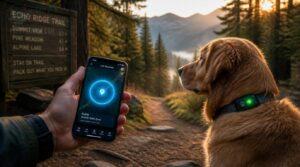
Think of a geofence as a digital leash — invisible, but instantly responsive. Before hitting the trail, draw your virtual boundary in the app around key spots: trailhead exits, rest areas, water stops.
Use 50–200 meters radius depending on your dog’s size. Enable both entry and exit alerts, and always test the setup before you leave home.
Using SOS Features for Emergency Rescue
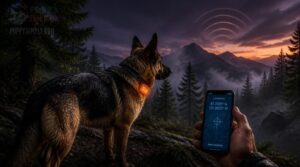
When your dog bolts and panic sets in, an SOS button can be the difference between a reunion and a crisis. Press it — physically or via app — and exact GPS coordinates transmit to pre-designated contacts within seconds.
Some trackers automatically switch to satellite when cellular drops. In rescue mode, non‑essential functions shut down, conserving battery while responders navigate to your dog’s position.
Optimal Update Interval Settings Outdoors

Update intervals are your biggest lever for balancing battery and awareness. For a day hike, 60–120 seconds works well. Drop to 30 seconds when your dog moves erratically.
On overnights, stretch to 300 seconds and let geofence alerts catch boundary breaks. Cold weather drains batteries faster — longer intervals buy you critical extra hours on the trail.
Handheld Receiver Range in Forest Cover
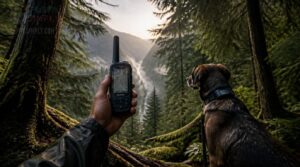
Your handheld receiver’s effective range shrinks fast under a closed canopy. Dense foliage scatters radio frequency signals, creating multipath errors that degrade GPS accuracy by several meters. Dedicated handhelds with high-gain antennas outperform smartphones here. Ravines and ridgelines carve out shadow zones. Raise your receiver toward any canopy gap to recover signal:
- Hold the device at arm’s length, tilted toward open sky
- Track along forest edges, not deep interior
- Use multi-constellation GNSS for faster lock recovery
- Enhanced receiver firmware improves weak-signal processing
- RF trackers outperform LTE in zero-cell-coverage terrain
Subscription Costs Vs. No-Fee Trackers

The price tag on a dog GPS tracker doesn’t stop at checkout — for most models, you’ll keep paying every month just to use it. Knowing how those costs stack up over time is the difference between a smart buy and a slow budget drain. Here’s a breakdown of what each pricing model actually costs you.
Monthly Fee Breakdown by Tracker Type
Not all trackers charge the same way. Here’s how monthly fees break down by type:
| Tracker Type | Monthly Fee Range | Notes |
|---|---|---|
| Cellular | $9.95–$19.99 | Real-time updates included |
| Hybrid LTE/Satellite | $15–$25+ | Satellite backup costs more |
| RF-only | $0 | No subscription required |
| Activity monitoring add-on | +$2–$6/month | Health metrics extra |
| International roaming | +$5–$10/month | Per destination network |
Annual billing usually saves 10–25% versus month-to-month.
Long-term Cost of Subscription Models
Monthly fees look manageable until years stack up. A $15/month plan costs $540 over three years — before activation fees or tier upgrades. Premium plans can exceed $1,000 over five years.
| Cost Factor | Typical Impact |
|---|---|
| Annual renewal increases | +5–15% per cycle |
| Hidden activation fees | $10–$30 upfront |
| Tiered feature upgrades | +$5–$10/month |
| Multi-dog bundle savings | 10–20% discount |
| Negotiated plan locks | Freeze rates 1–2 years |
No-subscription Trackers and Break-even Point
No monthly bill means your costs stop the moment you pay. The Aorkuler GPS Tracker 2 runs $249.99 upfront — no subscriptions ever. Hit 18–24 months of regular use and you’ve passed break-even, pocketing what subscription users keep spending.
Pay once for the Aorkuler GPS Tracker 2 and after 18 months, every dollar subscription users keep spending stays in your pocket
| Tracker | 3-Year Cost | Subscription Required |
|---|---|---|
| Aorkuler GPS Tracker 2 | ~$250 | None |
| Tractive GPS XL | ~$410 | Yes |
| Premium cellular model | $1,000+ | Yes |
Best Plans for Occasional Hikers
If you only hike a few times a year, month-to-month plans make more sense than locking into annual contracts. Cancellation fees quietly inflate your total ownership cost otherwise.
| Plan Type | Best For |
|---|---|
| Month-to-month | Occasional seasonal use |
| Annual subscription | Year-round daily walkers |
| No-subscription device | Infrequent budget hikers |
| Bundled lifetime plan | Long-term heavy users |
Key Features to Look for in a Hiking Tracker

Not every GPS tracker is built for the trail — and the difference shows fast when your dog disappears into thick brush a mile from the trailhead. The right features can mean the difference between a quick recovery and a frantic search. Here’s what actually matters when you’re picking a hiking tracker.
Real-time Location Update Speed
Update speed is the heartbeat of real-time monitoring.
Under open sky, cellular trackers deliver fixes within 1–3 seconds; forest cover pushes that to 5–15 seconds due to signal reflection delays.
A 5–10 second interval balances real-time location updates with battery life on multi-day trips.
Tracking algorithms using Kalman filtering smooth position jitter, while real-time confidence indicators flag when satellite ping intervals stretch beyond reliable thresholds.
Geofence and Breach Alert Options
A well-placed virtual fence does more than mark territory — it buys you reaction time. Set a circular geofence around your trailhead, or use a polygon geofence to trace ridge lines and cliff edges precisely.
SpotOn GPS Fence excels here. Alert sensitivity settings and multi-zone setups cut false positives, while offline geofence storage keeps boundaries active when cell coverage vanishes.
Low-battery Warning Notifications
A dead tracker on the trail is worse than no tracker at all.
Most devices trigger low-battery warnings between 15–25% charge, pushing push notifications, sounds, or vibration straight to your phone. Set your alert threshold before you leave — higher thresholds mean more warning time.
Some trackers automatically activate low-power mode, stretching battery longevity when you’re far from a recharge.
Two-way Messaging on Remote Trails
When cell service dies, two-way messaging keeps you connected to the outside world. Satellite communication bridges that gap — transmitting your dog’s location, status requests, or an emergency location beacon to preset contacts within minutes.
Three things worth knowing before you head out:
- Pre-trail connectivity testing confirms message delivery before you’re deep in backcountry.
- Message template efficiency cuts response time — predefined replies beat fumbling with keypads on cold, shaky hands.
- SOS profile customization lets rescue services instantly access your dog’s name, weight, and medical needs.
One tradeoff: messaging battery impact is real. Two-way features drain power faster than passive backcountry pet tracking alone.
Multi-dog Coordination Capabilities
Running five dogs off-grid isn’t chaos — it’s a coordination problem.
A solid multidog tracking system solves it with Group Map Visualization, showing every dog as a color-coded icon on one shared map.
Pack Proximity Thresholds trigger alerts when dogs crowd too close on steep switchbacks.
Shared Geofence Management and Synchronized Command Mirroring let you redirect the whole pack instantly — one tap, zero scrambling.
How to Choose The Right Tracker for Your Dog

The best tracker isn’t always the most expensive one — it’s the one that fits your dog, your terrain, and how often you actually hit the trail. A few key factors will narrow the field fast. Here’s what to weigh before you buy.
Matching Tracker Size to Dog Weight
Size matters more than you’d think. A chest girth measurement behind the front legs tells you far more than weight alone.
Small dogs — under 8 lbs — need trackers under 40 grams to avoid restricted movement.
For larger dogs, vest mounting benefits include better weight distribution and reduced neck strain, making heavier GPS dog collars far more comfortable on rugged trails.
Assessing Your Typical Hiking Terrain
Your terrain shapes every tracker decision. Think about where you actually hike — not where you wish you did.
Dense forest canopy degrades GPS signals by 10–30 meters and can sever cellular coverage entirely. Ravines create cellular dead zones. Steep elevation changes bring microclimate shifts and unstable footing. Knowing your terrain lets you choose the right technology before you’re deep in the backcountry with no signal.
Prioritizing Coverage Type for Your Region
Once you know your terrain, match your coverage type to it. In Saxony’s forested valleys, cellular networks drop out fast — satellite or hybrid trackers hold up better.
Open ridgelines favor RF range.
Rural trails need satellite backup when cell towers disappear.
Check local coverage maps before committing to any device.
Balancing Cost, Features, and Reliability
Coverage narrows the field. Now cost closes it.
Upfront vs recurring costs split trackers into two camps. The Aorkuler pays for itself after 18–24 months. Tractive hits ~$410 over three years. Subscription fee hidden costs add up fast.
| Trade-off | What to weigh |
|---|---|
| Durability vs price | Rugged builds cost more upfront |
| Feature vs battery | Real-time location updates drain faster |
| Accuracy vs cost | Multi-constellation GNSS raises device price |
Pick the tracker that survives your trails — not just your budget.
Frequently Asked Questions (FAQs)
How to track a dog in the woods?
Start with pre-hike testing — confirm your tracker syncs and geofence alerts fire before you hit the trailhead. In cellular dead zones, satellite tracking delivers real-time location updates when nothing else will.
Do GPS dog collars work in the woods?
Yes, GPS dog collars work in the woods — but performance varies. Canopy signal loss and cellular network dead zones can cut accuracy. Satellite-based positioning with GNSS constellations ensures off-grid tracking more reliably.
Can GPS trackers double as training tools?
Like a longer leash you never have to hold, GPS dog trackers can absolutely support training. Geofence boundary training and recall drill support become practical when real-time alerts reinforce your commands outdoors.
How do I clean a tracker after muddy hikes?
Rinse off mud with lukewarm water, then wipe down with mild soap on a soft cloth. Dry completely before reattaching — skip the hairdryer. Check charging ports last.
Are GPS collars safe for dogs with medical conditions?
For most dogs, GPS collars are safe. But if your dog has skin allergies, arthritis, or brachycephalic breathing issues, check with your vet first — collar fit and added weight can worsen existing conditions.
Can multiple family members track the same dog simultaneously?
Most modern trackers let multiple family members view real-time location updates simultaneously through a companion smartphone app — no duplicate streams, one dog profile, everyone connected.
Conclusion
The trailhead fades behind you, your dog bounding ahead with nose to the wind—that image doesn’t have to carry dread anymore. The right dog GPS trackers for hiking adventures turn that open wilderness from a source of anxiety into shared freedom.
Match your terrain to the right technology, know your battery limits, and set your geofence before you hit dirt.
Your dog’s next disappearing act into the treeline becomes a blip on a map, not a crisis.
- https://www.jakobagsds.com/blog/best-gps-trackers
- https://aorkuler.com/blogs/blog/best-gps-tracker-no-monthly-fee-2026
- https://www.treelinereview.com/gearreviews/best-gps-dog-collars
- https://satellai.com/blogs/tech-enabled-pet-life/best-adventure-gps-dog-collar
- https://www.life360.com/blog/best-dog-gps-tracker-2026