This site is supported by our readers. We may earn a commission, at no cost to you, if you purchase through links.
A treat pulled from your pocket mid-session shouldn’t smell like last Tuesday’s lunch. But for many dog owners, that’s exactly what happens—a bag of soft chicken rewards left in a warm training vest turns sticky, sour, and borderline unrecognizable by the time you’re halfway through a heel work drill.
What your dog gets rewarded with matters, and so does the condition it arrives in. A stale or spoiled treat doesn’t just lose its appeal—it can disrupt your dog’s motivation right when you need it most.
Keeping dog treats fresh during training sessions comes down to a few straightforward habits around portioning, storage, and environment that make a real difference in how your sessions go.
Table Of Contents
Key Takeaways
- Pack only what you need for each session and rotate older treats to the front, because fresh portions and smart turnover keep every reward high-value from start to finish.
- Airtight, opaque containers made from stainless steel or BPA-free materials are your best defense against the heat, light, and moisture that quietly degrade treats between sessions.
- Soft and crunchy treats need different storage strategies — soft treats can turn tacky in minutes above 60% humidity, while biscuits benefit from flash‑freezing before vacuum sealing to preserve texture.
- Trust your senses before every session: a sour smell, sticky or unusually dry texture, visible mold, or condensation inside the packaging all mean it’s time to toss the batch and start fresh.
Keep Training Treats Fresh With Portions
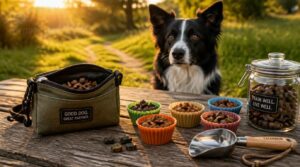
How much you pack for a training session matters more than most people realize. Bringing the right amount keeps treats fresh longer and makes the whole session run smoother. Here’s how to portion smarter before you even step outside.
Pairing the right portion size with treats your dog will actually work for takes the guesswork out of every session.
Pack Only Session Amounts
Think of your treat bag like a gas tank — fill it only as much as you need for the trip. Before each training session, pre-weigh your snack portions into a single small bag or container. This keeps session quantity consistent, minimizes treat waste, and makes daily usage tracking simple.
- Weigh treats per session
- Seal leftovers immediately
- Track daily portion totals
Use Bite-size Rewards
Once your portions are weighed, the size of each treat matters just as much. Bite-size rewards keep reward density high without filling your dog up mid‑session. Soft dog treats are ideal because they’re easy to break into small pieces, allowing precise timing and successive approximation. A pea-sized piece is usually the most suitable size treat for most training treats.
Follow appropriate treat size guidelines to match your dog’s breed.
Separate Backup Treats
Even with perfectly sized bite‑size rewards, your session can stall fast if your main pouch runs dry. That’s why keeping backup treats separate is worth building into your routine.
Store them in a color‑coded pouch or container, label it with the flavor and date, and only open it when your primary stash runs out — keeping everything fresh and contamination‑free.
Avoid Overfilling Pouches
Overfilling your treat pouch is a quick way to break the zipper seal.
When treats are packed too high, zipper track alignment becomes nearly impossible, and even a slightly skewed seal lets air and moisture creep in.
Leave a 1–2 finger air gap below the zip, stay within the pouch’s maximum fill line, and your seal stays secure every session.
Rotate Older Treats First
Rotating older treats first is the simplest way to protect treat freshness and avoid waste. Use a FIFO rotation method — first in, first out — by always moving older stock to the front of your container.
- Track purchase dates with water-resistant labels
- Use color-coded aging tags to identify oldest treats instantly
- Run weekly inventory audits to confirm front stock matches oldest inventory
- Prioritize soft treats first, since they lose texture faster
Choose Airtight Training Treat Containers
The container you choose makes a bigger difference than most people realize. A good airtight option keeps oxygen, moisture, and odors out — so your treats stay fresh from the first rep to the last. Here are the best containers worth keeping in your training kit.
Resealable Treat Pouches
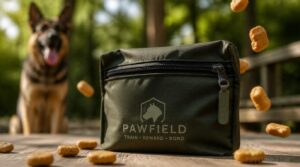
A good resealable treat pouch does more than just hold snacks — it actively protects them.
Look for pouches with two-track zipper systems, because they create a stronger seal than single-track designs and hold up through hundreds of open-close cycles.
A one-handed pull tab keeps things smooth mid-session, while measuring markings help you portion correctly without overfilling.
For extra guidance on balancing greens in your dog’s diet, can dogs eat spinach safely is worth a quick read before measuring out that first serving.
Original Packaging Benefits
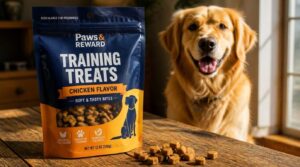
Don’t overlook what you already have — original packaging is engineered specifically to keep treats fresh for longer.
- Brand recognition helps you grab the right bag fast
- Ingredient lists stay accessible for sensitive stomach checks
- Resealable packaging prevents drying out between sessions
- Product authenticity is preserved, simplifying the return process if needed
BPA-free Plastic Bags
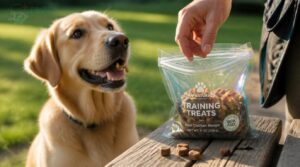
BPA-free plastic bags are a smart, lightweight option for portioning treats on the go.
Look for bags made from polyethylene or polypropylene — these resins don’t require Bisphenol A, reducing chemical leaching risks.
Keep in mind that "BPA-free" doesn’t always mean bisphenol-free; some bags substitute BPS, so choose brands with clear food-grade certification for your dog’s safety.
Stainless Steel Containers
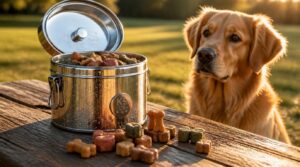
Stainless steel containers are one of the most reliable choices for keeping dog treats fresh.
Their non-porous surfaces don’t absorb moisture or harbor bacteria, which means your treats stay cleaner longer.
They’re also easy to sanitize, highly durable, and their corrosion-resistant construction won’t degrade even with daily use — making them a long-term investment worth having in your training kit.
Opaque Storage Options
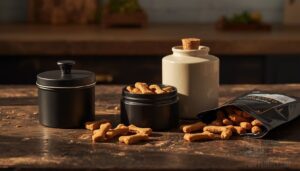
Light does quiet damage to treats over time, breaking down fats and weakening scent — and that’s exactly what opaque storage options prevent.
- Metal tins resist odors and seal tightly for lasting freshness
- Ceramic jars keep natural treats in a non-reactive environment
- Opaque film pouches block UV exposure while controlling moisture
Any of these keeps your pet food storage reliable and your treats smelling exactly as your dog expects.
Control Heat, Sun, and Humidity
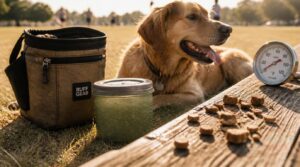
Heat, sunlight, and humidity are three of the fastest ways to ruin a perfectly good batch of training treats. Where and how you store them during a session matters just as much as the container you choose. Here’s what to watch out for so your treats stay fresh from the first rep to the last.
Keep Treats Cool
Heat is one of the fastest ways to ruin a training treat. Refrigerate treats for at least an hour before your session to keep them firm and fresh. During training, store them in an insulated cooling pouch with a cool pack, which can hold temperatures below 40°F for up to four hours — protecting both texture and palatability.
Avoid Direct Sunlight
Direct sunlight is a quiet saboteur. UV rays degrade fat-soluble vitamins and accelerate lipid oxidation, dulling both nutrition and flavor within days.
Radiant heat causes aromatic oils to volatilize, weakening the scent cues your dog depends on.
Store treats in opaque, light-blocking containers and keep them in a shaded bag during outdoor sessions to maintain temperature stability.
Prevent Pocket Overheating
Your pocket is basically a mini oven on a hot training day.
Insulated pocket liners can keep internal temperatures 5–8°F cooler, and thermal barrier clothing with breathable mesh panels reduces pocket heat by up to 6°C in direct sun.
Slip in a temperature tracking strip to catch overheating before it ruins your treats.
Reduce Moisture Exposure
Moisture sneaks in quietly — through rushed hands, humid air, or packaging that’s lost its seal.
Relative humidity below 50% is your baseline goal, so a simple hygrometer near your storage tells you exactly when conditions shift.
Store pouches upright with airtight seals, because a crushed or sideways pouch lets moisture creep in faster than you’d expect.
Moisture-proof inner liners and nested packaging add a second barrier, keeping treats from absorbing ambient humidity between sessions.
Use Desiccant Packets Safely
A small food-grade desiccant packet tucked inside your airtight container pulls excess moisture away from treats before mold or softening starts. Choose indicator desiccants — they change color when saturated, so you know exactly when to replace them.
Always keep packets away from your dog, because ingestion means a vet visit. Dispose of used packets according to your local waste guidelines.
Handle Treats Cleanly During Sessions
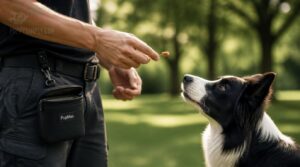
How you handle treats during a session matters just as much as how you store them at home. Small habits — like keeping your hands dry or sealing your pouch between rewards — can make a real difference in how long treats stay fresh. Here’s what to keep in mind while you’re out training.
Use Dry Hands
Your hands are the first line of defense against spoiled treats. Moisture transfer happens fast — even slightly damp fingers introduce humidity that softens soft treats and compromises packaging seal integrity.
Before each reward round, dry your hands thoroughly with a microfiber towel or pat them dry for 15–30 seconds. This one habit quietly protects your dog treat preservation efforts every session.
Close Pouches Quickly
Every second your pouch stays open, freshness slips out.
Resealable packaging works best when you close it immediately after grabbing each treat — press the zipper seal in three steps to create a uniform airtight closure.
This habit reduces moisture ingress by about 70 percent and prevents odor escape that attracts pests.
If your pouch has a double seal, use it.
Avoid Wet Grass Contact
Wet grass is a quiet saboteur during outdoor training sessions.
Dew moisture transfers almost instantly to soft treats, promoting mold risk and surface texture degradation — treats can turn sticky or clump together fast.
- Lay treats on a clean mat or towel instead of bare ground
- Wipe damp paws before reaching into your pouch
- Inspect pouches after grass contact and re-seal immediately
Keep Treats Off Floors
Floors are a contamination trap — dirt, bacteria, and moisture collect there constantly. Keep training treats off floors by using an elevated training mat as your base, and always deliver rewards at waist height rather than dropping them down.
A pocketed fanny pack keeps your snack pouch secure and away from ground contact, so your training treats stay clean throughout the session.
Replace Travel Pouches
Your travel pouch takes more abuse than you’d think — sweat, rain, and daily clipping wear it down fast. When seams fray or zippers stop sealing, airtight sealing fails and your training treats on the go dry out quickly.
- Switch to durable nylon pouches with reinforced stitching
- Choose dual zipper access for quick one-handed rewards
- Add a carabiner attachment for belt or strap clipping
- Pick resealable pouches with water-resistant fabric
Store Soft and Crunchy Treats Differently
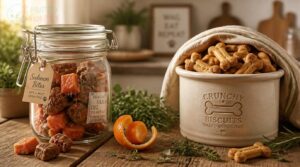
Not all treats are created equal, and that means they don’t all store the same way either. Soft treats and crunchy biscuits each have their own vulnerabilities that can quietly ruin a whole batch if you’re not paying attention. Here’s what you need to know about storing each type correctly.
Soft Treat Moisture Risks
Soft treats are more vulnerable to moisture than you might expect. When humidity rises above 60%, you can see surface tackiness develop in as little as 15 minutes — that sticky, unpleasant feel that makes treats hard to handle mid-session.
| Moisture Risk | What Happens |
|---|---|
| Above 12% moisture content | Texture collapse begins |
| Above 14% moisture content | Treats become crumbly |
| Humidity above 60% | Surface tackiness within 15 minutes |
| Packaging breached 2+ hours | Rehydration affects palatability |
Beyond texture, excess moisture opens the door to microbial growth and lipid oxidation, which both shorten treat life. Moisture migration accelerates when soft treats sit in warm, open pouches, so resealable packaging and a cool, dry place aren’t optional — they’re essential for keeping every training reward exactly as your dog expects it.
Biscuit Texture Protection
Biscuits need a different strategy than soft treats.
Flash-freeze them for one to two hours before vacuum sealing — this prevents crushing when air is removed. Set your sealer to low suction and place parchment paper between pieces to keep shapes intact. A small slice of white bread inside the bag helps maintain chewiness for up to a week.
Natural Treat Storage
Natural treats without preservatives have a much shorter window before lipid oxidation sets in and fats start to degrade. That’s why cool, dry storage matters more here than with processed options.
Keep them in airtight containers away from light, because organic ingredients are quick to spoil when exposed to heat or air.
Grain-free Treat Freshness
Grain-free treats rely on low moisture formulations to stay fresh, but that balance is easy to disrupt. Fat content in these recipes makes them especially vulnerable to lipid oxidation when exposed to heat or air, so keeping them in a cool, dry place matters more than you might think.
- Store grain-free treats at 15–25°C to slow fat rancidity
- Use opaque, airtight containers to block light and oxygen
- Natural preservatives like vitamin E or rosemary extract help extend shelf life
- Avoid humidity, which disrupts the moisture formulation balance
- Resealable packaging retains aroma between sessions
Tight seals and stable temperatures do most of the heavy lifting here.
Sensitive Stomach Precautions
If your dog has a sensitive stomach, the treat itself can be just as important as how you store it. Ingredient triggers like dairy or fatty meats cause loose stools even when treats are perfectly fresh.
Match the treat’s protein to your dog’s usual diet, keep portion sizes small, and watch for gas or lethargy after sessions.
Spot Spoiled Dog Training Treats
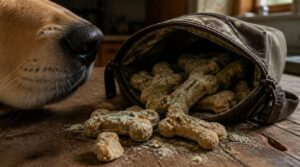
Even the best storage habits can’t guarantee every treat stays fresh forever, so knowing when to toss a batch is just as important as knowing how to store one. Your dog is counting on you to catch the warning signs before a spoiled treat causes an upset stomach. Here’s what to watch for.
Even perfect storage has limits—knowing when to discard treats protects your dog as much as freshness habits do
Sour or Rancid Smell
Your nose is your first line of defense. When you open a pouch and catch a sharp, sour, or rancid smell, that’s fat oxidation at work — fats breaking down into aldehydes and ketones that signal spoilage.
Moisture and heat speed this up fast.
If that odor hits you, discard the batch immediately and don’t risk your dog’s health.
Sticky or Dry Texture
Texture tells the truth when your nose doesn’t catch it first. Sticky or hard treats are both red flags — stickiness means sugars have drawn in moisture from humid air, while unusual dryness means moisture has escaped.
Cool and dry storage prevents both. If treats feel tacky or rock-hard instead of their normal texture, don’t use them.
Mold or Discoloration
Visible mold is a hard stop — no sniff test needed. Look for fuzzy black, green, or brown patches, which signal active microbial growth fueled by moisture absorption. Even small spots indicate a deeper problem, because mold spreads through irregular surfaces and seams.
- Fuzzy patches mean discard immediately
- Musty odors confirm hidden mold
- Yellow or dark staining signals lipid oxidation
Proper storage prevents this entirely.
Condensation Inside Packaging
Tiny water droplets clinging to the inside of your treat pouch are a quiet warning sign. This happens when temperature swings pull humid air into the package, and that moisture transfers directly into the treats.
It softens crunchy textures fast and speeds up spoilage.
When you spot condensation, transfer treats immediately to a fresh, dry container.
Expired Best-before Dates
A best-before date marks peak freshness, not a safety cutoff — but don’t let that distinction make you complacent.
Once that date passes, nutritional value starts declining and spoilage risk rises, especially if storage conditions weren’t ideal.
Check the date before every session, and if treats show any other warning signs alongside an expired date, discard them immediately.
Frequently Asked Questions (FAQs)
Can frozen treats be used directly during training?
Yes, frozen treats work well directly during training. They stay fresh, boost motivation through scent, and offer a cooling reward — especially useful in hot weather. Keep pieces bite-sized for quick consumption and precise reward timing.
How long do opened treat bags stay fresh?
Like milk left on the counter, opened treat bags lose freshness fast. Most stay good for 1–3 weeks when resealed tightly after each session, though soft treats degrade sooner than crunchy ones.
Do treat smells distract other dogs nearby?
Yes, treat smells can catch nearby dogs’ attention, since canine olfactory sensitivity lets them detect aromas at parts-per-billion concentrations. Fortunately, consistent distraction management training teaches your dog to stay focused on you.
Which treat types work best in cold weather?
Cold weather is the best excuse to skip planning — until your treats crumble or freeze solid. Freeze-dried texture and soft jerky pliability hold up best, while fish skin crispness and peanut aroma stay reliable below 50°F.
Should treats be warmed up before outdoor sessions?
Warming treats isn’t necessary. Room temperature works well for most dogs, and heat can shift scent intensity, distracting focus. Soft dog treats may melt in pockets, causing mess and risking reward overindulgence during your session.
Conclusion
The devil’s in the details regarding how to keep dog treats fresh during training sessions—and those details are simpler than most owners expect.
Pack smart portions, seal containers tightly, avoid heat and moisture, and trust your nose when something seems off.
Your dog reads every reward you offer, and a fresh, high-value treat signals that you mean business. Get the storage right, and your training sessions will follow suit.
- https://www.cloudflare.com/5xx-error-landing?utm_source=errorcode_522&utm_campaign=puppysimply.com
- https://developers.cloudflare.com/support/troubleshooting/http-status-codes/cloudflare-5xx-errors/error-522/
- https://www.timakes.com/the-secret-to-keeping-baked-treats-soft-with-vacuum-sealing.html
- https://zorasbest.com/blogs/the-dog-blog/the-science-behind-freeze-drying-how-it-preserves-flavor-and-nutrients
- https://www.enwave.net/what-makes-a-premium-dog-treat-premium