This site is supported by our readers. We may earn a commission, at no cost to you, if you purchase through links.

Watching a dog you love struggle to stand up from their bed hits differently than any diagnosis ever could. One morning they’re fine, and the next they’re trembling through what used to be easy.
Arthritis affects roughly 1 in 5 dogs—and most owners notice something’s wrong long before a vet confirms it.
The gap between diagnosis and relief doesn’t have to be a long one. Small, deliberate changes to your dog’s daily routine can meaningfully reduce their pain and restore some of that lost spark.
Knowing how to help a dog with arthritis at home starts with understanding what’s actually happening in their joints—and acting on it.
Table Of Contents
- Key Takeaways
- Spot Arthritis Signs Early
- Make Your Home Safer
- Manage Weight and Diet
- Keep Exercise Gentle
- Ease Pain at Home
- Know When to Call The Vet
- Frequently Asked Questions (FAQs)
- How can I Help my Dog with arthritis?
- What should I Feed my dog if he has arthritis?
- Can dietary supplements help a dog with arthritis?
- What are the 4 stages of arthritis in dogs?
- What is canine arthritis?
- Is arthritis painful for dogs?
- How can weight loss help a dog with arthritis?
- Does walking help a dog with arthritis?
- How do I protect my arthritic dog?
- What is the best treatment for arthritis in dogs?
- Conclusion
Key Takeaways
- Early arthritis signs like morning stiffness, slow rises, and irritability when touched often appear long before a vet diagnosis, so acting on those small changes early makes a real difference.
- Simple home adjustments — non-slip rugs, orthopedic bedding, raised food bowls, and ramps — reduce daily joint strain without requiring a vet visit or prescription.
- Keeping your dog at a healthy weight is one of the most powerful things you can do; even losing 6–9% of body weight measurably reduces pain with every step.
- Gentle, consistent movement like short grass walks, hydrotherapy, and range-of-motion exercises keeps joints mobile, but you should dial back activity after flare-ups and watch for signs that it’s time to call your vet.
Spot Arthritis Signs Early

Arthritis in dogs doesn’t always announce itself with an obvious limp. Often, the early signs are easy to miss or chalk up to "just getting older."
Those gradual shifts in how your dog moves are often the first clue, and understanding early arthritis signs in dogs can help you catch the problem before it gets worse.
Here’s what to watch for.
Trouble Standing Up or Lying Down
One of the earliest signs you’ll notice is your dog struggling to push up from the floor — pausing mid-rise, hesitating before straightening those back legs. Hip and knee arthritis make every stand painful, especially from low surfaces.
Incorporating targeted strengthening exercises can improve your dog’s mobility.
- Slow, effortful rises from orthopedic beds or nonslip flooring
- Hind-end trembling during Low-Impact Stand-ups
- Muscle wasting that weakens the hind-leg push-off
- Grateful response to an Assistive Lifting Support under the belly
- Easier stands after Targeted Muscle Strengthening and ramps and steps
Morning Stiffness After Rest
Morning stiffness after rest is another early clue.
When joints sit still for hours, synovial fluid gelling occurs — the joint fluid thickens and loses its cushioning effect.
Your dog may shuffle stiffly for several minutes before moving freely.
That slow warm-up movement routine is actually the joint "re-lubricating."
| Stiffness Sign | What It Means | What Helps |
|---|---|---|
| Stiff within 15–30 min | Likely osteoarthritis | Gentle low-impact exercise |
| Stiff over 60 min | Inflammatory stiffness indicator | Vet evaluation needed |
| Sleep position effect | Poor joint alignment overnight | Orthopedic beds |
| Temperature-related stiffness | Cold worsens joint pain | Heat therapy before walks |
| Improves with movement | Normal warm-up pattern | Short morning walks |
Slower Walks and Less Activity
Stiffness isn’t the only thing that changes. You’ll likely notice your dog slowing down on walks — shorter distances, a pace that feels almost cautious. That’s worth tracking.
Adjusted walk routes on flat, soft ground help a lot. Think grass over gravel. Low-impact activity keeps joints moving without overloading them.
Activity scheduling — two short walks daily — beats one long push.
Irritability When Touched or Handled
Behavioral signs of joint pain in dogs often show up in how your dog reacts to touch. Guarding behavior — pulling away, growling, or freezing when you reach toward a sore hip or elbow — is a real pain signal.
A slow approach and predictable handling make a big difference. Think gentle massage strokes before repositioning.
Desensitization techniques, sometimes guided by a physical therapy specialist, can help rebuild tolerance.
Swollen Joints and Hind-end Muscle Loss
Run your hand along both hind legs and compare them side by side. Swelling localization around the knee, hock, or hip often shows up as visible thickening — one joint noticeably larger than its mirror.
Muscle atrophy in the rear thighs follows quickly, driven by pain-related disuse.
Gait imbalance and functional decline accelerate from there, making early recognition essential before rehabilitation protocols and physical therapy can truly help.
Cold Weather Making Symptoms Worse
Cold weather doesn’t just make your dog uncomfortable — it actively tightens joints and slows circulation, turning mild arthritis into something much harder to manage. Indoor Temperature Control and Humidity Management matter more than most owners realize.
cold-weather warning signs:
- Stiffness worsens suddenly after temperature drops
- Morning rises become slower and more labored
- Bathroom trips get shorter — fewer total steps daily
- Your dog resists touch near painful joints after coming inside
- Curling tightly in one position increases overnight stiffness
Seasonal Activity Adjustment, Thermal Paw Covers, and a solid Pre-walk Warm-Up routine can meaningfully reduce the impact of cold weather on dog arthritis — maintaining a comfortable temperature for joint health makes a real difference.
Make Your Home Safer
Your home doesn’t have to be a hazard course for a dog in pain. A few simple changes can make a real difference in how comfortably your dog moves through the day.
Here’s what to focus on first.
Add Non-slip Rugs and Runners
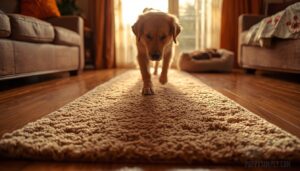
Slippery floors are one of the sneakiest sources of joint strain for arthritic dogs. Every time your dog scrambles for footing, those joints absorb extra stress. Non-slip surfaces fix that fast.
| Feature | Why It Matters |
|---|---|
| Rubber Backing | Grips the floor, prevents sliding |
| Traction Texture | Gives paws something to push against |
| Correct Sizing | Covers the full path, no gaps |
| Washable Materials | Easy to clean, stays hygienic |
Place runners with secure edge placement along high-traffic routes your dog uses daily.
Use Orthopedic Memory-foam Bedding

Think of memory foam dog beds as a full-body pressure relief system. Orthopedic bedding uses viscoelastic foam that softens with body heat, conforming to your dog’s shape for even pressure distribution across hips and shoulders.
Firm edge support helps arthritic dogs push themselves upright.
Look for removable covers for easy cleaning, and built-in temperature regulation to keep joints comfortable year-round — key home modifications for arthritic dogs.
Install Ramps or Pet Stairs
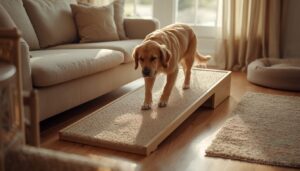
Jumping stresses arthritic joints more than most people realize. Ramps and pet stairs are simple mobility aids for dogs that remove that daily strain entirely. When choosing one, keep these key factors in mind:
- Ramp Angle Adjustment: A gentler slope means less force on hips and knees
- Stair Width Considerations: Wider steps give arthritic dogs room to reposition safely
- Non‑Slip Treads: Carpeted or textured surfaces prevent scrambling on painful joints
- Landing Pad Size: A wider landing lets your dog pause and reset between steps
- Weight Capacity Check: Always confirm the structure holds your dog’s full weight
Nonslip surfaces throughout make these home modifications for pets far more effective.
Raise Food and Water Bowls
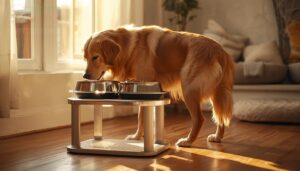
Bending low to eat puts real strain on arthritic necks and shoulders. Elevated feeding stations solve this quietly and effectively.
Look for these features when choosing one:
| Feature | What It Does | Why It Matters |
|---|---|---|
| Adjustable height | Matches bowl to dog’s shoulder level | Reduces neck and spine strain |
| Tilted angle | Angles food toward the mouth | Limits awkward neck flexion |
| Non-slip base | Keeps the stand from sliding | Prevents sudden posture shifts |
| Mess reduction | Catches dropped kibble | Keeps floors dry and safer |
| Position flexibility | Works standing or seated | Adapts as mobility changes |
Raising food and water bowls is one of the simplest home modifications for canine arthritis you can make today.
Keep Essentials Within Easy Reach

Once the bowls are raised, look around at everything else your dog depends on daily. Keeping water, toys, and bedding within a few steps cuts down unnecessary movement.
Think waist-level storage for your own supplies — leashes, medications, wipes. Pull-out drawers and clear labeling help you grab things fast.
Slip-free pathways between rest spots matter too. Small changes, big relief.
Limit Jumping on Furniture and Into Cars

Once essentials are easy to reach, the next piece is controlling where and how your dog moves vertically. Every jump down — from a couch, bed, or car — puts sudden force through already-inflamed joints.
Here’s how to build safer alternative access points at home:
- Install pet stairs or a ramp near furniture for low-impact mobility
- Use vehicle step solutions like fold-out ramps for car exits
- Practice jump prevention commands like "wait" before exits
- Choose surface texture choices — carpet-topped steps grip better than smooth wood
- Add assistive devices like ramps, stairs, and traction grips throughout the home
These simple environmental modifications reduce joint pain and improve your dog’s daily mobility.
Manage Weight and Diet

Extra weight is one of the biggest drivers of joint pain in arthritic dogs — even a few extra pounds make a real difference. The good news is that diet is something you can actually control at home.
Here’s what to focus on.
Aim for a Healthy Body Condition Score
body condition scoring as your dog’s personal health report card. Using standardized scoring on a 1–9 scale, you assess rib palpation, tailhead fat, and neck waist assessment to find their ideal score range of 4–5.
Maintaining healthy weight matters deeply for arthritic dogs — especially obese dogs, where even small shifts in diet and weight management reduce painful joint pressure noticeably.
Cut Calories to Reduce Joint Strain
Once you know your dog’s body condition score, calories become your clearest lever. For obese dogs, losing just 6–9% of body weight meaningfully reduces joint strain. Portion control strategies — like measuring meals instead of eyeballing — make a real difference. Low-calorie food swaps, meal timing adjustments, and calorie tracking tools support maintaining a healthy weight without sacrificing the protein preservation techniques your dog needs.
- Watch your dog rise more easily from rest
- See them walk with less hesitation
- Notice fewer "bad pain days" during cold snaps
- Feel the doing something that actually helps
- Know you’re giving their joints a fighting chance
Limit Treats and Table Scraps
Treats feel like love — but they add up fast. Even small bites chip away at your calorie budgeting goals, and overfeeding derails weight management quickly.
Keep treats to 10% of daily calories, use safe treat portioning with low-calorie alternatives like carrot slices, and skip table scraps entirely.
Toxic food awareness matters here too — grapes, onions, and xylitol can cause serious harm.
Feed a High-quality, Protein-rich Diet
Protein is the foundation of muscle, and muscle protects joints. Focus on Complete Protein Sources — lean meats, fish, eggs, and low‑fat dairy — as the core of a balanced diet.
Rotating Protein Variety across poultry, salmon, and legumes broadens the amino acid profile.
Fish naturally provides Omega-3 Enrichment, making it a smart pick for an anti‑inflammatory diet.
Practice Portion Control Strategies to avoid unintended weight gain.
Track Weekly Weight Changes
Weighing your dog weekly turns guesswork into a clear picture. A Consistent Weigh-in Routine — same time, same scale, same spot — makes your Weekly Average Calculation reliable.
Log Formatting Standards matter too: note confounders like flare-ups or travel days.
- Flag Trend Threshold Alerts when averages shift in the same direction for several weeks
- Watch for Seasonal Weight Patterns during colder months when reduced movement creeps weight up
- Share your log with your vet to guide weight management for arthritic dogs
Ask Your Vet About Omega-3s
Omega-3 fatty acids are one of the most practical dietary approaches to reduce joint inflammation — but dosage matters. Ask your vet about EPA/DHA dosage based on your dog’s weight and condition.
Whether you choose fish oil, algae fish oil, or green-lipped mussel, check the label EPA/DHA amounts, not just "total omega-3." Your vet will also flag GI upset monitoring needs and whether vitamin E balance requires attention.
Keep Exercise Gentle

Exercise isn’t off the table just because your dog has arthritis — it’s actually essential. The trick is keeping it low-impact and consistent so joints stay mobile without extra strain.
Here’s how to do that safely.
Take Short Daily Leash Walks
Short walks are the heartbeat of low-impact exercise for arthritic dogs. Two 10–15 minute sessions daily — rather than one long push — keep joints moving without overloading them.
Focus on three things:
- Leash Length Control: Keep the leash short to manage step cadence and prevent sudden lunges.
- Walk Timing Pacing: Space sessions morning and evening for consistent, manageable rest breaks between.
- Terrain Choice: Stick to flat, familiar routes so footing stays predictable.
Choose Soft Surfaces Like Grass
Think of grass as a natural shock absorber for arthritic joints. Grass cushioning reduces the hard impact concrete sends straight up through your dog’s hips and knees.
Prioritize surface firmness — dry, even patches offer the most stable footing. Moisture management matters too; wet or muddy ground gets slippery fast.
Choose wide, hazard-free edges, and avoid ruts, roots, or uneven borders that can twist a stride mid-step.
Use Swimming or Hydrotherapy
Water does what grass can’t — it holds your dog up. Buoyancy load reduction means aching hips carry far less weight mid-stroke.
Here’s why hydrotherapy works so well:
- Warm water benefits relaxes stiff muscles before movement begins.
- Hydrostatic pressure therapy gently reduces joint swelling.
- Water resistance training builds supporting muscles safely.
- Swimming maintains full-body motion without hard impact.
- At-home pool setup using a shallow tub works for short sessions.
Start with five minutes. Watch for comfort.
Try Gentle Range-of-motion Exercises
After water work, bring things even slower — right to the mat.
Range-of-motion exercises keep joints moving without asking much of your dog. Using Passive Joint Cycling, you gently guide each leg through Smooth Flexion Extension — bending and straightening in a calm, rhythmic pattern. That’s Assisted Limb Guidance: you do the work, not them.
| Movement | Repetition Guidelines | What to Watch |
|---|---|---|
| Hip cycle | 2–5 reps | No flinching or pulling away |
| Knee flexion | 2–5 reps | Steady breathing, soft muscles |
| Ankle circles | 2–5 reps | No growling or stiffening |
Use a Supportive Towel Hold under the limb for extra comfort. This low-impact exercise pairs beautifully with massage therapy — together, they’re the quiet backbone of physical rehabilitation at home. Keep each session under five minutes.
Add Low-strain Mental Games
Mental work counts as low-impact exercise — and arthritic dogs still need it.
Puzzle Toy Placement matters: use Floor Level Rewards so your dog doesn’t stretch or jump. Short Session Timing keeps joints from stiffening between searches.
- Place puzzle feeders on supportive bedding with Gentle Positioning
- Use environmental enrichment like scatter feeding or hide-and-seek
- Finish with Calm Game Endings — one easy win, then rest
Shorten Activity After Flare-ups
After a flare-up, don’t stop moving entirely — just dial it back. Pacing Strategies and Activity Burst Limits protect joints while preserving function. Cut walks to 5–10 minutes, then rebuild through Incremental Return as comfort improves.
Symptom Monitoring is your guide: watch for limping or irritability after each low‑impact exercise session.
| Flare Phase | Activity Guidance |
|---|---|
| Active flare | 5–10 min low-impact activities |
| Improving | Gradually increase Rest Duration |
| Recovered | Return to prior routine slowly |
Ease Pain at Home

You don’t need a prescription to take the edge off your dog’s pain — there’s a lot you can do right at home between vet visits. Small, consistent habits make a real difference in how comfortable your dog feels day to day.
Here are six simple ways to ease that discomfort.
Apply Warm Compresses Before Activity
Think of a warm compress as your dog’s pre-walk warm-up — it loosens stiff tissue before you ever clip on the leash. Heat therapy, especially moist heat, offers real moist heat benefits by boosting circulation and improving joint flexibility, boosting right where it’s needed.
Try this simple pre-walk routine:
- Soak a cloth in warm water and wring it out, applying moist heat for 5–10 minutes before activity.
- Keep temperature safety in mind — warm, never hot, so your dog stays comfortable throughout thermal therapy.
- Focus heat duration on the stiffest joints to enhance pain relief and reduce joint inflammation before movement.
Use Cold Packs After Exercise
After your dog finishes a low-impact exercise session, cold therapy becomes one of your best pain management strategies. Apply a wrapped cold pack — Wrap Safety matters here — within 20–30 minutes for effective inflammation reduction.
Use Temperature Control by keeping sessions to 10–15 minutes. Focus on Joint Targeting: press gently over the sorest spot. With Skin Monitoring, watch for unusual redness and remove the pack immediately if your dog pulls away.
Try Gentle Massage for Sore Muscles
Massaging your arthritic dog is one of the most rewarding things you can do between vet visits. With the right massage techniques, you can ease muscle tension and support physical rehabilitation at home.
Keep these Soft Tissue Focus principles in mind:
- Limit Session Duration to 2–3 minutes per area
- Maintain Limb Support so joints aren’t pulled or rotated
- Stick to consistent Massage Frequency — once daily works well
- Watch Gait Evaluation after each session for improvement
- Avoid inflamed joints; target surrounding muscles only
Use Traction Socks or Paw Grips
Slippery floors are one of the sneakiest pain triggers for arthritic dogs. Traction grips and dog socks act as mobility aids for dogs, giving paws the grip they lose on non‑slip flooring alternatives like tile.
Follow a Proper Sizing Guide — measure paw width carefully.
Sock Material Choice matters too; softer fabrics reduce rubbing.
For Seasonal Traction Use outdoors in winter, waterproof soles help.
Schedule a Vet Safety Evaluation if gait changes.
Keep Heat and Cold Treatments Brief
Less is more regarding heat and cold therapy for joint pain. Both work best in short bursts — not marathon sessions.
- Session Length Limits: warm compresses for 5–10 minutes; cold packs no longer than 20 minutes
- Barrier Use Guidelines: always wrap packs in a thin towel first
- Skin Check Routine: check for redness or irritation after every session
- Temperature Monitoring: keep warmth comfortable, never hot enough to redden skin
- Alternating Therapy Breaks: let skin return to normal temperature between applications
These thermal and heat therapy benefits for dog joints only hold when you respect the limits.
Watch for Signs of Worsening Pain
Your dog can’t say "this hurts more than yesterday" — but his body will tell you clearly.
Your dog cannot voice his pain, but his body speaks clearly if you know what to watch for
| Warning Sign | What You’ll Notice | When It Appears |
|---|---|---|
| Pain Spike Postwalk | Limping or reluctance to stand after normal routes | Within 30–60 minutes post-activity |
| Vocalizations Grooming | Yelping or flinching during brushing or handling | During routine care |
| Play Fatigue | Stops activity earlier, lies down mid-game | After minimal exertion |
Behavioral guarding, heat sensitivity around joints, and increasing stiffness in joints signal arthritis flareups requiring veterinary attention.
Know When to Call The Vet

Home care goes a long way, but it has real limits. Some things only a vet can handle — from confirming the diagnosis to prescribing the right pain relief.
Here’s what to bring up at your next appointment.
Get a Proper Diagnosis and Exam
Getting a clear picture of what’s happening starts with a thorough vet consultation. Your vet uses Veterinary History Taking to learn when pain appears and which joints are affected.
A hands-on physical examination checks Range of Motion, gait, and swelling.
Radiographs provide a Joint Imaging Review, while a Pain Scoring System helps track severity.
This clinical diagnosis guides everything that follows.
Ask About Blood Work Before NSAIDs
Once your vet confirms arthritis, pain relief often means NSAIDs — but never before a full blood panel.
Before prescribing, your vet needs:
- Kidney Function Tests, and Baseline Creatinine to check how well the kidneys filter waste
- Liver Enzyme Screening (ALT, AST) to confirm the liver can handle medication safely
- CBC Baseline and Urinalysis Screening to flag anemia or hidden bleeding risk
This vet consultation protects your dog from avoidable harm.
Discuss Prescription Pain Relief Options
Once blood work clears the way, your vet can tailor a prescription plan that fits your dog’s specific pain level.
| Pain Relief Type | Common Options | What to Know |
|---|---|---|
| NSAID Choices | Carprofen, grapiprant, meloxicam | Daily tablets; requires monitoring |
| Opioid Use | Tramadol | Short-term flare control |
| Topical Analgesics | Prescription gels | Targets local joint areas |
| Injectable Therapies | Adequan injections | Protects cartilage over time |
| Combination Strategies | Anti-inflammatory medication plus home care | Lowers overall drug reliance |
Review Supplements With Your Veterinarian
Prescription meds and supplements often work hand-in-hand — but your vet needs to review both together. Nutraceuticals like glucosamine supplements, chondroitin supplements, and omega-3 fatty acids sound harmless, yet dosage accuracy, interaction screening, and ingredient verification all matter.
Bring the exact label to your appointment.
Your vet will check for:
- Correct EPA/DHA amounts in omega-3 products
- Safe glucosamine and chondroitin forms for your dog’s size
- Overlap with current prescriptions or clotting concerns
- Quality assurance from reputable, dog-specific brands
- A monitoring outcomes plan to track real improvement
Recheck if Falls or Limping Increase
If your dog starts slipping more often, limping after short walks, or showing difficulty or reluctance to stand, don’t wait. These progression signs — including increased joint stiffness and mobility loss — signal a pain flare that needs veterinary review.
Gait monitoring and balance assessment at home matter, but medication side effects can also trigger sudden changes. Early detection of canine arthritis worsening protects your dog.
Share a Mobility Journal or Video Clips
A mobility diary and timestamped video logs give your vet something words alone can’t — proof of what daily life actually looks like. Film from consistent recording angles, same spot each time, capturing sit-to-stand and short walks.
Add weather context notes since cold days often explain symptom spikes. Follow simple file naming conventions and privacy redaction tips when sharing.
This owner education habit directly shapes vet recommended treatment and tracks real mobility improvement.
Frequently Asked Questions (FAQs)
How can I Help my Dog with arthritis?
Helping your dog with arthritis means combining low-impact exercise, maintaining a healthy weight, joint supplements, and home modifications.
Canine Physical Therapy, Acupuncture Sessions, CBD Oil Use, Therapeutic Laser, and Assistive Mobility Devices can also ease daily discomfort considerably.
What should I Feed my dog if he has arthritis?
joint-friendly ingredients like omega-3 fatty acids, glucosamine, and chondroitin sulfate. Anti-inflammatory nutrients help reduce joint inflammation naturally.
Ask your vet about veterinary prescription diets or custom meal plans suited to your dog.
Can dietary supplements help a dog with arthritis?
Yes, they can help. Glucosamine, chondroitin sulfate, and omega-3 fatty acids support joint comfort over time. Results build slowly, not overnight. Always get vet approval before starting any supplement.
What are the 4 stages of arthritis in dogs?
Arthritis in dogs progresses through four stages.
Stage 1 shows subtle early joint changes, stage 2 brings mild osteoarthritis symptoms, stage 3 indicates moderate progression, and stage 4 means severe arthritis effects requiring immediate veterinary guidance.
What is canine arthritis?
Canine arthritis — more precisely, canine osteoarthritis — is a progressive joint disease driven by cartilage degeneration and an ongoing inflammatory joint process that slowly erodes your dog’s comfort and mobility over time.
Is arthritis painful for dogs?
Absolutely — chronic pain in dogs with arthritis is real and relentless.
Behavioral indicators like limping, irritability, and restlessness all signal chronic discomfort rooted in inflammation that quietly chips away at your dog’s quality of life.
How can weight loss help a dog with arthritis?
Losing even a few pounds takes real pressure off sore joints.
Reduced Joint Load means less pain with every step, and lower inflammation helps improve mobility, muscle preservation, and safer activity through simple weight control.
Does walking help a dog with arthritis?
Yes, walking helps. Short, low-impact exercise reduces stiffness, promotes muscle strengthening, and aids calorie burning for weight management.
It also boosts joint mobility in senior dogs with arthritis symptoms — just keep it gentle.
How do I protect my arthritic dog?
Protecting your arthritic dog means pairing smart environmental modifications to reduce joint pain with consistent daily habits — small, steady changes that build a safer, more comfortable life for them.
What is the best treatment for arthritis in dogs?
There’s no single best treatment — it’s a combination. Most dogs do well with anti-inflammatory medication, omega-3 fatty acids, glucosamine, physical therapy, and weight management working together under veterinary guidance.
Conclusion
Arthritis doesn’t erase who your dog is—it just changes the terrain. Learning how to help a dog with arthritis at home is really about reading the small signals, adjusting the environment, and staying one step ahead of the pain.
Every ramp installed, every warm compress applied, every shortened walk on soft grass is a quiet act of devotion.
Your dog can’t tell you what helps most. But their willingness to try again each morning will.
- https://www.greatpetcare.com/dog-health/dog-arthritis-treatment-plan/
- https://www.pdsa.org.uk/pet-help-and-advice/pet-health-hub/conditions/arthritis-in-dogs
- https://qurist.in/blogs/news/how-to-help-a-dog-with-arthritis-at-home
- https://yumove.co.uk/blogs/dog-expert-advice/how-to-help-a-dog-with-arthritis-at-home
- https://vetslovepets.com.au/blogs/dog/arthritis-in-dogs