
This site is supported by our readers. We may earn a commission, at no cost to you, if you purchase through links.

Most dog owners spend researching food, yet grab the first bowl they see at the checkout aisle. That split-second decision affects how your dog eats, how fast they eat, and whether bacteria quietly build up between meals.
A bowl that’s too deep traps a flat-faced breed’s face; one that’s too shallow sends kibble sliding across your floor.
Size, material, and design each play a direct role in your dog’s comfort and digestive health. Knowing what to look for makes the choice straightforward—and the options far less overwhelming than the pet store aisle suggests.
Table Of Contents
- Key Takeaways
- Choose by Size, Material, Eating Style
- Pick The Right Bowl Size
- Compare Dog Bowl Materials
- Prioritize Safe, Durable Materials
- Consider Your Dog’s Breed
- Choose for Eating Behavior
- Use Slow Feed Bowls Wisely
- Evaluate Elevated Dog Bowls
- Look for Practical Features
- Clean and Replace Bowls Properly
- Frequently Asked Questions (FAQs)
- Conclusion
Key Takeaways
- Match your dog’s bowl to its muzzle size, eating speed, and breed traits — a flat‑faced dog needs a wide, shallow bowl, while a fast eater needs ridges to slow it down.
- Stainless steel (grade 304) is the safest, most durable material you can choose, since it resists bacteria, handles daily washing, and won’t leach anything into your dog’s food.
- A damaged bowl isn’t just ugly — cracks and scratches harbor up to ten times more bacteria than an intact surface, so replace any chipped, rusted, or deeply scratched bowl right away.
- Bowl size, elevated height, and slow-feeder design all affect digestion and joint health, so match each feature to your dog’s weight, age, and how it actually eats.
Choose by Size, Material, Eating Style
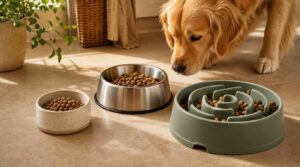
Picking the right dog bowl comes down to three things: your dog’s size, what it’s made of, and how your dog actually eats. Get those right, and mealtime becomes a lot smoother for both of you. Here’s what to look at first.
If you’re often on the go, it’s also worth thinking about dog food bowls built for outdoor use — portability matters more than you’d think.
Match Your Dog’s Muzzle
Start with a simple measurement: your dog’s snout length, from the stop between the eyes to the tip of the nose. Then check muzzle width just below the eyes.
These two numbers guide you toward a right-sized dog bowl — one wide enough for comfort, narrow enough to prevent ear contact.
Adjustable strap designs and breathable materials with a quick release buckle help fine-tune the fit.
Consider Eating Speed
Once you know the right fit, think about how your dog actually eats. Some dogs take their time, while others inhale food in seconds. Eating speed matters more than most owners realize.
- Slow feeders extend meal duration and reduce gulping
- Puzzle feeders add mental stimulation during meals
- Slower pace promotes better digestion and stable energy
- Meal pacing lowers bloat risk over time.
Check Cleaning Needs
Eating speed isn’t the only thing that shapes your choice. How easy a bowl is to clean matters just as much.
Stainless steel wipes down quickly, withstands daily hot-water washing, and resists bacterial contamination. Plastic scratches and traps odors over time.
Always dry bowls completely before reuse — moisture encourages mold. Dishwasher-safe options simplify your routine without cutting corners on bowl hygiene.
Think About Mobility
If you’re often on the go, how a bowl travels matters. Collapsible travel dog bowls fold flat and fit easily in a bag or cup holder. Look for a wide stable base and non-slip rubber bottom to prevent tipping indoors, and adjustable height options or foldable design for flexible setups anywhere.
- Lightweight portable bowls reduce fatigue on long outings
- Collapsible silicone compresses small for packing
- Slip-resistant rims keep bowls steady on smooth floors
- Adjustable stands adapt as your dog grows
Prioritize Food-safe Materials
The material your dog eats from matters more than most people think.
Food-safe materials like grade 304 stainless steel are non-porous and resist bacteria between washes. Ceramic works well too, but only with a lead-free glaze.
Avoid unmarked plastics — stick to certified food-grade options only. When in doubt, check for third-party safety certification before buying.
Check the product’s food‑grade recycling codes to verify its safety.
Pick The Right Bowl Size
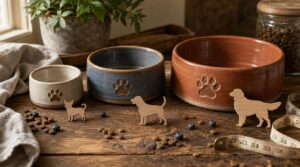
Bowl size matters more than most people think. A bowl that’s too big or too small can make mealtime awkward or even messy for your dog. Here’s what to know about sizing for every type of pup.
Small Dog Bowl Sizes
For small dogs and puppies, bowl size matters more than most owners expect. A bowl that’s too wide forces awkward reaching; one that’s too deep hides the food. Look for a 4 to 6 inch diameter with shallow depth around 1 to 1.5 inches — that’s the rightsized dog bowl for toy breeds.
- Diameter fit: 4–6 inches suits most small muzzles
- Shallow depth: 1 to 1.5 inches eases short-snout access
- Volume guidelines: 1–2 cups capacity covers daily needs
- Height range: ground level works for dogs under 10 pounds
- Development stage: adjustable stands grow with your puppy
Medium Dog Bowl Sizes
Most medium-sized dogs do well with a 6 to 8 inch diameter bowl — wide enough for a comfortable bite, not so wide that food spreads thin. Depth should sit around 2 to 3 inches, with a capacity of 3 to 4 cups. That rightsized dog bowl keeps mealtime tidy and posture natural.
| Feature | Recommendation | Why It Matters |
|---|---|---|
| Diameter | 6–8 inches | Fits muzzle comfortably |
| Depth | 2–3 inches | Prevents overreaching |
| Capacity | 3–4 cups | Matches medium meal portions |
| Elevated height | 4–6 inches | Aligns head with shoulders |
| Bowl weight | 0.5–1 pound | Stays stable while eating |
Bowl weight and footprint matter here too. A heavier base — around half a pound to one pound — keeps the bowl from sliding on hardwood or tile. When bowl size matters this much, those small details add up fast.
Large Dog Bowl Sizes
Large dogs need room — not just in your home, but in their bowl. For large dog breeds, look for a base diameter of 8 to 12 inches and a depth of 3 to 4 inches. Here’s what to keep in mind:
- Elevation height should sit between 8 and 12 inches
- Weight stability matters — empty bowls weigh 1.2 to 2.5 kg
- Growth adaptability calls for adjustable stands for younger large breeds
- Dog size considerations include snout length and feeding posture
These details shape every meal.
Proper Bowl Capacity
Think of bowl capacity as a portion control tool built into your dog’s routine.
A good rule: leave 1 to 2 ounces of headspace beyond each meal.
This tip pairs especially well with a properly sized setup—check out these large breed dog food bowls that give your pup enough room without encouraging overfilling.
Small dogs do well with 4 to 6 ounce bowls, medium dogs need 12 to 16 ounces, and large dogs benefit from 24 to 32 ounces to reduce constant refills throughout the day.
Avoid Overfilled Bowls
An overfilled bowl is basically an open invitation for food spillage. Choosing a bowl with proper capacity — matched to each meal — keeps portions controlled and mess minimal.
Spillproof dog bowls with a spill-resistant rim and weighted base help contain what’s there. If you’re feeding multiple dogs, compartmentalized bowls with an overflow guard make portion calibration straightforward and tidy.
Compare Dog Bowl Materials
The bowl you pick matters more than most people think — and material is one of the biggest decisions you’ll make. Each option has its own mix of pros, cons and best‑fit situations, so there’s no single right answer for every dog.
Here’s a closer look at the five most common materials to help you find the best match.
Stainless Steel Bowls
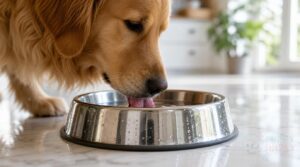
Stainless steel is the go-to choice for most dog owners, and it’s easy to see why.
A grade 304, food-grade stainless steel bowl won’t leach anything into your dog’s food, resists rust with repeated washing, and keeps bacteria from settling in.
Thick gauge walls and a mirror finish hold up to daily drops and hide everyday wear, making it one of the most durable dog bowl materials you can buy.
Ceramic Dog Bowls

Ceramic dog bowls bring a different kind of appeal. A high quality ceramic bowl is heavy enough to stay put during meals, and the lead-free glaze creates a smooth, non-porous surface that resists bacteria and odors.
- Glaze durability protects against staining
- Weight stability prevents tipping
- Easy cleaning — dishwasher-safe in most cases
Just watch for chips — a cracked bowl should be replaced right away.
Plastic Dog Bowls
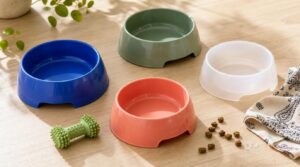
Plastic dog bowls are the budget-friendly pick — usually $5 to $15 — and they’re lightweight enough to move around easily.
Look for BPA-free, food-safe plastic to avoid phthalates and chemical leaching. Many are UV-resistant for outdoor use.
The downside? Scratches trap bacteria fast, so replace any gouged or discolored bowl promptly.
Some brands use recycled, eco-friendly materials without sacrificing impact resistance.
Silicone Travel Bowls

If plastic feels too fragile for the trail, silicone travel bowls are worth a look. They collapse flat, clip to your bag via a carabiner attachment, and hold up through thousands of folds.
Made from BPA-free, non-toxic food-grade silicone, they’re microwave-safe and dishwasher-friendly. Rinse promptly after wet meals — silicone’s odor resistance fades fast without proper cleaning.
Glass Dog Bowls
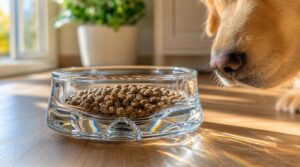
Glass bowls aren’t the obvious pick, but they bring something most materials can’t: a crystal clear view of every portion. That visibility makes it easier to catch overfeeding early.
Glass is completely inert, so it won’t leach chemicals — making it a reliable nontoxic pet dish. Most are dishwasher-safe, non-porous, and odor-resistant.
Just replace any bowl that chips.
Prioritize Safe, Durable Materials
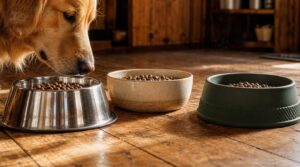
Not every bowl that holds food is actually safe for your dog. The material it’s made from matters more than most people realize, and some options hold up far better over time than others. Here’s what to look for when safety and durability are the priority.
Food-grade Stainless Steel
Food-grade stainless steel is one of the safest choices you can make for your dog’s bowl.
Look for grade 304 or 316, which means the steel meets strict composition standards for corrosion resistance and low metal migration.
It won’t harbor bacteria, tolerates daily dishwasher cycles, and lasts years without degrading — a genuinely non-toxic pet dish built to stay clean.
Lead-free Ceramic Glaze
Ceramic bowls can be a great pick — but the glaze matters. Always check that a ceramic bowl uses a lead-free glaze, since older or unverified ceramics can leach lead contamination into your dog’s food over time.
- Glaze composition commonly includes silica, zinc oxide, and boron compounds for a dense, non-porous finish
- A compatible firing range (1020–1180°C) ensures the glaze bonds properly, reducing leaching risk
- Color and gloss stay vibrant without compromising food-grade ceramic safety
- Well-fired glazes resist acids and resist scratching, making them a reliable nontoxic pet dish option
BPA-free Plastic Only
If you’re leaning toward plastic, make sure it’s BPA-free certified. Look for labels indicating FDA or EU food contact compliance — these confirm the bowl meets safe migration standards. HDPE and polypropylene are the most common food-safe materials used, and both resist cracking under normal use.
Keep in mind that plastic has an odor retention problem over time, even with regular washing.
Scratch-resistant Surfaces
Scratches are more than cosmetic — they’re places where bacteria hide. That’s why scratch-resistant surfaces matter for pet bowl durability and hygiene. Look for bowls with a scratch resistance rating of at least 3H, or those featuring hardness coatings with a Mohs rating of 6 or higher.
- Nanocoating protection fills micro-pores in ceramic surfaces, reducing scratch visibility
- Stainless steel inox maintains surface durability through thousands of cleaning cycles
- DLC coatings resist gouges from metal scoops, preserving material durability long-term
Avoid abrasive cleaners — they dull protective finishes fast.
Replace Damaged Bowls
A cracked or chipped bowl isn’t just an eyesore — it’s a health risk. Damaged surfaces can harbor 10 times more bacteria than intact bowls, and broken rims create sharp edges that cut your dog’s tongue or mouth. Replace damaged bowls within 24 hours of noticing any crack, chip, or rust spot.
A cracked bowl harbors ten times more bacteria than an intact one — replace it within 24 hours
| Damage Type | Replacement Urgency |
|---|---|
| Visible cracks or chips | Within 24 hours |
| Rust or corrosion spots | Within a few days |
| Warped or bent shape | Immediately |
| Faded or deep scratches | As soon as possible |
| Worn non-slip base | Before next meal |
Consider Your Dog’s Breed
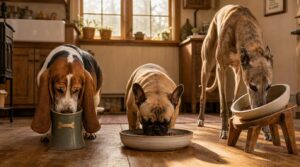
Your dog’s breed shapes almost every part of the bowl decision. From ear length to muzzle shape to how fast they’re still growing, the details matter more than most people realize. Here’s what to keep in mind based on your dog’s specific needs.
Long-eared Dog Bowls
Dogs with long ears, like the Cocker Spaniel, need a bowl designed with a narrow opening and a deep well interior. This keeps ears from dipping into food or water, which matters a lot for ear infection prevention.
Look for an odor-resistant surface and lead-free ceramic or stainless steel for hygiene and material safety.
Flat-faced Breed Needs
Flat-faced breeds like the French Bulldog need a bowl built around their unique anatomy. A wide, shallow bowl gives their muzzle room to reach food without pressing against the sides.
Pair that with a raised rim for better nasal clearance, a non-slip base to prevent spills mid-snort, and stainless steel for easy cleaning around sensitive facial folds.
Giant Breed Bowl Size
Giant breeds like Great Danes and mastiffs need bowls built for their scale. Look for a Wide Opening Design — usually 10 to 12 inches in diameter — with a Shallow Depth Bowl to reduce neck bending.
A Durable Giant Feeder with Stable Base Support and an Adjustable Stand Height of 6 to 12 inches keeps feeding comfortable and mess‑free.
Puppy Growth Considerations
Puppies grow fast — and their bowls should keep up. By 12 weeks, most pups hit about 25% of their adult weight, so starting with a correctly sized bowl matters.
Choose a BPA-free or stainless steel bowl that’s easy to clean, since puppies teethe and chew edges.
An adjustable-height stand grows with them, and a slow feeder promotes steady digestion during rapid growth spurts.
Multi-dog Household Feeding
Running a multi-dog household means every dog needs its own feeding zone. Separate bowls, consistent spots, and custom portion sizes by weight and age prevent resource guarding and keep mealtimes calm. A few things help:
- Use non-slip stainless steel bowls for easy daily hygiene
- Schedule fixed meal times to monitor each dog’s appetite
- Keep zones clearly defined with mats or baby gates
Choose for Eating Behavior
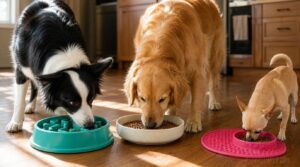
Your dog’s eating habits say a lot about what kind of bowl will actually work for them. A dog that inhales their food in seconds has different needs than one who grazes nervously or pushes kibble across the floor. Here’s what to look for based on how your pup actually eats.
Fast Eaters
Some dogs treat mealtime like a race — inhaling food in under a minute, barely chewing. That kind of rapid air intake raises the risk of bloat, choking, and poor digestion.
| Problem | Solution |
|---|---|
| Gulping and swallowing air | Use slow feeder bowls |
| Short meal duration | Extend with maze designs |
A slow feeder bowl with ridges forces smaller bites, improving chewing practice and supporting healthier digestion naturally.
Messy Eaters
Some dogs wear their meals — flinging kibble, splashing water, and leaving the floor looking like a disaster zone.
A non-slip base keeps the bowl anchored during enthusiastic eating, while a wide, stable rim contains spills before they spread. No-spill bowls and anti-spill designs cut floor mess noticeably. Smooth interior finishes make cleanup faster, and odor-resistant materials keep the feeding area fresher between meals.
Anxious Eaters
Some dogs approach mealtime like it’s something to survive, not enjoy.
Calm mealtime routines matter most here — predictable schedules and a quiet, low-stimulus space help anxious eaters feel safe enough to settle in.
A slow-feed bowl or lick mat slows the pace gently, reducing gulping while giving your dog something focused to do.
Food-motivated Dogs
If your dog treats every meal like it’s their last, you’re probably feeding a food-motivated dog.
- Use a slow puzzle feeder to make meals last longer
- Rotate rewards to avoid reward fatigue
- Practice food motivation training at mealtimes
- Apply food portion control to prevent overfeeding
- Add enrichment toys between meals for balance
Senior Dog Comfort
Senior dogs eat differently — slower, stiffer, and often more cautious. A raised feeding bowl keeps their head level with their shoulders, reducing strain on arthritic joints. Pair that with a non-slip base so the bowl stays put.
For dogs who still gulp, a slow feeder bowl helps. Clean bowls daily, since aging immune systems are more vulnerable to bacteria.
Use Slow Feed Bowls Wisely
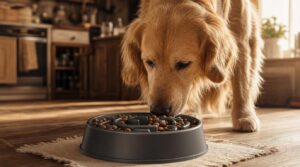
Slow feed bowls aren’t just for fast eaters — they’re a smart tool for any dog that often bolts meals or struggle with digestion. But like any tool, they work best when you know how to use them. Here’s what to keep in mind before you pick one and put it to work.
Ridges and Maze Designs
Slow feeder bowls come in two main designs: ridge-based and maze-based.
Ridge height variation — usually 2 to 6 millimeters — disrupts fast lapping by forcing your dog to navigate around raised barriers. Maze layouts use pathway complexity to pocket kibble into corners, stretching feeding duration naturally.
Both approaches support eating speed management without stressing your dog during meals.
Reducing Gulping
Gulping happens fast — your dog inhales food before their stomach has a chance to signal fullness. A slowfeed bowl physically interrupts that pattern by forcing mindful chewing around ridges and pockets, cutting swallowed air noticeably.
Pairing the bowl with consistent meal timing and fresh water nearby promotes steadier eating and lowers the risk of discomfort after meals.
Supporting Better Digestion
When eating slows down, digestion gets a real chance to catch up.
A slow feeder bowl reduces air intake and gives your dog’s gut time to respond properly. Pair that with consistent meal timing and food-grade stainless steel bowls that stay clean between meals, and you’re building habits that support steady digestion and lower bloat prevention risks naturally.
Choosing Difficulty Level
Not every dog needs the same feeding challenge. A dog just starting with a slow feeder should begin with shallow ridges and gradual progression before moving to tighter maze designs.
Match the puzzle complexity to how your dog eats — fast and frantic dogs can handle higher difficulty, while anxious eaters do better with gentler speed control settings.
Cleaning Maze Bowls
Maze bowls are great until it’s time to clean them. Those deep grooves trap bits of food and moisture fast. Use a flexible bottle brush to scrub tight corners after each meal. Here’s what keeps them hygienic:
- Scrub deep maze grooves after every use
- Use dishwasher-safe mazes when possible
- Apply a baking soda paste for odor removal
- Air-dry upright for mold prevention
- Replace bowls with persistent cracks or odors
Evaluate Elevated Dog Bowls
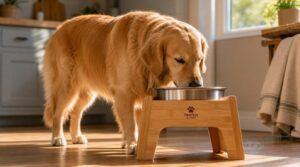
Elevated dog bowls aren’t just a trend — they genuinely change how your dog eats, and for some pups, that difference really matters.
Whether your dog is a senior slowing down or a large breed with a long neck, right feeder height can make meals more comfortable.
Here’s what to keep in mind when deciding if an elevated bowl is the right fit for your dog.
Neck Strain Relief
Bending down to floor level puts real stress on a dog’s neck and spine over time. Elevated bowl height keeps the head aligned with the shoulders during meals, which maintains elevated feeding posture and reduces daily strain.
For most dogs, this simple posture alignment feeding adjustment makes mealtime more comfortable and protects joint health long-term.
Senior Dog Support
As dogs age, their joints need more support at mealtime. An elevated bowl reduces how far a senior dog must lower its head, easing neck and shoulder strain. Pair this with joint-friendly materials like stainless steel and a non-skid mat underneath to prevent slipping.
- Keep water easily accessible nearby to support hydration accessibility
- Use a sensory feeding environment — quiet, consistent, low-traffic
- Monitor portions regularly to support weight management as metabolism slows
Large Breed Feeding
Large breeds need more than just a bigger bowl — they need a smarter setup. An elevated feeding bowl places your dog’s head at shoulder level, reducing neck and joint strain during meals. This matters especially as large dog breeds grow and carry more body weight, putting added stress on their skeletal system.
| Dog Weight | Bowl Height | Daily Meals |
|---|---|---|
| 50–80 lbs | 8–10 inches | 2 meals |
| 80–100 lbs | 10–12 inches | 2 meals |
| 100+ lbs | 12+ inches | 2–3 meals |
Pair the right bowl height with slow feeder bowls to promote bloat prevention — a real risk for large breeds that eat too fast. Spreading meals across consistent times also helps manage calorie density and promotes long-term joint support and growth nutrition.
Adjustable Feeder Stands
An adjustable-height stand lets you dial in the exact position your dog needs — no guesswork. Most models offer a height adjustment range from 8 to 24 inches, covering small breeds up to giants.
A stability base design with non-slip feet keeps everything steady, even when your dog nudges the bowl mid-meal.
Bloat Risk Discussion
Bloat is one of the most serious risks for deep-chested breeds, and elevated bowls are often at the center of that conversation. The research is genuinely mixed — some vets link raised feeders to higher bloat risk, while others point to fast feeding and air swallowing as the real culprits.
When in doubt, ask your veterinarian.
Look for Practical Features
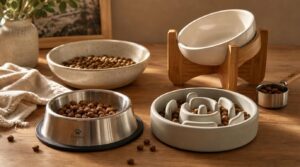
Beyond size and material, the little design details can make a real difference in your daily routine. Some features protect your dog’s health, while others just make feeding time less messy for you. Here are the practical features worth looking for.
Non-slip Bowl Bases
A sliding bowl is one of the most frustrating mealtime problems you can fix easily. Non-slip bases keep your dog’s bowl exactly where you placed it, even during enthusiastic eating.
Here’s what to look for:
- Rubber base grip — thick rings that lock onto tile or hardwood
- Silicone base grip — flexible, dishwasher-safe, absorbs floor irregularities
- Suction cup base — vacuum-seals to smooth surfaces instantly
- Weighted base stability — broad, heavy bases resist tipping without extra attachments
Base material longevity matters too. Rubber and silicone hold their grip through daily washing and rough play, making antislip bowls a genuinely long-term investment.
Rounded Bowl Edges
Once the bowl stays put, the next thing worth checking is the edge.
Rounded bowl edges protect your dog’s muzzle and whiskers during every meal. Sharp or uneven rims can cause muzzle irritation or even chin acne over time.
A smooth, curved edge also means fewer food trap points, making daily cleaning noticeably easier.
Dishwasher-safe Designs
A dishwasher-safe bowl saves real time. Stainless steel bowls handle up to 160°F and won’t transfer metallic taste thanks to their nonreactive finish.
Food‑grade ceramic holds up to 135°C with intact glaze.
Silicone grommets keep bowls secure during wash cycles. For odor control, silicone and steel both clean thoroughly without retaining smells — a clear win for busy households.
No-spill Bowl Shapes
A clean bowl area starts with the right shape. No-spill bowl designs use features like a raised outer wall and contoured lip to guide food back inward instead of onto your floor.
An anti-tip base keeps things steady, while a rotating inner rim and integrated splash guard work together to contain water and kibble even when your dog nudges the bowl mid-meal.
Travel-friendly Collapsible Bowls
When you’re out hiking or traveling, collapsible bowl portability makes a real difference. These bowls fold down to under an inch thick, slipping easily into a backpack pocket. Most use heat-resistant silicone that’s flexible, BPA-free, and dishwasher-safe — a solid win in any dog bowl material comparison.
Look for these three features:
- Leak-proof lid to prevent spills in transit
- Non-slip textured base for uneven surfaces
- Food-grade silicone construction for safe, easy clean travel
Clean and Replace Bowls Properly
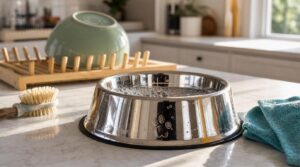
Picking the right bowl is only half the job — keeping it clean is the other half. A dirty bowl can quietly become a source of bacteria, odors, and even illness for your dog. Here’s what you need to know to stay on top of it.
Daily Bowl Washing
Every single day matters regarding daily cleaning of your dog’s bowl. Bacteria like Salmonella can build up within 24 hours, even from dry kibble.
Use hot water above 60°C with a few drops of mild, unscented dish soap, scrub with a dedicated non-abrasive sponge, rinse thoroughly, then air dry completely before refilling.
After Wet Food Meals
Wet food bowls need washing right after each meal — no waiting. The moisture left behind speeds up bacterial growth noticeably faster than dry kibble residue. Rinse the bowl immediately, then wash with hot soapy water. A dishwasher-safe stainless steel bowl makes this routine convenient.
- Wash after every wet meal
- Offer a brief meal rest before clearing the bowl
- Keep a consistent timing routine to stay on top of hygiene
Removing Odors Safely
Even a spotless‑looking bowl can hold onto smells. A quick vinegar rinse — white vinegar diluted with water — neutralizes odors without leaving residue.
For stubborn smells in plastic, a baking soda soak for 15 minutes loosens trapped odor. Stainless steel’s odor‑resistant surface stays fresher longer.
Always dry bowls fully before storing them in a ventilated spot.
Inspecting Chips and Cracks
Run your finger along the rim of your dog’s bowl — if you feel a rough edge or catch a chip, it’s time to look closer. Sharp chipped rims can snag your dog’s lips during feeding, causing small cuts. Fine surface crazing on ceramic glaze signals micro-cracking that traps bacteria, even when the bowl looks clean.
Darkened lines in stainless steel point to corrosion building beneath the surface. Discoloration around any damage site means material breakdown has already begun. Check plastic bowls for hairline cracks spreading from the rim inward — those are easy to miss but matter.
Replacement Timing by Material
Not all bowls age the same way. Here’s a quick guide to replacement timing by material:
- Stainless steel — lasts 10+ years with daily washing
- Ceramic — replace every 12–24 months if chips appear
- Plastic — swap out every 3–6 months; scratches invite bacterial growth
- Silicone — replace after 1–2 years of travel use
- Glass — replace immediately if any crack exceeds 1–2 mm
Frequently Asked Questions (FAQs)
Can smart bowls track my dogs health?
Think of smart bowls as a fitness tracker for your dog. They log food and water intake, sync with an app, and send health alerts when eating patterns shift unexpectedly.
Are antimicrobial bowl coatings actually worth it?
They can help, but they’re not a replacement for regular washing. Silver ion coatings reduce surface bacteria substantially in lab tests, though real-world results depend on routine cleaning too.
How do I feed two dogs separately?
Place bowls at least 3 feet apart and use color-coded bowls so each dog always eats from their own. Supervised mealtimes keep tension low and habits consistent.
Which bowls are safest for puppies chewing?
Stainless steel is your safest bet. It resists chewing, won’t splinter, and stays bacteria-free. Look for food-grade, BPA-free options with chew-proof rims and non-toxic coatings — puppy-safe materials that hold up through teething.
Do eco-friendly bowls hold up long-term?
Eco-friendly bowls vary widely. Recycled stainless steel lasts a decade or more. Bamboo withstands 1,000+ dishwasher cycles. Biodegradable options break down faster, so they’re better for occasional use than daily feeding.
Conclusion
The right bowl is no small feat—it’s one of the simplest ways to support your dog’s health every single day.
Knowing how to choose the right dog food bowl means thinking beyond looks: size, material, and design all shape how comfortably and safely your dog eats.
A flat-faced pup needs room to breathe; a fast eater needs friction.
Match the bowl to your dog, keep it clean, and mealtime takes care of itself.
- https://devildogpetco.com/blogs/the-devil-dog-blog/dog-bowls
- https://www.akc.org/expert-advice/nutrition/choosing-right-dog-bowl
- https://furchildpets.com/blog/best-material-for-pet-bowls
- https://pawhootz.com/dog-and-cat-bowls-which-one-is-best
- https://www.zooplus.co.uk/magazine/dog/dog-adoption/dog-bowl