
This site is supported by our readers. We may earn a commission, at no cost to you, if you purchase through links.

Working from home changed everything—including how your dog spends the day. When you’re on back-to-back calls and your dog is barking at every notification sound, the workday gets messy fast.
A good crate gives your dog a calm, familiar space to settle into while you stay focused. It’s not about shutting them out—it’s about giving them somewhere that feels safe and steady.
The right dog crate for working from home can cut down on interruptions, reduce anxious energy, and make your whole household run smoother.
These three picks are worth a close look.
Table Of Contents
Key Takeaways
- A crate isn’t about keeping your dog out — it gives them a steady, familiar spot to settle so your workday stays focused and interruption‑free.
- Choosing the right size matters more than most people think — too big and your dog feels anxious, too small and they’re uncomfortable all day.
- Crate training works best when you build up slowly, using meals, chews, and calm rewards to help your dog genuinely want to be in there.
- Where you place the crate shapes how well it works — keep it close, out of direct sunlight, and somewhere with good airflow to keep your dog comfortable for hours.
Best Dog Crates for WFH
Finding the right crate makes your workday easier for both you and your dog. Some options stand out for their strength, ease of use, and how well they fit into a home office setup. Here are the top picks worth your attention.
If your dog struggles with stress, narrowing your search to crates designed specifically for anxious dogs can make a real difference in how settled they feel during your workday.
1. MidWest Ultima Pro Heavy Duty Dog Crate
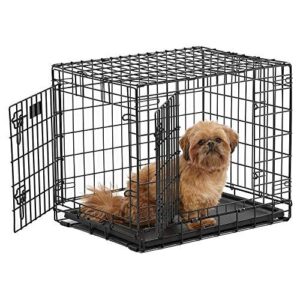
If your dog is a determined escape artist, the MidWest Ultima Pro might be exactly what you need. It’s built with heavy-gauge professional steel — up to 70% heavier than standard crates — so it holds its ground even against persistent chewers or anxious dogs.
The dual front and side doors make placement flexible, and the removable leak-proof pan keeps cleanup simple.
A built-in divider lets the crate grow with your dog from puppyhood through adulthood.
- Heavy-gauge steel construction holds up against persistent chewers and anxious dogs better than most standard crates
- Dual doors and a removable divider give you real flexibility in placement and interior sizing
- The leak-proof pan pulls right out for easy cleaning — no fuss
- At 22 lbs, it’s on the heavier side if you’re moving it around often
- Assembly can be a little finicky — panels sometimes need some jiggling to lock into place
- Slide-bolt latches work fine for most dogs, but they’re not as secure as L-shaped locks if you’ve got a truly determined escape artist
2. MidWest iCrate 18 Inch Dog Crate
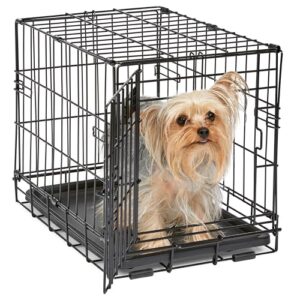
Not every pup needs a heavy-duty fortress. For small breeds and tiny puppies, the MidWest iCrate 18 Inch is a smart, budget-friendly pick. It folds flat in seconds, making it easy to tuck away after work hours.
The leak-proof removable tray accommodates accidents without fuss, and the patented Paw Block latch keeps curious paws from popping the door open. At just over 4 pounds, it’s light enough to move between rooms without a second thought.
- The adjustable divider panel grows with your puppy, so you’re not buying a second crate six months later.
- Folds flat in seconds and weighs just over 4 lbs — easy to toss in the car or store in a closet.
- The leak-proof tray pulls right out for cleaning, which is a lifesaver during potty training.
- Only fits dogs up to 10 lbs, so larger or fast-growing breeds will outgrow it quickly.
- The single door can limit where you place it, especially in tighter spaces.
- Folding it up can pinch your fingers — a small annoyance, but worth knowing going in.
3. Impact Collapsible Aluminum Dog Crate
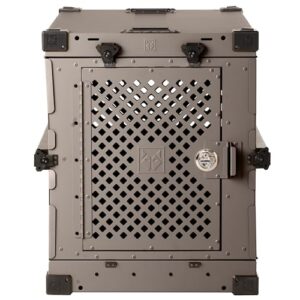
If your dog is a bit bigger and needs something tougher, the Impact Collapsible Aluminum Crate steps up nicely. It’s built from 99% recyclable aluminum and collapses to under eight inches tall — easy to stow between meetings or move room to room.
The marine-grade slam latches keep the door shut without fuss, and the diamond-shaped vents keep air moving all day. At 28.5 lb, it’s sturdy, though you’ll want a second pair of hands when moving it.
- Collapses and opens in under 60 seconds with no tools, making airport check-ins and car trips way less stressful.
- Built from durable, rust-resistant aluminum that’s also 99% recyclable — tough and eco-friendly.
- Great airflow from the diamond-shaped vents keeps your dog comfortable on longer trips.
- At 28.5 lb, it’s heavy enough that moving it solo gets awkward fast — no wheels don’t help.
- Not a great fit for anxious or escape-prone dogs, since the hinges can be a weak point.
- Side rails for airline compliance aren’t included and need to be bought separately.
Why Remote Workers Need Crates

Working from home sounds great until your dog decides your Zoom call is the perfect time to bark at the mailman. A crate gives both of you a clear routine — your dog knows when it’s rest time, and you can actually focus. Here’s why remote workers are finding crates so useful during the workday.
A crate turns work-from-home chaos into routine — your dog rests, and you actually focus
Safer Work-hour Boundaries
A crate gives your workday a quiet kind of structure. When your dog has a safe and secure space, your boundaries feel real — not just to you, but to everyone in the home.
- Use a Work Hours Ritual to signal crate time each morning
- Set Digital Boundaries and noise reduction tools while your dog settles
- Schedule breaks as Family Signals for connection without chaos
Reduced Destructive Behavior
When your dog can’t roam freely, chewing and chaos drop fast. Crate training creates a den-like space that keeps your dog calm and focused.
Studies show durable chew toys inside the crate cut destructive behavior by up to 65 percent.
Add a pheromone diffuser nearby, and your dog settles even faster — leaving your workday and your furniture intact.
Better Puppy Routines
Puppies thrive on structure, and your work-from-home schedule is the perfect foundation to build it on. A crate makes daily rhythms predictable — and predictable days mean calmer, more confident dogs.
Small tweaks like better bedding and a well-placed cover can go a long way — check out these dog crate comfort tips to help your pup settle in faster.
Here’s a simple routine to start with:
- Morning Feeding — feed at the same time, then head outside for a potty break
- Puppy Exercise — 15 to 20 minutes of gentle play keeps energy balanced without wearing joints down
- Nap Management — settle your pup into the crate for quiet rest; this is where crate training essentials do their best work
- Play Structure — short, focused sessions teach self-control and reinforce calm comfort and confidence
Include short training sessions to reinforce learning and keep your pup engaged.
That rhythm of rest, routine, and learning shapes a puppy built for day 1 together.
Fewer Meeting Interruptions
When your dog knows the crate is their spot, everything changes. A visual crate cue — something as simple as a mat or a sign — can reduce spontaneous interruptions during video calls by over 50 percent.
| Meeting Challenge | Crate-Based Solution |
|---|---|
| Dog approaches during calls | Visual Crate Cue signals boundaries |
| Noise disrupts focus | Quiet Environment with sound dampening |
| Unpredictable behavior | Scheduled Breaks build routine |
| Anxious pacing nearby | Den-like space reduces separation anxiety |
| Back-to-back meetings | Meeting Time Blocks with Door Stay Cue |
Stress reduction starts with consistency. Pair a calm safe environment with noise reduction features, and your dog settles naturally while you stay focused.
Calmer Independent Resting
Rest isn’t just downtime — it’s part of your dog’s daily balance. A calm safe environment makes all the difference. Here’s what helps better independent rest:
- Soft Cushioning eases body tension during quiet periods
- Gentle Ventilation keeps airflow steady without cold drafts
- Silent Latches prevent startling sounds near sleeping areas
- Temperature Control maintains a consistent, cozy comfort zone
Consistent crate training builds the denlike space your dog genuinely wants to return to.
Choosing The Right Crate Size
Getting the size right makes all the difference for your dog’s comfort and safety. A crate that’s too big or too small can cause real problems, especially during long work hours. Here’s what to keep in mind before you buy.
Measure Nose to Tail

Start with your dog’s nose-to-tail measurement — it’s the foundation of any good dog crate sizing guide. Stand your dog relaxed, then run a tape along their back from nose tip to tail base.
Record that number, then add 2 inches as a growth allowance for comfortable movement. This simple step makes crate size selection so much easier.
Add Standing Room
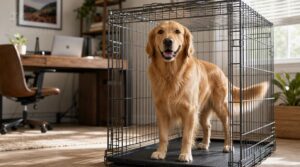
Height matters just as much as length. Measure from the floor to the top of your dog’s head while standing — then add 2 to 4 inches for comfortable clearance. This height adjustment ensures your dog can stand naturally without hunching.
Look for reinforced walls and a non-slip floor to keep things stable when your dog shifts postures.
Allow Full Turning
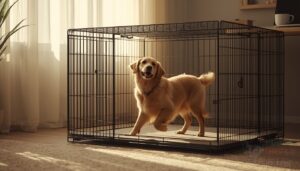
Your dog needs room to spin around without bumping into walls. Small dogs need at least 24 inches of interior length to turn comfortably. Medium dogs need around 30 inches. Large breeds may need up to 36.
Round interior corners and non-slip flooring help your dog rotate safely. Clear floor space matters too — loose bedding can get in the way.
Consider Puppy Dividers
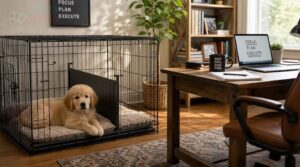
A puppy divider is one of the smartest tools you can add to your dog crate setup. It lets you buy one crate and adjust it as your puppy grows — no need to replace anything.
Adjustable divider benefits include restricting space early on, which enhances home alone training and prevents accidents.
Repositioning takes seconds with spring-loaded pegs or sliding tracks.
Avoid Oversized Crates
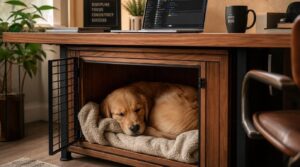
Once you’ve nailed the right fit, resist the urge to size up.
A crate that’s too large actually works against you — your dog loses that snug, den-like feeling and may feel more anxious, not less.
It can also leadaccidents, since dogs avoid soiling their sleeping space only when it feels close and contained.
Safest Crate Materials Compared
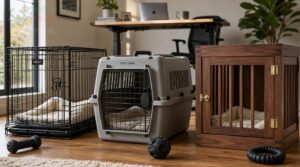
The material your dog’s crate is made from matters more than most people think. It affects how safe, durable, and easy to clean the crate will be during your workday. Here’s how the most common options stack up.
Heavy-duty Wire Crates
When you need peerless durability, heavy-duty wire crates are hard to beat. A gauge steel frame — commonly 9 to 12 gauge — resists bending even under serious pressure.
The welded panel design eliminates weak points, and interlocking door latches stop clever escape artists cold.
A reinforced bottom plate holds your dog’s full weight without sagging, keeping them safe all day.
Aluminum Crate Frames
Aluminum crate frames bring a invigorating lightness to the mix. Lightweight aluminum construction can weigh up to 40 percent less than steel, so moving your dog’s space around the home is easy.
Anodized or powder-coated profiles resist rust and handle frequent cleaning with everyday disinfectants — a real win on busy workdays.
Modular aluminum assembly also lets you customize dimensions as your dog grows.
Plastic Kennel Shells
Plastic kennel shells are built tough from the ground up. Rotational molding creates a one-piece shell with no seams that crack or collect bacteria.
UV stabilized HDPE withstands sun and weather without warping.
The drainage lip design channels spills away cleanly.
Models like the Petmate Ultra Vari Kennel show what plastic durability really looks like — reliable, easy to wipe down, and quietly hardworking.
Furniture-style Crate Designs
Furniture-style crates bring your dog’s space into your home décor rather than fighting against it. Cabinet-style doors, rich wood finish options like espresso and walnut, and brushed metal hardware make these feel like real pet furniture.
Sliding door mechanisms open quietly. Many include integrated storage for leashes and treats.
Every crate and accessory blends seamlessly into your space.
Chew-resistant Construction
Some dogs treat their crate like a chew toy — and that’s where chew-resistant construction matters most. Hardened steel corners, reinforced door hinges, and anti-chew coatings protect against even determined chewers.
Durable mesh with small openings keeps teeth out.
Crates like the Boldbone Heavy Duty Indestructible and Escape-Proof Dog Crate combine durable aluminum construction with an escape proof design, so your dog stays safe while you focus on work.
Features That Help Workdays
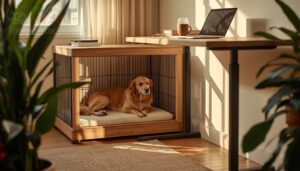
The right crate features can make your workday a lot smoother — for both you and your dog. Some details seem small but end up mattering more than you’d expect once you’re deep in a meeting. Here’s what to look for.
Quiet Door Latches
A noisy crate latch can derail your entire meeting. That’s why quiet door latches matter more than most people realize.
- Magnetic latches close with near-silent contact
- Soft close mechanisms absorb impact below 40 decibels
- Cushioned plungers prevent sudden slamming sounds
- Proper seal compatibility keeps closure consistently quiet
The MidWest Ultima Pro Two Door Folding Crate uses reinforced locking latches that engage smoothly without startling your dog.
Easy-clean Bottom Trays
Accidents happen — and when they do, a removable plastic tray makes cleanup fast. Sliding tray access means you pull it out without disturbing your dog.
Raised edge design keeps spills contained, while drainage channel systems guide moisture away. Some models even include removable corner sections for a deeper clean.
Good crate hygiene protects your dog and your floors.
Dual-door Access
A clean tray keeps your crate fresh — but a dual-door design keeps your day running smoothly. With the MidWest iCrate Double Door Dog Crate and MidWest Ultima Pro Two Door Folding Crate, you get flexible entry from the front or side.
- Access alignment lets you open the right door for your space
- Independent locks keep your dog secure even if one latch shifts
- The interlocking system prevents both doors from swinging open at once
- Dual-door latch design means faster, calmer entry without disturbing your dog
That’s real owner convenience built into every use.
Foldable Storage Options
When your workday winds down, the last thing you want is a bulky crate taking over your space. That’s where foldable storage options shine.
The MidWest Ultima Pro Two Door Folding Crate collapses flat in minutes — no tools needed. You get full owner convenience without sacrificing your floor space when the crate isn’t in use.
Secure Escape Prevention
A foldable crate saves your space, but it means nothing if your dog figures out the door.
Escape prevention starts with the latch. Look for latch reinforcement using metal plates and a Paw Block System that stops paws from nudging the lock open. Duallock doors add a second layer of security when it counts.
Here’s what to check:
- Door edge guards that prevent paw snagging
- Small ventilation hole size to block squeezing
- Corner impact shields for active dogs
- Spring-loaded catches that auto-engage on closing
Crate Training for Work Hours
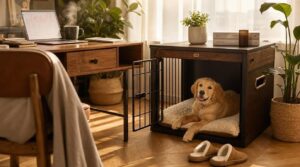
Getting your dog comfortable with crate time during work hours takes patience, but it’s very doable. The key is building the habit in small, gentle steps that feel good for your dog. Here’s what works.
Start With Short Sessions
Think of the first session as a handshake — short, calm, and low-pressure. Start with just 5 minutes.
Toss a small treat inside, let your dog explore, then close the door briefly. Watch for yawning or lip licking; those are early stress signals. If you see them, end the session.
Keep initial crate time gentle, and your dog will warm up faster than you’d expect.
Feed Meals Inside
Once your dog feels comfortable stepping inside, feeding meals in the crate is your next move. It quietly tells your dog that good things happen in there.
Place the bowl just inside the door at first. Over a few days, move it further back. Structured meal sessions also support portion control and keep your dog calm during your busiest video calls.
Add Long-lasting Chews
A long-lasting chew is your secret weapon for calm crate time. It gives your dog something rewarding to focus on while you handle your calls.
- Elk antler chews can last weeks of daily chewing
- Yak milk chews firm up and soften gradually
- Beef tendon chews resist splintering under heavy use
- Chews scrape plaque while your dog settles in
- Always size chews appropriately to prevent choking
Reward Calm Behavior
When your dog settles quietly in the crate, that moment matters. Reward it immediately. Calm Reinforcement works best when your timing is precise — the reward lands within seconds of the calm behavior, not after.
Use Behavior Markers like a soft "yes" to signal the exact moment you’re rewarding. This is the heart of positive reinforcement and behavioral training.
| Calm Behavior | Right Reward |
|---|---|
| Relaxed posture | Small treat or soft praise |
| Soft gaze, no barking | Gentle touch or quiet word |
| Resting without jumping | Favorite chew or treat toss |
| Stillness during your calls | Varied reward to stay fresh |
Reward Variety keeps crating dogs while at work engaging for your dog. Rotate treats, praise, and touch so the rewards don’t lose their pull. Over time, you’ll notice separation anxiety easing as your dog learns that calm equals good things.
Build Duration Slowly
Rushing the crate acclimation process never works. Start with just five minutes, then add two to five minutes every few days. Your dog needs time to adjust at its own pace.
Watch for these stress monitoring signs during sessions:
- Panting without reason
- Constant whining or barking
- Restlessness or pacing
- Refusing treats inside
- Tense or hunched posture
A consistent daily schedule paired with positive reinforcement rewards after each session makes the biggest difference. Over time, dog anxiety and separation anxiety quietly fade.
Office Placement and Comfort Tips
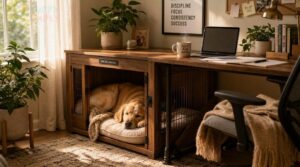
Where you place your dog’s crate matters more than most people realize. A few small adjustments can make your dog feel settled and your workday run smoother. Here’s what to keep in mind.
Keep Crate Nearby
Where you place your dog’s crate matters more than you’d think. Keeping it within 6 feet of your workspace gives your dog visual comfort while you work. It also lets you spot stress signals early.
Aim for a room temperature between 65–75°F, away from direct sunlight. Leave at least 2 feet of clearance around it for easy access.
Add Washable Bedding
Good bedding turns a bare crate into a cozy retreat.
Choose machine washable covers so cleanup stays simple after messy workdays. Quick drying fabrics like microfiber get back in rotation fast.
For sensitive pups, hypoallergenic bedding options reduce dander and irritation.
Pick colorfast designs that hold up after frequent washing, and follow care labels for easy care maintenance.
Reduce Distracting Noise
A quiet space helps your dog feel secure — and keeps your calls distraction-free.
A white noise machine near the crate masks sudden household sounds that can startle your dog mid-nap. Pair it with door weatherstripping to block hallway noise. For your own focus, noise cancelling headphones make a real difference during meetings while your pup rests calmly nearby.
Maintain Airflow
Fresh air matters more than most people think. Wire mesh design naturally pulls air through the crate, keeping your dog cool and comfortable.
Leave at least two inches of clearance around all sides so airflow moves freely. Choose breathable fabric bedding that doesn’t block side vents, and clean those vents weekly to keep air moving without restriction.
Avoid Direct Sunlight
Sunlight sneaks up on you. A crate that feels perfectly placed in the morning can turn into an oven by noon. Direct sun raises the interior temperature up to 10°F within 15 minutes — that’s enough to make your dog restless and uncomfortable fast.
Move the crate away from east- or west-facing windows, or hang sheer curtains to soften the light without blocking your view.
Crates Versus Pens and Gates
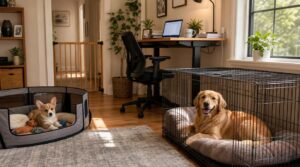
Not every dog needs the same kind of space, and not every moment in your workday calls for the same setup. Crates, pens, and gates each shine in different situations — so the right choice really depends on your dog and your routine. Here’s a look at which option works best for each scenario.
Best for Focused Meetings
When your dog is settled and calm, your whole meeting changes. A Meeting Boundary Crate placed near your desk sends a clear signal — focus time is here. The quiet latch design means no jarring clicks to disrupt your flow. Here’s what makes crates the top choice for focused calls:
- Reduces visual distractions during video meetings
- Den-like environment keeps dogs calm and contained
- Quiet hardware enhances a professional meeting atmosphere
- Stress Reduction Crate features lower bark rates naturally
- Placement near your desk allows quick care breaks without leaving
Your dog feels safe. Your teammates stay focused.
Best for Puppies
Puppies need adjustable space as they grow, and a crate with a puppy divider delivers exactly that. The MidWest Ultima Pro is a strong pick for early training — its divider panel grows with your pup through every stage.
Safety latches prevent escape, while training toys like a Kong keep young pups settled during your work hours.
Best for Anxious Dogs
When your dog struggles with separation anxiety, a crate beats an open pen every time. Enclosed walls tap into your dog’s den instinct, creating a space that feels safe and familiar.
- Choose calming materials like plastic shells or solid-wood furniture crates to muffle outside sounds
- Prioritize anti-anxiety design with quiet latches and escape-proof locks
- Layer in den-like comfort with soft washable bedding
- Control temperature by keeping the crate away from vents
- Use soft lighting nearby to create a calm, low-stimulation zone
Best for Small Spaces
In a small apartment or compact home office, every inch counts. That’s where a mini stationary dog crate earns its place. A compact footprint — as little as 24 by 28 inches — fits neatly without blocking pathways.
| Feature | Benefit |
|---|---|
| Foldable design | Reduces footprint by up to 60% |
| Lightweight frame | Under 20 lbs for easy moving |
| Space-saving doors | Open inward or outward as needed |
Crating dogs while at work is simpler when your crate tucks away cleanly.
Best for Flexible Setups
Some setups just need room to breathe and change. A modular crate design gives you that.
With interchangeable panels and foldable frames, you can reshape your dog’s space as your workday shifts. Lightweight relocation means moving from office to living room takes seconds. Corner mounting keeps pathways clear.
Whether you need a collapsible dog crate or portable pet housing, flexible setups grow with you.
Frequently Asked Questions (FAQs)
Can you crate a dog for eight hours?
Yes, you can — but with a few rules in place. Adult dogs handle up to eight hours well when they have fresh water, good crate ventilation, and a midday break. Puppies need more.
Which crates qualify for airline travel?
Not all crates qualify. For airline travel, your crate must meet IATA compliance requirements with ventilation on at least three sides. Hard plastic or metal materials are commonly required. Always confirm travel documentation with your carrier beforehand.
Do crates help with dog separation anxiety?
A crate won’t cure separation anxiety overnight — but it can ease it. Den-like security and consistent routine give anxious dogs a calm, predictable space they learn to trust over time.
What warranties do dog crates typically offer?
Most warranties fall into a few clear types. You’ll find lifetime manufacturer coverage, limited 1–5 year plans, and dog damage protection add-ons. Some brands also guarantee replacement parts availability. Always check transferability—many only cover the original buyer.
Can smart technology be added to dog crates?
Smart technology has officially "pawed" its way into pet care. Smart Sensors Integration and Remote Door Control let you monitor and manage your dog’s space from anywhere — no guesswork needed.
Conclusion
The theory that crates confine dogs misses what they actually do—they anchor them.
A dog that knows where to settle stops searching for somewhere to belong.
That quiet shift changes your whole workday.
The right dog crates for working from home don’t just reduce barking or protect your furniture.
They give your dog a place to feel steady while you stay focused.
When your dog is calm, you can finally be too.
- https://www.businessinsider.com/guides/pets/best-dog-crate
- https://www.forbes.com/sites/forbes-personal-shopper/article/best-dog-crate
- https://lifewithkleekai.com/ultimate-dog-crate-comparison-guide
- https://firstbuild.com/inventions/zennel-the-sounds-proof-dog-house
- https://www.nytimes.com/wirecutter/reviews/best-dog-crate