This site is supported by our readers. We may earn a commission, at no cost to you, if you purchase through links.
That curly coat and boundless energy come from two very different gene pools, and your Aussiedoodle’s belly knows it. Poodle and Australian Shepherd lines each carry their own quirks around protein needs, joint strength, and digestion, which means the cereal-aisle kibble bag won’t always cut it. Get the formula wrong, and you’ll see it in dull coats, soft stools, or a pup who tires out halfway through the walk.
Finding the best dog food for aussiedoodles isn’t about chasing the flashiest label. It’s about matching real nutrition science to your dog’s age, size, and health quirks.
Whether you’re raising a wiggly puppy or easing a graying senior into their golden years, the right bowl makes all the difference.
Table Of Contents
- Key Takeaways
- Best Dog Foods for Aussiedoodles
- Aussiedoodle Nutrition Needs
- Choosing Food by Life Stage
- Best Food Types Compared
- How to Switch Foods Safely
- Frequently Asked Questions (FAQs)
- What is the best food to feed an Aussiedoodle?
- What is the best food for an aussie?
- Do Aussiedoodles have sensitive stomachs?
- How many cups of food should an Aussiedoodle eat a day?
- How much food should Aussiedoodles eat daily?
- When should puppies switch to adult food?
- Can Aussiedoodles eat grain-free diets safely?
- What foods are toxic to Aussiedoodles?
- How often should I feed my Aussiedoodle?
- How much should I feed an Aussiedoodle daily?
- Conclusion
Key Takeaways
- Choose an Aussiedoodle’s food based on real animal protein first, matching the formula to their age, activity level, and any digestive sensitivities rather than picking whatever’s cheapest or flashiest.
- Puppies need 22-32% protein with DHA for brain development, adults need balanced protein and fiber for energy management, and seniors benefit from glucosamine, chondroitin, and lower-fat formulas for joint support.
- When switching foods, transition gradually over four weeks (25%, 50%, 75%, then 100% new food) while monitoring stool consistency, energy, and appetite to avoid digestive upset.
- Watch for warning signs like persistent vomiting, skin rashes, or lethargy after a food change, and consult your vet promptly since these can signal food intolerance or a more serious health issue.
Best Dog Foods for Aussiedoodles

Finding the right food for your Aussiedoodle doesn’t have to feel overwhelming. Every dog is different, whether you’ve got a bouncy puppy, a senior slowing down, or a pup with a sensitive tummy. Here are five vet-backed picks to match your dog’s exact needs, one category at a time.
If your pup’s a Mini American Shepherd instead, check out this guide to the best dog food for Miniature American Shepherds for breed-specific nutrition tips.
Best Overall Pick
Best Overall Pick for your Aussiedoodle should list chicken or salmon first, backed by a Guaranteed Analysis showing 25%+ crude protein.
Look for balanced omega fatty acids and minimal corn, wheat, or soy.
- Peace of mind knowing your pup’s fed right
- Confidence in every scoop you pour
- Relief from guesswork and guilt
- Joy watching your Aussiedoodle thrive
Ideal kibble texture rounds out this canine nutrition winner.
Best Puppy Food
Puppyhood moves fast, and your Aussiedoodle’s food needs to keep pace. Look for 22 to 32 percent protein, plus DHA for brain development and calcium-phosphorus balance for steady bone growth. Selecting a formula with high digestibility protein helps meet your puppy’s rapid growth needs.
Acana Wholesome Grains stands out here, pairing real meat with gentle fiber for puppy digestion. Calorie density matters too, sized right so growth spurts happen without excess weight gain.
Best Senior Food
Best Dog Food For Senior Aussiedoodles shifts focus from growth to graceful aging. Wellness Essential Digestive Health Best Choice for Seniors offers a lowfat senior dog diet with 20-30% protein, easing joints without piling on pounds.
Look for senior mobility nutrients like glucosamine, plus antioxidant longevity support from vitamin E.
Gentle fiber aids senior digestive care, while softer kibble helps aging teeth.
Best Sensitive Stomach Food
Not every Aussiedoodle sails through mealtime without a hiccup. If yours struggles with gas, loose stools, or picky eating, look for hydrolyzed protein or novel sources like duck.
Try Hill’s Science Diet Sensitive Stomach Chicken & Barley or Purina Pro Plan Sensitive Skin & Stomach Salmon Rice—both include prebiotic fiber for gut support. Watch stool consistency closely; it’s your best clue for digestive health.
Best Budget Option
Since good nutrition doesn’t have to break the bank, look for a named protein source in the top two ingredients—brands like Blue Buffalo or Pedigree can fit the bill.
- 25–40 lb bags cut cost-per-pound
- 20–26% crude protein
- 9–14% fat
- Favorable return policy
- Cost-effective protein first
Bulk buying stretches your budget while keeping the nutrient-to-price ratio solid.
Choosing a large-breed formula designed to manage growth rate, like this best food for Great Danes to gain weight healthily, helps pack on pounds without overloading fragile joints.
Aussiedoodle Nutrition Needs

Aussiedoodles have specific nutritional needs shaped by their mixed heritage and active lifestyle. Getting the basics right can mean fewer vet visits and a happier, healthier dog down the road. Here are the five nutrients you should always check for on that ingredient label.
High-Quality Animal Protein
Protein isn’t just a label buzzword — it’s the literal building block of your Aussiedoodle’s muscles, coat, and immune system.
Look for beef, chicken, or fish listed first, not "meat by-products," which offer poor amino acid profiles and inconsistent digestibility. High-quality protein delivers all essential amino acids your dog can’t make on their own.
For an active, protein-rich diet, digestibility matters as much as quantity — better absorption means better nutrient retention.
Omega-3 Fatty Acids
Think of omega-3s as your Aussiedoodle’s built-in skincare and joint serum, working from the inside out.
Omega-3s work like a built-in skincare and joint serum for your dog, nourishing from the inside out
Fish oil supplies EPA and DHA directly, while flaxseed only offers ALA, which converts poorly. DHA helps retinal cell health and brain function.
These fats also drive anti-inflammatory signaling and help manage triglycerides. For skin and coat health, balancing omega-3s against omega-6s keeps that curly coat soft and hydrated.
Joint Support Nutrients
Those hips and elbows work hard on an Aussiedoodle, so cartilage needs real backup.
Glucosamine and chondroitin work synergistically to maintain cartilage matrix strength, while MSM helps connective tissue comfort. Vitamin C aids collagen formation, and antioxidants calm inflammation.
Together, these nutrients form a solid joint health supplement strategy:
- Glucosamine
- Chondroitin
- MSM
- Vitamin C
Especially valuable for hip dysplasia management and senior dog joint support.
Fiber for Digestion
Good digestion isn’t just about what goes in—it’s about how smoothly things move through. Soluble vs insoluble fiber both matter: soluble types (oats, psyllium) feed gut bacteria and support microbiome balance, while insoluble fiber adds bulk for steady stool consistency.
Careful fiber source selection—beet pulp, sweet potato—offers prebiotic gut health benefits, easing digestive health for sensitive stomachs without sudden changes upsetting your pup’s tummy.
Eye Health Antioxidants
Your Aussiedoodle’s eyes rely on more than genetics—daily nutrition plays a real role.
Lutein gathers in retinal tissue, filtering harsh light, while vitamin C protects the eye’s fluid and vitamin E guards cell membranes. Zinc helps retinal metabolism, and omega-3s bring DHA straight to visual tissue.
Together, vitamins A, C, E and these antioxidants form a genuine defense system for lifelong eye health.
Choosing Food by Life Stage

Your Aussiedoodle’s nutritional needs shift as they move through life, and their food should shift right along with them.
A wiggly eight-week-old puppy, a busy adult who hikes with you every weekend, and a graying senior who naps more than she runs all need different things on their plate.
Here’s how to match the bowl to the dog in front of you.
Aussiedoodle Puppies
Puppy nutrition makes all the difference during those fast-growing months. Look for at least 30% protein with added DHA to support brain and eye development, feeding three to four small meals daily.
Puppy growth requirements also mean tracking dental development, encouraging early obedience, and offering puzzle toys for mental stimulation—all while socializing your pup often for a well-rounded temperament.
Active Adult Aussiedoodles
By the time your Aussiedoodle reaches full maturity, feeding shifts from growth-focused to energy expenditure management. Two meals daily, matched to their 60-90 minute exercise needs, keeps weight stable.
- High-protein diet for muscle recovery
- Moderate fats for sustained energy
- Fiber for digestion between meals
Pair meals with mental stimulation tools like puzzle feeders—active minds need active bodies, and vice versa.
Senior Aussiedoodles
Once those puzzle-feeder days slow down, priorities shift toward comfort.
Senior Aussiedoodles benefit from glucosamine and chondroitin for joint support, gentle 20-30 minute walks or hydrotherapy for mobility, and dental chews alongside brushing routines.
Watch for sensory decline—hearing or vision changes are common.
Supportive, cushioned bedding eases arthritis pain, while puzzle toys keep aging minds sharp between vet checkups every six months.
Overweight Aussiedoodles
A body condition score of 6 or higher signals extra pounds putting real strain on hips and joints.
Cutting calories by 20-30%, paired with high-protein, high-fiber meals, preserves muscle while curbing hunger.
Daily 60-minute walks or swimming support fat loss gently.
Weekly weigh-ins catch backsliding early—your vet can set realistic targets and confirm the plan’s actually working for your dog’s body.
Pregnant Aussiedoodles
Once your Aussiedoodle’s pregnancy hits the halfway mark, maternal caloric increases become essential, gradually shifting toward a high-calorie diet for pregnant dogs. Prioritize animal protein for muscle and milk, plus omega-3s for fetal brain development. Watch calcium phosphorus balance closely.
Start whelping box preparation early, and remember: postpartum colostrum importance can’t be overstated—nursing within that first hour matters enormously.
Best Food Types Compared
Once you know what your Aussiedoodle needs, the next question is simple: what type of food actually delivers it?
Walk down any pet store aisle and you’ll see fresh, dry, wet, freeze-dried, and limited-ingredient options all claiming to be the best fit.
Here’s how each one stacks up, so you can pick with confidence instead of guesswork.
Fresh Dog Food
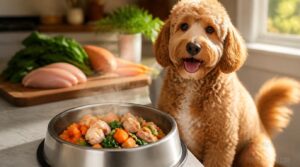
Fresh dog food often looks like a home-cooked meal because it practically is one. Brands like The Farmer’s Dog and JustFoodForDogs use human-grade meat as the first ingredient, gently cooked to preserve nutrients your pup actually digests well.
Why owners love it:
- Higher moisture keeps pups hydrated
- Real meat boosts palatability
- Gentle cooking protects nutrients
- Refrigeration required—use within days
Dry Kibble
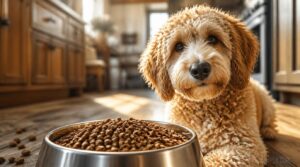
That crunch your Aussiedoodle loves comes from extrusion, a process that cooks and puffs a dough of meat, fats, and carbs like rice or barley into shelf-stable pellets.
Look for high-protein kibble (22–32%) with named animal fats and beet pulp fiber.
Calorie density runs 350–450 kcal/cup, so match portions to your dog’s activity level and body weight.
Wet Food
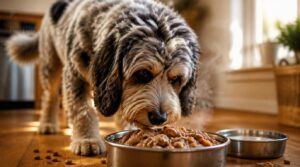
Ever notice how your Aussiedoodle inhales wet food faster than kibble? That’s moisture content at work—70-80% water, which boosts hydration and digestibility.
Options like Purina Moist Meaty Chopped Burger or Nutro’s Tender Chicken Sweet Potato Pea Stew offer texture variety and strong palatability.
In the wet vs dry dog food comparison, wet wins for picky eaters and dogs needing extra hydration.
Freeze-Dried Raw Food
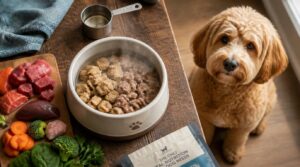
Think of it as raw feeding without the mess: nutrients stay intact since nothing’s cooked away, and cold pasteurization ensures pathogen safety instead of heat.
Get Joy Freeze-Dried is a solid vet-approved pick, sourcing quality meats and rehydrating quickly with warm water.
Daily costs run $4–15, and this raw BARF-style approach suits owners wanting minimally processed, nutrient-rich meals.
Limited-Ingredient Diets
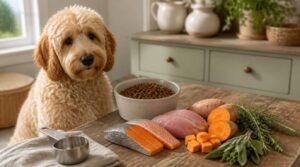
Limited-ingredient diets (LID) pair one protein with one carb, cutting exposure for dogs prone to food sensitivities. Novel proteins like salmon or turkey help identify dietary triggers during elimination trials.
This hypoallergenic formula design skips corn, wheat, and soy, easing digestion while supplying steady dietary fibre. Ask your vet before starting—true allergy management needs guidance, not guesswork.
How to Switch Foods Safely
Switching your Aussiedoodle’s food isn’t something you want to rush, even if the new bag looks better than the old one. A sudden change can upset a sensitive gut, so slow and steady really does win this race. Here’s exactly how to make the switch without any tummy trouble.
Four-Week Transition Plan
Because your Aussiedoodle’s gut needs time to adjust, spread the switch across four weeks: 25% new food, then 50%, 75%, and finally 100%. Watch:
- Stool consistency daily
- Energy levels
- Appetite changes
Adjust calories by 5% weekly using a dog food calculator matched to your Aussiedoodle Feeding Chart. Document digestive reactions—this protects against surprises.
Signs of Food Intolerance
Even a careful switch can reveal food sensitivities in dogs you didn’t expect.
Watch for skin rash patterns—redness, hives, or itching—alongside digestive discomfort signs like gas, bloating, or loose stool. Occasionally, respiratory intolerance symptoms like wheezing appear too.
Reactions often show delayed reaction timing, appearing hours later, with dose severity factors meaning bigger portions trigger worse symptoms.
Persistent signs warrant hypoallergenic dog food or sensitive stomach dog food recommendations from your vet.
Portion Control Tips
Skin flare-ups aside, overfeeding is the quieter risk owners miss.
Visualize the plate: half veggies, the rest split between protein and grains—no piling high. For dry kibble, aim near one cup per 20 pounds, adjusted to activity level. Use a measuring cup or scale every time, feed two set meals daily, and track weight weekly using a simple dog calorie calculator to catch drift before it becomes obesity.
The 10% Treat Rule
That measuring cup habit pays off double once treats enter the picture. Cap rewards at 10% of daily calories—use a dog calorie calculator to convert that into real numbers.
- A pea-sized training bite
- Praise or a quick play break
- Freeze-dried liver crumbles
Keep sessions short, weigh weekly, and rotate non-edible rewards to protect your Aussiedoodle’s weight-loss diet progress.
When to Ask Your Vet
How do you know when a diet switch needs a professional opinion instead of a wait-and-see approach? Call your vet for emergency red flags—repeated vomiting, lethargy, or possible pain. Also reach out for rapid weight changes, symptoms lasting past a short trial, or appetite loss over 24 hours.
Puppies need vaccine-schedule check-ins too. When in doubt, ask—it’s the safest vet-recommended diet habit you can build.
Frequently Asked Questions (FAQs)
What is the best food to feed an Aussiedoodle?
There’s no one-size-fits-all bowl here. The best pick starts with real animal protein first, avoids filler ingredients, and matches your dog’s life stage, like Blue Buffalo for adults or Hill’s Science Diet for growing puppies.
What is the best food for an aussie?
For an Aussiedoodle, look for salmon-based recipes with real meat first, balanced omega-3s for joints and coat, and named lamb as a gentle allergen alternative—these cover essential nutritional needs without unnecessary fillers or vague ingredients.
Do Aussiedoodles have sensitive stomachs?
Some do, thanks to their Poodle heritage — genetics vary widely. Watch for vomiting, gas, or loose stools after meals. A limited ingredient diet with easy-to-digest protein often calms flare-ups better than trial-and-error feeding.
How many cups of food should an Aussiedoodle eat a day?
There’s no single magic number here. Most adults do best with 5 to 3 cups daily, split into two meals, while puppies need 5 to 4 cups across three meals, adjusted using body condition scoring and a dog food calculator for accuracy.
How much food should Aussiedoodles eat daily?
Most Aussiedoodles need 400 to 800 calories daily, based on ideal weight and activity level rather than current size. Use a dog food calculator, check body condition scoring, and adjust portions gradually if weight shifts over time.
When should puppies switch to adult food?
Picture a 55-pound mini-Aussiedoodle mix hitting her first birthday—still gangly, still growing.
Medium breeds typically switch around 12 months, once growth plates close and weight gain steadies near 80% of adult size, confirming true skeletal development milestones.
Can Aussiedoodles eat grain-free diets safely?
Yes, but with caution: the FDA investigated cardiomyopathy risks tied to legume-heavy, grain-free diets and possible taurine deficiency. Verify nutrient balance, watch for allergies, and consult your vet before choosing grain-free over grain-inclusive options.
What foods are toxic to Aussiedoodles?
Keep chocolate, grapes, xylitol, onions, garlic, macadamia nuts, caffeine, and alcohol away from your pup entirely.
These trigger kidney damage, dangerous blood sugar crashes, or neurological symptoms fast—call your vet immediately if you suspect any accidental ingestion, even in small amounts.
How often should I feed my Aussiedoodle?
Ever wonder why your pup begs constantly? Wrong meal timing, not hunger.
Feed puppies 3–4 times daily, active adults twice daily, and seniors two smaller meals — spacing meals evenly also helps bloat prevention and steady caloric intake.
How much should I feed an Aussiedoodle daily?
Aim for 2–3% of ideal body weight in calories daily, split into two meals. A 40 lb adult often needs 280–420 grams of kibble. Use a dog food calculator and body condition scoring to fine-tune portions weekly.
Conclusion
You’re what you eat" applies to dogs too, and your Aussiedoodle’s coat, energy, and stool quality prove it daily. The best dog food for Aussiedoodles isn’t a single bag; it’s a custom approach that shifts with age, activity, and health.
Read labels, watch your dog’s response, and adjust with patience. Small, consistent choices build lasting wellness.
Trust the process, lean on your vet, and let every meal quietly build a longer, livelier life together.
- https://ivcjournal.com/feeding-large-breed-puppies
- https://www.petmd.com/dog/nutrition/evr_dg_whats_in_a_balanced_dog_food
- https://vcahospitals.com/know-your-pet/nutritional-requirements-of-large-and-giant-breed-puppies
- https://marleybones.com/blogs/news/best-dog-food-for-aussiedoodle
- https://veterinaryskinandear.com/food-allergies-in-dogs