
This site is supported by our readers. We may earn a commission, at no cost to you, if you purchase through links.

90-pound American Bully muscled body burns through nutrients differently than your neighbor’s Labrador, and most kibble bags on the shelf never account for that.
As a canine nutritionist, I’ve watched too many bully parents grab whatever’s cheapest at the pet store, then wonder why their dog’s coat looks dull or their joints start clicking by age five.
These dogs carry dense muscle mass, broad chests, and breed-specific risks like hip dysplasia, which means generic formulas often fall short.
Finding the best dog food for bullies comes down to matching real nutritional science to your dog’s build, age, and health history, and I’m sharing exactly how to do that.
Table Of Contents
- Key Takeaways
- Top 10 Best Dog Foods for Bullies
- American Bully Nutritional Needs
- Common Health Issues and Diet
- Feeding Guide by Life Stage
- Choosing The Right Dog Food
- What Not to Feed Your Bully
- Frequently Asked Questions (FAQs)
- What does a Bully dog eat?
- What not to feed an American Bully?
- What is the best food for bully dogs?
- Is Purina good for bullies?
- What dog food is comparable to Bully Max?
- Do American Bullies need grain-free food?
- What type of treats are best for American Bullies?
- How often should American Bullies eat?
- How can I tell if my American Bully is overweight?
- Are there any special dietary needs for senior American Bullies?
- Conclusion
Key Takeaways
- American Bullies need 30–38% protein and 10–20% fat in their diet to support their dense muscle mass and high energy demands, which most generic kibble simply doesn’t deliver.
- Joint-supporting nutrients like glucosamine, chondroitin, and omega-3 fatty acids aren’t optional extras for this breed—they’re foundational, given how prone American Bullies are to hip and elbow dysplasia.
- Food allergies, digestive sensitivities, and heart conditions are common in this breed, so watching for allergens like beef, chicken, and soy—and considering limited-ingredient diets—can head off a lot of chronic health issues before they start.
- Your Bully’s nutritional needs shift significantly across life stages, from 3–4 high-protein meals daily as a puppy to calorie-reduced senior formulas by age seven, making consistent adjustments more important than sticking with one food forever.
Top 10 Best Dog Foods for Bullies
As a dog parent to a powerhouse breed, you know not every bag of kibble or tub of fresh food is built for a body like your Bully’s.
That’s why finding a puppy food with real meat as the first ingredient can make all the difference in fueling that muscle and energy.
I’ve sorted through the formulas that actually back up their claims with real protein numbers and honest ingredient lists, so you don’t have to guess.
Here are the five picks worth knowing about, broken down by what your dog needs most right now.
Best Overall Pick

If you’re feeding an American Bully, start here: a formula built on real, named protein for muscle building proteins and digestibility.
- Deboned meat first
- Balanced fat for skin coat health
- Glucosamine for joint integrity support
- Complete vitamin profile
- No artificial fillers
This nutrient density balance delivers truly balanced nutrition, high protein canine nutrition every bully thrives on.
Best Budget Dry Food
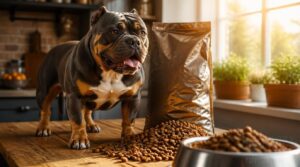
As a budget pick, Kirkland Signature dry dog food delivers real meat, balanced nutrition, and solid protein content near $0.60 per pound. Buying 40-pound bags lowers your cost-per-pound and rewards bulk buying benefits.
Diamond Naturals and Victor Hi Pro Plus offer similar caloric density, around 350–450 calories per cup, proving smart ingredient sourcing beats price-performance worries, without sacrificing palatability too.
Explore affordable dog food options for additional savings.
Best Fresh Food Option

Nom Nom Fresh Beef Fare offers nutrient-dense meals with roughly 37% protein, supporting muscle mass maintenance through this genuinely high protein diet. I appreciate its protein source variety and customizable pet food plans, paired with proper fresh food safety handling.
Gradual shifting fresh diets over a week, plus simple meal prep convenience, make fresh dog food practical for busy households.
Best for Puppies

Your growing American Bully thrives on Orijen Puppy Large Grain-Free, delivering 38% protein and 16% fat for true puppy growth nutrition. This high protein, balanced nutrition formula provides:
- Puppy Brain Development through DHA
- Bone Growth Minerals for steady joints
- Meal Frequency Benefits across 3–4 daily meals
- Stool Quality Monitoring for digestive confidence
Caloric Density Needs matched to lifestage specific nutrition.
Best for Seniors

As your Bully’s muzzle starts to gray and those once-tireless legs ask for a few extra naps, you’ll want a food that works with their slowing metabolism instead of against it, which is exactly where Victor Purpose Senior earns its keep, with 27% protein and 11.5% fat striking that gentler balance older joints and waistlines need, plus joint health supplements for aging comfort.
| Nutrient | Victor Purpose Senior |
|---|---|
| Protein | 27% |
| Fat | 11.5% |
| Joint Support | Glucosamine + Chondroitin |
American Bully Nutritional Needs

As a dog parent of a Bully, you already know this breed isn’t built like your average pup, and that muscular frame comes with some pretty specific dietary demands. Getting the basics right, from protein levels to joint support, makes a real difference in how your dog moves, grows, and ages.
Here’s what your Bully’s body actually needs at every meal.
Before swapping in a grain-free formula, it’s worth checking which ingredients are genuinely safe, since this guide to what dogs can and cannot eat breaks down the foods to watch for.
Protein Requirements
Look at those broad shoulders and that powerful chest, and you’re really looking at a walking advertisement for protein. American Bullies thrive on protein percentages of 30%–38% crude protein, reflecting animal protein quality, fueling muscle development and biological value.
- Whole meat as the first protein source
- Dry-matter calculations to verify true protein content
- High protein, low-filler formulas for proteinheavy builds
Fat Content Needs
While protein builds the muscle you love showing off, fat is what keeps your Bully’s energy steady and his coat looking healthy from the inside out.
Aim for 10%–20% crude fat, balancing essential fatty acids and omega ratios for coat health, while watching calorie density and your fat-to-protein ratio—active dogs need energy, but high‑fat diets without enough movement invite obesity.
Carbohydrate Requirements
Carbs get a bad reputation in the dog-food world, but for your American Bully, the right complex carbohydrates—think oatmeal, sweet potatoes, and whole grains—work like a slow-burning furnace, keeping energy levels steady long after mealtime is over. Unlike simple sugars, these low-glycemic carbohydrate sources release energy gradually, which nourishes your Bully’s demanding muscle metabolism without spiking blood sugar.
Sweet potatoes, in particular, deliver dietary fiber that keeps digestion running smoothly—something this breed genuinely benefits from. Paired with oatmeal or whole grains inside a balanced macronutrient profile, plant-based carbohydrates round out the energy picture that protein and fat alone can’t complete.
Vitamin and Mineral Needs
Think of vitamins and minerals as the behind-the-scenes crew that keeps your American Bully’s whole operation running—because without them, even the most protein-packed diet in the world starts to fall apart.
Mineral balance—zinc, iron, calcium, phosphorus—directly bolsters bone strength and immune function, while B vitamins drive the metabolic support your Bully needs to convert all that quality protein into real muscle.
Joint Support Nutrients
If your American Bully’s joints aren’t getting the right nutritional backup, all that muscle and energy has nothing solid to stand on—which is exactly why glucosamine, chondroitin, and omega-3 fatty acids deserve a spot on your ingredient checklist.
Glucosamine benefits cartilage repair, while chondroitin retains moisture in joint tissue. Omega fatty acids (EPA/DHA) calm inflammation. As a dog parent, I appreciate when labels list these clearly—it’s real skeletal health support, not just marketing.
Common Health Issues and Diet

As a dog parent, you already know your Bully’s stocky build and big heart come with a few breed-specific health quirks worth watching.
The good news is that the right diet can ease, or even help prevent, many of these issues before they become real problems.
Here’s what to keep an eye on and how your dog’s food fits into the picture.
Hip and Elbow Dysplasia
As much as you love watching your Bully strut around with that signature confidence, those powerful joints carrying all that muscle are quietly working overtime — and they’re more vulnerable than they look.
Hip and elbow dysplasia affect this breed more than most, so feeding a diet enriched with glucosamine and chondroitin alongside omega-3 fatty acids like EPA and DHA isn’t optional — it’s foundational to protecting their skeletal health long-term.
Food Allergies and Sensitivities
Beyond joint health, your Bully’s skin and gut may be sending you distress signals of a different kind — and food allergies or sensitivities are often the culprit hiding in plain sight. Chronic itching, hot spots, and loose stools frequently trace back to common allergens like beef, chicken, dairy, or grains — ingredients that appear in the majority of mainstream dog foods.
That’s why a limited-ingredient diet can be genuinely life-changing for allergy-prone Bullies, reducing exposure to triggers while making it far easier to pinpoint exactly what’s causing the reaction.
Heart Conditions
While sorting out your Bully’s diet for skin and gut health is a big win, it’s worth knowing that what goes in the bowl also has a direct line to their heart — and for a breed prone to aortic stenosis, that connection isn’t one you can afford to overlook.
Key cardiac nutrients like taurine and L-carnitine support healthy heart muscle function, while omega-3 fatty acids help reduce inflammation that can stress the cardiovascular system.
I’d also recommend keeping an eye on sodium levels, since excess salt quietly strains the heart over time.
Obesity and Weight Management
Here’s something I tell every Bully owner I work with: that thick, muscular build you love so much can hide extra pounds far longer than it would on a leaner breed, which makes weight gain one of the sneakiest health risks for this breed.
A muscular build can hide extra pounds longer than it would on a leaner breed, making weight gain one of the sneakiest health risks
A few habits make all the difference:
- Use a dog calorie calculator based on weight and activity
- Practice consistent portion control, not free-feeding
- Choose calorie-controlled meals with lower fat density
- Track weight monitoring monthly for early obesity prevention
Digestive Sensitivities
Bullies might look tough on the outside, but their digestive systems can be surprisingly finicky — and when your dog is vomiting, dealing with loose stools, or just seems uncomfortable after meals, the food bowl is usually the first place worth examining. Highly digestible proteins, added prebiotics, and probiotics restore gut flora balance. A limited ingredient diet often resolves food allergies and sensitive stomachs fastest.
| Symptom | Likely Cause | Dietary Fix |
|---|---|---|
| Loose stools | Poor protein quality | Limited ingredient diet |
| Gas/bloating | Grain sensitivity | Grain-free formula |
| Vomiting | Allergen exposure | Novel protein source |
Feeding Guide by Life Stage

As a dog parent, you’ll find that what goes in your Bully’s bowl needs to change as they grow, since a wriggly eight-week-old puppy and a graying seven-year-old have completely different bodies to fuel.
I appreciate that feeding isn’t a ‘set it and forget it’ routine; it’s something you adjust at each stage to keep your dog healthy and thriving.
Here’s how to map out meals and portions from puppyhood through the senior years, plus how to switch between them without upsetting that sensitive gut.
Puppy Feeding Schedule
Those first twelve months are when your Bully puppy is fundamentally building the chassis it’ll live in for the next decade, so getting the feeding schedule right matters more now than at any other stage of its life. Growth demands call for 3-4 meals daily, with portion control adjusted weekly.
- Watch belly fullness, not just the bowl
- Track weekly weight gains
- Monitor energy and coat shine
- Trust your vet’s calorie guidance
Adult Feeding Schedule
Once your Bully settles into adulthood somewhere between twelve and twenty-four months, you’ll trade the puppy hustle of multiple daily meals for a calmer, twice-a-day rhythm that’s easier on both your schedule and your dog’s digestion. This feeding frequency consistency promotes steady energy and easier digestion.
| Activity Level | Daily Calorie Adjustment |
|---|---|
| Low (mostly indoor) | Reduce 10% |
| Moderate (daily walks) | Standard portion |
| High (working/sport) | Increase 15-20% |
| Weight gain noted | Reduce 10-15% |
| Weight loss noted | Increase portions |
Track daily calorie intake against activity for balanced nutrition.
Senior Feeding Schedule
When your Bully hits that seven-year anniversary, their body quietly starts sending signals that the old routine just isn’t cutting it anymore — and the smartest thing you can do is listen.
Slower metabolism calls for caloric reduction and smaller, more frequent meals.
Switch to a senior formula with joint support, watch hydration closely, and weigh your dog monthly to keep nutrient-dense portions on track.
Switching Between Life Stages
Switching life stage diets isn’t a light-switch moment — it’s a process, and rushing it sets up tummy trouble fast.
- Blend old and new food over 7-14 days
- Watch stool consistency daily
- Track caloric intake shifts as activity changes
- Recheck body condition monthly
- Adjust feeding frequency gradually, never abruptly
Gradual changeover methods protect your Bully’s gut through every nutritional requirements shift, puppy to senior.
Choosing The Right Dog Food
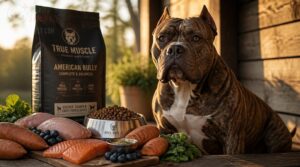
As a dog parent, you’ve got the nutrition basics down, but the pet food aisle still throws a lot of decisions your way.
Grain-free or grain-inclusive, dry or wet, novel proteins or familiar ones, each choice shapes how well your Bully thrives.
Let’s walk through what actually matters when you’re standing there reading labels.
Grain-Free Vs Grain-Inclusive
One of the most debated choices in canine nutrition right now is whether to go grain-free or stick with whole grains — and for American Bullies, the answer matters more than you’d think.
| Factor | Grain-Free | Grain-Inclusive |
|---|---|---|
| Carb Source | Legumes, sweet potatoes, peas | Rice, oats, barley |
| Fiber Type | Variable, legume-based | Consistent, grain-derived fiber |
| Health Note | Taurine deficiency risks monitored | Stable glucose response |
Grain-free diets rely heavily on legume-based carbohydrates, which can shift amino acid profiles and potentially affect taurine levels — a concern flagged in the ongoing grain-free controversy around certain heart conditions. Grain-inclusive options, by contrast, deliver steadier glucose response stability and more predictable micronutrients from whole grains, making them a practical choice for weight-conscious Bullies. That said, if your dog reacts to dog food allergens like corn, wheat, or soy, a carefully formulated grain-free diet with supplemental taurine can still support a balanced canine diet — just consult your vet first.
Limited Ingredient Diets
If grain-free versus grain-inclusive feels like choosing between two shades of the same headache, a limited ingredient diet cuts through the noise entirely by stripping your Bully’s bowl down to just a handful of carefully chosen components — making it far easier to pinpoint exactly what’s causing a reaction.
For allergy-prone American Bullies, that clarity is everything.
Dry Vs Wet Food
As a dog parent narrowing down ingredients, you’ll still face one more fork in the road: dry food vs wet food.
Kibble runs 8–12% moisture, offering lower cost per day, dental abrasion benefits, and easy free-feeding.
Wet food’s 60–80% moisture boosts hydration and aroma for picky eaters.
Many Bully owners mix both for balanced moisture and budget.
Novel Protein Sources
As a dog parent who’s settled the dry-versus-wet debate, you’ll still want to keep an eye on protein sources, since rotating in something less common, like duck, venison, or rabbit, can spare your Bully’s gut from the beef and chicken sensitivities that show up so often in this breed.
Lamb protein offers a gentler alternative, while fish oil adds omega-3s for skin and joints. These exotic meat options support a true limited ingredient diet, easing allergy symptoms through smarter allergen reduction strategies.
Ingredient Quality and Sourcing
Knowing where your Bully’s food actually comes from matters just as much as what’s in it.
Look for brands that disclose traceable ingredient origins — specific farms, countries, and processing steps — and back that up with batch-specific testing for contaminants.
Ethical sourcing audits and human‑grade, real meat from sustainable animal sources tell you the manufacturer genuinely prioritizes your dog’s safety.
What Not to Feed Your Bully

As a dog parent, knowing what to feed your Bully is only half the job, since what you keep off the menu matters just as much.
Some ingredients quietly trigger allergies, sabotage weight goals, or sneak in empty calories without you even noticing.
Let’s walk through the four areas where I’d encourage you to stay extra cautious.
Common Food Allergens
Your American Bully’s immune system can mistake everyday proteins for threats.
Common dog food allergens include beef, chicken, dairy, soy, wheat, and eggs — and many labels hide these under names like whey, soybean meal, or malt.
Even cross-contact during manufacturing can trigger reactions, so always check both the ingredient list and any allergen statements carefully.
Unsafe Human Foods
Even if your Bully gives you those irresistible puppy eyes at the dinner table, some of the foods you enjoy every day can be genuinely dangerous — even deadly — for them.
- Toxic kitchen staples: onions, garlic, grapes
- Chocolate and caffeine (hidden food toxins)
- Xylitol-sweetened snacks
- Fatty table scraps causing pancreatitis
- Cooked bones (choking, internal injury)
When in doubt, ask your vet before sharing anything new — it’s a simple habit that prevents real dietary poison risks.
Low-Quality Fillers
Reading the ingredient panel matters more than the marketing copy. Skip corn, wheat, soy, and unnamed meat by-products — common allergens and low-quality fillers tied to contamination risks, poor sterility, and weak regulatory compliance.
| Filler Type | Risk | Better Choice |
|---|---|---|
| Corn gluten | Allergic, inflammatory | Sweet potato |
| Soy meal | Hormonal, allergic | Oatmeal |
| By-product meal | Inconsistent protein quality | Named muscle meat |
Choose low-glycemic, traceable ingredients for steady energy and fewer immune flare-ups.
Treats and Calorie Limits
A handful of training treats might seem harmless, but for a muscular, food-motivated Bully, those little extras can quietly add up to a daily calorie surplus that undoes weeks of careful feeding. Keep treats to 10% of daily calories and choose smarter options:
- Blueberries for antioxidants
- Baby carrots for crunch without fat
- Plain cooked chicken pieces
- Small bits of sweet potato
- Commercial low-calorie training treats
Weigh your Bully monthly and adjust portions accordingly.
Frequently Asked Questions (FAQs)
What does a Bully dog eat?
Think of your American Bully as a high-performance athlete — their body genuinely needs high-protein, nutrient-dense dog food rich in essential fatty acids, joint-supporting glucosamine, and carefully managed calorie density to sustain muscle maintenance and long-term health.
What not to feed an American Bully?
Some foods can quietly derail your Bully’s health. Toxic human scraps like grapes, onions, and chocolate top the list of things to never share.
What is the best food for bully dogs?
For a muscular American Bully, Nom Nom Fresh Beef Fare consistently stands out — it delivers 37% dry-matter protein, supporting that powerful build without excess calories or fillers your dog doesn’t need.
Is Purina good for bullies?
Purina Pro Plan is a solid option for American Bullies, offering real meat protein, joint-supporting glucosamine and EPA/DHA, and life-stage formulas that cover puppies through seniors with reliable, vet-recommended nutritional balance.
What dog food is comparable to Bully Max?
Eukanuba Premium Performance 30/20 SPORT matches Bully Max’s protein-to-fat ratio closely, giving you a high-protein diet for athletic performance nutrition.
Its muscle mass support and nutrient density rival pricier premium protein sources without straining your budget.
Do American Bullies need grain-free food?
Not necessarily. Grain-free isn’t mandatory for every Bully, but it helps allergy-prone dogs avoid common triggers like wheat, corn, and soy — replacing those carbs with sweet potatoes or peas instead.
What type of treats are best for American Bullies?
Soft, high-protein training treats work best for American Bullies — small, meat-based, and calorie-controlled. For dental health, add durable chews that reduce plaque. Always choose limited-ingredient options if your Bully is allergy-prone.
How often should American Bullies eat?
Most Bullies do well with 2 meals daily as adults, 3–4 meals as puppies, and smaller senior portions timed consistently. Splitting calories evenly keeps energy stable and prevents bloat.
How can I tell if my American Bully is overweight?
Run your hands over the ribs, check waist shape from above, and look for abdominal tuck from the side. Hip fat pads and a waddling gait also signal it’s time for calorie-controlled meals and weight management.
Are there any special dietary needs for senior American Bullies?
By age seven, your dog’s metabolic rate can drop nearly 20%, meaning senior Bullies need calorie reduction, joint health supplements like glucosamine, low-fat formulas, and steady hydration—always guided by your vet recommendation for diet.
Conclusion
Your bully’s bowl is the foundation that everything else is built on—get it right, and you’ll see it in their coat, their energy, and the way they move. Choosing the best dog food for bullies isn’t guesswork once you understand their muscle-dense build, breed-specific risks, and life stage needs.
Feed real protein, watch for allergens, and adjust as they age. Do that consistently, and you’re not just feeding a dog—you’re protecting a companion built to last.
- https://www.ukcdogs.com/american-bully
- https://spot-and-tango.i5md.net/c/2295087/2131535/9669
- https://pangovet.com/talk-to-a-vet-online-dog-nutrition/?utm_source=dogster&utm_medium=article&utm_campaign=dog-nutrition&utm_content=best-dog-foods-for-american-bully
- https://www.fda.gov/animal-veterinary/outbreaks-and-advisories/fda-investigation-potential-link-between-certain-diets-and-canine-dilated-cardiomyopathy
- https://venomlinebullies.com/blogs/news/pocket-bully-growth-weight-chart-2025