This site is supported by our readers. We may earn a commission, at no cost to you, if you purchase through links.
Run your fingers through a crimped dog coat, and you’ll feel something closer to a wool sweater than typical dog fur—dense, springy, and packed with air pockets that trap warmth like insulation inside a wall.
That texture isn’t random.
It comes from specific gene variants that bend each hair shaft at the follicle, creating the zigzag pattern you see on breeds like the Curly‑Coated Retriever, Poodle, and Lagotto Romagnolo.
Crimped coat texture breeds share more than a look—they share distinct grooming demands, health considerations, and coat mechanics worth understanding before you bring one home.
Table Of Contents
- Key Takeaways
- What is a Crimped Coat?
- Crimped Vs Curly Vs Corded
- Genes Behind Crimped Dog Coats
- Curly-Coated Retriever Coat Traits
- Poodles and Similar Coat Types
- Bichon and Bedlington Textures
- Corded Breeds With Textured Coats
- Other Breeds With Crimped Texture
- Grooming Needs for Crimped Breeds
- Health and Lifestyle Considerations
- Frequently Asked Questions (FAQs)
- Conclusion
Key Takeaways
- Crimped coats are shaped by specific gene variants — mainly KRT71, RSPO2, and FGF5 — that bend each hair shaft at the follicle, creating the springy, zigzag texture you see in breeds like Poodles, Curly-Coated Retrievers, and Lagotto Romagnolo.
- That dense, air-trapping structure does real work: it insulates against cold, repels debris, and reduces shedding by catching loose hairs inside the curl — but it also hides skin problems, so regular checks are non-negotiable.
- Crimped, curly, wavy, and corded coats aren’t interchangeable — each has distinct genetics, grooming demands, and breed standard definitions, and confusing them leads to the wrong care routine.
- Keeping a crimped coat healthy means committing to a consistent routine: blot-dry after baths, finger-comb instead of brushing daily, trim every six to eight weeks, and match your grooming schedule to your dog’s coat density and the season.
What is a Crimped Coat?
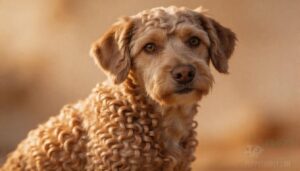
A crimped coat is one of the more distinctive textures you’ll come across in the dog world — tight, springy, and fuller than it looks at first glance. It’s easy to confuse it with a standard curly coat, but there are real differences worth knowing.
Understanding how a crimped coat differs from other textures becomes even clearer when you explore dog coat types and proper washing techniques, since different textures respond very differently to water and soap.
Here’s what actually sets a crimped coat apart.
Definition of a Crimped Coat Texture in Dogs
A crimped coat isn’t just a styling choice — it’s built into the hair itself. Each strand follows a zigzag shaft pattern, shaped by a keratin twist mechanism inside the follicle. The result is a single-layer coat that creates natural air pocket insulation for thermal regulation.
Three things define crimped fur genetically:
- KRT71 gene variants
- RSPO2 texture modifiers
- Selective breed-specific amplification
Common Signs of Crimping, Tight Waves, and Springy Curls
Once you know what to look for, spotting crimped fur is straightforward.
Run your hand through the coat — tight curls push back with a noticeable curl rebound instead of lying flat.
The volume bulge along the body is visible even at a distance.
| Sign | What You’ll Notice |
|---|---|
| Clump consistency | Strands group into defined ringlets |
| Frizz level | Low when healthy; rises with dryness |
Why “crimped” is Often Grouped With Curly Coats
Shared genetic pathways explain a lot here. Both crimped fur and curly coat textures trace back to the same core genes, especially KRT71.
That texture classification overlap makes it logical for breed standards to group them together.
Historically, breeders selected for functional insulation similarity, not labels. The genetic basis of coat variation is broad enough that "crimped" simply lives inside the curly family.
How Texture Affects Appearance, Feel, and Volume
Texture does more than you’d think. Crimped fur and curly coat strands lift away from the skin, creating real Visual Depth through Light Shadow contrast between raised fibers and darker gaps beneath.
That’s your Volume Illusion at work — Perceived Bulk without extra weight. You also get genuine Tactile Softness and natural volume and texture that simplifies coat maintenance.
- Raises visible surface detail
- Creates warmth through trapped air
- Reduces shedding naturally
Crimped Vs Curly Vs Corded
Not all textured coats are built the same, and the differences matter more than you’d think. Crimped, curly, wavy, and corded coats each follow their own rules — from how they form to how breed standards describe them.
Here’s a closer look at what sets them apart.
Differences Between Crimped, Curly, Wavy, and Corded Coats
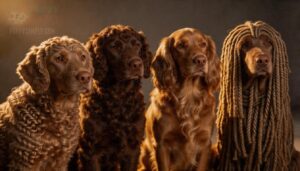
Not all textured coats work the same way. Crimped fur bounces back after stretching and excels at Thermal Insulation. Curly-haired dogs shed minimally, which helps with Allergy Sensitivity. Wavy fur offers easy upkeep. A corded coat delivers serious Abrasion Resistance and Water Repellency.
| Coat Type | Key Trait |
|---|---|
| Crimped | High Thermal Insulation |
| Wavy fur | Low Shedding Levels |
| Corded coat | Maximum Weather Protection |
How Breed Standards Describe Textured Coats
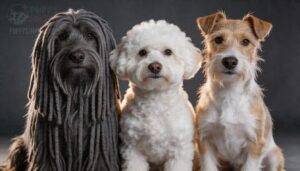
Breed standards don’t leave coat descriptions to chance. They use precise Texture Terminology — words like crisp, harsh, woolly, or silky — as Standardized Curl Descriptors that define breed characteristics exactly.
Furnishing Requirements specify longer textured hair on the beard or legs, while Coat Length Guidelines separate feel from length entirely.
| Standard Term | What It Describes | Judges Evaluation Criteria |
|---|---|---|
| Crisp/Harsh | Tight curl structure | Coat stands away from body |
| Woolly/Soft | Dense undercoat texture | Plush, powder-puff silhouette |
| Corded/Flat | Cord shape and separation | Clean, well-separated cords |
Why Some Coats Look Crimped Only After Grooming
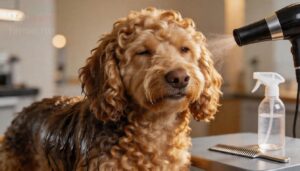
Some coats don’t reveal their true pattern until after a bath. Water lifts packed fibers apart, and blow-drying creates Post-Wash Volume Boost that exposes crimped hair hiding beneath flat, oily buildup. Genetics of curly dog coats determine the bend — grooming just uncovers it.
| Coat State | What You See | Why It Changes |
|---|---|---|
| Dry, unwashed | Flat, smooth-looking | Weight and oil compress texture |
| Wet | Clumped, undefined | Moisture shifts fiber alignment |
| Clean and dried | Visible crimp pattern | Air Pocket Insulation lifts strands apart |
Seasonal Moisture Impact also plays a role — humid months can flatten crimped fur between grooming sessions, making regular grooming for curly-coated dogs essential.
Which Coat Types Are Easiest to Confuse
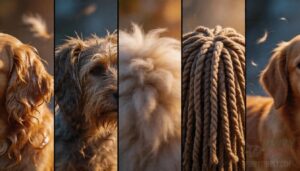
Telling these coat types apart isn’t always straightforward. Wavy Misidentification trips up even experienced owners — a damp Golden Retriever can look just like a crimped hair dog. Wire-Curly Overlap confuses breeds carrying both RSPO2 and KRT71 variants. Double-Coat Illusion makes fluffy coat breeds look curly from a distance. Corded-Matted Similarity is real too — long wavy fur left unbrushed mimics true cords.
Regular grooming sessions with the right dog grooming tools for shedding also help you spot early skin irritation that’s easy to miss beneath a misidentified coat type.
| Coat Type | Common Confusion | Key Difference |
|---|---|---|
| Wavy fur | Looks crimped when wet | Sits flatter when dry |
| Wire-curly | Resembles curly hair dogs | Feels harsh, not springy |
| Double coat | Fluffy coat illusion | Sheds seasonally |
| Corded | Corded-Matted Similarity | Forms deliberate rope strands |
| Shedding Appearance | Looks low-shed like breeds with crimped fur | Actually releases loose hair freely |
Genes Behind Crimped Dog Coats

That curly or crimped coat your dog carries isn’t just luck — it’s written in their DNA.
A handful of specific genes do most of the heavy lifting, shaping everything from curl tightness to coat length. Here’s a closer look at the key players behind crimped textures.
KRT71 and Curl Formation
KRT71 is the structural gene responsible for shaping hair curl from the inside out. It operates through the inner root sheath—three layers of tissue that mold each hair shaft as it grows. When a splice site variant disrupts KRT71, the fiber bends instead of growing straight. Cross-species mutations confirm this mechanism in cats, rats, and dogs alike.
KRT71 shapes every curl from within, bending the hair shaft before it ever leaves the skin
- Curl forms before the hair leaves the skin.
- One gene variant can shift a coat from wavy to tightly coiled.
- Genetic testing strategies can confirm which KRT71 allele your dog carries.
RSPO2 and Furnishings That Change Texture
While KRT71 shapes the curl itself, RSPO2 regulates something different — it controls furnishings, those distinctive eyebrows, beards, and leg hair defining so many textured breeds.
A 167 bp RSPO2 insertion drives this trait, producing the wiry beard texture you see on Schnauzers and Poodles.
Furnishing variant testing confirms whether your dog carries this dominant allele, which is why breed standard furnishings and crimped hair maintenance plans often start with genetic determinants of coat texture.
FGF5 and Coat Length
The third piece of the puzzle is FGF5. Think of it as the "stop growing" switch for hair follicles.
When it works normally, it signals hair to stop and shed. But FGF5 variants knock that signal out — and suddenly follicles just keep going.
That’s how long coat inheritance works across dog breeds with crimped fur, driven by recessive alleles affecting hair growth regulation.
How Selective Breeding Preserves Crimped Textures
Selective breeding is really just choosing what carries forward.
Breeders track allele frequency in KRT71, RSPO2, and FGF5 lines to preserve crimped textures in dog breeds with crimped fur. Phenotype scoring systems evaluate curl quality early, while marker-assisted selection confirms the genetic trait before pairing.
Founder line selection and smart crossbreeding strategies keep that springy texture consistent across generations without letting it drift.
Curly-Coated Retriever Coat Traits
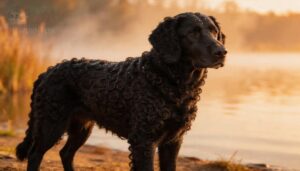
The Curly-Coated Retriever has one of the most distinctive coats in the sporting group — and every part of it fulfills a purpose. From the tight curls covering the body to the smooth patches on the face and legs, this breed’s coat tells a working-dog story.
Here’s what makes it so unique.
Tight, Crisp Curls Across The Body
The Curly-Coated Retriever’s body coat is built for work. Those tight curls aren’t just striking — they’re functional.
The crimped hair lies close to the skin, dense and springy, forming a natural shield that delivers real benefits:
- Sun Protection against UV exposure
- Insect Barrier that deflects bites
- Insulation Benefits in cold, wet conditions
- Seasonal Shedding Reduction through trapped loose hairs
Grooming requirements for crimped fur dogs like this breed stay manageable with consistent upkeep.
Smooth Hair on The Face and Lower Legs
While the body stays dense with crimped hair, the face and lower legs tell a different story. Breed standard facial guidelines call for short, smooth hair here — no facial furnishings, no texture.
Lower leg smoothness keeps the outline clean and purposeful. For grooming requirements for crimped fur dogs, eye-area hair management and muzzle trim tips stay simple: a careful clip keeps these areas neat.
Working-dog Purpose Behind The Coat
That dense, crimped hair wasn’t designed for dog shows — it was built for real work. Weather Insulation keeps the dog warm during cold-water retrieves, while Debris Resistance stops burrs and brush from reaching skin. Swim Efficiency matters too: tight curls shed water fast, reducing drag.
Every coat adaptation to climate and terrain enhances Task Performance and Field Durability in punishing field conditions.
Grooming Needs for Maintaining Curl Definition
Keeping those curls intact takes more intention than most people expect. Skip the rough towel rubdown — blot moisture out, then use Diffuser Drying to preserve each curl clump. Finger Separation lifts loose hair without breaking the pattern.
- Apply Leave-in Conditioning after every bath
- Prioritize Moisture Retention with lightweight curl creams
- Follow a consistent Trim Frequency — every 6–8 weeks
- Avoid daily brushing; use finger-combing instead
- Book Professional Crimping Services for curls when shape needs resetting
Poodles and Similar Coat Types
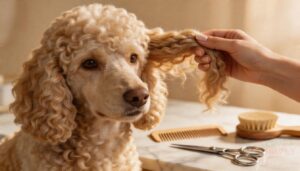
Poodles are one of the most recognized crimped-coat breeds, and for good reason. Their dense, fine curls can shift between looking crimped, corded, or somewhere in between depending on how you groom them.
Here’s what makes Poodle coats unique — and which other breeds share that same textured look.
Dense, Fine-textured Curls in Standard, Miniature, and Toy Poodles
Poodle curls aren’t just pretty — they’re engineered. Each variety carries the same dense, fine, frizzy texture that springs back when touched, a quality groomers call curl elasticity testing in practice. That texture also provides thermal insulation benefits year-round.
Unlike double-coated breeds, Poodles show almost no seasonal shedding variation, making crimped fur easier to manage.
| Variety | Height Range | Coat Notes |
|---|---|---|
| Standard | Over 15 inches | Harsh, dense curls; texture uniformity scoring matters most in show clip standards |
| Miniature | 10–15 inches | Tight, fine curls; hypoallergenic qualities make regular grooming essential |
| Toy | 10 inches or under | Uniform crimped hair maintenance and care keeps the coat neat and show-ready |
How Poodle Coats Can Appear Crimped or Corded
Your Poodle’s look can shift more than you’d expect. Moisture-Induced Crimp kicks in after bathing — wet hair clumps, then dries into a tighter, almost crimped fur pattern.
Groomer Styling Techniques and Coat Age Progression also play a role: younger coats look curlier, while older hair left unmanaged forms a corded coat naturally.
Environmental Texture Influence and Seasonal Texture Shifts affect this hypoallergenic breed constantly.
Low-shedding Qualities and Coat Upkeep
Crimped fur traps loose hair inside the curl — that’s one of the key Shedding Reduction Mechanisms that makes Poodles so popular for allergy-friendly households. But low-shedding doesn’t mean low-maintenance.
Dog coat grooming frequency matters here: brush several times weekly, manage moisture carefully after baths, and use the right tools. Breed-specific grooming needs are real — ignore them, and mats form fast.
Other Breeds With a Similar Textured Coat
Several breeds share that signature textured look. Here are five worth knowing:
- Goldendoodle – Inherits Poodle curl genetics, with Coat Color Genetics varying widely by generation.
- Labradoodle – Functional Weather Protection drives its wavy-to-curly coat, rooted in Historical Breed Origins as a working cross.
- Bichon Frise – A Show Ring Judging staple with powder-puff texture.
- Lagotto Romagnolo – Rustic, tight curls built for fieldwork.
- Barbet – Rising in Breed Popularity Trends for its soft, dense wave.
Bichon and Bedlington Textures
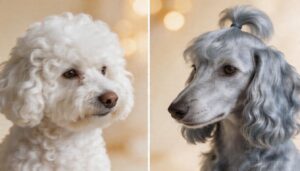
Not all crimped and curly coats are built the same, and the Bichon Frise and Bedlington Terrier are proof of that. These two breeds sit at opposite ends of the soft-coat spectrum, each with its own texture, structure, and styling needs.
Here’s a closer look at what sets them apart.
Bichon Frise Double Coat and Powder-puff Texture
The Bichon Frise double coat is a textbook example of Coat Density Measurement in action. The soft undercoat and curlier outer layer create a Texture Sensory Appeal that feels both springy and plush — never flat or limp.
| Coat Feature | Detail |
|---|---|
| Undercoat | Soft and dense |
| Outer coat | Coarser, curlier |
| Feel | Springy, full |
| Standard Show Evaluation | Limp coat is a fault |
| Skin Protection Benefits | Dense layers shield skin |
Grooming requirements for crimped fur dogs like the Bichon are real — daily brushing prevents matting. That’s what keeps those hypoallergenic dogs looking like a white cloud and promotes long-term dog coat health.
Bedlington Terrier’s Soft, Lamb-like Coat
The Bedlington Terrier takes a different path entirely.
Where the Bichon is plush, the Bedlington’s crimped fur is linty and crisp — it stands out from the skin rather than lying flat. That lamb-like silhouette comes from a mix of hard and soft hair that curls noticeably on the head.
It’s a low-shedding breed, making it appealing for those exploring hypoallergenic dog breeds.
Nose color rules apply strictly — blue dogs get black noses, liver and sandy dogs get brown.
Texture Differences Between Soft Curls and Crisp Crimping
Soft curls and crisp crimping feel completely different under your hand. Soft curls offer Tactile Softness — rounded, springy, with smooth Light Reflection. Crisp crimped fur creates angular zigzag ridges that add sharp Volume Perception and a bold look.
Key differences to know:
- Soft curls separate easily with your fingers.
- Crimped hair holds a rigid, patterned wave line.
- Crimped hair style shows strongest on straighter base coats.
- Crimped hair benefits include higher lift and texture definition.
- Styling Durability drops with Heat Sensitivity — minimize tool exposure during crimped hair maintenance.
Trimming Styles That Shape The Coat
The trimming style you choose shapes everything. A lamb trim leaves the body shorter than the legs, giving Bedlingtons a soft, rounded silhouette. A lion cut or topknot style works well for Bichons.
Balanced scissoring keeps proportions clean. A utility cut suits low‑maintenance owners.
Professional crimping services for canines can improve any crimped hair style beyond what a home crimping tool achieves.
Corded Breeds With Textured Coats
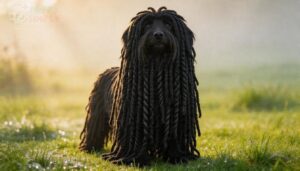
Some dogs take coat texture to a whole different level — literally forming cords on their own. The Puli is the most recognizable example, but it’s not alone in the corded world.
Here’s what you need to know about breeds whose coats naturally lock, twist, and protect.
Puli and Its Naturally Forming Cords
The Puli’s corded coat doesn’t happen overnight. Cords usually begin forming around nine months, and a full ground-length coat takes four to five years.
Those distinctive ropes aren’t just striking — they’re functional weather shield benefits built for herding life. Vision through cords works like vertical blinds, shifting as the dog moves.
Breed-specific grooming needs start with separating cords down to the skin early.
How Cords Begin From Dense, Textured Hair
Dense, woolly fur doesn’t just sit there — it gets to work. Fiber Cohesion Mechanics kick in as coarse strands grip neighboring hairs through everyday friction and movement.
The Frictional Binding Process pulls these strands into early tendrils, initiating the formation of distinct cords rather than a uniform mass.
Moisture-Induced Clumping further tightens these clumps each time the coat wets and dries, reinforcing the structure.
Functional Protection From Weather and Debris
Those cords aren’t just eye-catching — they’re working hard. Corded coats act as a natural protective barrier against wind, rain, UV rays, and insects.
- Water resistance — cords repel rain and wet debris
- Debris barrier — dirt and burrs stay near the surface
- Wind insulation — layered cords block moving air
- UV and insect protection — crimped fur shields skin naturally
Water resistance comes built-in, as tightly woven cords shed moisture before it reaches the skin. Dogs in cold or exposed environments also benefit from real thermal insulation.
Why Corded Coats Need Specialized Maintenance
Keeping a corded coat healthy takes real commitment. Moisture retention risks are serious — incomplete drying leads to bacterial growth inside cords within days.
Your cord separation timing matters too: Komondors need separation every 2–3 days, while adult coats require 30–45 minutes twice weekly.
Skin infection surveillance under cords catches hot spots early. Think of it as dog coat maintenance with a schedule, not guesswork.
Other Breeds With Crimped Texture
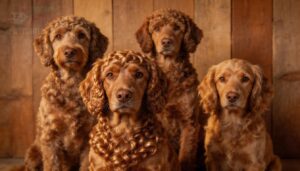
Beyond the well-known curly breeds, several other dogs carry that same crimped, textured coat worth knowing about. Each one brings its own working history and grooming needs to the table.
Here are four breeds that belong in any conversation about crimped coat textures.
Irish Water Spaniel
Irish Water Spaniel brings serious historical lineage to the water retrieval world. Its crimped fur is dense, naturally oily, and built for wet conditions. Males reach up to 65 pounds with a striking topknot of loose curls.
It’s low-shedding, but grooming tips matter — brush weekly and trim carefully. Show ring standards call for solid liver only, no exceptions.
Portuguese Water Dog
The Portuguese Water Dog was practically built for the sea. Known in Portugal as Cão de Água, this breed used its Water Retrieval Skills and Webbed Feet Advantage to herd fish and retrieve lost gear for fishermen.
- Curly or wavy crimped fur with no undercoat
- hypoallergenic coats that stay tidy with regular grooming
- Lion Clip Styling keeps the coat neat and functional
- Breed Temperament Traits: intelligent, enthusiastic, and people-focused
- Historical Revival Efforts in the 1970s saved the breed from near‑extinction
Lagotto Romagnolo
Italy gave us another standout with Marshland Heritage roots — the Lagotto Romagnolo.
This breed’s Italian Origin traces back to the wetlands of Emilia-Romagna, where its crimped fur handled damp, rough terrain naturally.
A Rescue Revival in the 1970s kept it alive.
Today, its low-shedding, hypoallergenic coats, and sharp nose make Truffle Training its signature role, backed by solid dog coat genetics and breed temperament built for focused work.
Barbet and Other Curly-coated Working Breeds
The Barbet wraps up this group with plenty of character. France’s answer to Working Dog Origins, this breed’s long, dense, woolly crimped fur has handled marsh and water retrieval for centuries. Training for Water came naturally — the coat is built for it.
- Coat Color Standards vary widely
- Barbet Temperament is gentle and enthusiastic
- dog coat genetics shape every curl
- regular grooming prevents matting fast
Hereditary coat variations in purebred dogs and Breed Popularity Trends show this rustic breed gaining ground steadily.
Grooming Needs for Crimped Breeds
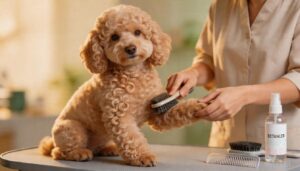
Crimped and curly coats don’t take care of themselves — they need a consistent routine to stay healthy and tangle-free. The good news is that once you know what your dog’s coat actually needs, it’s straightforward to maintain.
Here’s what to focus on.
Brushing Routines by Coat Density and Length
Crimped fur demands a grooming schedule matched to your dog’s coat density and length.
Short coat brushing once weekly keeps things manageable, while medium coat frequency jumps to two or three times weekly.
Long coat sectioning is non‑negotiable — work in layers from skin outward.
Dense coat pressure should stay controlled to avoid skin scraping.
detangling spray and the right sparse coat tools make regular brushing far less of a battle.
Bathing, Conditioning, and Drying Textured Fur
After brushing comes bath time. Shampoo your dog fully, then follow with a conditioning treatment suited to crimped hair — lightweight formulas protect texture without flattening curls. A thorough rinse removes every trace of product.
Pat dry gently using the pat dry technique to preserve the wave pattern. Apply a conditioning spray as a leave-in, then use high-velocity drying with careful airflow direction to finish safely.
Preventing Mats, Split Ends, and Coat Breakage
Mats don’t appear overnight — they start small, in friction hotspots like armpits, collar lines, and behind the ears. Stay ahead of them with these crimped hair maintenance and care basics:
- gentle detangling methods, working from the outside edge inward
- moisture control techniques by drying the coat fully after every bath
- regular trim schedule to stop split ends before they travel
- protective collar fitting often so hardware doesn’t fray the coat
Best Tools for Crimped and Tightly Curled Coats
The right dog grooming tools make all the difference with crimped hair.
Here’s a quick reference:
| Tool | Best For | Key Feature |
|---|---|---|
| Slicker Brush Design | Lifting dense curls | Curved head, firm pins |
| Metal Comb Types | Finding hidden knots | Stainless steel, dual-tooth spacing |
| Clipper Choices | Shaping and trimming | Two-speed, consistent power |
| Drying Tools | Post-bath prep | High-velocity airflow |
| Detangling Aids | Crimped hair maintenance | Conditioning sprays, section-by-section method |
Professional groomers always finish with a metal comb — it catches what the slicker misses.
Health and Lifestyle Considerations
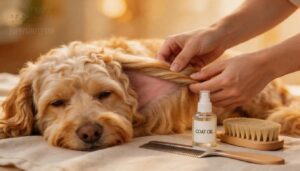
beautiful coat is only part of the picture — what’s underneath matters just as much. Dense, textured fur can quietly hide skin problems, trap heat, and create ear issues that sneak up on even the most attentive owners.
Here’s what to watch for regarding keeping your crimped-coat dog healthy day-to-day.
Skin Issues Hidden Beneath Dense Textured Coats
Dense crimped fur is sneaky — moisture traps form fast after bathing or swimming, keeping skin damp long after the surface feels dry.
Matting risks compound this, hiding hidden infections like yeast or bacteria in Skin Check Zones under the belly and armpits.
Watch for allergy clues too: odor, itching, or greasy patches are early warnings; regular grooming for curly-coated dogs helps catch.
Ear Care for Curly-coated Breeds
Curly hair around the ear opening isn’t just a styling quirk — it’s a real health concern. Crimped fur traps wax, debris, and moisture close to the skin, and poor ventilation turns minor buildup into recurring infections quickly.
regular ear cleaning helps prevent infections in long‑ear breeds.
- Check ear shape risks — pendulous ears reduce natural airflow
- Trim ear hair to keep the canal clear
- Follow a consistent cleaning routine using dog-safe solution
- Watch for infection warning signs: odor, redness, or discharge
- Skip cotton swabs — they push debris deeper
Heat, Moisture, and Seasonal Coat Management
Seasons hit crimped coats hard — and each one demands a different response.
In summer, thinning shears tackle bulk while keeping an inch of length for UV protection.
Winter calls for full coat retention to lock in warmth.
Here’s a quick seasonal reference:
| Season | Priority | Key Action |
|---|---|---|
| Summer | Heat regulation | Trim underbelly and airflow zones |
| Winter | Insulation | Preserve full crimped length |
| Humid months | Moisture control | Apply leave-in conditioner |
Humidity Control Methods and Moisture Retention Techniques matter year-round for shedding reduction and coat health.
Choosing a Crimped Coat Breed for Shedding, Grooming, and Activity Level
Picking the right crimped coat breed comes down to three honest questions: How much hair can you live with? How often will you groom? How active is your household?
Low shedding breeds like the Poodle and Bichon Frise suit allergy suitability needs well, but grooming frequency is non‑negotiable.
Match energy requirements and space constraints to your lifestyle before falling for the coat.
Frequently Asked Questions (FAQs)
What dog breeds have corded coats?
The AKC recognizes seven Historical Corded Breeds: Bergamasco Sheepdog, Havanese, Komondor, Puli, Poodle, Pyrenean Shepherd, and Spanish Water Dog — each shaped by Regional Coat Functions tied to Climate Adaptation Benefits and Working Role Advantages.
What health problems affect curly cats?
Curly cats face ear infections, dental disease, and skin sensitivity. Breeds like Devon Rex carry myopathy risk, while Selkirk Rex may develop heart conditions.
Heart screening and routine vet care matter most.
Can crimped coats trigger allergies in sensitive owners?
Think of a crimped coat like a lint trap — it catches particles but doesn’t eliminate them. Dander, not fur, drives most allergies.
Low shedding helps, but no coat is truly allergen-free.
How does diet affect crimped coat health?
Your dog’s diet shapes coat health from the inside out. Protein quality fuels keratin production, essential fatty acids maintain skin hydration, and vitamin balance promotes even growth.
Mineral supplementation fills the gaps a basic diet often misses.
At what age does a puppys crimp develop?
Your puppy’s crimp usually starts showing between four to six months, driven by dog coat genetics. Breed-specific timing varies — some wait until 18 months for full genetic expression age.
Are crimped coats more prone to parasite infestations?
Crimped fur isn’t naturally more parasite-prone, but density creates real inspection challenges.
Flea hiding spots multiply in thick, matted sections. Regular combing and canine skin care routines keep coat health and grooming on track.
Conclusion
A crimped coat texture breed’s unique charm is like a rich tapestry, woven with specific gene variants.
Caring for your dog’s crimped coat requires attention to detail, patience, and the right techniques. By understanding the needs of crimped coat texture breeds, you’ll forge a deeper connection with your pet and ensure their coat remains healthy and striking.
- https://www.woofspark.com.au/doodle-summer-grooming/
- https://www.lombardvet.com/services/dogs/blog/what-you-need-know-about-summer-cut-dogs-you-pick-those-clippers
- https://www.dreamdogz.ie/a-deeper-look-into-the-coats-role-in-the-dogs-thermal-regulation/
- https://www.groomers-online.com/blog/2025/11/heres-how-to-maintain-different-dog-coat-types-in-winter/
- https://petageinhumanyearscalculator.com/blog/portuguese-water-dog-grooming/